
Definition of Physical Education PHYSICAL EDUCATION is an

- Slides: 23
Definition of Physical Education
PHYSICAL EDUCATION is an integral part of the total education process and has as its aims the development of: physically mentally socially & emotionally fit citizens through the medium of physical activities that have been selected and planned to achieve specific outcomes.
PHYSICAL EDUCATION • is an integral part of the total education process • and has as its aims • the development of. . .
§ physically § mentally § socially & § emotionally fit citizens
• • • through the medium of physical activities that have been selected and planned to achieve specific outcomes
PHYSICAL EDUCATION is an integral part of the total education process and has as its aims the development of: physically mentally socially & emotionally fit citizens through the medium of physical activities that have been selected and planned to achieve specific outcomes.
Chapter 4 Philosophy and Physical Education, Exercise Science and Sport
Why Study Philosophy? • It is defined as the pursuit of truth.
Why Study Philosophy? • It attempt to understand the meaning of things.
Why Study Philosophy? • Developing a personal philosophy can improve your effectiveness as an HPERD leader.
Why Study Philosophy? • A philosophy will influence your behaviors.
Five Traditional Philosophies
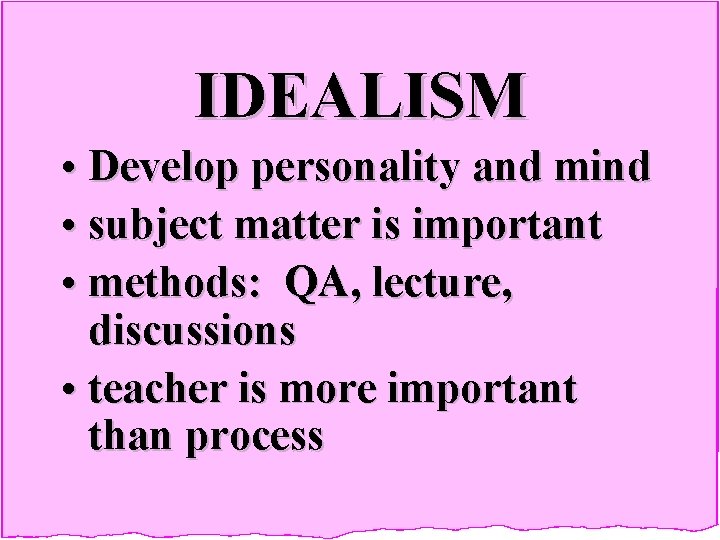
IDEALISM • Develop personality and mind • subject matter is important • methods: QA, lecture, discussions • teacher is more important than process
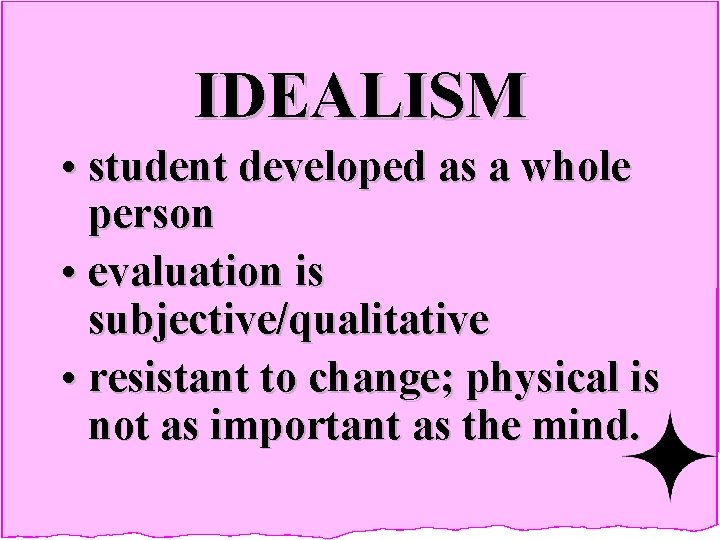
IDEALISM • student developed as a whole person • evaluation is subjective/qualitative • resistant to change; physical is not as important as the mind.
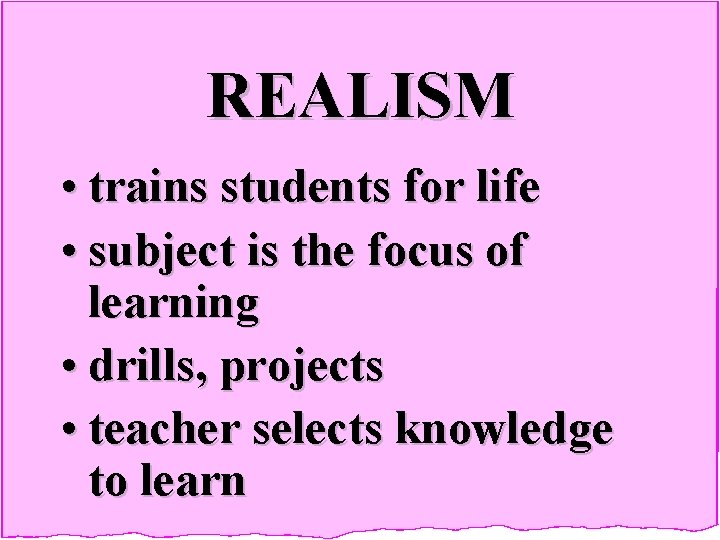
REALISM • trains students for life • subject is the focus of learning • drills, projects • teacher selects knowledge to learn
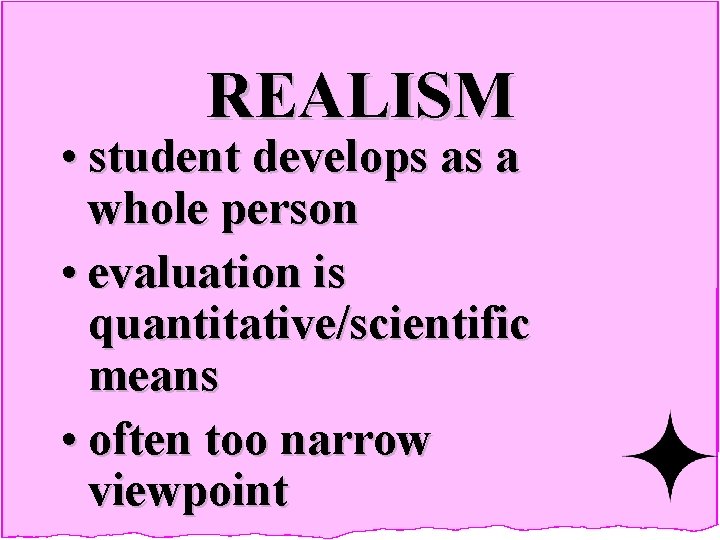
REALISM • student develops as a whole person • evaluation is quantitative/scientific means • often too narrow viewpoint
PRAGMATISM • Helps student to function in society • wide variety of subject matter • problem-solving is used • teacher is a guide
PRAGMATISM • student learns about moral self • evaluation is subjective or self-evaluation • fails to give students stability
NATURALISM • Development of whole person • subject matter is playoriented, individualized • problem-solving, informal methods
NATURALISM • teacher is a guide, secondary to nature • individualized rate of learning • evaluation is based on individual goals • too simple for complex world
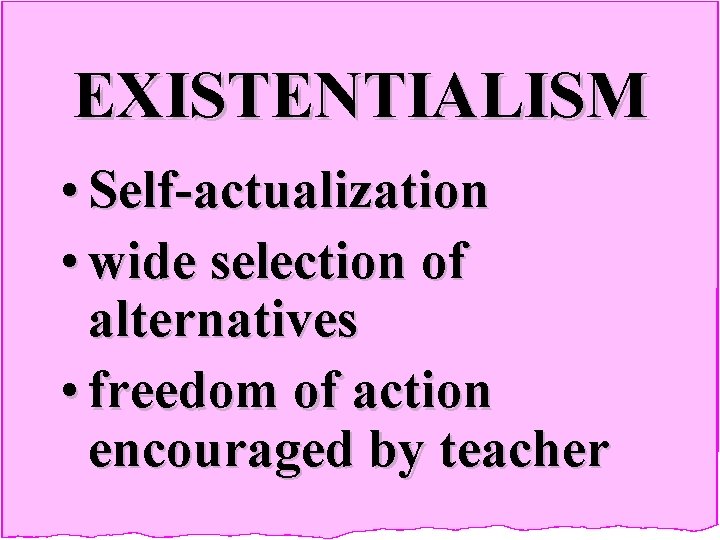
EXISTENTIALISM • Self-actualization • wide selection of alternatives • freedom of action encouraged by teacher
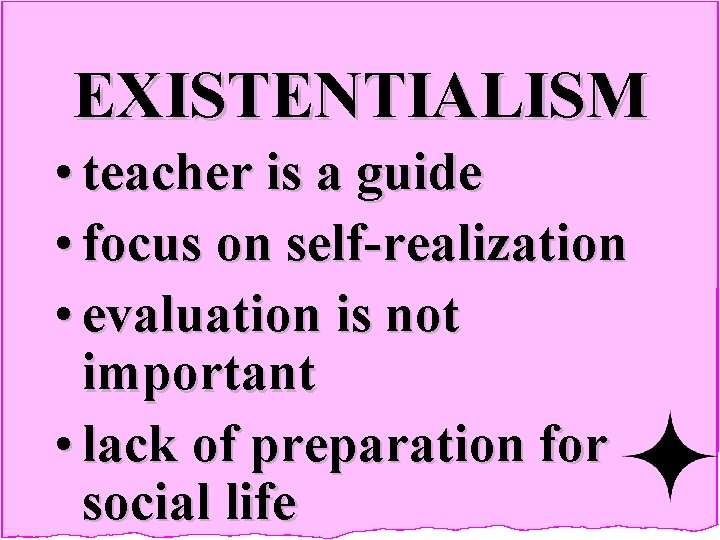
EXISTENTIALISM • teacher is a guide • focus on self-realization • evaluation is not important • lack of preparation for social life