
Definition of Modal Verbs Modal verbs are special

Definition of Modal Verbs • Modal verbs are special verbs which behave irregularly in English. They are different from normal verbs like "work, play, visit. . . " They are used to indicate modality. They give additional information about the function of the main verb that follows it. • We have learned these modal verbs: may/might, can/could, will/would, shall/should, must/can’t
Modal verbs in unit 2 ought to/ought not to have to/don’t have to mustn’t needn’t
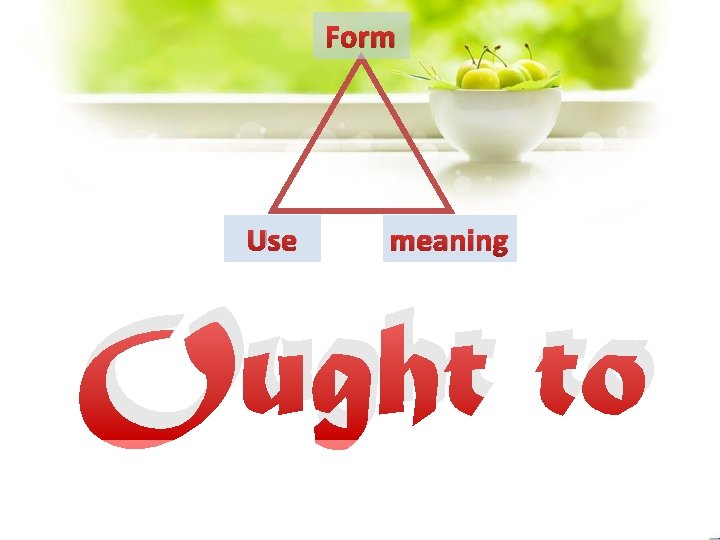
Form Use meaning Ought to

Use

Use Assumption/ Expectation/ Probability

Use Look at these sentences and make a match. Advice Assumption 1. You ought to revise your lessons. 2. He ought to be very tired after such enormous work. 3. More than five years ought to be enough time. 4. They ought to respect the law. 5. you ought to go.

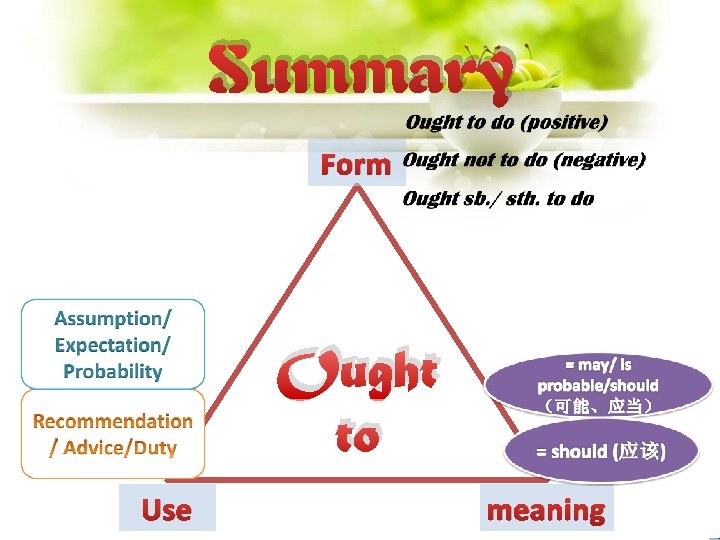
Meaning Assumption/ Expectation/ Probability = may/ is probable/should (可能、应当) A: I wish I could see things clearly in the dark. B: Eating carrots ought to help you see better. You should eat some every day. = should ( 应该) A: What should you do after school? B: I ought to do my homework as soon as I get home.
Please find out the sentence containing “ought to” or “ought not to” in the reading passage on P 10
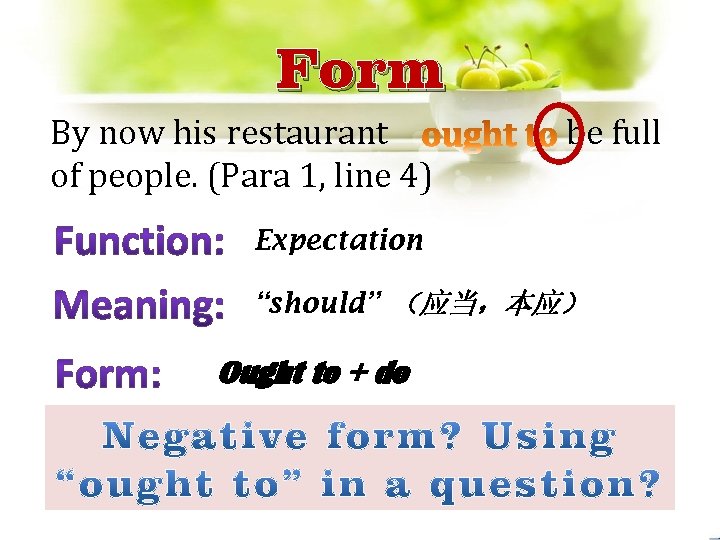
Form By now his restaurant of people. (Para 1, line 4) be full Expectation “should” (应当,本应) Ought to + do

Form You ought not to go there. Ought I to tell her the truth? Ought to do (positive) Ought not to do (negative) Ought sb. / sth. to do
Summary Form Ought to Use meaning

Thank
- Slides: 13