
Definition According to E Geister Manpower planning is




- Slides: 21
Definition: According to E. Geister , “ Manpower planning is the process including forecasting, developing and controlling by which a firm ensures that it has the right number of people and the right kind of people at the right places at the right time doing work for which they are economically most useful. ’’
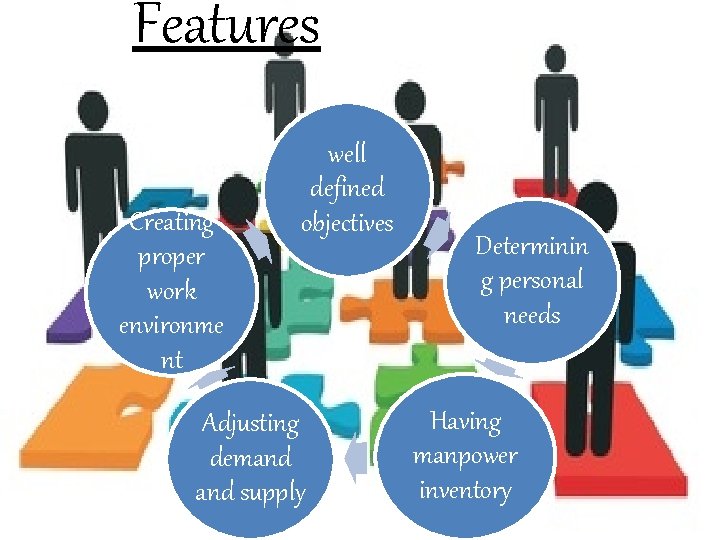
Features Creating proper work environme nt well defined objectives Adjusting demand supply Determinin g personal needs Having manpower inventory
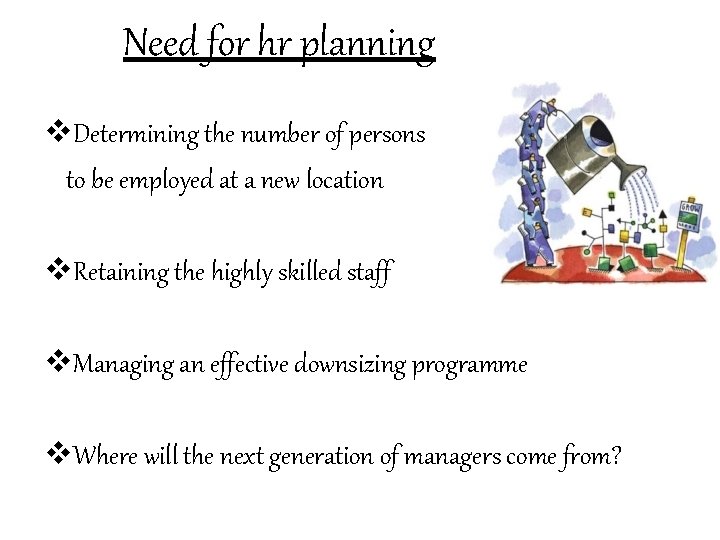
Need for hr planning v. Determining the number of persons to be employed at a new location v. Retaining the highly skilled staff v. Managing an effective downsizing programme v. Where will the next generation of managers come from?
• Optimum utilization of Human Resource. • Meeting personnel requirement § Placement of personnel. § Prevent disruption of work. § Control cost. § Training & management development. § Personnel motivation.
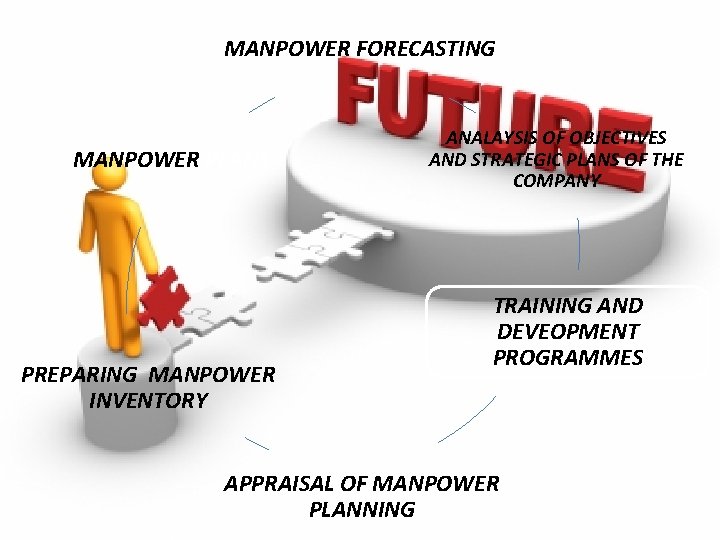
MANPOWER FORECASTING MANPOWER PLANS PREPARING MANPOWER INVENTORY ANALAYSIS OF OBJECTIVES AND STRATEGIC PLANS OF THE COMPANY TRAINING AND DEVEOPMENT PROGRAMMES APPRAISAL OF MANPOWER PLANNING
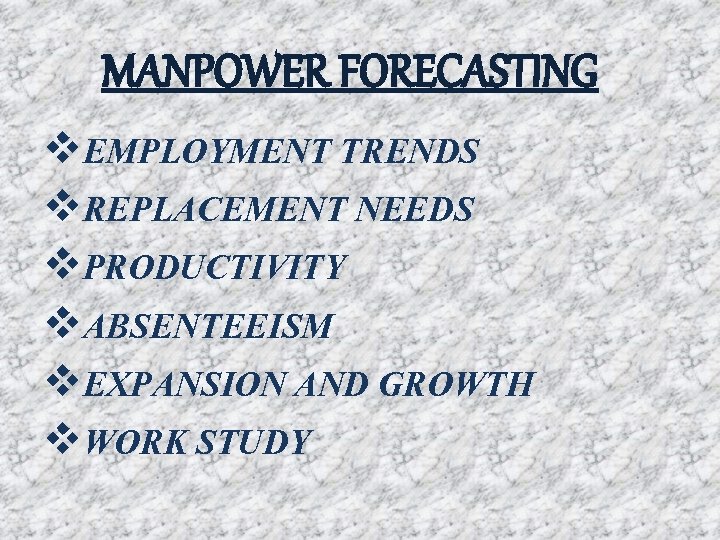
MANPOWER FORECASTING v. EMPLOYMENT TRENDS v. REPLACEMENT NEEDS v. PRODUCTIVITY v. ABSENTEEISM v. EXPANSION AND GROWTH v. WORK STUDY
FACTORS AFFECTING HR PLANNING v. EXISTING STOCK OF MANPOWER v. WASTAGE v. FUTURE MANPOWER REQUIREMENT
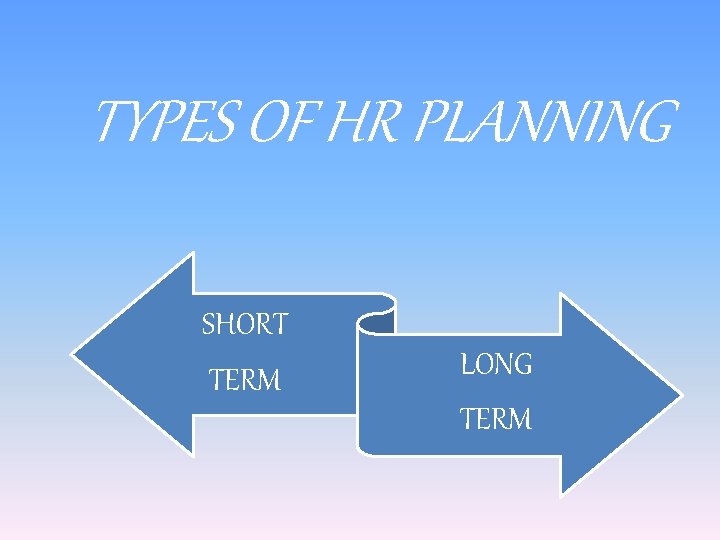
TYPES OF HR PLANNING SHORT TERM LONG TERM
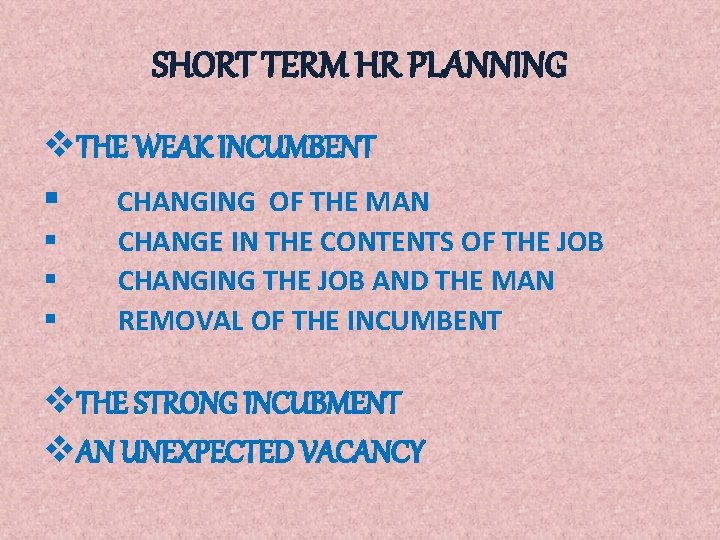
SHORT TERM HR PLANNING v. THE WEAK INCUMBENT § CHANGING OF THE MAN § § § CHANGE IN THE CONTENTS OF THE JOB CHANGING THE JOB AND THE MAN REMOVAL OF THE INCUMBENT v. THE STRONG INCUBMENT v. AN UNEXPECTED VACANCY
LONG TERM HR PLANNING v. PROJECTING MAN POWER REQUIREMENTS v TAKING STOCK OF EXISTING MANPOWER v RECRUITMENT AND SELECTION v MANPOWER DEVELOPMENT
LEVELS OF HUMAN RESOURCE PLANNING
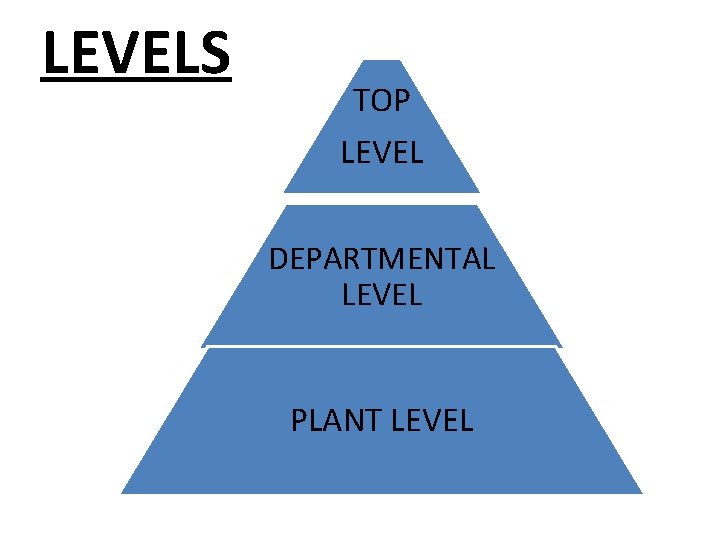
LEVELS TOP LEVEL DEPARTMENTAL LEVEL PLANT LEVEL
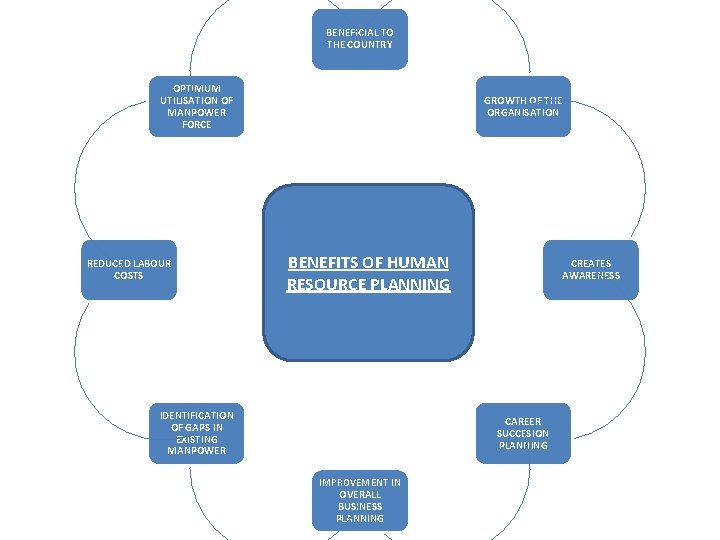
BENEFICIAL TO THE COUNTRY OPTIMUM UTILISATION OF MANPOWER FORCE REDUCED LABOUR COSTS GROWTH OF THE ORGANISATION BENEFITS OF HUMAN RESOURCE PLANNING IDENTIFICATION OF GAPS IN EXISTING MANPOWER CREATES AWARENESS CAREER SUCCESION PLANNING IMPROVEMENT IN OVERALL BUSINESS PLANNING
PROBLEMS IN HUMAN RESOURCE PLANNING: • • • Accuracy of forecasts identity crisis Support of top management resistance from employees insufficient initial efforts management information system uncertainties expensive & time consuming coordination with other managerial function unbalanced approach
SUGGESTIONS FOR MAKING HUMAN RESOURCE PLANNING EFFECTIVE 1. 2. 3. 4. 5. 6. 7. Integration with organizational plans Period of manpower planning Proper organization Support of top management Involvement of top management Efficient and reliable information system Balanced approach
ORGANISATION SHOULD: § Assess their current needs § Matching § Develop a plan
IMPORTANCE • • • Ensures of having a plan Continuous supply of people Alignment Develop career paths External reputation
• • Size of the organization Lack of financial resources The nature of funding Project staff Less skill with seniors Inadequate training Poor communication Does not promote people in time
COMPONENTS : 1. Capacity and needs assessment 2. Develop and implement the plan 3. Monitor and manage the plan TIPS FOR SUCCESSFUL SUCCESSION PLANNING : § Secure senior management § Review and update § Develop procedural manuals