
Definiteness and indefiniteness markers Definite article al The
- Slides: 28
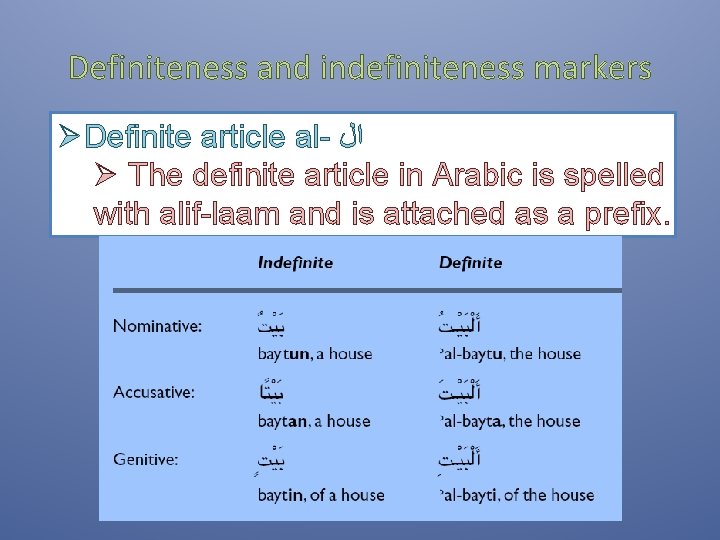
Definiteness and indefiniteness markers ØDefinite article al- ﺍﻝ Ø The definite article in Arabic is spelled with alif-laam and is attached as a prefix.
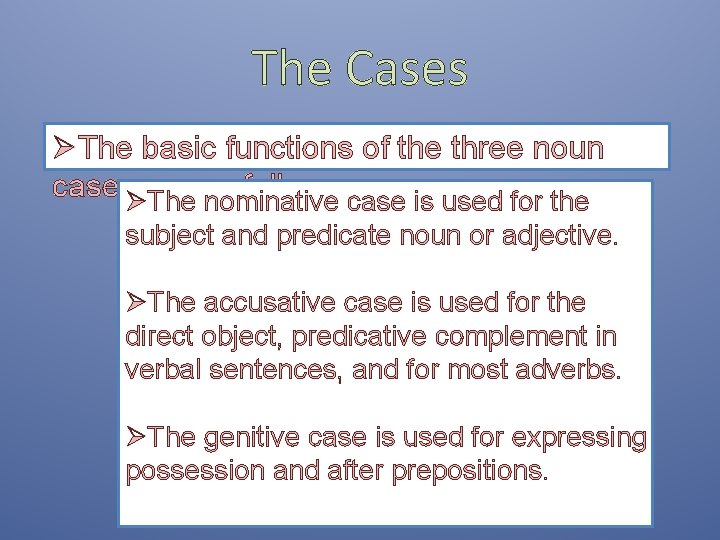
The Cases ØThe basic functions of the three noun casesØare follows: case is used for the The as nominative subject and predicate noun or adjective. ØThe accusative case is used for the direct object, predicative complement in verbal sentences, and for most adverbs. ØThe genitive case is used for expressing possession and after prepositions.
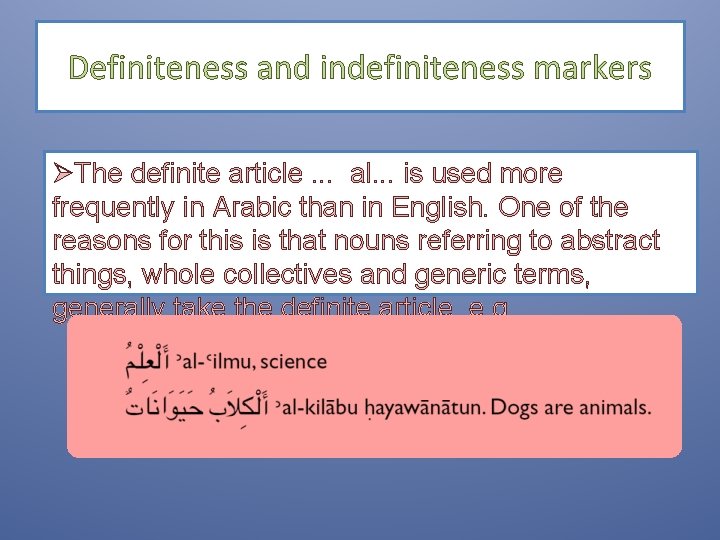
Definiteness and indefiniteness markers ØThe definite article. . . al. . . is used more frequently in Arabic than in English. One of the reasons for this is that nouns referring to abstract things, whole collectives and generic terms, generally take the definite article, e. g.
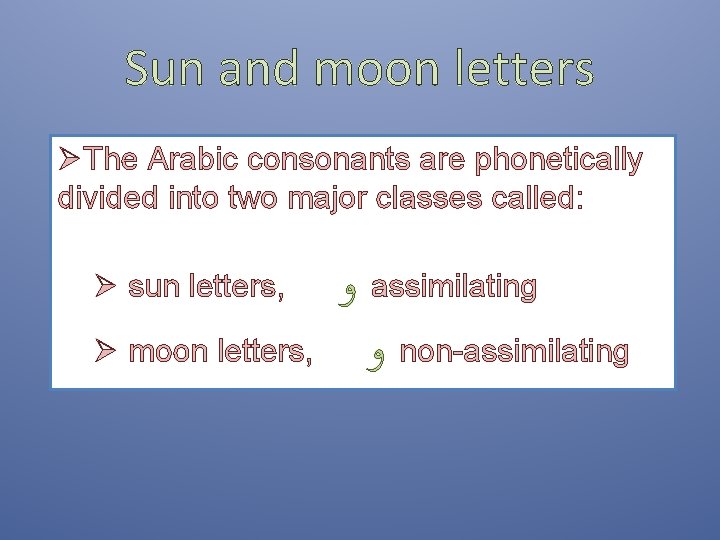
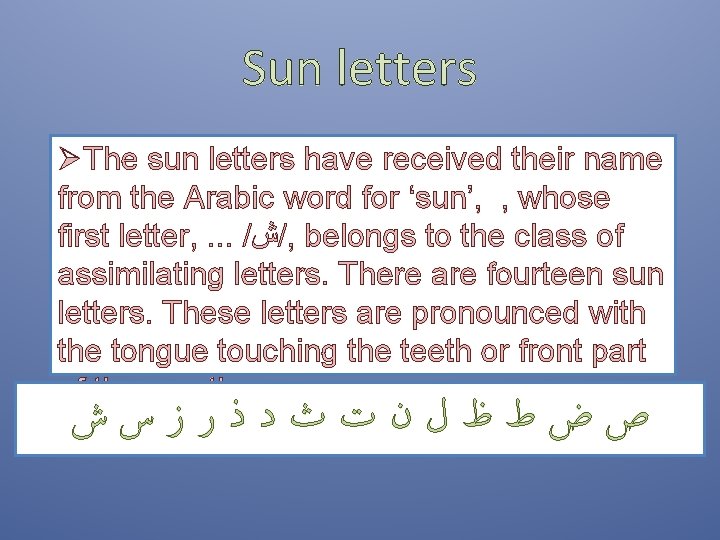
Sun and moon letters ØThe Arabic consonants are phonetically divided into two major classes called: Ø sun letters, Ø moon letters, ﻭ assimilating ﻭ non-assimilating
Sun letters ØThe sun letters have received their name from the Arabic word for ‘sun’, , whose first letter, . . . / ﺵ /, belongs to the class of assimilating letters. There are fourteen sun letters. These letters are pronounced with the tongue touching the teeth or front part of the mouth: ﺹﺽﻁﻅﻝﻥﺕﺙﺩﺫﺭﺯﺱﺵ
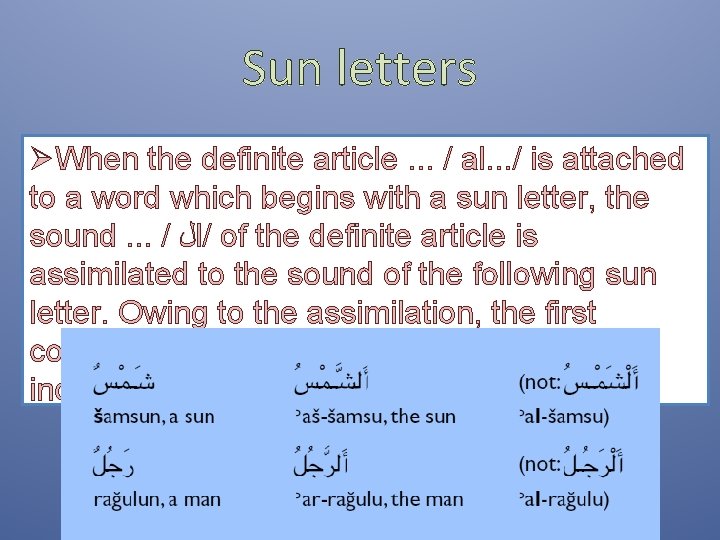
Sun letters ØWhen the definite article. . . / al. . . / is attached to a word which begins with a sun letter, the sound. . . / ﻝ l/ of the definite article is assimilated to the sound of the following sun letter. Owing to the assimilation, the first consonant of the word is doubled, which is indicated by a şaddah above it.
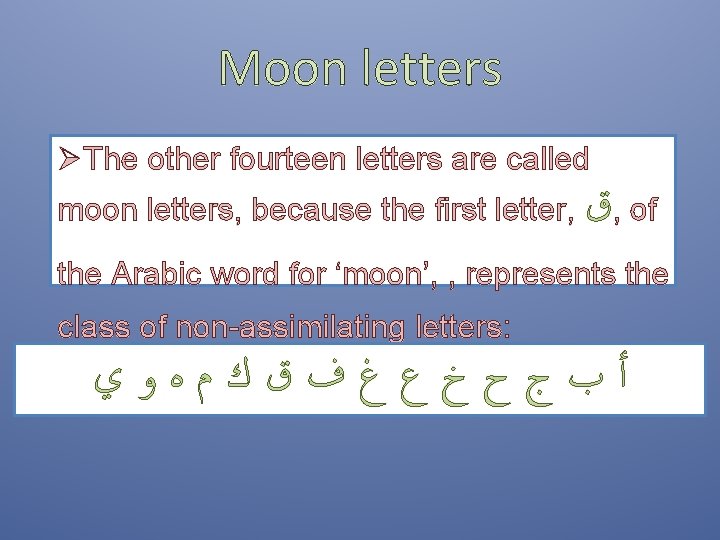
Moon letters ØThe other fourteen letters are called moon letters, because the first letter, ﻕ , of the Arabic word for ‘moon’, , represents the class of non-assimilating letters: ﺃﺏﺝﺡﺥﻉﻍﻑﻕﻙﻡﻩﻭﻱ
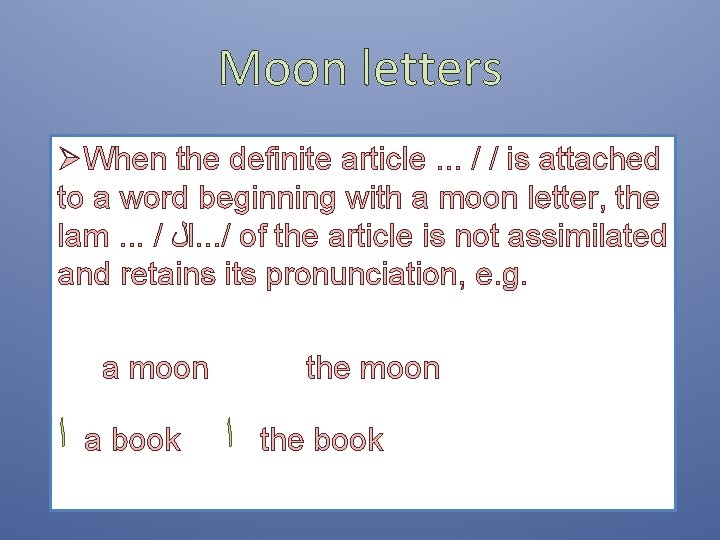
Moon letters ØWhen the definite article. . . / / is attached to a word beginning with a moon letter, the lam. . . / ﻝ l. . . / of the article is not assimilated and retains its pronunciation, e. g. a moon ﺍ a book ﺍ the moon the book
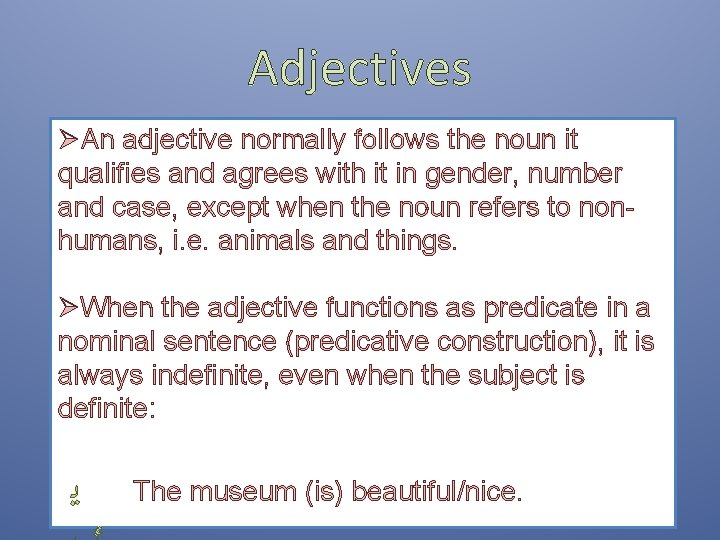
Adjectives ØAn adjective normally follows the noun it qualifies and agrees with it in gender, number and case, except when the noun refers to nonhumans, i. e. animals and things. ØWhen the adjective functions as predicate in a nominal sentence (predicative construction), it is always indefinite, even when the subject is definite: ﻳ The museum (is) beautiful/nice.
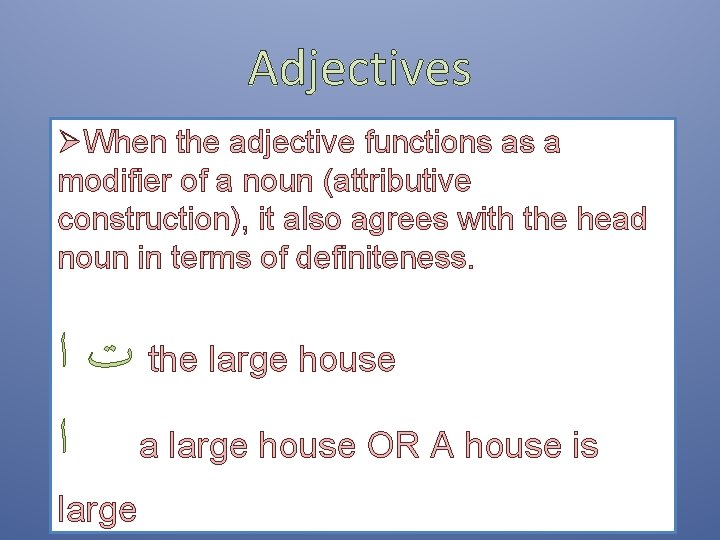
Adjectives ØWhen the adjective functions as a modifier of a noun (attributive construction), it also agrees with the head noun in terms of definiteness. ﺕ ﺍ the large house ﺍ a large house OR A house is large
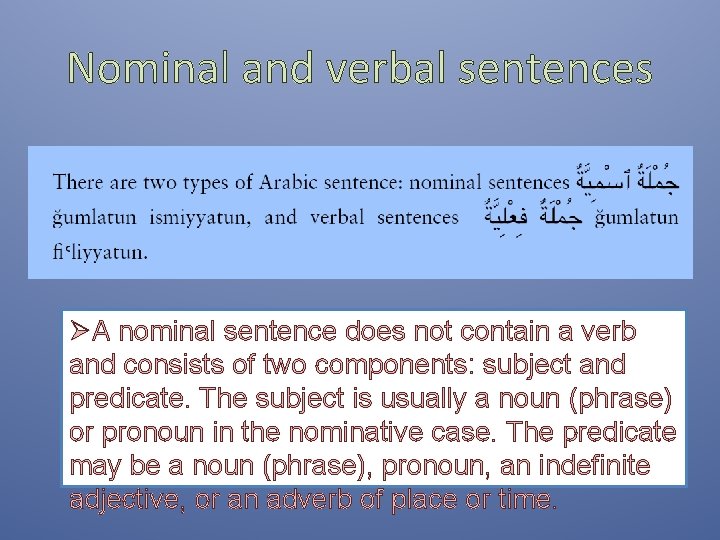
Nominal and verbal sentences ØA nominal sentence does not contain a verb and consists of two components: subject and predicate. The subject is usually a noun (phrase) or pronoun in the nominative case. The predicate may be a noun (phrase), pronoun, an indefinite adjective, or an adverb of place or time.
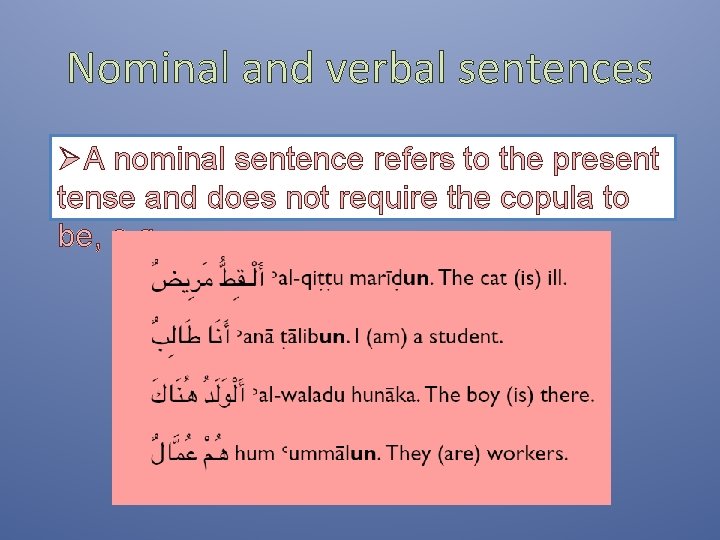
Nominal and verbal sentences ØA nominal sentence refers to the present tense and does not require the copula to be, e. g.
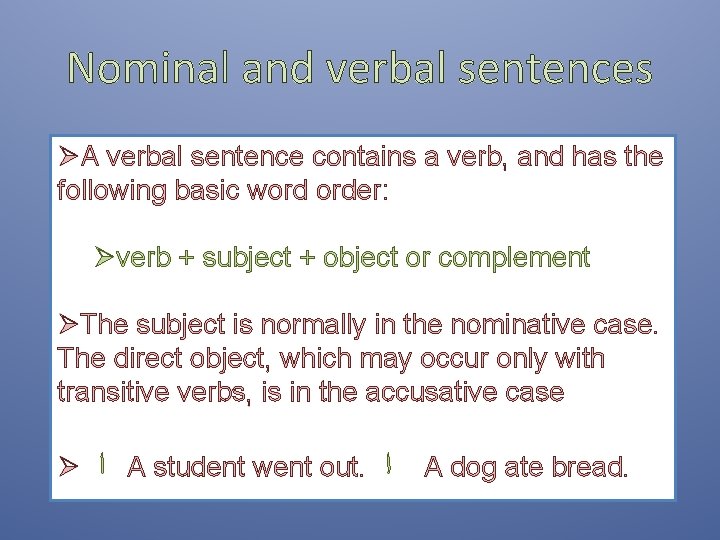
Nominal and verbal sentences ØA verbal sentence contains a verb, and has the following basic word order: Øverb + subject + object or complement ØThe subject is normally in the nominative case. The direct object, which may occur only with transitive verbs, is in the accusative case Ø ﺍ A student went out. ﺍ A dog ate bread.
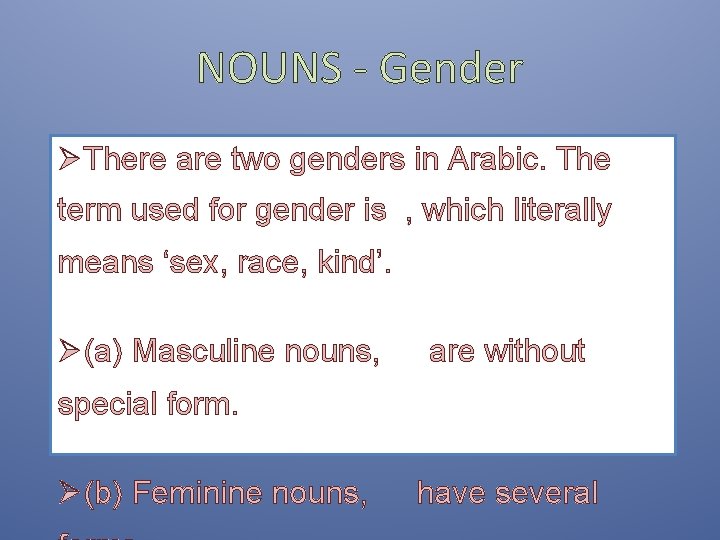
NOUNS - Gender ØThere are two genders in Arabic. The term used for gender is , which literally means ‘sex, race, kind’. Ø(a) Masculine nouns, are without special form. Ø(b) Feminine nouns, have several
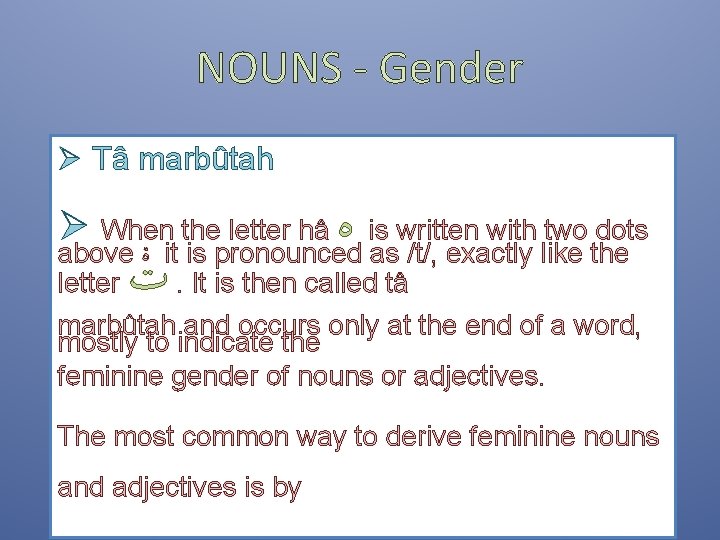
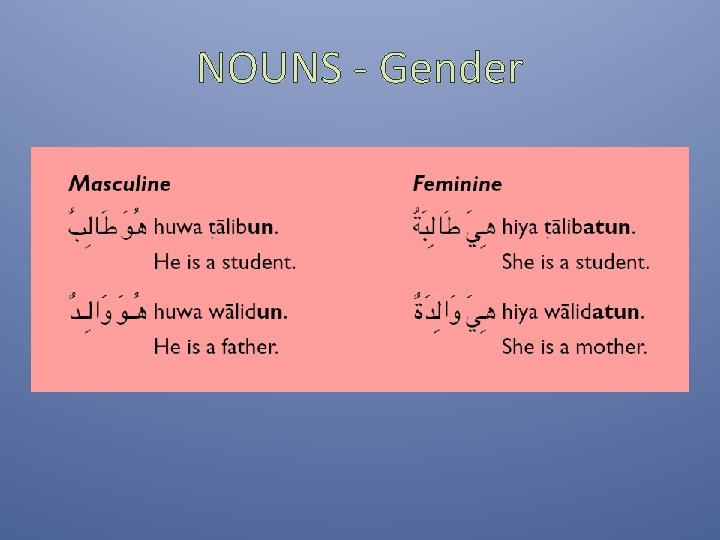
NOUNS - Gender Ø Tâ marbûtah Ø When the letter hâ ﻩ is written with two dots above ﺓ it is pronounced as /t/, exactly like the letter. It is then called tâ ﺕ marbûtah and occurs only at the end of a word, mostly to indicate the feminine gender of nouns or adjectives. The most common way to derive feminine nouns and adjectives is by
NOUNS - Gender
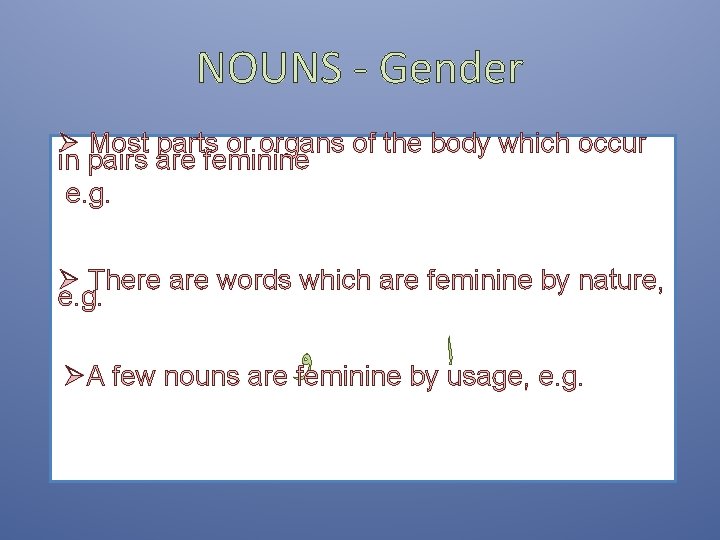
NOUNS - Gender Ø Most parts or organs of the body which occur in pairs are feminine e. g. Ø There are words which are feminine by nature, e. g. ﻭ ﺍ ØA few nouns are feminine by usage, e. g.
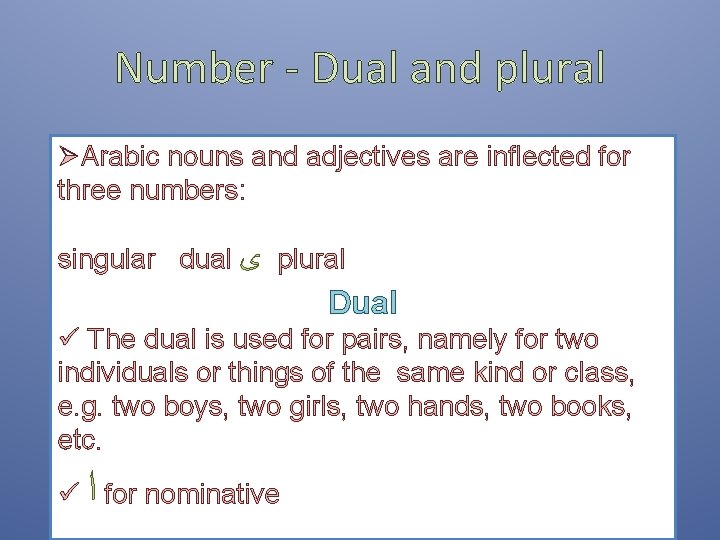
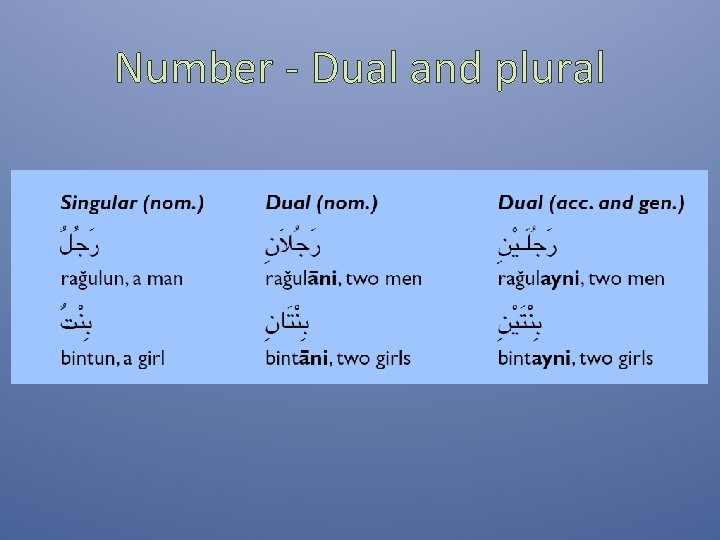
Number - Dual and plural ØArabic nouns and adjectives are inflected for three numbers: singular dual ﻯ plural Dual ü The dual is used for pairs, namely for two individuals or things of the same kind or class, e. g. two boys, two girls, two hands, two books, etc. ﺍ ü for nominative
Number - Dual and plural
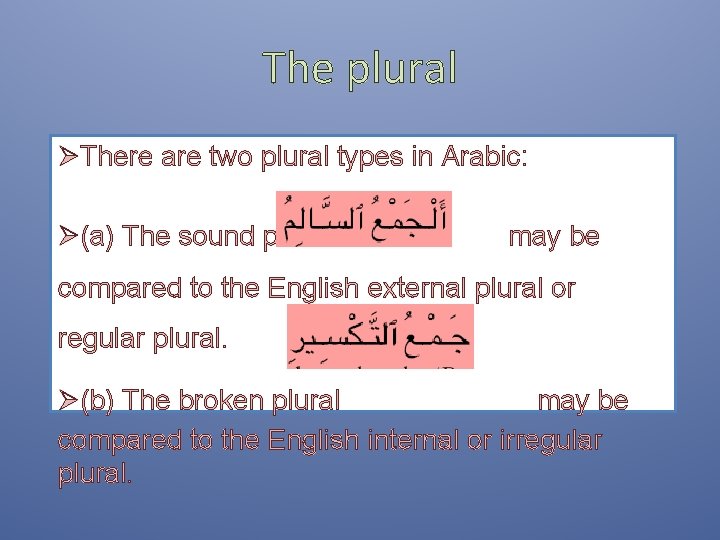
The plural ØThere are two plural types in Arabic: Ø(a) The sound plural may be compared to the English external plural or regular plural. Ø(b) The broken plural may be compared to the English internal or irregular plural.
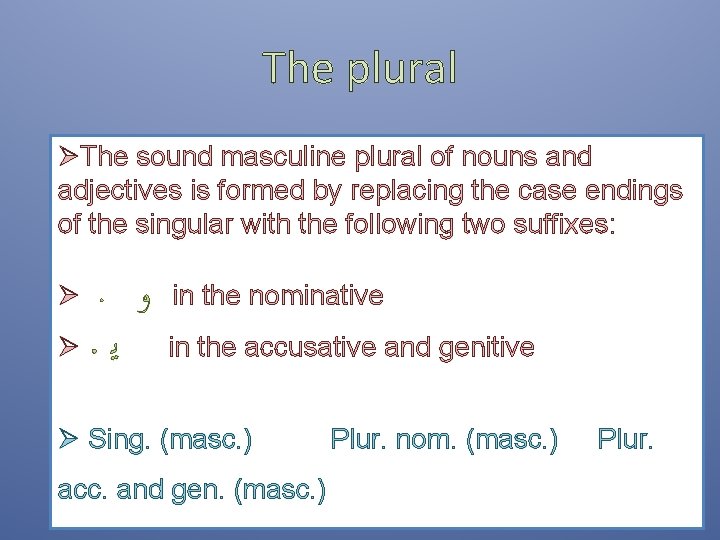
The plural ØThe sound masculine plural of nouns and adjectives is formed by replacing the case endings of the singular with the following two suffixes: Ø . ﻭ Ø. ﻳ in the nominative in the accusative and genitive Ø Sing. (masc. ) acc. and gen. (masc. ) Plur. nom. (masc. ) Plur.
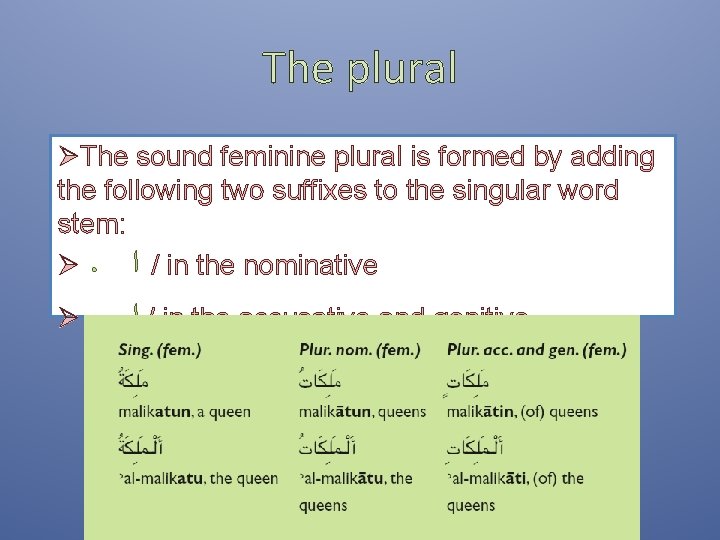
The plural ØThe sound feminine plural is formed by adding the following two suffixes to the singular word stem: Ø. ﺍ / in the nominative Ø. ﺍ / in the accusative and genitive
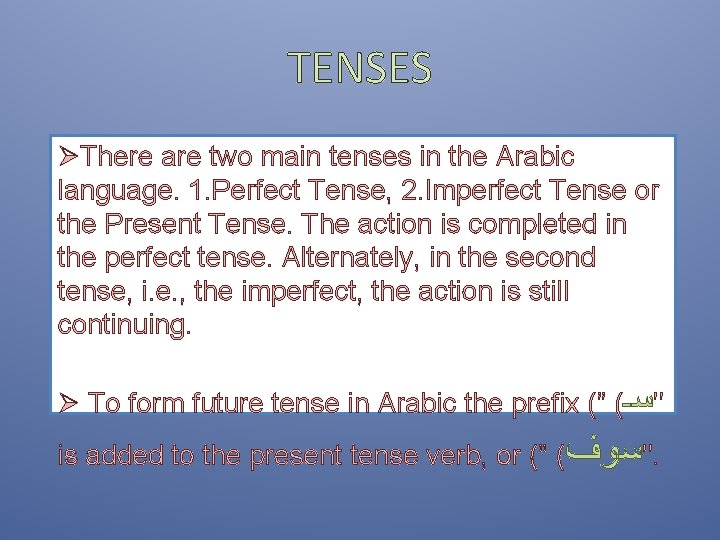
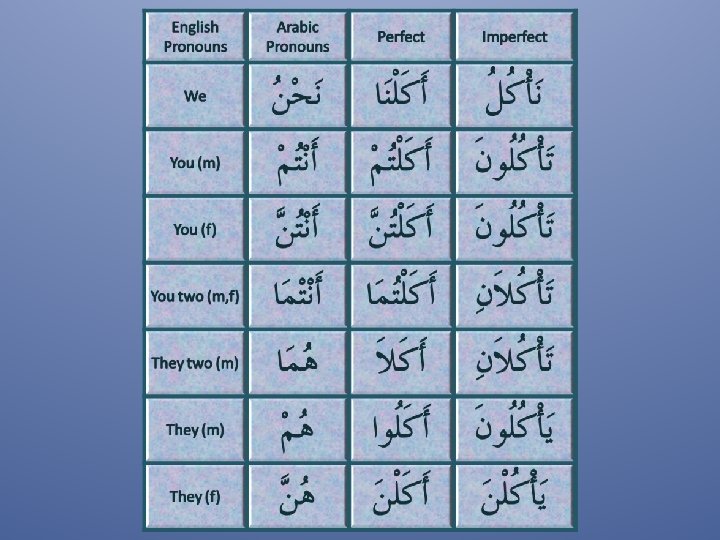
TENSES ØThere are two main tenses in the Arabic language. 1. Perfect Tense, 2. Imperfect Tense or the Present Tense. The action is completed in the perfect tense. Alternately, in the second tense, i. e. , the imperfect, the action is still continuing. Ø To form future tense in Arabic the prefix (” ( "ﺳـ is added to the present tense verb, or (” ( "ﺳﻮﻑ.
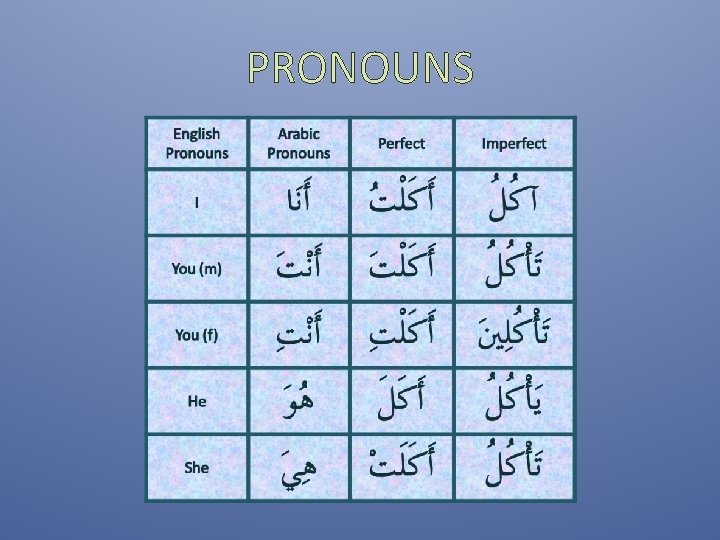
PRONOUNS
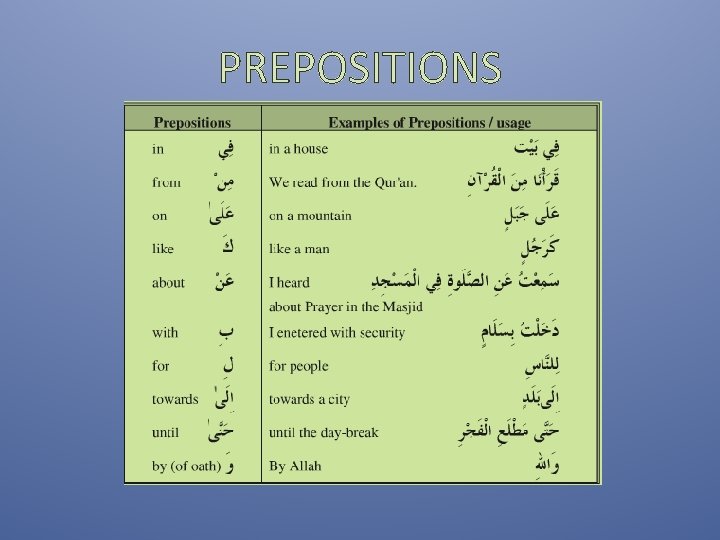
PREPOSITIONS
Resources Ø Books § Arabic – Verbs and Essentials of Grammar / Jane Wightwick, Mahmud Gaafar § Arabic: An Essential Grammar / Faruk Abu-Chacra § Easy Arabic Grammar / Jane Wightwick, Mahmud Gaafar § A Reference Grammar of Modern Standard Arabic / KARIN C. RYDING Ø Websites § http: //arabic. tripod. com/ § http: //www. languageguide. org/arabic/ § http: //www. arabic-language. org/