
Defining Projects and Project Management 1 DEFINITION OF

- Slides: 24
Defining Projects and Project Management
1. DEFINITION OF A PROJECT: To fulfil Strategic needs. Time, cost & quality bound operation. Not normal routine activities. With unique associated complexity, risks & challenges Irreversible process in oil & Gas sector, because of associated high value. Linked activities in organised manner. Clear start and end points. It has variables like technology, cost, time, quality, locations, markets, feed stocks, environmental and political issues etc.
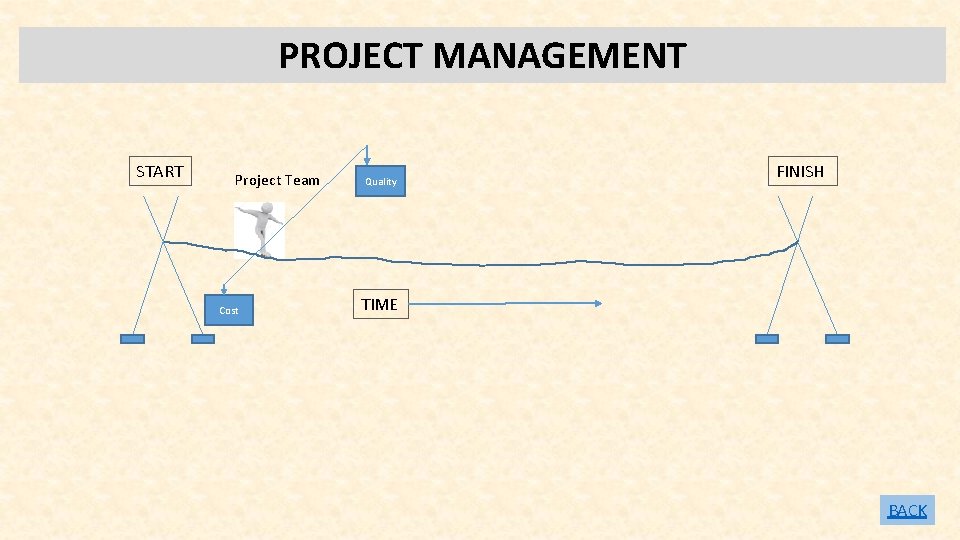
2. DEFINITION OF PROJECT MANAGEMENT: A dynamic process To achieve some defined objectives, identified as strategic needs Flip side, a journey on a ropeway for a goal, balancing oneself from a possible fall Utilizes optimum resources, in a structured and controlled manner. Needs sets of special knowledge, experience, skills and competencies.
3. MAIN STAKE HOLDERS OF A PROJECT IN OIL & GAS SECTOR: Ministry/Share holders Client/Owner (PSU/ Private/JV/SPV) PMC/ FETC/Consultant Contractors/ Vendors/Suppliers.
4. ROLES OF CLIENT: Visualisation of business case, pre-FR, Market study, Proposal, 1 st stage approval Project planning, Project Charter, Resource plan, Risk identification & mitigation plan Cost estimation within accuracy of +/- 20% to +/-25% Execute DFR & through specialized consultant DFR to re-estimate cost within accuracy of +/- 15% to +/- 20% Financing strategy (Internal, FIs, market etc. ) Formulation of Bidding strategy and preparation of commercial bidding document Formulation of HSE policy, Site selection, Data collection, Surveys, statutory approvals
4. ROLES OF CLIENT: …. (CONTINUED) Final Proposal and 2 nd Stage approval. (Zero- Date) Financial closure Project execution: appoint PMC, Bidding, ordering, review of engineering (operational) Project administration: monitoring, controlling, reporting, risk management Create synergy amongst the stake holders Project closure, reconciliation, financial auditing, documentations, & Completion report
5. ROLE OF PMC: Preparation of FEED/Process package, Basic engineering, detailed engineering Re-estimation within accuracy of +/- 10% to +/-15% Review of engineering done by Contractors/Suppliers Quality control of Materials, Works and Services of the Contractors/Suppliers Expediting, Controlling, Monitoring on behalf of Client and Reporting Ensuring compliance Project objectives, Performances of systems Assistance to Client for Project closure Expectation of Client: Protection of Project interest Alignment with Project objectives, goals & missions of Client
6. ROLES OF CONTRACTORS/ SUPPLIERS: Residual & Detailed engineering Conversion of designs/drawings into reality within a given cost, time & quality Procurement of all Project components except FIMs if any Construction, erection, testing, commissioning, and post commissioning services Expectation of Client: Compliances of local rules, regulations, applicable laws & HSE policy Avoidance of time over run and minimum deviation to Contract Alignment with the Project requirements, systems and procedures Satisfactory post commissioning services Golden hand shaking at Project closure
7. PROJECT TEAM: Strong sense of commitment, proactive approach and passion Immaculate planning Performance orientation and ability to take timely decision Courage to face obstacles of normal systems and procedures of the Company Effective team building and leadership qualities Strong commercial and business sense and understanding of business drivers Effective monitoring and reporting skill Managing both internal and external environment and influencing skill. Concern for HSE and CSR Transparency Strong sense of humour.
8. PROJECT CHARTER: Constitution of a Project Objective, Vision, missions, Implementation plan, and Structure of the Project Scopes, Deliverables, Roles & responsibilities, Stake holder’s participation, Resources, Financial plans, Quality plans, Battery limits, Schedules, etc Approval of Top Management/ Project Sponsor before execution stage
9. BIDDING PROCESS & DOCUMENTS: ICB, Domestic, Open, Limited, Nomination ( Governed by organisational and FIs practice) Fully engineered, FEED based, Functional spec. Based (Driven by schedule, Client’s team) Commercial: NIT, ITB, GCC, SOP, Schedule, Formats (Client and FIs systems driven) Technical: Process package, Job spec, General spec & PGs (Nature of Project driven) Bid Qualification and Evaluation criteria(Client & FIs driven: Important for PSU organisation)
10. CONTRACT APPROACH: Conventional(Engineering by PMC; Procurement by Owner/PMC, Construction by Contractors) Cost Reimbursable Fully reimbursable. (Cost plus basis: PMC) Reimbursable with maximum cap. (Cost plus basis: PMC) Fully reimbursable with incentive/penalty scheme (Cost reduction in new era) Reimbursable conversion to LSTK upon design definition. Unit rate based Lump Sum Services. (PMC) Lump Sum Turnkey (LSTK) / EPC LSTK + FIM
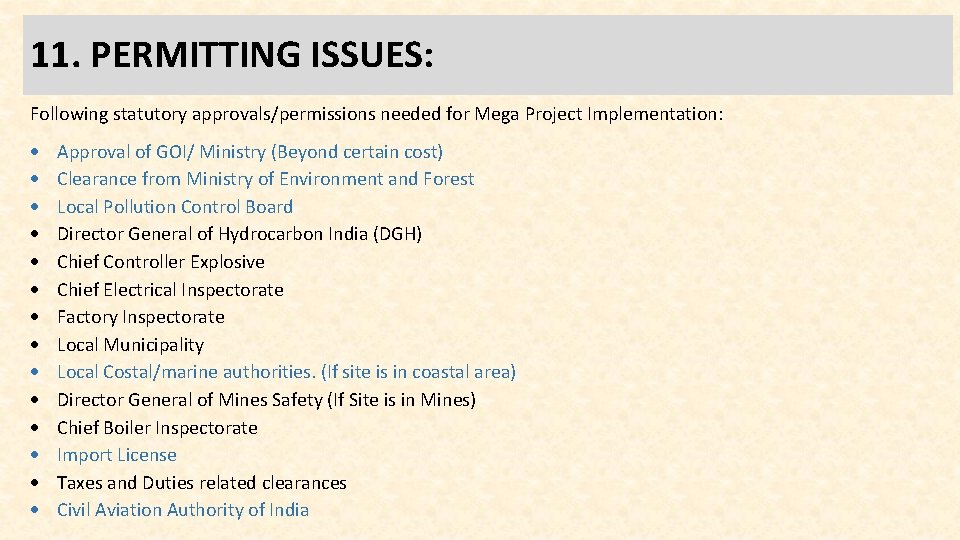
11. PERMITTING ISSUES: Following statutory approvals/permissions needed for Mega Project Implementation: Approval of GOI/ Ministry (Beyond certain cost) Clearance from Ministry of Environment and Forest Local Pollution Control Board Director General of Hydrocarbon India (DGH) Chief Controller Explosive Chief Electrical Inspectorate Factory Inspectorate Local Municipality Local Costal/marine authorities. (If site is in coastal area) Director General of Mines Safety (If Site is in Mines) Chief Boiler Inspectorate Import License Taxes and Duties related clearances Civil Aviation Authority of India
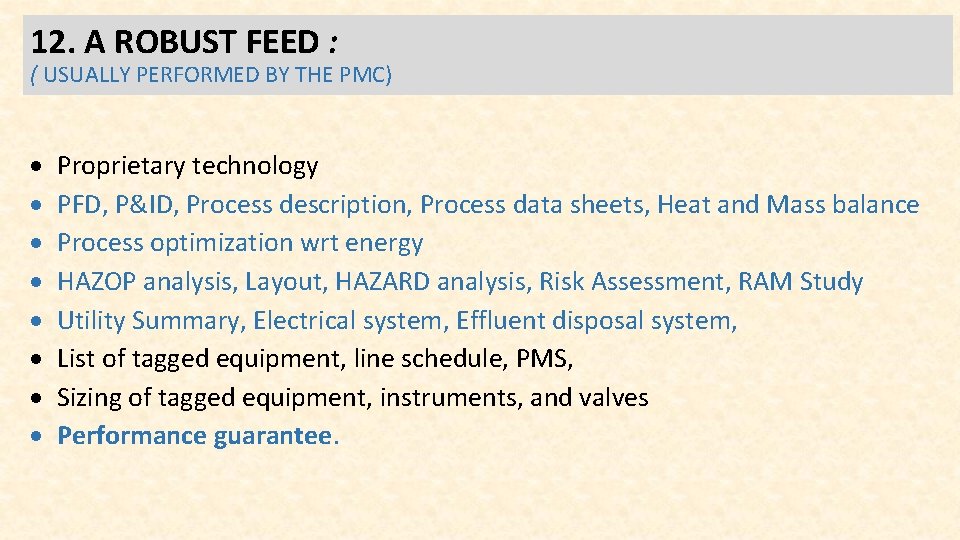
12. A ROBUST FEED : ( USUALLY PERFORMED BY THE PMC) Proprietary technology PFD, P&ID, Process description, Process data sheets, Heat and Mass balance Process optimization wrt energy HAZOP analysis, Layout, HAZARD analysis, Risk Assessment, RAM Study Utility Summary, Electrical system, Effluent disposal system, List of tagged equipment, line schedule, PMS, Sizing of tagged equipment, instruments, and valves Performance guarantee.
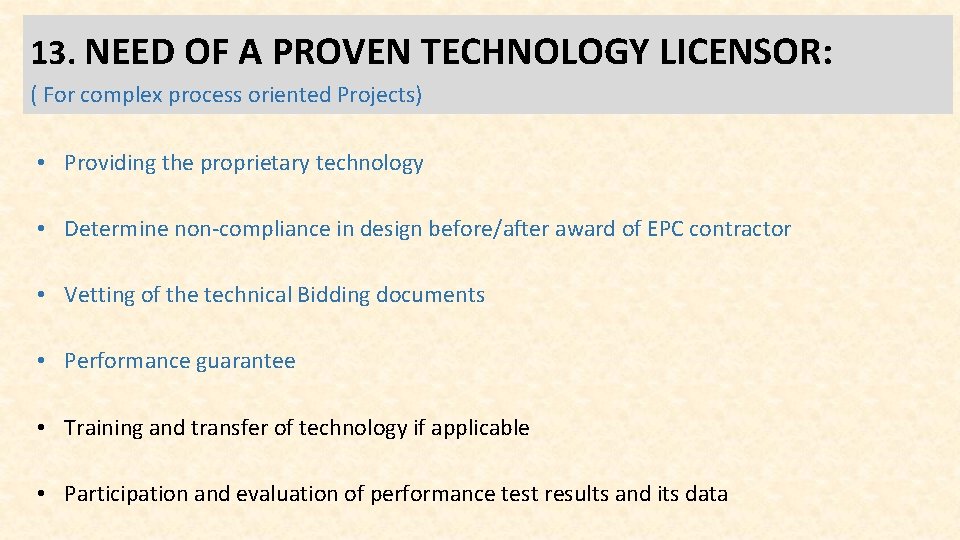
13. NEED OF A PROVEN TECHNOLOGY LICENSOR: ( For complex process oriented Projects) • Providing the proprietary technology • Determine non-compliance in design before/after award of EPC contractor • Vetting of the technical Bidding documents • Performance guarantee • Training and transfer of technology if applicable • Participation and evaluation of performance test results and its data
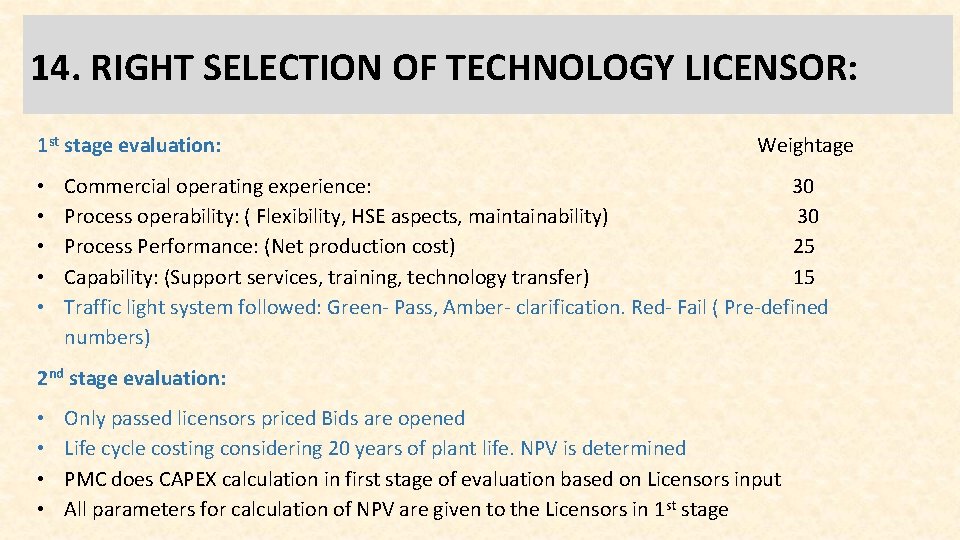
14. RIGHT SELECTION OF TECHNOLOGY LICENSOR: 1 st stage evaluation: • • • Weightage Commercial operating experience: 30 Process operability: ( Flexibility, HSE aspects, maintainability) 30 Process Performance: (Net production cost) 25 Capability: (Support services, training, technology transfer) 15 Traffic light system followed: Green- Pass, Amber- clarification. Red- Fail ( Pre-defined numbers) 2 nd stage evaluation: • • Only passed licensors priced Bids are opened Life cycle costing considering 20 years of plant life. NPV is determined PMC does CAPEX calculation in first stage of evaluation based on Licensors input All parameters for calculation of NPV are given to the Licensors in 1 st stage
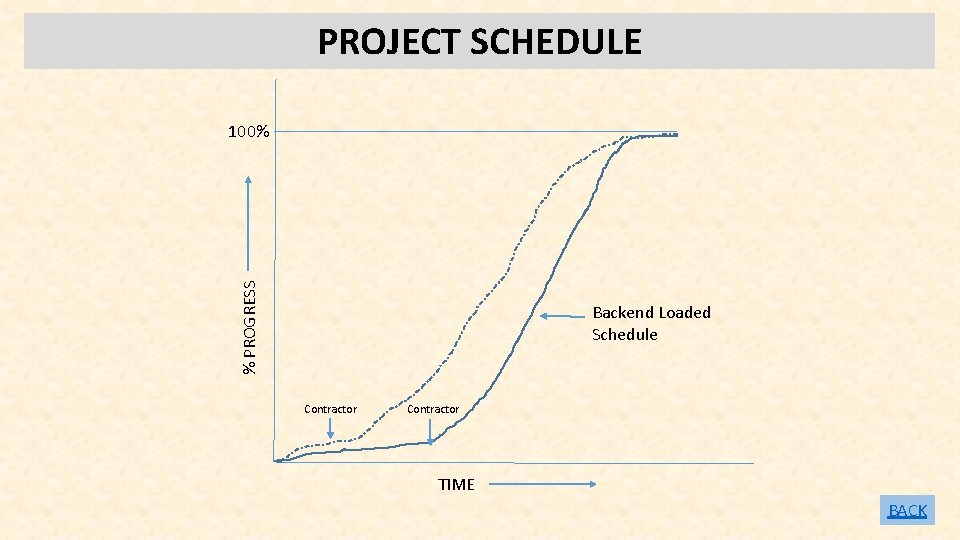
15. HURDLES AND AREAS OF CONCERN: • • • Jacketing of implementation activities into normal systems and procedures Inadequate planning leading to mismatch of sequences Un realistic and backend loaded schedule Un realistic cost estimation and escalation due to delay Selection of incompetent contractors/ suppliers Delayed land acquisition and statutory approvals Lack of synergy amongst Project stake holders Lack of CSR and image building Lack of transparency/indifferent attitude in bidding and contract administration Inadequate delegation of powers to the Project authorities/Sponsor Political banana skin
16. KEY PERFORMANCE INDICATOR (KPI): • Timeliness: Cycle time, on time percentage completion, No. of schedule adjustment • Budget: Variance, Utilisation, Revisions • Quality: Errors, Reworks, Non-fulfilment of commitments, Deviations • Effectiveness: Number of Milestones completed in time, Number of returns of materials, Training, Near misses, number of accidents, conflicts with local populations, Conflicts with Project stake holders.
17. KEY RESULT AREA (KRA): • Deliver value based business results • Project Plan driven • To deliver defined requirements within a given cost and time
18. SEVEN HABITS OF HIGHLY IN-EFFECTIVE PROJECT MANAGER: 1. 2. 3. 4. 5. 6. 7. Motivate by intimidation Not knowing the team members Not being open to ideas Creating a negative work environment Procrastination Viewing themselves as only decision maker Not communicating performance expectation
“VICTORY HAS A THOUSAND FATHERS BUT DEFEAT IS AN ORPHAN” -John. F. Kennedy. “LOSS OF WAR IS A CRIME”
THANK YOU
PROJECT MANAGEMENT START Project Team Cost Quality FINISH TIME BACK
PROJECT SCHEDULE % PROGRESS 100% Backend Loaded Schedule Contractor TIME BACK