
Defining Performance and Choosing a Measurement Approach Overview
- Slides: 28
Defining Performance and Choosing a Measurement Approach
Overview Defining Performance Ø Determinants of Performance Ø Performance Dimensions Ø Approaches to Measuring Performance Ø
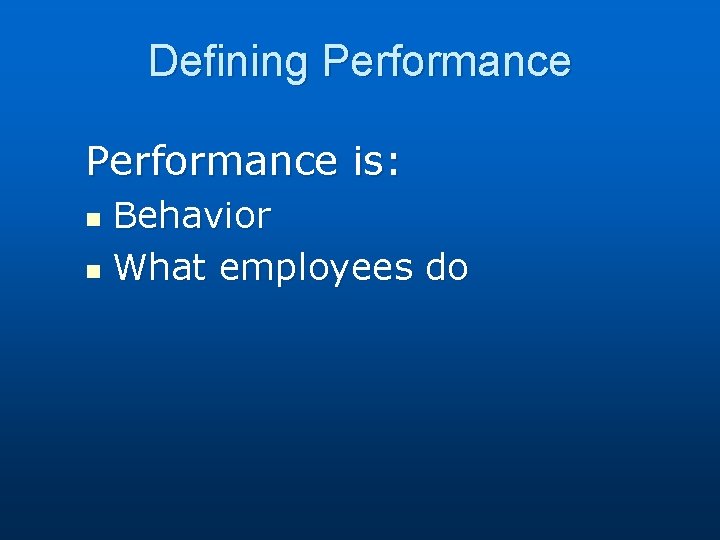
Defining Performance is: Behavior n What employees do n
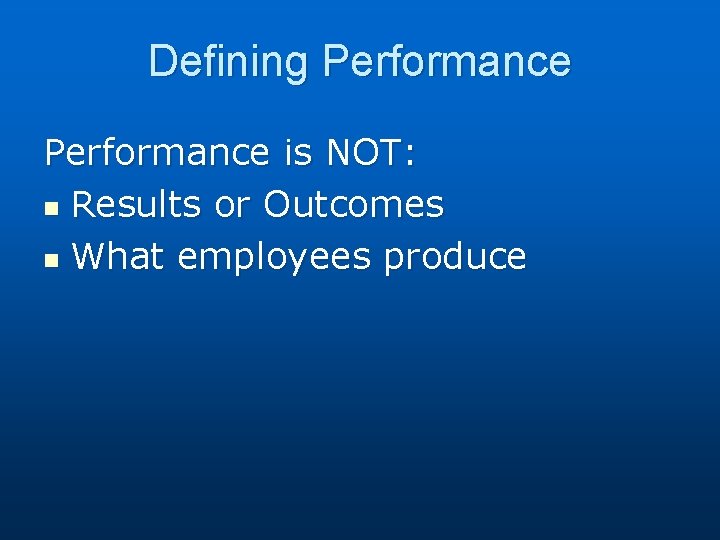
Defining Performance is NOT: n Results or Outcomes n What employees produce
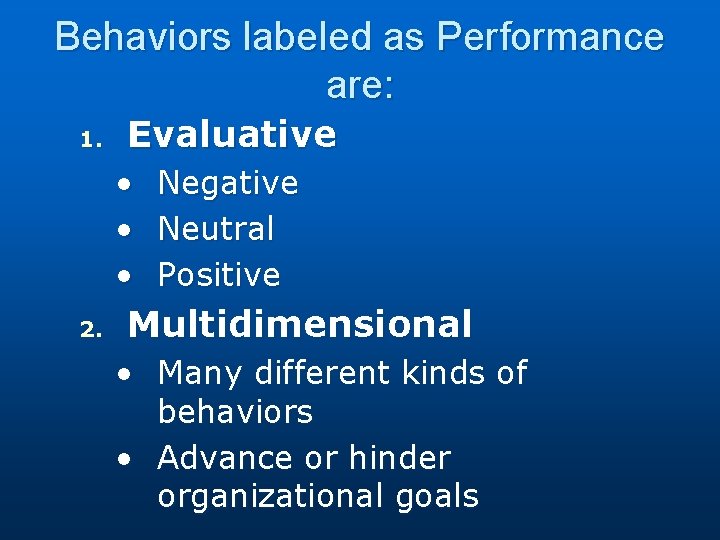
Behaviors labeled as Performance are: 1. Evaluative • Negative • Neutral • Positive 2. Multidimensional • Many different kinds of behaviors • Advance or hinder organizational goals
Behaviors are Not always • Observable • Measurable
Results/Consequences may be used • To infer behavior • As proxy for behavioral measure
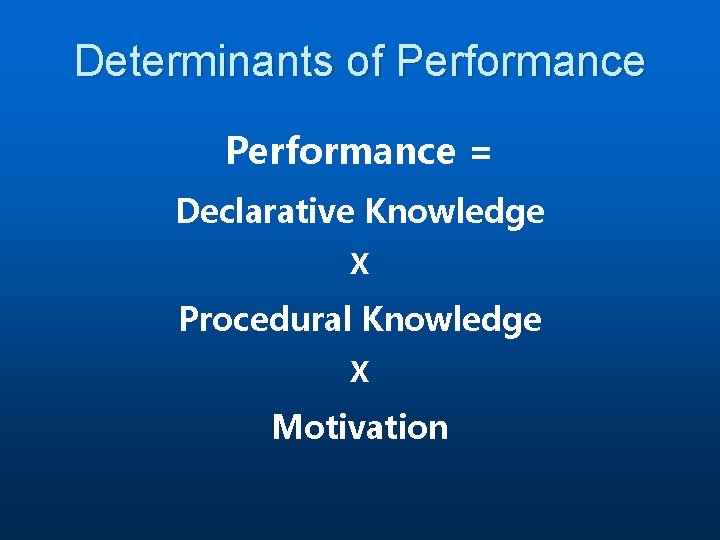
Determinants of Performance = Declarative Knowledge X Procedural Knowledge X Motivation
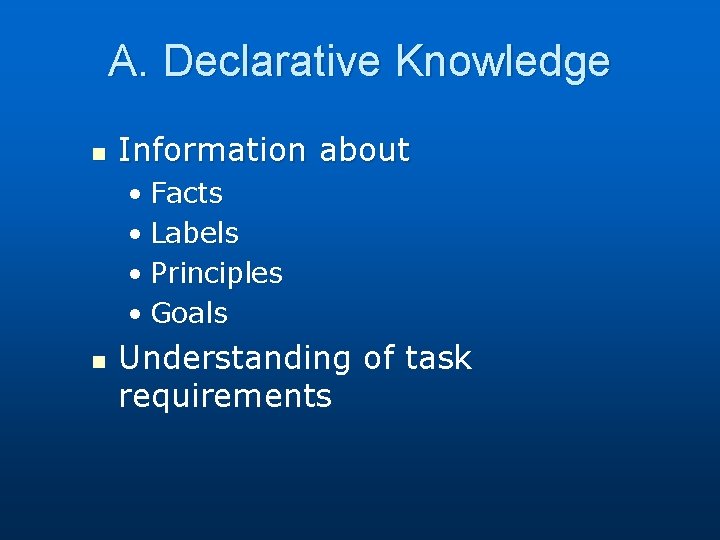
A. Declarative Knowledge n Information about • Facts • Labels • Principles • Goals n Understanding of task requirements
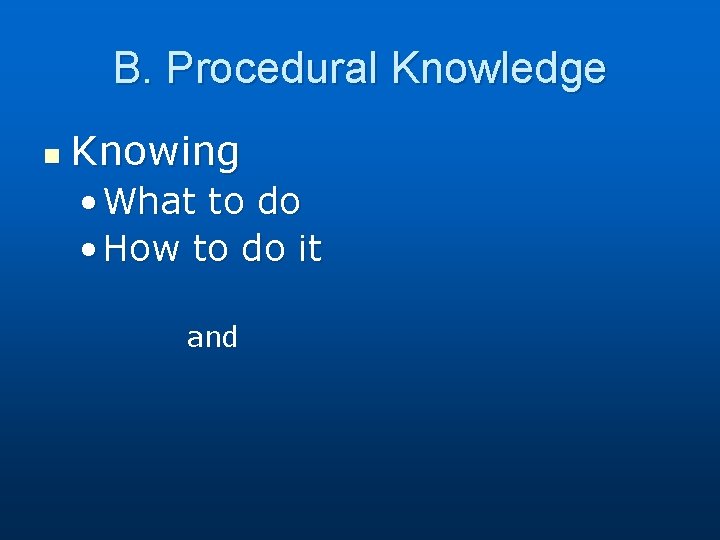
B. Procedural Knowledge n Knowing • What to do • How to do it and
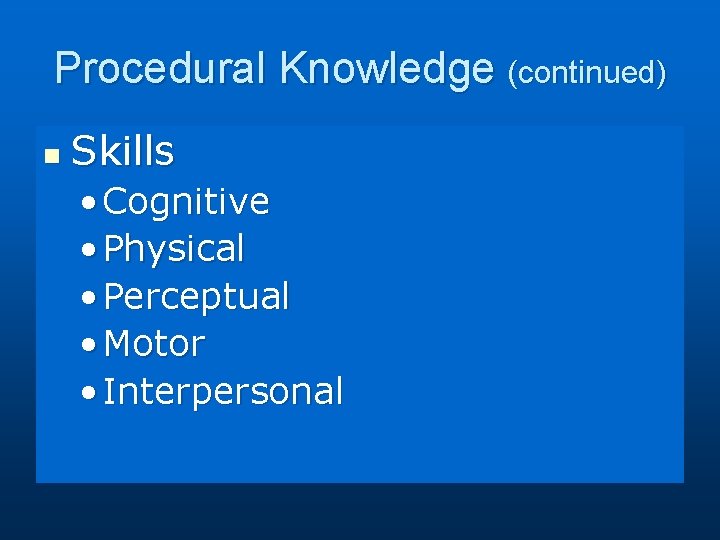
Procedural Knowledge (continued) n Skills • Cognitive • Physical • Perceptual • Motor • Interpersonal
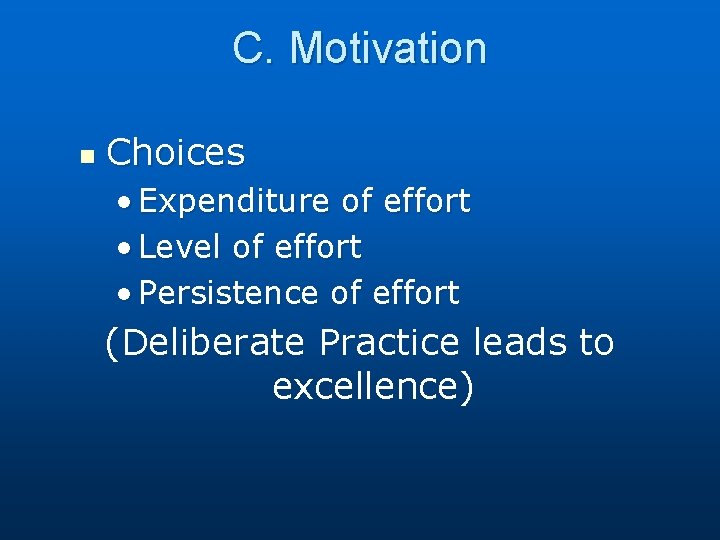
C. Motivation n Choices • Expenditure of effort • Level of effort • Persistence of effort (Deliberate Practice leads to excellence)
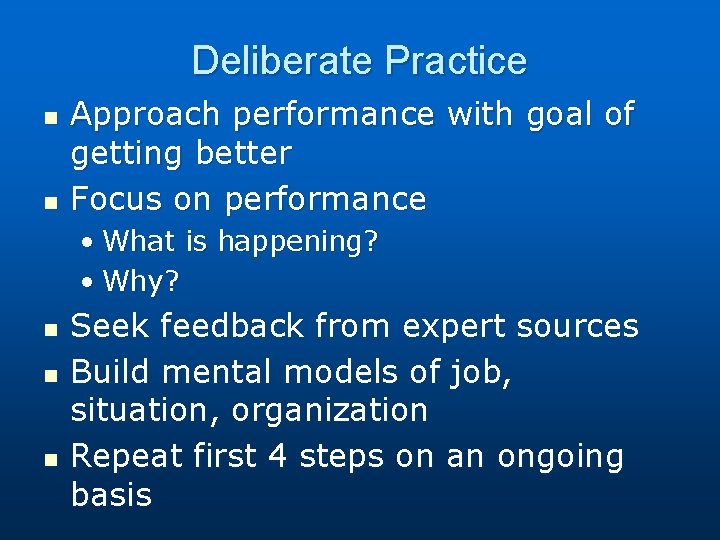
Deliberate Practice n n Approach performance with goal of getting better Focus on performance • What is happening? • Why? n n n Seek feedback from expert sources Build mental models of job, situation, organization Repeat first 4 steps on an ongoing basis
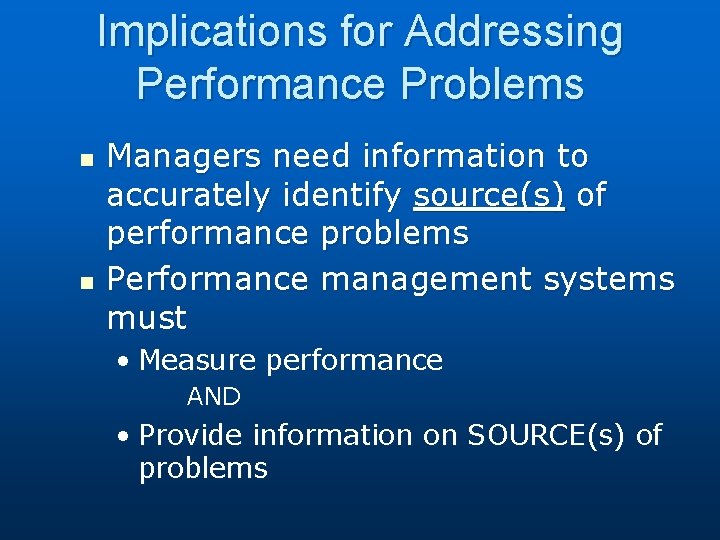
Implications for Addressing Performance Problems n n Managers need information to accurately identify source(s) of performance problems Performance management systems must • Measure performance AND • Provide information on SOURCE(s) of problems
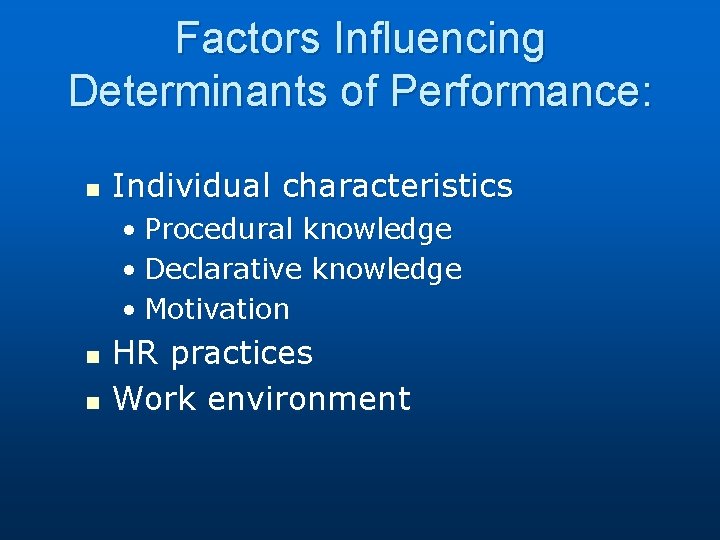
Factors Influencing Determinants of Performance: n Individual characteristics • Procedural knowledge • Declarative knowledge • Motivation n n HR practices Work environment
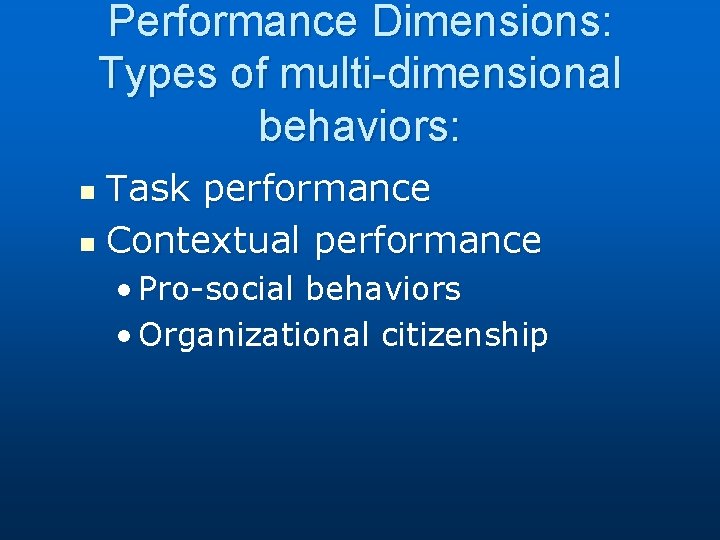
Performance Dimensions: Types of multi-dimensional behaviors: Task performance n Contextual performance n • Pro-social behaviors • Organizational citizenship
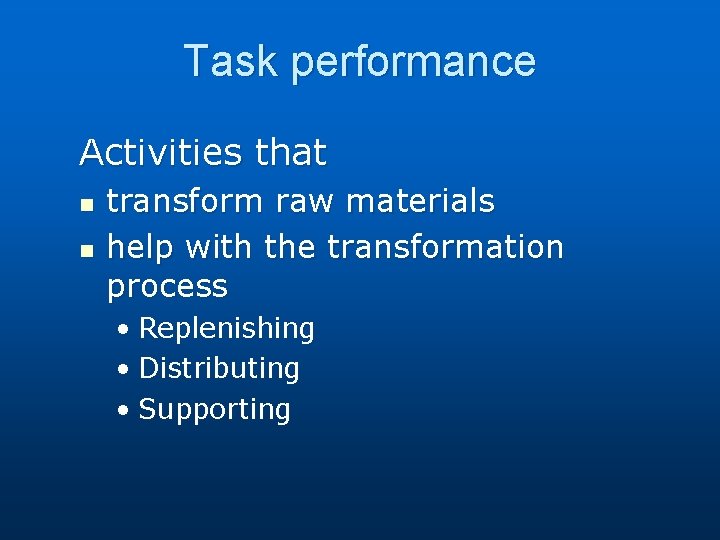
Task performance Activities that n n transform raw materials help with the transformation process • Replenishing • Distributing • Supporting
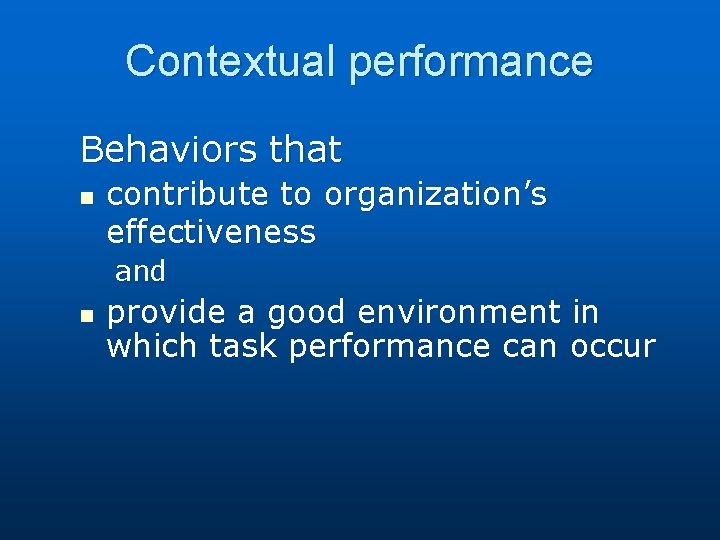
Contextual performance Behaviors that n contribute to organization’s effectiveness and n provide a good environment in which task performance can occur
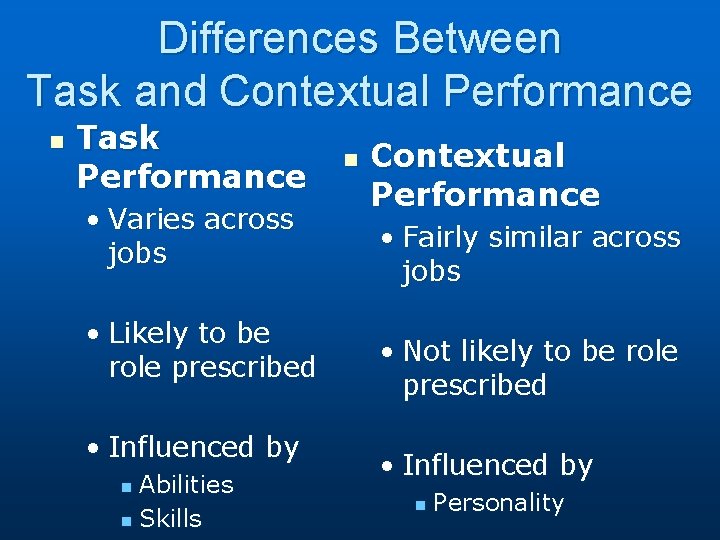
Differences Between Task and Contextual Performance n Task Performance • Varies across jobs • Likely to be role prescribed • Influenced by Abilities n Skills n n Contextual Performance • Fairly similar across jobs • Not likely to be role prescribed • Influenced by n Personality
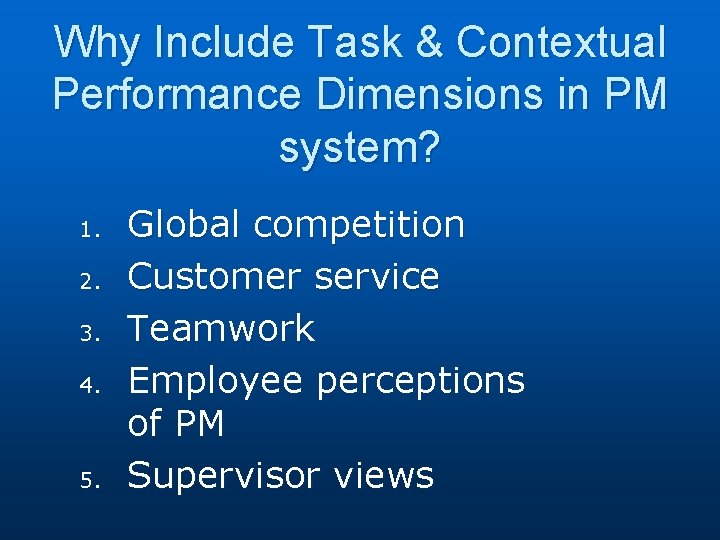
Why Include Task & Contextual Performance Dimensions in PM system? 1. 2. 3. 4. 5. Global competition Customer service Teamwork Employee perceptions of PM Supervisor views
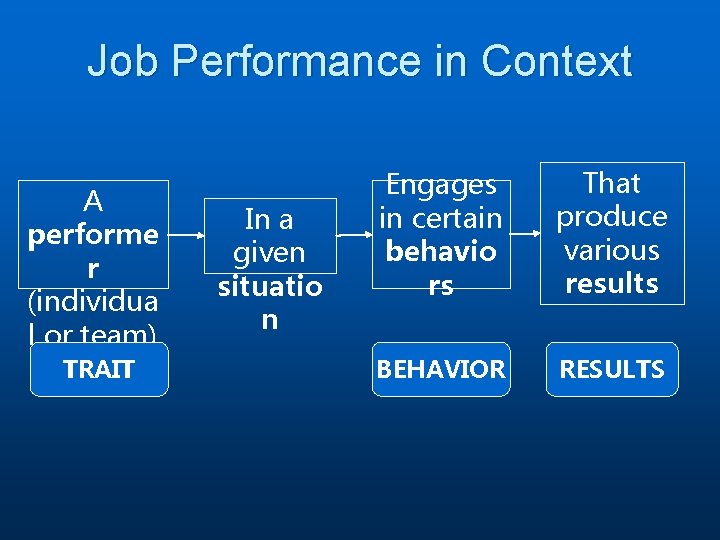
Job Performance in Context A performe r (individua l or team) TRAIT In a given situatio n Engages in certain behavio rs That produce various results BEHAVIOR RESULTS
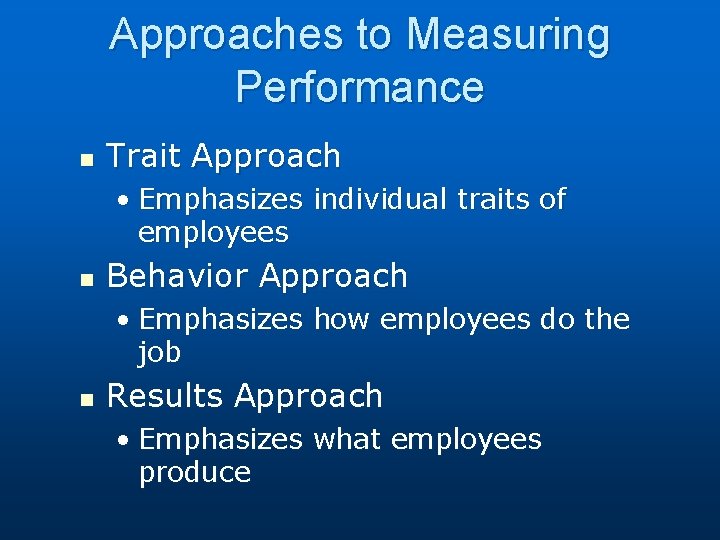
Approaches to Measuring Performance n Trait Approach • Emphasizes individual traits of employees n Behavior Approach • Emphasizes how employees do the job n Results Approach • Emphasizes what employees produce
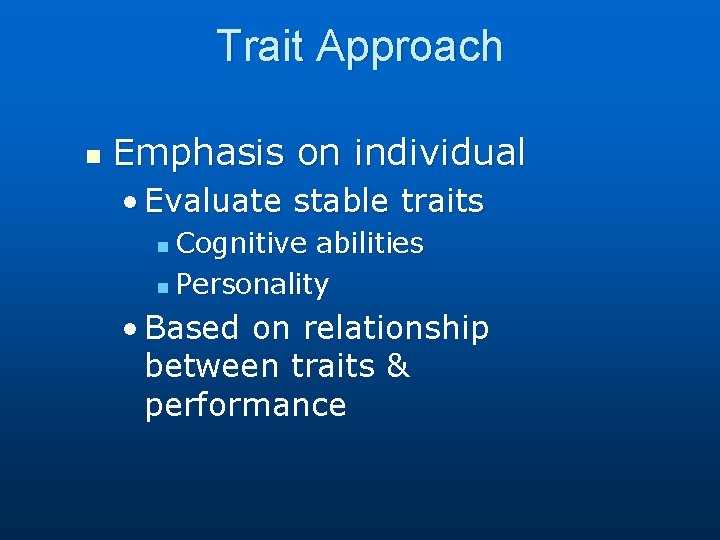
Trait Approach n Emphasis on individual • Evaluate stable traits Cognitive abilities n Personality n • Based on relationship between traits & performance
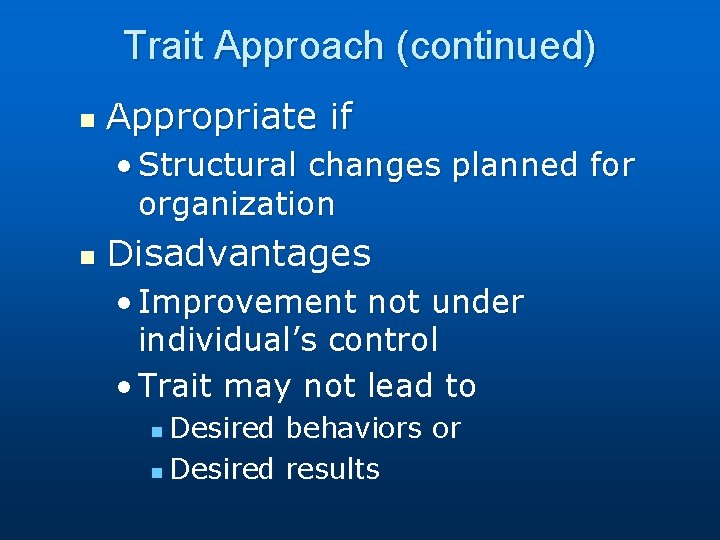
Trait Approach (continued) n Appropriate if • Structural changes planned for organization n Disadvantages • Improvement not under individual’s control • Trait may not lead to Desired behaviors or n Desired results n
Behavior Approach Appropriate if • Employees take a long time to achieve desired outcomes • Link between behaviors and results is not obvious • Outcomes occur in the distant future • Poor results are due to causes beyond the performer’s control Not appropriate if n above conditions are not present
Results Approach Advantages: • Less time • Lower cost • Data appear objective
Results Approach (continued) Most appropriate when: • Workers skilled in necessary behaviors • Behaviors and results obviously related • Consistent improvement in results over time • Many ways to do the job right
Quick Review Defining Performance Ø Determinants of Performance Ø Performance Dimensions Ø Approaches to Measuring Performance Ø