
Defining an Image Quality Technique based on the
Defining an Image Quality Technique based on the Rayleigh Criteria for Satellite Resolvability David Conran November 17, 2020 Emmett Ientilucci a, Stephen Schiller b , Chris Durell c, Jeff Holt c, Brandon Russell c, Will Arnold c a Rochester Institute of Technology, Rochester, NY USA b Raytheon Space and Airborne Systems c Labsphere, Inc. , North Sutton, NH USA
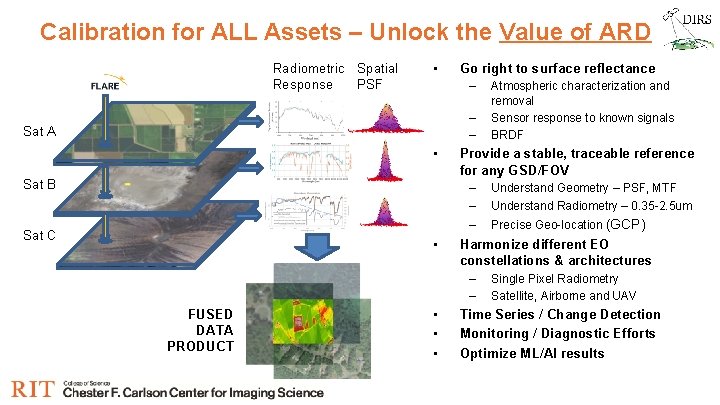
Calibration for ALL Assets – Unlock the Value of ARD Radiometric Spatial PSF Response • Go right to surface reflectance – – – Sat A • Sat B Sat C • Provide a stable, traceable reference for any GSD/FOV – – Understand Geometry – PSF, MTF Understand Radiometry – 0. 35 -2. 5 um – Precise Geo-location (GCP) Harmonize different EO constellations & architectures – – FUSED DATA PRODUCT • • • Atmospheric characterization and removal Sensor response to known signals BRDF Single Pixel Radiometry Satellite, Airborne and UAV Time Series / Change Detection Monitoring / Diagnostic Efforts Optimize ML/AI results
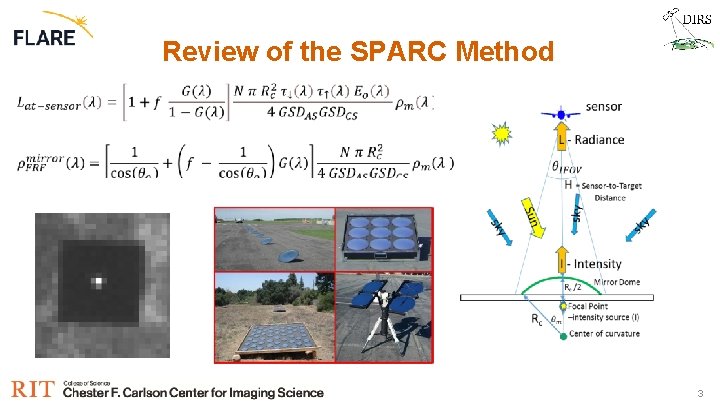
Review of the SPARC Method 3
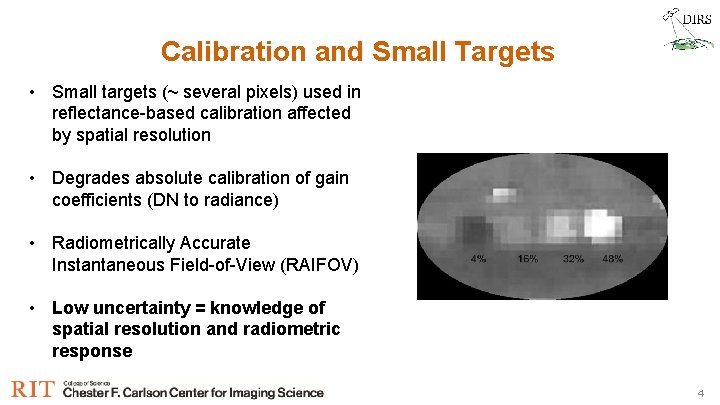
Calibration and Small Targets • Small targets (~ several pixels) used in reflectance-based calibration affected by spatial resolution • Degrades absolute calibration of gain coefficients (DN to radiance) • Radiometrically Accurate Instantaneous Field-of-View (RAIFOV) • Low uncertainty = knowledge of spatial resolution and radiometric response 4
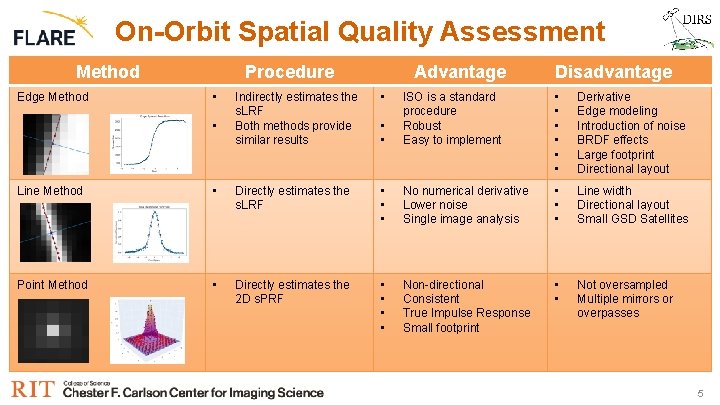
On-Orbit Spatial Quality Assessment Method Edge Method Procedure • • Advantage Indirectly estimates the s. LRF Both methods provide similar results • Disadvantage • • ISO is a standard procedure Robust Easy to implement • • • Derivative Edge modeling Introduction of noise BRDF effects Large footprint Directional layout Line Method • Directly estimates the s. LRF • • • No numerical derivative Lower noise Single image analysis • • • Line width Directional layout Small GSD Satellites Point Method • Directly estimates the 2 D s. PRF • • Non-directional Consistent True Impulse Response Small footprint • • Not oversampled Multiple mirrors or overpasses 5
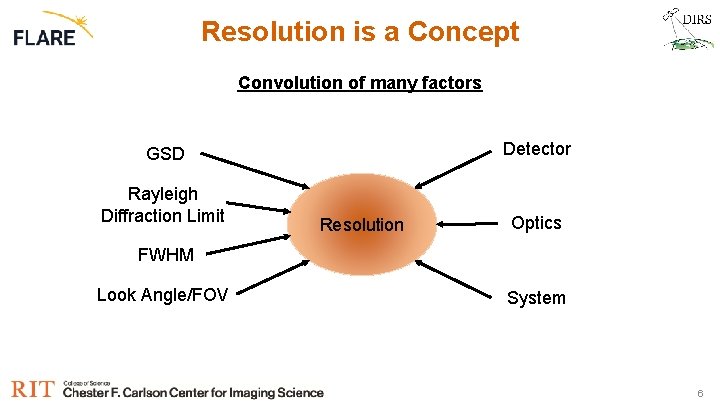
Resolution is a Concept Convolution of many factors Detector GSD Rayleigh Diffraction Limit Resolution Optics FWHM Look Angle/FOV System 6
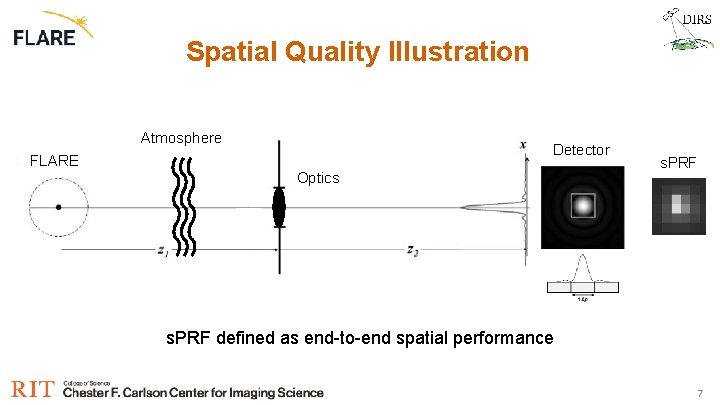
Spatial Quality Illustration Atmosphere FLARE Detector Optics s. PRF defined as end-to-end spatial performance 7
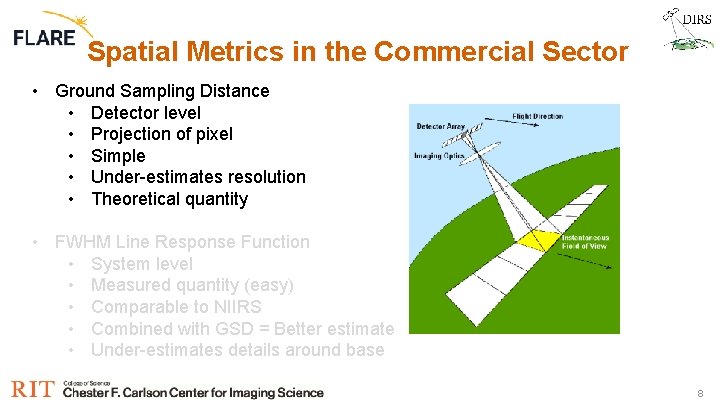
Spatial Metrics in the Commercial Sector • Ground Sampling Distance • Detector level • Projection of pixel • Simple • Under-estimates resolution • Theoretical quantity • FWHM Line Response Function • System level • Measured quantity (easy) • Comparable to NIIRS • Combined with GSD = Better estimate • Under-estimates details around base 8
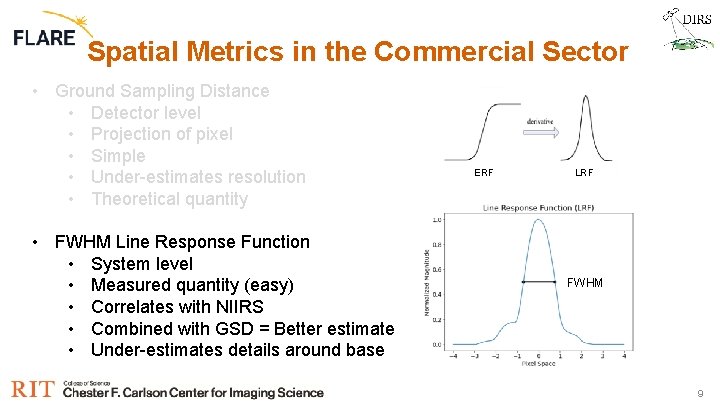
Spatial Metrics in the Commercial Sector • Ground Sampling Distance • Detector level • Projection of pixel • Simple • Under-estimates resolution • Theoretical quantity • FWHM Line Response Function • System level • Measured quantity (easy) • Correlates with NIIRS • Combined with GSD = Better estimate • Under-estimates details around base ERF LRF FWHM 9
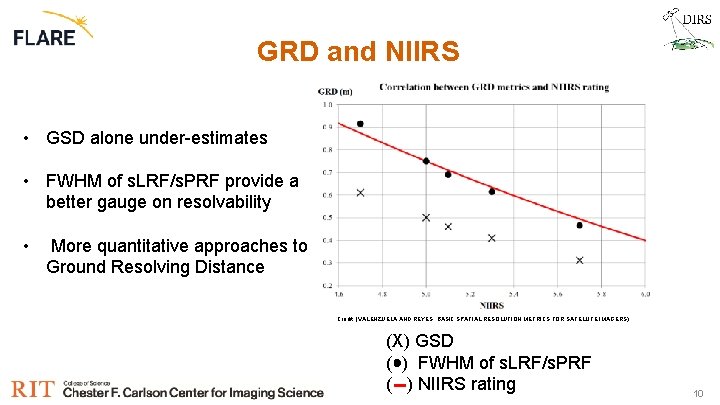
GRD and NIIRS • GSD alone under-estimates • FWHM of s. LRF/s. PRF provide a better gauge on resolvability • More quantitative approaches to Ground Resolving Distance Credit: (VALENZUELA AND REYES: BASIC SPATIAL RESOLUTION METRICS FOR SATELLITE IMAGERS) (X) GSD ( ) FWHM of s. LRF/s. PRF ( ) NIIRS rating 10
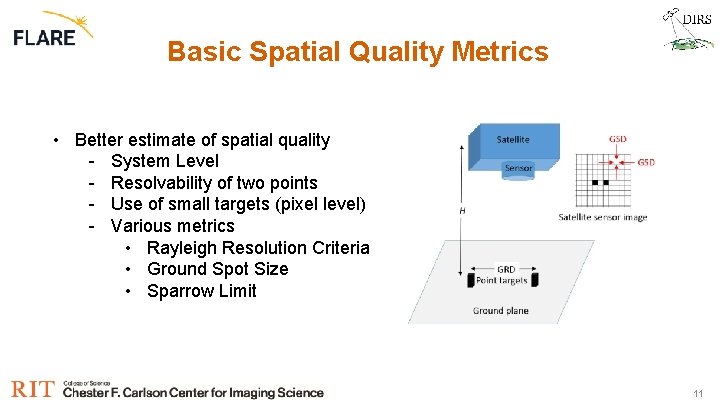
Basic Spatial Quality Metrics • Better estimate of spatial quality - System Level - Resolvability of two points - Use of small targets (pixel level) - Various metrics • Rayleigh Resolution Criteria • Ground Spot Size • Sparrow Limit 11
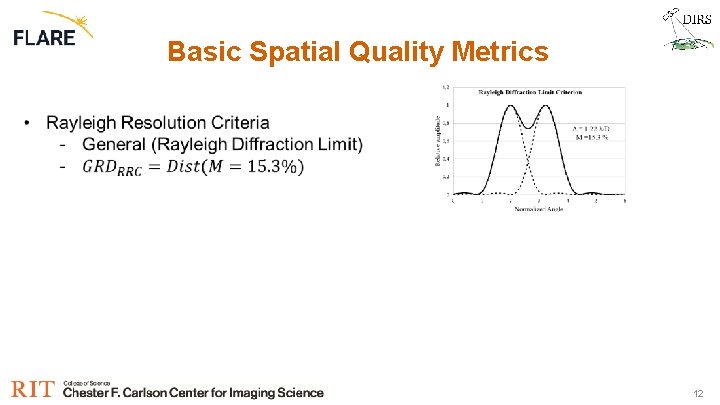
Basic Spatial Quality Metrics 12
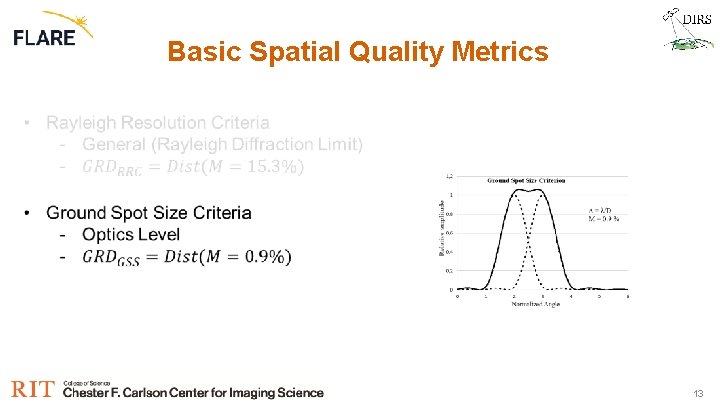
Basic Spatial Quality Metrics 13
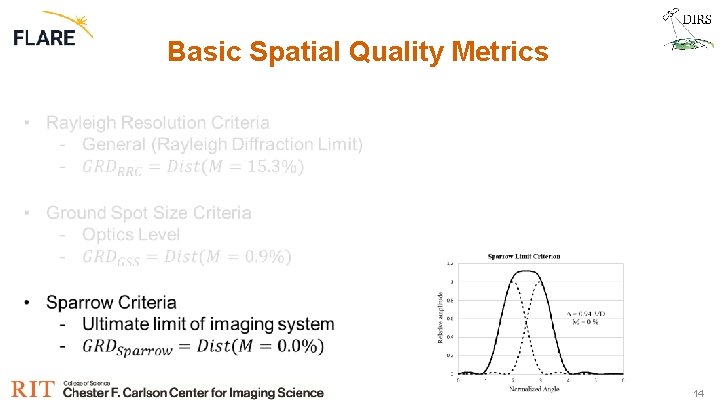
Basic Spatial Quality Metrics 14
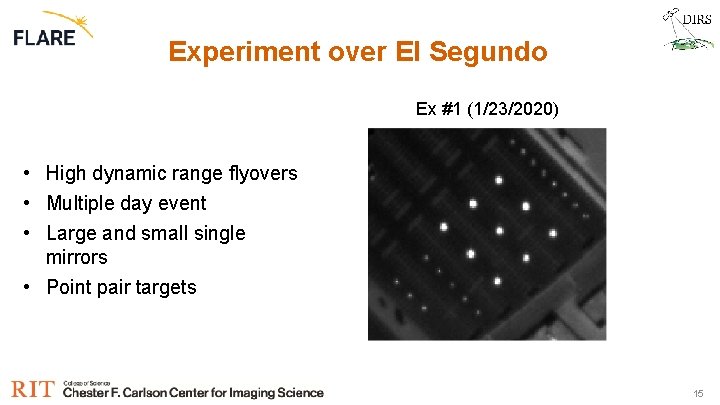
Experiment over El Segundo Ex #1 (1/23/2020) • High dynamic range flyovers • Multiple day event • Large and small single mirrors • Point pair targets 15
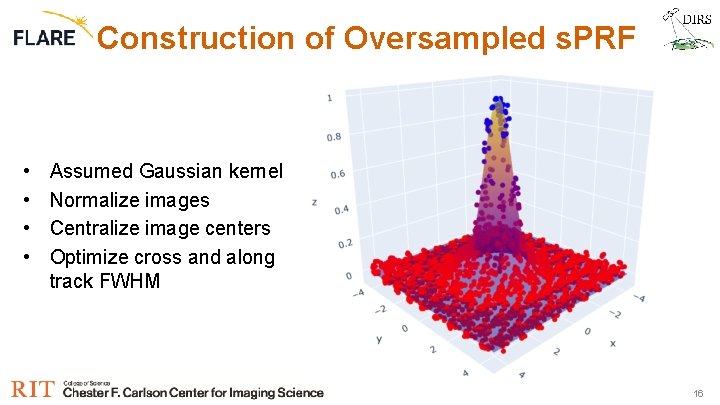
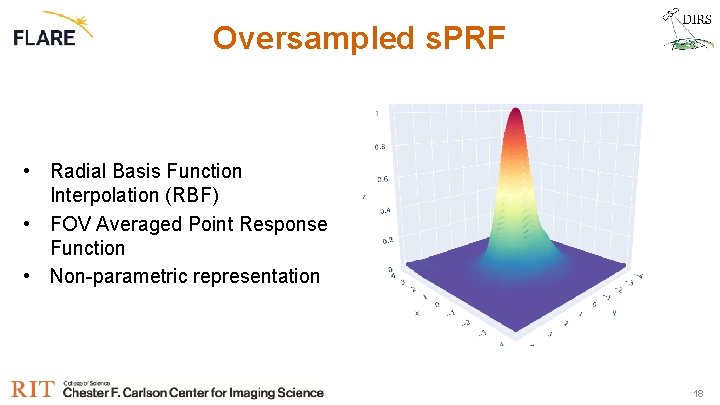
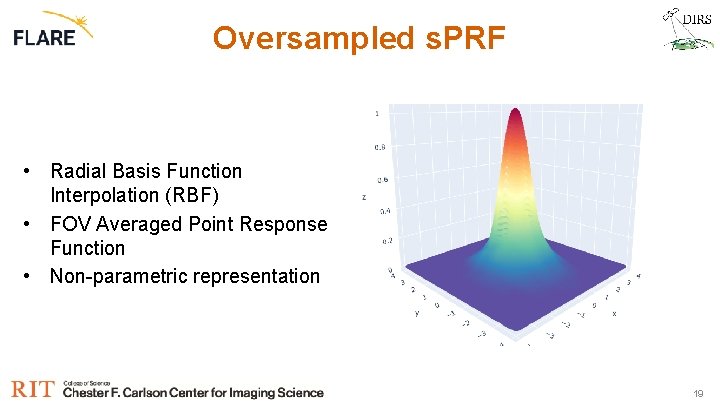
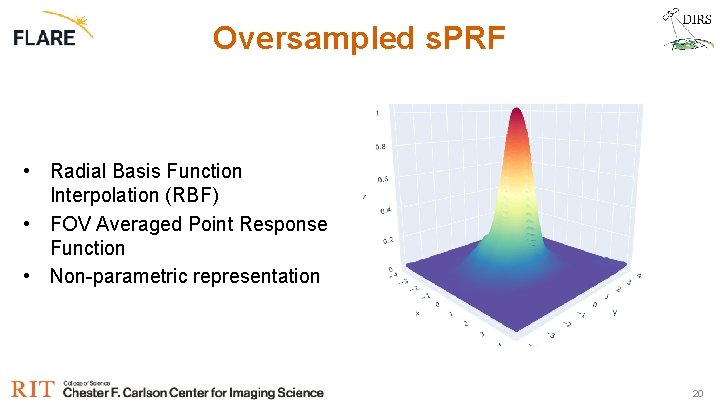
Construction of Oversampled s. PRF • • Assumed Gaussian kernel Normalize images Centralize image centers Optimize cross and along track FWHM 16
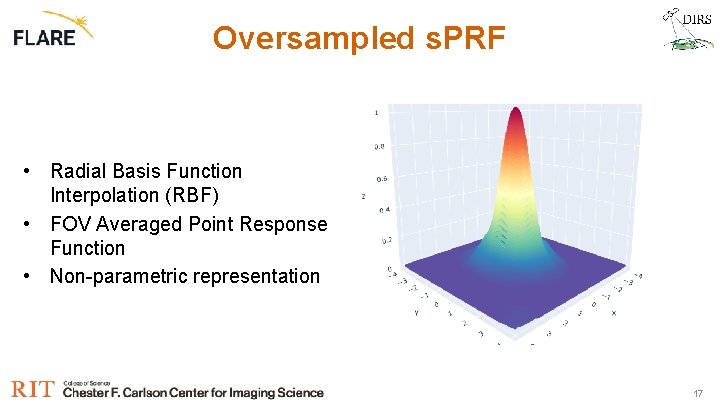
Oversampled s. PRF • Radial Basis Function Interpolation (RBF) • FOV Averaged Point Response Function • Non-parametric representation 17
Oversampled s. PRF • Radial Basis Function Interpolation (RBF) • FOV Averaged Point Response Function • Non-parametric representation 18
Oversampled s. PRF • Radial Basis Function Interpolation (RBF) • FOV Averaged Point Response Function • Non-parametric representation 19
Oversampled s. PRF • Radial Basis Function Interpolation (RBF) • FOV Averaged Point Response Function • Non-parametric representation 20
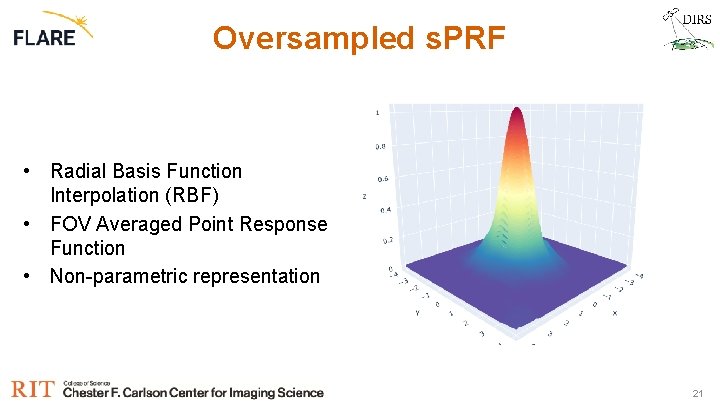
Oversampled s. PRF • Radial Basis Function Interpolation (RBF) • FOV Averaged Point Response Function • Non-parametric representation 21
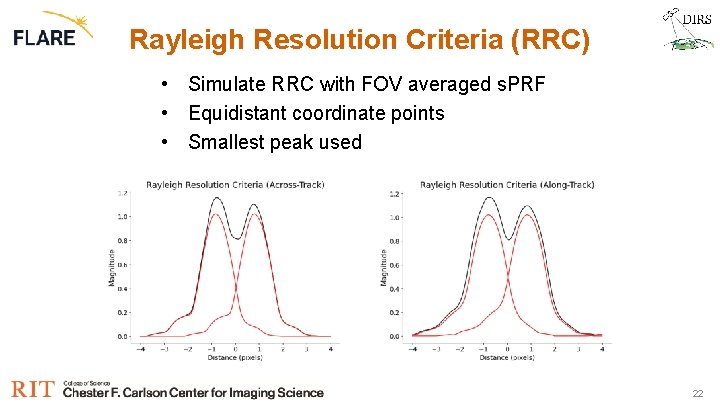
Rayleigh Resolution Criteria (RRC) • Simulate RRC with FOV averaged s. PRF • Equidistant coordinate points • Smallest peak used 22
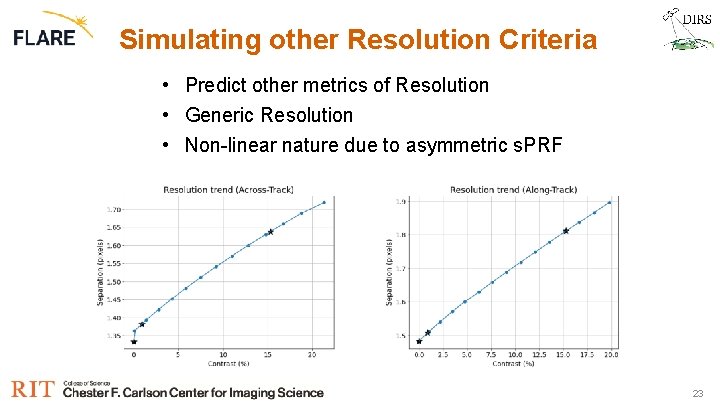
Simulating other Resolution Criteria • Predict other metrics of Resolution • Generic Resolution • Non-linear nature due to asymmetric s. PRF 23
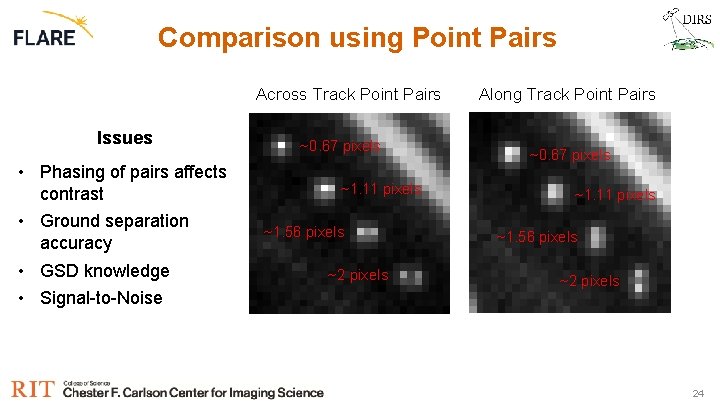
Comparison using Point Pairs Across Track Point Pairs Issues • Phasing of pairs affects contrast • Ground separation accuracy • GSD knowledge • Signal-to-Noise ~0. 67 pixels ~1. 11 pixels ~1. 56 pixels ~2 pixels Along Track Point Pairs ~0. 67 pixels ~1. 11 pixels ~1. 56 pixels ~2 pixels 24
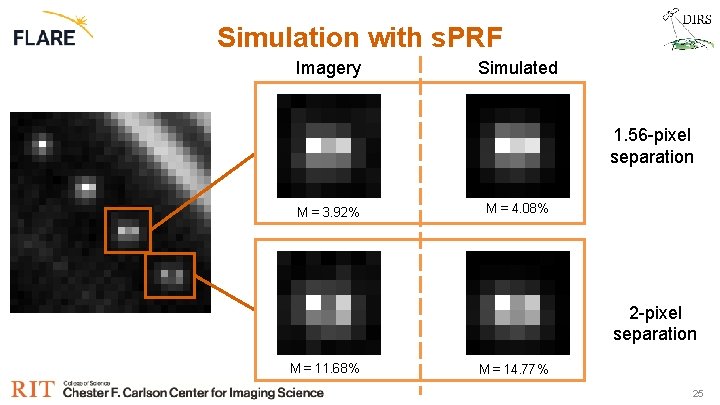
Simulation with s. PRF Imagery Simulated 1. 56 -pixel separation M = 3. 92% M = 4. 08% 2 -pixel separation M = 11. 68% M = 14. 77% 25
Highlights • Higher-order definition of spatial resolution • Non-parametric surface representation of s. PRF • Point-Pairs provide direct comparison • Spatial resolution has an impact on radiance calibration for small targets 26

Questions? 27
- Slides: 27