
Defining a Future Conservation Landscape in the Southeastern


- Slides: 26
Defining a Future Conservation Landscape in the Southeastern United States LCC National Workshop Denver, CO March 28 -29, 2012
The Need • Resource management challenges usually transcend political and jurisdictional boundaries; particularly at a landscape scale • The goals and objectives for sustainable landscapes exceed the operational reach of individual programs, agencies and organizations
The Need • Complex management challenges will require a collaborative approach to develop new techniques, to share resources and expertise, and to leverage capacity • Success will require transformational change from a model of competition for resources to one of collaboration in developing a desired future condition
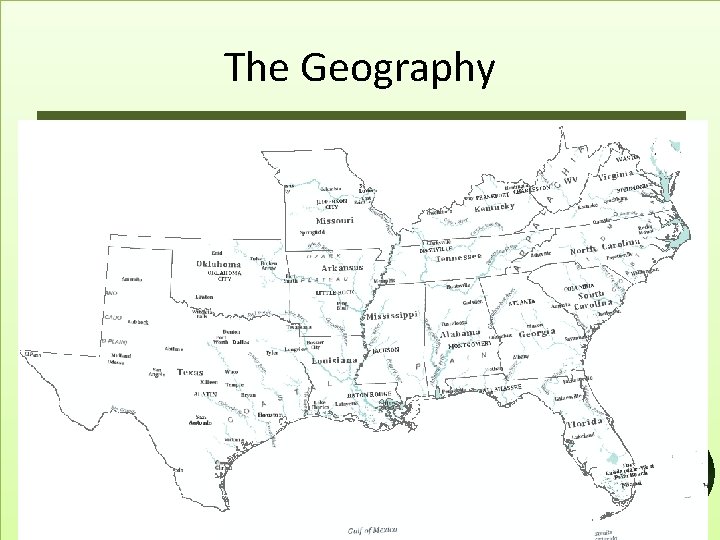
The Geography
Rationale for the Geography • The existence of a self-directed and longstanding partnership that was created to work together to solve regional resource problems of common interest
SEAFWA Membership
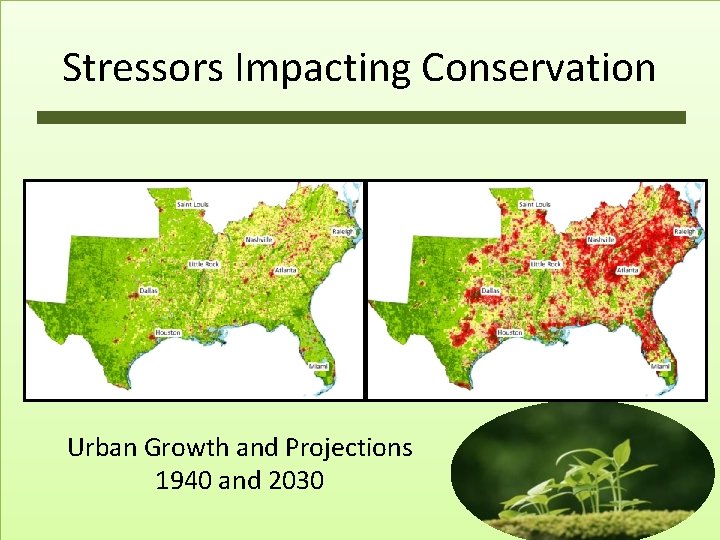
Stressors Impacting Conservation Urban Growth and Projections 1940 and 2030
Stressors Impacting Conservation Solar Potential (Annual)
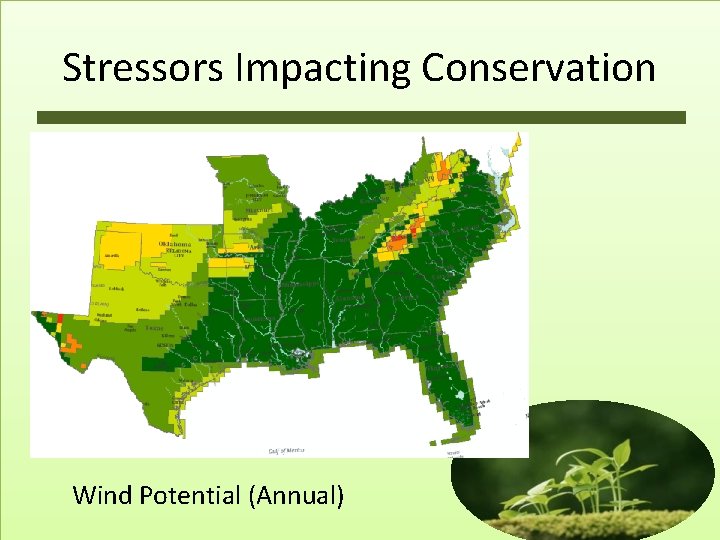
Stressors Impacting Conservation Wind Potential (Annual)
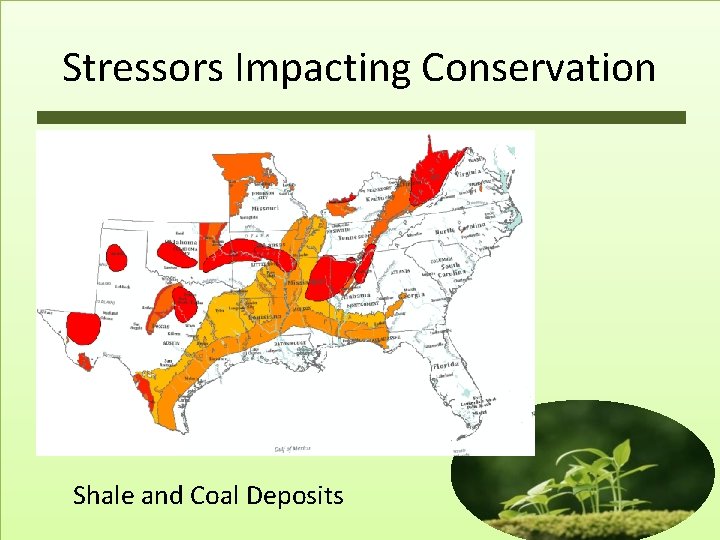
Stressors Impacting Conservation Shale and Coal Deposits
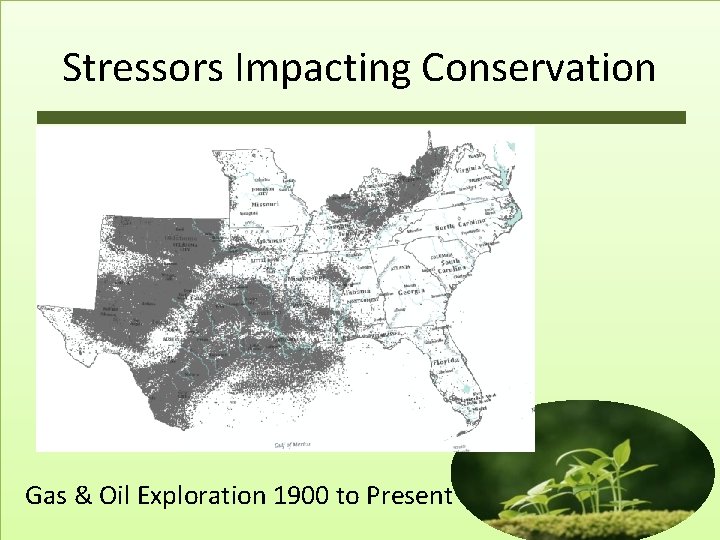
Stressors Impacting Conservation Gas & Oil Exploration 1900 to Present
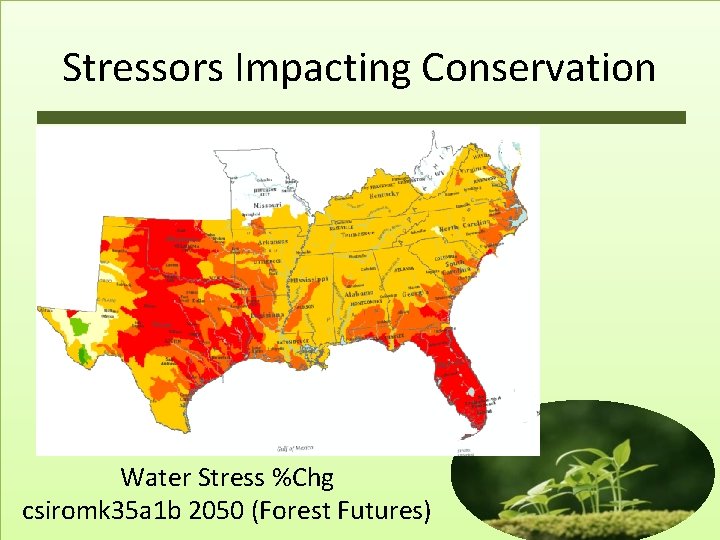
Stressors Impacting Conservation Water Stress %Chg csiromk 35 a 1 b 2050 (Forest Futures)
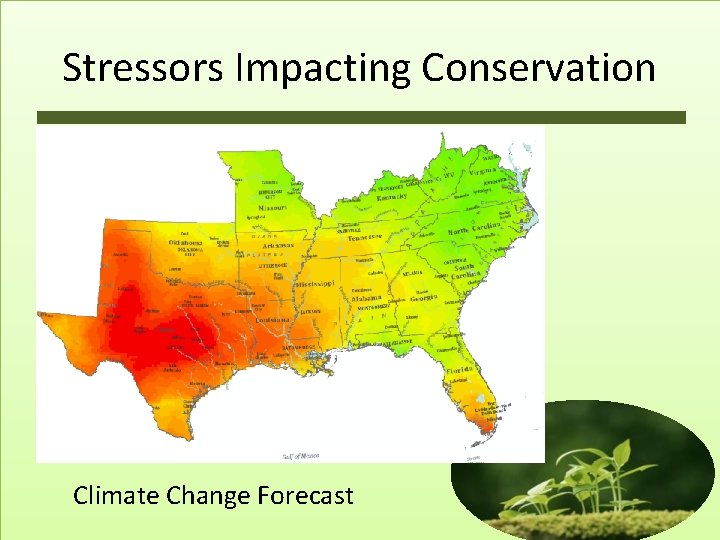
Stressors Impacting Conservation Climate Change Forecast
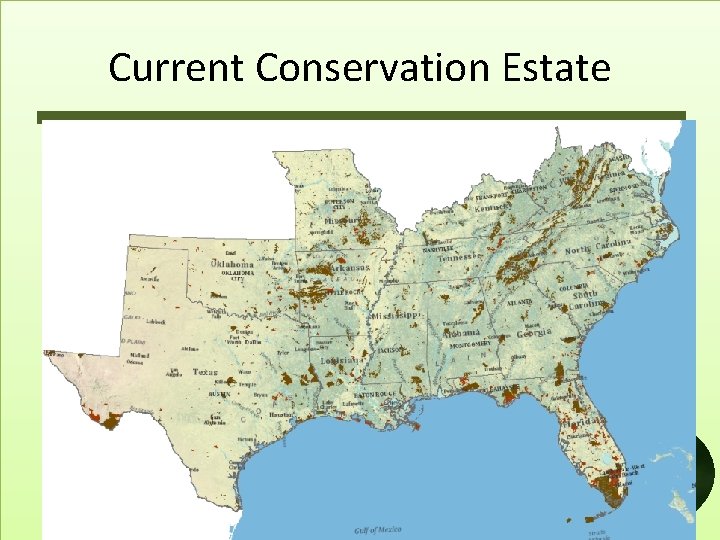
Current Conservation Estate
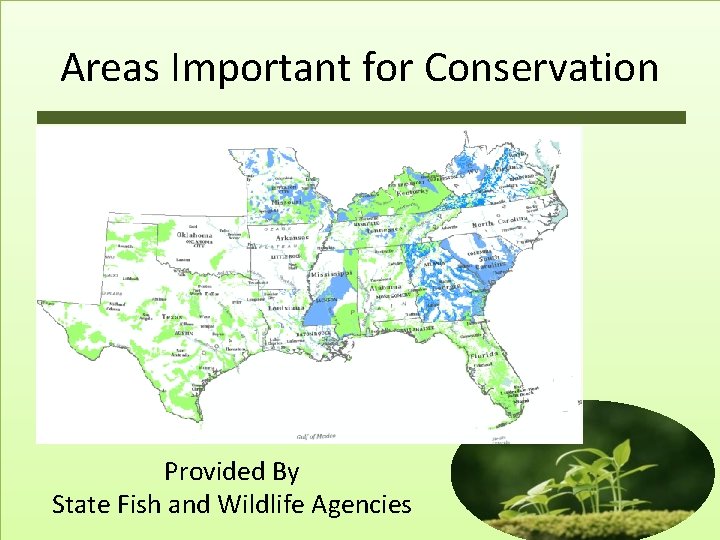
Areas Important for Conservation Provided By State Fish and Wildlife Agencies
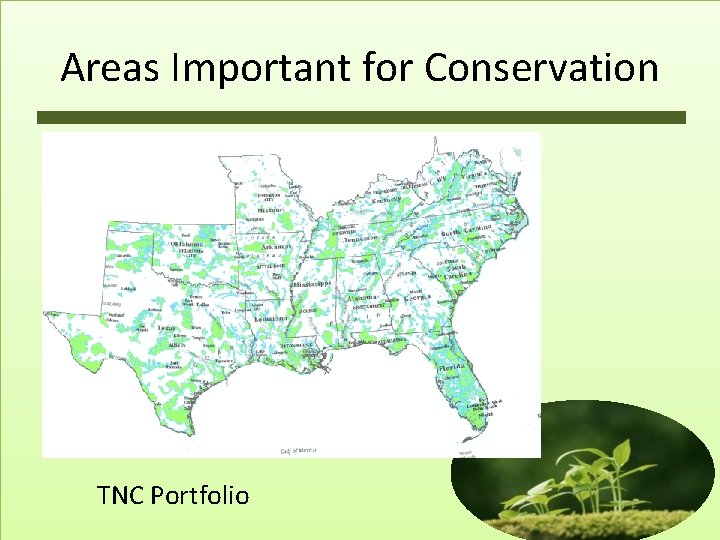
Areas Important for Conservation TNC Portfolio
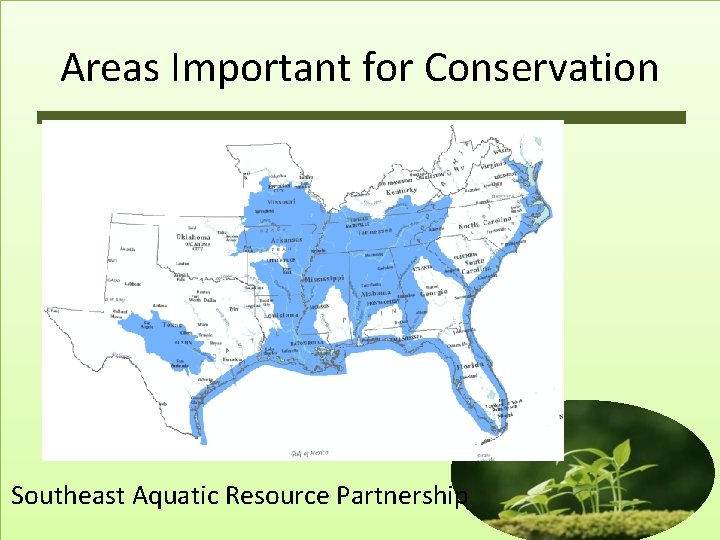
Areas Important for Conservation Southeast Aquatic Resource Partnership
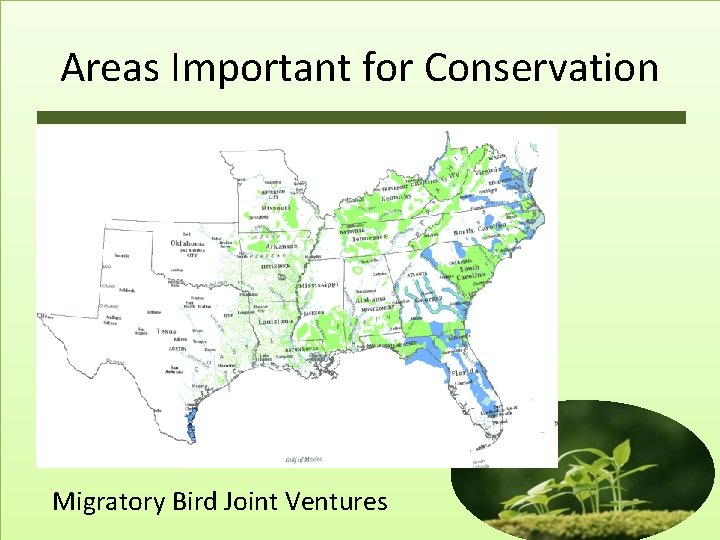
Areas Important for Conservation Migratory Bird Joint Ventures
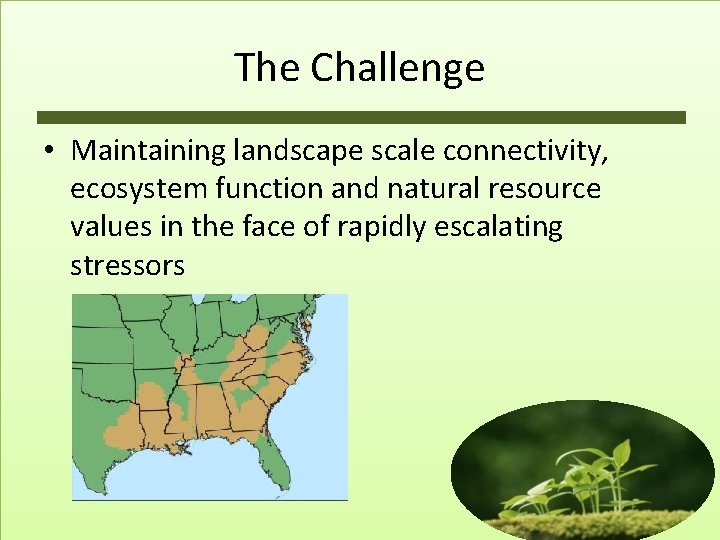
The Challenge • Maintaining landscape scale connectivity, ecosystem function and natural resource values in the face of rapidly escalating stressors
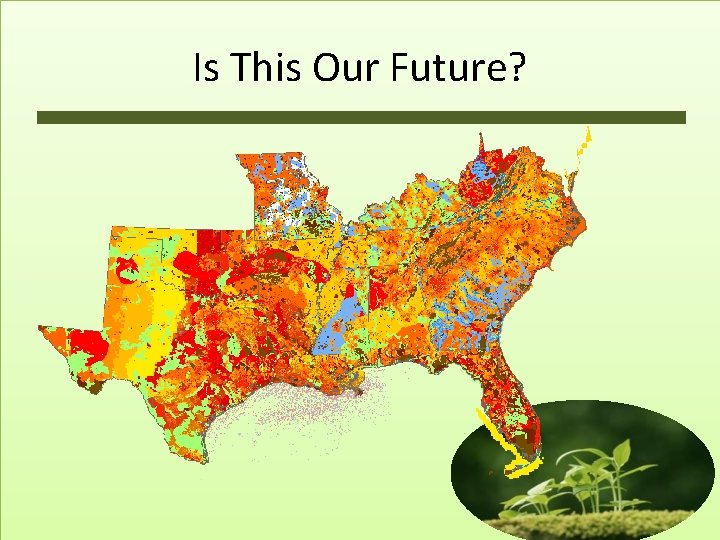
Is This Our Future?
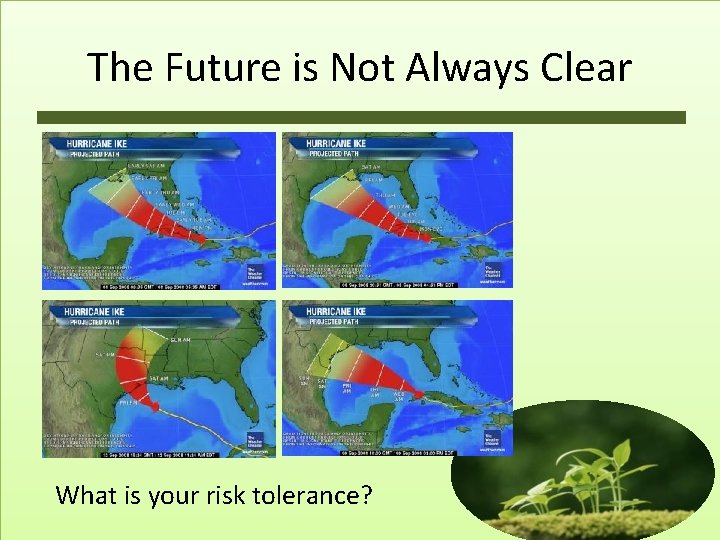
The Future is Not Always Clear What is your risk tolerance?
The Role for LCCs in Developing a Southeast Conservation Strategy • Engage the conservation and science communities and serve as a catalyst to focus science and technical capacity • It is not about a plan, but rather a way of working with multiple partners at multiple scales while recognizing differing authorities and responsibilities • Seek broader engagement
Critical Elements of an Adaptation Strategy 1. Ability to see the system • • Current and alternative futures Predicted habitat and species responses 2. Conservation delivery tools • • Decision support tools Structured decision-making 3. Conservation targets • Species, habitats, ecological processes
Critical Elements of an Adaptation Strategy 4. Science-based adaptive management framework • Learning as an explicit outcome of management 5. Conservation assessment science • • • Landscape ecology Geospatial analyses Database programming and management
Critical Elements of an Adaptation Strategy 6. Risk management tools • Assessment, tolerance and trigger points 7. Monitoring systems and capacity • • Assessing uncertainty Testing assumptions in management decisions 8. Public engagement • • Quantify conservation values of all societal sectors Changes to policy, rules and regulations Citizen science Grassroots conservation delivery
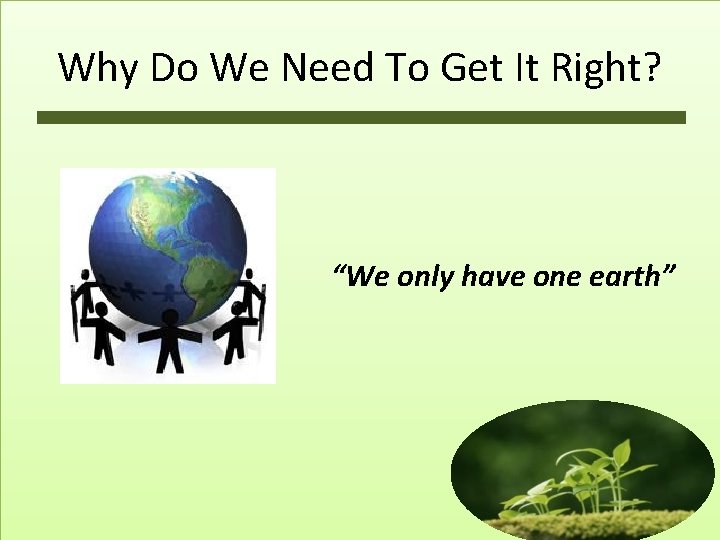
Why Do We Need To Get It Right? “We only have one earth”