
Defined Collection of every known fossil Most fossils

- Slides: 22
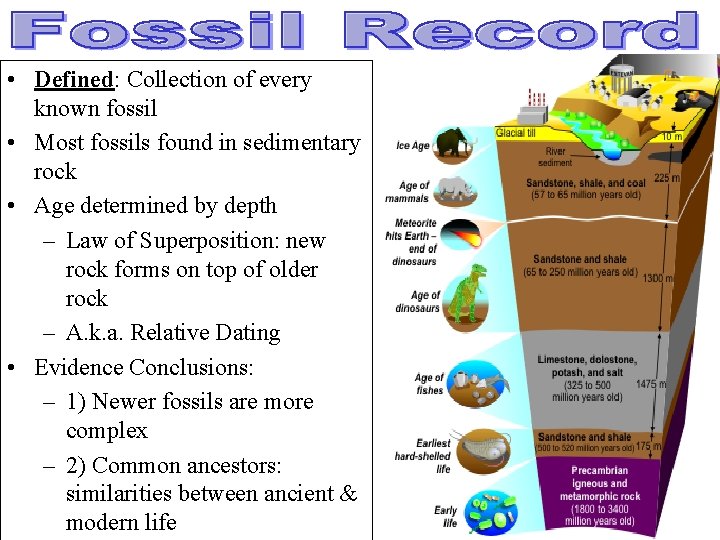
• Defined: Collection of every known fossil • Most fossils found in sedimentary rock • Age determined by depth – Law of Superposition: new rock forms on top of older rock – A. k. a. Relative Dating • Evidence Conclusions: – 1) Newer fossils are more complex – 2) Common ancestors: similarities between ancient & modern life
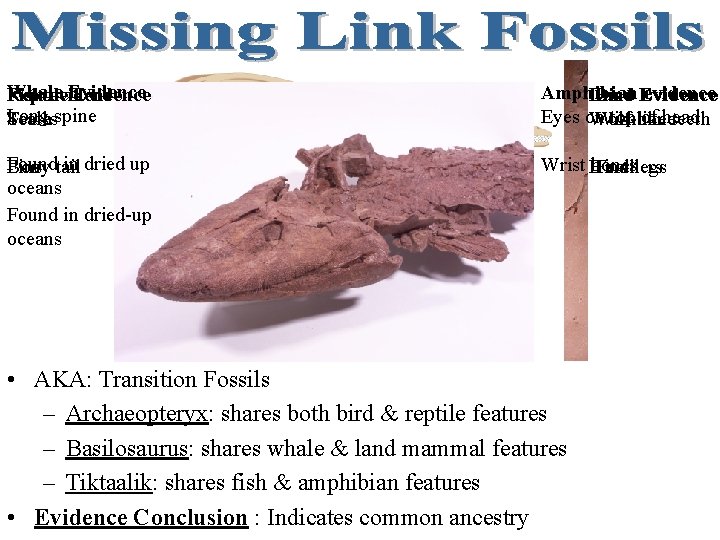
Whale Evidence Reptile Fish evidence Evidence Long Teeth spine Scales Amphibian evidence Land Bird Evidence Eyes on top of head Wolf-like Wishbone teeth Found in dried up Bony tail Fins oceans Found in dried-up oceans Wrist Hind bones Feathers legs • AKA: Transition Fossils – Archaeopteryx: shares both bird & reptile features – Basilosaurus: shares whale & land mammal features – Tiktaalik: shares fish & amphibian features • Evidence Conclusion : Indicates common ancestry
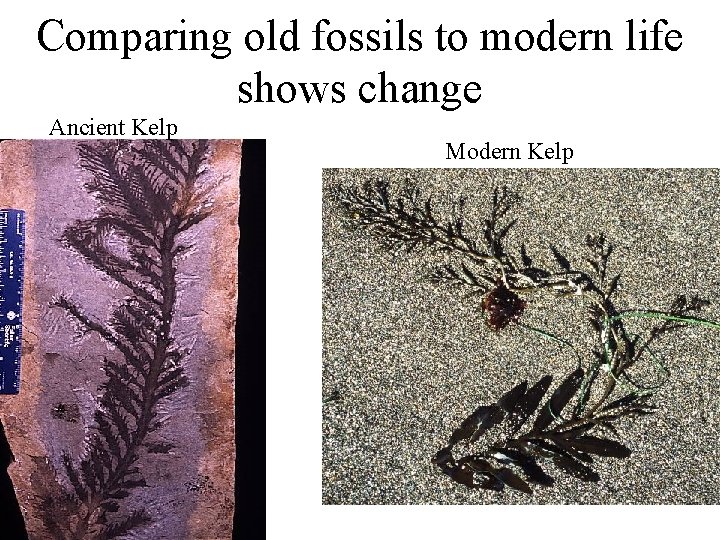
Comparing old fossils to modern life shows change Ancient Kelp Modern Kelp
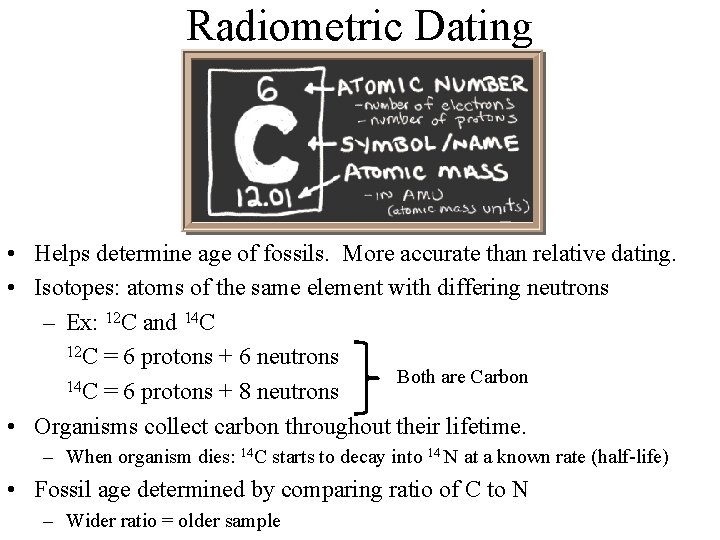
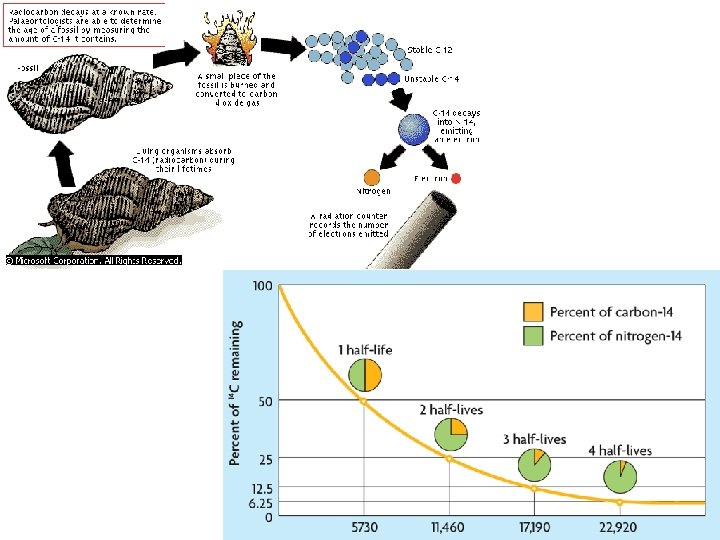
Radiometric Dating • Helps determine age of fossils. More accurate than relative dating. • Isotopes: atoms of the same element with differing neutrons – Ex: 12 C and 14 C 12 C = 6 protons + 6 neutrons Both are Carbon 14 C = 6 protons + 8 neutrons • Organisms collect carbon throughout their lifetime. – When organism dies: 14 C starts to decay into 14 N at a known rate (half-life) • Fossil age determined by comparing ratio of C to N – Wider ratio = older sample
Dating Fossils
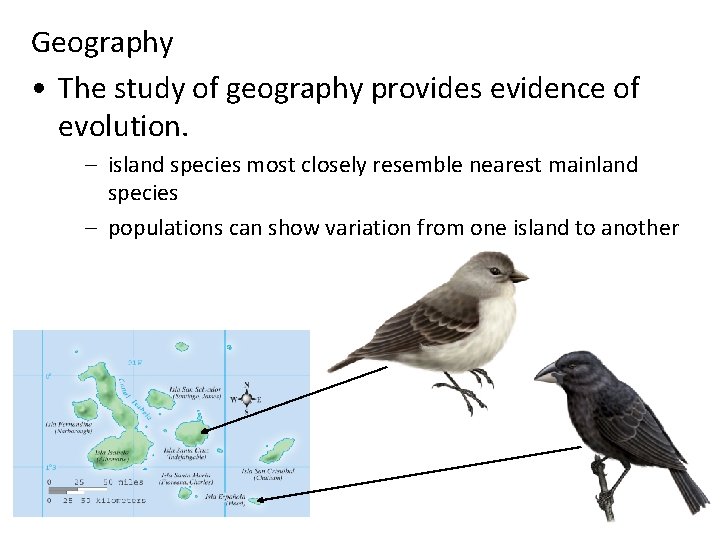
Geography • The study of geography provides evidence of evolution. – island species most closely resemble nearest mainland species – populations can show variation from one island to another
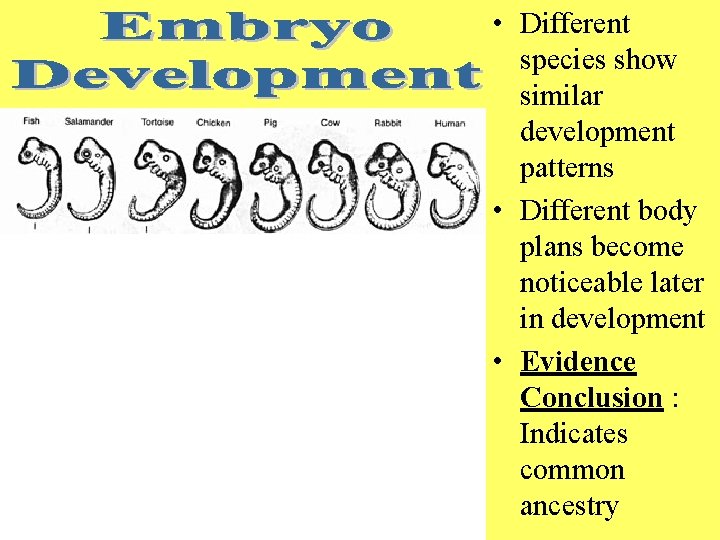
• Different species show similar development patterns • Different body plans become noticeable later in development • Evidence Conclusion : Indicates common ancestry
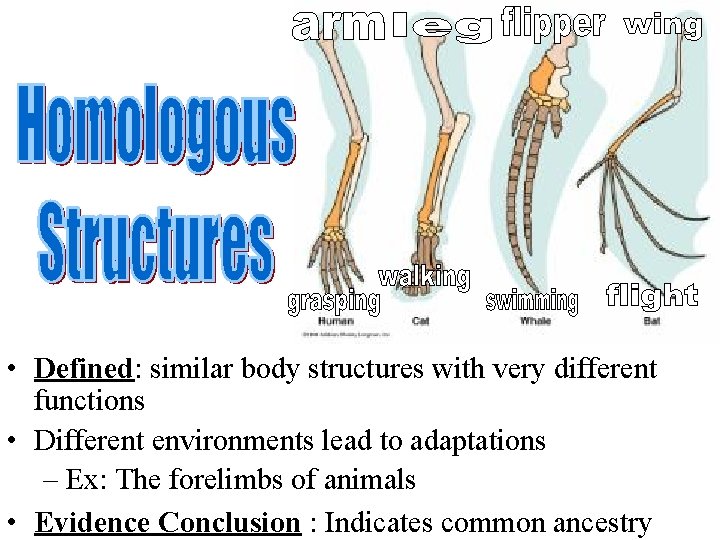
• Defined: similar body structures with very different functions • Different environments lead to adaptations – Ex: The forelimbs of animals • Evidence Conclusion : Indicates common ancestry
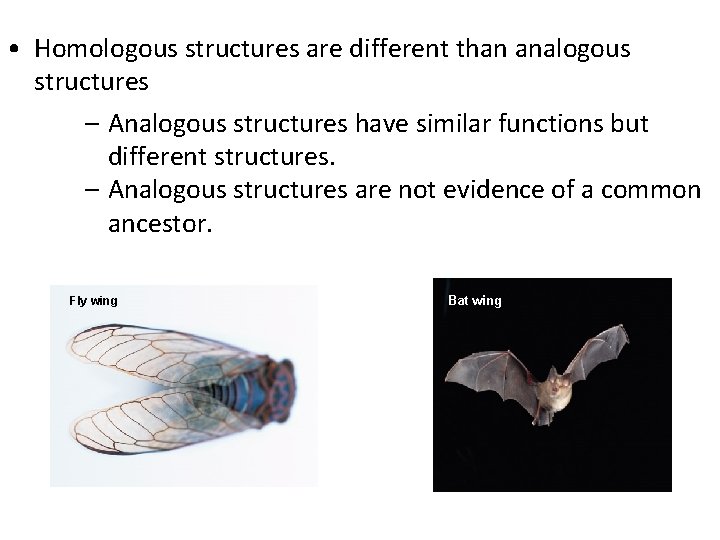
• Homologous structures are different than analogous structures – Analogous structures have similar functions but different structures. Human hand foot – Analogous structures are. Mole not evidence of a common ancestor. Fly wing Bat wing
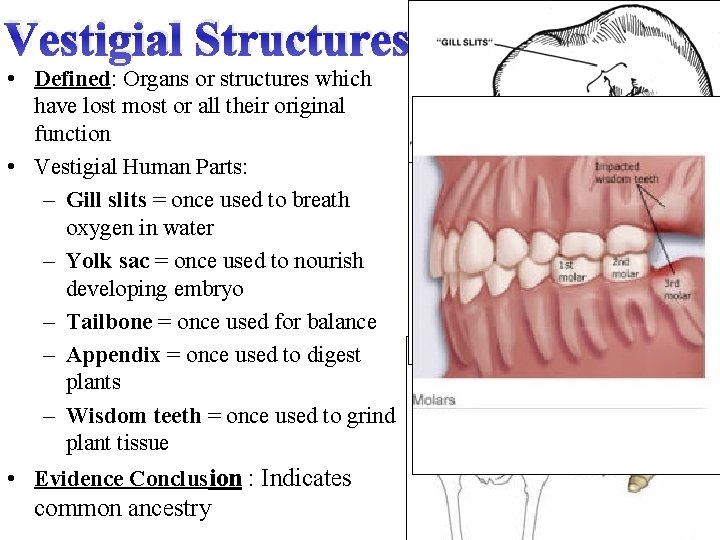
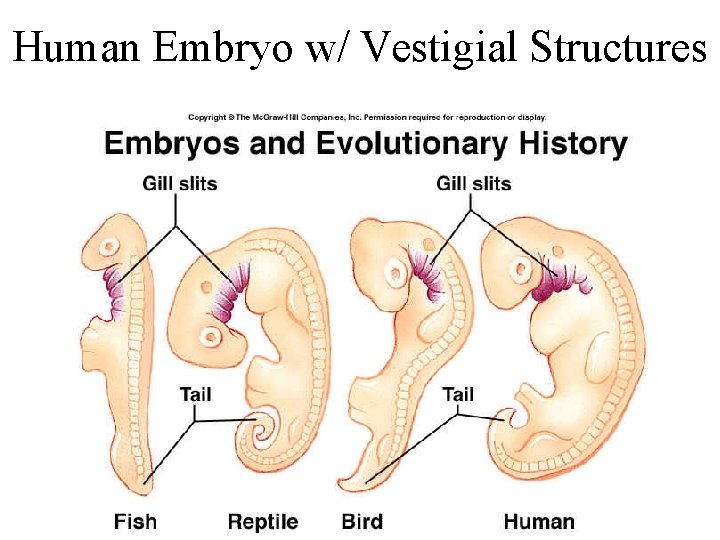
Vestigial Structures • Defined: Organs or structures which have lost most or all their original function • Vestigial Human Parts: – Gill slits = once used to breath oxygen in water – Yolk sac = once used to nourish developing embryo – Tailbone = once used for balance – Appendix = once used to digest plants – Wisdom teeth = once used to grind plant tissue • Evidence Conclusion : Indicates common ancestry
Human Embryo w/ Vestigial Structures
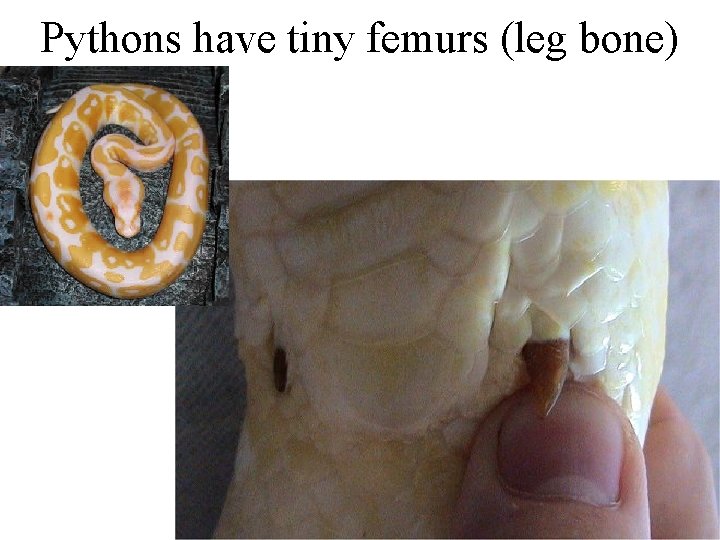
Pythons have tiny femurs (leg bone)
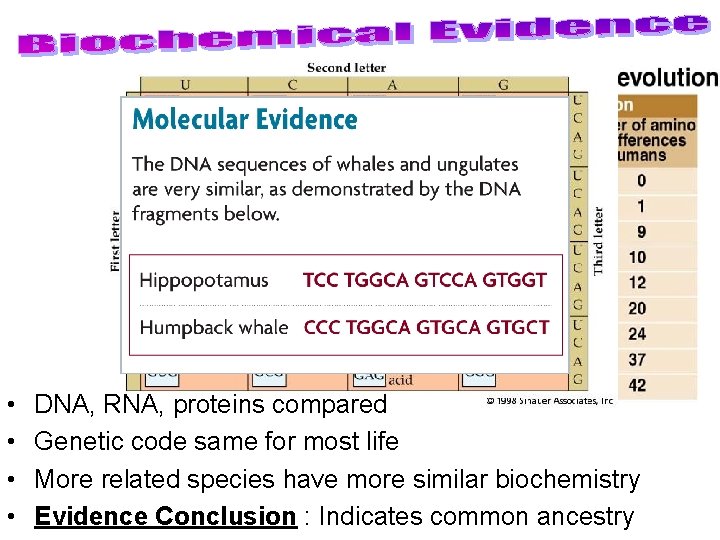
• • DNA, RNA, proteins compared Genetic code same for most life More related species have more similar biochemistry Evidence Conclusion : Indicates common ancestry
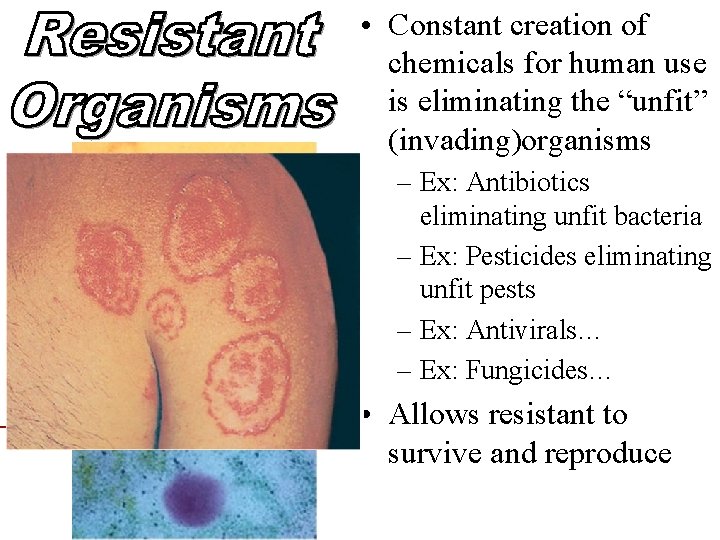
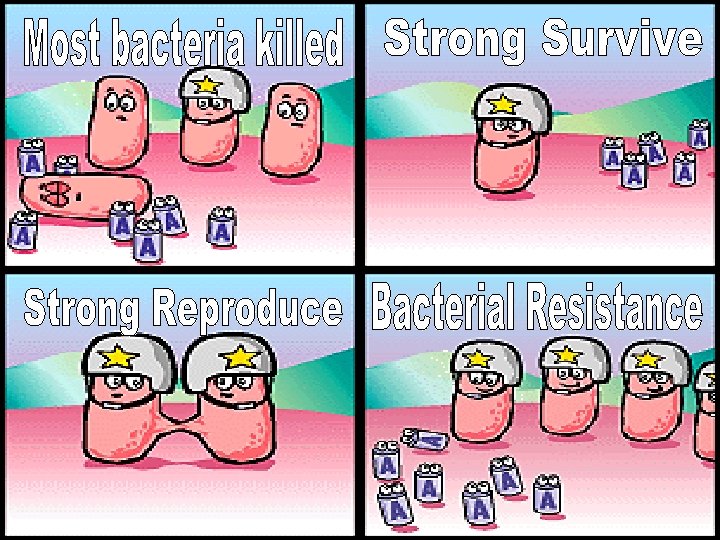
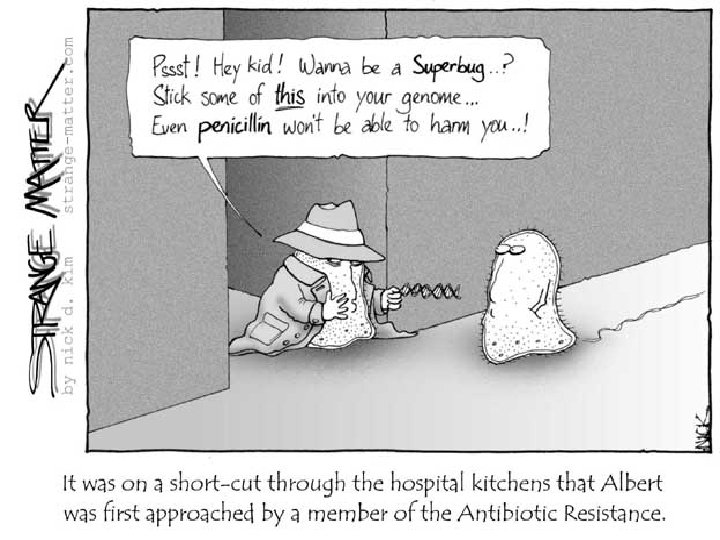
• Constant creation of chemicals for human use is eliminating the “unfit” (invading)organisms – Ex: Antibiotics eliminating unfit bacteria – Ex: Pesticides eliminating unfit pests – Ex: Antivirals… – Ex: Fungicides… • Allows resistant to survive and reproduce
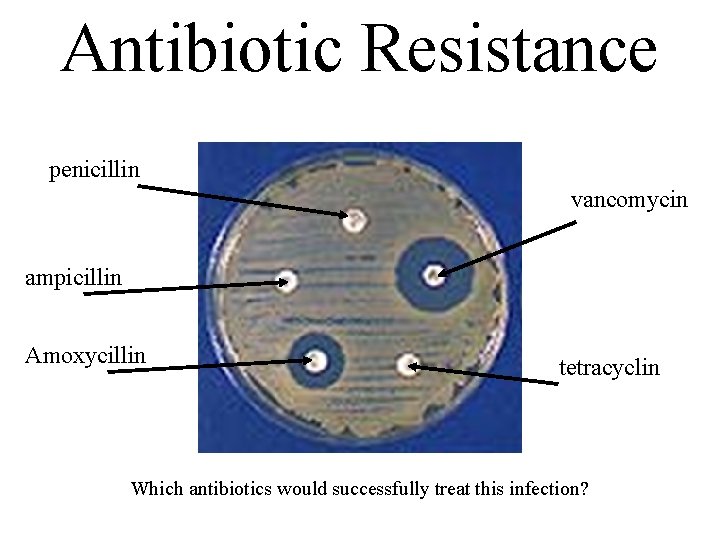
Antibiotic Resistance penicillin vancomycin ampicillin Amoxycillin tetracyclin Which antibiotics would successfully treat this infection?
Review • How does antibiotic and pesticide resistance show natural selection? • How do the following lines of evidence show change over time? – – – Fossils Homologous structures Vestigial structures Resistant organisms Embryo development Biochemical (molecular) evidence • Fossil age can be determined two ways. What are they? • Which type of anatomical structures do not show evidence of common ancestry?