
Defined by law Iowa Code Section 280 28
Defined by law: Iowa Code Section 280. 28 What is bullying?
Bullying Through a Legal Lens Iowa Code section 280. 28 Harassment and bullying shall be construed to mean any electronic, written, verbal, or physical act or conduct toward a student which is based on any actual or perceived trait or characteristic of the student and which creates an objectively hostile school environment that meets one or more of the following conditions: ü Places the student in reasonable fear of harm to the student’s person or property ü Has a substantially detrimental effect on the student’s physical or mental health ü Has the effect of substantially interfering with a student’s academic performance ü Has the effect of substantially interfering with the student’s ability to participate in or benefit from the services, activities, or privileges
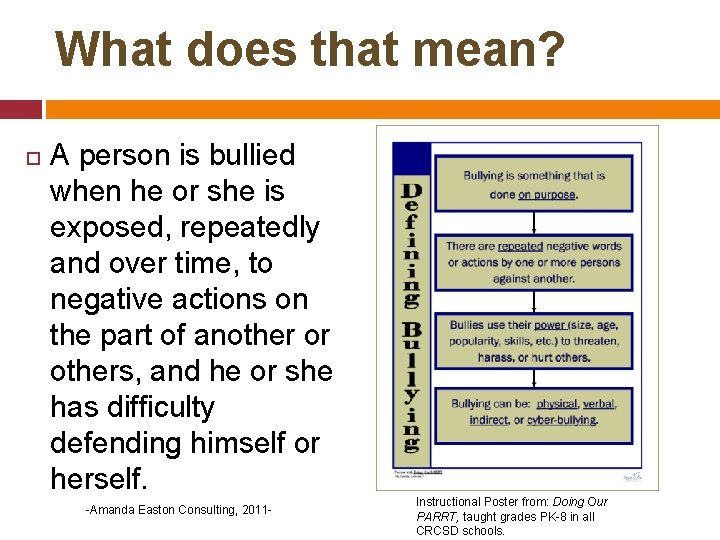
What does that mean? A person is bullied when he or she is exposed, repeatedly and over time, to negative actions on the part of another or others, and he or she has difficulty defending himself or herself. -Amanda Easton Consulting, 2011 - Instructional Poster from: Doing Our PARRT, taught grades PK-8 in all CRCSD schools.
1. 2. 3. From: Amanda Easton Consulting, 2011 Aggressive behavior that involves unwanted, negative actions; Pattern of behavior repeated over time; and Imbalance of power or strength Three Components of Bullying
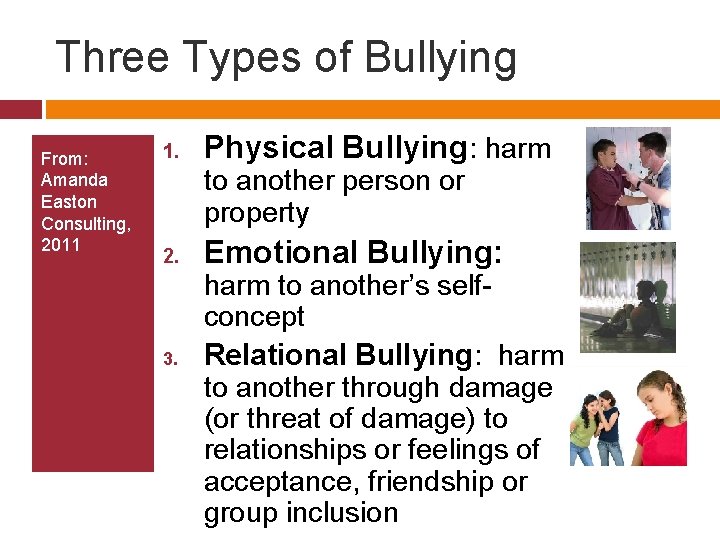
Three Types of Bullying From: Amanda Easton Consulting, 2011 1. Physical Bullying: harm to another person or property 2. 3. Emotional Bullying: harm to another’s selfconcept Relational Bullying: harm to another through damage (or threat of damage) to relationships or feelings of acceptance, friendship or group inclusion
What does relational bullying look like? From: Amanda Easton Consultin g, 2011 Negative body language or facial expressions (i. e. dirty looks) Gossiping, starting/spreading rumors or deliberately ruining someone’s reputation � These rumors are often known to be false by the bully and are intended to isolate the target or to recruit others to bully the target Playing mean tricks or setting up target to look stupid Publicly insulting target (i. e. calling ‘stupid’ or ‘gay’ Exclusion, being ostracized, total group rejection or ‘cold shoulder’ as means of punishing or coercing target Arranging public humiliation
Be Observant and Document What You See From: Amanda Easton Consulting, 2011 Taunting, name-calling, mimicking, rude gestures, cruel remarks, hitting, kicking, shoving, shoulder-checking, biting, scratching, hair-pulling, pinching, spitting, exclusion, etc. � All need to be intervened upon, investigated, and documented Bullying as a pattern of behavior is much easier to track when incidents are turned into a central bullying complaint manager DID YOU KNOW? We typically have 2 -4 times more bullying going on than we know about.
Encourage Students to Report From: Amanda Easton Consulting, 2011 Listen to students and take their complaints seriously Intervene when you see something that looks problematic Follow-up with students, ask questions and clarify As an investigator, listen to the involvement of ‘silent partners’ or ‘ringleaders’
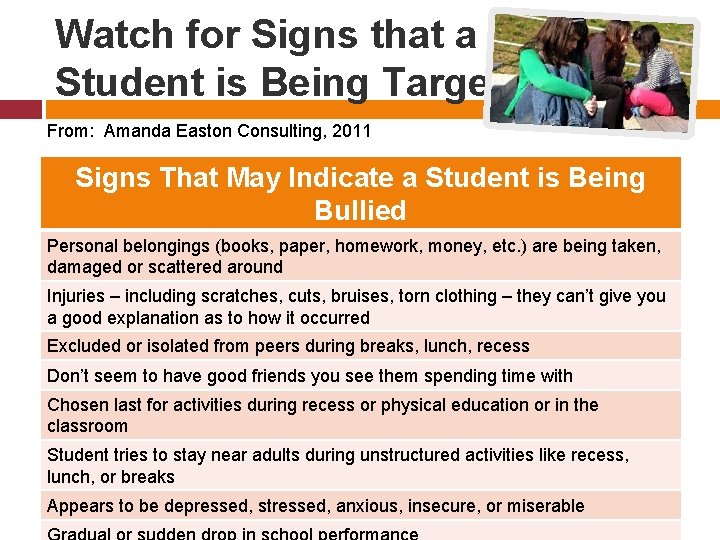
Watch for Signs that a Student is Being Targeted From: Amanda Easton Consulting, 2011 Signs That May Indicate a Student is Being Bullied Personal belongings (books, paper, homework, money, etc. ) are being taken, damaged or scattered around Injuries – including scratches, cuts, bruises, torn clothing – they can’t give you a good explanation as to how it occurred Excluded or isolated from peers during breaks, lunch, recess Don’t seem to have good friends you see them spending time with Chosen last for activities during recess or physical education or in the classroom Student tries to stay near adults during unstructured activities like recess, lunch, or breaks Appears to be depressed, stressed, anxious, insecure, or miserable
Be Vigilant From: Amanda Easton Consulting, 2011 DON’T FALL FOR IT! Bullies (individuals and groups) tend to justify and minimalize their bullying behavior by claiming they were provoked by the target � Investigate � Interview the target’s friend’s, the bully’s friends and others who may have witnessed incidents � Work to get the whole story You’ll find that more often than not, the target doesn’t respond at all to bullying behaviors REMEMBER: Bullying involves an imbalance of power!
Safe Adults are Guardians From: Amanda Easton Consulting, 2011 Recognize the difference between being a: � Friend Someone who builds their selfesteem and gives them good, helpful advice � Confidante Someone who listens and maintains confidentiality � Guardian Someone who actively protects students and ensures their safety and well-being
What schools can do – best practices in bullying prevention and intervention www. stopbullying. gov 12 Focus on the social environment of the school Assess bullying at the school Form a group to coordinate the school’s bullying prevention activities Train staff in bullying prevention, intervention, and investigation Increase adult supervision in hotspots where bullying occurs Intervene consistently and appropriately in bullying situations Focus some class time on bullying prevention Continue these efforts over time Garner staff / parental support for bullying prevention Establish and enforce rules, procedures, and policies related to bullying
CRCSD Bullying and Harassment Policy 13 http: //www. cr. k 12. ia. us/ Regulation 604. 2 “…The Cedar Rapids Community School District prohibits harassment, bullying, hazing, or any other victimization of students based on real or perceived race, sex, creed, color, national origin, religion, marital status, disability, sexual orientation, physical appearance, personality characteristics or for any other reason…”
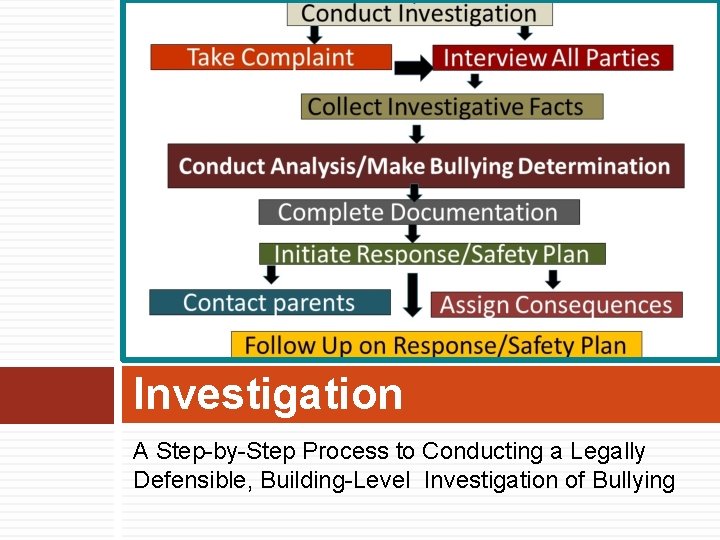
Investigation A Step-by-Step Process to Conducting a Legally Defensible, Building-Level Investigation of Bullying
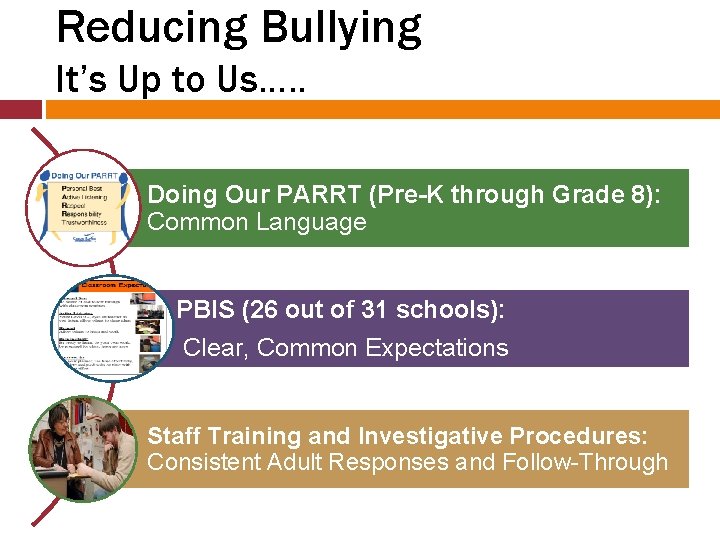
Reducing Bullying It’s Up to Us…. . Doing Our PARRT (Pre-K through Grade 8): Common Language PBIS (26 out of 31 schools): Clear, Common Expectations Staff Training and Investigative Procedures: Consistent Adult Responses and Follow-Through
- Slides: 15