
Define Phase Selecting Projects Project Selection Understanding Six

- Slides: 42
Define Phase Selecting Projects
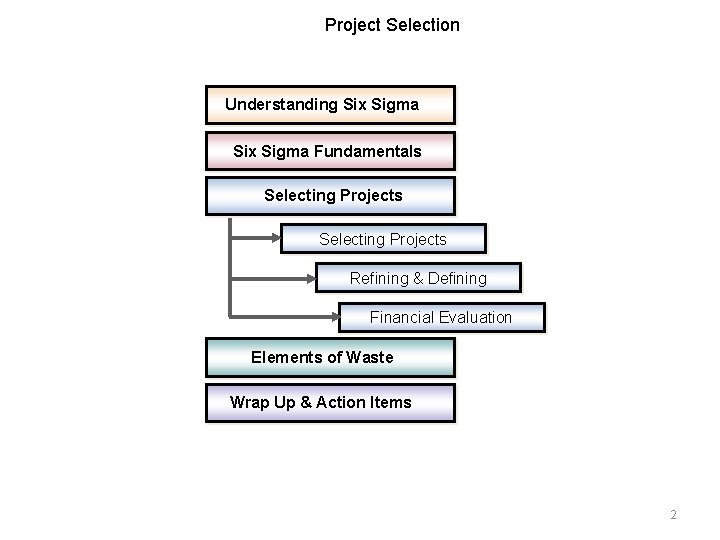
Project Selection Understanding Six Sigma Fundamentals Selecting Projects Refining & Defining Financial Evaluation Elements of Waste Wrap Up & Action Items 2
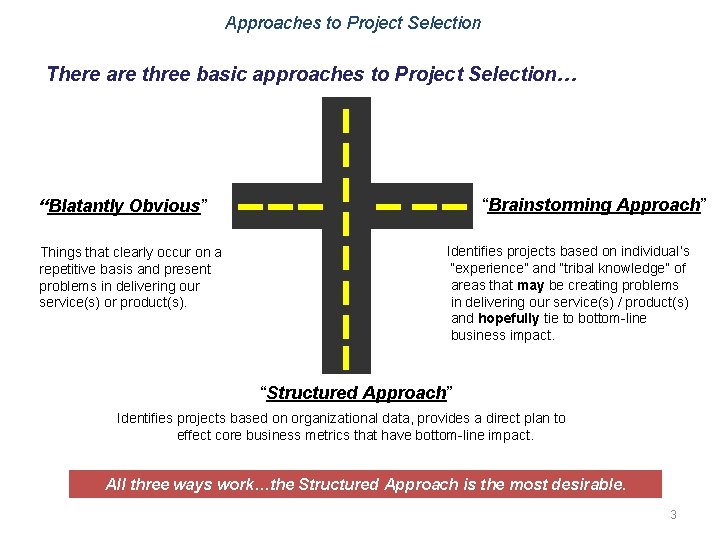
Approaches to Project Selection There are three basic approaches to Project Selection… “Brainstorming Approach” “Blatantly Obvious” Things that clearly occur on a repetitive basis and present problems in delivering our service(s) or product(s). Identifies projects based on individual’s “experience” and “tribal knowledge” of areas that may be creating problems in delivering our service(s) / product(s) and hopefully tie to bottom-line business impact. “Structured Approach” Identifies projects based on organizational data, provides a direct plan to effect core business metrics that have bottom-line impact. All three ways work…the Structured Approach is the most desirable. 3
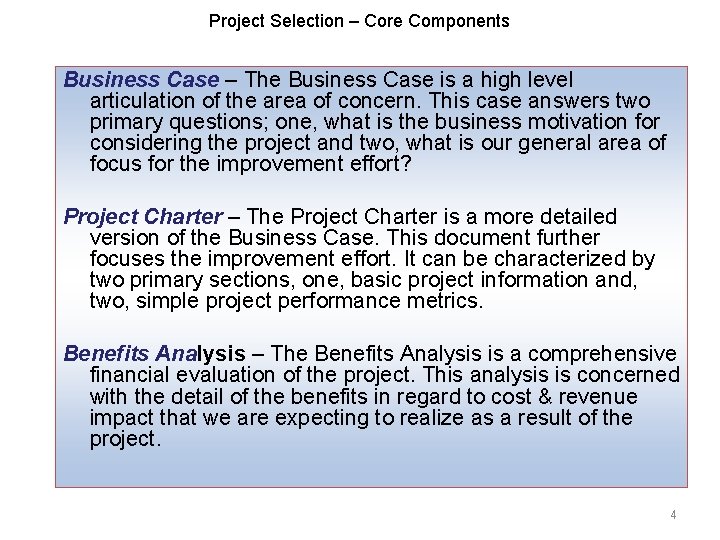
Project Selection – Core Components Business Case – The Business Case is a high level articulation of the area of concern. This case answers two primary questions; one, what is the business motivation for considering the project and two, what is our general area of focus for the improvement effort? Project Charter – The Project Charter is a more detailed version of the Business Case. This document further focuses the improvement effort. It can be characterized by two primary sections, one, basic project information and, two, simple project performance metrics. Benefits Analysis – The Benefits Analysis is a comprehensive financial evaluation of the project. This analysis is concerned with the detail of the benefits in regard to cost & revenue impact that we are expecting to realize as a result of the project. 4
Project Selection - Governance Responsible Party Resources Champion (Process Owner) Business Unit Members N/A Project Charter Six Sigma Belt Champion (Process Owner) & Master Black Belt Ongoing Benefits Analysis Benefits Capture Manager or Unit Financial Rep Champion (Process Owner) & Six Sigma Belt Ongoing / D, M, A, I, C Business Case Frequency of Update 5
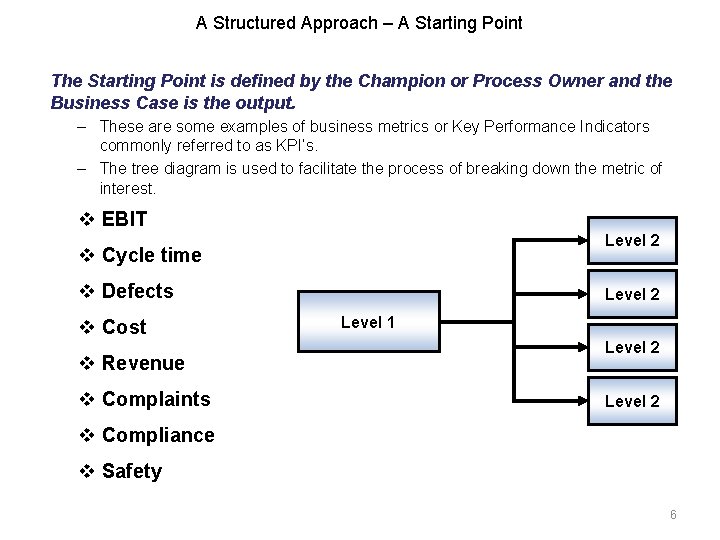
A Structured Approach – A Starting Point The Starting Point is defined by the Champion or Process Owner and the Business Case is the output. – These are some examples of business metrics or Key Performance Indicators commonly referred to as KPI’s. – The tree diagram is used to facilitate the process of breaking down the metric of interest. v EBIT Level 2 v Cycle time v Defects v Cost v Revenue v Complaints Level 2 Level 1 Level 2 v Compliance v Safety 6
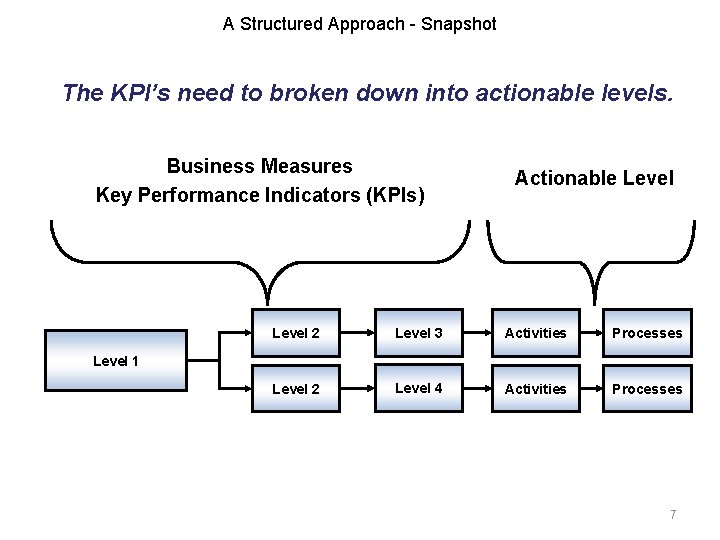
A Structured Approach - Snapshot The KPI’s need to broken down into actionable levels. Business Measures Key Performance Indicators (KPIs) Actionable Level 2 Level 3 Activities Processes Level 2 Level 4 Activities Processes Level 1 7
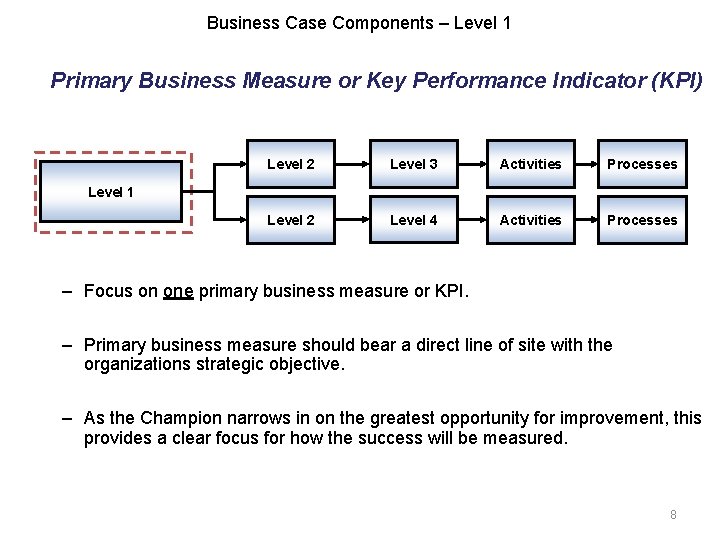
Business Case Components – Level 1 Primary Business Measure or Key Performance Indicator (KPI) Level 2 Level 3 Activities Processes Level 2 Level 4 Activities Processes Level 1 – Focus on one primary business measure or KPI. – Primary business measure should bear a direct line of site with the organizations strategic objective. – As the Champion narrows in on the greatest opportunity for improvement, this provides a clear focus for how the success will be measured. 8
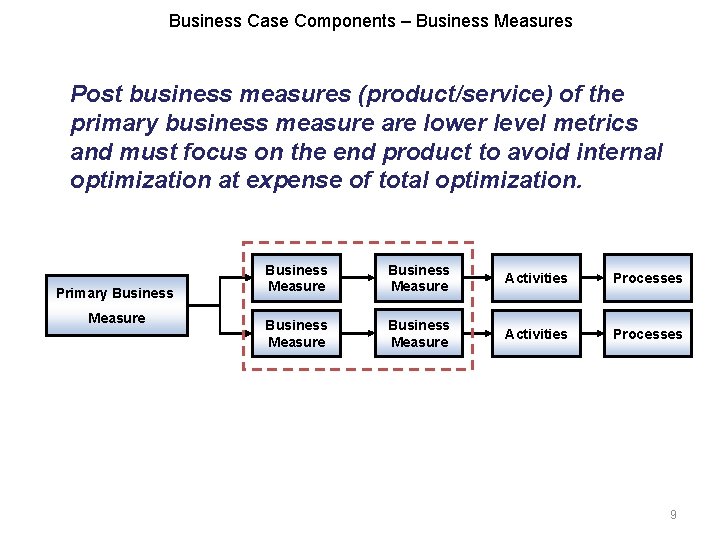
Business Case Components – Business Measures Post business measures (product/service) of the primary business measure are lower level metrics and must focus on the end product to avoid internal optimization at expense of total optimization. Primary Business Measure Activities Processes Business Measure Activities Processes 9
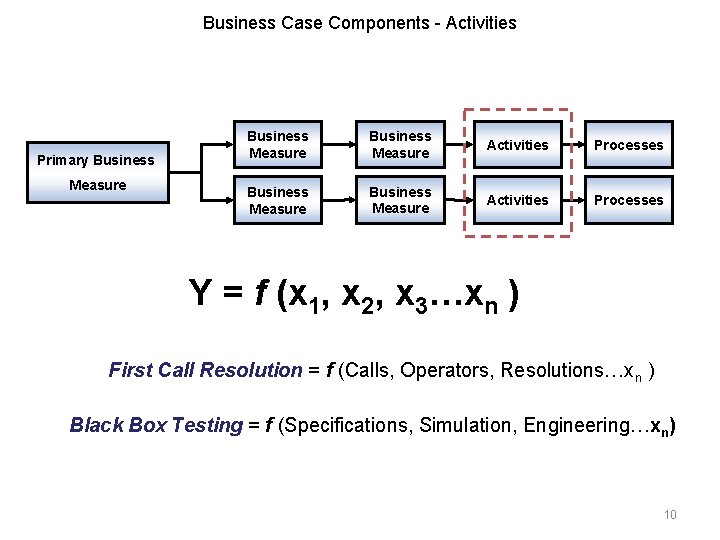
Business Case Components - Activities Primary Business Measure Activities Processes Business Measure Activities Processes Y = f (x 1, x 2, x 3…xn ) First Call Resolution = f (Calls, Operators, Resolutions…xn ) Black Box Testing = f (Specifications, Simulation, Engineering…xn) 10
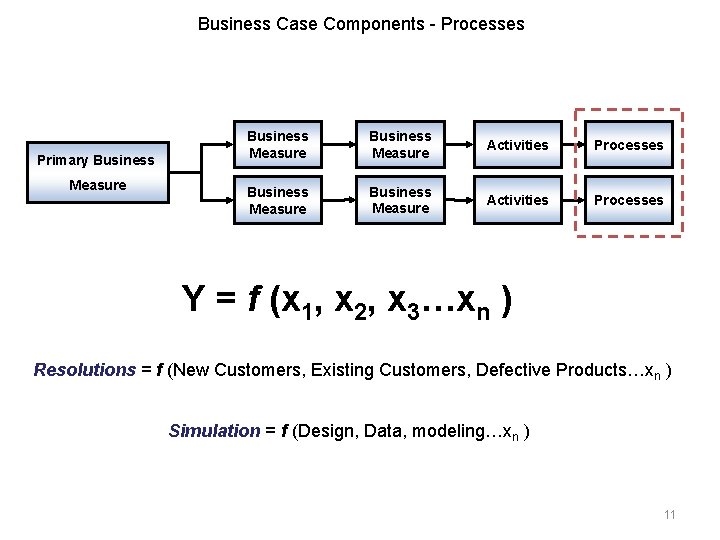
Business Case Components - Processes Primary Business Measure Activities Processes Business Measure Activities Processes Y = f (x 1, x 2, x 3…xn ) Resolutions = f (New Customers, Existing Customers, Defective Products…xn ) Simulation = f (Design, Data, modeling…xn ) 11
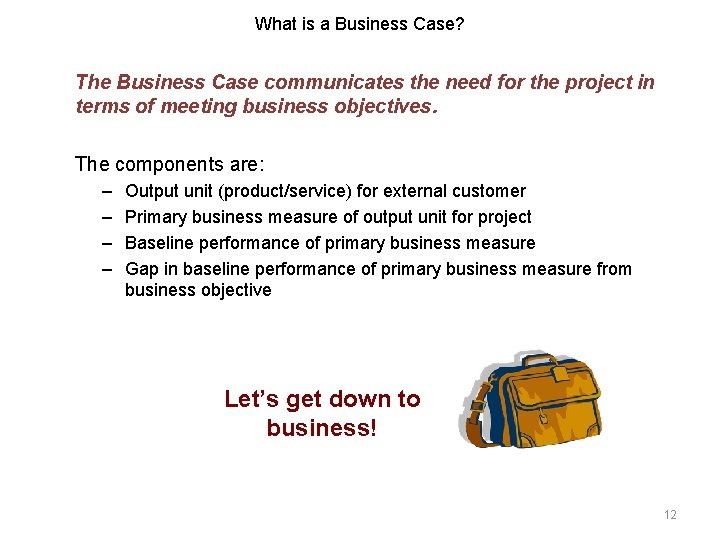
What is a Business Case? The Business Case communicates the need for the project in terms of meeting business objectives. The components are: – – Output unit (product/service) for external customer Primary business measure of output unit for project Baseline performance of primary business measure Gap in baseline performance of primary business measure from business objective Let’s get down to business! 12
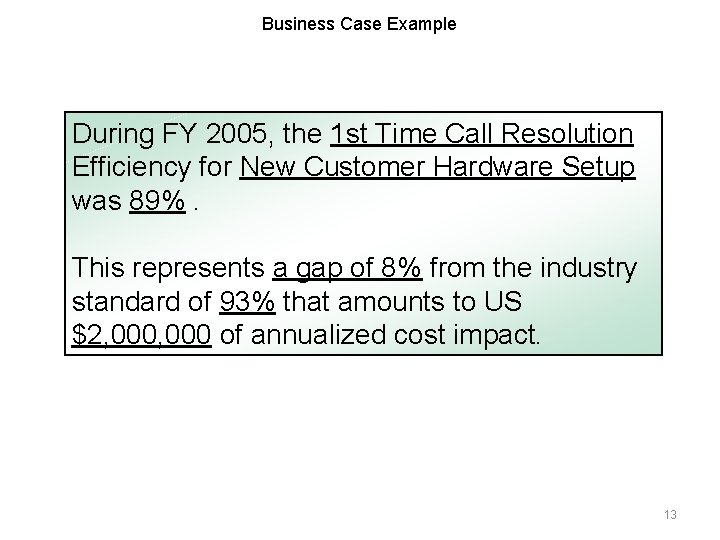
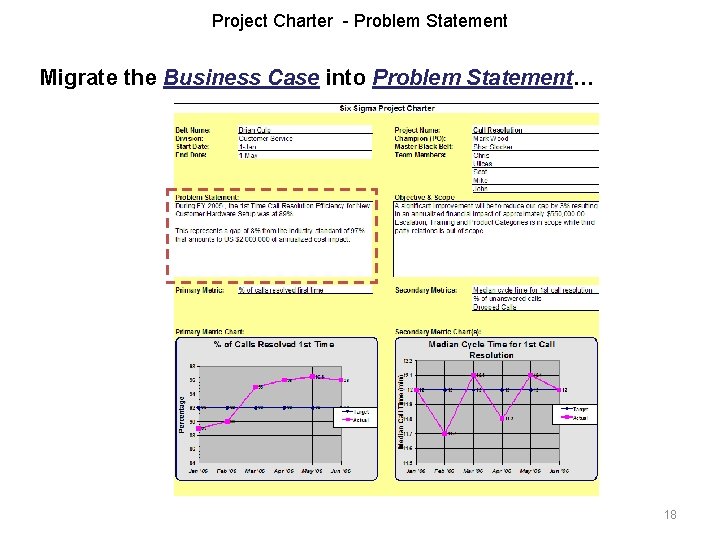
Business Case Example During FY 2005, the 1 st Time Call Resolution Efficiency for New Customer Hardware Setup was 89%. This represents a gap of 8% from the industry standard of 93% that amounts to US $2, 000 of annualized cost impact. 13
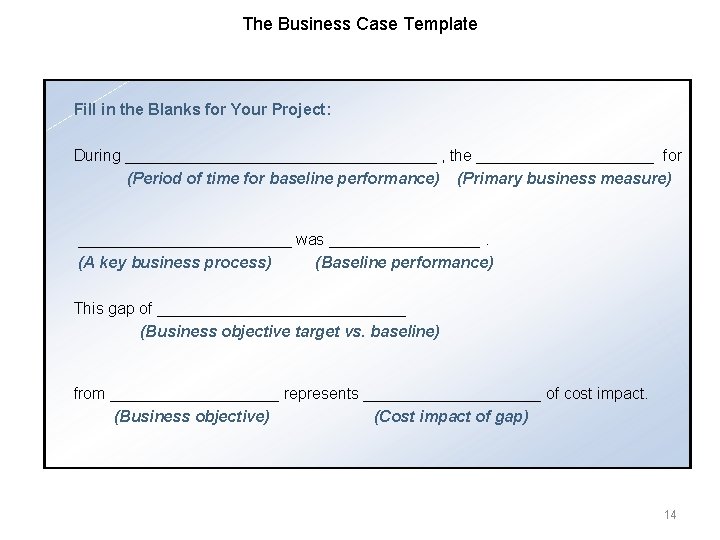
The Business Case Template Fill in the Blanks for Your Project: During __________________ , the __________ for (Period of time for baseline performance) (Primary business measure) ____________ was _________. (A key business process) (Baseline performance) This gap of ______________ (Business objective target vs. baseline) from __________ represents __________ of cost impact. (Business objective) (Cost impact of gap) 14
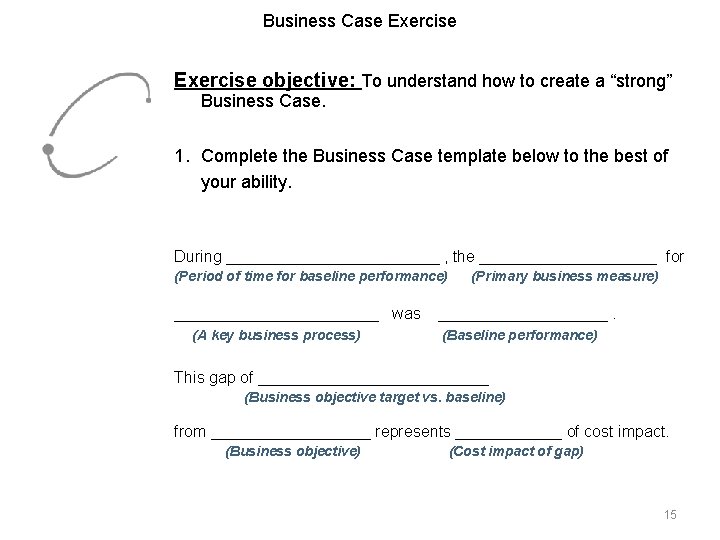
Business Case Exercise objective: To understand how to create a “strong” Business Case. 1. Complete the Business Case template below to the best of your ability. During ____________ , the __________ for (Period of time for baseline performance) (Primary business measure) ____________ was __________. (A key business process) (Baseline performance) This gap of _____________ (Business objective target vs. baseline) from _________ represents ______ of cost impact. (Business objective) (Cost impact of gap) 15
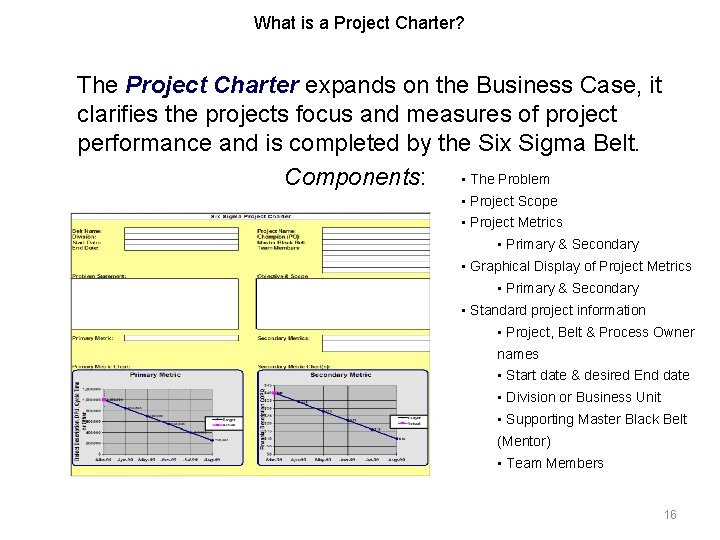
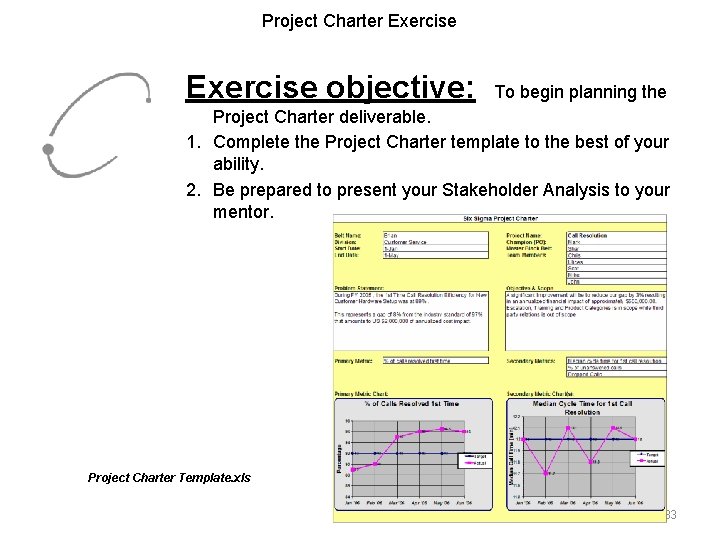
What is a Project Charter? The Project Charter expands on the Business Case, it clarifies the projects focus and measures of project performance and is completed by the Six Sigma Belt. Components: • The Problem • Project Scope • Project Metrics • Primary & Secondary • Graphical Display of Project Metrics • Primary & Secondary • Standard project information • Project, Belt & Process Owner names • Start date & desired End date • Division or Business Unit • Supporting Master Black Belt (Mentor) • Team Members 16
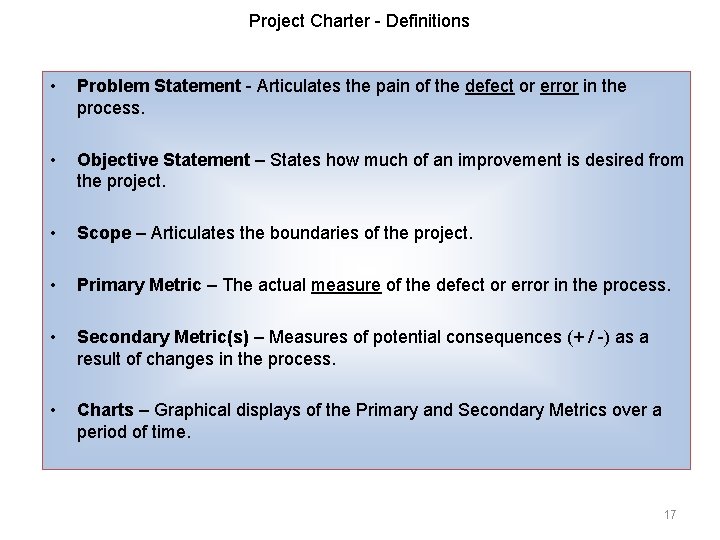
Project Charter - Definitions • Problem Statement - Articulates the pain of the defect or error in the process. • Objective Statement – States how much of an improvement is desired from the project. • Scope – Articulates the boundaries of the project. • Primary Metric – The actual measure of the defect or error in the process. • Secondary Metric(s) – Measures of potential consequences (+ / -) as a result of changes in the process. • Charts – Graphical displays of the Primary and Secondary Metrics over a period of time. 17
Project Charter - Problem Statement Migrate the Business Case into Problem Statement… 18
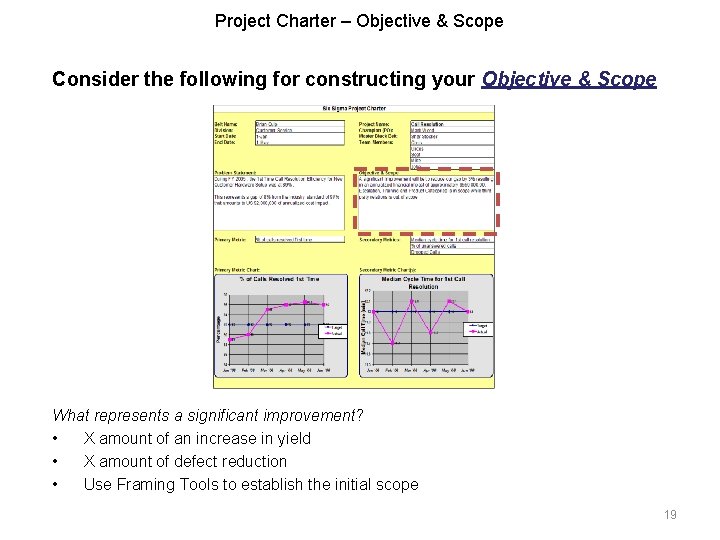
Project Charter – Objective & Scope Consider the following for constructing your Objective & Scope What represents a significant improvement? • X amount of an increase in yield • X amount of defect reduction • Use Framing Tools to establish the initial scope 19
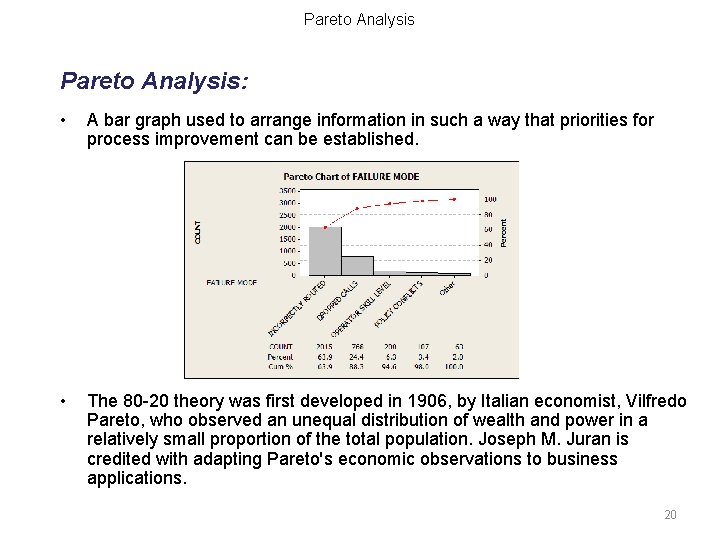
Pareto Analysis: • A bar graph used to arrange information in such a way that priorities for process improvement can be established. • The 80 -20 theory was first developed in 1906, by Italian economist, Vilfredo Pareto, who observed an unequal distribution of wealth and power in a relatively small proportion of the total population. Joseph M. Juran is credited with adapting Pareto's economic observations to business applications. 20
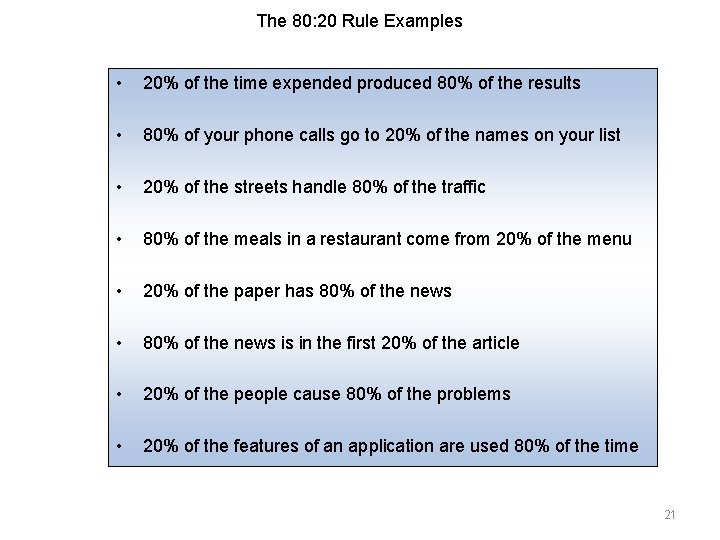
The 80: 20 Rule Examples • 20% of the time expended produced 80% of the results • 80% of your phone calls go to 20% of the names on your list • 20% of the streets handle 80% of the traffic • 80% of the meals in a restaurant come from 20% of the menu • 20% of the paper has 80% of the news • 80% of the news is in the first 20% of the article • 20% of the people cause 80% of the problems • 20% of the features of an application are used 80% of the time 21
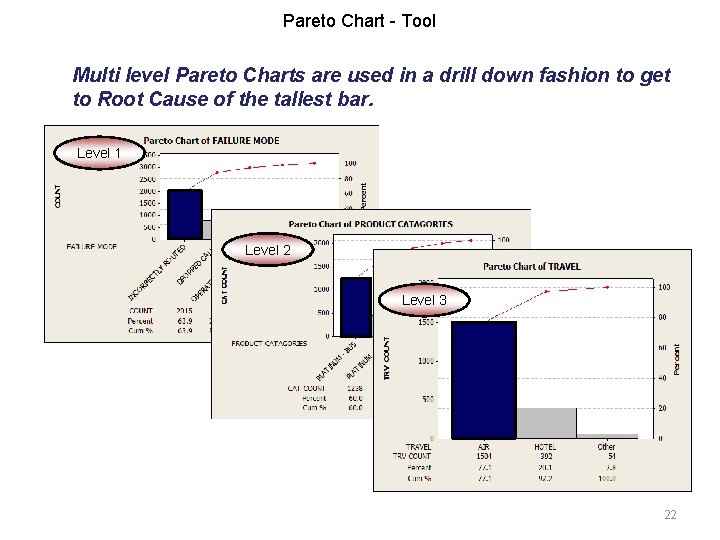
Pareto Chart - Tool Multi level Pareto Charts are used in a drill down fashion to get to Root Cause of the tallest bar. Level 1 Level 2 Level 3 22
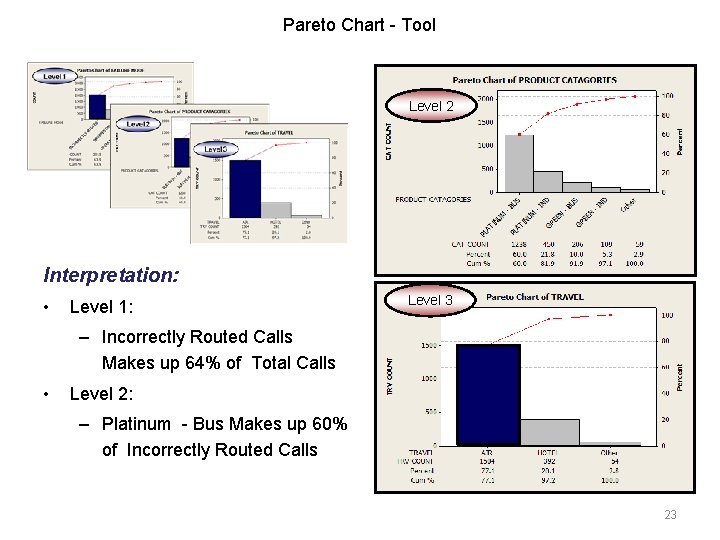
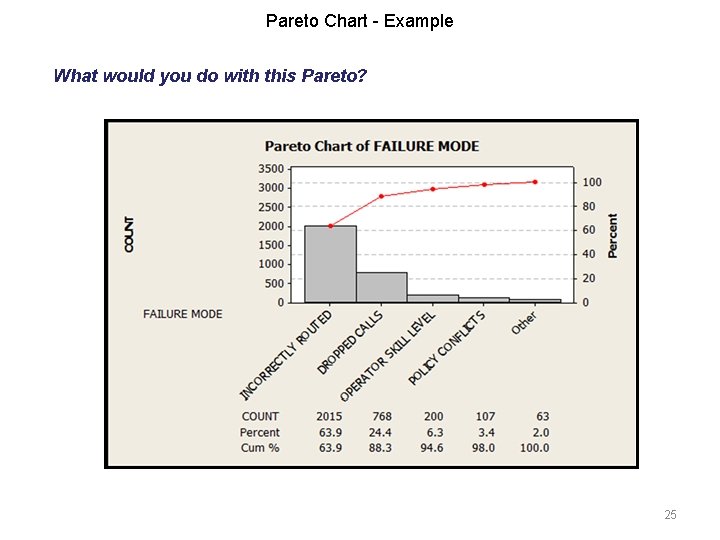
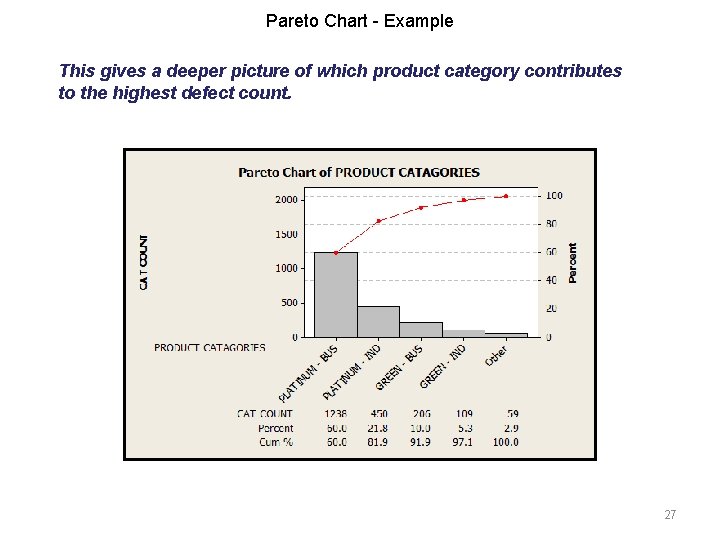
Pareto Chart - Tool Level 2 Interpretation: • Level 1: Level 3 – Incorrectly Routed Calls Makes up 64% of Total Calls • Level 2: – Platinum - Bus Makes up 60% of Incorrectly Routed Calls 23
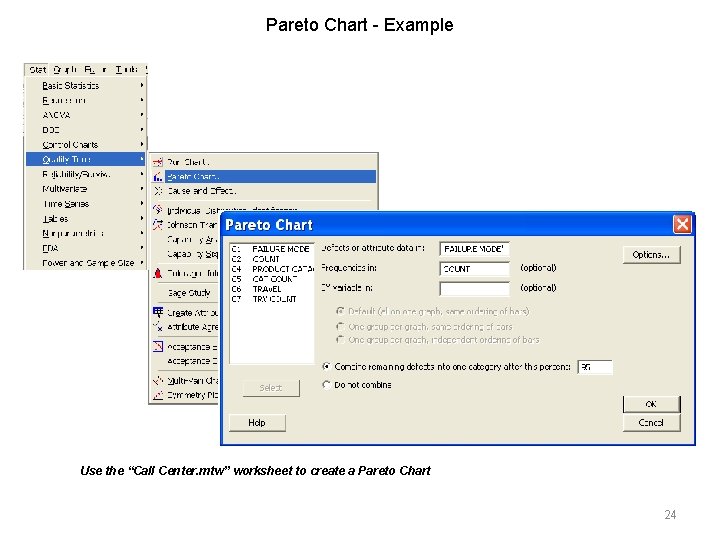
Pareto Chart - Example Use the “Call Center. mtw” worksheet to create a Pareto Chart 24
Pareto Chart - Example What would you do with this Pareto? 25
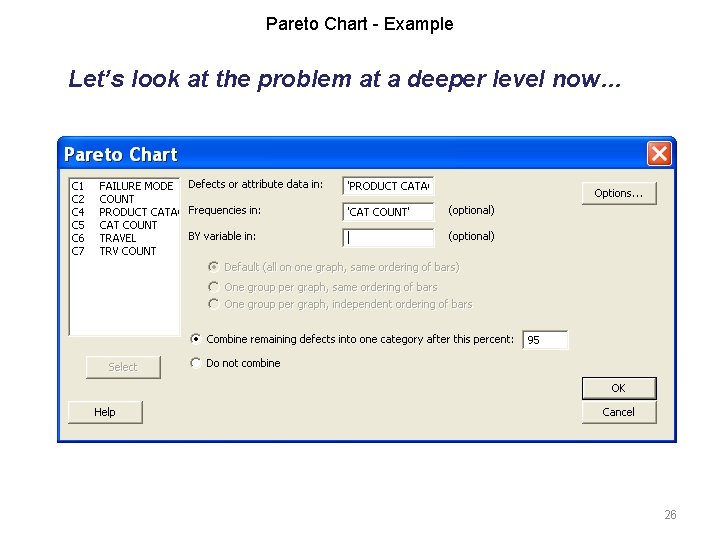
Pareto Chart - Example Let’s look at the problem at a deeper level now… 26
Pareto Chart - Example This gives a deeper picture of which product category contributes to the highest defect count. 27
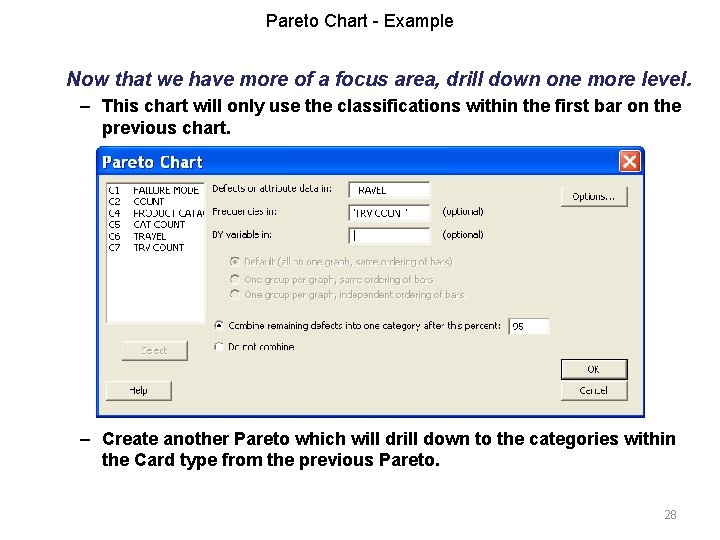
Pareto Chart - Example Now that we have more of a focus area, drill down one more level. – This chart will only use the classifications within the first bar on the previous chart. – Create another Pareto which will drill down to the categories within the Card type from the previous Pareto. 28
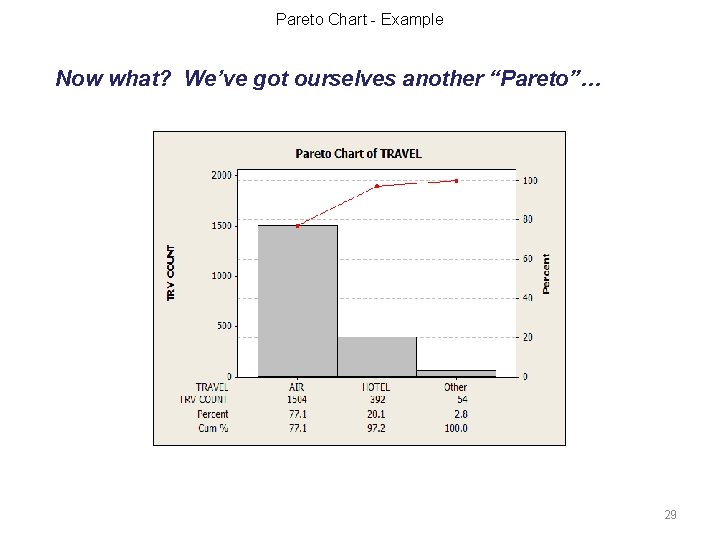
Pareto Chart - Example Now what? We’ve got ourselves another “Pareto”… 29
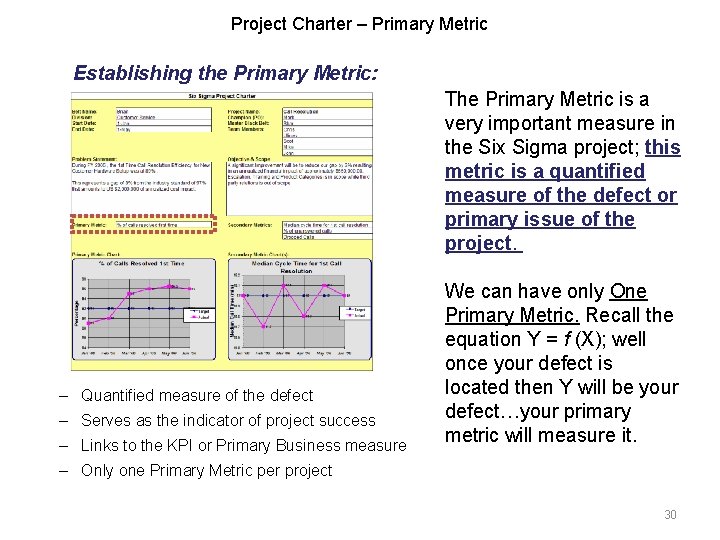
Project Charter – Primary Metric Establishing the Primary Metric: The Primary Metric is a very important measure in the Six Sigma project; this metric is a quantified measure of the defect or primary issue of the project. – Quantified measure of the defect – Serves as the indicator of project success – Links to the KPI or Primary Business measure We can have only One Primary Metric. Recall the equation Y = f (X); well once your defect is located then Y will be your defect…your primary metric will measure it. – Only one Primary Metric per project 30
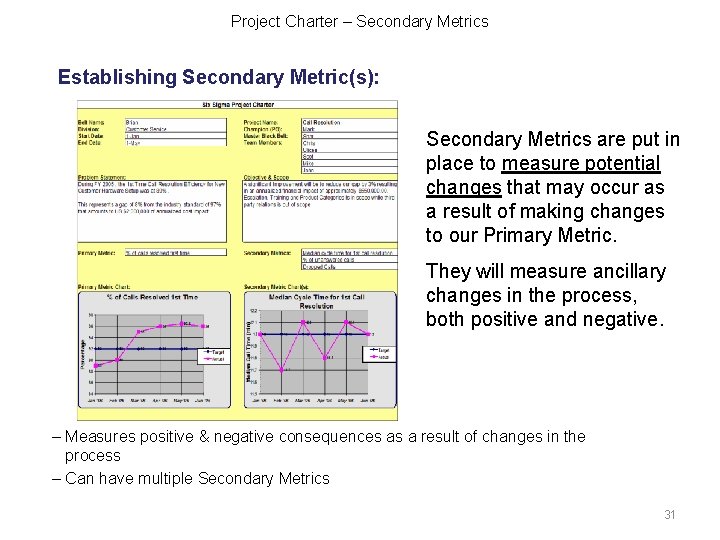
Project Charter – Secondary Metrics Establishing Secondary Metric(s): Secondary Metrics are put in place to measure potential changes that may occur as a result of making changes to our Primary Metric. They will measure ancillary changes in the process, both positive and negative. – Measures positive & negative consequences as a result of changes in the process – Can have multiple Secondary Metrics 31
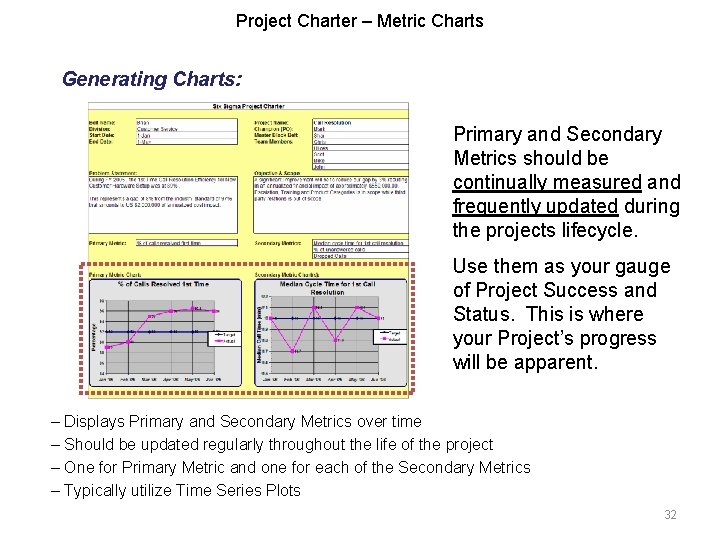
Project Charter – Metric Charts Generating Charts: Primary and Secondary Metrics should be continually measured and frequently updated during the projects lifecycle. Use them as your gauge of Project Success and Status. This is where your Project’s progress will be apparent. – Displays Primary and Secondary Metrics over time – Should be updated regularly throughout the life of the project – One for Primary Metric and one for each of the Secondary Metrics – Typically utilize Time Series Plots 32
Project Charter Exercise objective: To begin planning the Project Charter deliverable. 1. Complete the Project Charter template to the best of your ability. 2. Be prepared to present your Stakeholder Analysis to your mentor. Project Charter Template. xls 33
What is the Financial Evaluation? The Financial Evaluation establishes the value of the project. The components are: – Impact OK, let’s add it up! • Sustainable • One-off – Allocations • Cost Codes / Accounting System – Forecast • Cash flow • Realization schedule Typically a financial representative is responsible for evaluating the financial impact of the project. The Belt works in coordination to facilitate the proper information. 34
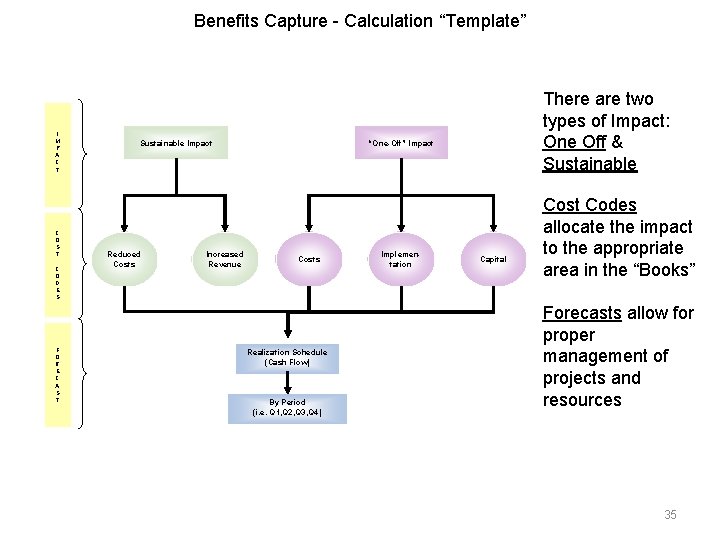
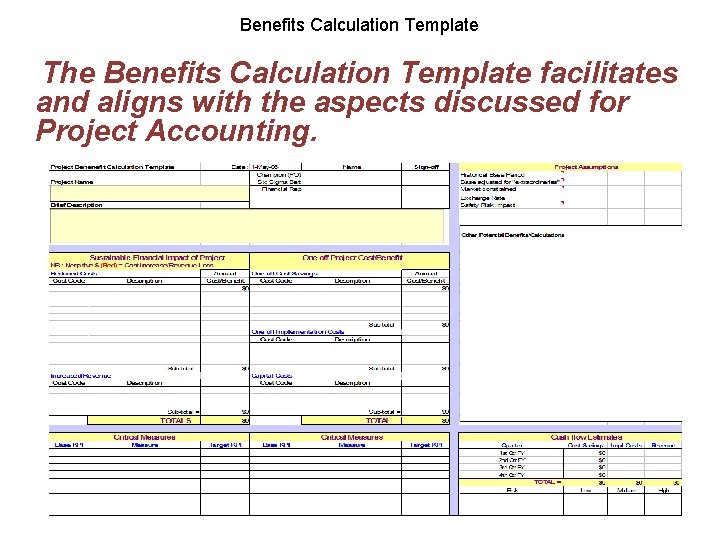
Benefits Capture - Calculation “Template” I M P A C T C O S T C O D E S F O R E C A S T Sustainable Impact Reduced Costs Increased Revenue There are two types of Impact: One Off & Sustainable “One-Off” Impact Costs Realization Schedule (Cash Flow) By Period (i. e. Q 1, Q 2, Q 3, Q 4) Implementation Capital Cost Codes allocate the impact to the appropriate area in the “Books” Forecasts allow for proper management of projects and resources 35
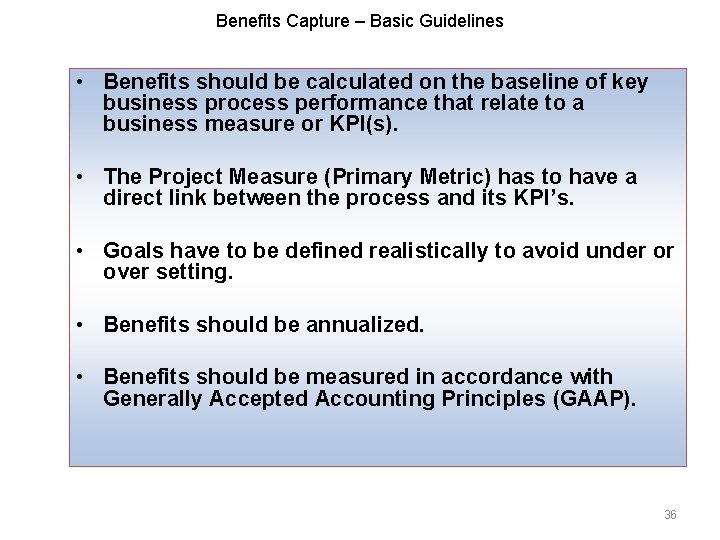
Benefits Capture – Basic Guidelines • Benefits should be calculated on the baseline of key business process performance that relate to a business measure or KPI(s). • The Project Measure (Primary Metric) has to have a direct link between the process and its KPI’s. • Goals have to be defined realistically to avoid under or over setting. • Benefits should be annualized. • Benefits should be measured in accordance with Generally Accepted Accounting Principles (GAAP). 36
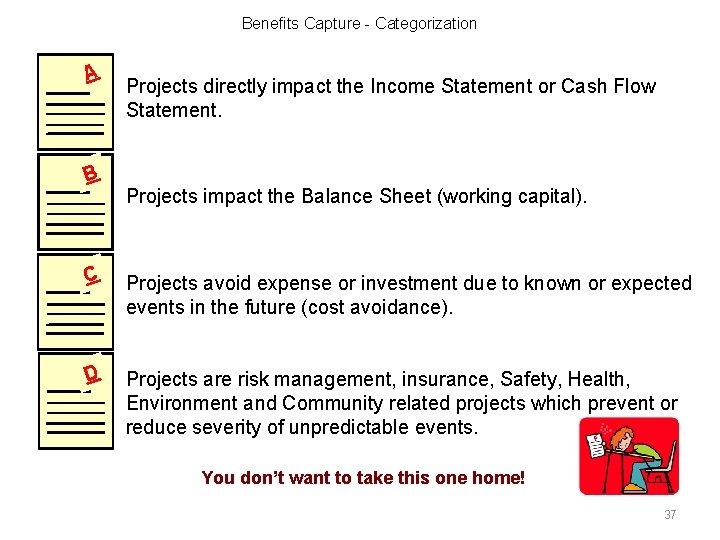
Benefits Capture - Categorization A • Projects directly impact the Income Statement or Cash Flow Statement. B • Projects impact the Balance Sheet (working capital). C • Projects avoid expense or investment due to known or expected events in the future (cost avoidance). D • Projects are risk management, insurance, Safety, Health, Environment and Community related projects which prevent or reduce severity of unpredictable events. You don’t want to take this one home! 37
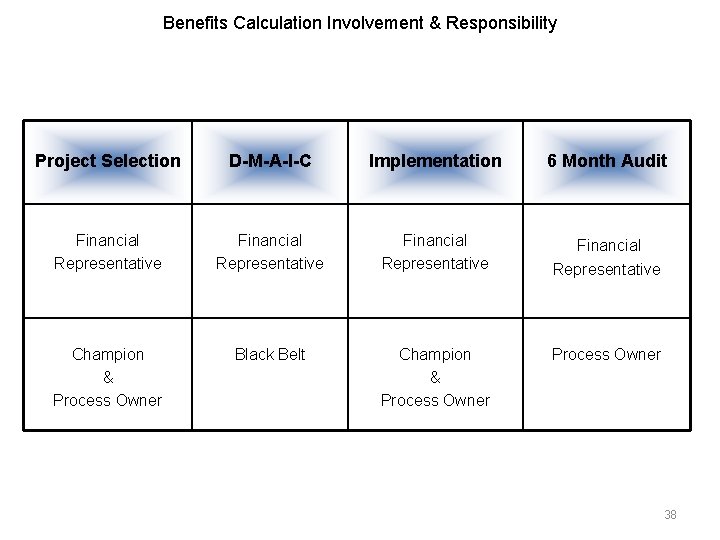
Benefits Calculation Involvement & Responsibility Project Selection D-M-A-I-C Implementation 6 Month Audit Financial Representative Financial Champion & Process Owner Black Belt Champion & Process Owner Representative Process Owner 38
Benefits Capture - Summary • Performance tracking for Six Sigma Projects should use the same discipline that would be used for tracking any other high-profile projects. • The A-B-C-D categories can be used to illustrate the impact of your project or a “portfolio” of projects. • Establish The Governess Grid for Responsibility & Involvement. It’s a wrap! 39
Benefits Calculation Template The Benefits Calculation Template facilitates and aligns with the aspects discussed for Project Accounting. 40
Summary At this point, you should be able to: • Understand the various approaches to project selection • Articulate the benefits of a “Structured Approach” • Refine and Define the business problem into a Project Charter to display critical aspects of an improvement project • Make initial financial impact estimate 41
The Certified Lean Six Sigma Yellow Belt Assessment The Certified Lean Six Sigma Yellow Belt (CLSSYB) tests are useful for assessing a Yellow Belt’s knowledge of Lean Six Sigma. The CLSSYB can be used in preparation for the ASQ or IASSC Certified Six Sigma Yellow Belt exam or for any number of other certifications, including private company certifications. The Lean Six Sigma Yellow Belt Course Manual Open Source Six Sigma Course Manuals are professionally designed and formatted manuals used by Belt’s during training and for reference guides afterwards. The OSSS manuals complement the OSSS Training Materials and consist of slide content, instructional notes data sets and templates. Get the latest products at… www. Open. Source. Six. Sigma. com