
Define and give an example of a natural
- Slides: 18
• Define and give an example of a natural resource, human resource, and capital resources. • Pages 4 -5
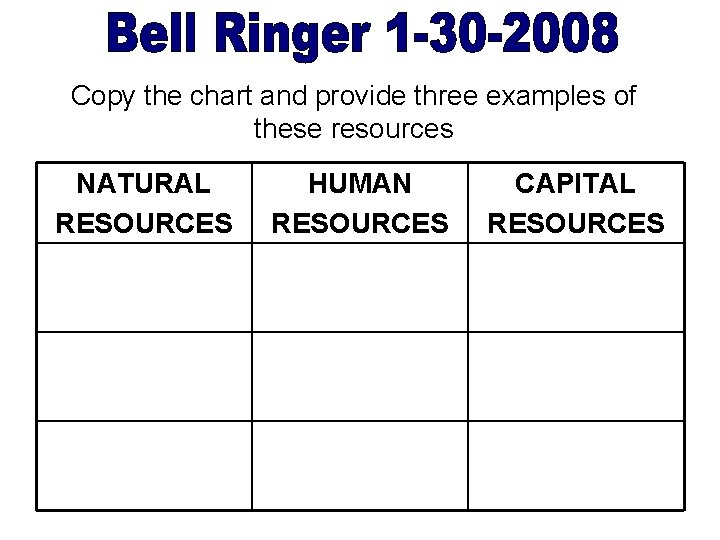
Copy the chart and provide three examples of these resources NATURAL RESOURCES HUMAN RESOURCES CAPITAL RESOURCES
• Why is scarcity a basic problem of economics? (page 8) • What are the THREE basic economic questions on how to allocate resources effectively, that a society must address? (page 9)
• What are three economic choices? Page 11. • Using Figure 1. 2 on page 11 answer the following questions: “Based on the decision-making grid, what is his best choice for a Friday-night activity? What are the trade-offs? What is the opportunity cost?
• What are three forms of exchange? Pages 15 -16 • What are three functions of money? Page 16
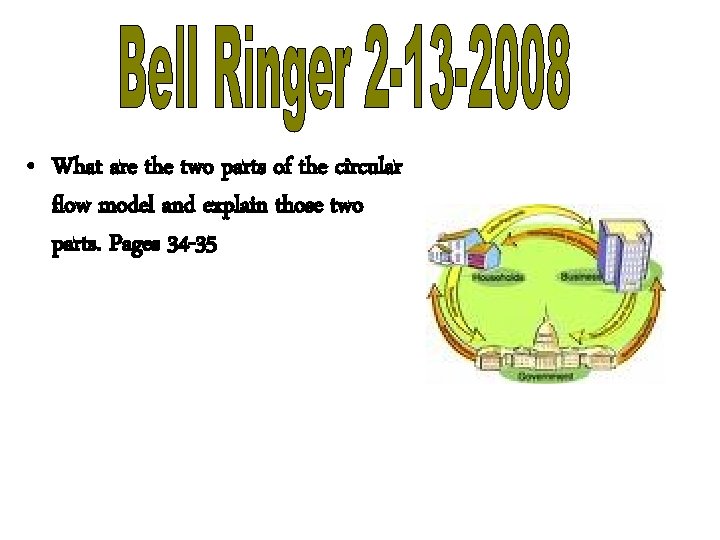
• What are the two parts of the circular flow model and explain those two parts. Pages 34 -35
• Why is scarcity a basic problem of economics? (page 8) • What does the Production Possibility Curve represent? (page 12) • What is interdependence and why might interdependence lead to increased economic efficiency? (page 18)
• List and explain the three economic concepts that help explain the law of demand. • Pages 52 -54
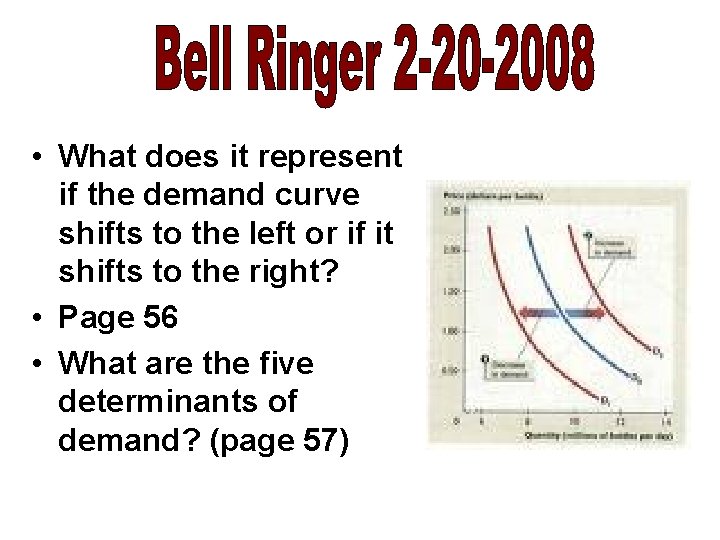
• What does it represent if the demand curve shifts to the left or if it shifts to the right? • Page 56 • What are the five determinants of demand? (page 57)
• When looking a flour, if you take a wideangle shot is flour elastic or inelastic and why? If you take a close-up shot is flour elastic or inelastic and why? • Page 65 -66
• What is the law of supply? (page 73) • When do businesses make a profit? (page 74)
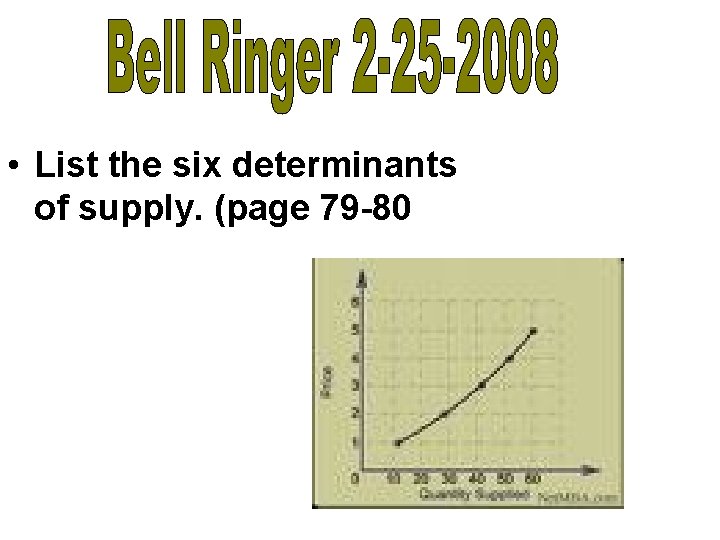
• List the six determinants of supply. (page 79 -80
• What is a fixed cost, variable cost, total cost, and marginal cost? Pages 91 -92
• List the advantages and disadvantages of sole proprietorships. • Pages 145 & 147
• List the advantages and disadvantages of having a partnership. • Pages 150 and 152
• WHAT IS THE DIFFERENCE BETWEEN A SOLE PROPRIETORSHIP AND A PARTNER SHIP? • WHAT IS COLLATERAL? Page 149 • What is Liability? Page 147
• What is the difference between a stock and a corporate bond? • Page 155
• What is a horizontal combination? Page 159 • What is a vertical combination? Pages 159 -160 • What is a conglomerate combination? Page 160