
Defensive publications MGT404 Principles of IP Management EPFL
Defensive publications MGT-404 Principles of IP Management EPFL 25. 04. 2017 Maria MAINA
Summary Ø Defensive publications Ø Dating of documents Ø Brief overview of no-patent strategies
Summary Ø Defensive publications Ø Dating of documents Ø Brief overview of no-patent strategies
Before starting…. Ø Some vocabulary….
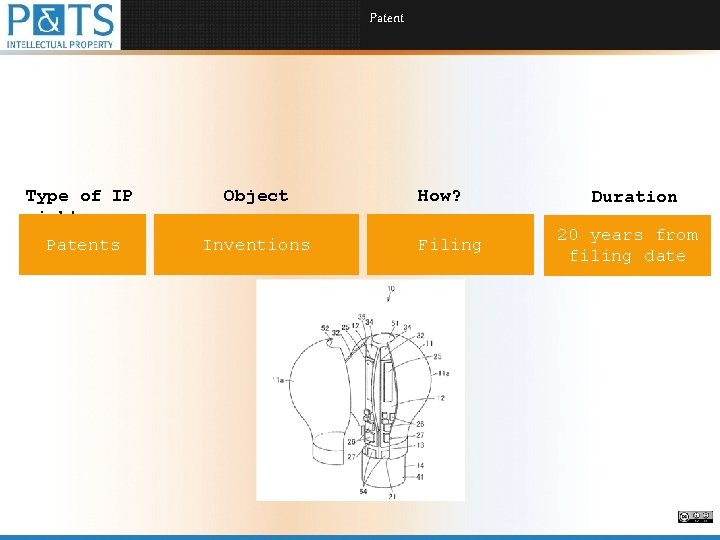
Patent Type of IP right Object Patents Inventions How? Filing Duration 20 years from filing date
Patent vocabulary Ø Prior art Ø Novelty Ø Inventive step
Prior art Any information which has been made accessible to the public in any form and anywhere before the date of the patent/design filing, as: Ø written description, including emails or web pages Ø oral disclosure, such as public lecture, meeting, . . Ø sales, offering for sales Ø radio or television program Ø etc…
Let us start !
Defensive publications Ø IP no-patent strategy. Ø Disclosing an enabling description and/or drawing of a product, apparatus or method. Ø The disclosure enters in the public domain and becomes prior art.
Defensive publications Ø Goal: create prior art describing an invention/design in order to prevent others from later obtaining a patent on the same or a closely-related invention.
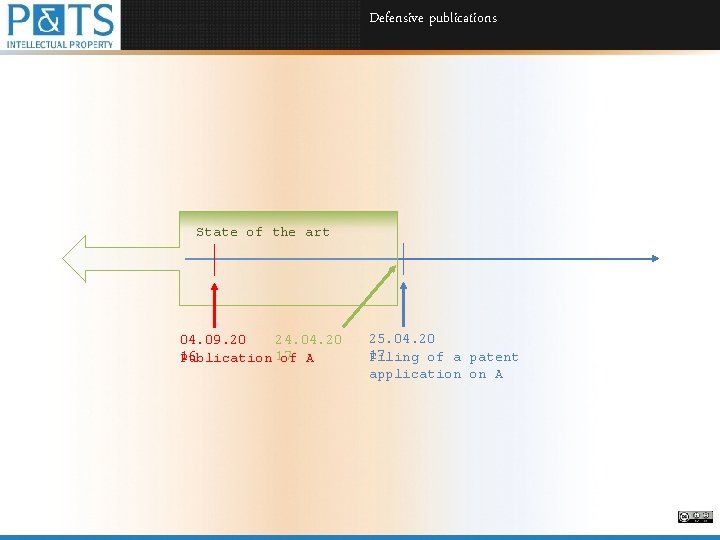
Defensive publications State of the art 04. 09. 20 24. 04. 20 16 Publication 17 of A 25. 04. 20 17 Filing of a patent application on A
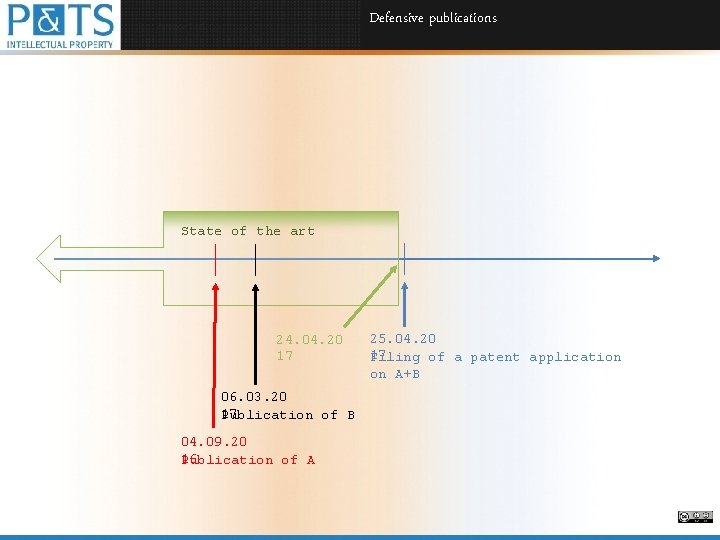
Defensive publications State of the art 24. 04. 20 17 06. 03. 20 17 Publication of B 04. 09. 20 16 Publication of A 25. 04. 20 17 Filing of a patent application on A+B
Where I can publish? Ø Where you want, as long as the publication is / could be accessible. Ø Until recently, there was no really suitable channel for publishing inventions rapidly, cost-effectively and with limited administrative constraints.
Where I can publish? Ø Traditional technical papers published in a journal. Ø Internet publications. Ø Specialized websites.
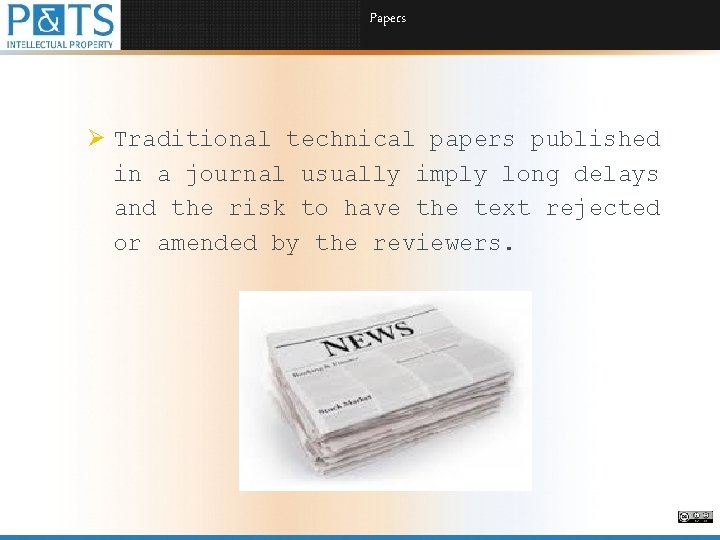
Papers Ø Traditional technical papers published in a journal usually imply long delays and the risk to have the text rejected or amended by the reviewers.
Internet discolsures Ø Internet publications are easier to achieve, but it may be difficult or even impossible to prove later on which information was published and on what date exactly. Ø Not all web pages mention when they were published. Also, websites are easily updated, yet most do not provide any archive of previously displayed material (…but internet archiving service as the so-called
Internet discolsures Ø Neither restricting access to a limited circle of people (e. g. by password protection) nor requiring payment for access (analogous to purchasing a book or subscribing to a journal) prevent a web page from forming part of the state of the art. Ø It is sufficient if the web page is in principle available without any bar of confidentiality.
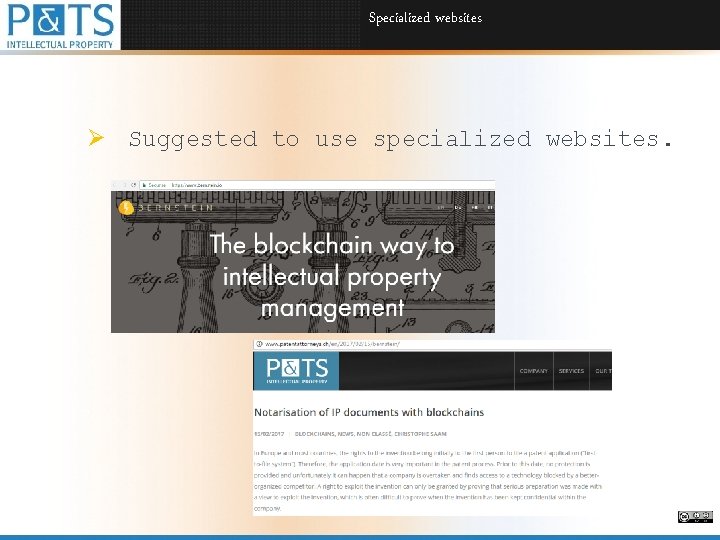
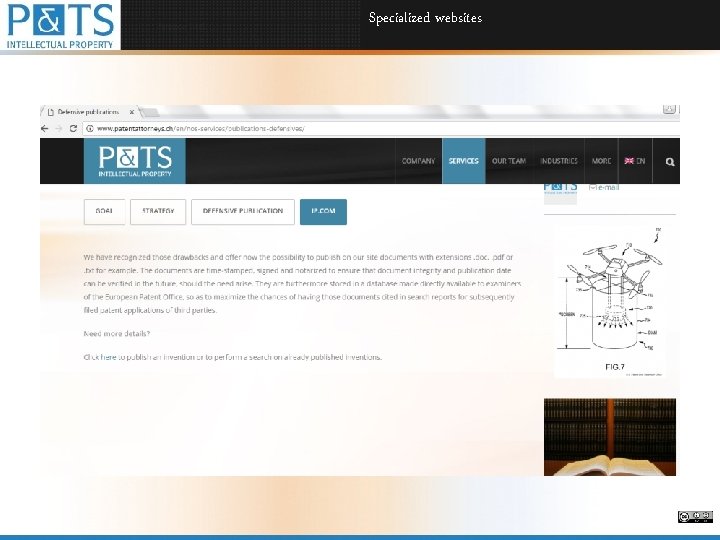
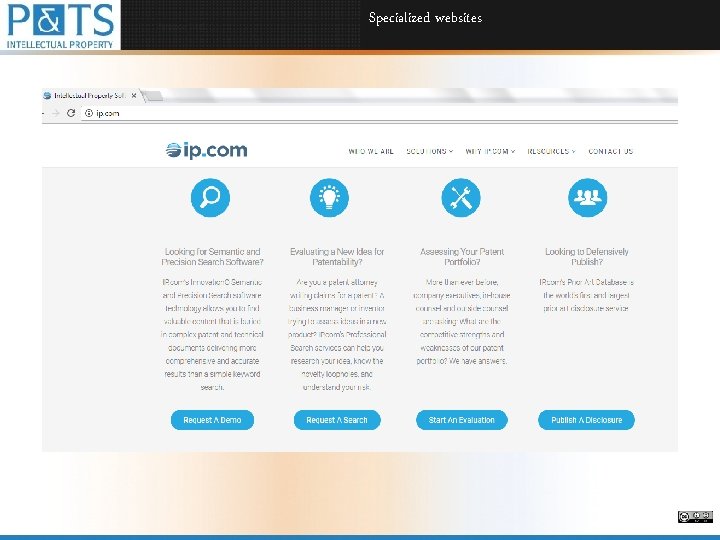
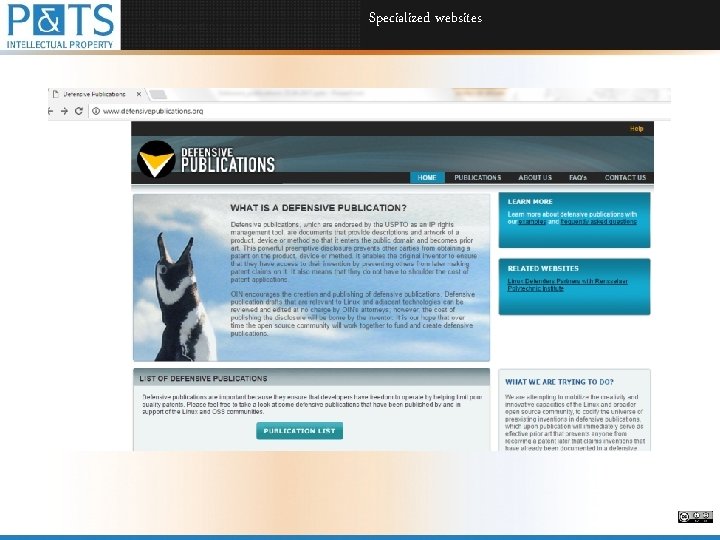
Specialized websites Ø Suggested to use specialized websites.
Specialized websites
Specialized websites
Specialized websites
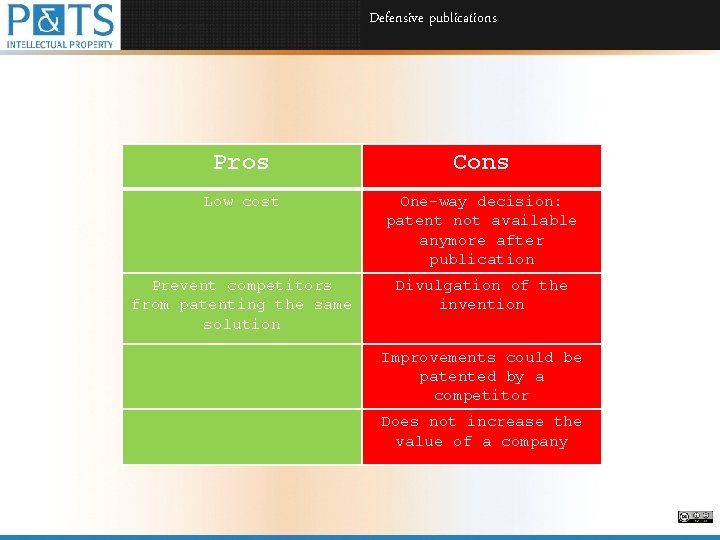
Defensive publications Pros Cons Low cost One-way decision: patent not available anymore after publication Prevent competitors from patenting the same solution Divulgation of the invention Improvements could be patented by a competitor Does not increase the value of a company
Example 1 Ø An example from the real life…. Dear M. Patent Attorney, I’m sorry, I have decided to abandon my patent application…
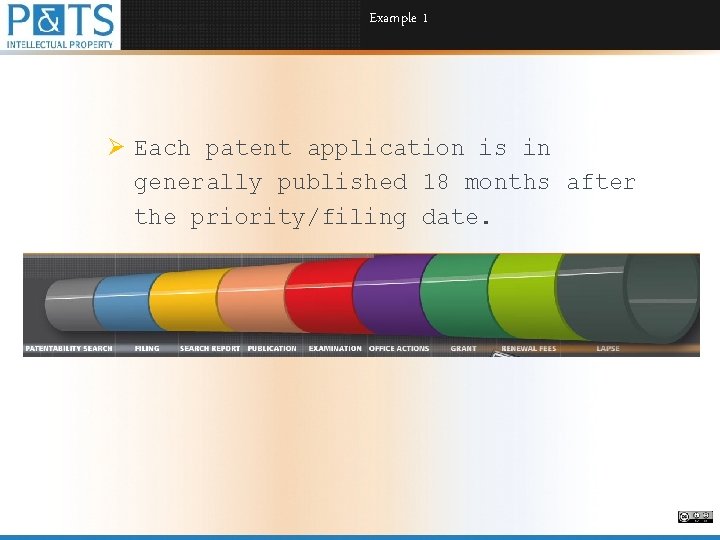
Example 1 Ø Each patent application is in generally published 18 months after the priority/filing date.
Example 1 Ø If the application has been already published and it is abandoned, it belongs to the prior art. Ø An abandoned application does not grant any monopoly to the applicant.
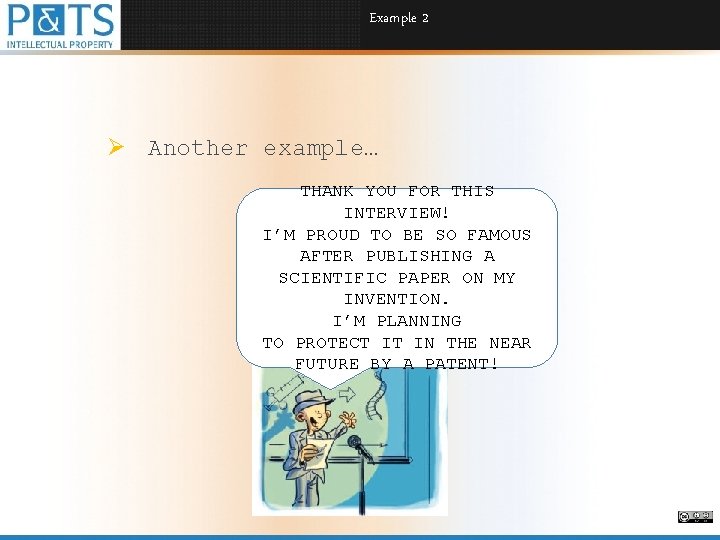
Example 2 Ø Another example… THANK YOU FOR THIS INTERVIEW! I’M PROUD TO BE SO FAMOUS AFTER PUBLISHING A SCIENTIFIC PAPER ON MY INVENTION. I’M PLANNING TO PROTECT IT IN THE NEAR FUTURE BY A PATENT!
Example 2 Ø When it was published? Ø Where? Ø What has been published? Ø Where a patent application can possibly be filed? (check for Countries and/or IP rights with a grace period)
Grace period Ø In some Countries, if an applicant/inventor files a patent application within a certain time after disclosing the invention, the earlier disclosure is not considered to be prior art to the patent application. Ø 12 months (e. g. USA), 6 months (e. g. JP, SM). Ø Other IP titles (utility models,
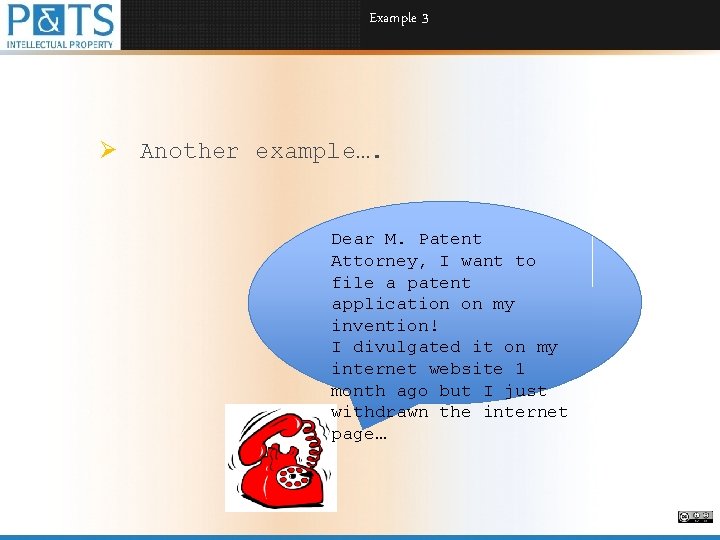
Example 3 Ø Another example…. Dear M. Patent Attorney, I want to file a patent application on my invention! I divulgated it on my internet website 1 month ago but I just withdrawn the internet page…
Example 3 Ø It was available 3 months, 3 weeks or 20 minutes? Ø 3 weeks “sufficiently long” (T 1553/06, r. 6. 7. 5) Ø No decision on 20 minutes (T 1553/06, r. 6. 7. 3)
Example 3 Requirement for availability (T 1553/06, r. 6. 7. 3) Ø Document could be found with a public engine Ø Using one or more keywords Ø All related to the essence of content of document Ø A document only accessible through non -public URL is not available to the public (unless the URL is so straightforward that it can be readily
Summary Ø Defensive publications Ø Dating of documents Ø Brief overview of no-patent strategies
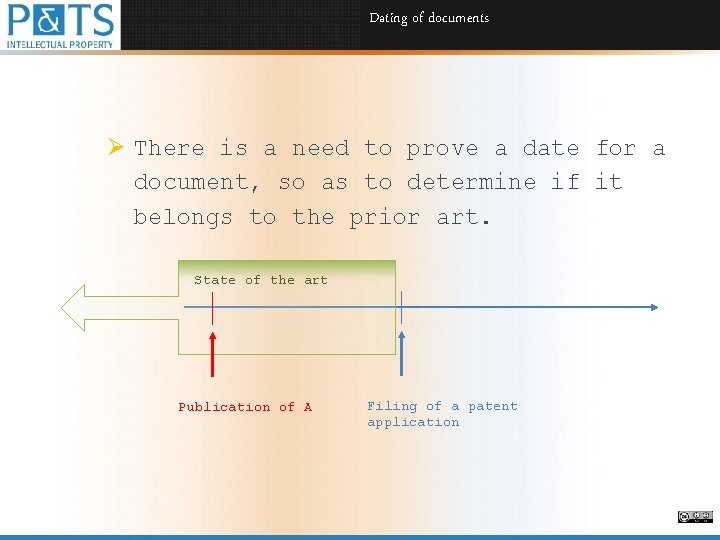
Dating of documents Ø There is a need to prove a date for a document, so as to determine if it belongs to the prior art. State of the art Publication of A Filing of a patent application
Dating of documents Ø There is a need to prove a date in first to file systems: the first applicant of the patent is considered to be the rightful owner of the patent, regardless of whether or not he is the first inventor. Ø The first inventor cannot prohibit the first applicant from exploiting the invention (he has no monopoly, no exclusivity on his creation).

Dating of documents Ø However, in some Countries, the 1 st owner of the technology (i. e. 1 st inventor/company) may claim a "prior personal possession right", which will allow him/it (and only him/it) to use/manufacture/market… the invention, despite another patent owner's monopoly. Ø This right to exploit the invention can only be granted in some Countries by proving that serious preparation was made with a view to exploit the
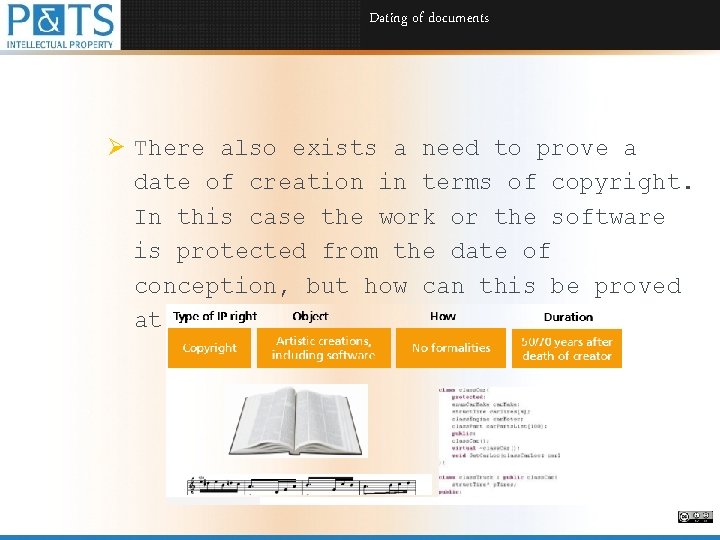
Dating of documents Ø There also exists a need to prove a date of creation in terms of copyright. In this case the work or the software is protected from the date of conception, but how can this be proved at a later date?
Dating of documents Ø Notary Ø « Enveloppe Soleau » Ø Registered mail Ø Filing documents at an IP Office Ø Blockchains
Notary Pros Cons Safe Cumbersome procedure Limited costs Not adapted for companies that create inventions or lines of code every day
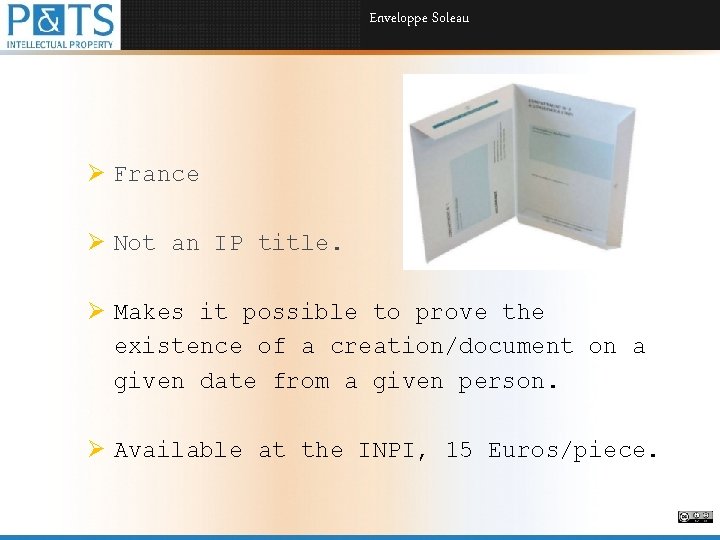
Enveloppe Soleau Ø France Ø Not an IP title. Ø Makes it possible to prove the existence of a creation/document on a given date from a given person. Ø Available at the INPI, 15 Euros/piece.
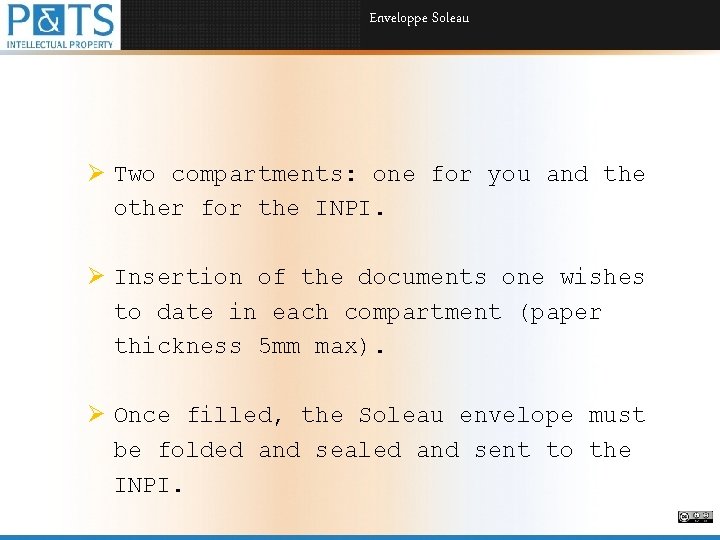
Enveloppe Soleau Ø Two compartments: one for you and the other for the INPI. Ø Insertion of the documents one wishes to date in each compartment (paper thickness 5 mm max). Ø Once filled, the Soleau envelope must be folded and sealed and sent to the INPI.
Enveloppe Soleau Ø After registering and perforating the envelope to date it, the INPI return one of the two compartments to the person/company who filed it. Ø One must preserve it carefully, without opening/unclipping it! Ø The INPI keeps the other compartment in its archives for a period of 5 years, renewable once.
Enveloppe Soleau Ø If someone disputes the date of a creation or project: a judge can ask the INPI/Applicant to unpack the envelope. Ø The content of each compartment or the comparison of the contents of the two compartments can serve as piece of evidence of the information available/exact situation of a technical development at the filing date. It could serve also to establish
e-Soleau Ø https: //www. inpi. fr/fr/services-etprestations/e-soleau (since 12. 2016). Ø For each filed, a fingerprint is calculated and stored in the INPI Electronic Archiving System. Ø Receipt by email mentioning the filing date, the list of the deposited documents and their respective fingerprints.
e-Soleau Ø Up to 300 MB in various formats (pdf, images, audio, video). Ø 15 € / 10 Mo, 10 € / 10 Mo extra.
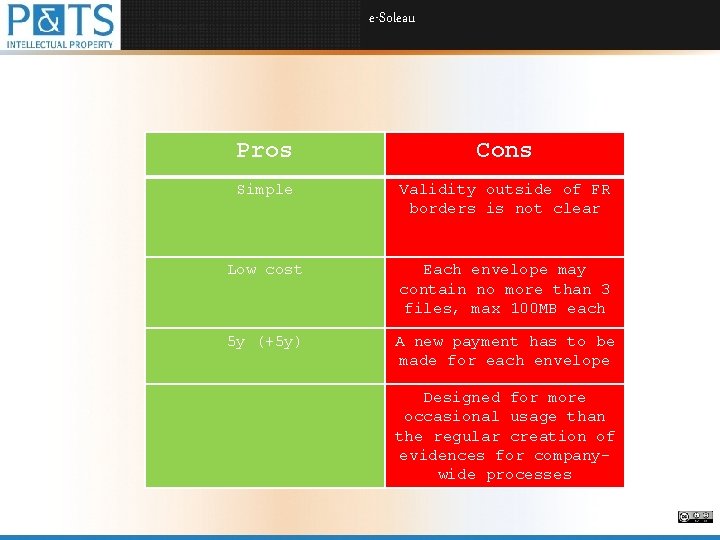
e-Soleau Pros Cons Simple Validity outside of FR borders is not clear Low cost Each envelope may contain no more than 3 files, max 100 MB each 5 y (+5 y) A new payment has to be made for each envelope Designed for more occasional usage than the regular creation of evidences for companywide processes
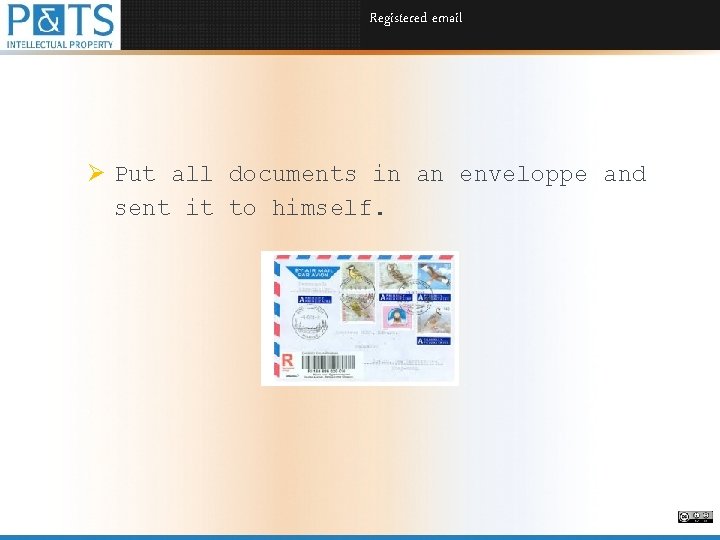
Registered email Ø Put all documents in an enveloppe and sent it to himself.
Registered email Pros Cons Simple Uncertain autentification (e. g. if the letter is opened or nor perfectly sealed) Low cost Validity is not clear Not adapted for companies that create inventions or lines of code every day
Filing documents at an IP Office Ø For having a filing date in some Countries it is just required to send to an IP Office: - an indication that a patent is sought - information identifying the applicant or allowing the applicant to be contacted - a description.
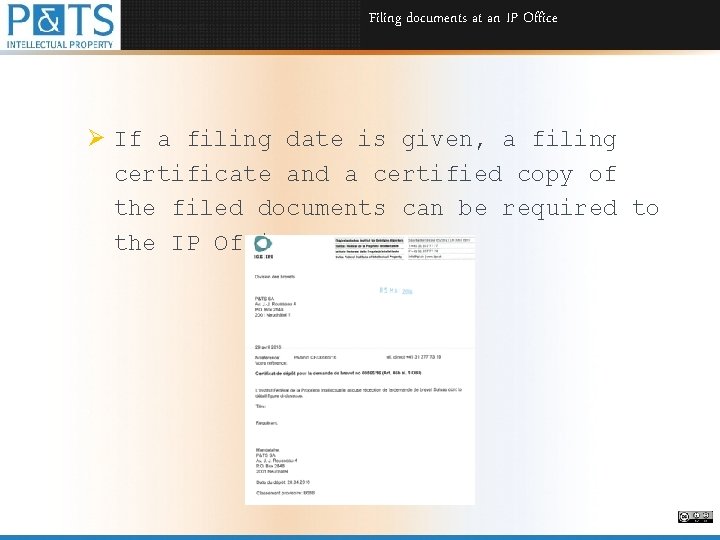
Filing documents at an IP Office Ø If a filing date is given, a filing certificate and a certified copy of the filed documents can be required to the IP Office.
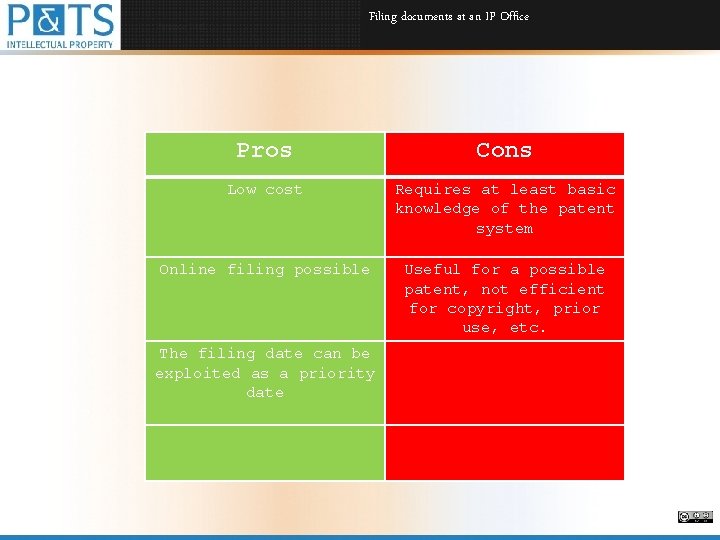
Filing documents at an IP Office Pros Cons Low cost Requires at least basic knowledge of the patent system Online filing possible Useful for a possible patent, not efficient for copyright, prior use, etc. The filing date can be exploited as a priority date
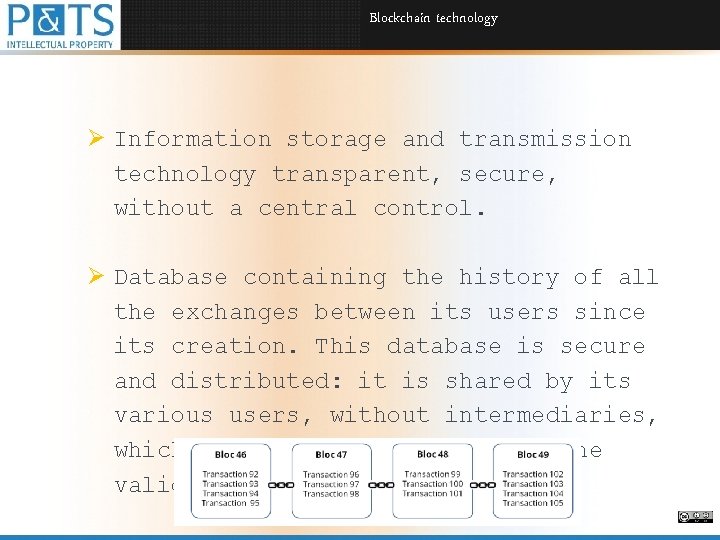
Blockchain technology Ø Information storage and transmission technology transparent, secure, without a central control. Ø Database containing the history of all the exchanges between its users since its creation. This database is secure and distributed: it is shared by its various users, without intermediaries, which allows each one to check the validity of the channel.
Blockchain technology Ø Public blockchains (open to all) and private blockchains (whose access and use are limited to a number of actors). Ø A public blockchain can therefore be assimilated to a public, anonymous and unfalsifiable public accounting book. "a very large notebook that everyone can read freely and free of charge, on which everyone can write, but which is impossible to erase and indestructible" [mathematician Jean-Paul Delahaye]
Blockchain technology Ø https: //www. bernstein. io/ Ø Notarisation services for invention announcements based on blockchain technology. The downloaded document remains confidential, but it is possible to prove at a later date that it existed at the date it was uploaded and that it has not been modified. Ø It is also possible to request the publication of this document if
Blockchain technology Ø https: //www. bernstein. io/ Ø Encrypting documents locally and registering a cryptographic fingerprint on the blockchain. Ø Nothing to install, no software or extensions. Bernstein is a regular web app that runs in any modern browser.
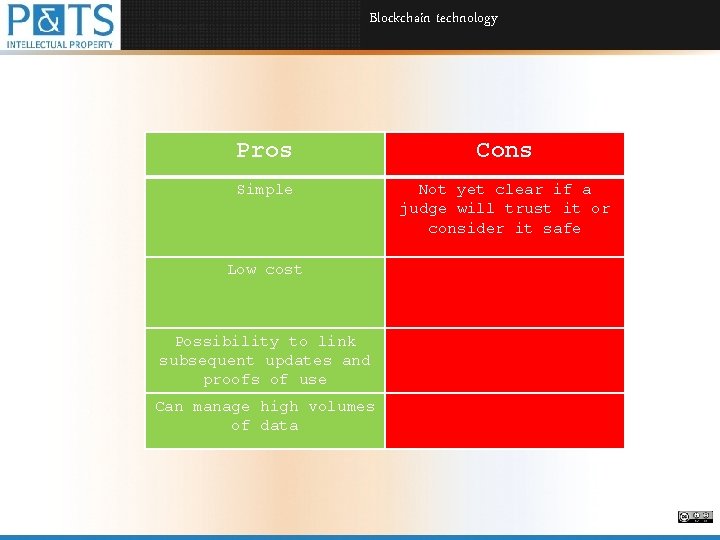
Blockchain technology Pros Cons Simple Not yet clear if a judge will trust it or consider it safe Low cost Possibility to link subsequent updates and proofs of use Can manage high volumes of data
Summary Ø Defensive publications Ø Dating of documents Ø Brief overview of no-patent strategies
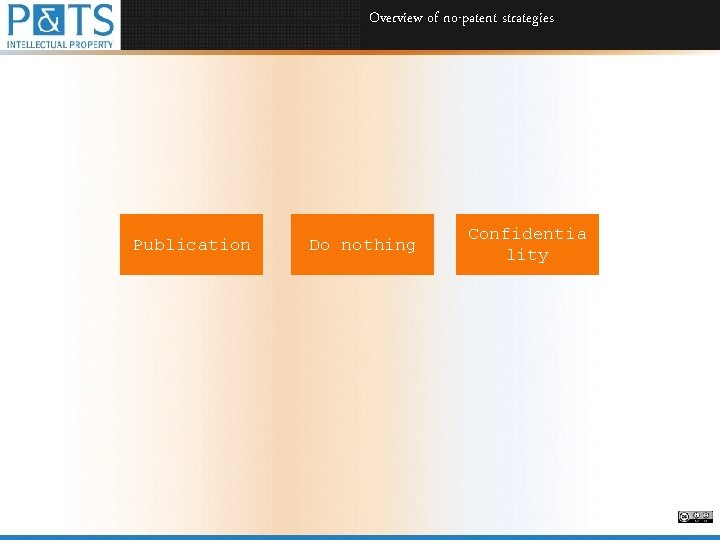
Overview of no-patent strategies Publication Do nothing Confidentia lity
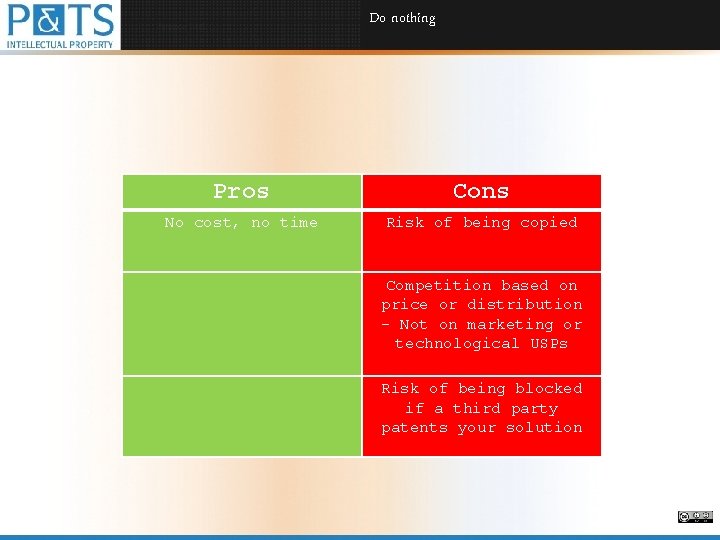
Do nothing Pros Cons No cost, no time Risk of being copied Competition based on price or distribution - Not on marketing or technological USPs Risk of being blocked if a third party patents your solution
Confidentiality Ø Keep it secret
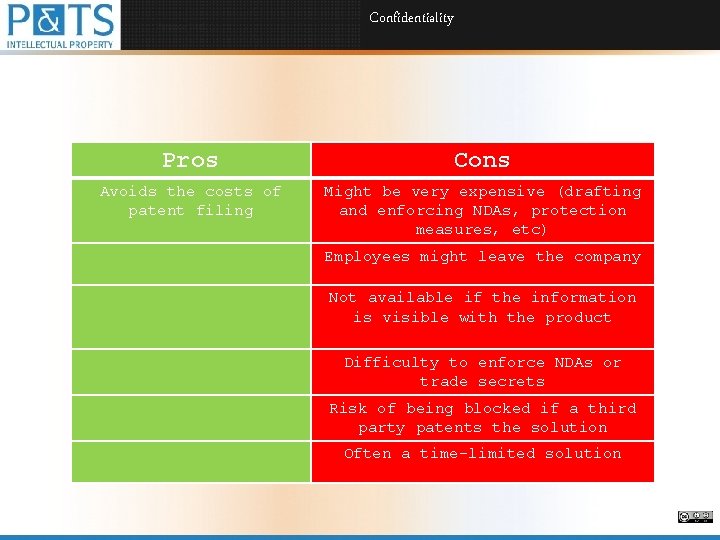
Confidentiality Pros Cons Avoids the costs of patent filing Might be very expensive (drafting and enforcing NDAs, protection measures, etc) Employees might leave the company Not available if the information is visible with the product Difficulty to enforce NDAs or trade secrets Risk of being blocked if a third party patents the solution Often a time-limited solution
Thanks for your attention ! Av. J. -J. Rousseau 4 Nordstrasse 9 CH 2001 Neuchâtel Zürich +41 -32 -7271427 2673919 www. patentattorneys. ch CH 8006 +41 -44 -
- Slides: 61