
Defense Mechanisms Sigmund Freud and Anna Freud Reminders
- Slides: 15
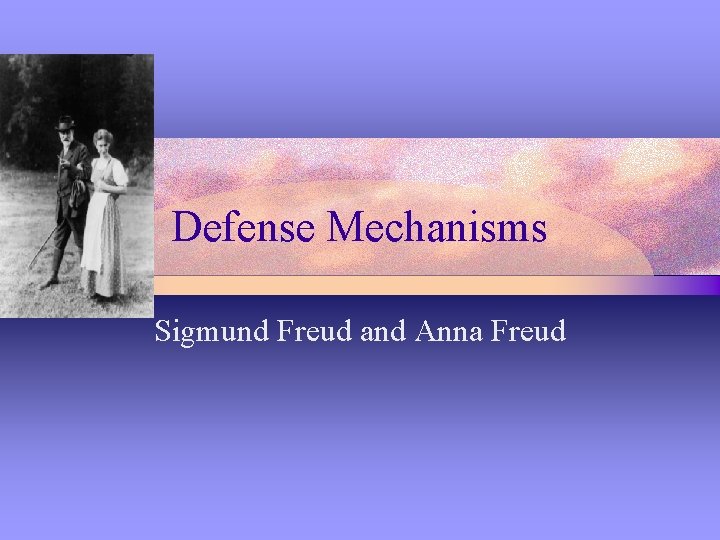
Defense Mechanisms Sigmund Freud and Anna Freud
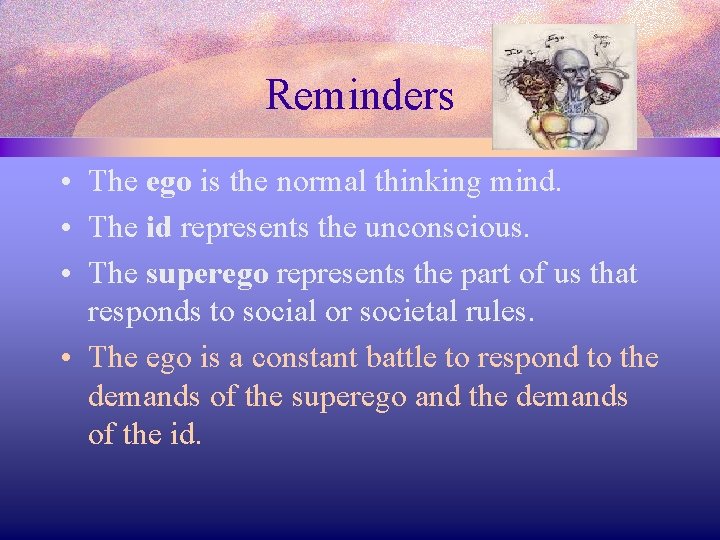
Reminders • The ego is the normal thinking mind. • The id represents the unconscious. • The superego represents the part of us that responds to social or societal rules. • The ego is a constant battle to respond to the demands of the superego and the demands of the id.
The Ego’s main job • Is to use Defenses Mechanisms (D. M. )! • The ego develops a defense in order to protect itself against being overcome by unconscious demands. • We do just about anything to avoid pain and preserve a sense of self, and this compulsion leads some of us to create psychological defenses.
Why is this a problem? • Heavily relying on defense mechanism can lead to neurosis (A psychological state characterized by excessive anxiety or insecurity). • Heavily relying on D. M. ’s prevents a person from dealing with the “real” issue(s)!
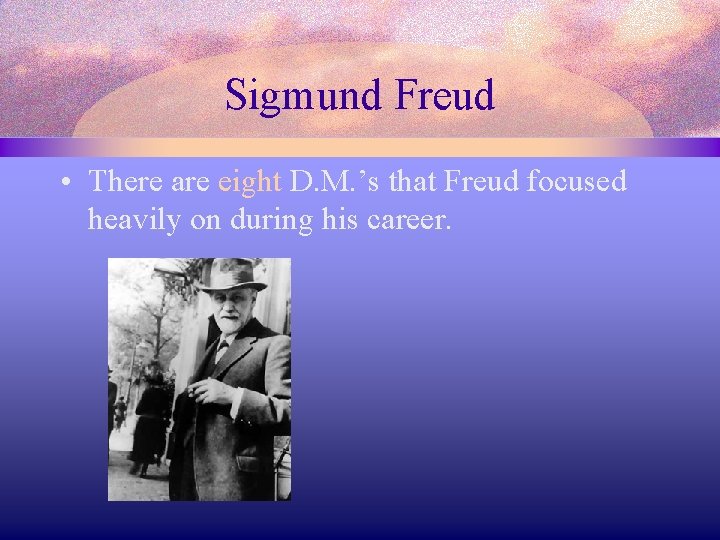
Sigmund Freud • There are eight D. M. ’s that Freud focused heavily on during his career.
1. Repression (major defense) • The complete exclusion from conscious of anxiety-producing thoughts, feelings, or impulses. • Ex. A person remains unaware of harboring hateful or destructive impulses toward others. Ex. Lisa, once caught shoplifting when she was in high school, years later has NO recollection of the embarrassing event.
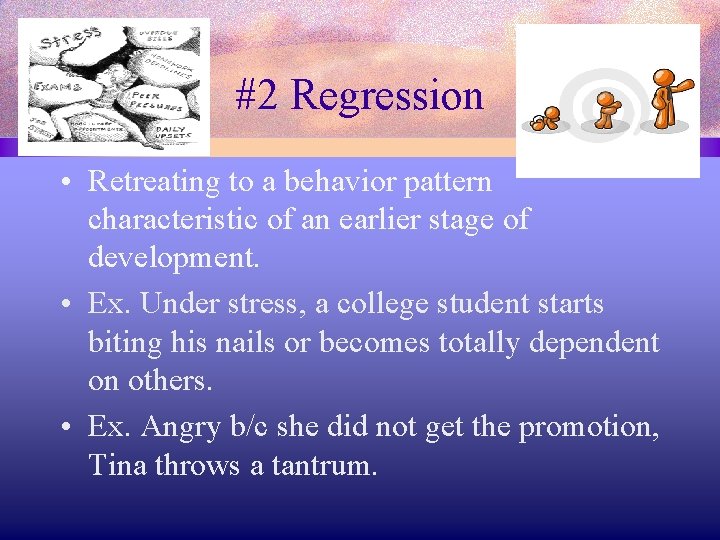
#2 Regression • Retreating to a behavior pattern characteristic of an earlier stage of development. • Ex. Under stress, a college student starts biting his nails or becomes totally dependent on others. • Ex. Angry b/c she did not get the promotion, Tina throws a tantrum.
#3 Denial • The failure to recognize or acknowledge the existence of anxiety-provoking information. • Ex. An alcoholic fails to acknowledge that he is addicted to a drug. • Ex. A person verbally “blows up” at someone acts afterward like it was “no big deal. ” • Ex. Diagnosis with cancer, believes it’s just bronchitis.
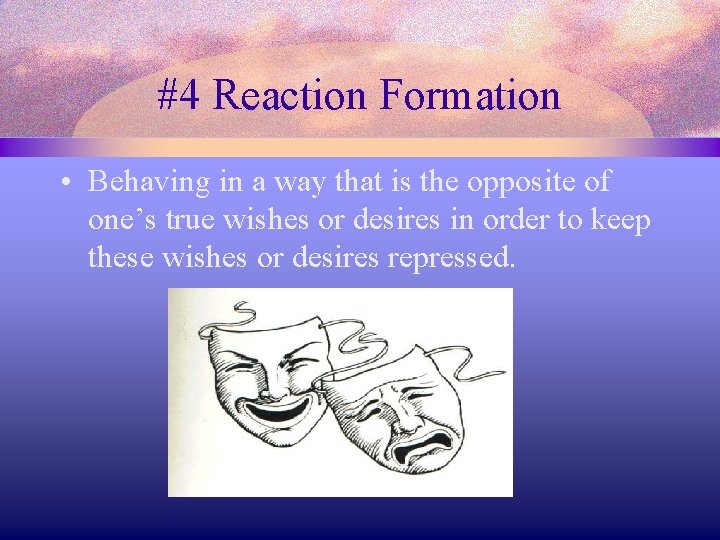
#4 Reaction Formation • Behaving in a way that is the opposite of one’s true wishes or desires in order to keep these wishes or desires repressed.
#5 Rationalization • The use of self-justifications to explain away unacceptable behavior. • Ex. When asked why she continues to smoke, a woman says, “Cancer doesn’t run in my family. ” • Ex. After learning that she was not invited to a party, Janie coolly discusses the ways in which social cliques form and how they “rule” people’s lives. Make yourself feel better about something bad you did or when something does not go your way.
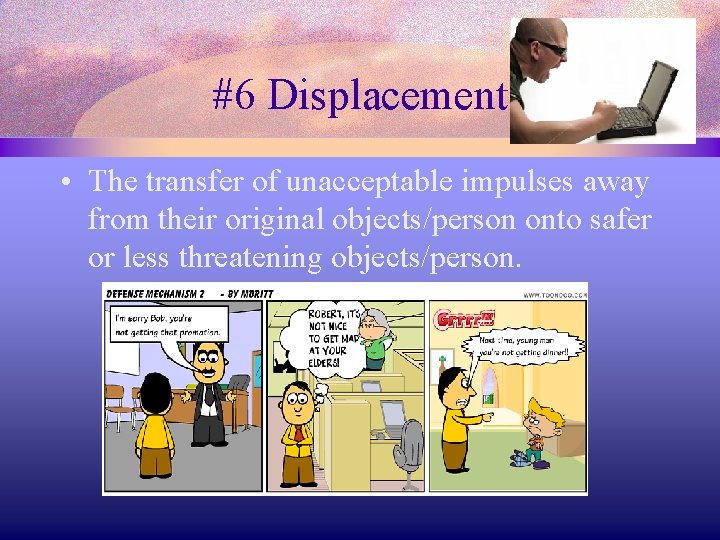
#6 Displacement • The transfer of unacceptable impulses away from their original objects/person onto safer or less threatening objects/person.
#7 Sublimation (special type of Displacement) • The channeling of unacceptable impulses into socially acceptable pursuits. • Ex. A person channels aggressive impulses into competitive sports. • Ex. The child of parents who never paid attention to him, Bill is running for public office.
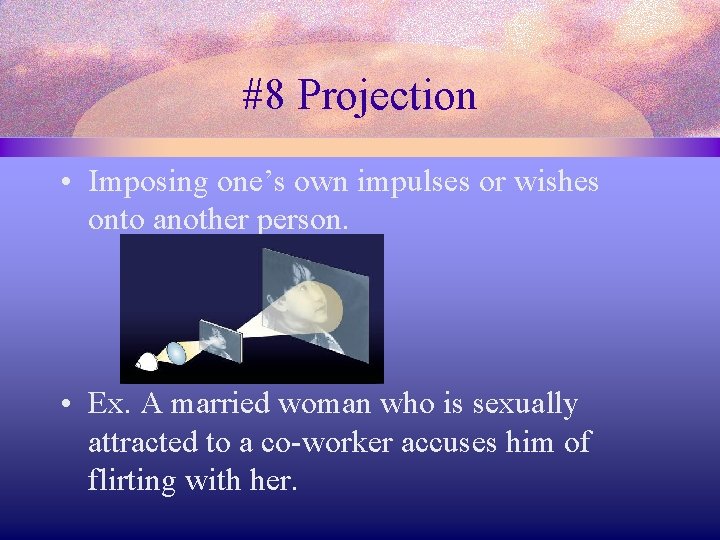
#8 Projection • Imposing one’s own impulses or wishes onto another person. • Ex. A married woman who is sexually attracted to a co-worker accuses him of flirting with her.
Summary • Many psychologically healthy people temporarily use ego defense mechanisms to deal with stressful events. • Used to much, D. M. can delay or interfere with our use of more constructive coping strategies, they can be counterproductive.
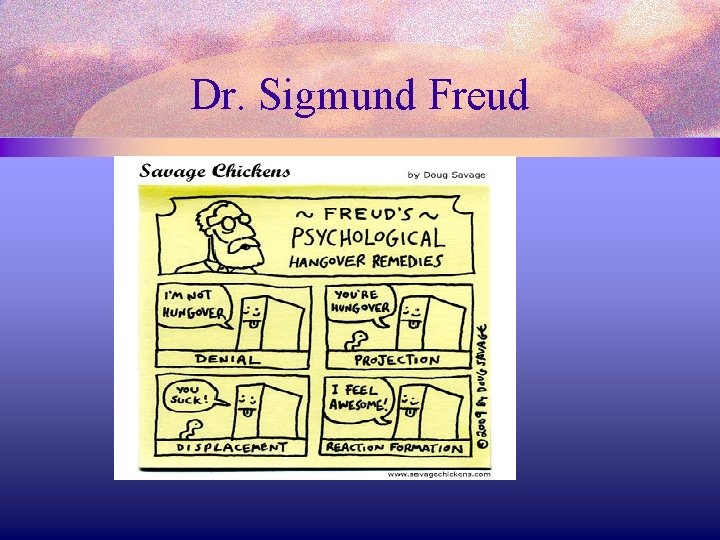
Dr. Sigmund Freud