
DEFENCE AGAINST INFECTIOUS DISEASE The human body has
DEFENCE AGAINST INFECTIOUS DISEASE The human body has structures and processes that resist the continuous threat of invasion by pathogens. Topic 6. 3 IB Biology Miss Werba
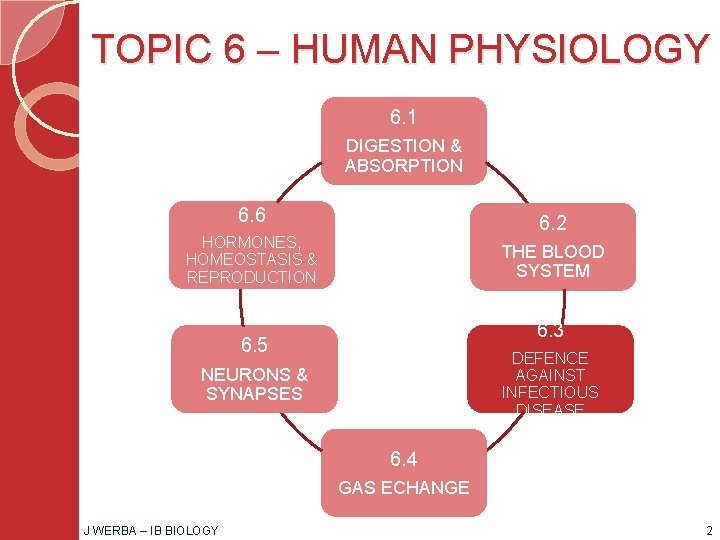
TOPIC 6 – HUMAN PHYSIOLOGY 6. 1 DIGESTION & ABSORPTION 6. 6 6. 2 HORMONES, HOMEOSTASIS & REPRODUCTION THE BLOOD SYSTEM 6. 3 6. 5 DEFENCE AGAINST INFECTIOUS DISEASE NEURONS & SYNAPSES 6. 4 GAS ECHANGE J WERBA – IB BIOLOGY 2
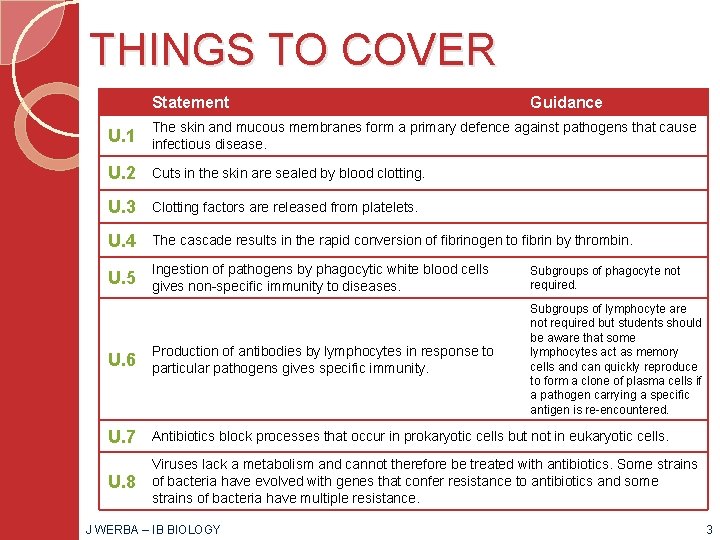
THINGS TO COVER Statement Guidance U. 1 The skin and mucous membranes form a primary defence against pathogens that cause infectious disease. U. 2 Cuts in the skin are sealed by blood clotting. U. 3 Clotting factors are released from platelets. U. 4 The cascade results in the rapid conversion of fibrinogen to fibrin by thrombin. U. 5 Ingestion of pathogens by phagocytic white blood cells gives non-specific immunity to diseases. Subgroups of phagocyte not required. U. 6 Production of antibodies by lymphocytes in response to particular pathogens gives specific immunity. Subgroups of lymphocyte are not required but students should be aware that some lymphocytes act as memory cells and can quickly reproduce to form a clone of plasma cells if a pathogen carrying a specific antigen is re-encountered. U. 7 Antibiotics block processes that occur in prokaryotic cells but not in eukaryotic cells. U. 8 Viruses lack a metabolism and cannot therefore be treated with antibiotics. Some strains of bacteria have evolved with genes that confer resistance to antibiotics and some strains of bacteria have multiple resistance. J WERBA – IB BIOLOGY 3
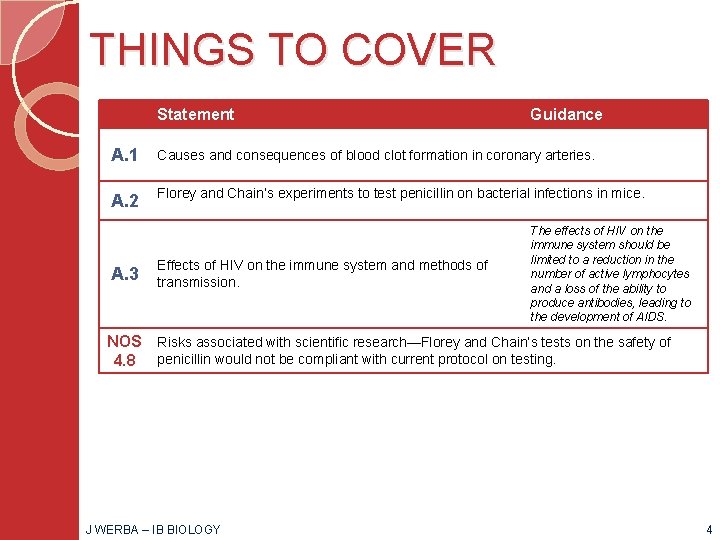
THINGS TO COVER Statement Guidance A. 1 Causes and consequences of blood clot formation in coronary arteries. A. 2 Florey and Chain’s experiments to test penicillin on bacterial infections in mice. A. 3 Effects of HIV on the immune system and methods of transmission. The effects of HIV on the immune system should be limited to a reduction in the number of active lymphocytes and a loss of the ability to produce antibodies, leading to the development of AIDS. NOS Risks associated with scientific research—Florey and Chain’s tests on the safety of 4. 8 penicillin would not be compliant with current protocol on testing. J WERBA – IB BIOLOGY 4
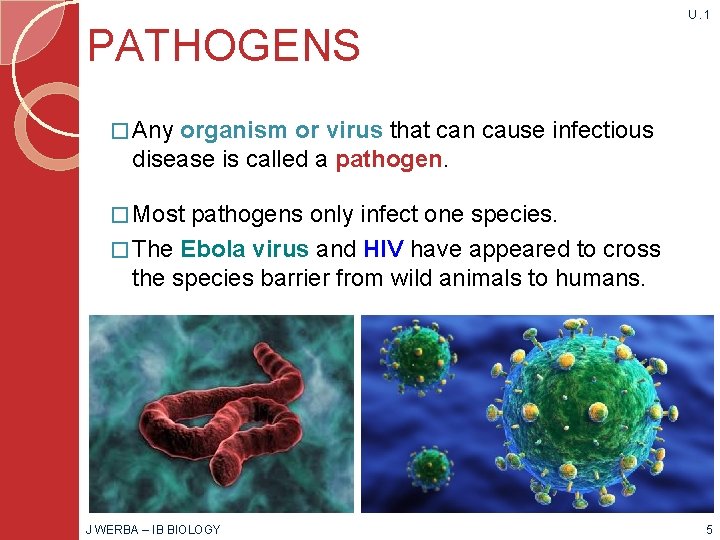
U. 1 PATHOGENS � Any organism or virus that can cause infectious disease is called a pathogen. � Most pathogens only infect one species. � The Ebola virus and HIV have appeared to cross the species barrier from wild animals to humans. J WERBA – IB BIOLOGY 5
THE IMMUNE RESPONSE � The immune response is how your body recognizes and defends itself against the presence of a pathogen. � The human immune system is composed of three major parts that work together to keep out or neutralize pathogens: ◦ physical barriers, ◦ the innate immune system, and ◦ the adaptive immune system � These are our “three lines of defence”. J WERBA – IB BIOLOGY 6
FIRST LINE OF DEFENCE: Physical barriers � The U. 1 physical barriers to infection include: ◦ intact skin and ◦ mucous membranes � Both host natural flora and fauna which compete with pathogens � Both have lysozyme enzymes present to break down pathogens � Both have a p. H that is unfavourable to pathogens J WERBA – IB BIOLOGY 7

FIRST LINE OF DEFENCE: Physical barriers U. 1 � Skin: ◦ Protects external structures (outer body areas) ◦ Is a continuous, (hopefully) unbroken layer ◦ Is dry – discourages growth/reproduction of pathogens ◦ Has several layers of keratinized (hardened) cells ◦ Contains biochemical defence agents sebaceous glands secrete chemicals which inhibit the growth of some bacteria ◦ The skin also releases acidic secretions to lower p. H and prevent bacteria from growing J WERBA – IB BIOLOGY 8
FIRST LINE OF DEFENCE: Physical barriers � Mucous U. 1 membranes: ◦ Protect internal structures (externally accessible cavities and tubes, such as trachea, vagina and urethra) ◦ Contains cells that release fluids to wash away pathogens (mucus, tears, saliva, etc. ) ◦ Contains biochemical defence agents secretions contain lysozyme, which can destroy cell walls and cause cell lysis ◦ May be ciliated to aid in the removal of pathogens ◦ Is sticky - traps pathogens J WERBA – IB BIOLOGY 9
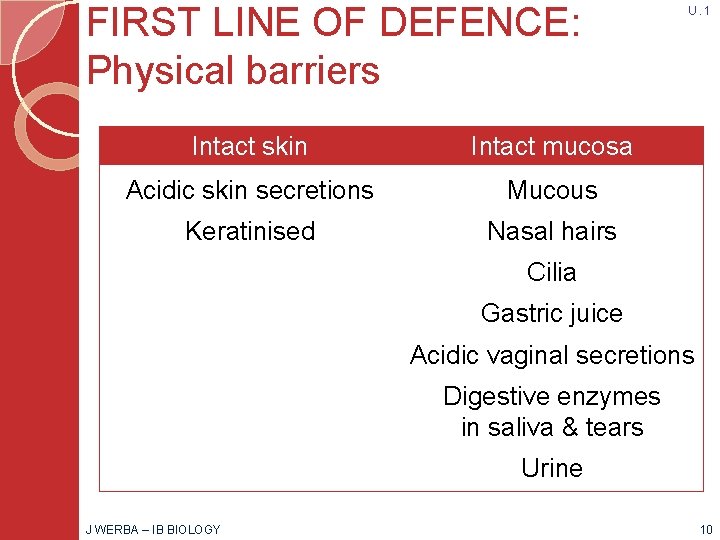
FIRST LINE OF DEFENCE: Physical barriers Intact skin Intact mucosa Acidic skin secretions Mucous Keratinised Nasal hairs U. 1 Cilia Gastric juice Acidic vaginal secretions Digestive enzymes in saliva & tears Urine J WERBA – IB BIOLOGY 10
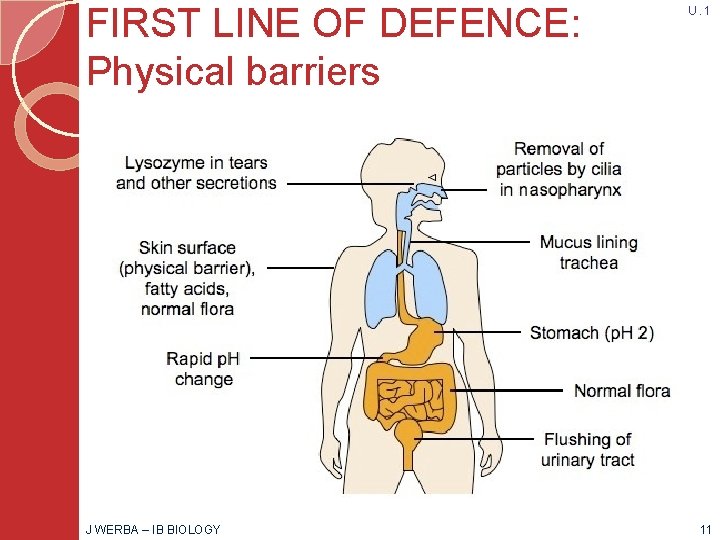
FIRST LINE OF DEFENCE: Physical barriers J WERBA – IB BIOLOGY U. 1 11
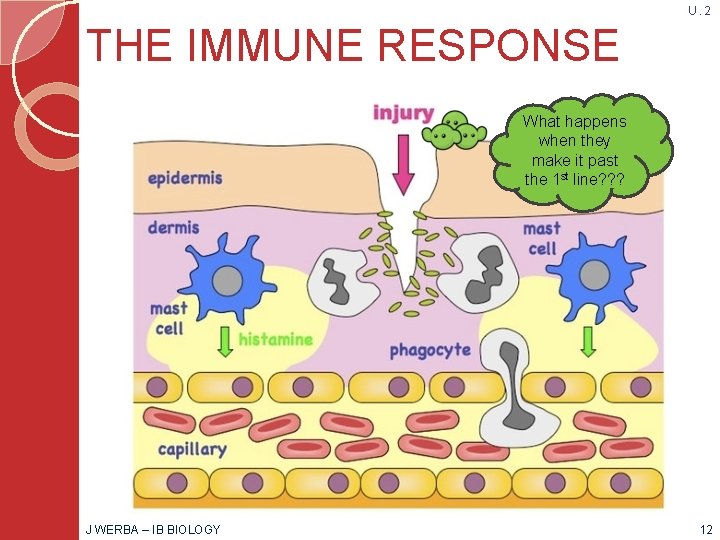
U. 2 THE IMMUNE RESPONSE What happens when they make it past the 1 st line? ? ? J WERBA – IB BIOLOGY 12

SECOND LINE OF DEFENCE: Innate immune system � The U. 1 innate immune response has two features: ◦ non-specific cannot differentiate between microbes ◦ non-adaptive produces the same response every time (no memory) � Both the blood and lymphatic systems support the immune response. � The blood system produces the body’s leucocytes (white blood cells) and transports them to the sites of infection in the blood. � Lymph also contains leucocytes and comes from the drainage of fluid from the blood stream and surrounding tissues. J WERBA – IB BIOLOGY 13
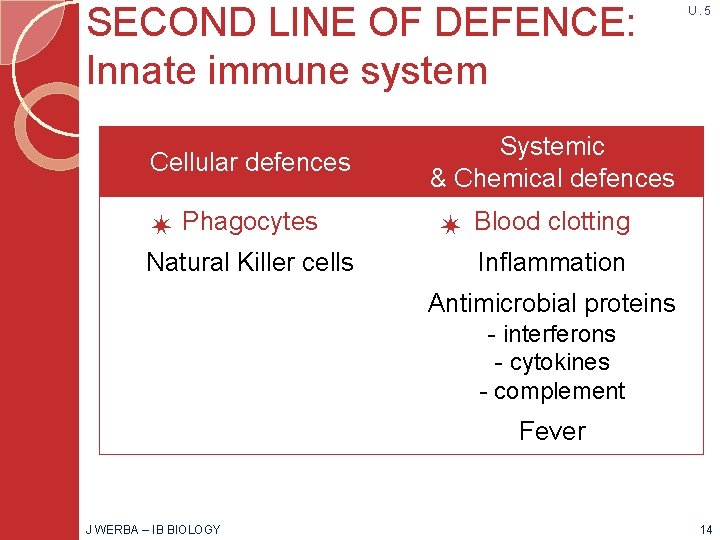
SECOND LINE OF DEFENCE: Innate immune system Cellular defences Systemic & Chemical defences Phagocytes Blood clotting Natural Killer cells Inflammation U. 5 Antimicrobial proteins - interferons - cytokines - complement Fever J WERBA – IB BIOLOGY 14
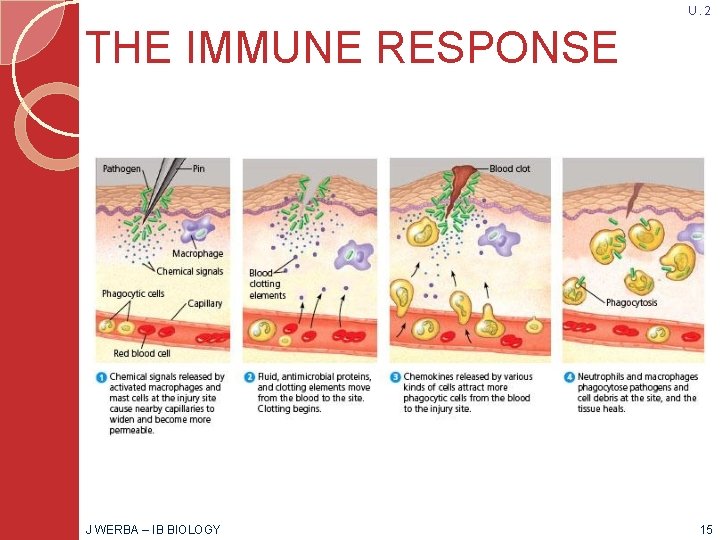
U. 2 THE IMMUNE RESPONSE J WERBA – IB BIOLOGY 15

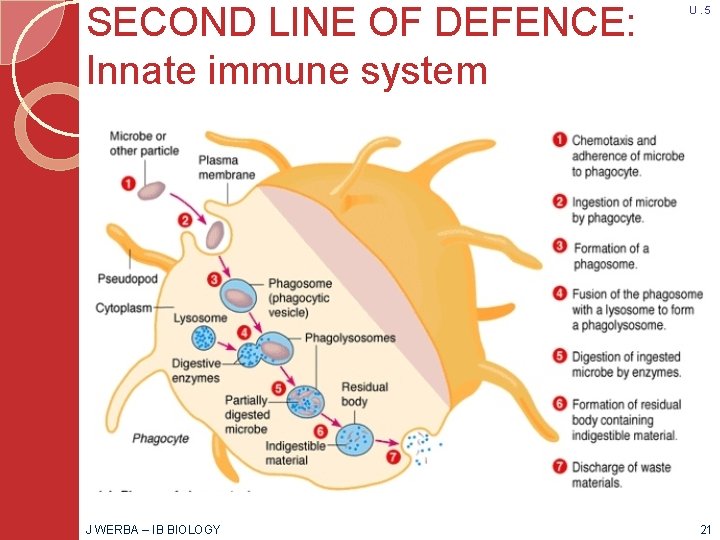
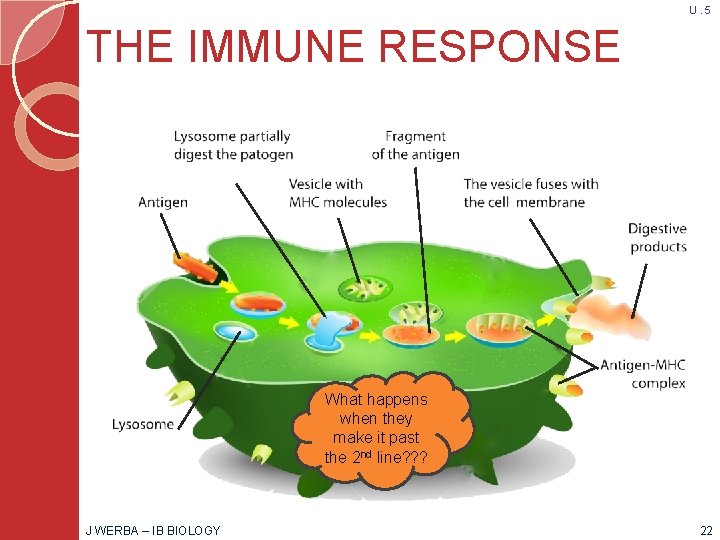
SECOND LINE OF DEFENCE: Innate immune system U. 5 Phagocytosis � Macrophages (phagocytic leucocytes) ingest pathogens � Phagocytes circulate in blood but can enter the body tissues in response to infection. � They concentrate at sites of infection in response to the release of chemicals from the damaged cells. � They detect pathogens and engulf them (by endocytosis or more specifically, phagocytosis) � Membrane forms around pathogen to form a vesicle � Lysosomes digest contents of vesicles � Macrophages are assisted by antibodies attached to pathogens. J WERBA – IB BIOLOGY 16

SECOND LINE OF DEFENCE: Innate immune system U. 2 – U. 4 Blood clotting � Blood clotting involves a chain of biochemical reactions. � Allows us to seal wounds and prevent excess blood loss. � Blood clotting involves platelets (fragments of much larger cells) � Platelets contain granules filled with chemicals that act in the clotting process, including: ◦ ◦ Serotonin Ca 2+ ions Enzymes ADP J WERBA – IB BIOLOGY 17
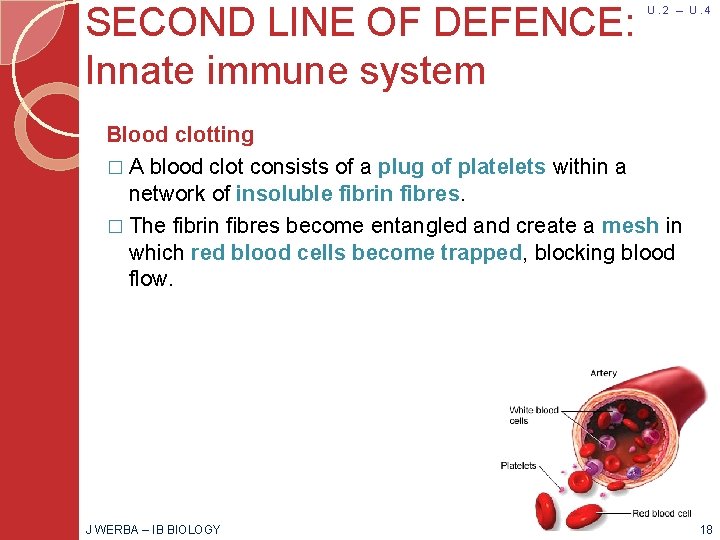
SECOND LINE OF DEFENCE: Innate immune system U. 2 – U. 4 Blood clotting � A blood clot consists of a plug of platelets within a network of insoluble fibrin fibres. � The fibrin fibres become entangled and create a mesh in which red blood cells become trapped, blocking blood flow. J WERBA – IB BIOLOGY 18

SECOND LINE OF DEFENCE: Innate immune system U. 2 – U. 4 Platelets Damaged blood vessels. Exposure to air. stimulates Clotting factors released from platelets Prothrombin in plasma stimulates Thrombin stimulates Soluble fibrinogen circulating in plasma Insoluble fibrin fibres + RBCs CLOT J WERBA – IB BIOLOGY 19
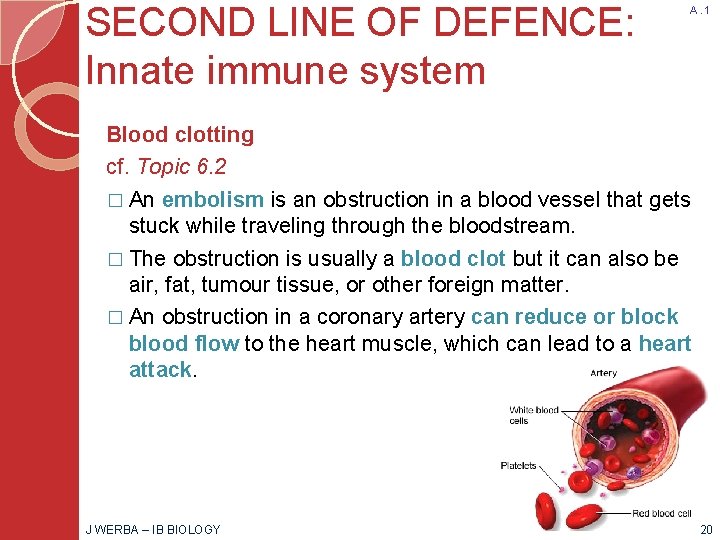
SECOND LINE OF DEFENCE: Innate immune system A. 1 Blood clotting cf. Topic 6. 2 � An embolism is an obstruction in a blood vessel that gets stuck while traveling through the bloodstream. � The obstruction is usually a blood clot but it can also be air, fat, tumour tissue, or other foreign matter. � An obstruction in a coronary artery can reduce or block blood flow to the heart muscle, which can lead to a heart attack. J WERBA – IB BIOLOGY 20
SECOND LINE OF DEFENCE: Innate immune system J WERBA – IB BIOLOGY U. 5 21
U. 5 THE IMMUNE RESPONSE What happens when they make it past the 2 nd line? ? ? J WERBA – IB BIOLOGY 22
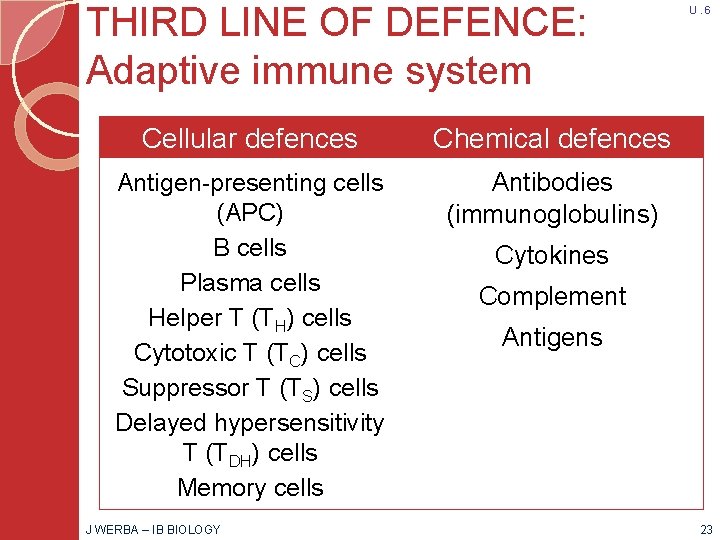
THIRD LINE OF DEFENCE: Adaptive immune system Cellular defences Chemical defences Antigen-presenting cells (APC) B cells Plasma cells Helper T (TH) cells Cytotoxic T (TC) cells Suppressor T (TS) cells Delayed hypersensitivity T (TDH) cells Memory cells Antibodies (immunoglobulins) J WERBA – IB BIOLOGY U. 6 Cytokines Complement Antigens 23
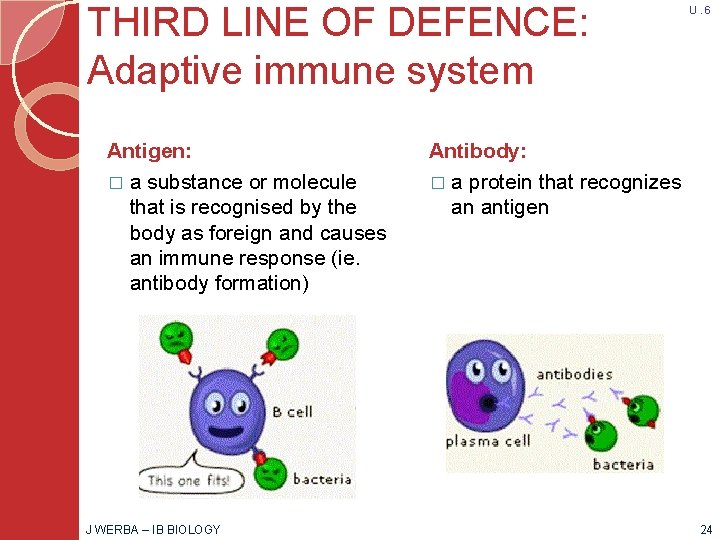
THIRD LINE OF DEFENCE: Adaptive immune system Antigen: � a substance or molecule that is recognised by the body as foreign and causes an immune response (ie. antibody formation) J WERBA – IB BIOLOGY U. 6 Antibody: � a protein that recognizes an antigen 24
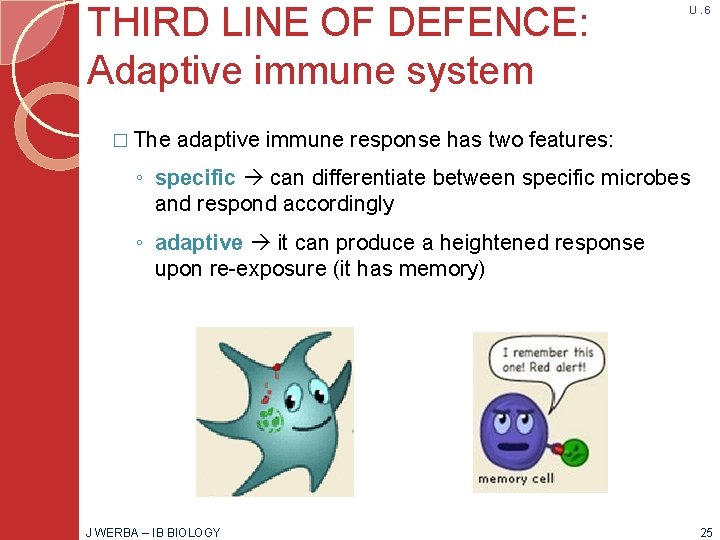
THIRD LINE OF DEFENCE: Adaptive immune system � The U. 6 adaptive immune response has two features: ◦ specific can differentiate between specific microbes and respond accordingly ◦ adaptive it can produce a heightened response upon re-exposure (it has memory) J WERBA – IB BIOLOGY 25
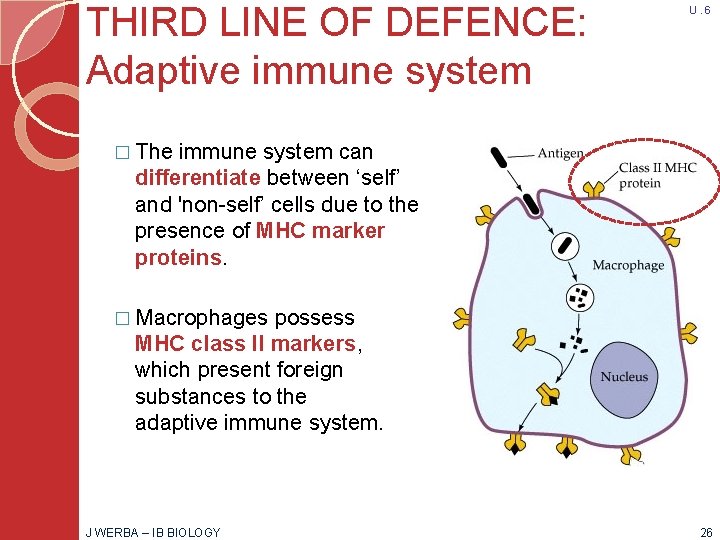
THIRD LINE OF DEFENCE: Adaptive immune system U. 6 � The immune system can differentiate between ‘self’ and 'non-self’ cells due to the presence of MHC marker proteins. � Macrophages possess MHC class II markers, which present foreign substances to the adaptive immune system. J WERBA – IB BIOLOGY 26
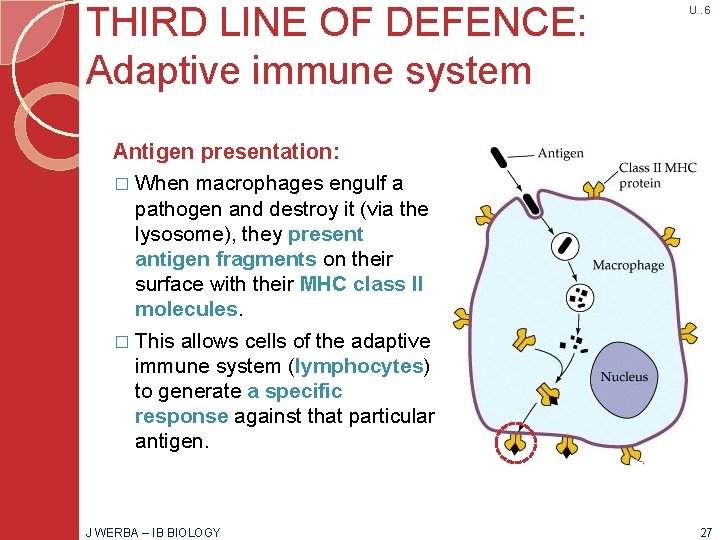
THIRD LINE OF DEFENCE: Adaptive immune system U. 6 Antigen presentation: � When macrophages engulf a pathogen and destroy it (via the lysosome), they present antigen fragments on their surface with their MHC class II molecules. � This allows cells of the adaptive immune system (lymphocytes) to generate a specific response against that particular antigen. J WERBA – IB BIOLOGY 27
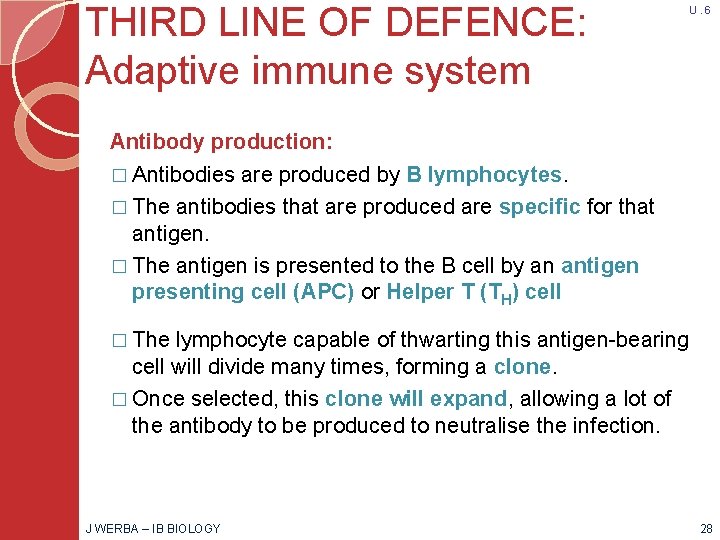
THIRD LINE OF DEFENCE: Adaptive immune system U. 6 Antibody production: � Antibodies are produced by B lymphocytes. � The antibodies that are produced are specific for that antigen. � The antigen is presented to the B cell by an antigen presenting cell (APC) or Helper T (TH) cell � The lymphocyte capable of thwarting this antigen-bearing cell will divide many times, forming a clone. � Once selected, this clone will expand, allowing a lot of the antibody to be produced to neutralise the infection. J WERBA – IB BIOLOGY 28

THIRD LINE OF DEFENCE: Adaptive immune system U. 6 Antibody production: J WERBA – IB BIOLOGY 29
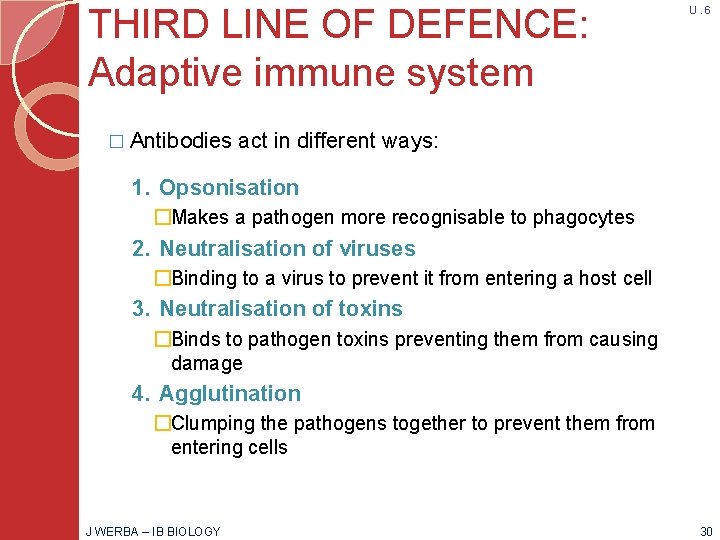
THIRD LINE OF DEFENCE: Adaptive immune system � Antibodies U. 6 act in different ways: 1. Opsonisation �Makes a pathogen more recognisable to phagocytes 2. Neutralisation of viruses �Binding to a virus to prevent it from entering a host cell 3. Neutralisation of toxins �Binds to pathogen toxins preventing them from causing damage 4. Agglutination �Clumping the pathogens together to prevent them from entering cells J WERBA – IB BIOLOGY 30
THIRD LINE OF DEFENCE: Adaptive immune system U. 6 Immune memory : � Some of the B lymphocytes capable of thwarting this antigen differentiate to form memory B cells. � These memory cells can quickly reproduce to form a clone of plasma cells if a pathogen carrying a specific antigen is re-encountered. � The memory cells can remain dormant for many years, providing the basis for immunity. � Helper T (TH) cells also produce memory cells. J WERBA – IB BIOLOGY 31
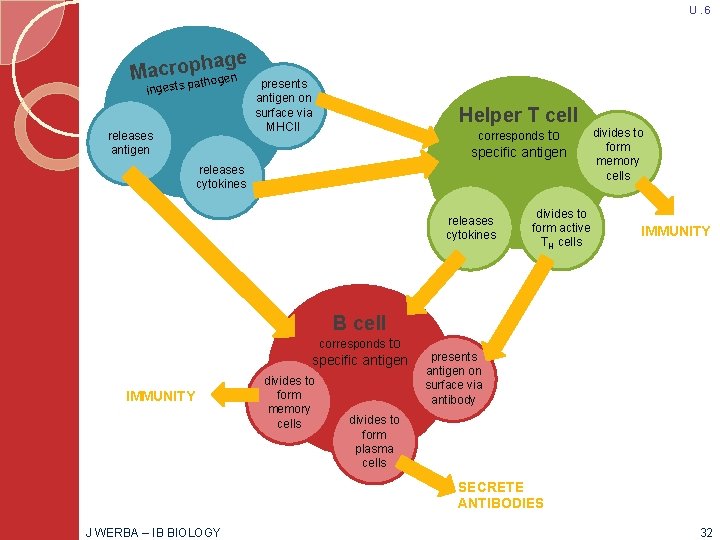
U. 6 hage p o r c a M athogen ingests p releases antigen presents antigen on surface via MHCII Helper T cell corresponds to specific antigen releases cytokines divides to form active TH cells divides to form memory cells IMMUNITY B cell corresponds to specific antigen IMMUNITY divides to form memory cells presents antigen on surface via antibody divides to form plasma cells SECRETE ANTIBODIES J WERBA – IB BIOLOGY 32
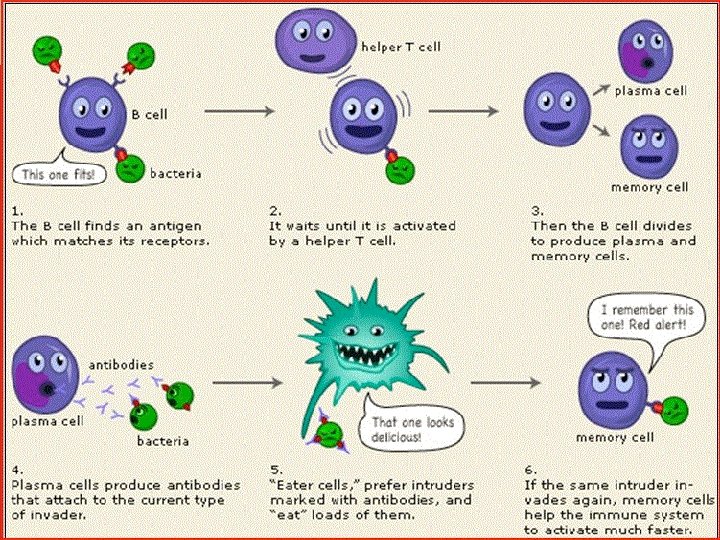
THIRD LINE OF DEFENCE: Adaptive immune system U. 6 Antibody production: J WERBA – IB BIOLOGY 33
https: //hibio-geo. wikispaces. com/file/view/imm. Response. swf
ANTIBIOTICS U. 7 U. 8 � Antibiotics inhibit specific chemicals or metabolic pathways found in bacteria. ◦ eg. cell protein synthesis or cell wall formation � This is why antibiotics are effective against prokaryotic cells but not viruses or eukaryotic cells. � Viruses are intra-cellular parasites and lack a metabolism. Therefore, they cannot therefore be treated with antibiotics. � Some strains of bacteria have evolved with genes that confer resistance to specific antibiotics and some strains of bacteria have multiple resistance. J WERBA – IB BIOLOGY 35
https: //www. youtube. com/watch? v=34 -c. EH--o. Fo 23 min
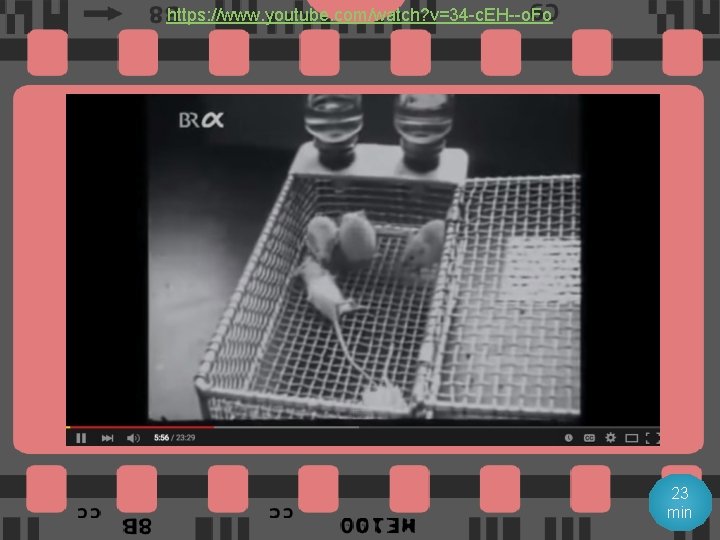
A. 2 ANTIBIOTICS � Alexander Fleming accidentally discovered penicillin in 1928. � Howard Florey and Ernst Chain later extracted enough penicillin to test penicillin on bacterial infections in mice. � Animal trials (1938): ◦ injected the mice with the penicillin to test its toxicity ◦ then they injected mice with a haemolytic streptococci bacteria ◦ they gave half the mice penicillin and the rest all died J WERBA – IB BIOLOGY 37
A. 2 ANTIBIOTICS � Human trial 1: ◦ toxicity trial run on a cancer patient was attempted ◦ patient had a bad reaction to the treatment, which was later shown to be due to impurities in the sample. � Human trial 2 (1941): ◦ patient had a bacterial infection in a wound ◦ patient given a purified penicillin preparation and showed immediate signs of improvement ◦ insufficient penicillin was available to continue his treatment and he later died � Further trials were later conducted and large scale production of antibiotics began in America. J WERBA – IB BIOLOGY 38
NOS 4. 8 RISKS OF RESEARCH There are risks associated with scientific research. Florey and Chain’s tests on the safety of penicillin would not be compliant with current protocol on testing. J WERBA – IB BIOLOGY 39
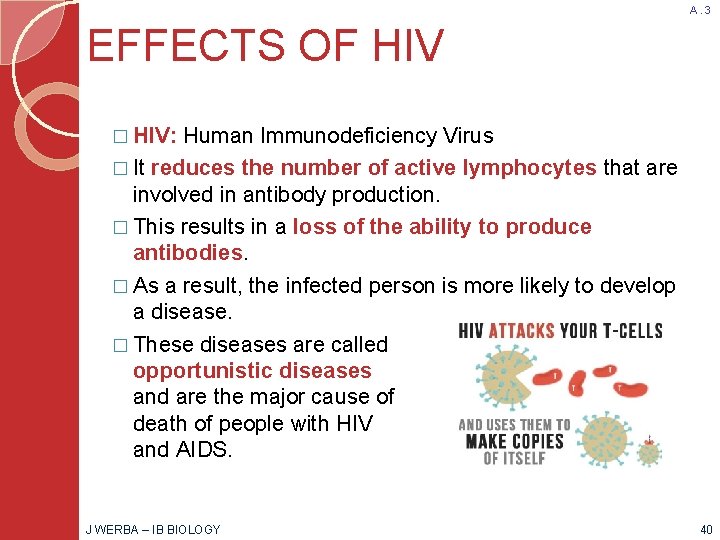
A. 3 EFFECTS OF HIV � HIV: Human Immunodeficiency Virus � It reduces the number of active lymphocytes that are involved in antibody production. � This results in a loss of the ability to produce antibodies. � As a result, the infected person is more likely to develop a disease. � These diseases are called opportunistic diseases and are the major cause of death of people with HIV and AIDS. J WERBA – IB BIOLOGY 40
A. 3 EFFECTS OF HIV � AIDS: � AIDS Acquired Immune Deficiency Syndrome is caused by HIV � AIDS is not a disease – but a collection of symptoms and/or opportunistic diseases that develops over the course of the HIV infection. J WERBA – IB BIOLOGY 41
A. 3 TRANSMISSION OF HIV � HIV is transmitted through blood, sexual contact, body fluids, placenta, childbirth or breastfeeding. ◦ Blood and semen contain the highest concentration of HIV � Transmission rates are uneven around the world. � Transmission risk increases depending on society’s traditions, beliefs, behaviour. � Condoms or other latex barriers only protection against transmission through sexual contact. J WERBA – IB BIOLOGY 42
DEFENCE AGAINST INFECTIOUS DISEASE Q 1. Which of the following statements about antibodies is correct? Antibodies are polypeptides. B. Antibodies are produced by the bone marrow. C. Antibodies are pathogenic foreign substances. D. Antibodies kill bacteria but not viruses. A. J WERBA – IB BIOLOGY 43
DEFENCE AGAINST INFECTIOUS DISEASE Q 2. Describe how phagocytic leucocytes may act as a defence against disease. [4] Q 3. Outline the cause and transmission of HIV and AIDS. J WERBA – IB BIOLOGY [5] 44
- Slides: 44