
Deep Ultraviolet Raman Microspectroscopy Novel Technique for the
- Slides: 10
Deep Ultraviolet Raman Microspectroscopy – Novel Technique for the Characterization of Phosphorus in Soil Christian Vogel, Manfred Ramsteiner and Christian Adam BAM Federal Institute for Materials Research and Testing, Berlin, Germany Paul-Drude-Institut, Berlin, Germany 1
Introduction • Deep ultraviolet (DUV) Raman microspectroscopy • Detection of P-Phases in soil • Advantages and Disadvantages of DUV Raman microspectroscopy • Outlook • Conclusions 2
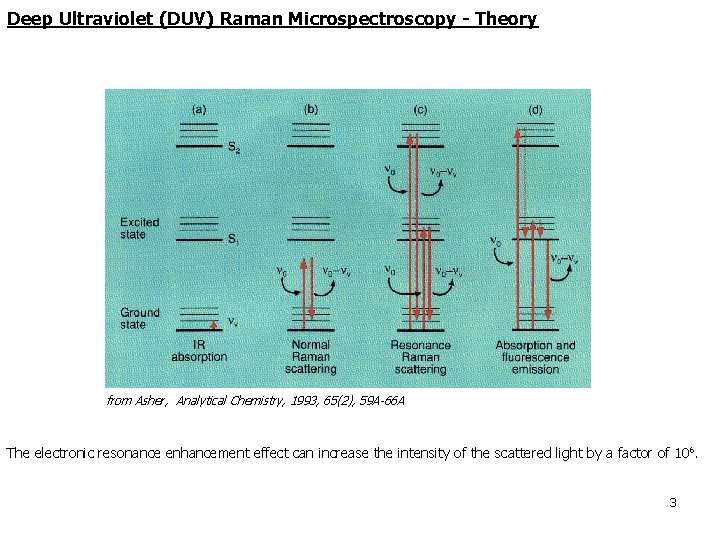
Deep Ultraviolet (DUV) Raman Microspectroscopy - Theory from Asher, Analytical Chemistry, 1993, 65(2), 59 A-66 A The electronic resonance enhancement effect can increase the intensity of the scattered light by a factor of 10 6. 3
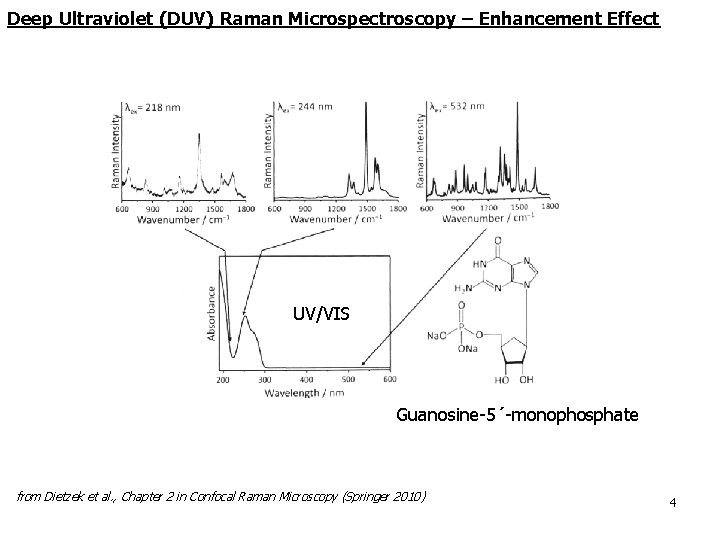
Deep Ultraviolet (DUV) Raman Microspectroscopy – Enhancement Effect UV/VIS Guanosine-5´-monophosphate from Dietzek et al. , Chapter 2 in Confocal Raman Microscopy (Springer 2010) 4
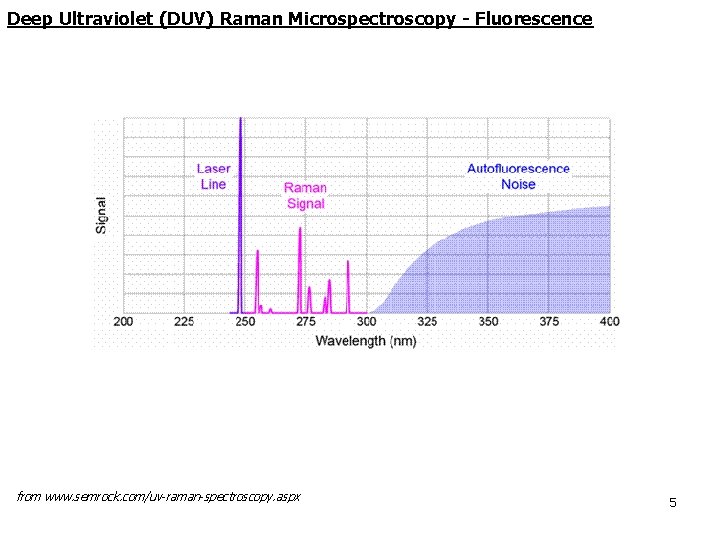
Deep Ultraviolet (DUV) Raman Microspectroscopy - Fluorescence from www. semrock. com/uv-raman-spectroscopy. aspx 5
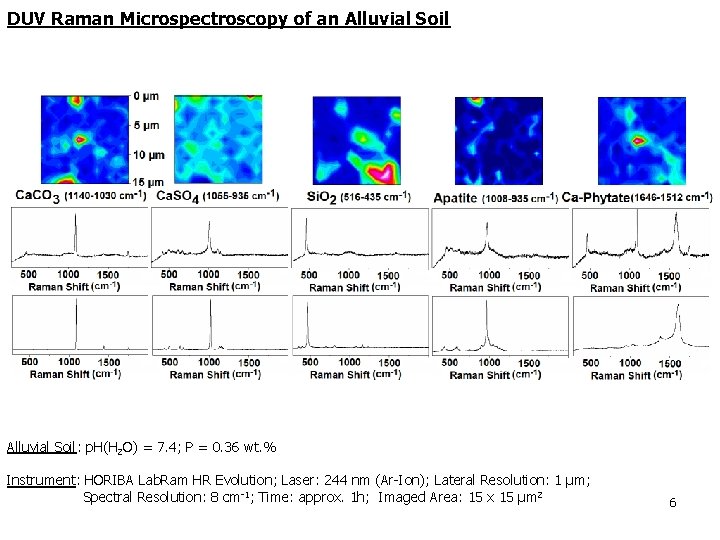
DUV Raman Microspectroscopy of an Alluvial Soil: p. H(H 2 O) = 7. 4; P = 0. 36 wt. % Instrument: HORIBA Lab. Ram HR Evolution; Laser: 244 nm (Ar-Ion); Lateral Resolution: 1 µm; Spectral Resolution: 8 cm-1; Time: approx. 1 h; Imaged Area: 15 x 15 µm 2 6
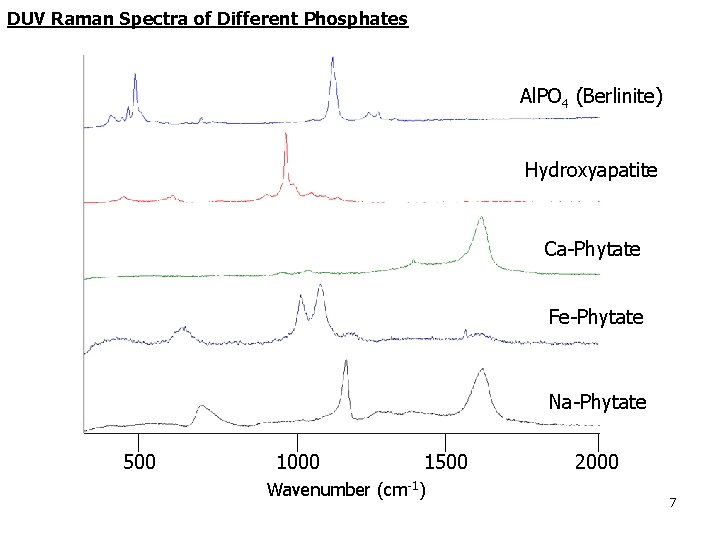
DUV Raman Spectra of Different Phosphates Al. PO 4 (Berlinite) Hydroxyapatite Ca-Phytate Fe-Phytate Na-Phytate 500 1000 1500 Wavenumber (cm-1) 2000 7
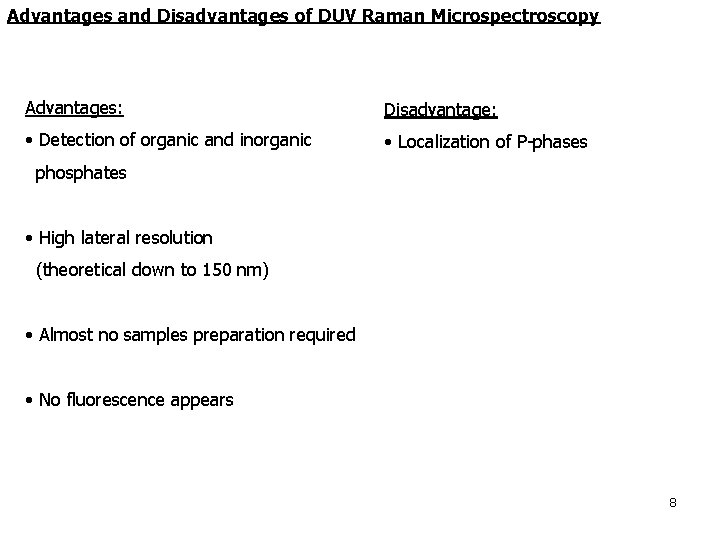
Advantages and Disadvantages of DUV Raman Microspectroscopy Advantages: Disadvantage: • Detection of organic and inorganic • Localization of P-phases phosphates • High lateral resolution (theoretical down to 150 nm) • Almost no samples preparation required • No fluorescence appears 8
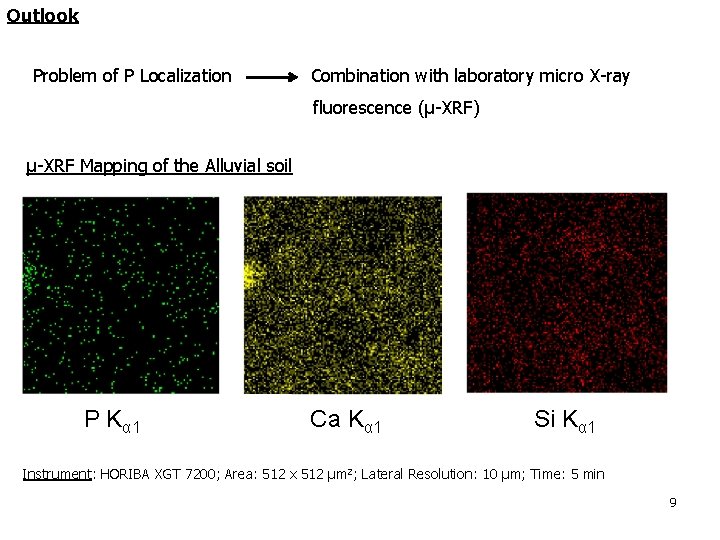
Outlook Problem of P Localization Combination with laboratory micro X-ray fluorescence (µ-XRF) µ-XRF Mapping of the Alluvial soil P Kα 1 Ca Kα 1 Si Kα 1 Instrument: HORIBA XGT 7200; Area: 512 x 512 µm 2; Lateral Resolution: 10 µm; Time: 5 min 9
Conclusions • Chemical state of inorganic and organic phosphates is detectable by DUV Raman Microspectroscopy • Almost no sample pre-treatment is required • Combination with µ-XRF make it easier to localize P-phases 10