
Deep sea habitat profile No Natural Light Average
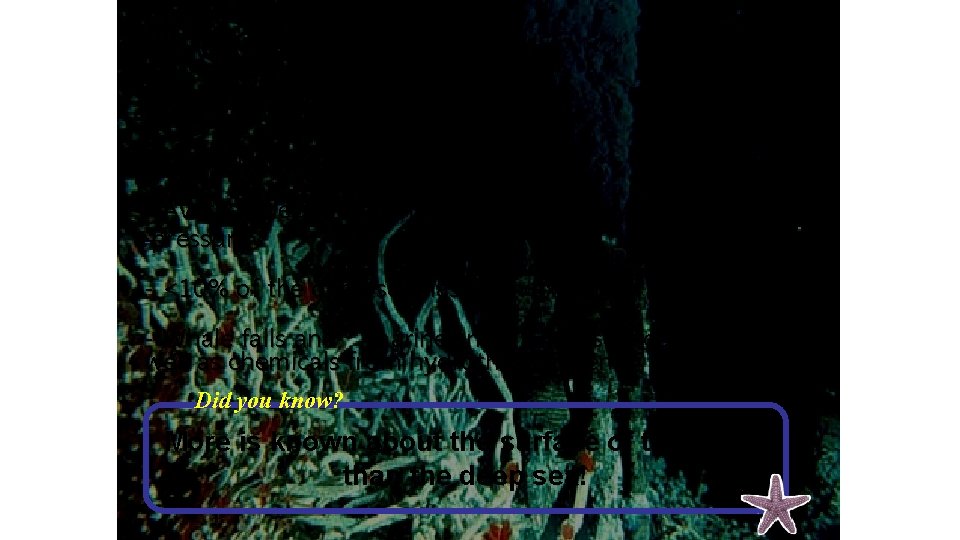
Deep sea: habitat profile - No Natural Light - Average depth 4, 000 m – near freezing water and high -pressure - <10% of the deep sea has been explored - Whale falls and ‘marine snow’ key source of food as well as chemicals from hydrothermal vents Did you know? More is known about the surface of the moon than the deep sea!
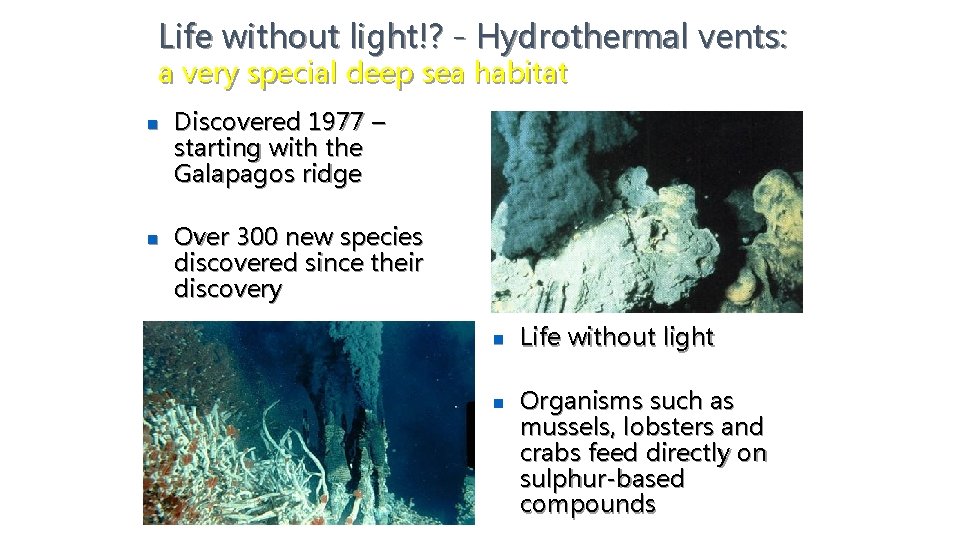
Life without light!? - Hydrothermal vents: a very special deep sea habitat n n Discovered 1977 – starting with the Galapagos ridge Over 300 new species discovered since their discovery n n Life without light Organisms such as mussels, lobsters and crabs feed directly on sulphur-based compounds
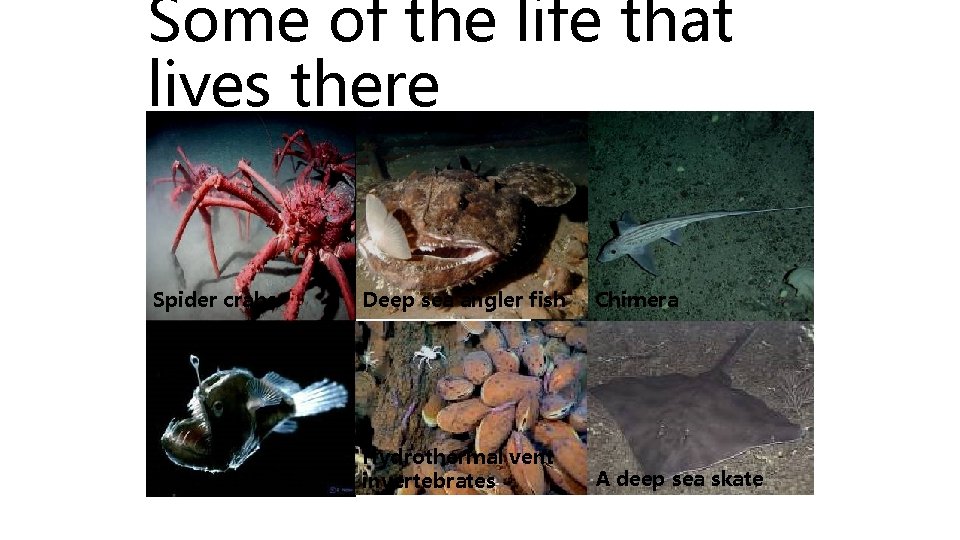
Some of the life that lives there Spider crabs Deep sea angler fish Chimera Black devil angler fish Hydrothermal vent invertebrates A deep sea skate

An amazing sight Image courtesy: Edith Widder/HBOI This deep sea shrimp spews a bioluminescent chemical to blind or distract its predator
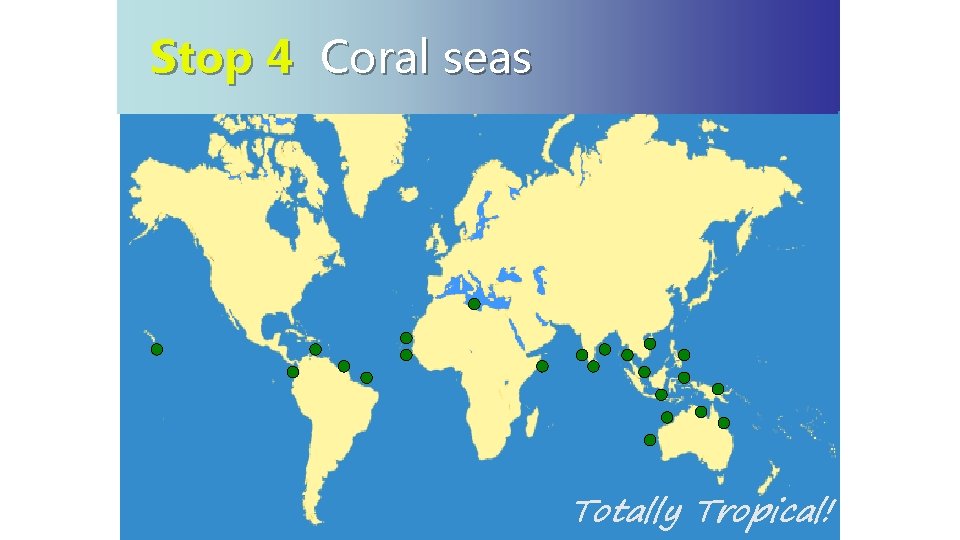
Stop 4 Coral seas Coral Reef Habitat Distribution Totally Tropical!
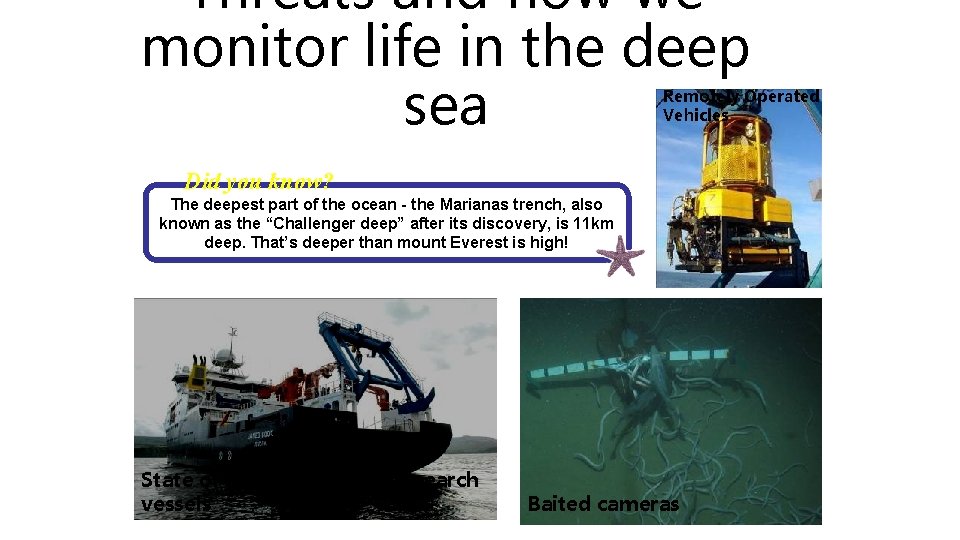
Threats and how we monitor life in the deep sea Remotely Operated Vehicles Did you know? The deepest part of the ocean - the Marianas trench, also known as the “Challenger deep” after its discovery, is 11 km deep. That’s deeper than mount Everest is high! State of the art scientific research vessels Baited cameras
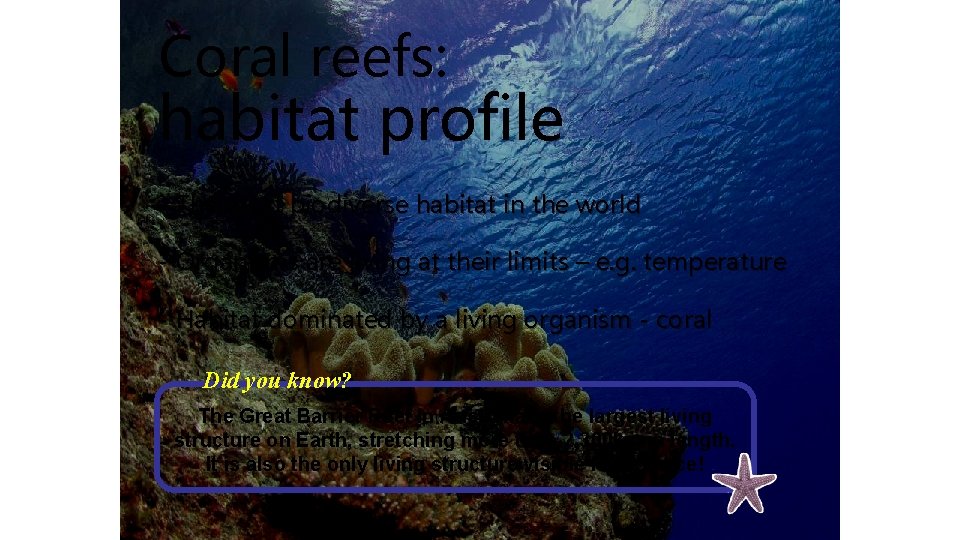
Coral reefs: habitat profile - The most biodiverse habitat in the world - Organisms are living at their limits – e. g. temperature - Habitat dominated by a living organism - coral Did you know? The Great Barrier Reef In Australia is the largest living structure on Earth, stretching more than 2, 300 km in length. It is also the only living structure visible from space!
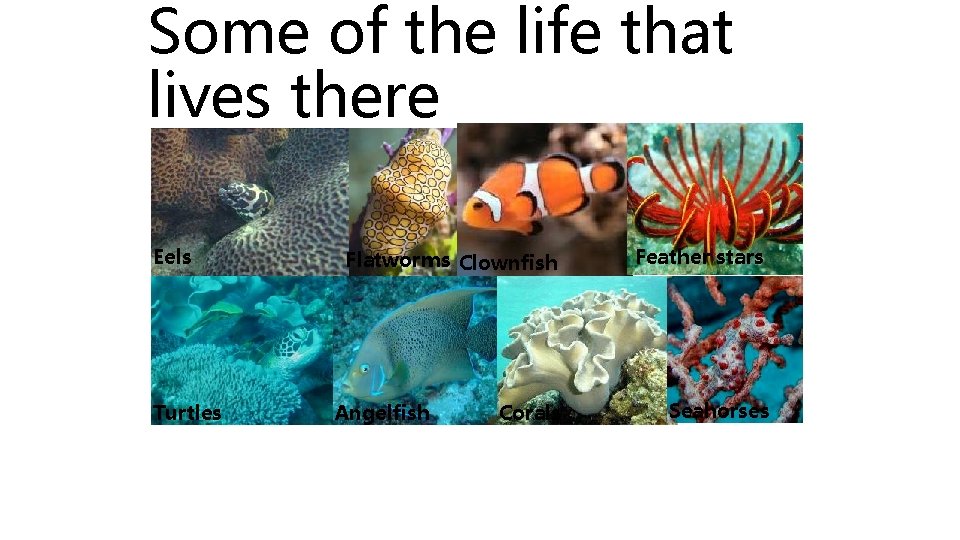
Some of the life that lives there Eels Turtles Flatworms Clownfish Angelfish Corals Feather stars Seahorses
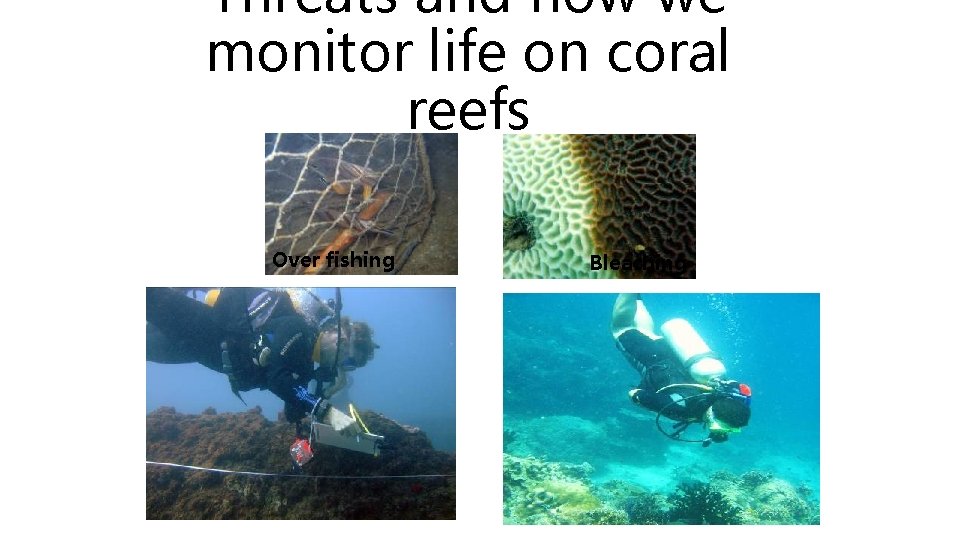
Threats and how we monitor life on coral reefs Over fishing Bleaching
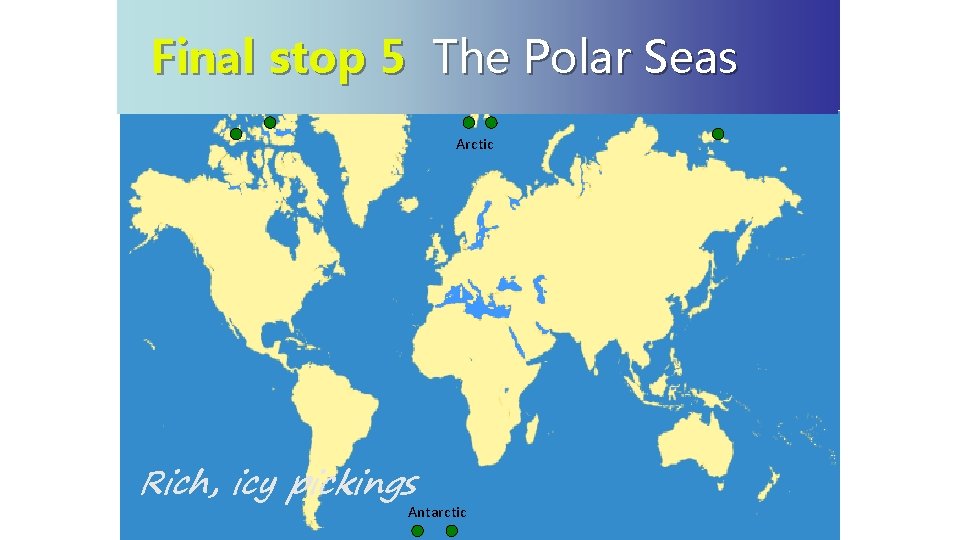
Final stop 5 The Polar Seas Polar Sea Arctic Rich, icy pickings Antarctic
Why don’t polar bears eat penguins… ? …It’s not because they can’t get the wrappers off!
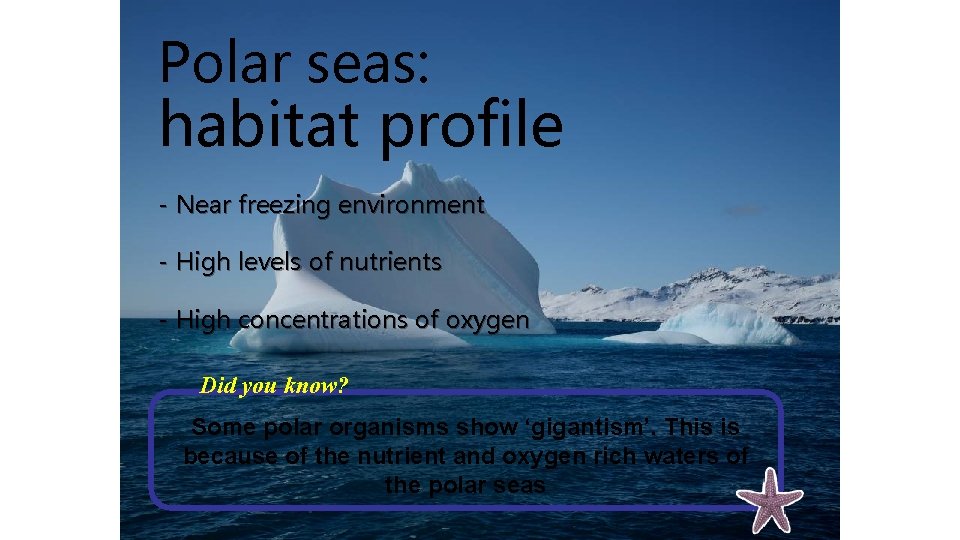
Polar seas: habitat profile - Near freezing environment - High levels of nutrients - High concentrations of oxygen Did you know? Some polar organisms show ‘gigantism’. This is because of the nutrient and oxygen rich waters of the polar seas
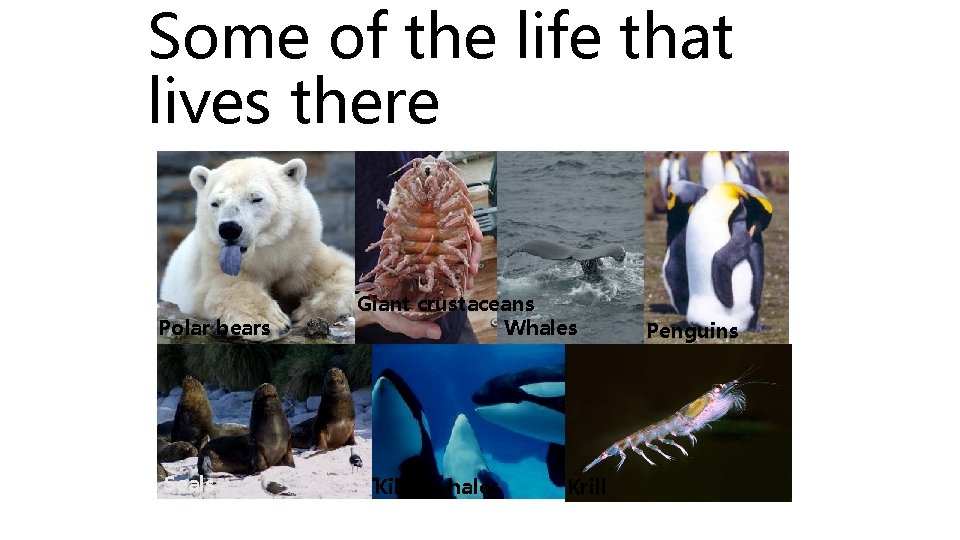
Some of the life that lives there Polar bears Seals Giant crustaceans Whales Killer whales Krill Penguins

Anti-freeze fish!
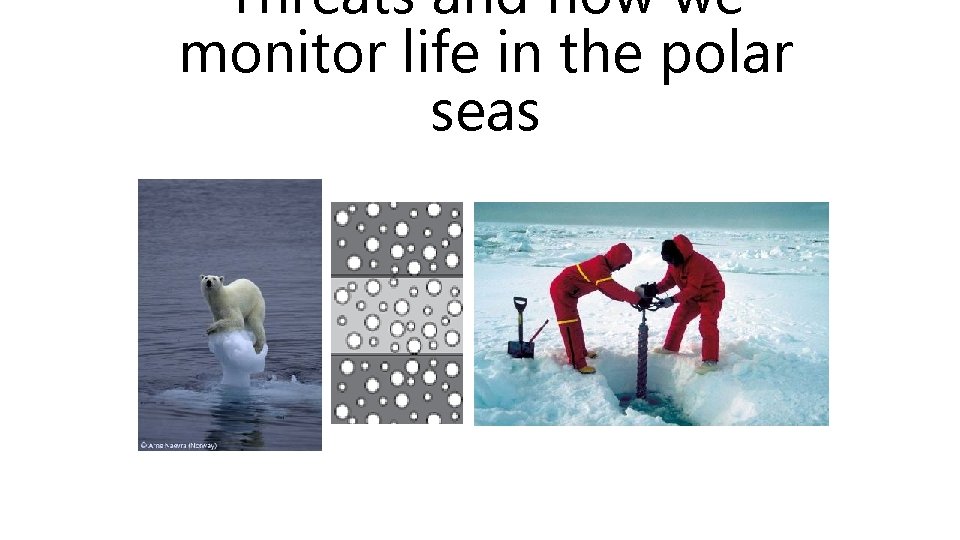
Threats and how we monitor life in the polar seas
Take home messages The marine world contains a huge diversity of habitats, each with their own unique communities of organisms specially adapted to living there Although scientists have several techniques for monitoring the impacts of mankind on our seas, excessive human use is still effecting the natural functioning of our ecosystems There is a need to focus on sustainable development of our oceans and to manage the use of our seas by mankind The key question still remains though… How we can achieve this?
- Slides: 16