
Deep Learning techniques to classify Scanning Electron Microscope
- Slides: 30
Deep Learning techniques to classify Scanning Electron Microscope (SEM) images at the nanoscale the NFFA case study S. Cozzini, R. Aversa, C. De Nobili, A. Chiusole, G. B Brandino CNR – IOM / e. Xact lab srl NFFA-Europe has received funding from the European Union’s Horizon 2020 research and innovation programme under grant agreement No 654360
Agenda • Introduction: NFFA-EUROPE project • Data Repository for NFFA-EUROPE project • Classify Scanning Electron Microscope (SEM) images at the nanoscale. • Conclusions & perspectives
EU funded project it provides the widest range of tools for research at the nanoscale Free transnational access to academia & industry www. nffa. eu NFFA-Europe has received funding from the European Union’s Horizon 2020 research and innovation programme under grant agreement No 654360
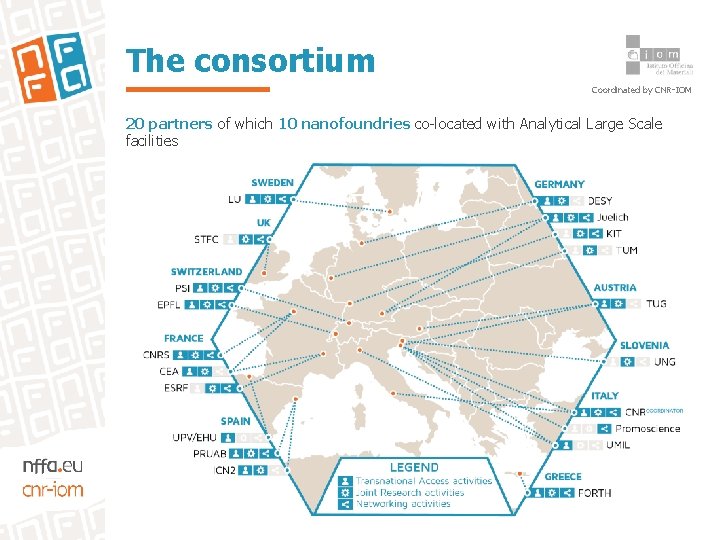
The consortium Coordinated by CNR-IOM 20 partners of which 10 nanofoundries co-located with Analytical Large Scale facilities
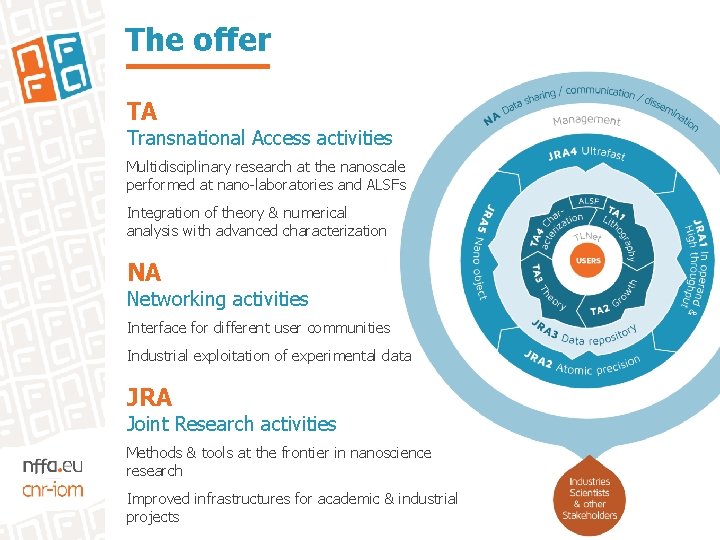
The offer TA Transnational Access activities Multidisciplinary research at the nanoscale performed at nano-laboratories and ALSFs Integration of theory & numerical analysis with advanced characterization NA Networking activities Interface for different user communities Industrial exploitation of experimental data JRA Joint Research activities Methods & tools at the frontier in nanoscience research Improved infrastructures for academic & industrial projects
NFFA Data management JRA 3: e-Infrastructure for data and information management A transversal activity devoted to the setup of the first Information and Data Repository Platform (IDRP) for Nano science • Definition of new metadata standards for data sharing in nanoscience • Automatic acquisition of key metadata and create a data repository for future data access Data infrastructure is complemented by Data Analysis Services.
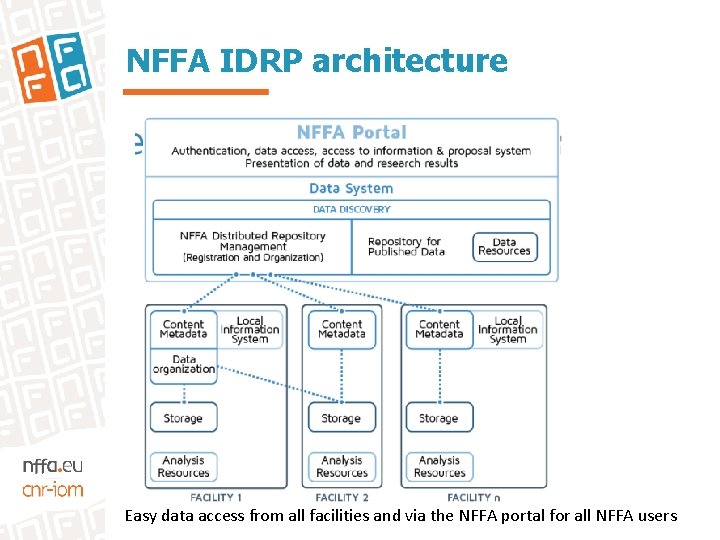
NFFA IDRP architecture Easy data access from all facilities and via the NFFA portal for all NFFA users
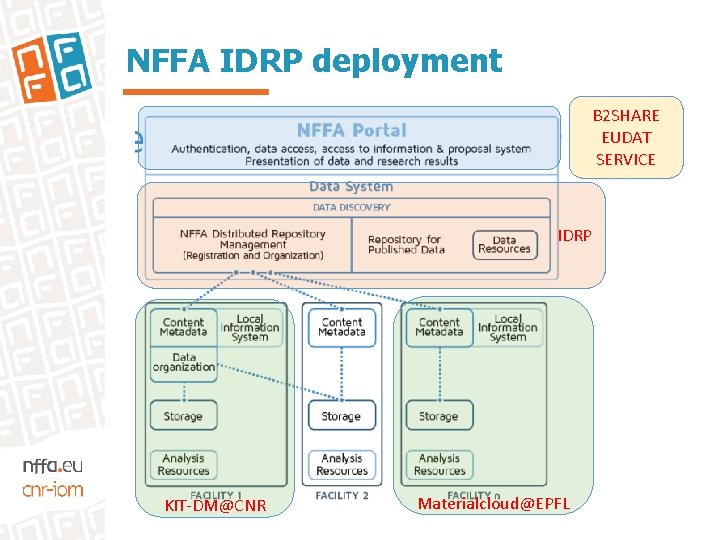
NFFA IDRP deployment B 2 SHARE EUDAT SERVICE IDRP KIT-DM@CNR Materialcloud@EPFL
A case study: classifying SEM images by Neural network
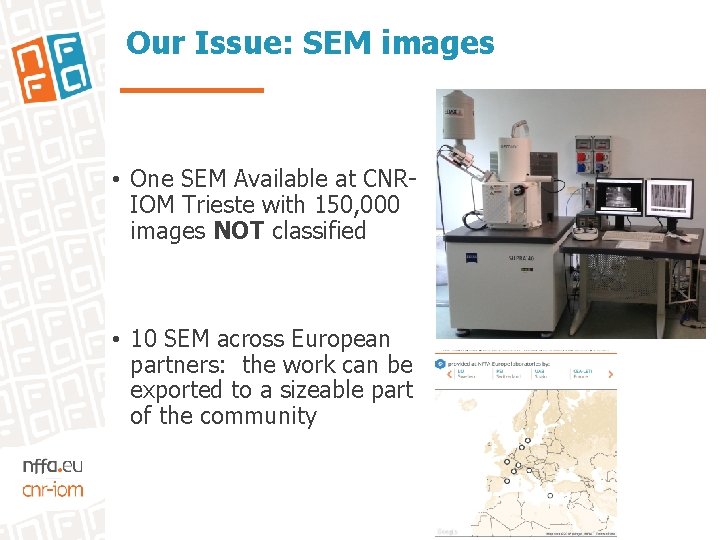
Our Issue: SEM images • One SEM Available at CNRIOM Trieste with 150, 000 images NOT classified • 10 SEM across European partners: the work can be exported to a sizeable part of the community
Sharing images is nice. . • A couple of million nano images can be of some help for some nanoscience. . But before doing that we need to start classifying them…
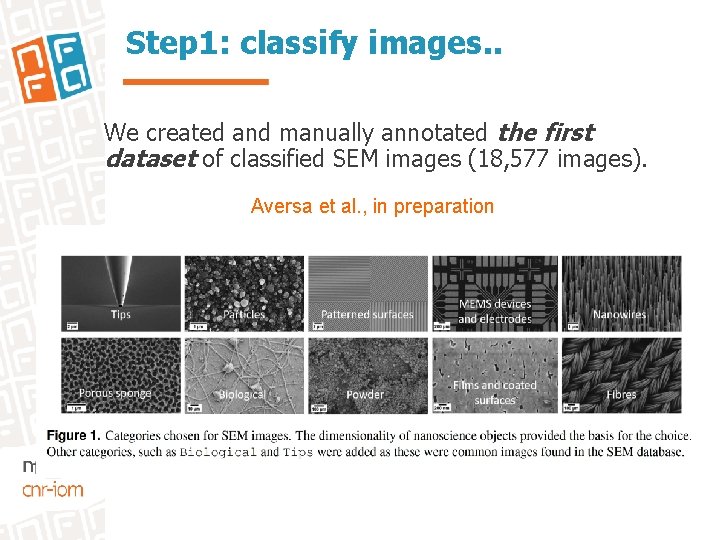
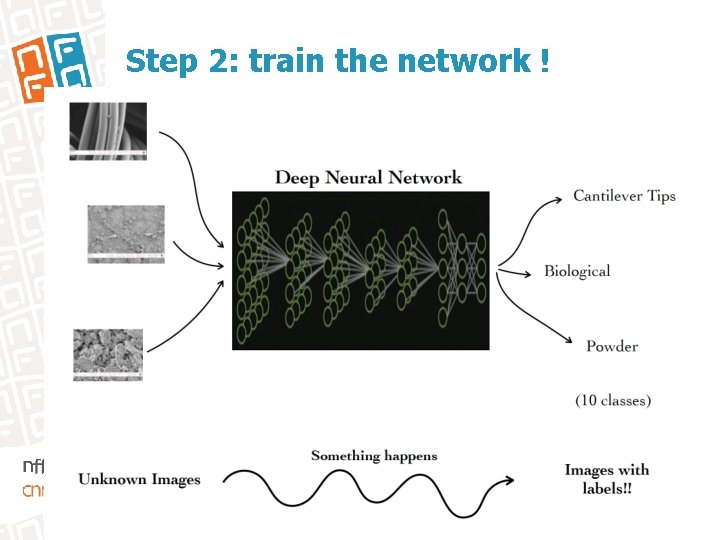
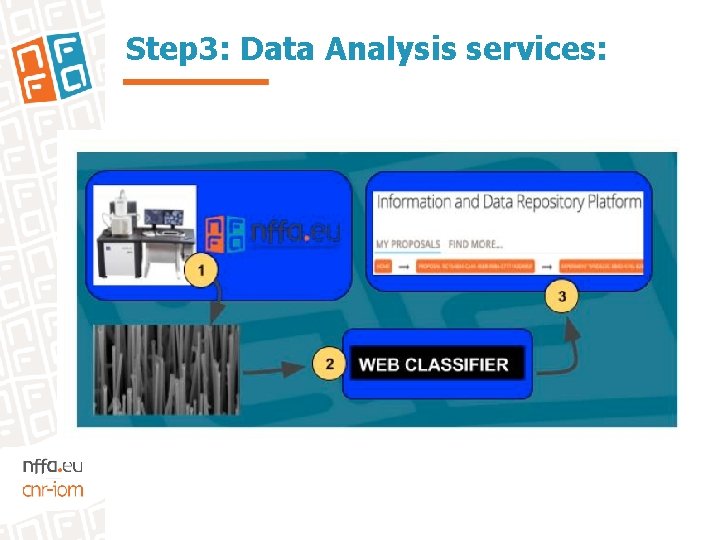
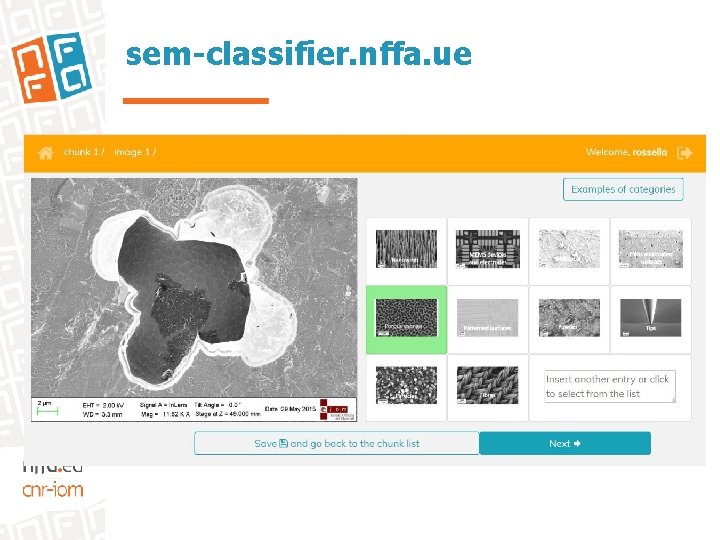
SEM images classification steps • STEP 1: Classify images (scientific skills) • STEP 2: Train a neural network (deep learning) • STEP 3: Use the network as classifier (inference) • Semi - Automatic tool for SEM users • Massive process of all the images • Specific task in nano science: wires alignment
Step 1: classify images. . We created and manually annotated the first dataset of classified SEM images (18, 577 images). Aversa et al. , in preparation
Step 2: train the network !
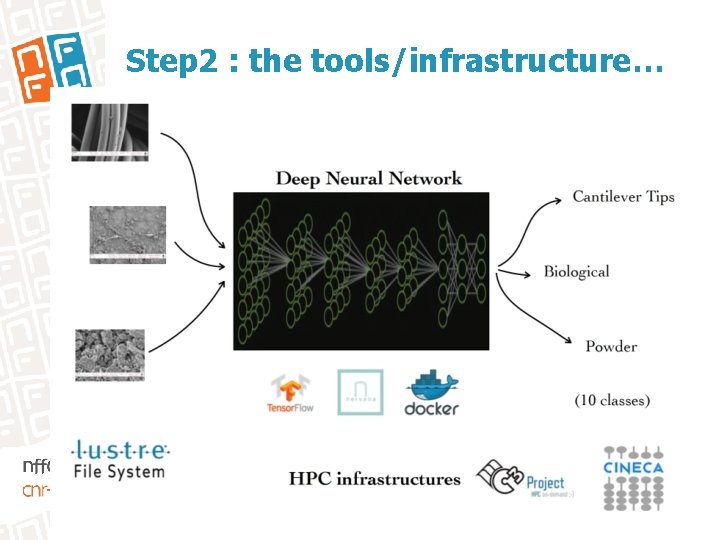
Step 2 : the tools/infrastructure…
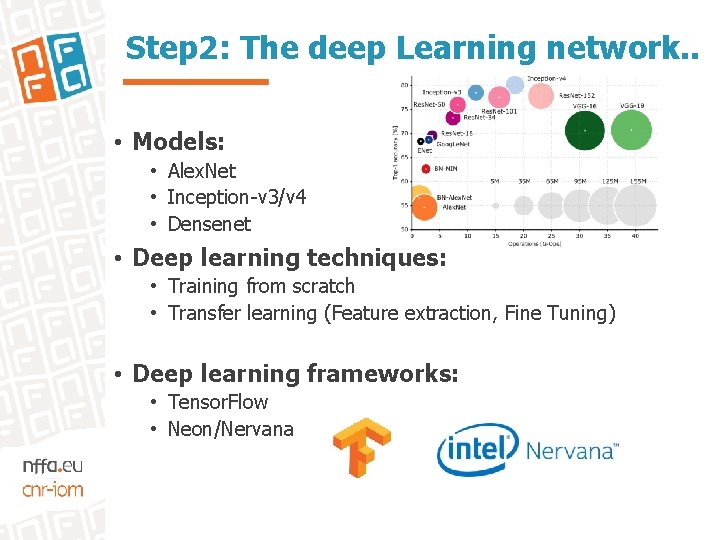
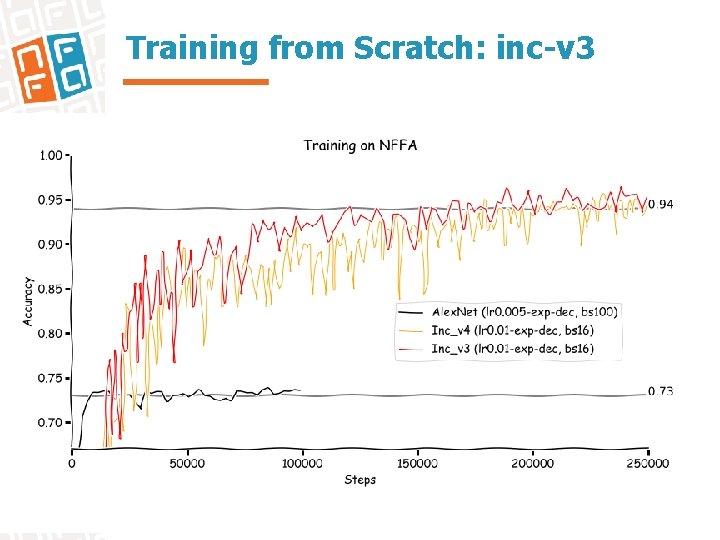
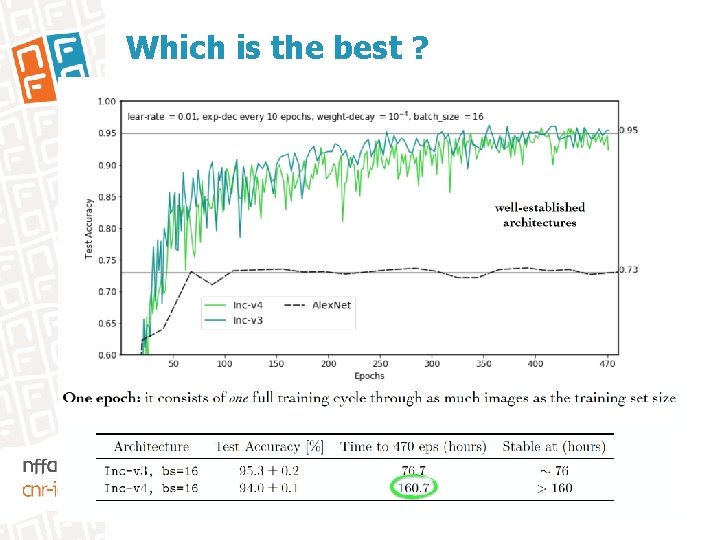
Step 2: The deep Learning network. . • Models: • Alex. Net • Inception-v 3/v 4 • Densenet • Deep learning techniques: • Training from scratch • Transfer learning (Feature extraction, Fine Tuning) • Deep learning frameworks: • Tensor. Flow • Neon/Nervana
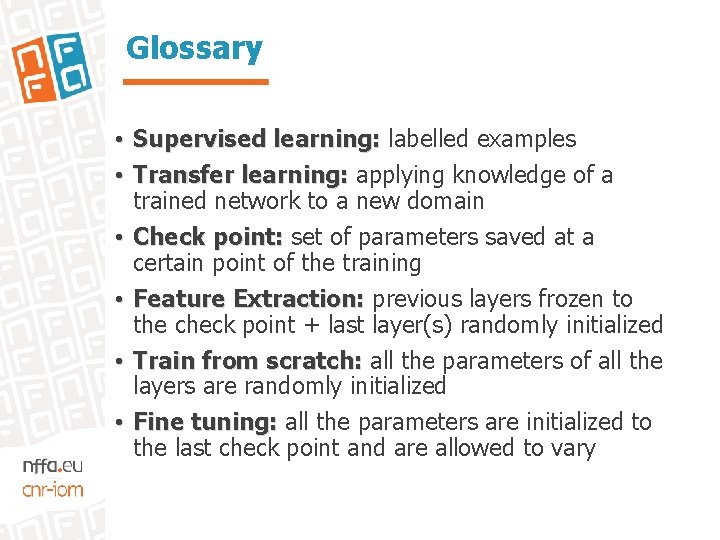
Glossary • • • Supervised learning: labelled examples Transfer learning: applying knowledge of a trained network to a new domain Check point: set of parameters saved at a certain point of the training Feature Extraction: previous layers frozen to the check point + last layer(s) randomly initialized Train from scratch: all the parameters of all the layers are randomly initialized Fine tuning: all the parameters are initialized to the last check point and are allowed to vary
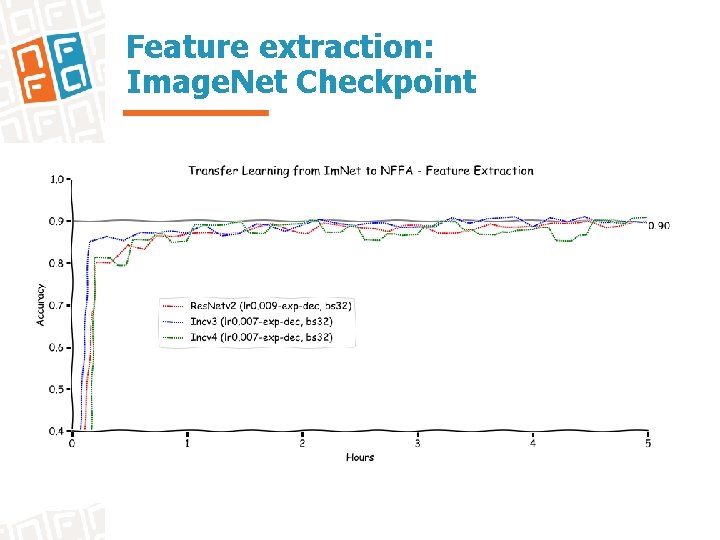
Feature extraction: Image. Net Checkpoint
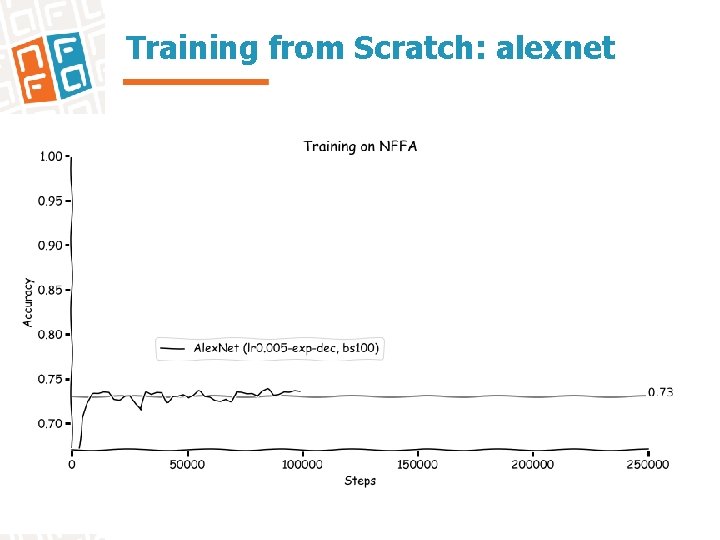
Training from Scratch: alexnet
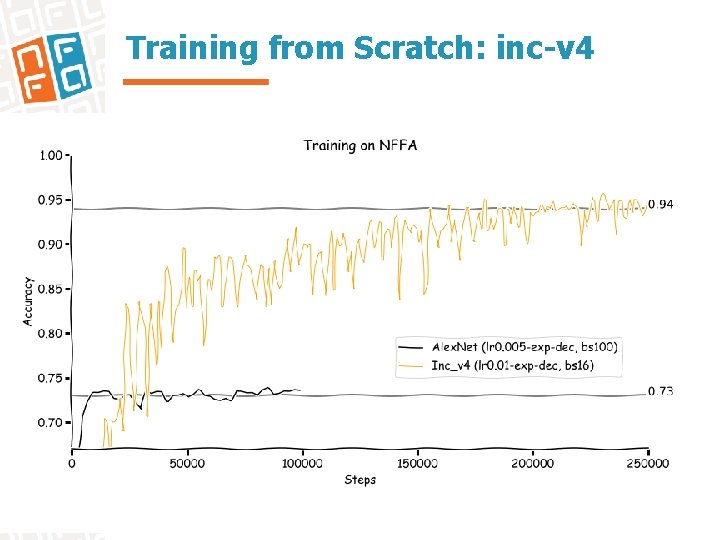
Training from Scratch: inc-v 4
Training from Scratch: inc-v 3
Which is the best ?
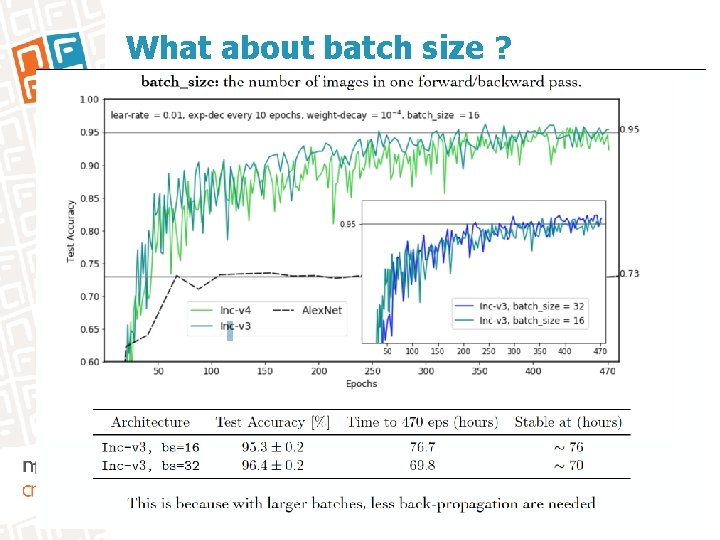
What about batch size ?
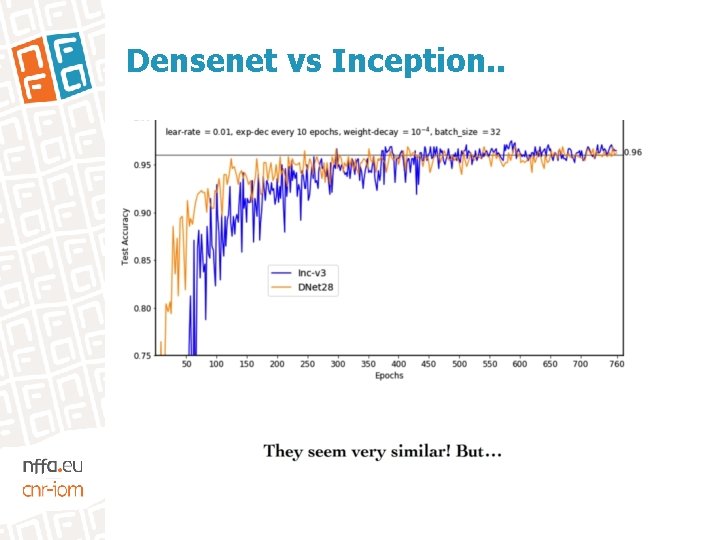
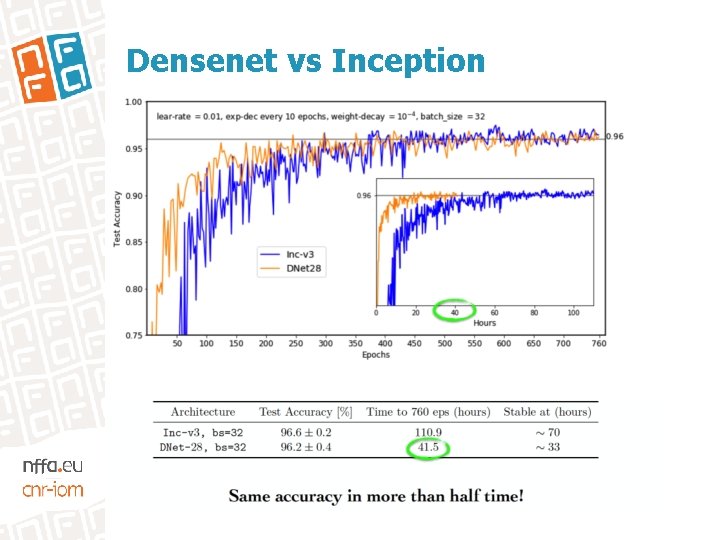
Densenet vs Inception. .
Densenet vs Inception
Step 3: Data Analysis services:
sem-classifier. nffa. ue
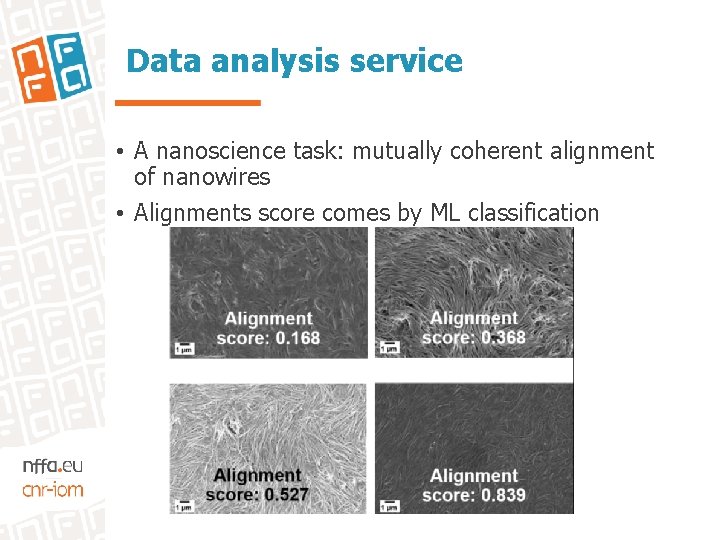
Data analysis service • A nanoscience task: mutually coherent alignment of nanowires • Alignments score comes by ML classification
Conclusions&perspective • A distributed Data management infrastructure for NFFA -EUROPE up&running • We applied the deep learning technique to train an automatic image classification engine for Nano images to provide Data Analysis services on the top of the infrastructure • A full automated procedure has been then setup to automatically annotate SEM images once user load them on the KTDM&IDRP. . • Metadata generated automatically thanks to ML • A pandora box was open for many different interesting nanoscience problems to be solved with the help of deep learning techniques to complement NFFAEUROPE IDRP with data analysis services.
References • R. Aversa, “Scientific Image Processing within the NFFA-EUROPE Project”, MHPC thesis, 16 -122016 • C. De Nobili, “Deep Learning for Nanoscience Scanning Electron Microscope Image Recognition”, MHPC thesis, 18 -12 -2017 • H. M. Modarres, R. Aversa, S. Cozzini, et al. , “Neural Network for Nanoscience Scanning Electron Microscope Image Recognition”, Scientific Reports 7, 13282(2017) • R. Aversa, S. Cozzini, “The first annotated set of Scanning Electroscope Microscopy images”, in preparation • Web classifier: sem-classifier. nffa. eu