
Deep Learning A tutorial for dummies Param Vir







- Slides: 39
Deep Learning A tutorial for dummies Param Vir Singh Shunyuan Zhang Nikhil Malik
Dokyun Lee: The Deep Learner http: //leedokyun. com/deep-learning-reading-list. html
“Deep Learning doesn’t do different things, it does things differently”
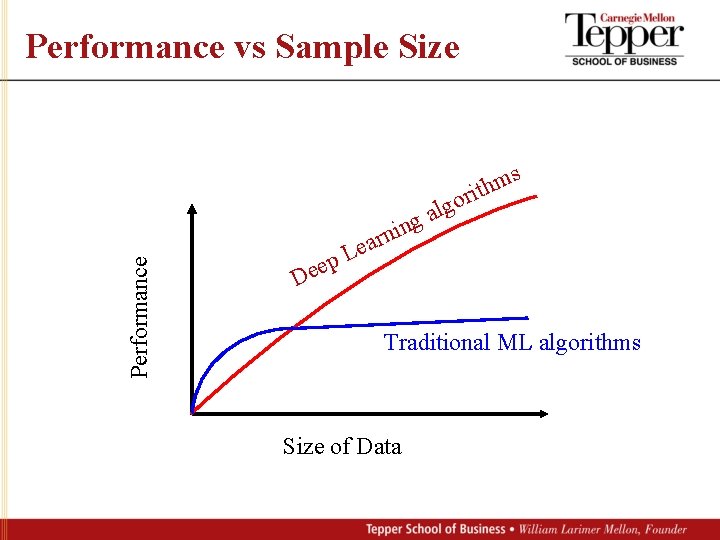
Performance vs Sample Size Performance s eep D in n r ea m h t i r o lg a g L Traditional ML algorithms Size of Data
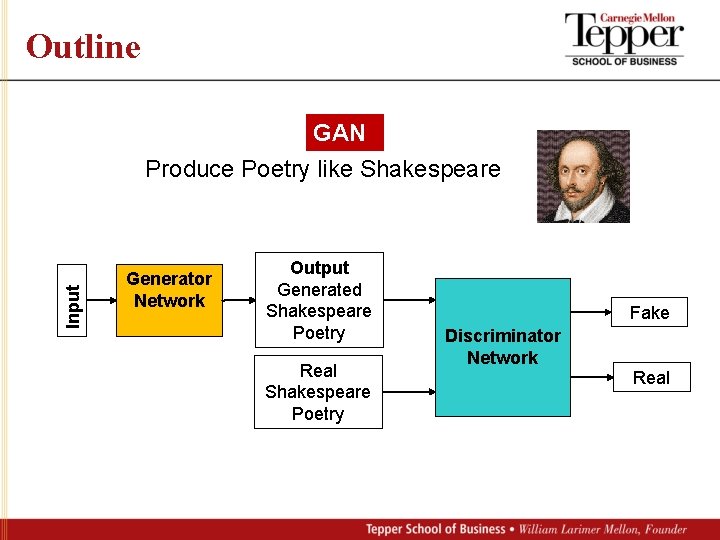
Outline • Supervised Learning GAN – Convolutional Neural Network Produce Poetry like Shakespeare – Sequence Modelling: RNN and its extensions • Unsupervised Learning Input • – Autoencoder Output Generator – Stacked Denoising Autoencoder Generated Network Shakespeare Unsupervised Learning (+Supervised) – Poetry Generative Adversarial Networks Real • Reinforcement Learning Shakespeare – Deep Reinforcement Learning Poetry Discriminator Network Fake Real
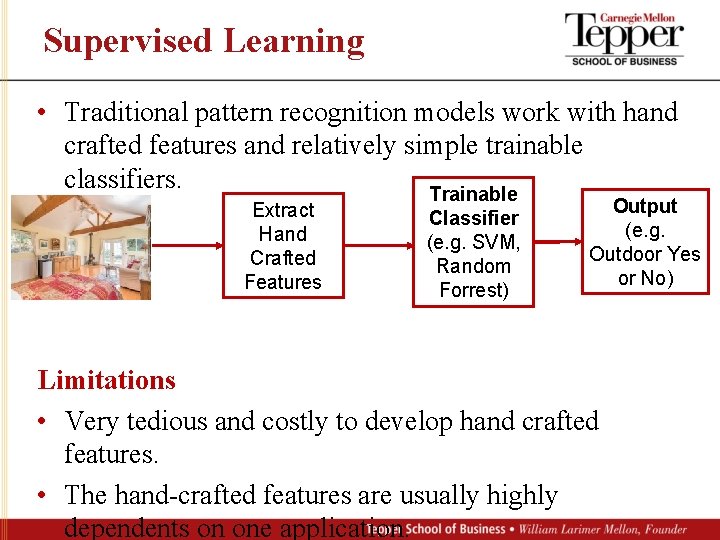
Supervised Learning • Traditional pattern recognition models work with hand crafted features and relatively simple trainable classifiers. Trainable Extract Hand Crafted Features Classifier (e. g. SVM, Random Forrest) Output (e. g. Outdoor Yes or No) Limitations • Very tedious and costly to develop hand crafted features. • The hand-crafted features are usually highly dependents on one application.
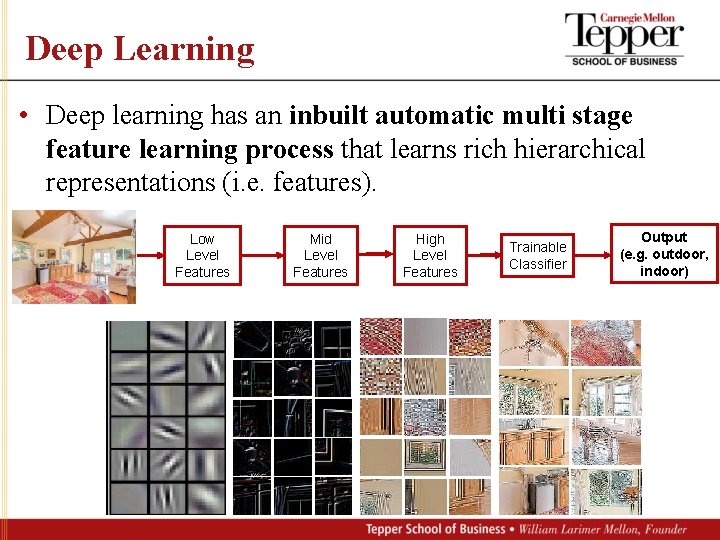
Deep Learning • Deep learning has an inbuilt automatic multi stage feature learning process that learns rich hierarchical representations (i. e. features). Low Level Features Mid Level Features High Level Features Trainable Classifier Output (e. g. outdoor, indoor)
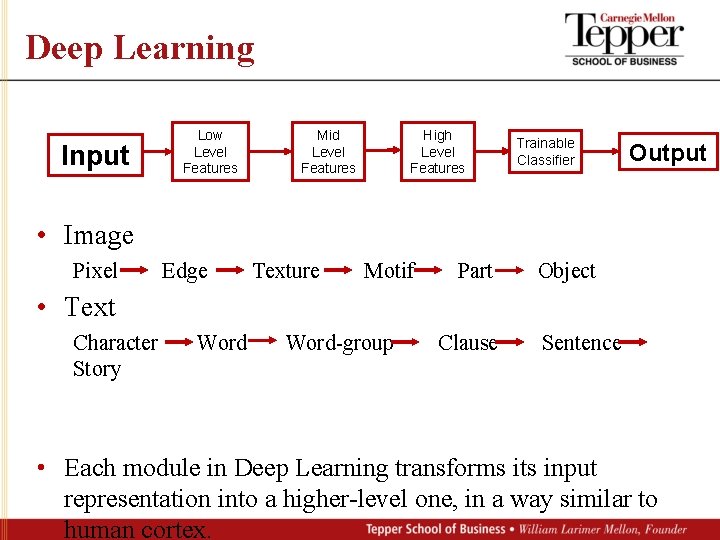
Deep Learning Input Low Level Features Mid Level Features High Level Features Trainable Classifier Output • Image Pixel Edge Texture Motif Part Object • Text Character Story Word-group Clause Sentence • Each module in Deep Learning transforms its input representation into a higher-level one, in a way similar to human cortex.
Let us see how it all works!
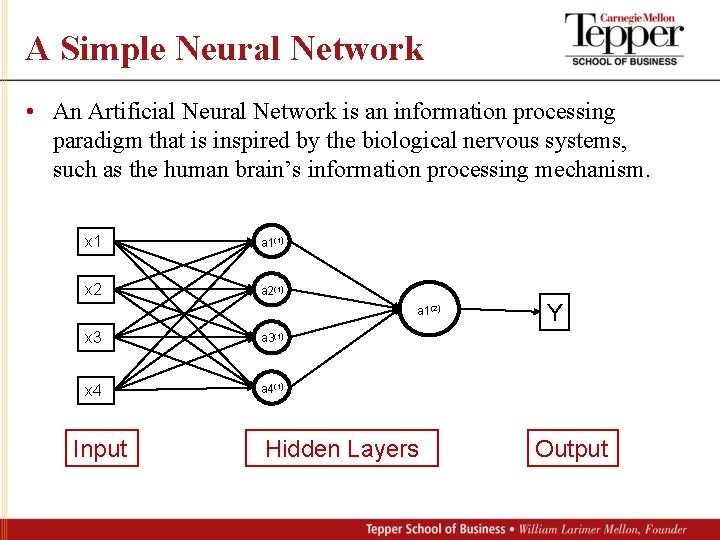
A Simple Neural Network • An Artificial Neural Network is an information processing paradigm that is inspired by the biological nervous systems, such as the human brain’s information processing mechanism. x 1 a 1(1) x 2 a 2(1) a 1(2) x 3 a 3(1) x 4 a 4(1) Input Hidden Layers Y Output
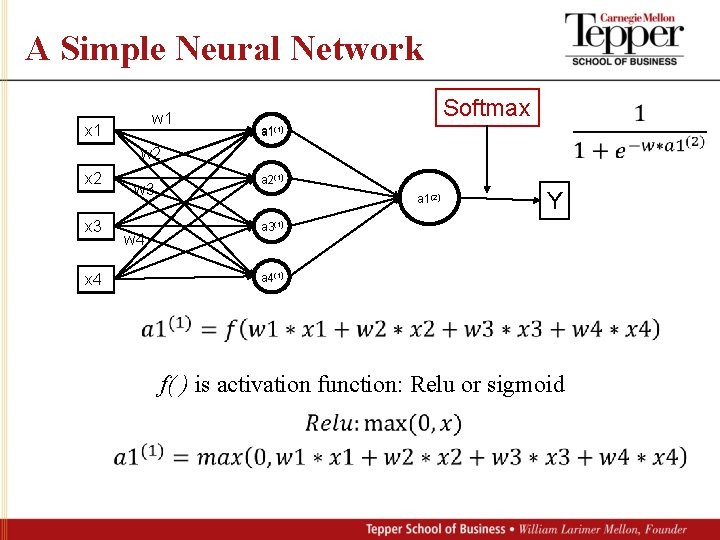
A Simple Neural Network w 1 x 1 Softmax a 1(1) w 2 x 2 w 3 x 3 w 4 x 4 a 2(1) a 1(2) Y a 3(1) a 4(1) f( ) is activation function: Relu or sigmoid
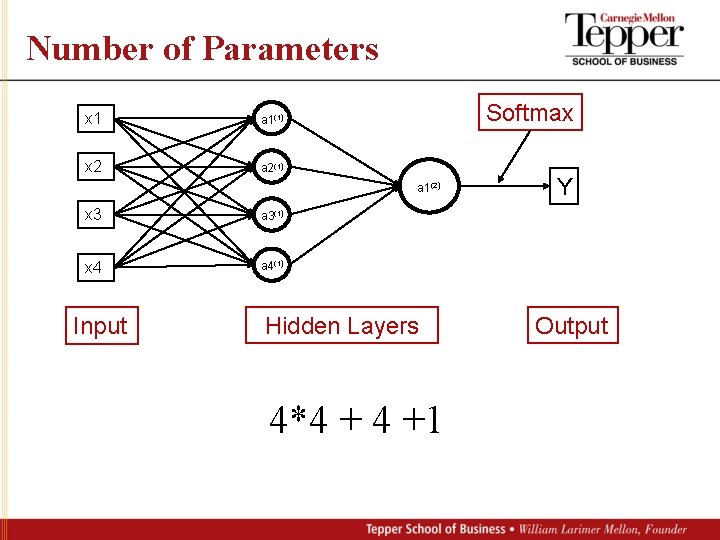
Number of Parameters x 1 a 1(1) x 2 a 2(1) Softmax a 1(2) x 3 a 3(1) x 4 a 4(1) Input Hidden Layers 4*4 + 4 +1 Y Output
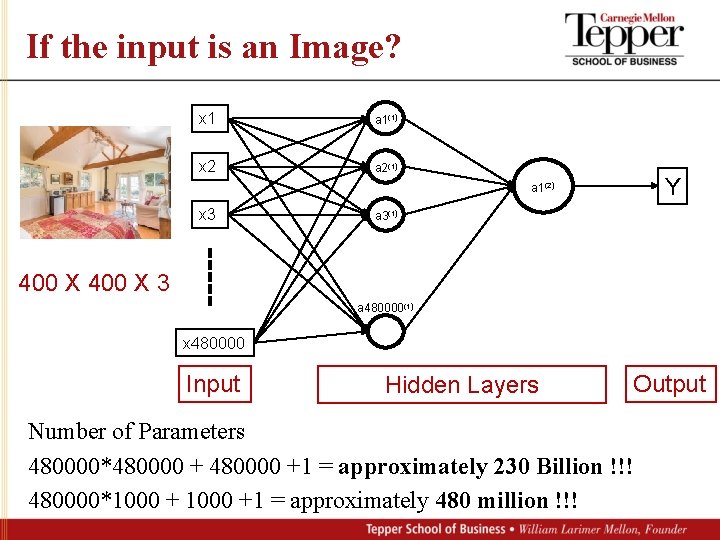
If the input is an Image? x 1 a 1(1) x 2 a 2(1) Y a 1(2) x 3 a 3(1) 400 X 3 a 480000(1) x 480000 Input Hidden Layers Output Number of Parameters 480000*480000 +1 = approximately 230 Billion !!! 480000*1000 +1 = approximately 480 million !!!
Let us see how convolutional layers help.
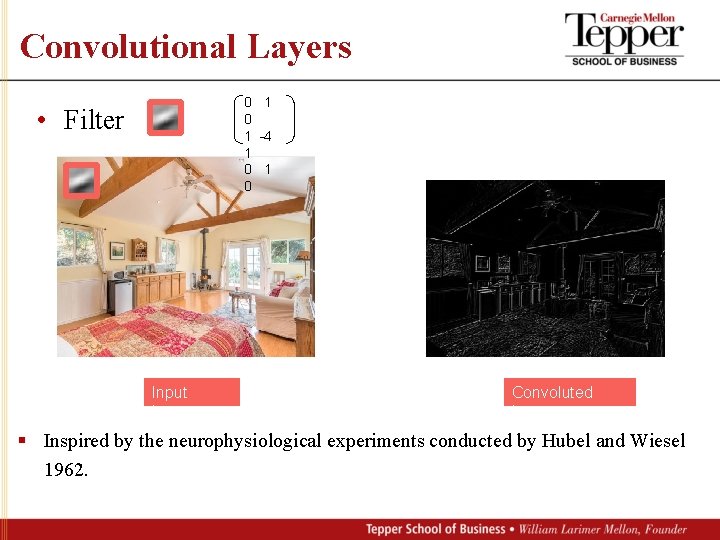
Convolutional Layers 0 1 0 1 -4 1 0 1 0 • Filter Input Image Convoluted Image § Inspired by the neurophysiological experiments conducted by Hubel and Wiesel 1962.
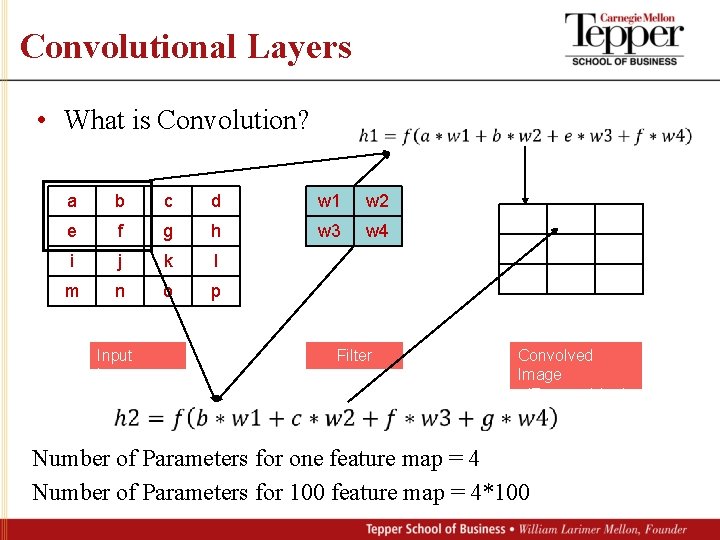
Convolutional Layers • What is Convolution? a b c d w 1 w 2 e f g h w 3 w 4 i j k l m n o p Input Image Filter h 1 h 2 Convolved Image (Feature Map) Number of Parameters for one feature map = 4 Number of Parameters for 100 feature map = 4*100
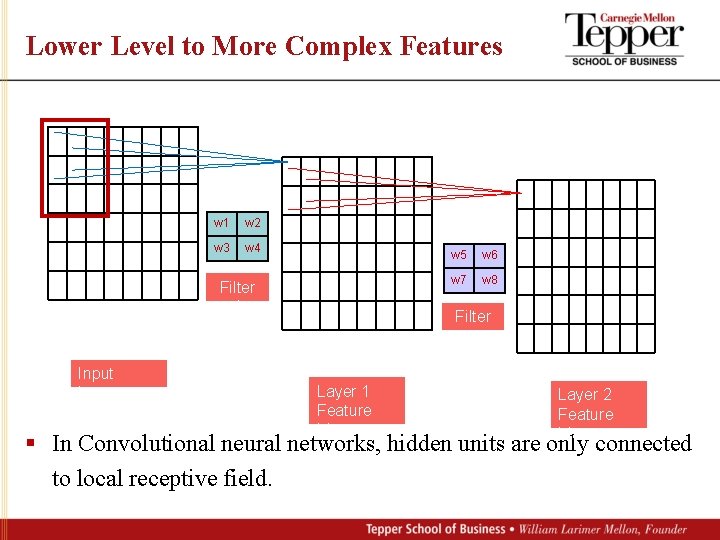
Lower Level to More Complex Features w 1 w 2 w 3 w 4 Filter 1 Input Image w 5 w 6 w 7 w 8 Filter 2 Layer 1 Feature Map Layer 2 Feature Map § In Convolutional neural networks, hidden units are only connected to local receptive field.
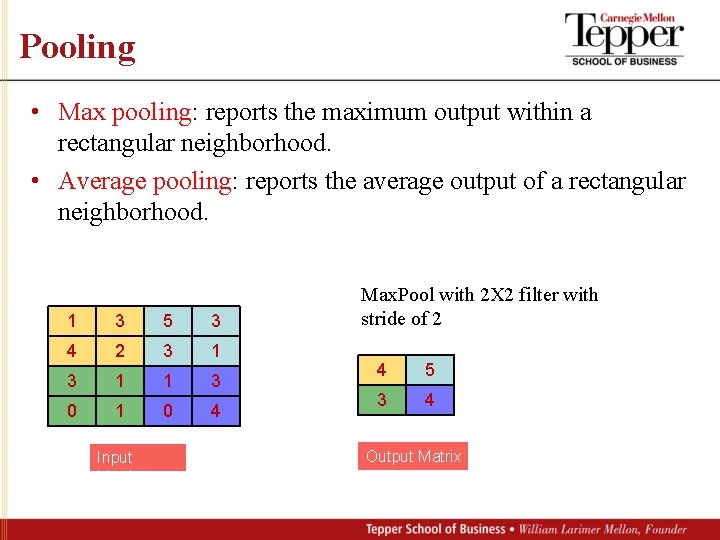
Pooling • Max pooling: reports the maximum output within a rectangular neighborhood. • Average pooling: reports the average output of a rectangular neighborhood. 1 3 5 3 4 2 3 1 1 3 0 1 0 4 Input Matrix Max. Pool with 2 X 2 filter with stride of 2 4 5 3 4 Output Matrix
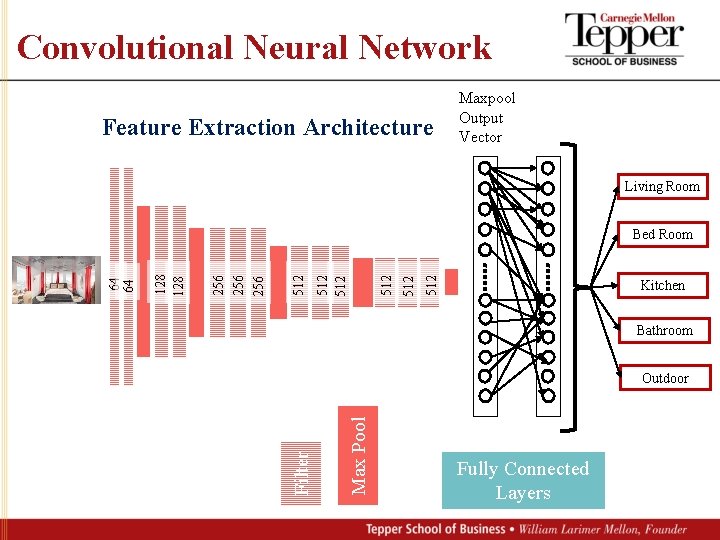
Convolutional Neural Network Feature Extraction Architecture Maxpool Output Vector Living Room 512 512 512 Kitchen Bathroom Max Pool Outdoor Filter 256 256 128 64 64 Bed Room Fully Connected Layers
Convolutional Neural Networks • Output: Binary, Multinomial, Continuous, Count • Input: fixed size, can use padding to make all images same size. • Architecture: Choice is ad hoc – requires experimentation. • Optimization: Backward propagation – hyper parameters for very deep model can be estimated properly only if you have billions of images. • Use an architecture and trained hyper parameters from other papers (Imagenet or Microsoft/Google APIs etc) • Computing Power: Buy a GPU!!
Automatic Colorization of Black and White Images
Optimizing Images Post Processing Feature Optimization (Color Curves and Details) Post Processing Feature Optimization (Illumination) Post Processing Feature Optimization (Color Tone: Warmness)
Recurrent Neural Networks
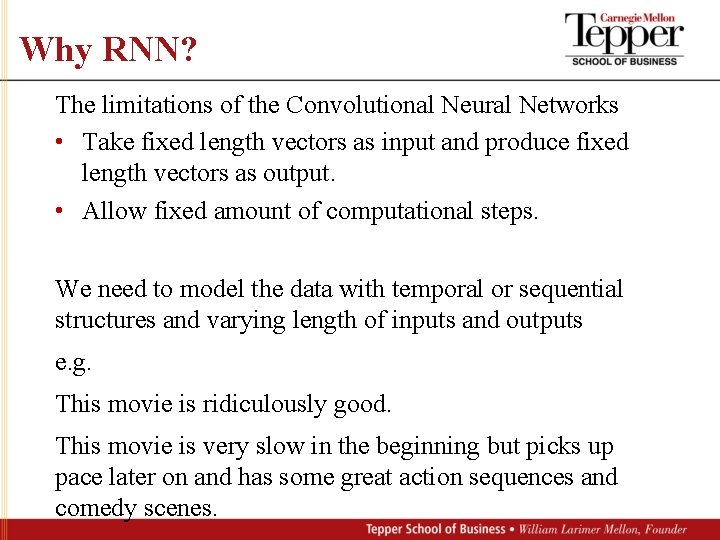
Why RNN? The limitations of the Convolutional Neural Networks • Take fixed length vectors as input and produce fixed length vectors as output. • Allow fixed amount of computational steps. We need to model the data with temporal or sequential structures and varying length of inputs and outputs e. g. This movie is ridiculously good. This movie is very slow in the beginning but picks up pace later on and has some great action sequences and comedy scenes.
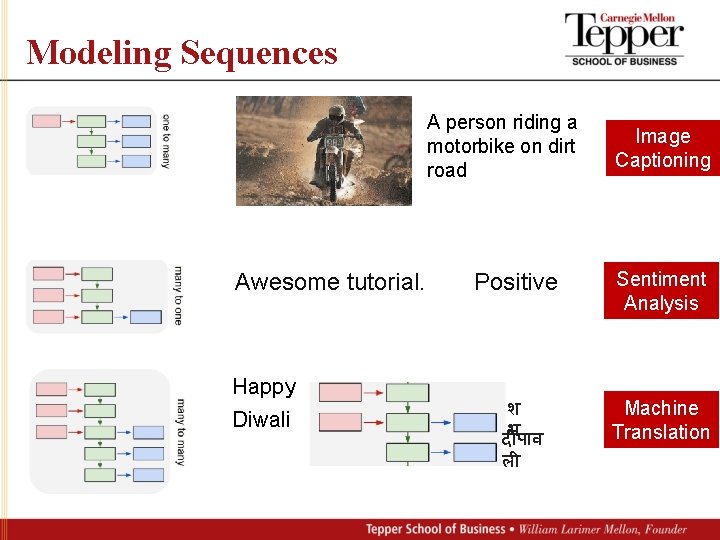
Modeling Sequences A person riding a motorbike on dirt road Awesome tutorial. Happy Diwali Positive श भ द प व ल Image Captioning Sentiment Analysis Machine Translation
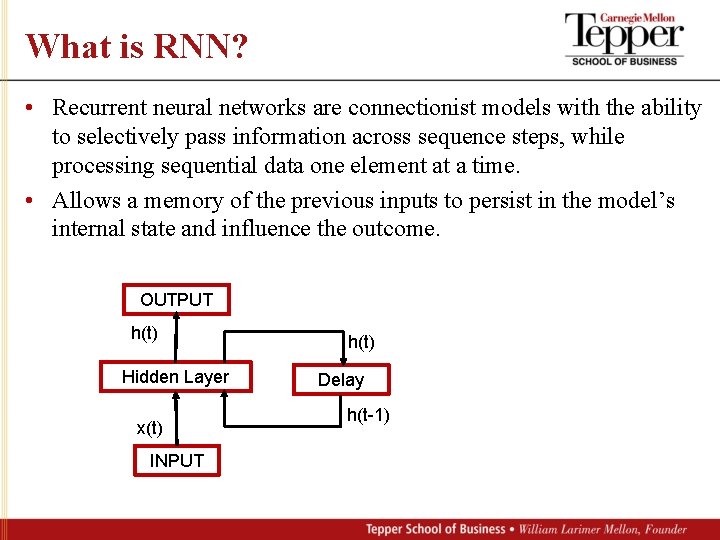
What is RNN? • Recurrent neural networks are connectionist models with the ability to selectively pass information across sequence steps, while processing sequential data one element at a time. • Allows a memory of the previous inputs to persist in the model’s internal state and influence the outcome. OUTPUT h(t) Hidden Layer x(t) INPUT h(t) Delay h(t-1)
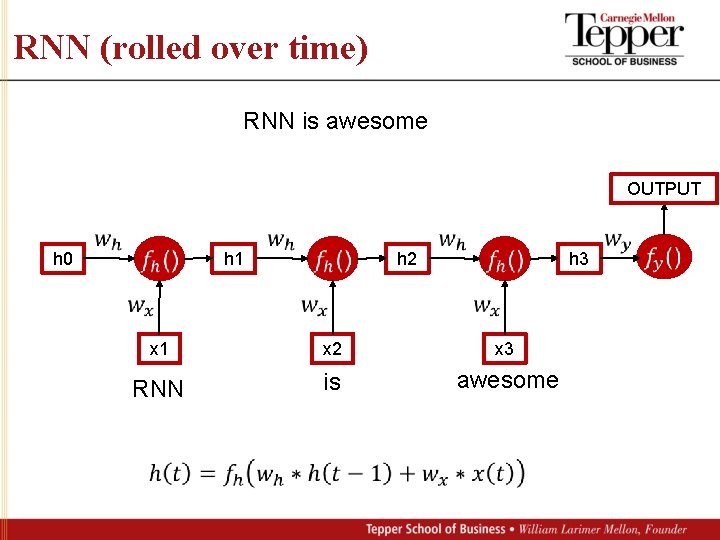
RNN (rolled over time) RNN is awesome OUTPUT h 0 h 1 h 2 x 1 x 2 x 3 RNN is awesome h 3
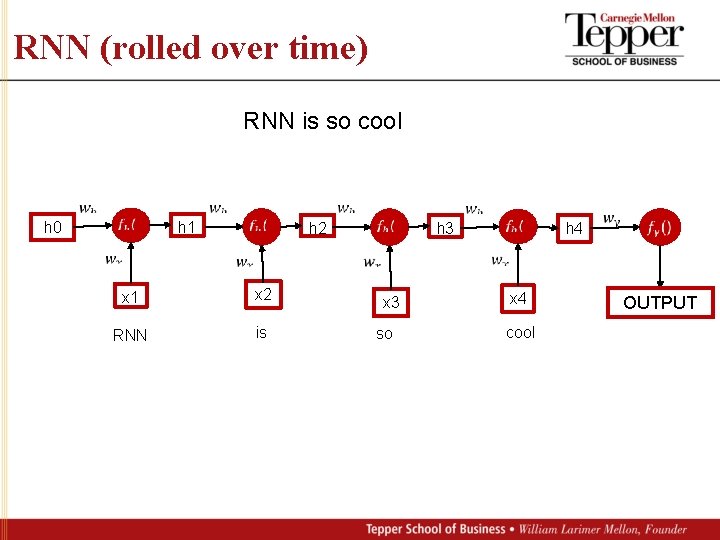
RNN (rolled over time) RNN is so cool h 0 h 1 h 2 x 2 RNN is h 4 x 1 h 3 x 3 so x 4 cool OUTPUT
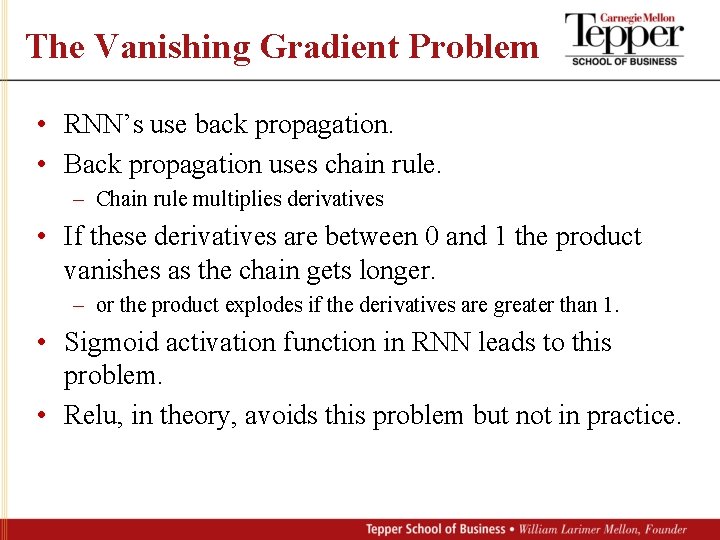
The Vanishing Gradient Problem • RNN’s use back propagation. • Back propagation uses chain rule. – Chain rule multiplies derivatives • If these derivatives are between 0 and 1 the product vanishes as the chain gets longer. – or the product explodes if the derivatives are greater than 1. • Sigmoid activation function in RNN leads to this problem. • Relu, in theory, avoids this problem but not in practice.
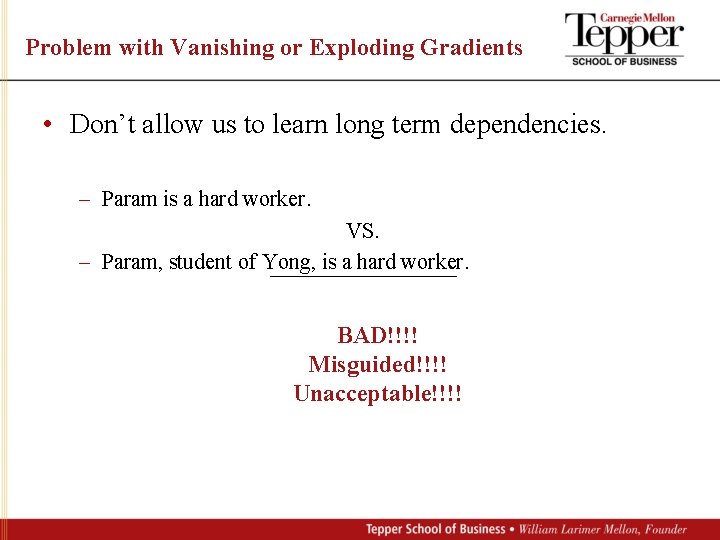
Problem with Vanishing or Exploding Gradients • Don’t allow us to learn long term dependencies. – Param is a hard worker. VS. – Param, student of Yong, is a hard worker. BAD!!!! Misguided!!!! Unacceptable!!!!
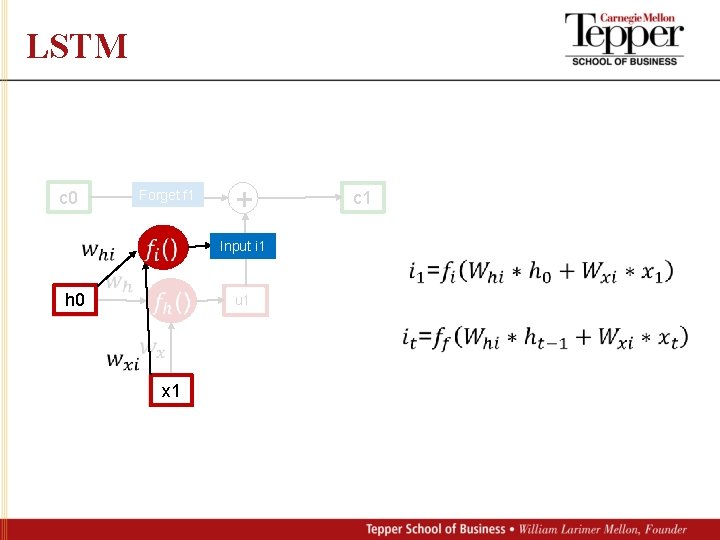
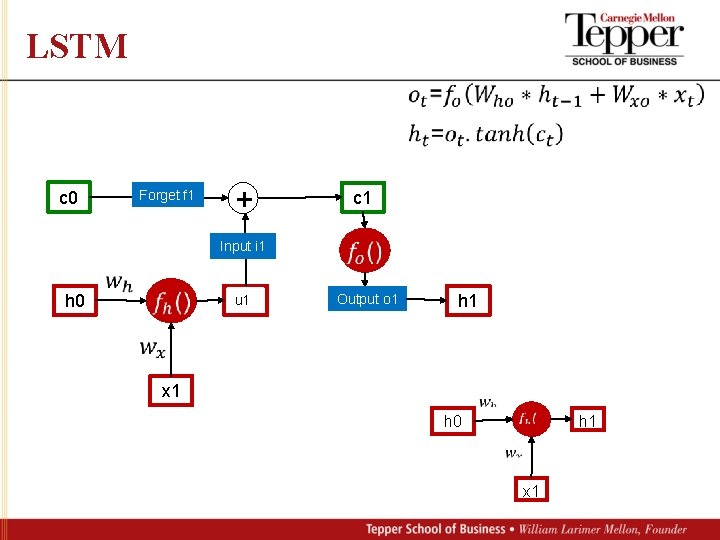
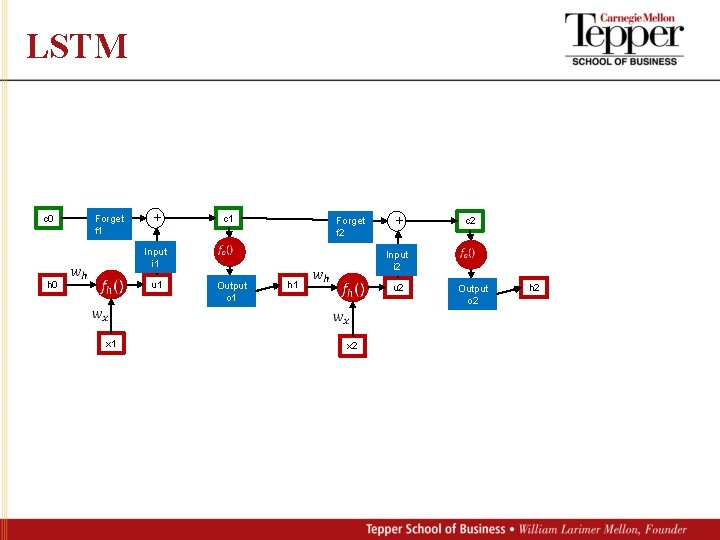
Long Short Term Memory (LSTM) • LSTM provide solution to the vanishing/exploding gradient problem. • Solution: Memory Cell, which is updated at each step in the sequence. • Three Gates control the flow of information to and from the Memory cell – Input Gate: protect the current step from irrelevant inputs – Output Gate: prevents current step from passing irrelevant information to later steps. – Forget Gate: limits information passed from one cell to the next.
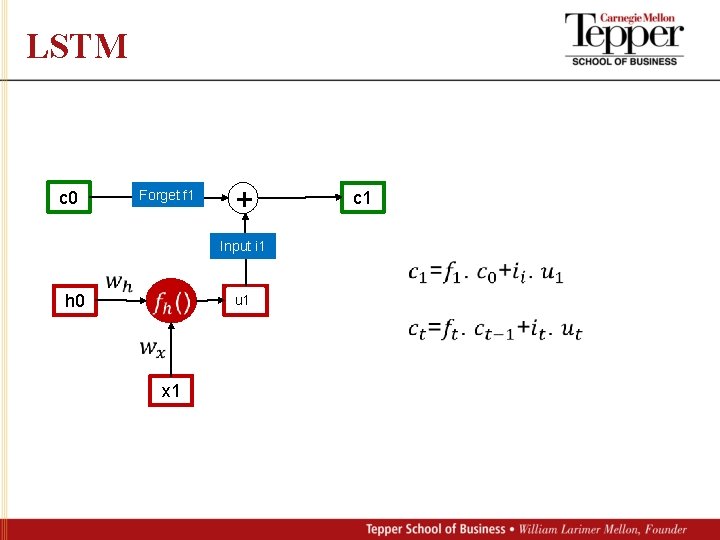
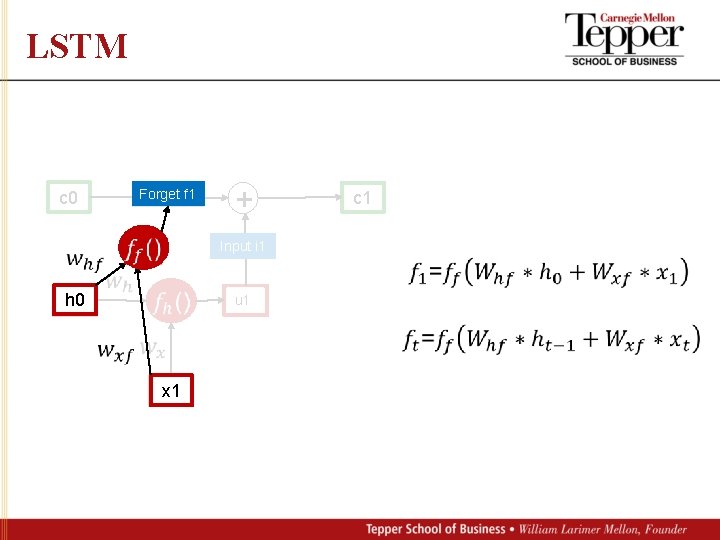
LSTM Forget f 1 c 0 + c 1 Input i 1 h 0 x 1 u 1 h 1
LSTM Forget f 1 c 0 c 1 Input i 1 h 0 + u 1 h 1 x 1
LSTM Forget f 1 c 0 h 0 + c 1 Input i 1 u 1 h 1 x 1
LSTM Forget f 1 c 0 + Input i 1 h 0 u 1 h 1 c 1 Output o 1 h 1 x 1 h 0 x 1 h 1
LSTM c 0 h 0 Forget f 1 x 1 + c 1 Input i 1 u 1 Output o 1 Forget f 2 h 1 x 2 + c 2 Input i 2 u 2 Output o 2 h 2
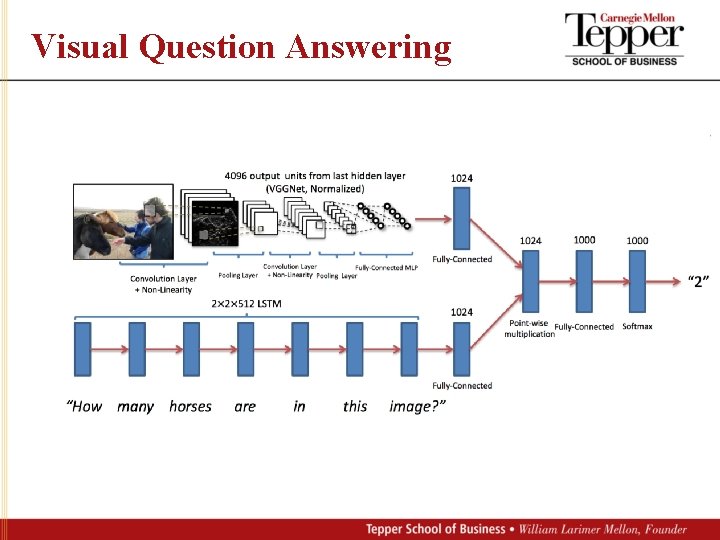
Combining CNN and LSTM
Visual Question Answering