
DEEP DIVE SERIES Acute Respiratory Distress Syndrome ARDS
- Slides: 19
DEEP DIVE SERIES Acute Respiratory Distress Syndrome (ARDS) is a lifethreatening form of respiratory failure characterized by massive inflammation leading to pulmonary edema, decruitment of alveoli, and hypoxemia. Despite its incidence rate and lethality, there are limited direct therapeutic options available for its treatment. This EMRA Critical Care Committee Deep Dive will review the current best available literature on ARDS management and provide insight on how to best treat ARDS patients in the emergency department.
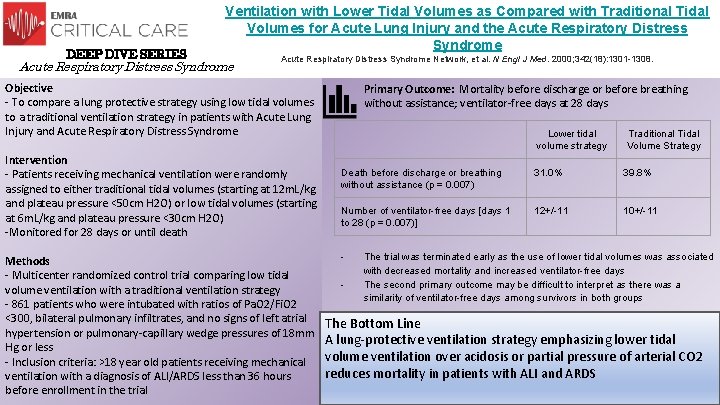
DEEP DIVE SERIES Ventilation with Lower Tidal Volumes as Compared with Traditional Tidal Volumes for Acute Lung Injury and the Acute Respiratory Distress Syndrome Network, et al. N Engl J Med. 2000; 342(18): 1301 -1308. Objective - To compare a lung protective strategy using low tidal volumes to a traditional ventilation strategy in patients with Acute Lung Injury and Acute Respiratory Distress Syndrome Primary Outcome: Mortality before discharge or before breathing without assistance; ventilator-free days at 28 days Lower tidal volume strategy Intervention - Patients receiving mechanical ventilation were randomly assigned to either traditional tidal volumes (starting at 12 m. L/kg and plateau pressure <50 cm H 2 O) or low tidal volumes (starting at 6 m. L/kg and plateau pressure <30 cm H 2 O) -Monitored for 28 days or until death Methods - Multicenter randomized control trial comparing low tidal volume ventilation with a traditional ventilation strategy - 861 patients who were intubated with ratios of Pa. O 2/Fi. O 2 <300, bilateral pulmonary infiltrates, and no signs of left atrial hypertension or pulmonary-capillary wedge pressures of 18 mm Hg or less - Inclusion criteria: >18 year old patients receiving mechanical ventilation with a diagnosis of ALI/ARDS less than 36 hours before enrollment in the trial Traditional Tidal Volume Strategy Death before discharge or breathing without assistance (p = 0. 007) 31. 0% 39. 8% Number of ventilator-free days [days 1 to 28 (p = 0. 007)] 12+/-11 10+/-11 - The trial was terminated early as the use of lower tidal volumes was associated with decreased mortality and increased ventilator-free days The second primary outcome may be difficult to interpret as there was a similarity of ventilator-free days among survivors in both groups The Bottom Line A lung-protective ventilation strategy emphasizing lower tidal volume ventilation over acidosis or partial pressure of arterial CO 2 reduces mortality in patients with ALI and ARDS
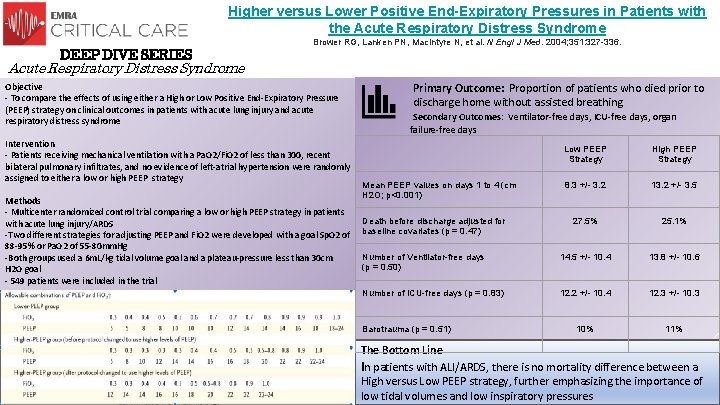
Higher versus Lower Positive End-Expiratory Pressures in Patients with the Acute Respiratory Distress Syndrome DEEP DIVE SERIES Brower RG, Lanken PN, Mac. Intyre N, et al. N Engl J Med. 2004; 351: 327 -336. Acute Respiratory Distress Syndrome Objective - To compare the effects of using either a High or Low Positive End-Expiratory Pressure (PEEP) strategy on clinical outcomes in patients with acute lung injury and acute respiratory distress syndrome Intervention - Patients receiving mechanical ventilation with a Pa. O 2/Fi. O 2 of less than 300, recent bilateral pulmonary infiltrates, and no evidence of left-atrial hypertension were randomly assigned to either a low or high PEEP strategy Methods - Multicenter randomized control trial comparing a low or high PEEP strategy in patients with acute lung injury/ARDS -Two different strategies for adjusting PEEP and Fi. O 2 were developed with a goal Sp. O 2 of 88 -95% or Pa. O 2 of 55 -80 mm. Hg -Both groups used a 6 m. L/kg tidal volume goal and a plateau-pressure less than 30 cm H 2 O goal - 549 patients were included in the trial Primary Outcome: Proportion of patients who died prior to discharge home without assisted breathing Secondary Outcomes: Ventilator-free days, ICU-free days, organ failure-free days Low PEEP Strategy High PEEP Strategy 8. 3 +/- 3. 2 13. 2 +/- 3. 5 27. 5% 25. 1% Number of Ventilator-free days (p = 0. 50) 14. 5 +/- 10. 4 13. 8 +/- 10. 6 Number of ICU-free days (p = 0. 83) 12. 2 +/- 10. 4 12. 3 +/- 10. 3 10% 11% Mean PEEP values on days 1 to 4 (cm H 2 O; p<0. 001) Death before discharge adjusted for baseline covariates (p = 0. 47) Barotrauma (p = 0. 51) The Bottom Line In patients with ALI/ARDS, there is no mortality difference between a High versus Low PEEP strategy, further emphasizing the importance of low tidal volumes and low inspiratory pressures
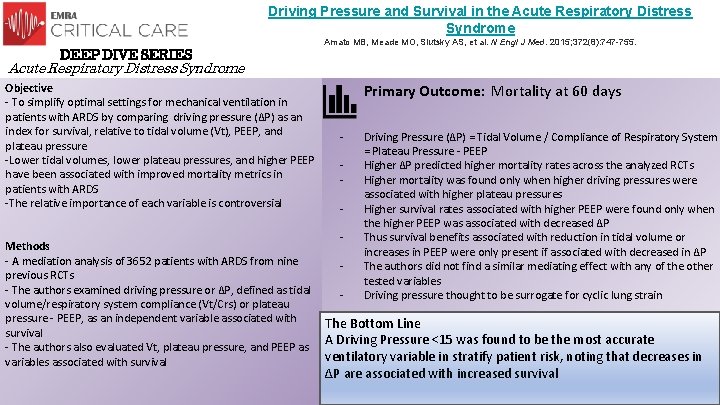
Driving Pressure and Survival in the Acute Respiratory Distress Syndrome DEEP DIVE SERIES Amato MB, Meade MO, Slutsky AS, et al. N Engl J Med. 2015; 372(8): 747 -755. Acute Respiratory Distress Syndrome Objective - To simplify optimal settings for mechanical ventilation in patients with ARDS by comparing driving pressure (ΔP) as an index for survival, relative to tidal volume (Vt), PEEP, and plateau pressure -Lower tidal volumes, lower plateau pressures, and higher PEEP have been associated with improved mortality metrics in patients with ARDS -The relative importance of each variable is controversial Methods - A mediation analysis of 3652 patients with ARDS from nine previous RCTs - The authors examined driving pressure or ΔP, defined as tidal volume/respiratory system compliance (Vt/Crs) or plateau pressure - PEEP, as an independent variable associated with survival - The authors also evaluated Vt, plateau pressure, and PEEP as variables associated with survival Primary Outcome: Mortality at 60 days - Driving Pressure (ΔP) = Tidal Volume / Compliance of Respiratory System = Plateau Pressure - PEEP Higher ΔP predicted higher mortality rates across the analyzed RCTs Higher mortality was found only when higher driving pressures were associated with higher plateau pressures Higher survival rates associated with higher PEEP were found only when the higher PEEP was associated with decreased ΔP Thus survival benefits associated with reduction in tidal volume or increases in PEEP were only present if associated with decreased in ΔP The authors did not find a similar mediating effect with any of the other tested variables Driving pressure thought to be surrogate for cyclic lung strain The Bottom Line A Driving Pressure <15 was found to be the most accurate ventilatory variable in stratify patient risk, noting that decreases in ΔP are associated with increased survival
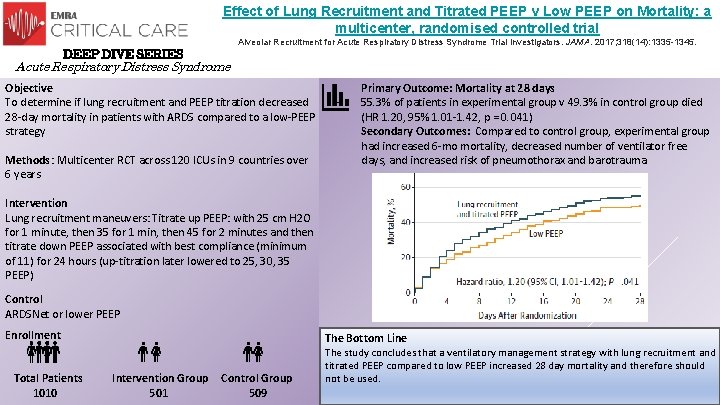
Effect of Lung Recruitment and Titrated PEEP v Low PEEP on Mortality: a multicenter, randomised controlled trial Alveolar Recruitment for Acute Respiratory Distress Syndrome Trial Investigators. JAMA. 2017; 318(14): 1335 -1345. DEEP DIVE SERIES Acute Respiratory Distress Syndrome Objective To determine if lung recruitment and PEEP titration decreased 28 -day mortality in patients with ARDS compared to a low-PEEP strategy Methods: Multicenter RCT across 120 ICUs in 9 countries over 6 years - Primary Outcome: Mortality at 28 days 55. 3% of patients in experimental group v 49. 3% in control group died (HR 1. 20, 95% 1. 01 -1. 42, p = 0. 041) Secondary Outcomes: Compared to control group, experimental group had increased 6 -mo mortality, decreased number of ventilator free days, and increased risk of pneumothorax and barotrauma Intervention Lung recruitment maneuvers: Titrate up PEEP: with 25 cm H 2 O for 1 minute, then 35 for 1 min, then 45 for 2 minutes and then titrate down PEEP associated with best compliance (minimum of 11) for 24 hours (up-titration later lowered to 25, 30, 35 PEEP) Control ARDSNet or lower PEEP Enrollment Total Patients Intervention Group 1010 501 The Bottom Line Control Group 509 The study concludes that a ventilatory management strategy with lung recruitment and titrated PEEP compared to low PEEP increased 28 day mortality and therefore should not be used.
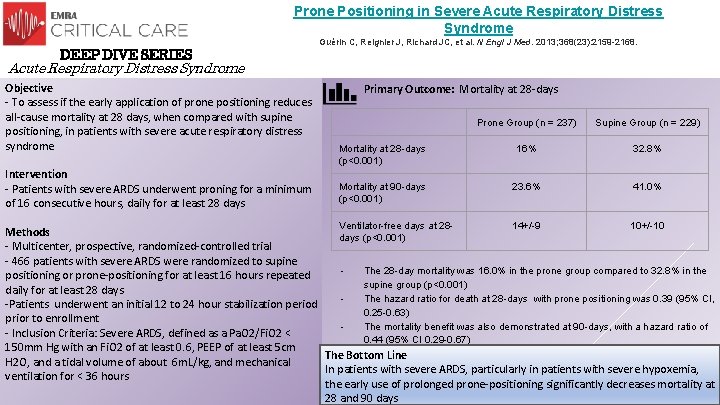
Prone Positioning in Severe Acute Respiratory Distress Syndrome DEEP DIVE SERIES Guérin C, Reignier J, Richard JC, et al. N Engl J Med. 2013; 368(23): 2159 -2168. Acute Respiratory Distress Syndrome Objective - To assess if the early application of prone positioning reduces all-cause mortality at 28 days, when compared with supine positioning, in patients with severe acute respiratory distress syndrome Intervention - Patients with severe ARDS underwent proning for a minimum of 16 consecutive hours, daily for at least 28 days Primary Outcome: Mortality at 28 -days Prone Group (n = 237) Supine Group (n = 229) Mortality at 28 -days (p<0. 001) 16% 32. 8% Mortality at 90 -days (p<0. 001) 23. 6% 41. 0% Ventilator-free days at 28 - 14+/-9 10+/-10 Methods days (p<0. 001) - Multicenter, prospective, randomized-controlled trial - 466 patients with severe ARDS were randomized to supine The 28 -day mortality was 16. 0% in the prone group compared to 32. 8% in the positioning or prone-positioning for at least 16 hours repeated supine group (p<0. 001) daily for at least 28 days The hazard ratio for death at 28 -days with prone positioning was 0. 39 (95% CI, -Patients underwent an initial 12 to 24 hour stabilization period 0. 25 -0. 63) prior to enrollment The mortality benefit was also demonstrated at 90 -days, with a hazard ratio of - Inclusion Criteria: Severe ARDS, defined as a Pa. O 2/Fi. O 2 < 0. 44 (95% CI 0. 29 -0. 67) 150 mm Hg with an Fi. O 2 of at least 0. 6, PEEP of at least 5 cm The Bottom Line H 2 O, and a tidal volume of about 6 m. L/kg, and mechanical In patients with severe ARDS, particularly in patients with severe hypoxemia, ventilation for < 36 hours the early use of prolonged prone-positioning significantly decreases mortality at 28 and 90 days
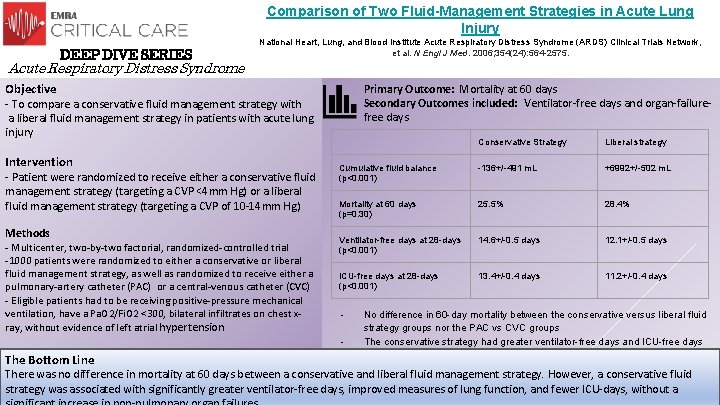
Comparison of Two Fluid-Management Strategies in Acute Lung Injury DEEP DIVE SERIES National Heart, Lung, and Blood Institute Acute Respiratory Distress Syndrome (ARDS) Clinical Trials Network, et al. N Engl J Med. 2006; 354(24): 564 -2575. Acute Respiratory Distress Syndrome Objective Primary Outcome: Mortality at 60 days Secondary Outcomes included: Ventilator-free days and organ-failurefree days - To compare a conservative fluid management strategy with a liberal fluid management strategy in patients with acute lung injury Intervention - Patient were randomized to receive either a conservative fluid management strategy (targeting a CVP <4 mm Hg) or a liberal fluid management strategy (targeting a CVP of 10 -14 mm Hg) Methods - Multicenter, two-by-two factorial, randomized-controlled trial -1000 patients were randomized to either a conservative or liberal fluid management strategy, as well as randomized to receive either a pulmonary-artery catheter (PAC) or a central-venous catheter (CVC) - Eligible patients had to be receiving positive-pressure mechanical ventilation, have a Pa. O 2/Fi. O 2 <300, bilateral infiltrates on chest xray, without evidence of left atrial hypertension Conservative Strategy Liberal strategy Cumulative fluid balance (p<0. 001) -136+/-491 m. L +6992+/-502 m. L Mortality at 60 days (p=0. 30) 25. 5% 28. 4% Ventilator-free days at 28 -days (p<0. 001) 14. 6+/-0. 5 days 12. 1+/-0. 5 days ICU-free days at 28 -days (p<0. 001) 13. 4+/-0. 4 days 11. 2+/-0. 4 days - The Bottom Line No difference in 60 -day mortality between the conservative versus liberal fluid strategy groups nor the PAC vs CVC groups The conservative strategy had greater ventilator-free days and ICU-free days There was no difference in mortality at 60 days between a conservative and liberal fluid management strategy. However, a conservative fluid strategy was associated with significantly greater ventilator-free days, improved measures of lung function, and fewer ICU-days, without a
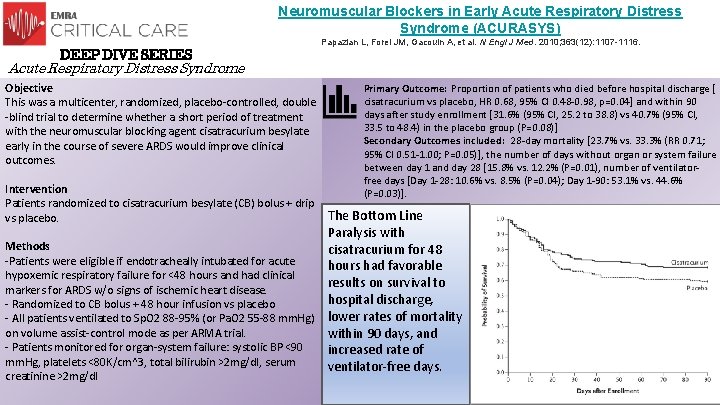
Neuromuscular Blockers in Early Acute Respiratory Distress Syndrome (ACURASYS) DEEP DIVE SERIES Papazian L, Forel JM, Gacouin A, et al. N Engl J Med. 2010; 363(12): 1107 -1116. Acute Respiratory Distress Syndrome Objective This was a multicenter, randomized, placebo-controlled, double -blind trial to determine whether a short period of treatment with the neuromuscular blocking agent cisatracurium besylate early in the course of severe ARDS would improve clinical outcomes. Primary Outcome: Proportion of patients who died before hospital discharge [ cisatracurium vs placebo, HR 0. 68, 95% CI 0. 48 -0. 98, p=0. 04] and within 90 days after study enrollment [31. 6% (95% CI, 25. 2 to 38. 8) vs 40. 7% (95% CI, 33. 5 to 48. 4) in the placebo group (P=0. 08)] Secondary Outcomes included: 28 -day mortality [23. 7% vs. 33. 3% (RR 0. 71; 95% CI 0. 51 -1. 00; P=0. 05)], the number of days without organ or system failure between day 1 and day 28 [15. 8% vs. 12. 2% (P=0. 01), number of ventilatorfree days [Day 1 -28: 10. 6% vs. 8. 5% (P=0. 04); Day 1 -90: 53. 1% vs. 44. 6% (P=0. 03)]. Intervention Patients randomized to cisatracurium besylate (CB) bolus + drip vs placebo. The Bottom Line Paralysis with Methods cisatracurium for 48 -Patients were eligible if endotracheally intubated for acute hours had favorable hypoxemic respiratory failure for <48 hours and had clinical results on survival to markers for ARDS w/o signs of ischemic heart disease. hospital discharge, - Randomized to CB bolus + 48 hour infusion vs placebo - All patients ventilated to Sp. O 2 88 -95% (or Pa. O 2 55 -88 mm. Hg) lower rates of mortality on volume assist-control mode as per ARMA trial. within 90 days, and - Patients monitored for organ-system failure: systolic BP <90 increased rate of mm. Hg, platelets <80 K/cm^3, total bilirubin >2 mg/dl, serum ventilator-free days. creatinine >2 mg/dl
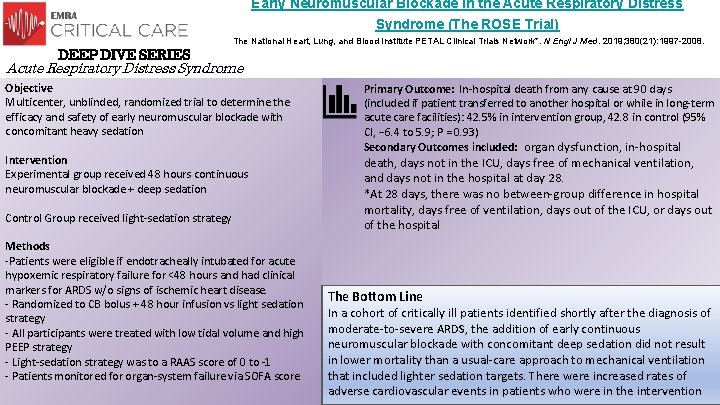
Early Neuromuscular Blockade in the Acute Respiratory Distress Syndrome (The ROSE Trial) The National Heart, Lung, and Blood Institute PETAL Clinical Trials Network*. N Engl J Med. 2019; 380(21): 1997 -2008. DEEP DIVE SERIES Acute Respiratory Distress Syndrome Objective Multicenter, Objective unblinded, randomized trial to determine the efficacy and safety of early neuromuscular blockade with - Can POCUS determine outcomes in N=793 concomitant heavy sedation cardiac arrest? Intervention N=208 Experimental group at received 48 hours continuous - POCUS performed beginning and end ROSC neuromuscular of ACLS efforts blockade + deep sedation N=114 Hosp Adm Control Methods. Group received light-sedation strategy - non-randomized prospective N=13 Methods observational study Hosp -Patients were eligible if endotracheally intubated for acute hypoxemic respiratory failure for <48 hours and. Dis had clinical Inclusion Criteria markers for ARDS+ w/o of ischemic heart disease. - Out of hospital in-EDsigns non-traumatic -cardiac Randomized to CB bolus 48 hourorinfusion arrest patients w/ +asystole PEA vs light sedation strategy -Exclusion Criteria All participants were treated with low tidal volume and high PEEP - briefstrategy resuscitation efforts (< 5 min), -resuscitation Light-sedation strategy was to after a RAAS score of 0 to -1 efforts not cont’d -initial Patients monitored organ-system POCUS, efforts for halted for DNR failure via SOFA score status Primary Outcome: In-hospitalsurvival death from any cause at 90 days Primary Outcome: to hospital admission (included if patient transferred to 95%CI another hospital or while in long-term - 114/793 (14. 4%, 12. 1– 17. 0) intervention group, 42. 8 in control (95% acute care facilities): 42. 5% in. Secondary Outcomes: CI, − 6. 4 to 5. 9; = 0. 93) - P Survival to discharge 13/793 (1. 6%, 95%CI 0. 9– 2. 8) - ROSC 208/793 =organ 26. 2% dysfunction, (95%CI 23. 3– 29. 4) Secondary Outcomes included: in-hospital death, days not in the ICU, days free of=mechanical Black cardiac activityventilation, on initial POCUS and days not in the hospital at day. Grey 28. = no cardiac activity on initial POCUS *At 28 days, there was no between-group difference in hospital mortality, days free of ventilation, Pts days out of the ICU, or days out with cardiac activity demonstrated higher rates of ROSC of the hospital (51. 2%vs 14. 3, p < 0. 001), survival to hospital admission (29. 0% vs 7. 2, p < 0. 001) and survival to hospital discharge (3. 8% vs 0. 6, p = 0. 04). The Bottom Line In a cohort of critically ill patients identified shortly after the diagnosis of moderate-to-severe ARDS, the addition of early continuous neuromuscular blockade with concomitant deep sedation did not result in lower mortality than a usual-care approach to mechanical ventilation that included lighter sedation targets. There were increased rates of adverse cardiovascular events in patients who were in the intervention
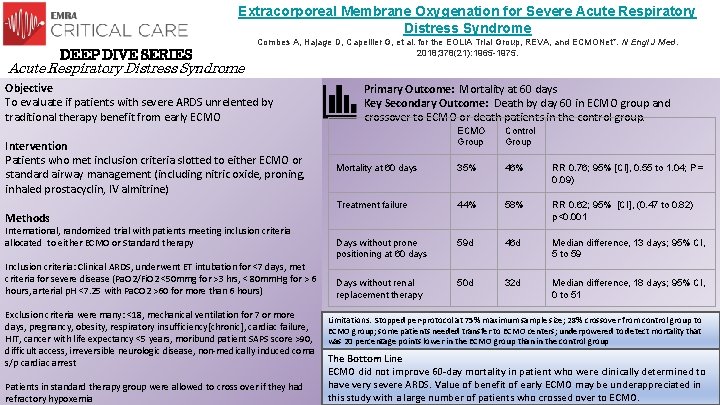
Extracorporeal Membrane Oxygenation for Severe Acute Respiratory Distress Syndrome DEEP DIVE SERIES Combes A, Hajage D, Capellier G, et al. for the EOLIA Trial Group, REVA, and ECMONet*. N Engl J Med. 2018; 378(21): 1965 -1975. Acute Respiratory Distress Syndrome Objective To evaluate if patients with severe ARDS unrelented by traditional therapy benefit from early ECMO Intervention Patients who met inclusion criteria slotted to either ECMO or standard airway management (including nitric oxide, proning, inhaled prostacyclin, IV almitrine) Methods International, randomized trial with patients meeting inclusion criteria allocated to either ECMO or Standard therapy Inclusion criteria: Clinical ARDS, underwent ET intubation for <7 days, met criteria for severe disease (Pa. O 2/Fi. O 2 <50 mmg for >3 hrs, < 80 mm. Hg for > 6 hours, arterial p. H <7. 25 with Pa. CO 2 >60 for more than 6 hours) Exclusion criteria were many: <18, mechanical ventilation for 7 or more days, pregnancy, obesity, respiratory insufficiency[chronic], cardiac failure, HIT, cancer with life expectancy <5 years, moribund patient SAPS score >90, difficult access, irreversible neurologic disease, non-medically induced coma s/p cardiac arrest Patients in standard therapy group were allowed to cross over if they had refractory hypoxemia Primary Outcome: Mortality at 60 days Key Secondary Outcome: Death by day 60 in ECMO group and crossover to ECMO or death patients in the control group. ECMO Group Control Group Mortality at 60 days 35% 46% RR 0. 76; 95% [CI], 0. 55 to 1. 04; P = 0. 09) Treatment failure 44% 58% RR 0. 62; 95% [CI], (0. 47 to 0. 82) p<0. 001 Days without prone positioning at 60 days 59 d 46 d Median difference, 13 days; 95% CI, 5 to 59 Days without renal replacement therapy 50 d 32 d Median difference, 18 days; 95% CI, 0 to 51 Limitations: Stopped per-protocol at 75% maximum sample size; 28% crossover from control group to ECMO group; some patients needed transfer to ECMO centers; underpowered to detect mortality that was 20 percentage points lower in the ECMO group than in the control group The Bottom Line ECMO did not improve 60 -day mortality in patient who were clinically determined to have very severe ARDS. Value of benefit of early ECMO may be underappreciated in this study with a large number of patients who crossed over to ECMO.
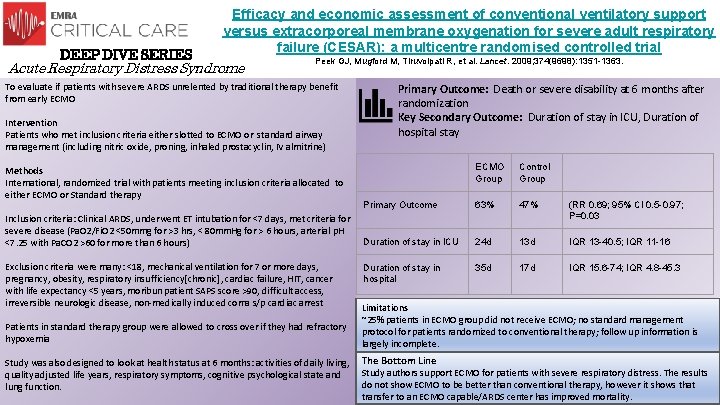
DEEP DIVE SERIES Efficacy and economic assessment of conventional ventilatory support versus extracorporeal membrane oxygenation for severe adult respiratory failure (CESAR): a multicentre randomised controlled trial Acute Respiratory Distress Syndrome Peek GJ, Mugford M, Tiruvoipati R, et al. Lancet. 2009; 374(9698): 1351 -1363. To evaluate if patients with severe ARDS unrelented by traditional therapy benefit from early ECMO Intervention Patients who met inclusion criteria either slotted to ECMO or standard airway management (including nitric oxide, proning, inhaled prostacyclin, IV almitrine) Methods International, randomized trial with patients meeting inclusion criteria allocated to either ECMO or Standard therapy Inclusion criteria: Clinical ARDS, underwent ET intubation for <7 days, met criteria for severe disease (Pa. O 2/Fi. O 2 <50 mmg for >3 hrs, < 80 mm. Hg for > 6 hours, arterial p. H <7. 25 with Pa. CO 2 >60 for more than 6 hours) Exclusion criteria were many: <18, mechanical ventilation for 7 or more days, pregnancy, obesity, respiratory insufficiency[chronic], cardiac failure, HIT, cancer with life expectancy <5 years, moribun patient SAPS score >90, difficult access, irreversible neurologic disease, non-medically induced coma s/p cardiac arrest Patients in standard therapy group were allowed to cross over if they had refractory hypoxemia Study was also designed to look at health status at 6 months: activities of daily living, quality adjusted life years, respiratory symptoms, cognitive psychological state and lung function. Primary Outcome: Death or severe disability at 6 months after randomization Key Secondary Outcome: Duration of stay in ICU, Duration of hospital stay ECMO Group Control Group Primary Outcome 63% 47% (RR 0. 69; 95% CI 0. 5 -0. 97; P=0. 03 Duration of stay in ICU 24 d 13 d IQR 13 -40. 5; IQR 11 -16 Duration of stay in hospital 35 d 17 d IQR 15. 6 -74; IQR 4. 8 -45. 3 Limitations ~25% patients in ECMO group did not receive ECMO; no standard management protocol for patients randomized to conventional therapy; follow up information is largely incomplete. The Bottom Line Study authors support ECMO for patients with severe respiratory distress. The results do not show ECMO to be better than conventional therapy, however it shows that transfer to an ECMO capable/ARDS center has improved mortality.
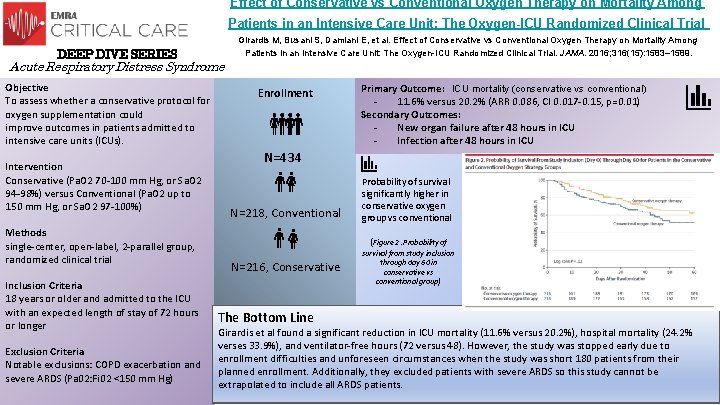
Effect of Conservative vs Conventional Oxygen Therapy on Mortality Among Patients in an Intensive Care Unit: The Oxygen-ICU Randomized Clinical Trial DEEP DIVE SERIES Girardis M, Busani S, Damiani E, et al. Effect of Conservative vs Conventional Oxygen Therapy on Mortality Among Patients in an Intensive Care Unit: The Oxygen-ICU Randomized Clinical Trial. JAMA. 2016; 316(15): 1583– 1589. Acute Respiratory Distress Syndrome Objective To assess whether a conservative protocol for oxygen supplementation could improve outcomes in patients admitted to intensive care units (ICUs). Intervention Conservative (Pa. O 2 70 -100 mm Hg, or Sa. O 2 94 -98%) versus Conventional (Pa. O 2 up to 150 mm Hg, or Sa. O 2 97 -100%) Methods single-center, open-label, 2 -parallel group, randomized clinical trial Inclusion Criteria 18 years or older and admitted to the ICU with an expected length of stay of 72 hours or longer Exclusion Criteria Notable exclusions: COPD exacerbation and severe ARDS (Pa 02: Fi 02 <150 mm Hg) Enrollment N=434 N=218, Conventional N=216, Conservative The Bottom Line Primary Outcome: ICU mortality (conservative vs conventional) 11. 6% versus 20. 2% (ARR 0. 086, CI 0. 017 -0. 15, p=0. 01) Secondary Outcomes: New organ failure after 48 hours in ICU Infection after 48 hours in ICU Probability of survival significantly higher in conservative oxygen group vs conventional (Figure 2: Probability of survival from study inclusion through day 60 in conservative vs conventional group) Girardis et al found a significant reduction in ICU mortality (11. 6% versus 20. 2%), hospital mortality (24. 2% verses 33. 9%), and ventilator-free hours (72 versus 48). However, the study was stopped early due to enrollment difficulties and unforeseen circumstances when the study was short 180 patients from their planned enrollment. Additionally, they excluded patients with severe ARDS so this study cannot be extrapolated to include all ARDS patients.
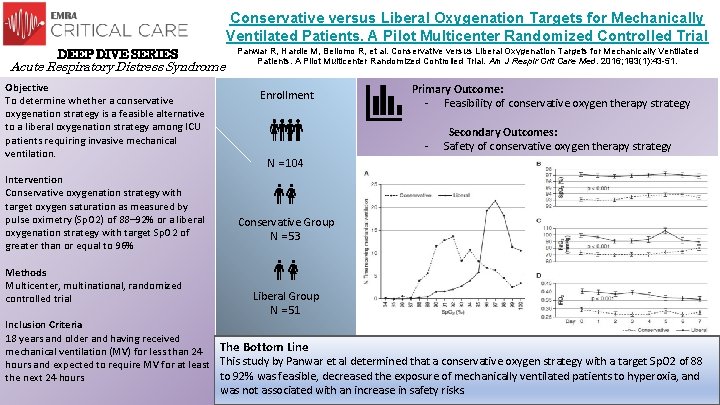
Conservative versus Liberal Oxygenation Targets for Mechanically Ventilated Patients. A Pilot Multicenter Randomized Controlled Trial DEEP DIVE SERIES Acute Respiratory Distress Syndrome Objective To determine whether a conservative oxygenation strategy is a feasible alternative to a liberal oxygenation strategy among ICU patients requiring invasive mechanical ventilation. Intervention Conservative oxygenation strategy with target oxygen saturation as measured by pulse oximetry (Sp. O 2) of 88– 92% or a liberal oxygenation strategy with target Sp. O 2 of greater than or equal to 96% Methods Multicenter, multinational, randomized controlled trial Panwar R, Hardie M, Bellomo R, et al. Conservative versus Liberal Oxygenation Targets for Mechanically Ventilated Patients. A Pilot Multicenter Randomized Controlled Trial. Am J Respir Crit Care Med. 2016; 193(1): 43 -51. Enrollment Primary Outcome: - Feasibility of conservative oxygen therapy strategy N = 104 Secondary Outcomes: - Safety of conservative oxygen therapy strategy Conservative Group N = 53 Liberal Group N = 51 Inclusion Criteria 18 years and older and having received The Bottom Line mechanical ventilation (MV) for less than 24 hours and expected to require MV for at least This study by Panwar et al determined that a conservative oxygen strategy with a target Sp. O 2 of 88 to 92% was feasible, decreased the exposure of mechanically ventilated patients to hyperoxia, and the next 24 hours was not associated with an increase in safety risks.
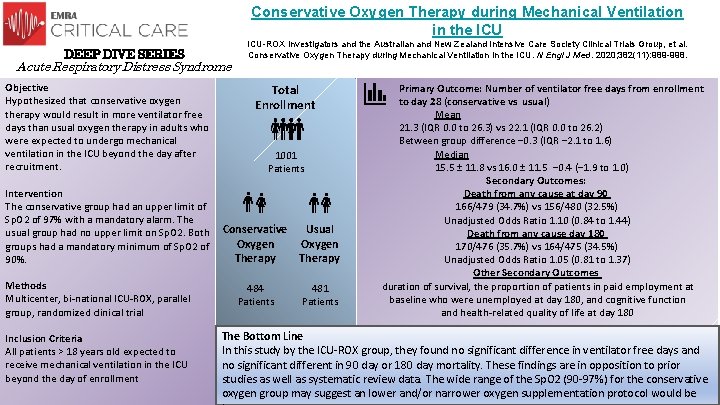
Conservative Oxygen Therapy during Mechanical Ventilation in the ICU DEEP DIVE SERIES Acute Respiratory Distress Syndrome Objective Hypothesized that conservative oxygen therapy would result in more ventilator free days than usual oxygen therapy in adults who were expected to undergo mechanical ventilation in the ICU beyond the day after recruitment. Intervention The conservative group had an upper limit of Sp. O 2 of 97% with a mandatory alarm. The usual group had no upper limit on Sp. O 2. Both groups had a mandatory minimum of Sp. O 2 of 90%. Methods Multicenter, bi-national ICU-ROX, parallel group, randomized clinical trial Inclusion Criteria All patients > 18 years old expected to receive mechanical ventilation in the ICU beyond the day of enrollment ICU-ROX Investigators and the Australian and New Zealand Intensive Care Society Clinical Trials Group, et al. Conservative Oxygen Therapy during Mechanical Ventilation in the ICU. N Engl J Med. 2020; 382(11): 989 -998. Total Enrollment 1001 Patients Conservative Oxygen Therapy Usual Oxygen Therapy 484 Patients 481 Patients Primary Outcome: Number of ventilator free days from enrollment to day 28 (conservative vs usual) Mean 21. 3 (IQR 0. 0 to 26. 3) vs 22. 1 (IQR 0. 0 to 26. 2) Between group difference − 0. 3 (IQR − 2. 1 to 1. 6) Median 15. 5 ± 11. 8 vs 16. 0 ± 11. 5 − 0. 4 (− 1. 9 to 1. 0) Secondary Outcomes: Death from any cause at day 90 166/479 (34. 7%) vs 156/480 (32. 5%) Unadjusted Odds Ratio 1. 10 (0. 84 to 1. 44) Death from any cause day 180 170/476 (35. 7%) vs 164/475 (34. 5%) Unadjusted Odds Ratio 1. 05 (0. 81 to 1. 37) Other Secondary Outcomes duration of survival, the proportion of patients in paid employment at baseline who were unemployed at day 180, and cognitive function and health-related quality of life at day 180 The Bottom Line In this study by the ICU-ROX group, they found no significant difference in ventilator free days and no significant different in 90 day or 180 day mortality. These findings are in opposition to prior studies as well as systematic review data. The wide range of the Sp. O 2 (90 -97%) for the conservative oxygen group may suggest an lower and/or narrower oxygen supplementation protocol would be
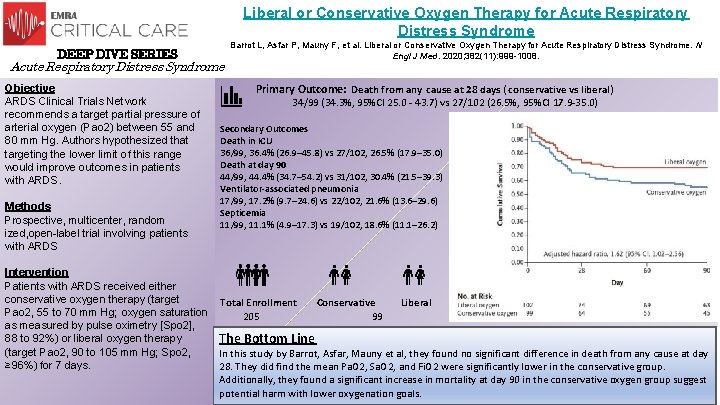
Liberal or Conservative Oxygen Therapy for Acute Respiratory Distress Syndrome DEEP DIVE SERIES Acute Respiratory Distress Syndrome Objective ARDS Clinical Trials Network recommends a target partial pressure of arterial oxygen (Pao 2) between 55 and 80 mm Hg. Authors hypothesized that targeting the lower limit of this range would improve outcomes in patients with ARDS. Methods Prospective, multicenter, random ized, open-label trial involving patients with ARDS Barrot L, Asfar P, Mauny F, et al. Liberal or Conservative Oxygen Therapy for Acute Respiratory Distress Syndrome. N Engl J Med. 2020; 382(11): 999 -1008. Primary Outcome: Death from any cause at 28 days ( conservative vs liberal) 34/99 (34. 3%, 95%CI 25. 0 - 43. 7) vs 27/102 (26. 5%, 95%CI 17. 9 -35. 0) Secondary Outcomes Death in ICU 36/99, 36. 4% (26. 9– 45. 8) vs 27/102, 26. 5% (17. 9– 35. 0) Death at day 90 44/99, 44. 4% (34. 7– 54. 2) vs 31/102, 30. 4% (21. 5– 39. 3) Ventilator-associated pneumonia 17/99, 17. 2% (9. 7– 24. 6) vs 22/102, 21. 6% (13. 6– 29. 6) Septicemia 11/99, 11. 1% (4. 9– 17. 3) vs 19/102, 18. 6% (11. 1– 26. 2) Intervention Patients with ARDS received either conservative oxygen therapy (target Total Enrollment Conservative Liberal Pao 2, 55 to 70 mm Hg; oxygen saturation 205 99 102 as measured by pulse oximetry [Spo 2], 88 to 92%) or liberal oxygen therapy The Bottom Line (target Pao 2, 90 to 105 mm Hg; Spo 2, In this study by Barrot, Asfar, Mauny et al, they found no significant difference in death from any cause at day ≥ 96%) for 7 days. 28. They did find the mean Pa. O 2, Sa. O 2, and Fi. O 2 were significantly lower in the conservative group. Additionally, they found a significant increase in mortality at day 90 in the conservative oxygen group suggest potential harm with lower oxygenation goals.
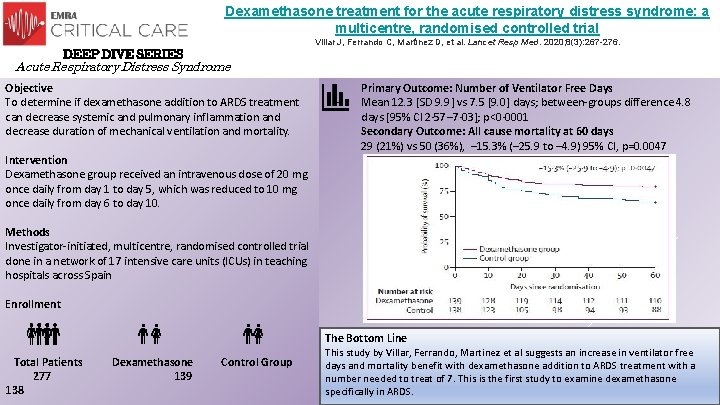
Dexamethasone treatment for the acute respiratory distress syndrome: a multicentre, randomised controlled trial Villar J, Ferrando C, Martínez D, et al. Lancet Resp Med. 2020; 8(3): 267 -276. DEEP DIVE SERIES Acute Respiratory Distress Syndrome Objective To determine if dexamethasone addition to ARDS treatment can decrease systemic and pulmonary inflammation and decrease duration of mechanical ventilation and mortality. Intervention Dexamethasone group received an intravenous dose of 20 mg once daily from day 1 to day 5, which was reduced to 10 mg once daily from day 6 to day 10. - Primary Outcome: Number of Ventilator Free Days Mean 12. 3 [SD 9. 9] vs 7. 5 [9. 0] days; between-groups difference 4. 8 days [95% CI 2· 57– 7· 03]; p<0· 0001 Secondary Outcome: All cause mortality at 60 days 29 (21%) vs 50 (36%), – 15. 3% (– 25. 9 to – 4. 9) 95% CI, p=0. 0047 Methods Investigator-initiated, multicentre, randomised controlled trial done in a network of 17 intensive care units (ICUs) in teaching hospitals across Spain Enrollment The Bottom Line Total Patients Dexamethasone 277 139 138 This study by Villar, Ferrando, Martinez et al suggests an increase in ventilator free Control Group days and mortality benefit with dexamethasone addition to ARDS treatment with a number needed to treat of 7. This is the first study to examine dexamethasone specifically in ARDS.
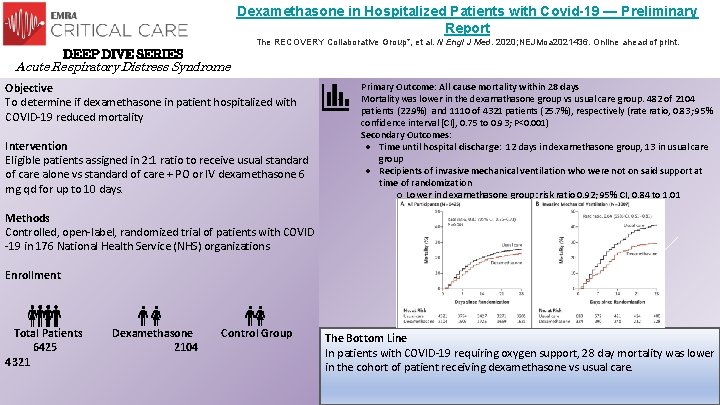
Dexamethasone in Hospitalized Patients with Covid-19 — Preliminary Report The RECOVERY Collaborative Group*, et al. N Engl J Med. 2020; NEJMoa 2021436. Online ahead of print. DEEP DIVE SERIES Acute Respiratory Distress Syndrome Objective To determine if dexamethasone in patient hospitalized with COVID-19 reduced mortality - Intervention Eligible patients assigned in 2: 1 ratio to receive usual standard of care alone vs standard of care + PO or IV dexamethasone 6 mg qd for up to 10 days. Primary Outcome: All cause mortality within 28 days Mortality was lower in the dexamathasone group vs usual care group. 482 of 2104 patients (22. 9%) and 1110 of 4321 patients (25. 7%), respectively (rate ratio, 0. 83; 95% confidence interval [CI], 0. 75 to 0. 93; P<0. 001) Secondary Outcomes: ● Time until hospital discharge: 12 days in dexamethasone group, 13 in usual care group ● Recipients of invasive mechanical ventilation who were not on said support at time of randomization ○ Lower in dexamethasone group: risk ratio 0. 92; 95% CI, 0. 84 to 1. 01 Methods Controlled, open-label, randomized trial of patients with COVID -19 in 176 National Health Service (NHS) organizations Enrollment Total Patients Dexamethasone 6425 2104 4321 Control Group The Bottom Line In patients with COVID-19 requiring oxygen support, 28 day mortality was lower in the cohort of patient receiving dexamethasone vs usual care.
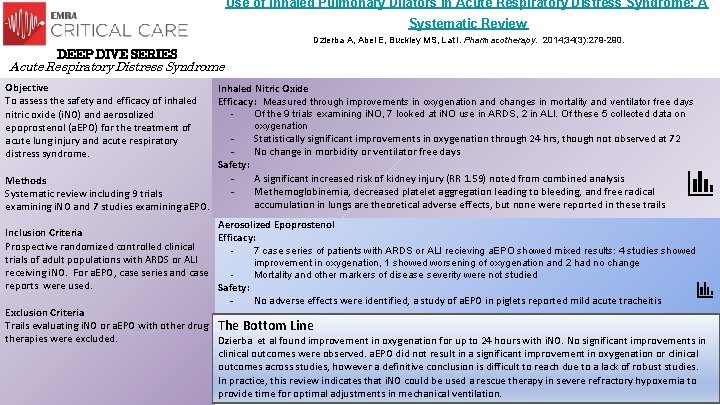
Use of Inhaled Pulmonary Dilators in Acute Respiratory Distress Syndrome: A Systematic Review Dzierba A, Abel E, Buckley MS, Lat I. Pharmacotherapy. 2014; 34(3): 279 -290. DEEP DIVE SERIES Acute Respiratory Distress Syndrome Objective To assess the safety and efficacy of inhaled nitric oxide (i. NO) and aerosolized epoprostenol (a. EPO) for the treatment of acute lung injury and acute respiratory distress syndrome. Methods Systematic review including 9 trials examining i. NO and 7 studies examining a. EPO. Inhaled Nitric Oxide Efficacy : Measured through improvements in oxygenation and changes in mortality and ventilator free days - Of the 9 trials examining i. NO, 7 looked at i. NO use in ARDS, 2 in ALI. Of these 5 collected data on oxygenation Statistically significant improvements in oxygenation through 24 hrs, though not observed at 72 No change in morbidity or ventilator free days Safety: A significant increased risk of kidney injury (RR 1. 59) noted from combined analysis Methemoglobinemia, decreased platelet aggregation leading to bleeding, and free radical accumulation in lungs are theoretical adverse effects, but none were reported in these trails Aerosolized Epoprostenol Inclusion Criteria Efficacy: Prospective randomized controlled clinical 7 case series of patients with ARDS or ALI recieving a. EPO showed mixed results: 4 studies showed trials of adult populations with ARDS or ALI improvement in oxygenation, 1 showed worsening of oxygenation and 2 had no change receiving i. NO. For a. EPO, case series and case Mortality and other markers of disease severity were not studied reports were used. Safety: No adverse effects were identified, a study of a. EPO in piglets reported mild acute tracheitis Exclusion Criteria Trails evaluating i. NO or a. EPO with other drug The Bottom Line therapies were excluded. Dzierba et al found improvement in oxygenation for up to 24 hours with i. NO. No significant improvements in clinical outcomes were observed. a. EPO did not result in a significant improvement in oxygenation or clinical outcomes across studies, however a definitive conclusion is difficult to reach due to a lack of robust studies. In practice, this review indicates that i. NO could be used a rescue therapy in severe refractory hypoxemia to provide time for optimal adjustments in mechanical ventilation.
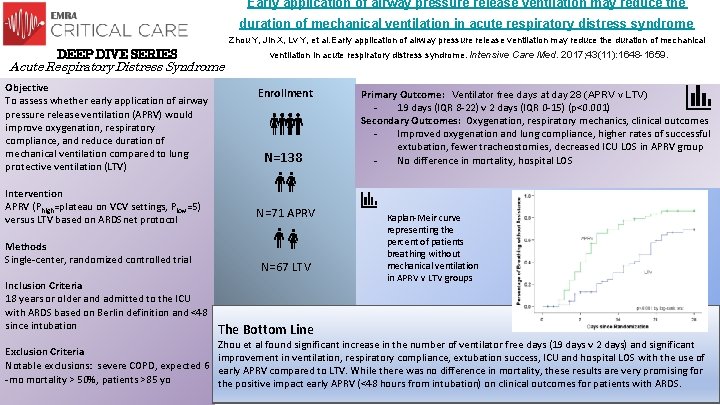
Early application of airway pressure release ventilation may reduce the duration of mechanical ventilation in acute respiratory distress syndrome Zhou Y, Jin X, Lv Y, et al. Early application of airway pressure release ventilation may reduce the duration of mechanical DEEP DIVE SERIES Acute Respiratory Distress Syndrome Objective To assess whether early application of airway pressure release ventilation (APRV) would improve oxygenation, respiratory compliance, and reduce duration of mechanical ventilation compared to lung protective ventilation (LTV) Intervention APRV (Phigh=plateau on VCV settings, Plow=5) versus LTV based on ARDSnet protocol Methods Single-center, randomized controlled trial Inclusion Criteria 18 years or older and admitted to the ICU with ARDS based on Berlin definition and <48 since intubation ventilation in acute respiratory distress syndrome. Intensive Care Med. 2017; 43(11): 1648 -1659. Enrollment N=138 N=71 APRV N=67 LTV The Bottom Line Primary Outcome: Ventilator free days at day 28 (APRV v LTV) 19 days (IQR 8 -22) v 2 days (IQR 0 -15) (p<0. 001) Secondary Outcomes: Oxygenation, respiratory mechanics, clinical outcomes Improved oxygenation and lung compliance, higher rates of successful extubation, fewer tracheostomies, decreased ICU LOS in APRV group No difference in mortality, hospital LOS Kaplan-Meir curve representing the percent of patients breathing without mechanical ventilation in APRV v LTV groups Zhou et al found significant increase in the number of ventilator free days (19 days v 2 days) and significant Exclusion Criteria improvement in ventilation, respiratory compliance, extubation success, ICU and hospital LOS with the use of Notable exclusions: severe COPD, expected 6 early APRV compared to LTV. While there was no difference in mortality, these results are very promising for -mo mortality > 50%, patients >85 yo the positive impact early APRV (<48 hours from intubation) on clinical outcomes for patients with ARDS.