
Deep Convection Conceptual Models Based on Physical Processes
Deep Convection Conceptual Models Based on Physical Processes Discussion • Ordinary Cells • Multicell storms • Supercells
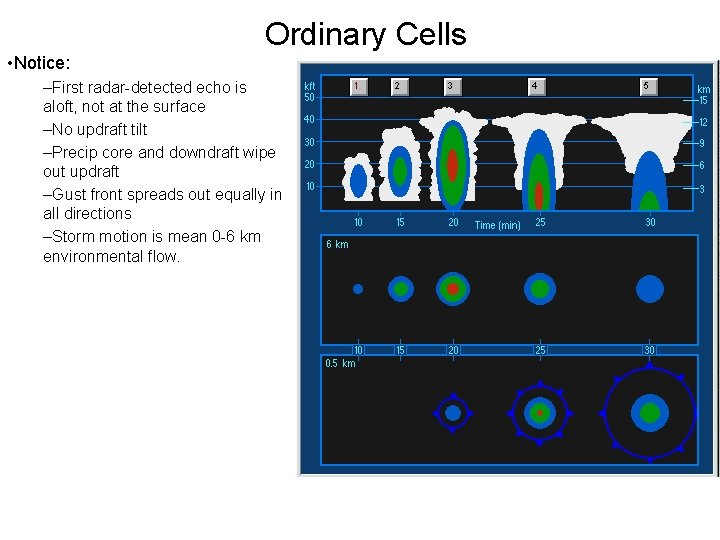
Ordinary Cells • Notice: –First radar-detected echo is aloft, not at the surface –No updraft tilt –Precip core and downdraft wipe out updraft –Gust front spreads out equally in all directions –Storm motion is mean 0 -6 km environmental flow.
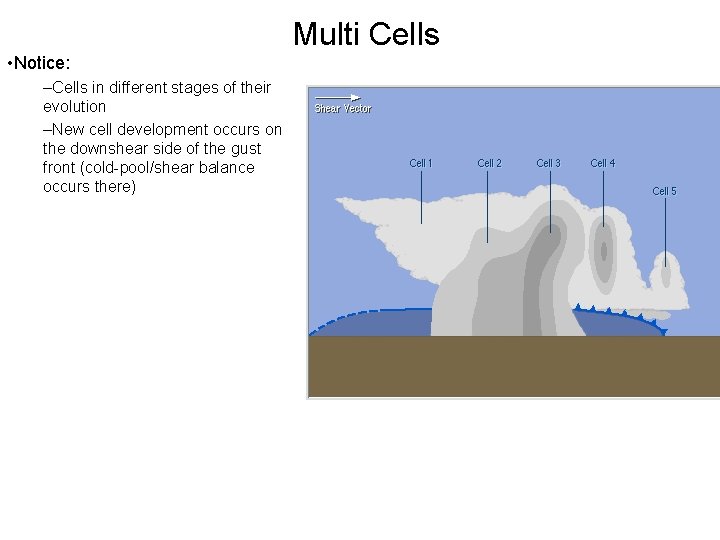
Multi Cells • Notice: –Cells in different stages of their evolution –New cell development occurs on the downshear side of the gust front (cold-pool/shear balance occurs there)

Multi Cells • Notice: –Cells in different stages of their evolution –New cell development occurs on the downshear side of the gust front (cold-pool/shear balance occurs there)

Multi Cells • Notice: –The reflectivity at the ground is largely associated with cell number 3. –The updraft may have some tilt to it if there is some shear through a layer deeper than the cold pool.
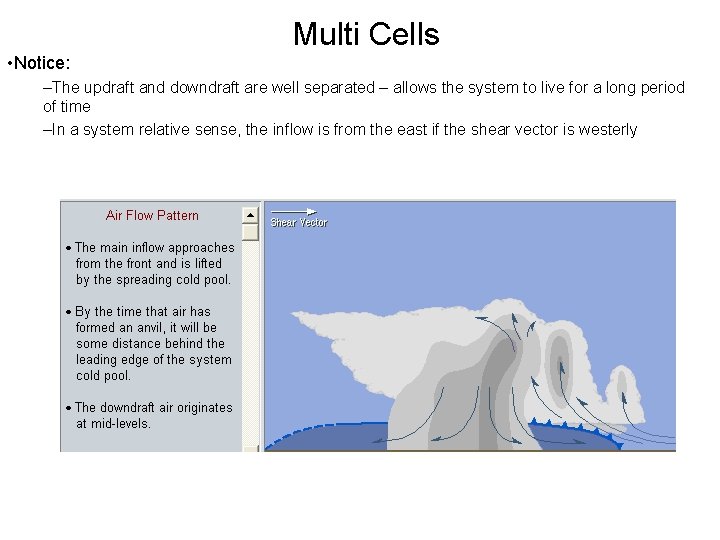
Multi Cells • Notice: –The updraft and downdraft are well separated – allows the system to live for a long period of time –In a system relative sense, the inflow is from the east if the shear vector is westerly
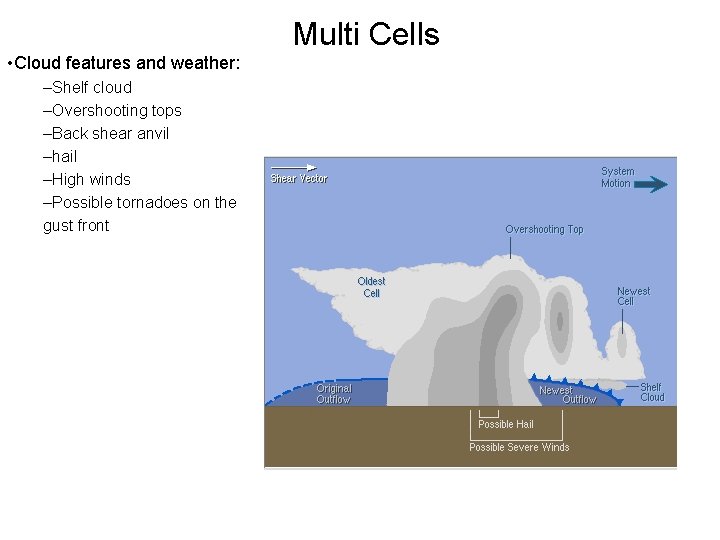
Multi Cells • Cloud features and weather: –Shelf cloud –Overshooting tops –Back shear anvil –hail –High winds –Possible tornadoes on the gust front
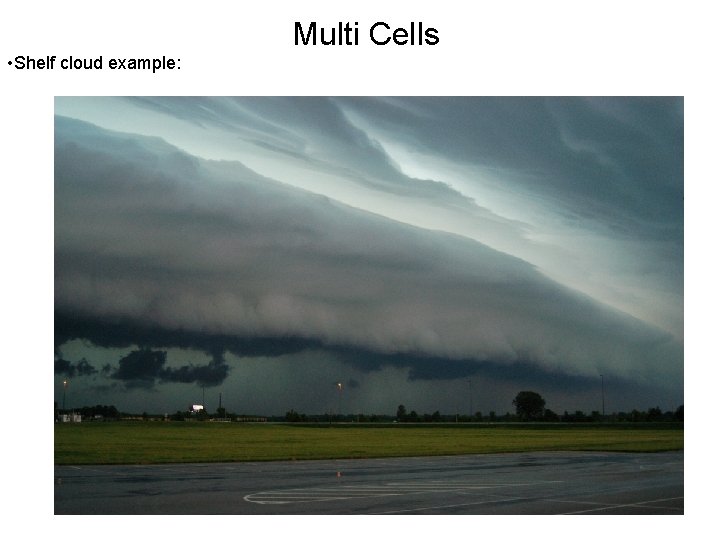
Multi Cells • Shelf cloud example:
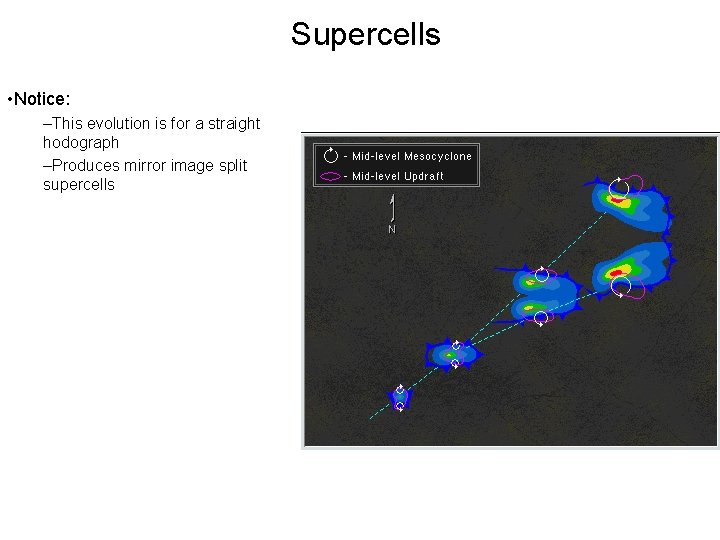
Supercells • Notice: –This evolution is for a straight hodograph –Produces mirror image split supercells
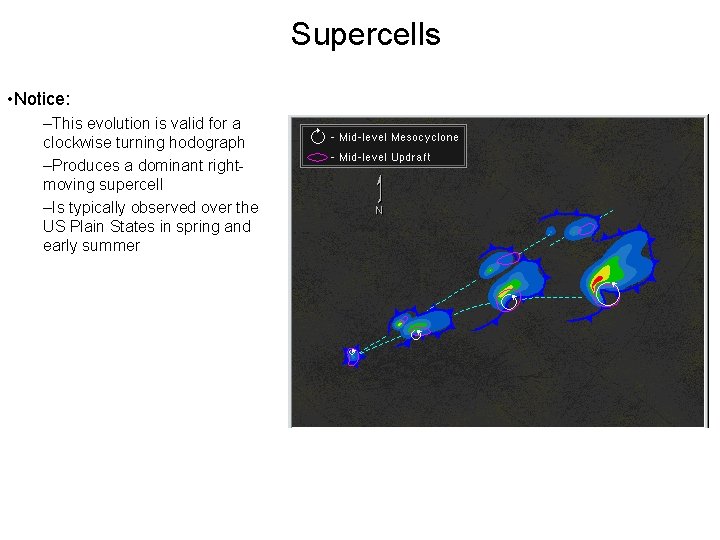
Supercells • Notice: –This evolution is valid for a clockwise turning hodograph –Produces a dominant rightmoving supercell –Is typically observed over the US Plain States in spring and early summer
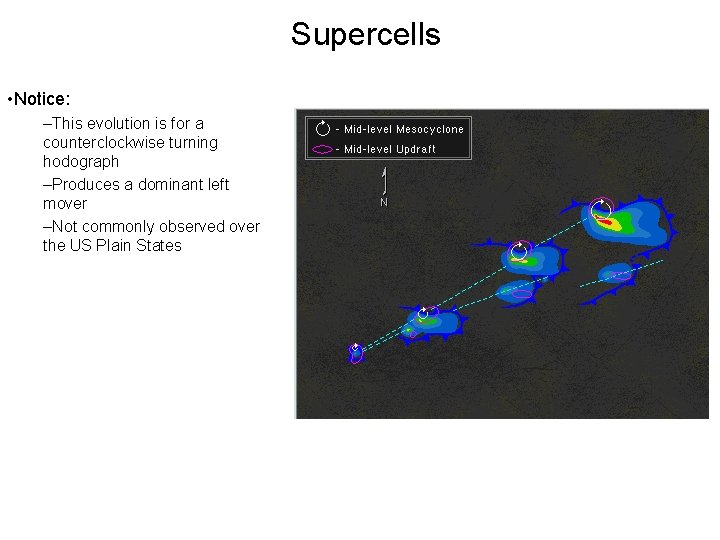
Supercells • Notice: –This evolution is for a counterclockwise turning hodograph –Produces a dominant left mover –Not commonly observed over the US Plain States
Supercells
Supercells
Supercells
- Slides: 14