
Deep CNN for breast cancer histology Image Analysis
Deep CNN for breast cancer histology Image Analysis Honghao Zheng
Background In Recent decades: • Improved and highly incidence of cancer, breast cancer is one of most common cancer diagnosed in women. • The improvement and advance in Machine learning make it as a efficient aid tool in medical field. Moreover, CNN is the most popular hot model in the medical AI.
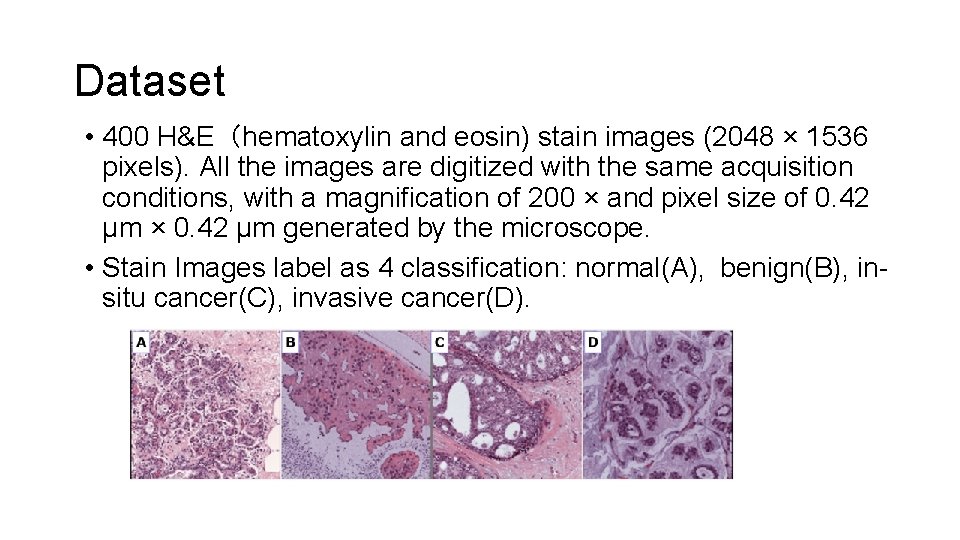
Dataset • 400 H&E(hematoxylin and eosin) stain images (2048 × 1536 pixels). All the images are digitized with the same acquisition conditions, with a magnification of 200 × and pixel size of 0. 42 µm × 0. 42 µm generated by the microscope. • Stain Images label as 4 classification: normal(A), benign(B), insitu cancer(C), invasive cancer(D).
Overfit problem • If we just trained only 400 images in the deep CNN architecture like VGG, Inception, Res. Net, which consist millions of parameters, it would lead to overfit. • The fine-tunning method works not very well. . ? t i e v l o s o t w Ho
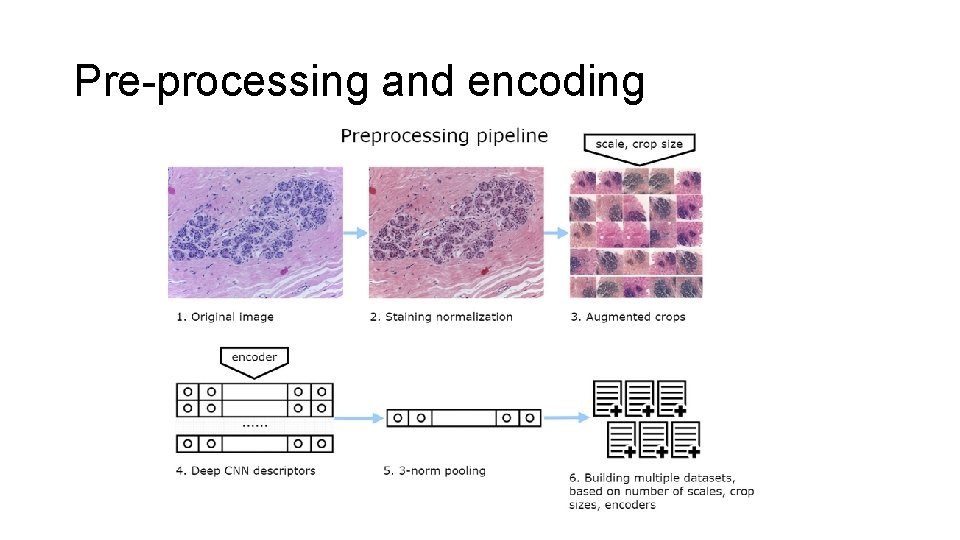
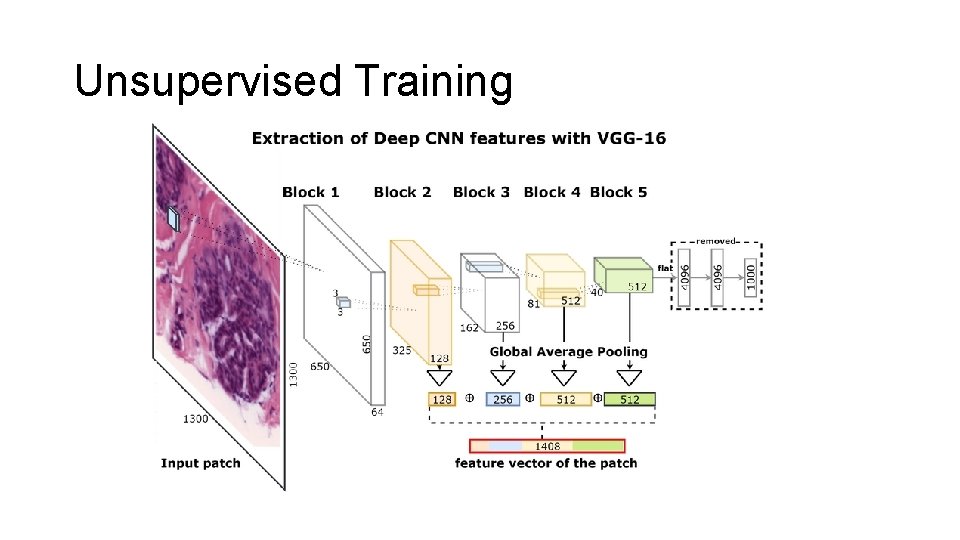
New Idea • 1 st setup: unsupervised learning feature extraction, trained general dataset Image. Net by Deep CNN VGG-16. Before training, sparse coding on original image is pre-processing job. • 2 nd setup: use Light. GBM implementing gradient boosted trees for supervised classification.
Pre-processing and encoding
Unsupervised Training
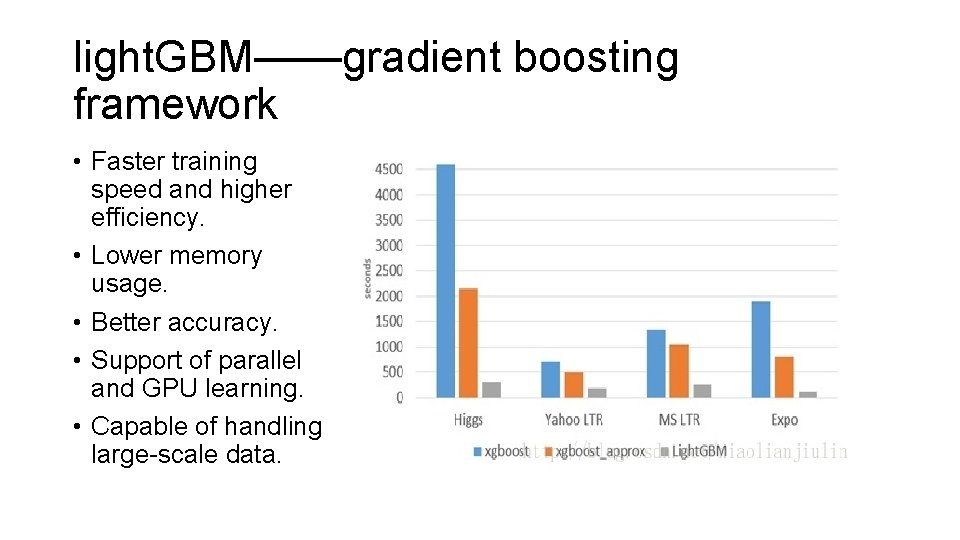
light. GBM——gradient boosting framework • Faster training speed and higher efficiency. • Lower memory usage. • Better accuracy. • Support of parallel and GPU learning. • Capable of handling large-scale data.
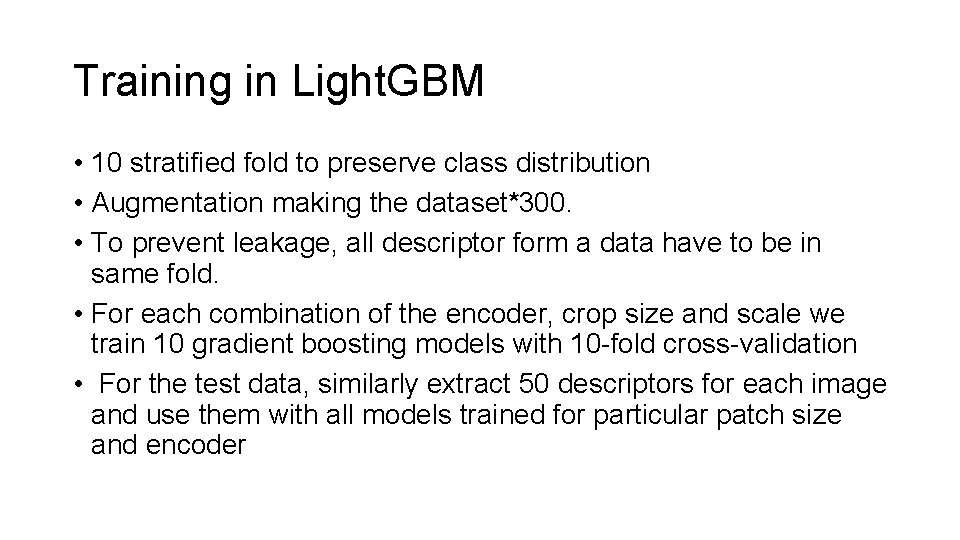
Training in Light. GBM • 10 stratified fold to preserve class distribution • Augmentation making the dataset*300. • To prevent leakage, all descriptor form a data have to be in same fold. • For each combination of the encoder, crop size and scale we train 10 gradient boosting models with 10 -fold cross-validation • For the test data, similarly extract 50 descriptors for each image and use them with all models trained for particular patch size and encoder
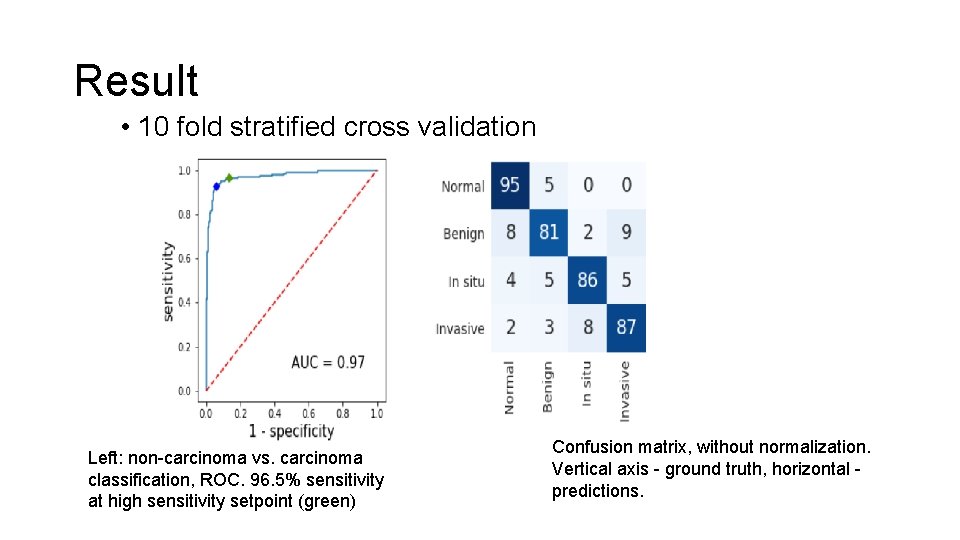
Result • 10 fold stratified cross validation Left: non-carcinoma vs. carcinoma classification, ROC. 96. 5% sensitivity at high sensitivity setpoint (green) Confusion matrix, without normalization. Vertical axis - ground truth, horizontal - predictions.

Result

a h T u o y k n
- Slides: 12