
Deep breathing exercises for cardiac surgery patients after
Deep breathing exercises for cardiac surgery patients after discharge - a randomized controlled trial Ph. D, RPT Elisabeth Westerdahl Urell C, Jonsson M, Bryngelsson I, Hedenström H, Emtner M. Örebro University Hospital, Uppsala University and Örebro University, Sweden. elisabeth. westerdahl@orebroll. se
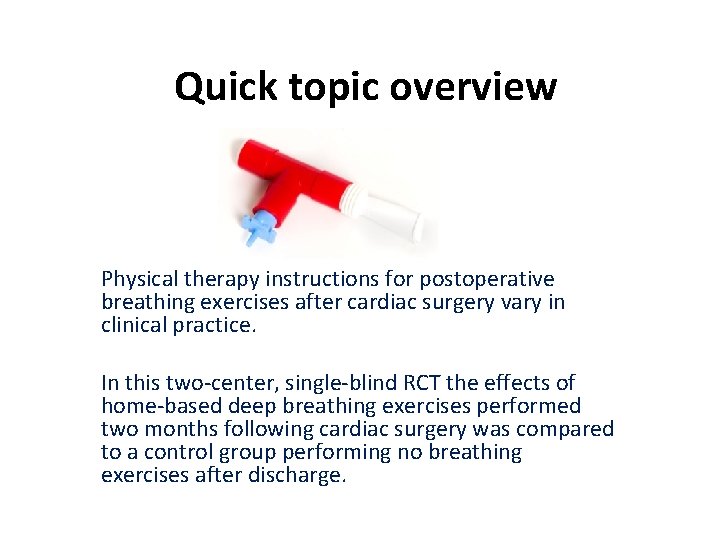
Quick topic overview Physical therapy instructions for postoperative breathing exercises after cardiac surgery vary in clinical practice. In this two-center, single-blind RCT the effects of home-based deep breathing exercises performed two months following cardiac surgery was compared to a control group performing no breathing exercises after discharge.
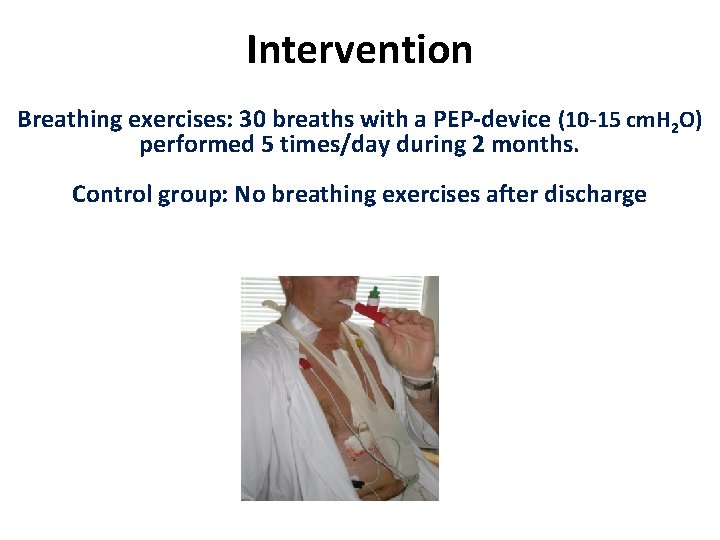
Intervention Breathing exercises: 30 breaths with a PEP-device (10 -15 cm. H 2 O) performed 5 times/day during 2 months. Control group: No breathing exercises after discharge
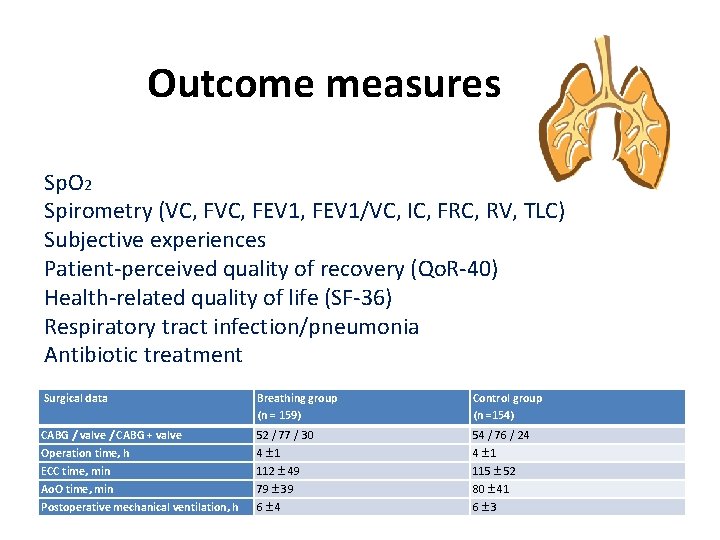
Outcome measures Sp. O 2 Spirometry (VC, FEV 1, FEV 1/VC, IC, FRC, RV, TLC) Subjective experiences Patient-perceived quality of recovery (Qo. R-40) Health-related quality of life (SF-36) Respiratory tract infection/pneumonia Antibiotic treatment Surgical data Breathing group (n = 159) Control group (n =154) CABG / valve / CABG + valve Operation time, h ECC time, min Ao. O time, min Postoperative mechanical ventilation, h 52 / 77 / 30 4 1 112 49 79 39 6 4 54 / 76 / 24 4 1 115 52 80 41 6 3
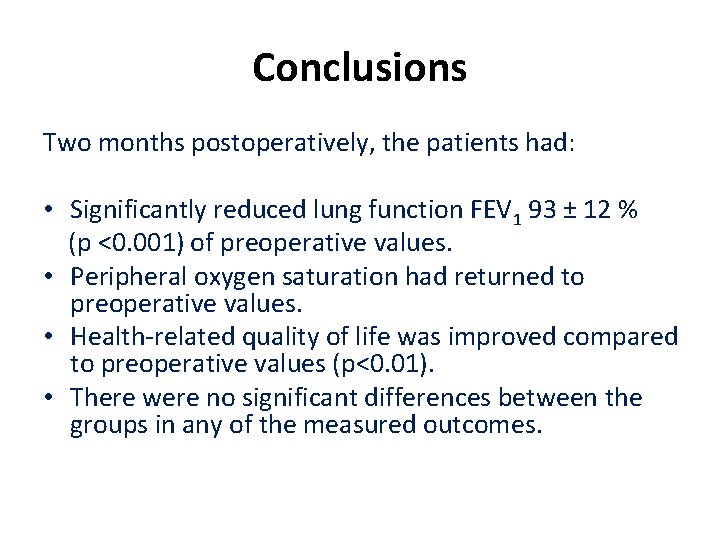
Conclusions Two months postoperatively, the patients had: • Significantly reduced lung function FEV 1 93 ± 12 % (p <0. 001) of preoperative values. • Peripheral oxygen saturation had returned to preoperative values. • Health-related quality of life was improved compared to preoperative values (p<0. 01). • There were no significant differences between the groups in any of the measured outcomes.
- Slides: 5