
Deep Analysis Problem solving the six sigma approach
Deep Analysis Problem solving the six sigma approach www. qualimations. com
Deep Analysis Deep analysis Is a process involving coordination of knowledge Analysis Attitude and Intuition to solve real time problems at work place. www. qualimations. com
Deep Analysis The objectives of a Deep Analysis exercise are the following 1. Understanding the failure mode-its cause and effect 2. Achieve the return on investment by solving this problem. 3. Understanding the Process and system better. www. qualimations. com
Deep Analysis Identify the Need Think of your problems or concerns and try to answer the following questions 1. 2. 3. 4. Has the problem affected me? Is it a potential problem to come? What is the frequency of its occurrence? Can I quantify the problem? • Have I seen the problem? • Has the problem cost you significantly? 5. Is the time invested in solving the problem significant? 6. Should I avoid the problem? www. qualimations. com
Deep Analysis Identify the Need Do you know that seven out of 10 problems are not resolved. Instead they are avoided. Nature 1998 May edition www. qualimations. com
Deep Analysis Objective Have You Accepted that a problem really exist? 1. Is the problem going to be superficial? 2. Do you know the events that preceded this problem and the one that followed it? 3. Does solving this problem lead to other problems? www. qualimations. com
Deep Analysis Objective Getting deeper in the problem is more important than Solving the problem itself. Prof Psuda Toyota motors Ask the right question at the right time www. qualimations. com
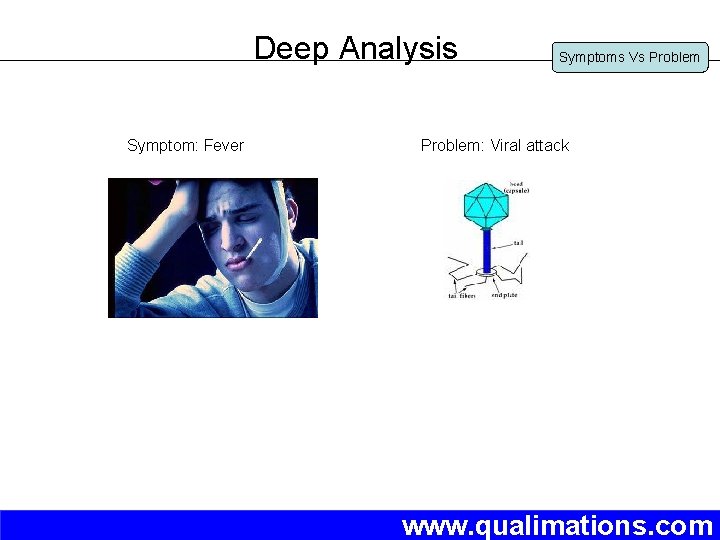
Deep Analysis Symptom: Fever Symptoms Vs Problem: Viral attack www. qualimations. com
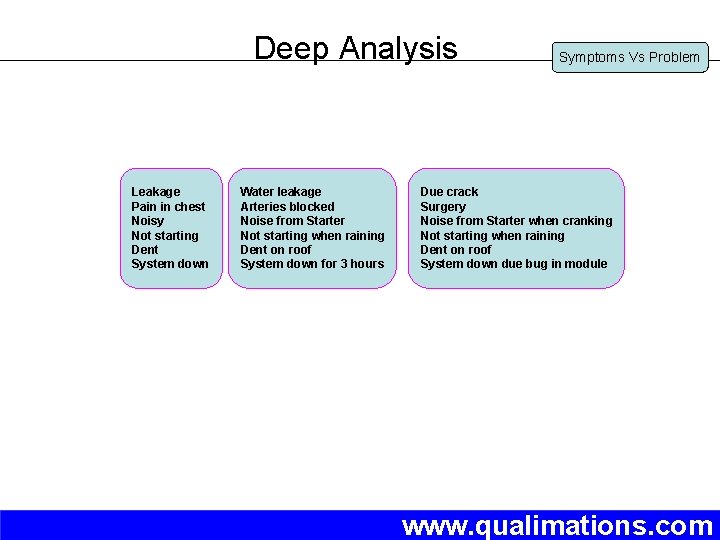
Deep Analysis Leakage Pain in chest Noisy Not starting Dent System down Water leakage Arteries blocked Noise from Starter Not starting when raining Dent on roof System down for 3 hours Symptoms Vs Problem Due crack Surgery Noise from Starter when cranking Not starting when raining Dent on roof System down due bug in module www. qualimations. com
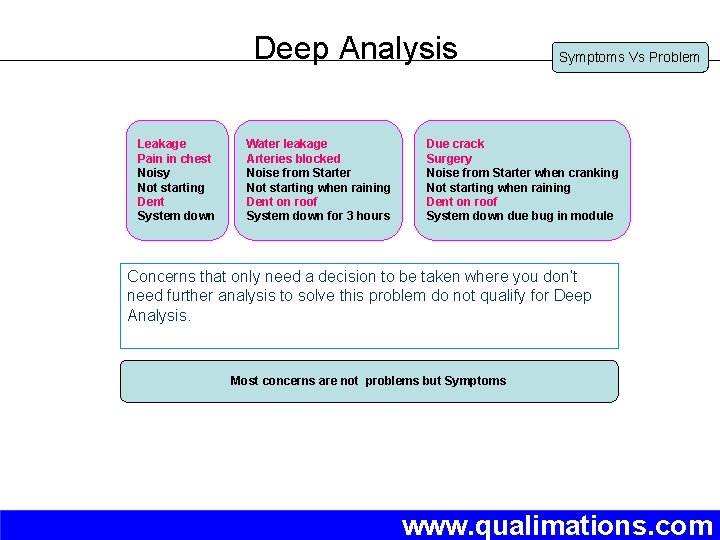
Deep Analysis Leakage Pain in chest Noisy Not starting Dent System down Water leakage Arteries blocked Noise from Starter Not starting when raining Dent on roof System down for 3 hours Symptoms Vs Problem Due crack Surgery Noise from Starter when cranking Not starting when raining Dent on roof System down due bug in module Concerns that only need a decision to be taken where you don’t need further analysis to solve this problem do not qualify for Deep Analysis. Most concerns are not problems but Symptoms www. qualimations. com
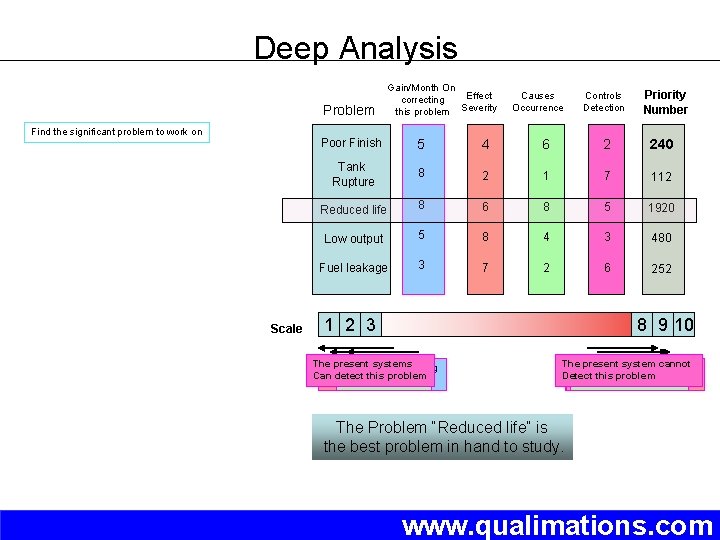
Deep Analysis Problem Find the significant problem to work on Scale Gain/Month On Effect correcting Severity this problem Causes Occurrence Controls Detection Priority Number Poor Finish 5 4 6 2 240 Tank Rupture 8 2 1 7 112 Reduced life 8 6 8 5 1920 Low output 5 8 4 3 480 Fuel leakage 3 7 2 6 252 1 2 3 8 9 10 The present systems No Low damage Less Returns Occurrence oron solving Can detect this problem safety this. Of problem threat the problem The present system cannot High Safety Problem Returns is threatened occurs on solving more / Detect this problem intended this frequently problem function not met The Problem “Reduced life” is the best problem in hand to study. www. qualimations. com
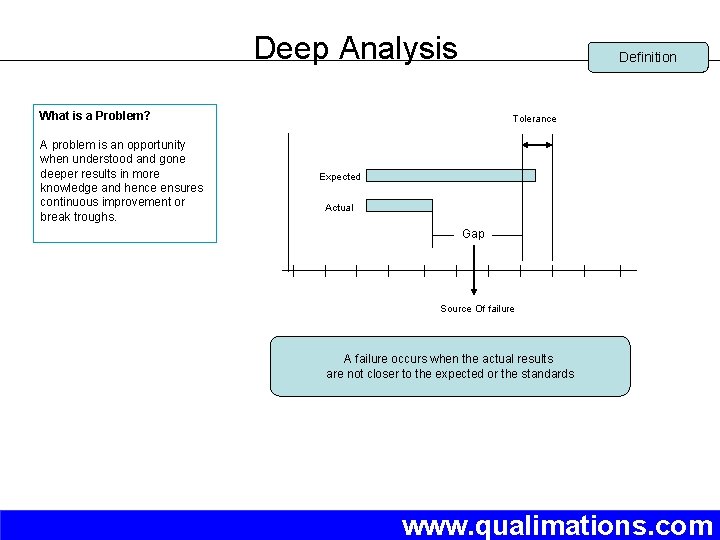
Deep Analysis Definition What is a Problem? A problem is an opportunity when understood and gone deeper results in more knowledge and hence ensures continuous improvement or break troughs. Tolerance Expected Actual Gap Source Of failure A failure occurs when the actual results are not closer to the expected or the standards www. qualimations. com
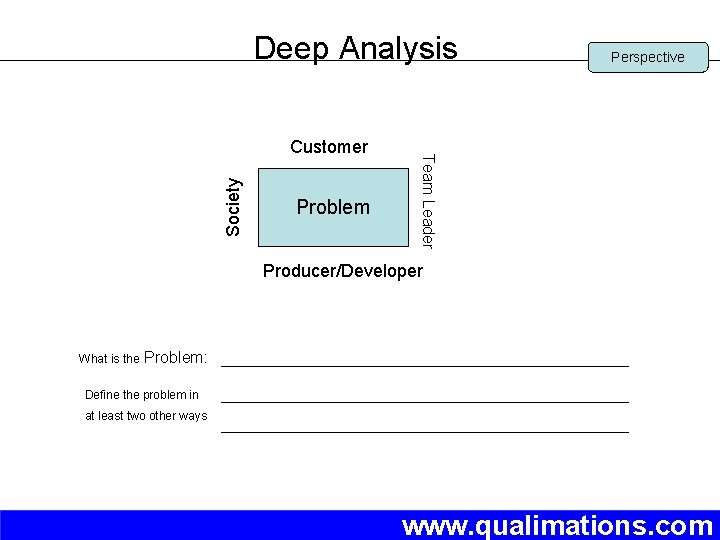
Deep Analysis Society Problem Team Leader Customer Perspective Producer/Developer What is the Problem: Define the problem in at least two other ways www. qualimations. com
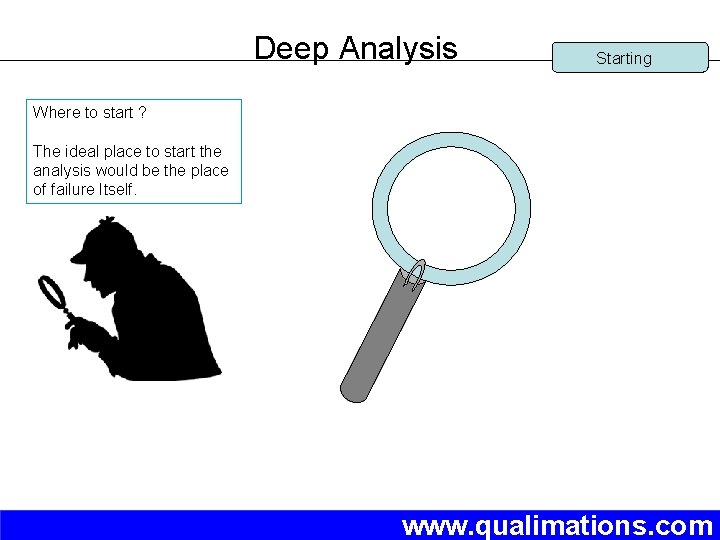
Deep Analysis Starting Where to start ? The ideal place to start the analysis would be the place of failure Itself. www. qualimations. com
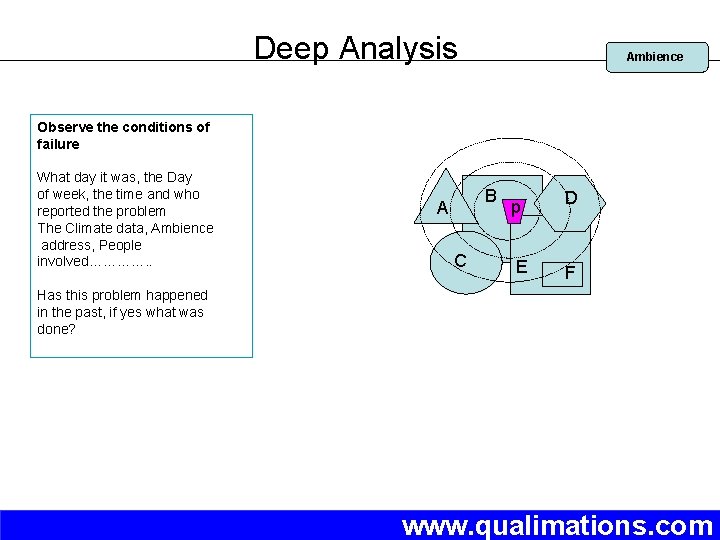
Deep Analysis Ambience Observe the conditions of failure What day it was, the Day of week, the time and who reported the problem The Climate data, Ambience address, People involved…………. . B A C p E D F Has this problem happened in the past, if yes what was done? www. qualimations. com
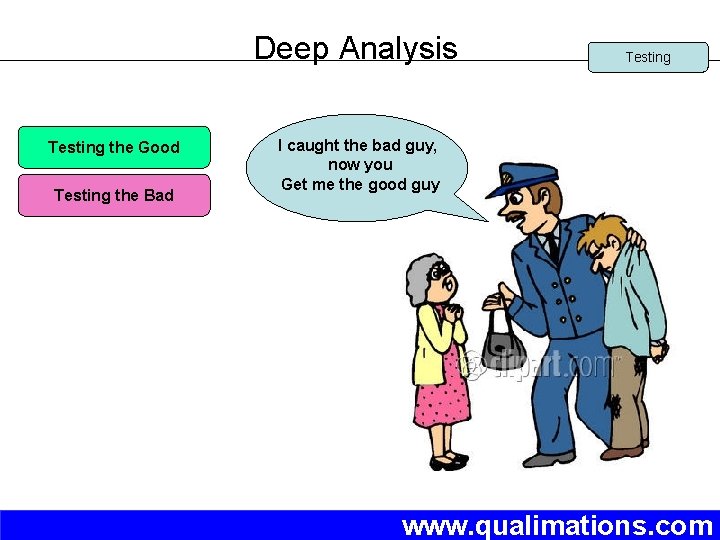
Deep Analysis Testing the Good Testing the Bad Testing I caught the bad guy, now you Get me the good guy www. qualimations. com
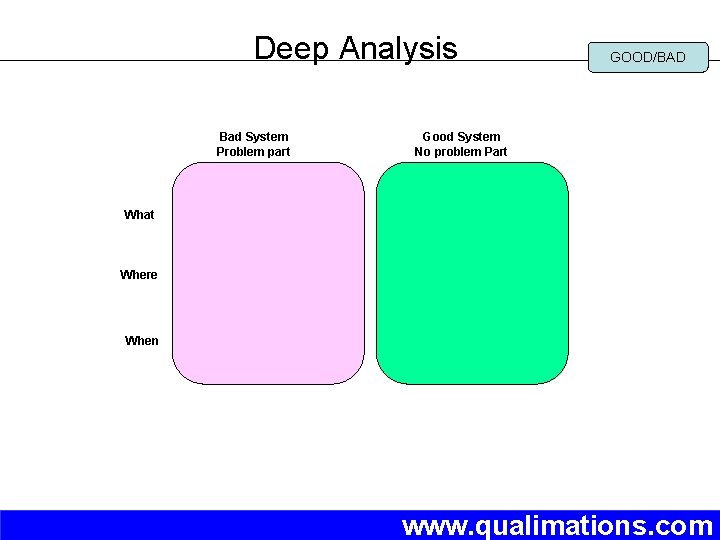
Deep Analysis Bad System Problem part GOOD/BAD Good System No problem Part What Where When www. qualimations. com
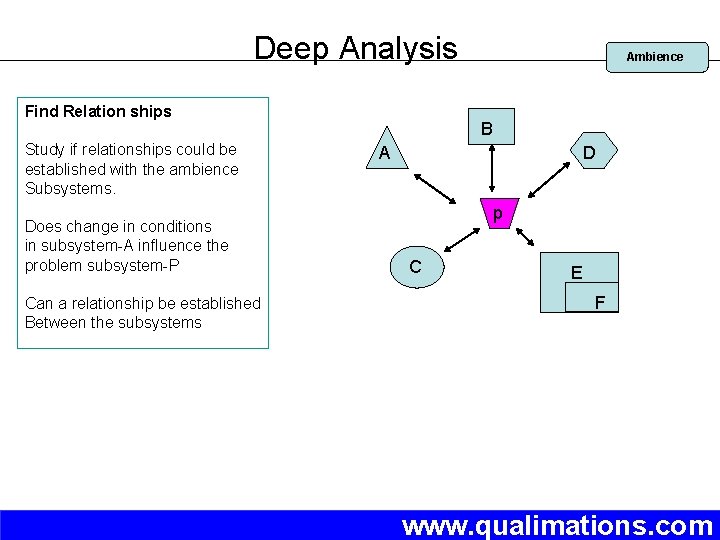
Deep Analysis Find Relation ships Study if relationships could be established with the ambience Subsystems. Does change in conditions in subsystem-A influence the problem subsystem-P Can a relationship be established Between the subsystems Ambience B A D p C E F www. qualimations. com
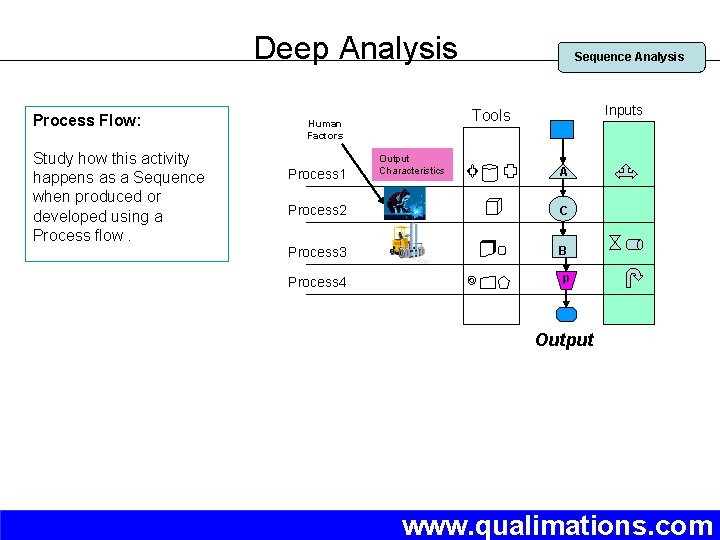
Deep Analysis Process Flow: Study how this activity happens as a Sequence when produced or developed using a Process flow. Inputs Tools Human Factors Process 1 Sequence Analysis Output Characteristics A Process 2 C Process 3 B Process 4 p Output www. qualimations. com
Deep Analysis Testing/Sequence Analysis Going Deeper……. . Component replacement method: Use this method to find the sub system that contributes to the problem and also to identify the source of this problem. Correlation Method The correlation method is very useful to find the relation between characteristics in each subsystem and establish the relation to the characteristic in the Problem System. www. qualimations. com
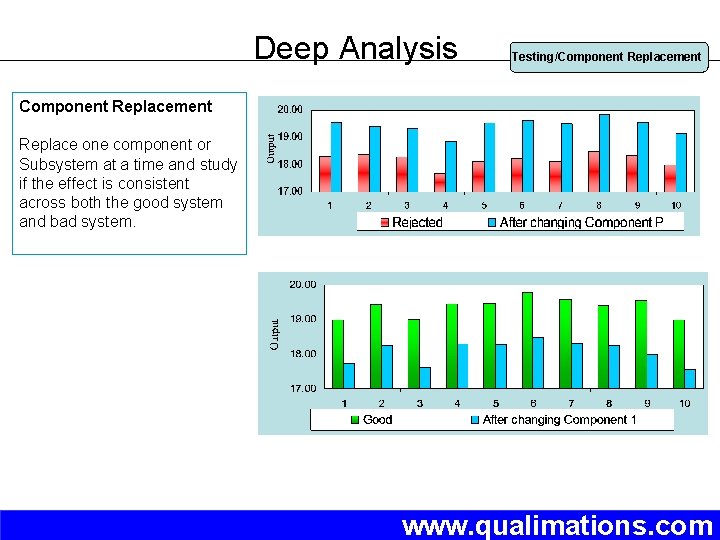
Deep Analysis Testing/Component Replacement Replace one component or Subsystem at a time and study if the effect is consistent across both the good system and bad system. www. qualimations. com
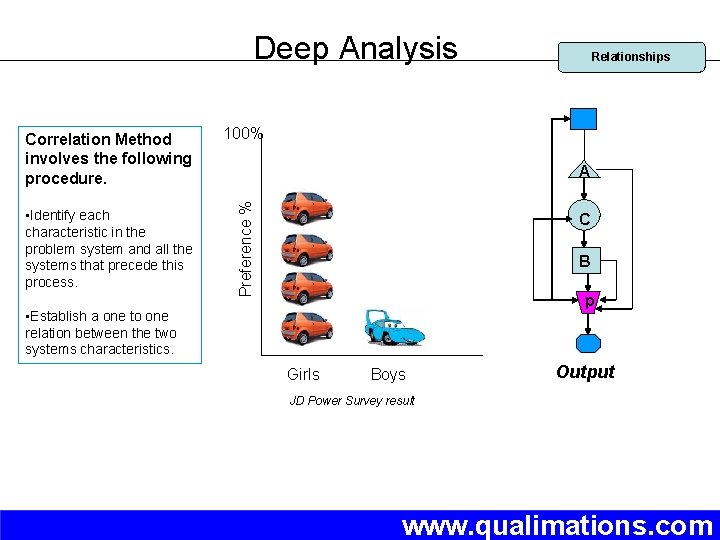
Correlation Method involves the following procedure. 100% • Identify each characteristic in the problem system and all the systems that precede this process. Preference % Deep Analysis Relationships A C B p • Establish a one to one relation between the two systems characteristics. Girls Boys Output JD Power Survey result www. qualimations. com
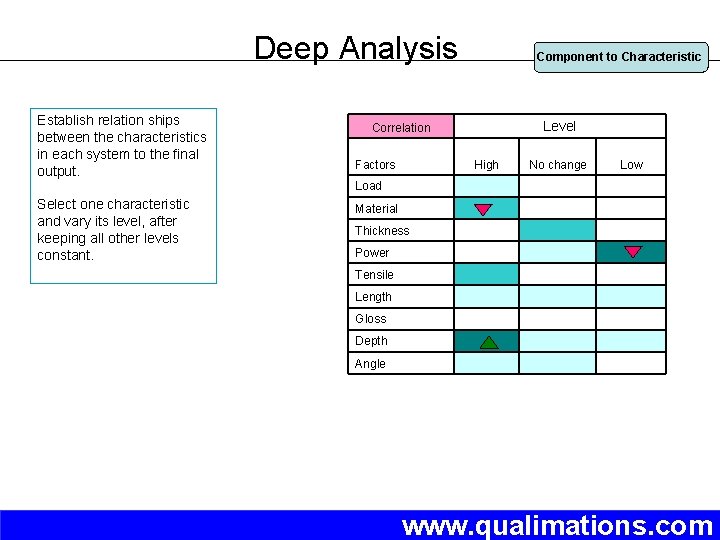
Deep Analysis Establish relation ships between the characteristics in each system to the final output. Component to Characteristic Level Correlation Factors High No change Low Load Select one characteristic and vary its level, after keeping all other levels constant. Material Thickness Power Tensile Length Gloss Depth Angle www. qualimations. com
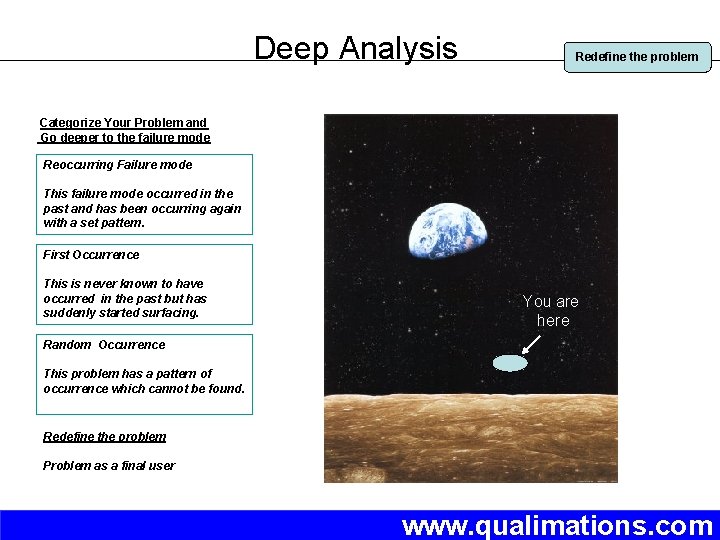
Deep Analysis Redefine the problem Categorize Your Problem and Go deeper to the failure mode Reoccurring Failure mode This failure mode occurred in the past and has been occurring again with a set pattern. First Occurrence This is never known to have occurred in the past but has suddenly started surfacing. You are here Random Occurrence This problem has a pattern of occurrence which cannot be found. Redefine the problem Problem as a final user www. qualimations. com
Deep Analysis Road Map Where are you now You have defined the problem You have viewed the problem from all perspectives You have zeroed on the location of the problem You have collected information regarding the history of the problem You know what characteristic when deviates leads to this problem. You know the mode of failure and know that when this corrected it affects your problem. www. qualimations. com
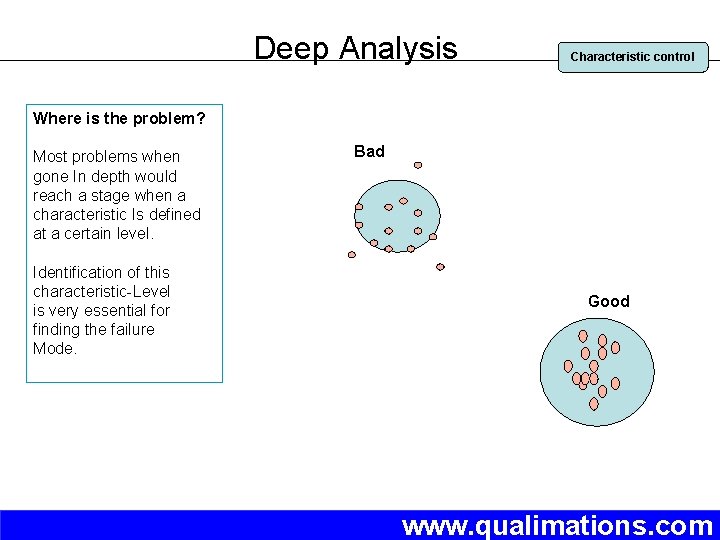
Deep Analysis Characteristic control Where is the problem? Most problems when gone In depth would reach a stage when a characteristic Is defined at a certain level. Identification of this characteristic-Level is very essential for finding the failure Mode. Bad Good www. qualimations. com
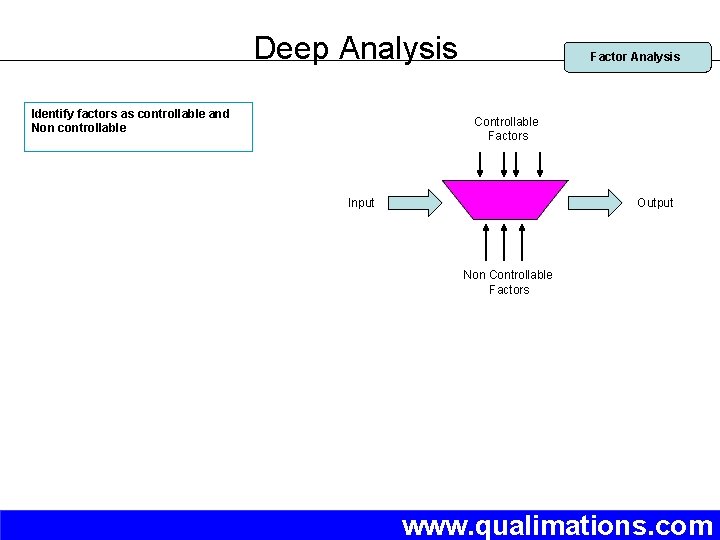
Deep Analysis Identify factors as controllable and Non controllable Factor Analysis Controllable Factors Input Output Non Controllable Factors www. qualimations. com
Deep Analysis Factor Analysis Have you started using words like • Insufficient……. • High …. . Content • Low……. • Broken…. . • Not enough……. www. qualimations. com
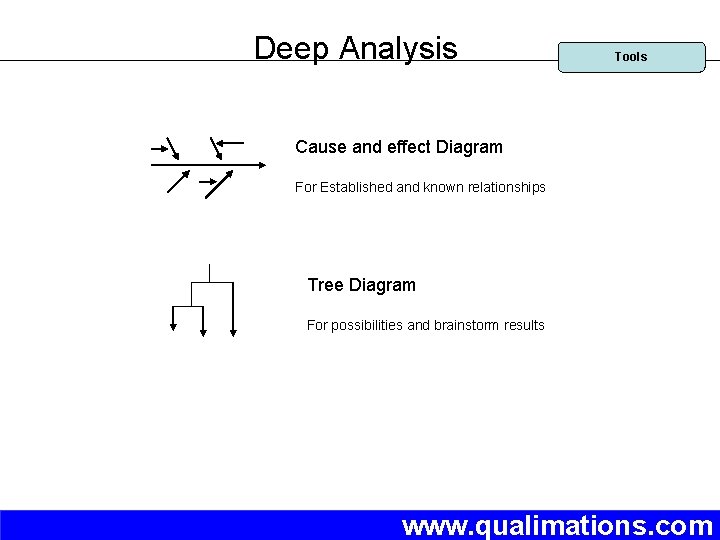
Deep Analysis Tools Cause and effect Diagram For Established and known relationships Tree Diagram For possibilities and brainstorm results www. qualimations. com
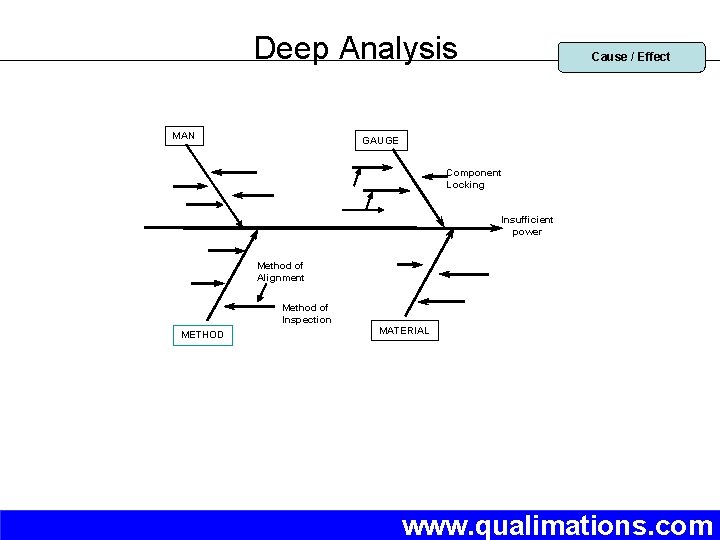
Deep Analysis MAN Cause / Effect GAUGE Component Locking Insufficient power Method of Alignment Method of Inspection METHOD MATERIAL www. qualimations. com
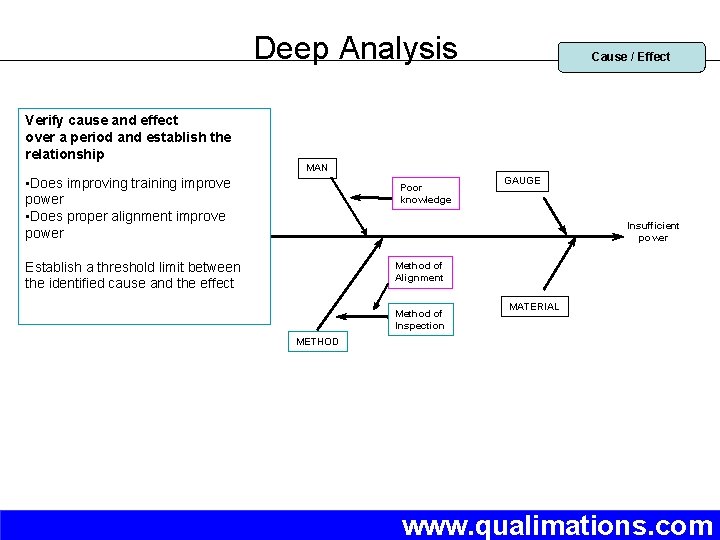
Deep Analysis Cause / Effect Verify cause and effect over a period and establish the relationship MAN • Does improving training improve power • Does proper alignment improve power Poor knowledge GAUGE Insufficient power Establish a threshold limit between the identified cause and the effect Method of Alignment Method of Inspection MATERIAL METHOD www. qualimations. com
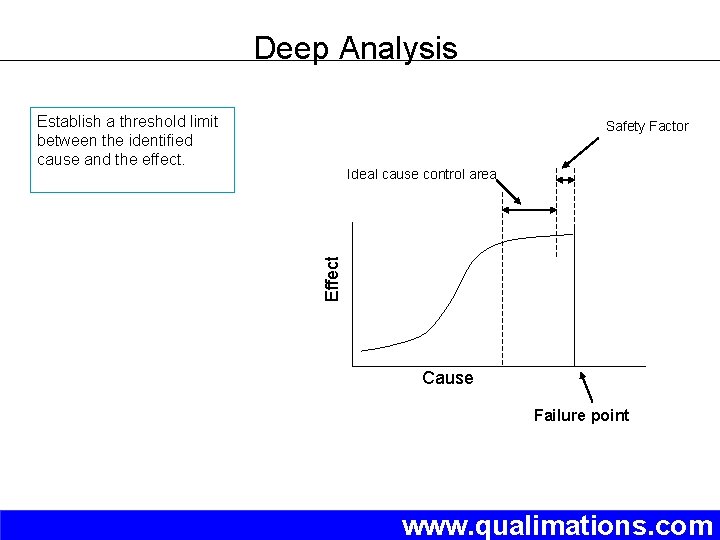
Deep Analysis Establish a threshold limit between the identified cause and the effect. Safety Factor Effect Ideal cause control area Cause Failure point www. qualimations. com
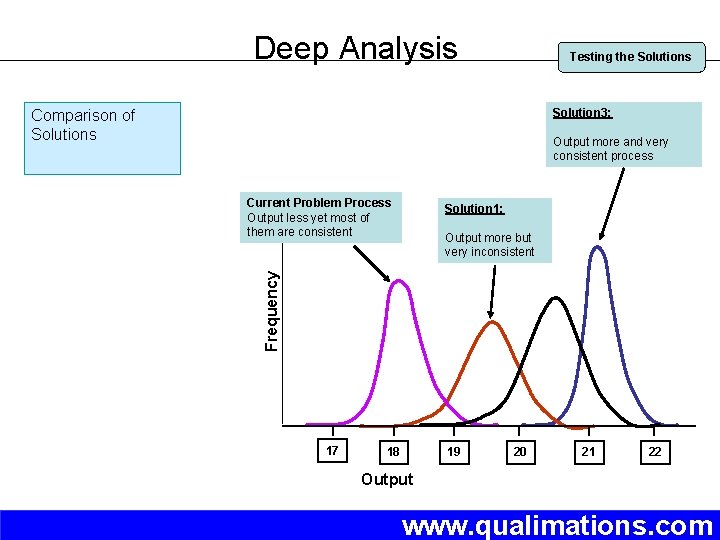
Deep Analysis Testing the Solutions Solution 3: Comparison of Solutions Output more and very consistent process Current Problem Process Output less yet most of them are consistent Solution 1: Frequency Output more but very inconsistent 17 18 19 20 21 22 Output www. qualimations. com
Deep Analysis Document the Effectiveness of the solution and the revenue gained as a result of solving this problem. • What additional information gained in the study. • Recommendations to control the failure mode or a design change. • What other problems were identified other than the problem under study. • Update your list of potential failure modes and evolve a control mechanism. www. qualimations. com
DEEP ANALYSIS www. qualimations. com
- Slides: 35