
Deductive vs Inductive writing Builds to conclusion Premises
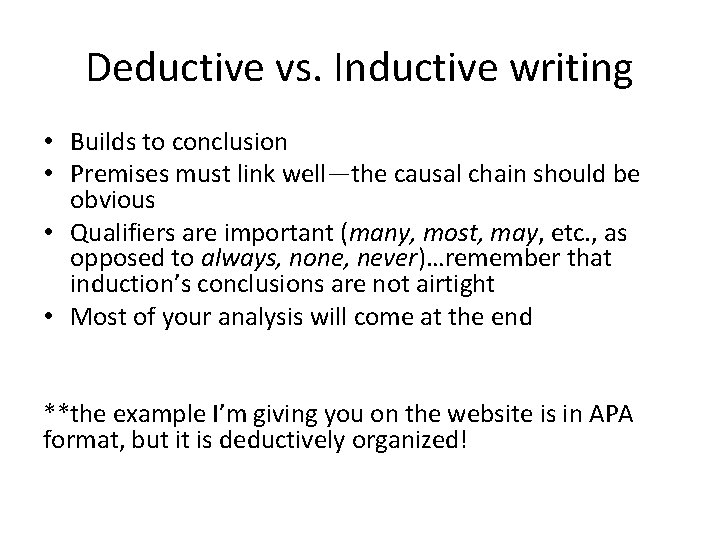
Deductive vs. Inductive writing • Builds to conclusion • Premises must link well—the causal chain should be obvious • Qualifiers are important (many, most, may, etc. , as opposed to always, none, never)…remember that induction’s conclusions are not airtight • Most of your analysis will come at the end **the example I’m giving you on the website is in APA format, but it is deductively organized!
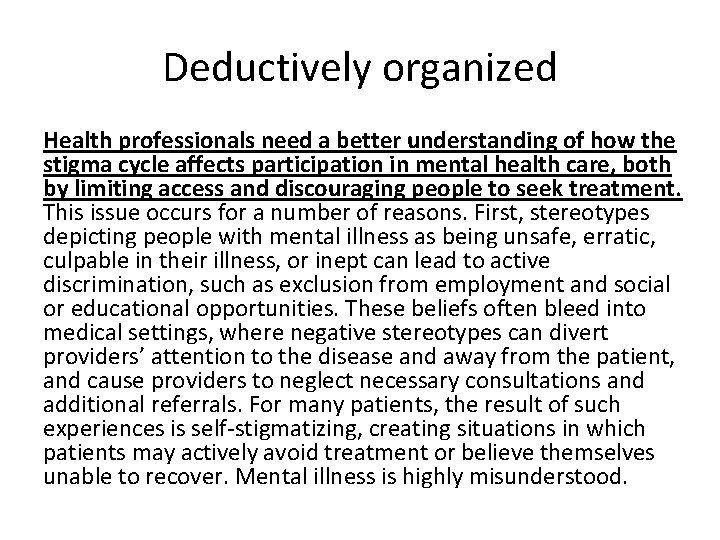
Deductively organized Health professionals need a better understanding of how the stigma cycle affects participation in mental health care, both by limiting access and discouraging people to seek treatment. This issue occurs for a number of reasons. First, stereotypes depicting people with mental illness as being unsafe, erratic, culpable in their illness, or inept can lead to active discrimination, such as exclusion from employment and social or educational opportunities. These beliefs often bleed into medical settings, where negative stereotypes can divert providers’ attention to the disease and away from the patient, and cause providers to neglect necessary consultations and additional referrals. For many patients, the result of such experiences is self-stigmatizing, creating situations in which patients may actively avoid treatment or believe themselves unable to recover. Mental illness is highly misunderstood.
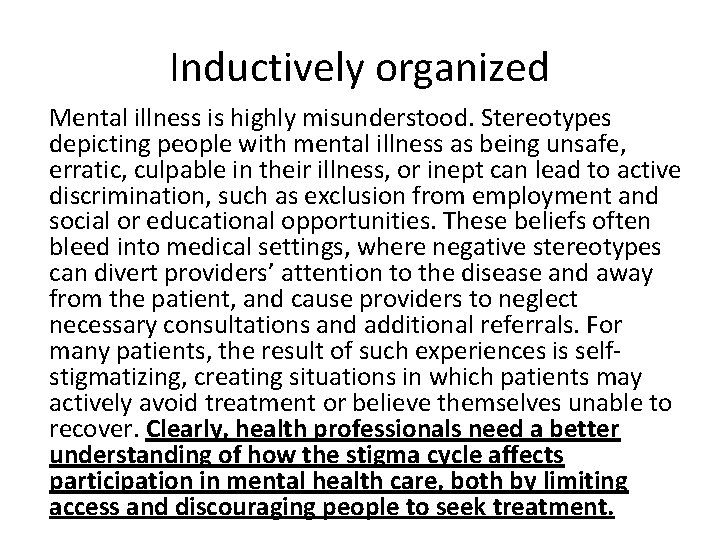
Inductively organized Mental illness is highly misunderstood. Stereotypes depicting people with mental illness as being unsafe, erratic, culpable in their illness, or inept can lead to active discrimination, such as exclusion from employment and social or educational opportunities. These beliefs often bleed into medical settings, where negative stereotypes can divert providers’ attention to the disease and away from the patient, and cause providers to neglect necessary consultations and additional referrals. For many patients, the result of such experiences is selfstigmatizing, creating situations in which patients may actively avoid treatment or believe themselves unable to recover. Clearly, health professionals need a better understanding of how the stigma cycle affects participation in mental health care, both by limiting access and discouraging people to seek treatment.

This week • Wednesday: work day • Thursday: references page check, library check & work day • Friday: editing day & topics
- Slides: 4