
Decomposition of overlapping protein complexes A graph theoretical
- Slides: 13
Decomposition of overlapping protein complexes: A graph theoretical method for analyzing static and dynamic protein associations Algorithms for Molecular Biology, 2006 Team 1 Presenter: Ferhat Ay
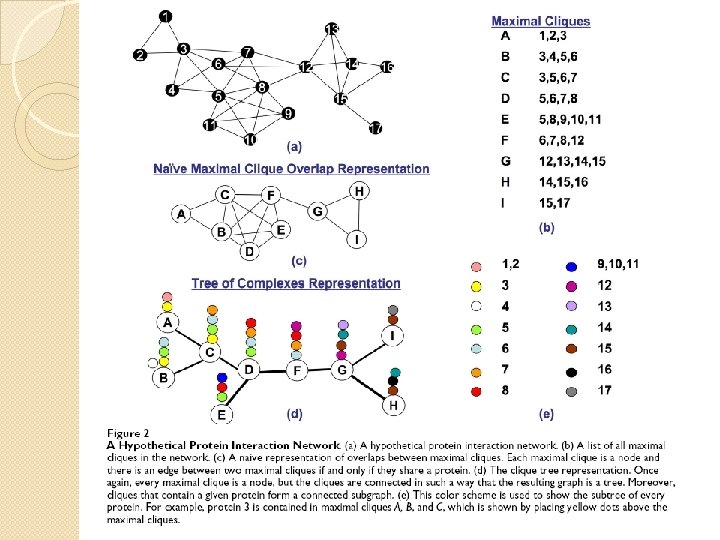
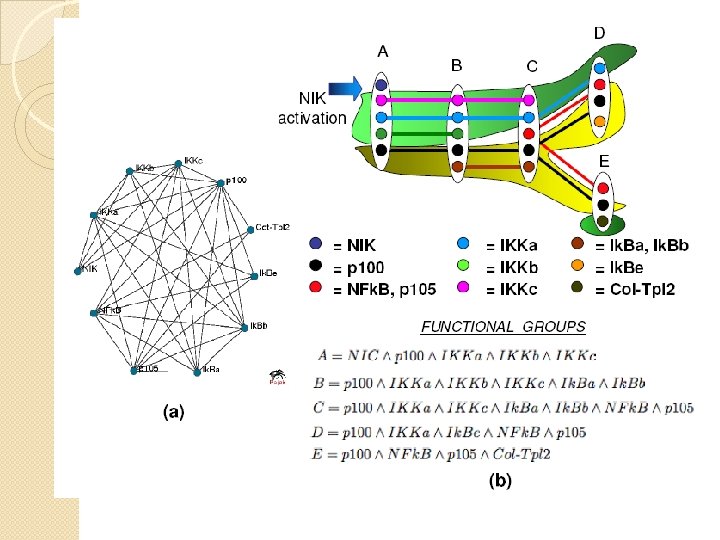
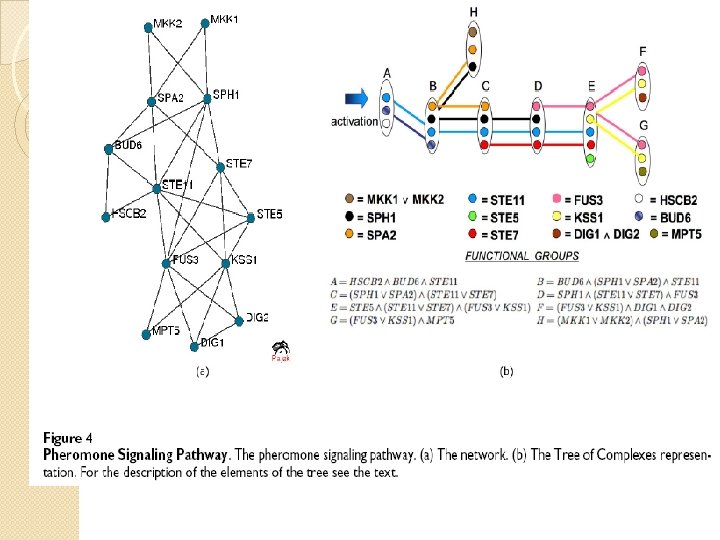
Function in PPI networks �A functional group is either a maximal clique or a set of alternative variants of such complexes/cliques. �A functional module is a union of overlapping functional groups.
Clique trees can be constructed only for chordal graphs �Chord = an edge connecting two nonconsecutive nodes of a cycle �Chordal graph – every cycle of length at least four has a chord. Every chordal graph has a corresponding clique tree representation.
Naïve representation VS Tree of Complexes Representation �Which protein in which complex interacts with each other? �Dynamics of the interactions �How to identify functional groups? �A set of maximum cliques containing a node are connected? �Size of overlap
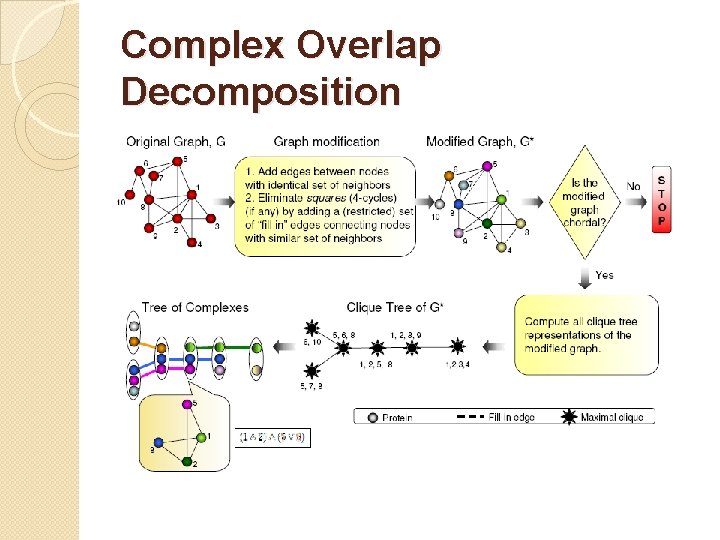
Complex Overlap Decomposition
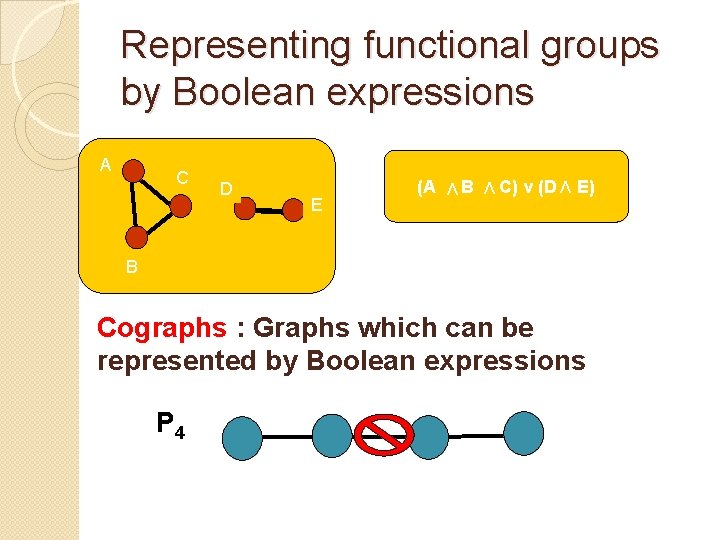
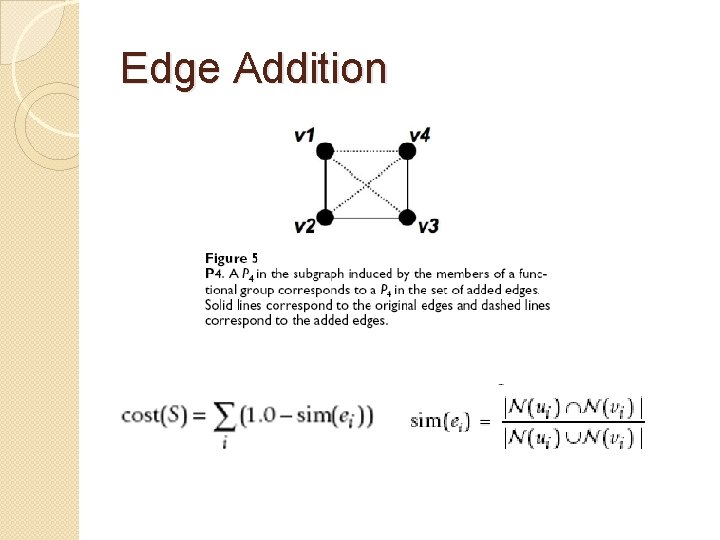
Representing functional groups by Boolean expressions E (A V D B V C C) v (D V A E) B Cographs : Graphs which can be represented by Boolean expressions P 4
Edge Addition
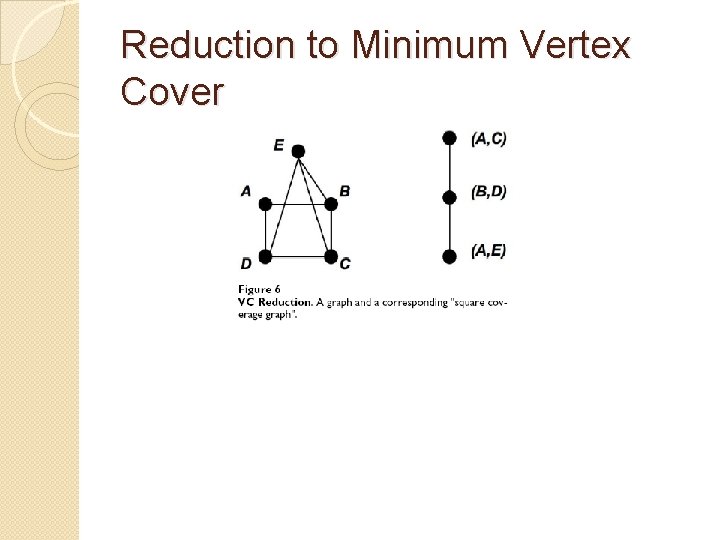
Reduction to Minimum Vertex Cover
When it works? � Algorithm is not guaranteed to produce the Tree of Complexes representation. � Conjectured that the algorithm will succeed for chordal graphs and cographs. � Applicable to PPI networks that do not contain long (longer than four node) chordless cycles. � Not appropriate for analyzing large PPI networks with long cycles.
Summary � A new method delineating functional groups and representing their overlaps � Each functional group is represented as a Boolean expression � If functional groups represent dynamically changing protein associations, the method can suggest a possible order of these dynamic changes � For static functional groups it provides compact tree representation of overlaps between such groups � Can be used for predicting protein-protein interactions and putative associations and pathways � Uses chordal graph theory and cograph theory to build new graph-theoretical results.