
Decomposers Last Lesson 1 Define biocontrol 2 State
Decomposers Last Lesson: 1. Define biocontrol. 2. State two advantages and one disadvantage of using pesticides. Last Topic: Sound and Light. 1. Describe two methods of changing the direction of light rays. December 2021 Last Week: 1. Define population. 2. Describe the population of organisms in a park. Last Year: Working scientifically 1. Explain the difference between continuous and categorical data. Stretch: Suggest how else pests can be controlled.
Decomposers December 2021
Understand the importance of decomposers in a good chain. Recognise the term decomposer and provide examples Explain the similarities and differences between types of decomposers Suggest the link between decomposers and food chains.
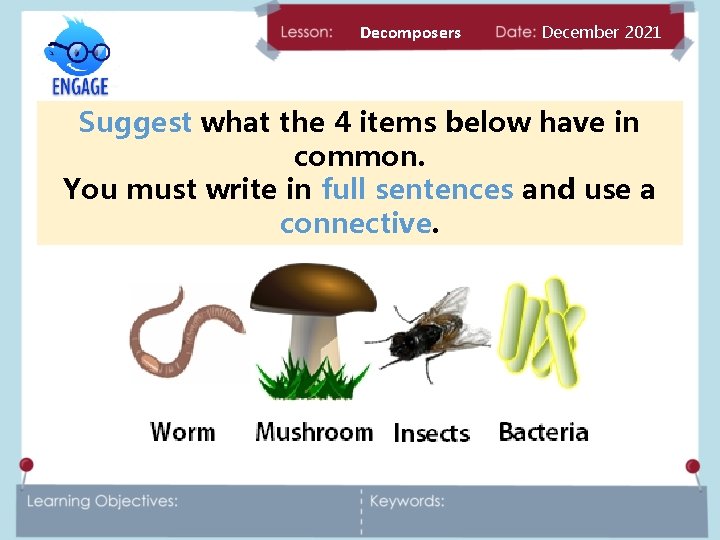
Decomposers December 2021 Suggest what the 4 items below have in common. You must write in full sentences and use a connective.

Decomposers December 2021 Decomposer: Organism that breaks down dead plant and animal material so nutrients can be recycled back to the soil or water. Stretch: Suggest where decomposers fit into a food chain.
Decomposers Identify different types of composes and what they do. Describe the link between decomposers and food chains. December 2021 Explain why decomposers are important in terms of energy.
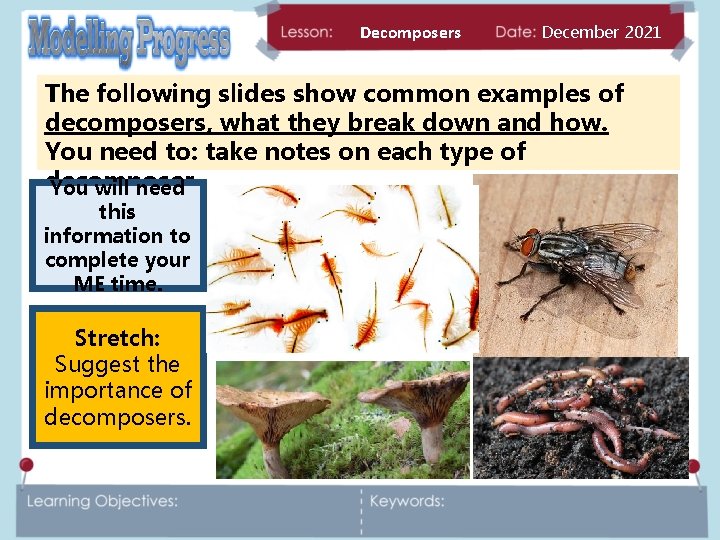
Decomposers December 2021 The following slides show common examples of decomposers, what they break down and how. You need to: take notes on each type of decomposer You will need this information to complete your ME time. Stretch: Suggest the importance of decomposers.
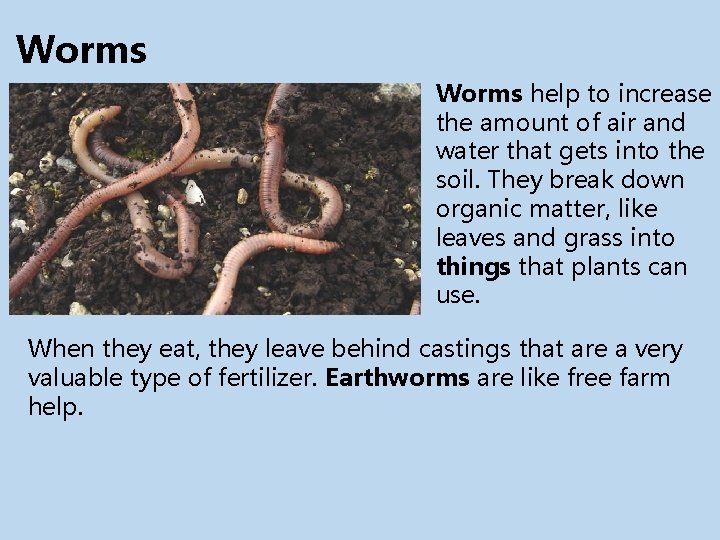
Worms help to increase the amount of air and water that gets into the soil. They break down organic matter, like leaves and grass into things that plants can use. When they eat, they leave behind castings that are a very valuable type of fertilizer. Earthworms are like free farm help.
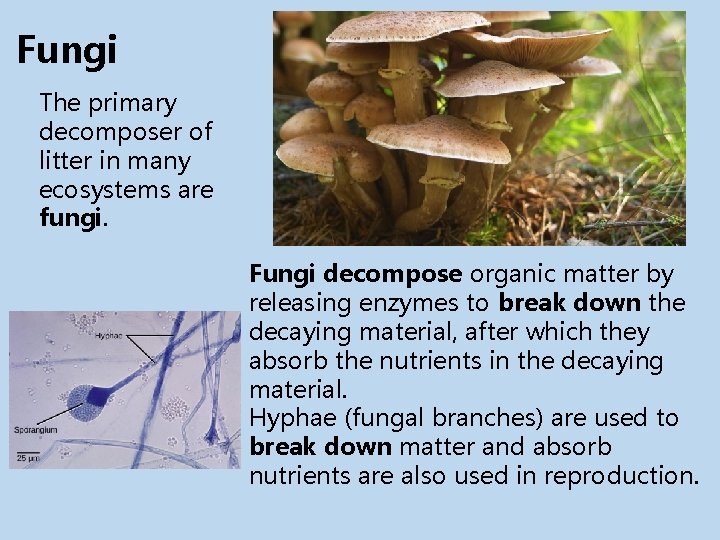
Fungi The primary decomposer of litter in many ecosystems are fungi. Fungi decompose organic matter by releasing enzymes to break down the decaying material, after which they absorb the nutrients in the decaying material. Hyphae (fungal branches) are used to break down matter and absorb nutrients are also used in reproduction.
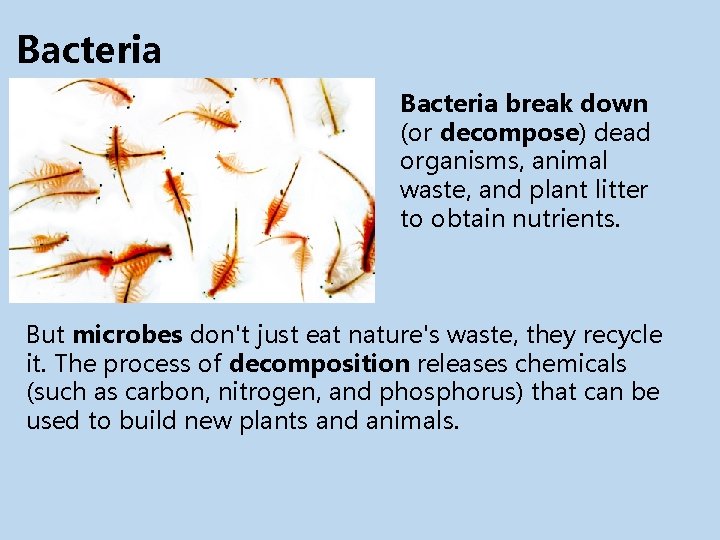
Bacteria break down (or decompose) dead organisms, animal waste, and plant litter to obtain nutrients. But microbes don't just eat nature's waste, they recycle it. The process of decomposition releases chemicals (such as carbon, nitrogen, and phosphorus) that can be used to build new plants and animals.
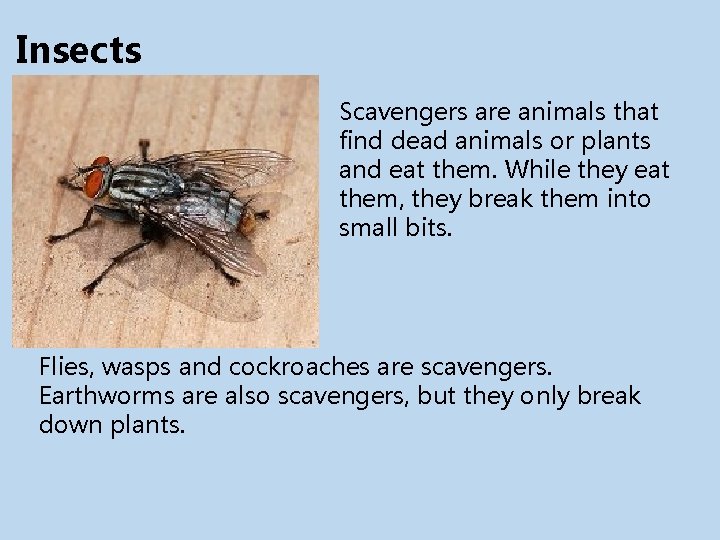
Insects Scavengers are animals that find dead animals or plants and eat them. While they eat them, they break them into small bits. Flies, wasps and cockroaches are scavengers. Earthworms are also scavengers, but they only break down plants.
Decomposers C H A L L E N G E December 2021 Define decomposer and state 4 examples. Compare how earth worms and wasps decompose (break down) organic material. Suggest why decomposers are said to ‘Complete the circle of life’. STRETCH: Suggest the what would happen if decomposers did not exist.
Decomposers December 2021 Learning review. • State two examples of decomposers • Give one reason why decomposers are important.
- Slides: 13