
Decolonization Vietnam A Case Study in Communism and

- Slides: 43
Decolonization
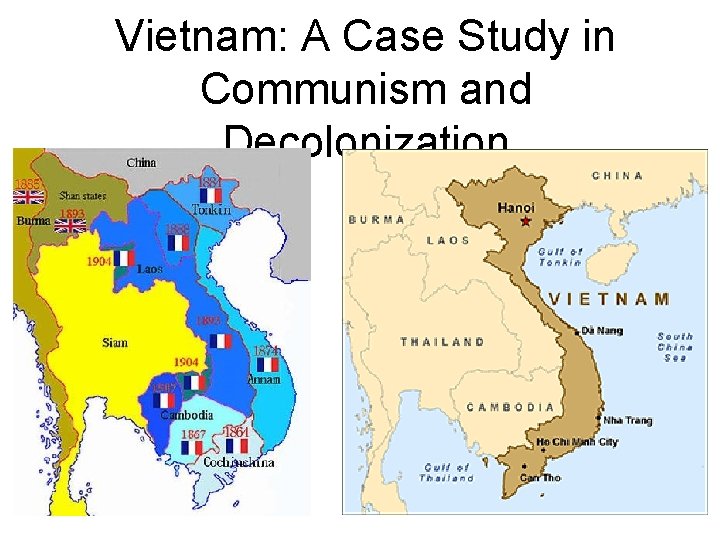
Vietnam: A Case Study in Communism and Decolonization
Cold War and Decolonization • After WWII, the once-mighty European empires began losing land influence to native independence movements • Imperial breakups weren’t new; independence centered around a nationalist ideology was – Led to creation of new nation-states
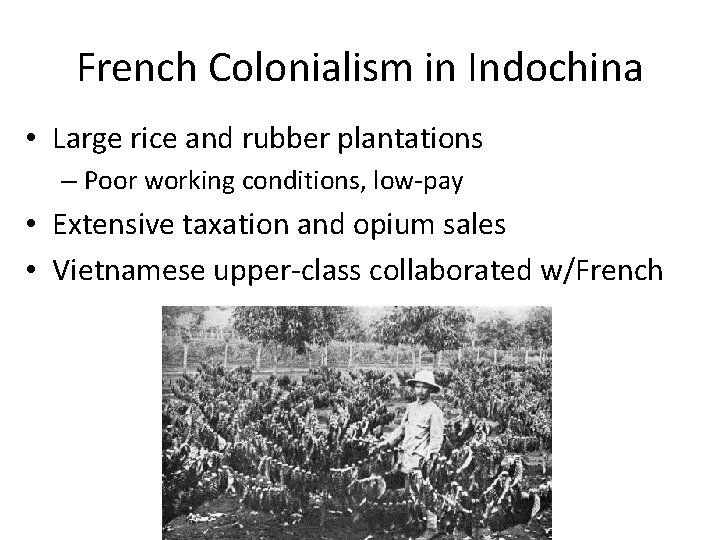
French Colonialism in Indochina • Large rice and rubber plantations – Poor working conditions, low-pay • Extensive taxation and opium sales • Vietnamese upper-class collaborated w/French
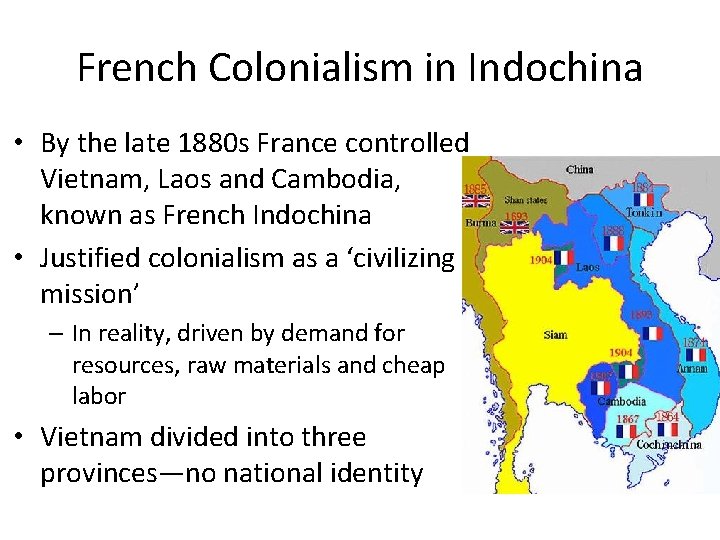
French Colonialism in Indochina • By the late 1880 s France controlled Vietnam, Laos and Cambodia, known as French Indochina • Justified colonialism as a ‘civilizing mission’ – In reality, driven by demand for resources, raw materials and cheap labor • Vietnam divided into three provinces—no national identity
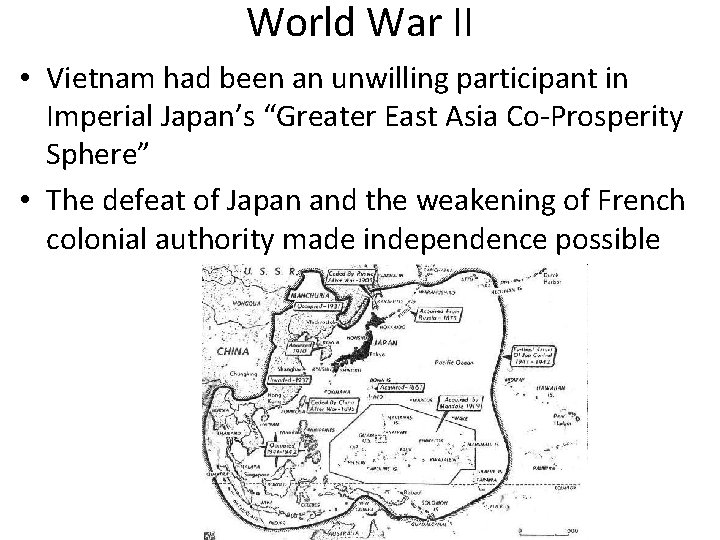
World War II • Vietnam had been an unwilling participant in Imperial Japan’s “Greater East Asia Co-Prosperity Sphere” • The defeat of Japan and the weakening of French colonial authority made independence possible
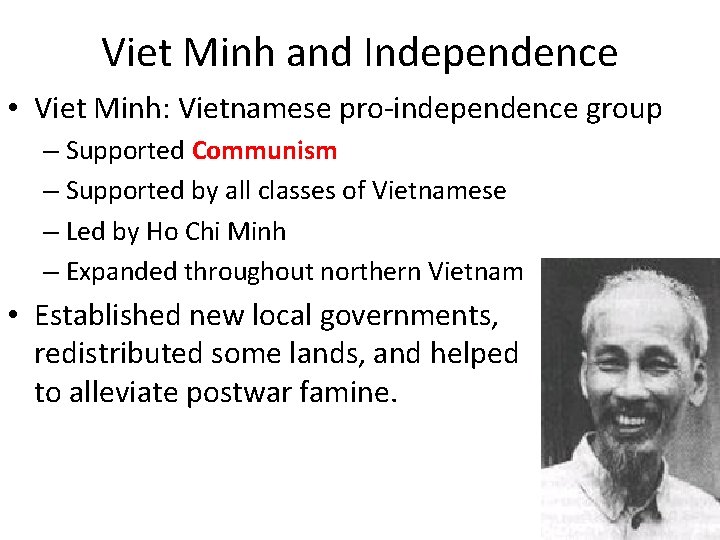
Viet Minh and Independence • Viet Minh: Vietnamese pro-independence group – Supported Communism – Supported by all classes of Vietnamese – Led by Ho Chi Minh – Expanded throughout northern Vietnam • Established new local governments, redistributed some lands, and helped to alleviate postwar famine.
Declaration of Independence of the Democratic Republic of Vietnam (September 2 nd, 1945) 1. How does the Viet Minh Declaration begin? 2. What grievances do the Vietnamese hold against the French? 3. According to the Vietnamese, what were the actions of the French colonialists during WWII? What effect did this have on the people of Vietnam? 4. How will the Vietnamese protect the independence they believed they have gained? 5. Why do the Vietnamese believe that other countries will recognize their independence?
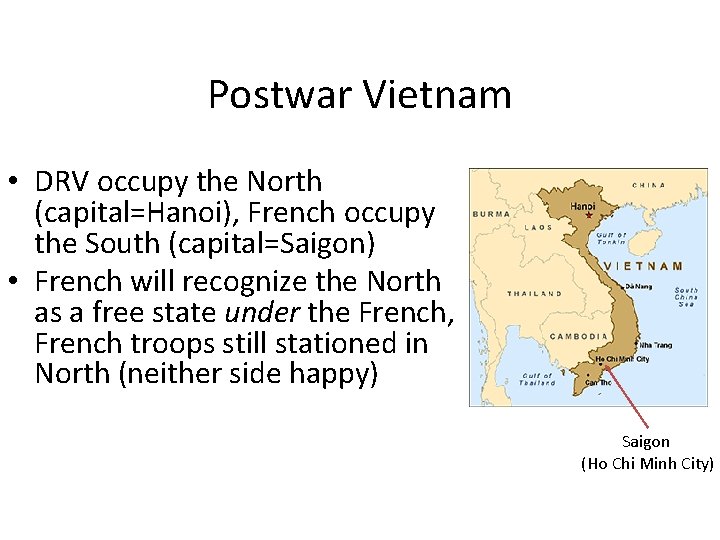
Postwar Vietnam • DRV occupy the North (capital=Hanoi), French occupy the South (capital=Saigon) • French will recognize the North as a free state under the French, French troops still stationed in North (neither side happy) Saigon (Ho Chi Minh City)
First Indochina War • Nov/Dec 1946, French and DRV forces attack each other in North Vietnam • France defined this more as a fight against communism than as a colonial war. – Beginning in 1949, the Chinese positioned troops along the Vietnamese border, sending weapons, supplies, etc. – The US declared that it would supply arms to the French in order to “contain” Communism
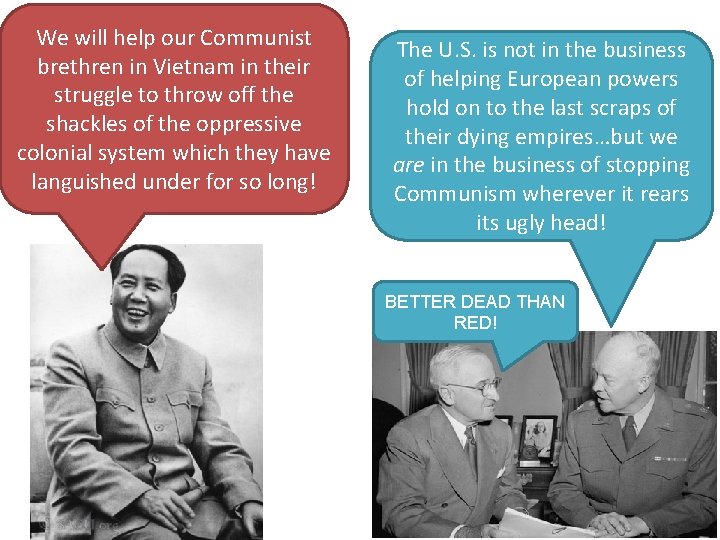
We will help our Communist brethren in Vietnam in their struggle to throw off the shackles of the oppressive colonial system which they have languished under for so long! The U. S. is not in the business of helping European powers hold on to the last scraps of their dying empires…but we are in the business of stopping Communism wherever it rears its ugly head! BETTER DEAD THAN RED!
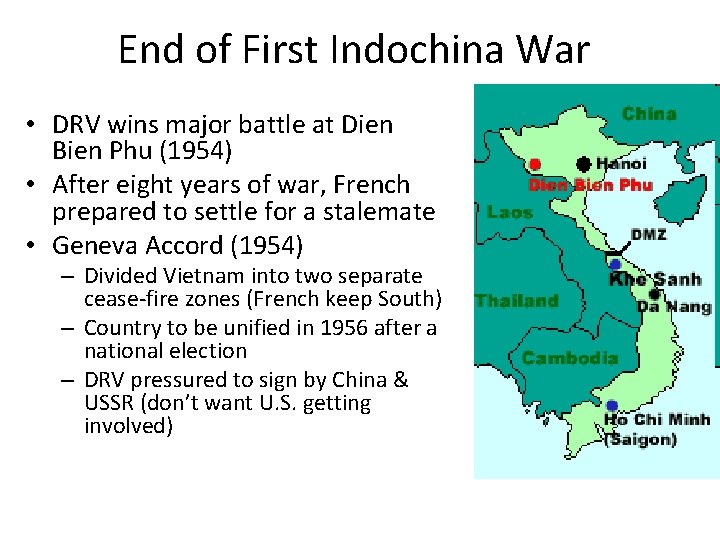
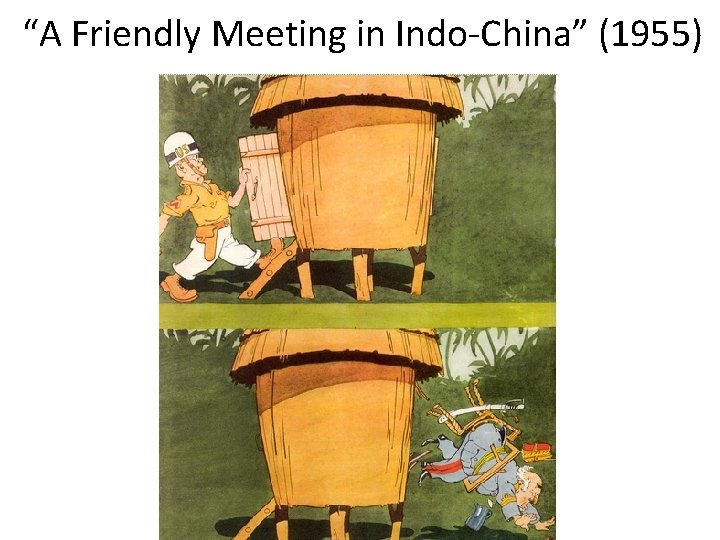
End of First Indochina War • DRV wins major battle at Dien Bien Phu (1954) • After eight years of war, French prepared to settle for a stalemate • Geneva Accord (1954) – Divided Vietnam into two separate cease-fire zones (French keep South) – Country to be unified in 1956 after a national election – DRV pressured to sign by China & USSR (don’t want U. S. getting involved)
“A Friendly Meeting in Indo-China” (1955)
Aftermath • New government in the south led by Prime Minister/ Dictator Ngo Dinh Diem refused to hold national elections in 1956 – Said that a free vote was impossible under the Communist government in the north • The US encouraged this violation of the accords – Wanted an independent South Vietnam – Wanted to resist the further spread of Communism in Southeast Asia • DRV tries to organize and gain support of factions in the South (Vietcong) • Leads to the Vietnam War
U. S. and Vietnam • 1961, President John F. Kennedy provides military advisors and supplies for the South Vietnamese government • 1964, Lyndon Johnson helps pass the Gulf of Tonkin Resolution, escalating the Vietnam War • 1973, American troops withdraw • 1975, North Vietnamese troops conquer Saigon, finally unifying Vietnam
Is it always Capitalism v. Communism? • Sometimes, Nationalism wins out – Vietnam invaded Communist Cambodia in late 1970’s – China invaded Vietnam in 1979 in retaliation
Panjabi MC • https: //www. youtube. com/watch? v=DJzt. Xj 2 G Pfk
Decolonization and Independence in India
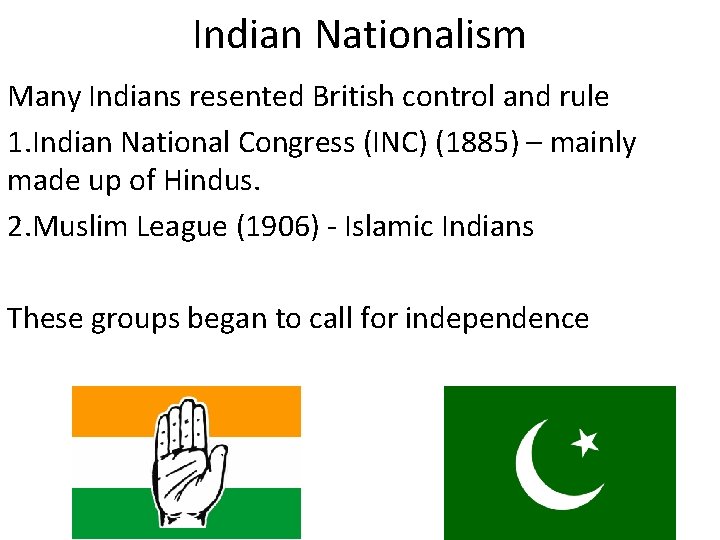
Indian Nationalism Many Indians resented British control and rule 1. Indian National Congress (INC) (1885) – mainly made up of Hindus. 2. Muslim League (1906) - Islamic Indians These groups began to call for independence
The Amritsar Massacre (1919) https: //www. youtube. com/watch? v=345 aoj. Byo Gk • A British attack on Indian citizens who were holding a protest meeting • British soldiers fired on the crowd for 10 minutes, killing 379 and wounding more than 1, 100 people • United all Indians (and much of the world) for Indian independence
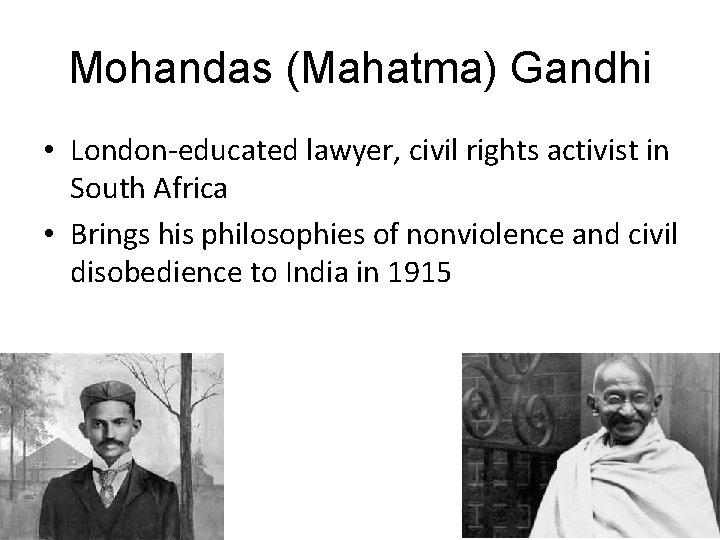
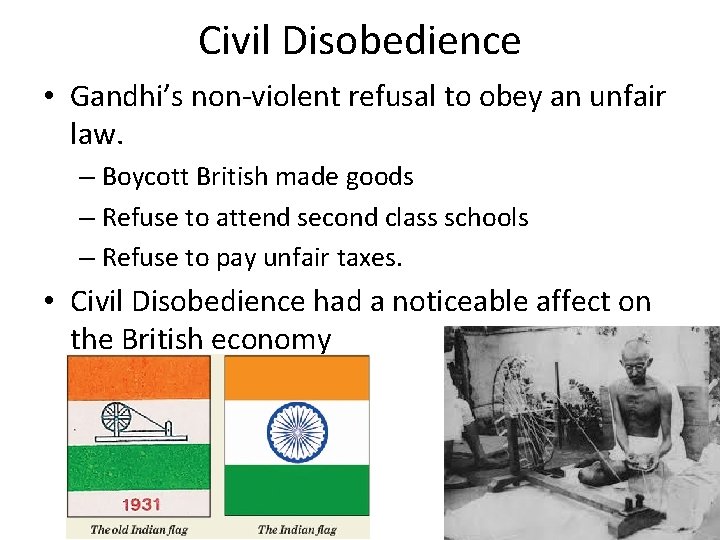
Mohandas (Mahatma) Gandhi • London-educated lawyer, civil rights activist in South Africa • Brings his philosophies of nonviolence and civil disobedience to India in 1915
Civil Disobedience • Gandhi’s non-violent refusal to obey an unfair law. – Boycott British made goods – Refuse to attend second class schools – Refuse to pay unfair taxes. • Civil Disobedience had a noticeable affect on the British economy
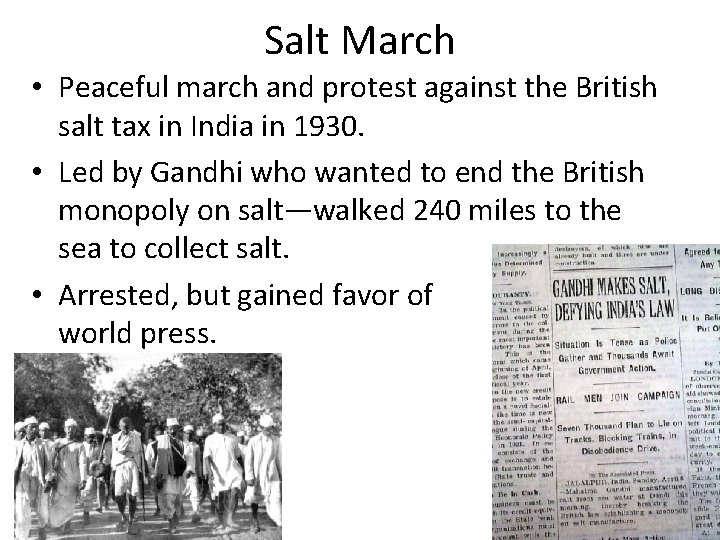
Salt March • Peaceful march and protest against the British salt tax in India in 1930. • Led by Gandhi who wanted to end the British monopoly on salt—walked 240 miles to the sea to collect salt. • Arrested, but gained favor of world press.
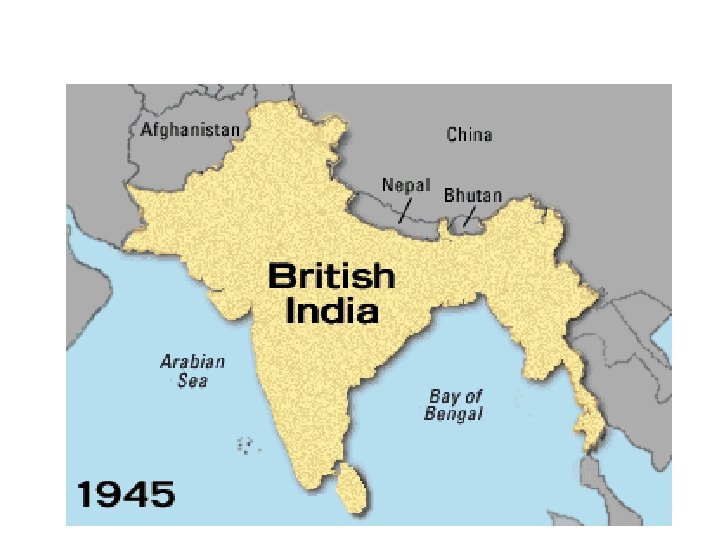
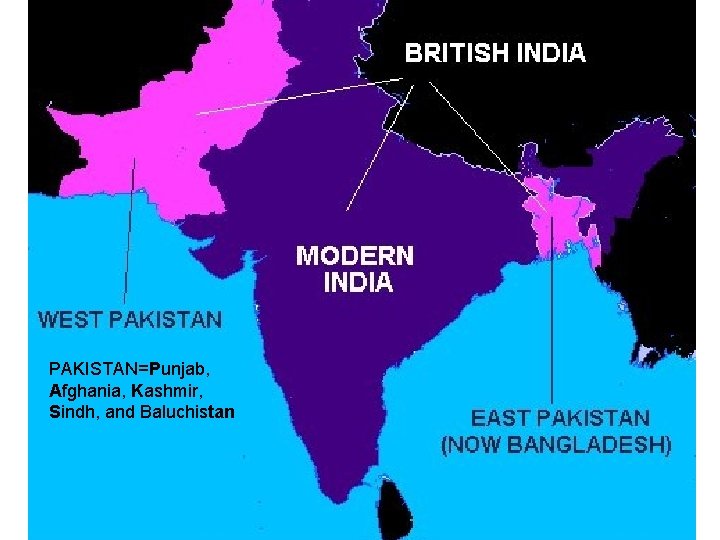
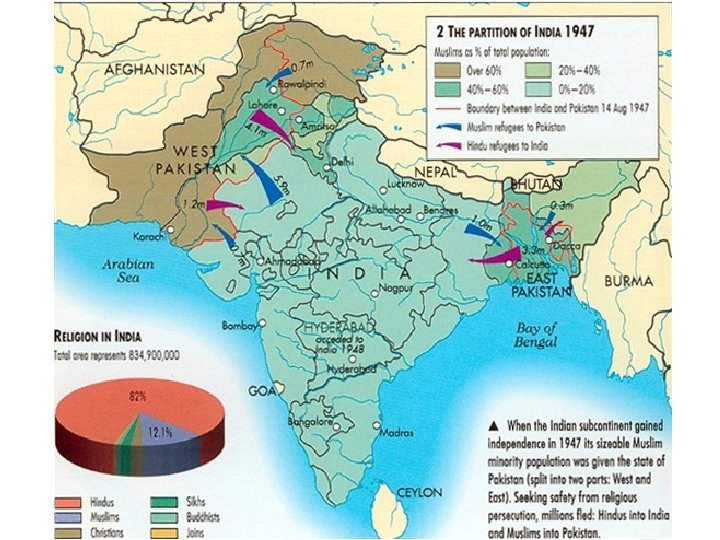
Independence • The British allowed more self government through the 1930’s—interrupted by WWII. – Many Indians fought for the British and some refused to fight. • India received complete independence in 1947. • Disputes broke out between Indian Hindus and Muslims about how the new country should be organized.
PAKISTAN=Punjab, Afghania, Kashmir, Sindh, and Baluchistan
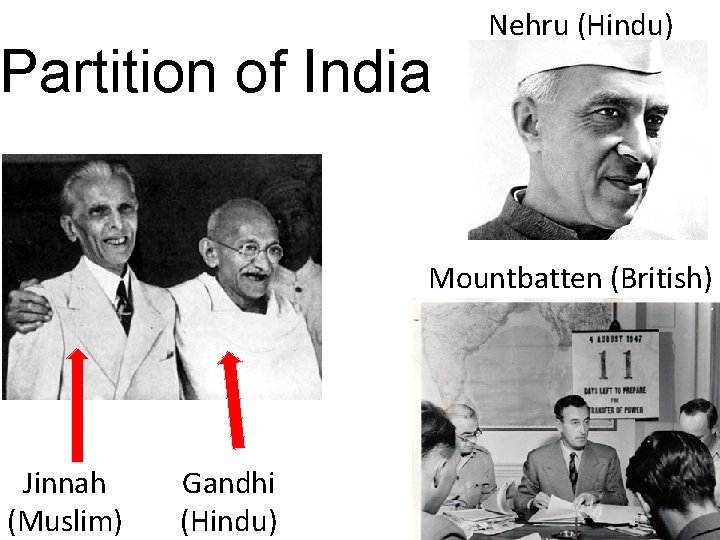
Partition of India Nehru (Hindu) Mountbatten (British) Jinnah (Muslim) Gandhi (Hindu)
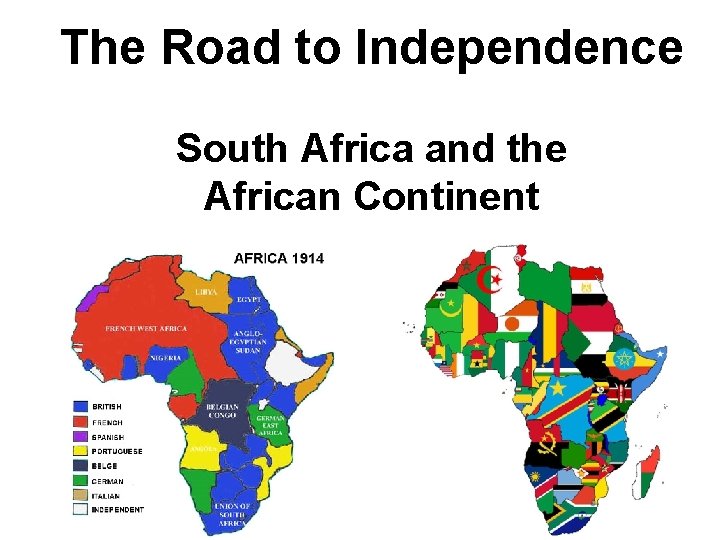
The Road to Independence South Africa and the African Continent
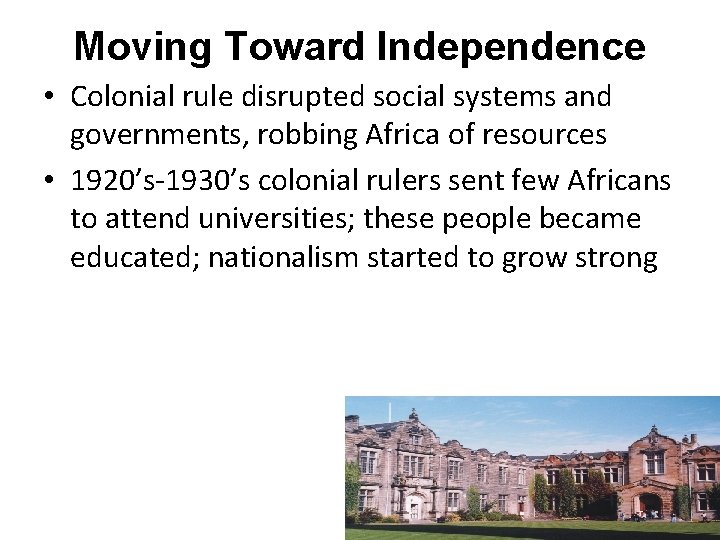
Moving Toward Independence • Colonial rule disrupted social systems and governments, robbing Africa of resources • 1920’s-1930’s colonial rulers sent few Africans to attend universities; these people became educated; nationalism started to grow strong
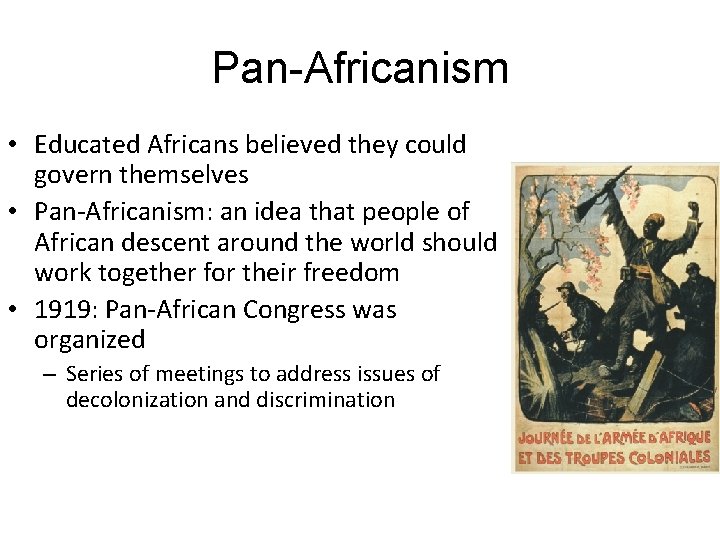
Pan-Africanism • Educated Africans believed they could govern themselves • Pan-Africanism: an idea that people of African descent around the world should work together for their freedom • 1919: Pan-African Congress was organized – Series of meetings to address issues of decolonization and discrimination
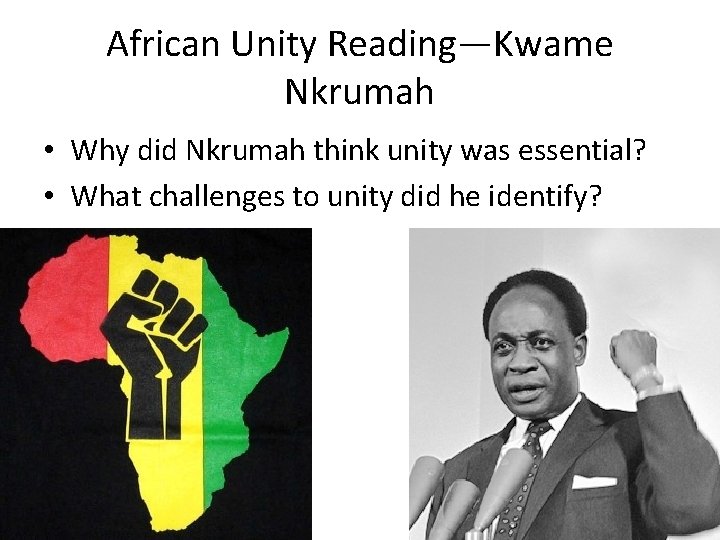
African Unity Reading—Kwame Nkrumah • Why did Nkrumah think unity was essential? • What challenges to unity did he identify?
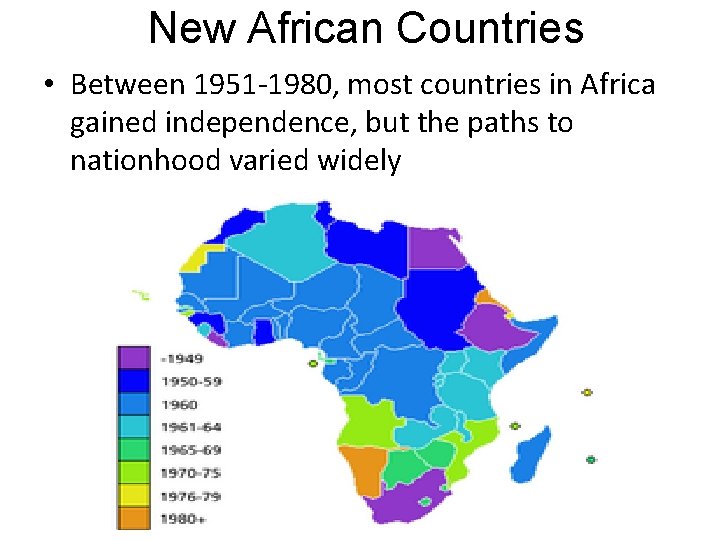
New African Countries • Between 1951 -1980, most countries in Africa gained independence, but the paths to nationhood varied widely
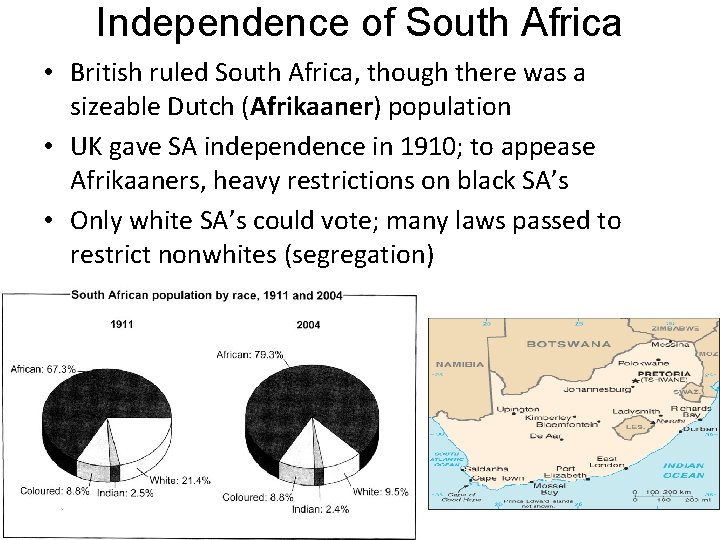
Independence of South Africa • British ruled South Africa, though there was a sizeable Dutch (Afrikaaner) population • UK gave SA independence in 1910; to appease Afrikaaners, heavy restrictions on black SA’s • Only white SA’s could vote; many laws passed to restrict nonwhites (segregation)
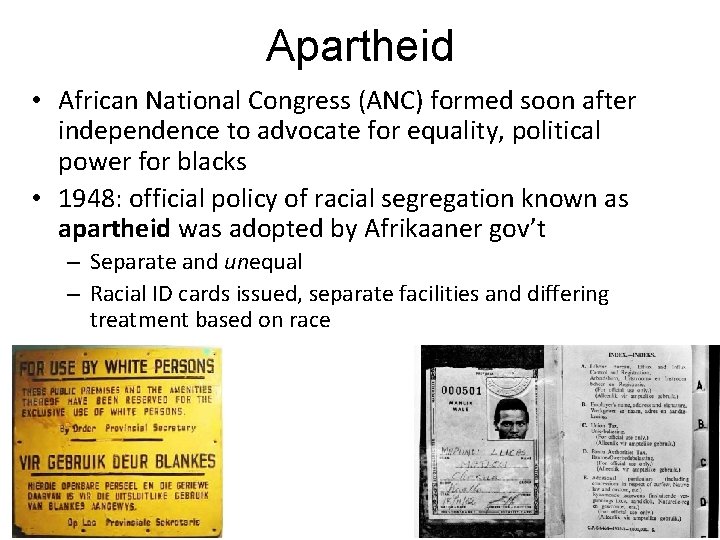
Apartheid • African National Congress (ANC) formed soon after independence to advocate for equality, political power for blacks • 1948: official policy of racial segregation known as apartheid was adopted by Afrikaaner gov’t – Separate and unequal – Racial ID cards issued, separate facilities and differing treatment based on race
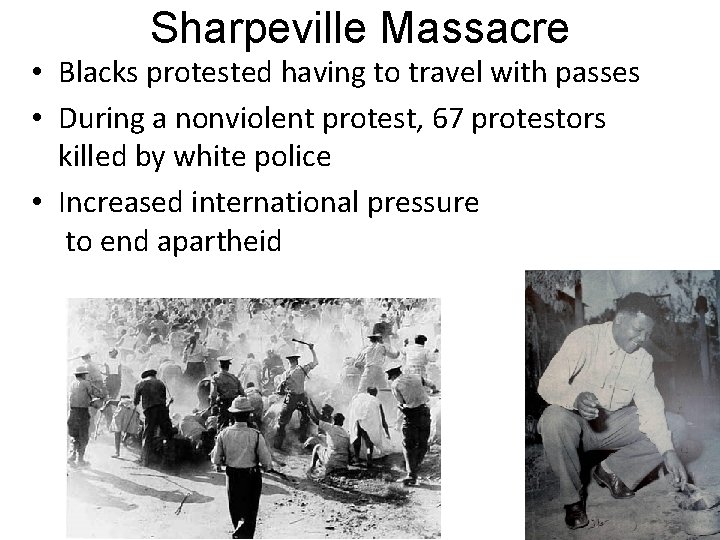
Sharpeville Massacre • Blacks protested having to travel with passes • During a nonviolent protest, 67 protestors killed by white police • Increased international pressure to end apartheid
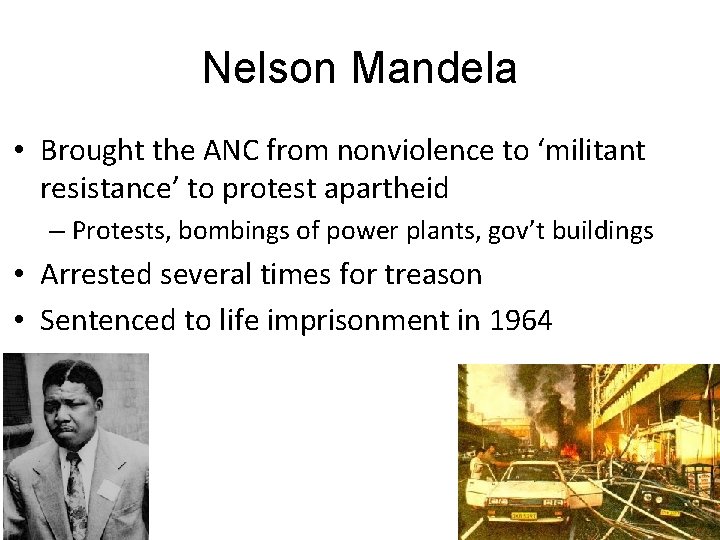
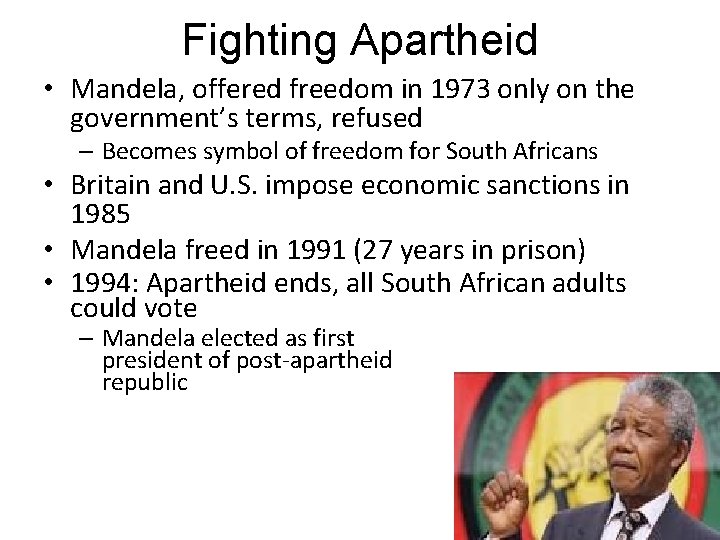
Nelson Mandela • Brought the ANC from nonviolence to ‘militant resistance’ to protest apartheid – Protests, bombings of power plants, gov’t buildings • Arrested several times for treason • Sentenced to life imprisonment in 1964
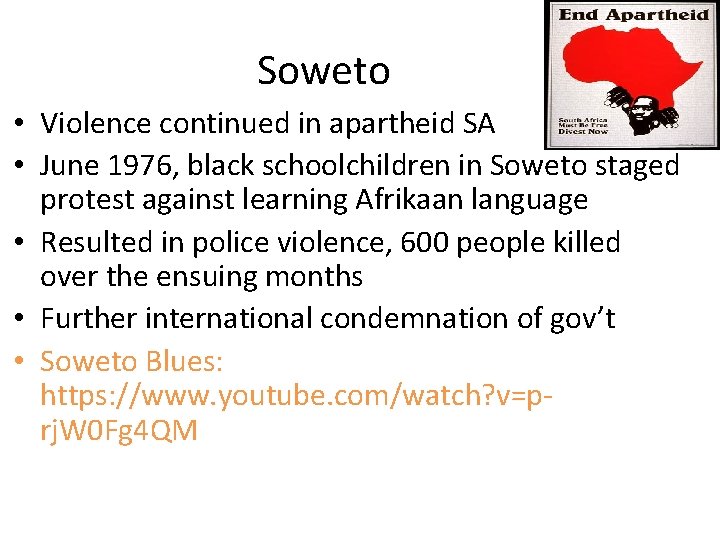
Soweto • Violence continued in apartheid SA • June 1976, black schoolchildren in Soweto staged protest against learning Afrikaan language • Resulted in police violence, 600 people killed over the ensuing months • Further international condemnation of gov’t • Soweto Blues: https: //www. youtube. com/watch? v=prj. W 0 Fg 4 QM
Fighting Apartheid • Mandela, offered freedom in 1973 only on the government’s terms, refused – Becomes symbol of freedom for South Africans • Britain and U. S. impose economic sanctions in 1985 • Mandela freed in 1991 (27 years in prison) • 1994: Apartheid ends, all South African adults could vote – Mandela elected as first president of post-apartheid republic
Independence in Nigeria • Nigeria gained independence from Great Britain in 1960. – Most expected the new country to be stable and calm. • Within a few months, war broke out between the Christian south and Muslim north. • WHY? ? • Many different ethnic groups living in Nigeria. – Many of these ethnic groups did not wish to be part of the same country. – This led to division and different treatment of the ethnic groups by the British. – British favored the south of Nigeria.
Independence in Nigeria • The religious war left many thousands dead. • Nigeria has the potential to have great wealth from their oil supplies. – Because of government corruption this resource has not been developed – As a result, Nigeria must rely on foreign aid and foreign supplies for their people.
Kenyan Independence • Many Kenyans thought the British had taken their land unfairly. • Rebellions against the British had begun in the early 1950’s. • Violence continued until 1960. • More and more Kenyans began to support the rebellions against the British.
Kenyan Independence • Eventually, their support convinced the British they would have to grant independence to Kenya. • The British helped Kenyans hold democratic elections. • They elected Jomo Kenyatta president in 1963. Kenya was independent was again. – Kenya claims to be a open and free democracy.