
Declaration on the Rights of Indigenous Peoples Act
- Slides: 9
Declaration on the Rights of Indigenous Peoples Act PRESENTATION TO THE UNION OF BC INDIAN CHIEFS SEPTEMBER 2020
Declaration on the Rights of Indigenous Peoples Act Brought into force November 28, 2019, the Declaration Act establishes the United Nations Declaration on the Rights of Indigenous Peoples (UN Declaration) as the framework for reconciliation. Requires the Province, in consultation and cooperation with Indigenous peoples to: ◦ Ensure new and existing laws are consistent with the UN Declaration ◦ Develop and implement an action plan to achieve the objectives of the UN Declaration ◦ Monitor progress through public annual reporting Enables new decision-making agreements between the Province and Indigenous governing bodies.
Alignment of Provincial Laws (section 3) • Distinct legal obligation from the Action Plan. • Joint FNLC-BC working group in place to advance this work. Progress has been limited to date. FNLC continues to emphasize: ◦ Alignment of laws is a positive obligation that applies to the Province, meaning that as laws are modified or created, they need to be aligned with the UN Declaration. ◦ The need to transform and decolonize the legislative process. • First Nations and First Nations Organizations have shared numerous priorities for laws that need to be amended to align with the UN Declaration.
Action Plan (section 4) • Province to develop an action plan in consultation and cooperation with Indigenous peoples to achieve the objectives of the UN Declaration. • The action plan is not intended to limit, but rather supplement, ongoing reconciliation work that will continue whether or not it’s in the action plan. • FNLC has invited expertise from First Nations Organizations; summary of this input being shared with First Nations for comment. • Province commenced some initial engagement which is now on hold during the election period. • Original target was end of calendar year, may now be targeted before end of fiscal, which would impact the content of the next annual report.
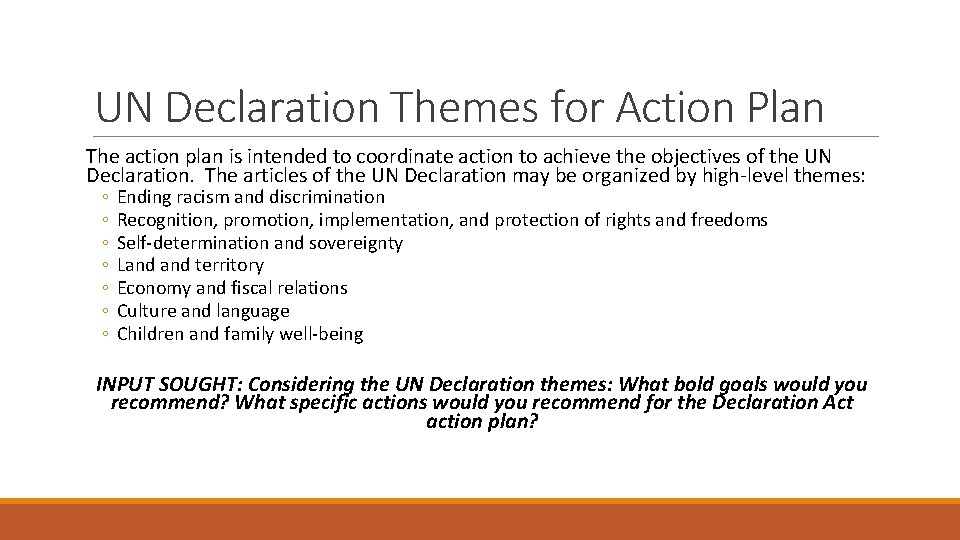
UN Declaration Themes for Action Plan The action plan is intended to coordinate action to achieve the objectives of the UN Declaration. The articles of the UN Declaration may be organized by high-level themes: ◦ ◦ ◦ ◦ Ending racism and discrimination Recognition, promotion, implementation, and protection of rights and freedoms Self-determination and sovereignty Land territory Economy and fiscal relations Culture and language Children and family well-being INPUT SOUGHT: Considering the UN Declaration themes: What bold goals would you recommend? What specific actions would you recommend for the Declaration Act action plan?
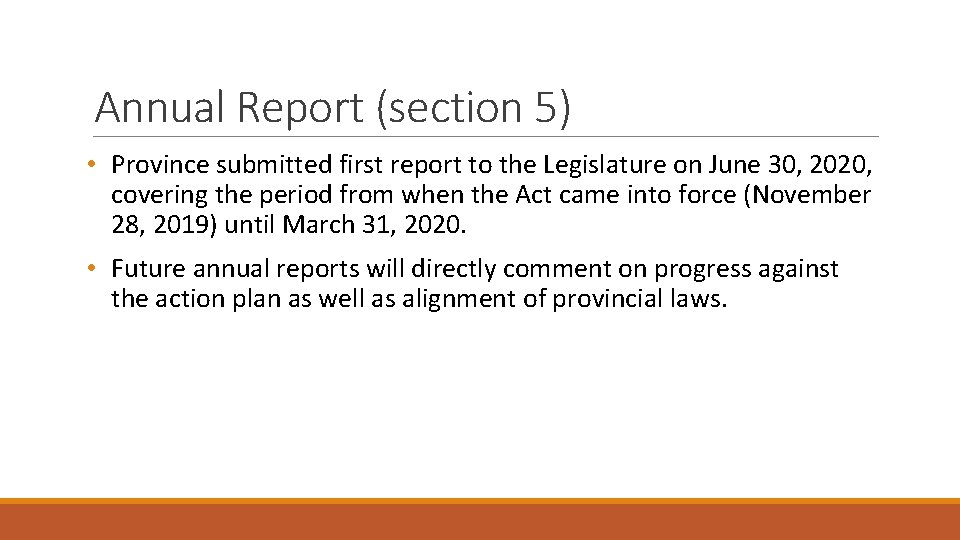
Annual Report (section 5) • Province submitted first report to the Legislature on June 30, 2020, covering the period from when the Act came into force (November 28, 2019) until March 31, 2020. • Future annual reports will directly comment on progress against the action plan as well as alignment of provincial laws.
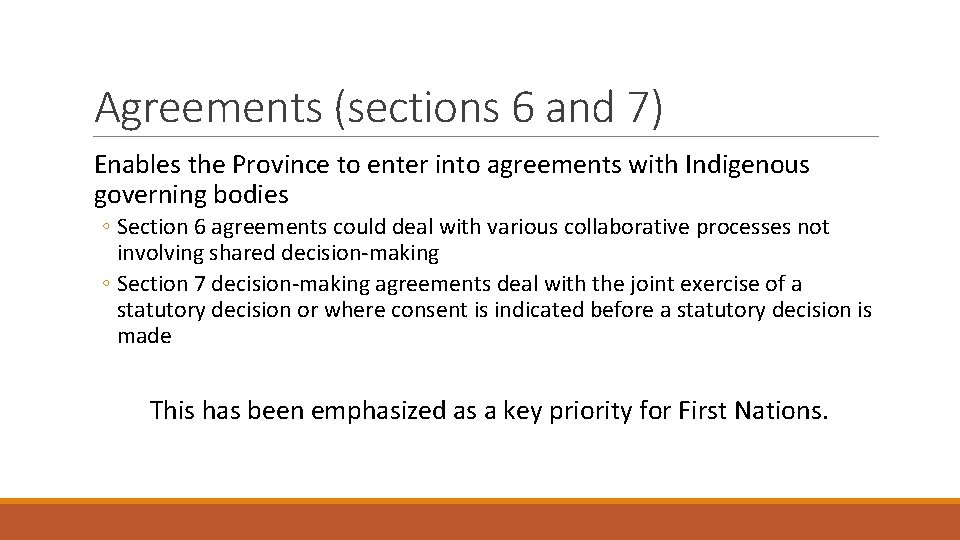
Agreements (sections 6 and 7) Enables the Province to enter into agreements with Indigenous governing bodies ◦ Section 6 agreements could deal with various collaborative processes not involving shared decision-making ◦ Section 7 decision-making agreements deal with the joint exercise of a statutory decision or where consent is indicated before a statutory decision is made This has been emphasized as a key priority for First Nations.
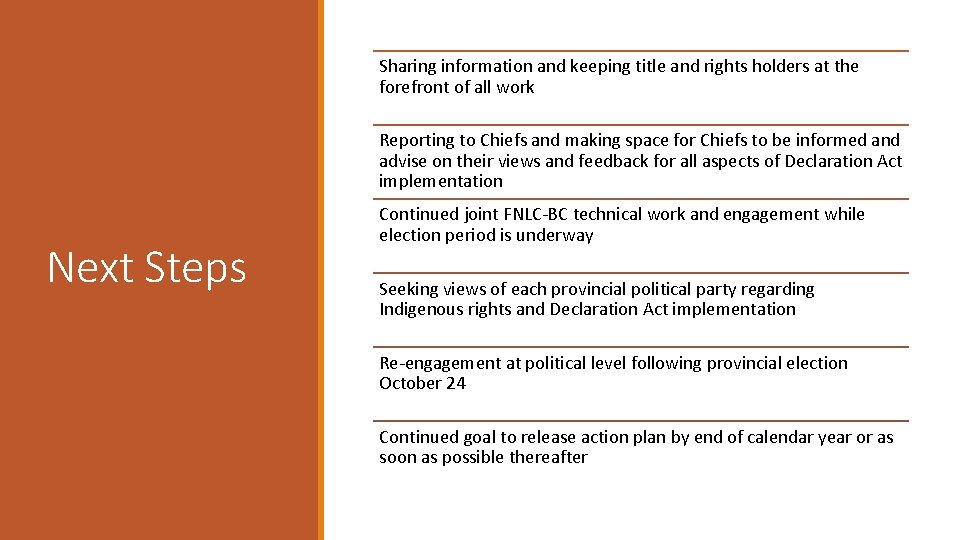
Sharing information and keeping title and rights holders at the forefront of all work Reporting to Chiefs and making space for Chiefs to be informed and advise on their views and feedback for all aspects of Declaration Act implementation Next Steps Continued joint FNLC-BC technical work and engagement while election period is underway Seeking views of each provincial political party regarding Indigenous rights and Declaration Act implementation Re-engagement at political level following provincial election October 24 Continued goal to release action plan by end of calendar year or as soon as possible thereafter
For further information Maureen Buchan, BCAFN Senior Policy Advisor- maureen. buchan@bcafn. ca Colin Braker, FNS Communications Director- cbraker@fns. ca Andrea Glickman, UBCIC Policy Director – andrea@ubcic. bc. ca