
Deck Joint Ltd Tool Box Talk GRP How
Deck Joint Ltd Tool Box Talk GRP – How to use it safely.
What is GRP? The most common engineered composite materials are glass reinforced plastics, usually known as GRP or Fibreglass. They are becoming increasingly popular because they are heavy duty, lightweight, non-corrosive, non-conductive, non-sparking, low maintenance, fast to install and easy to cut.
Why is it used? • In the past, temporary solutions such as scaffolding or plywood covers were a common way of dealing with voids, but these can be easily breached or fail, and still require costly and time consuming daily hole protection inspection by on-site personnel.
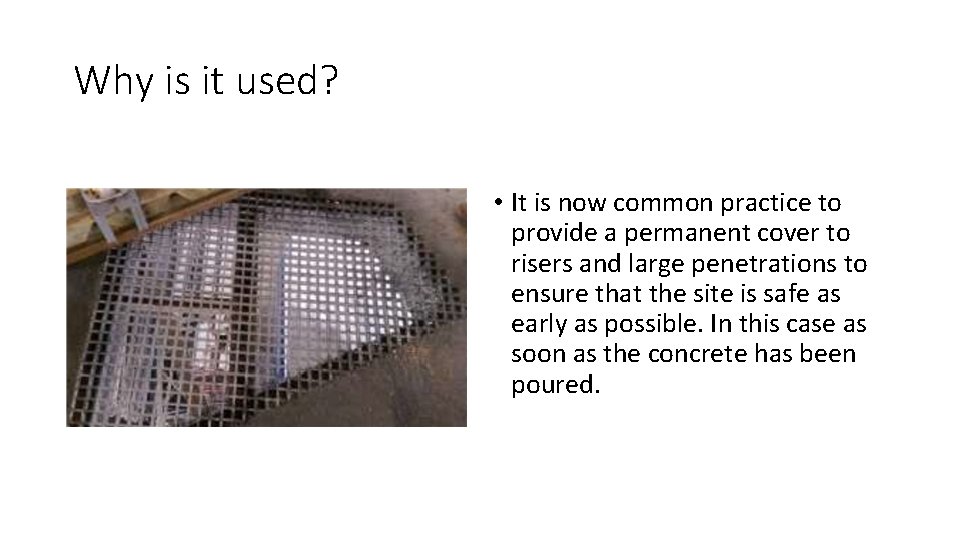
Why is it used? • It is now common practice to provide a permanent cover to risers and large penetrations to ensure that the site is safe as early as possible. In this case as soon as the concrete has been poured.

Cutting GRP • GRP is a plastic which is relatively easy to cut. This picture shows how it can be cut into complex patterns. • GRP creates a fine powder when cut which blunts blades and drill bits very quickly. We recommend the use of TCT or diamond coated blades and bits to reduce changing times, and extended useable life.
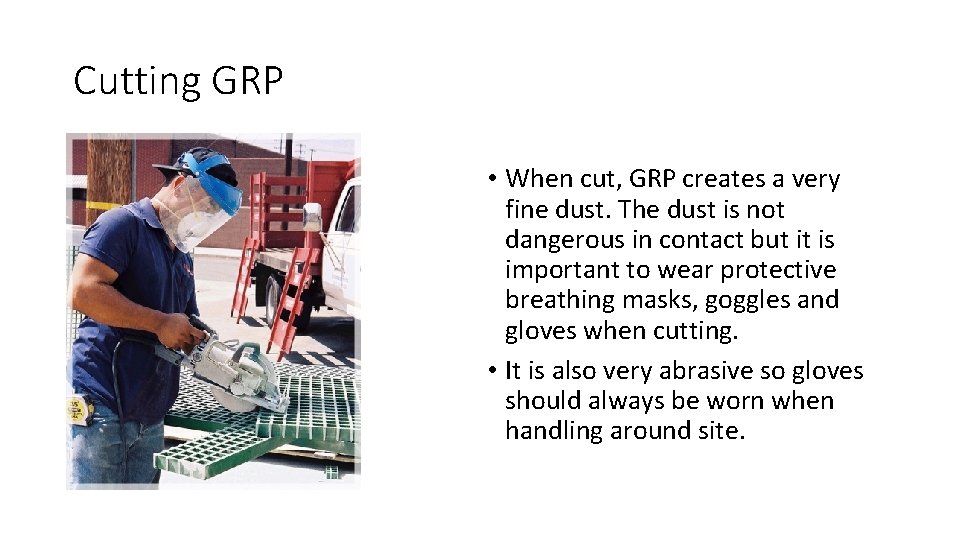
Cutting GRP • When cut, GRP creates a very fine dust. The dust is not dangerous in contact but it is important to wear protective breathing masks, goggles and gloves when cutting. • It is also very abrasive so gloves should always be worn when handling around site.

Cutting holes in GRP • The easiest way to cut GRP is with a circular saw. Reciprocol saws and jigsaws can be used, and may be better for small areas, however they will take longer and it may be more difficult to get TCT or diamond blades for them.
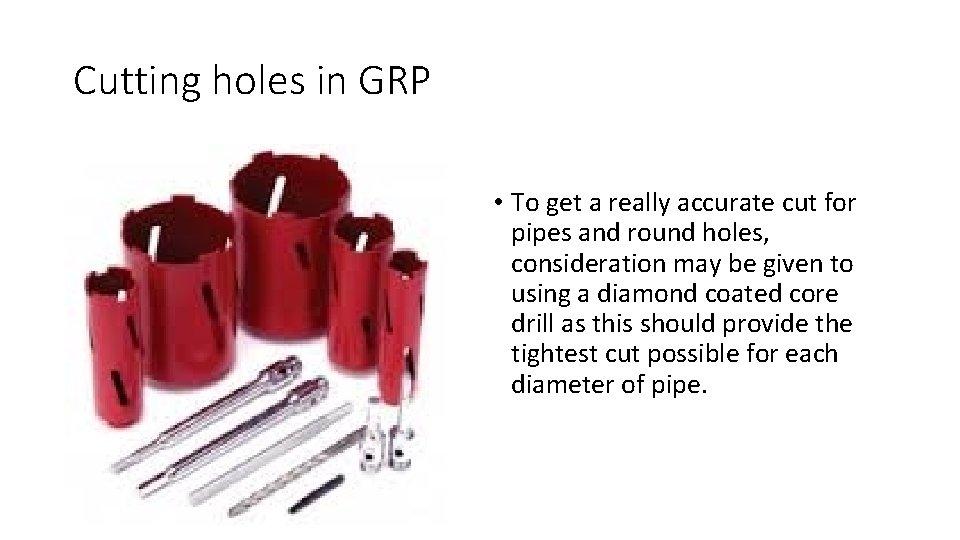
Cutting holes in GRP • To get a really accurate cut for pipes and round holes, consideration may be given to using a diamond coated core drill as this should provide the tightest cut possible for each diameter of pipe.
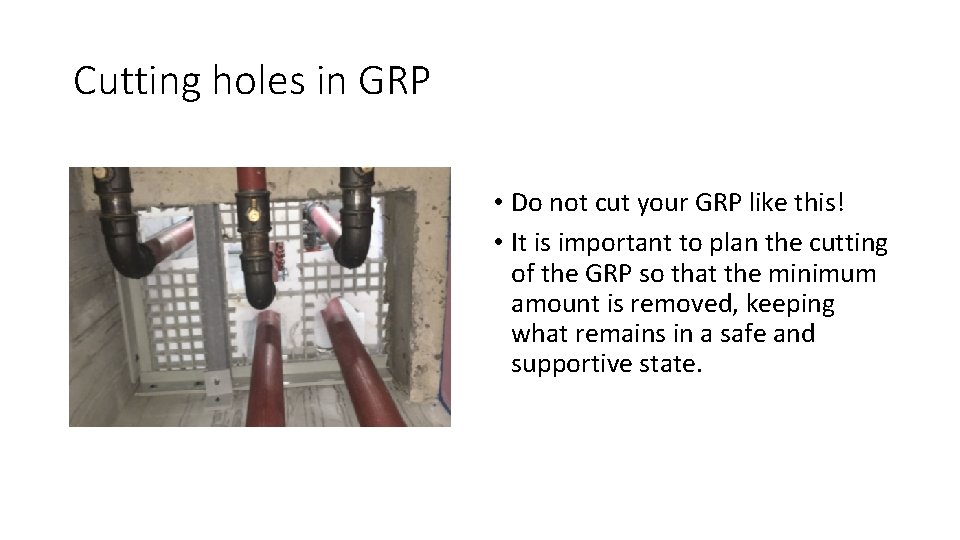
Cutting holes in GRP • Do not cut your GRP like this! • It is important to plan the cutting of the GRP so that the minimum amount is removed, keeping what remains in a safe and supportive state.
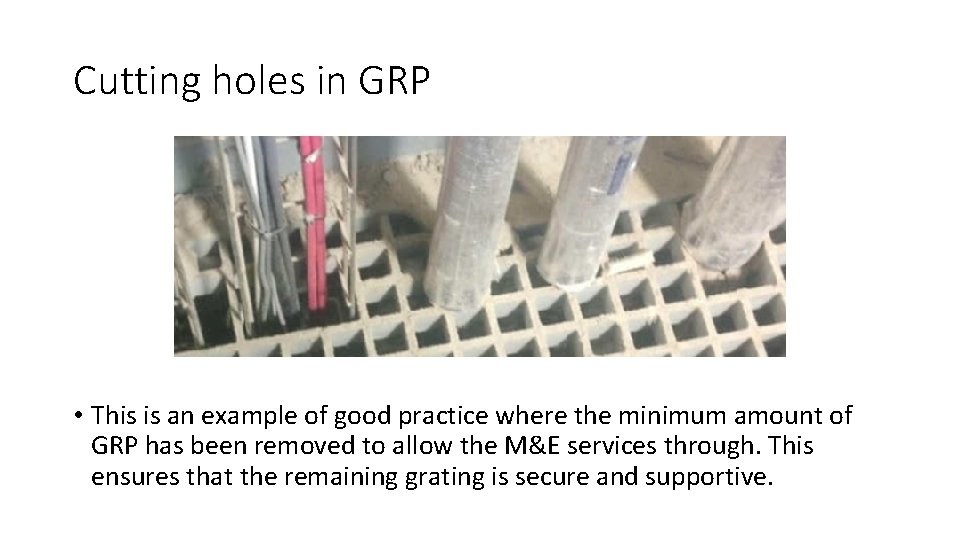
Cutting holes in GRP • This is an example of good practice where the minimum amount of GRP has been removed to allow the M&E services through. This ensures that the remaining grating is secure and supportive.

Cutting holes in GRP • It is important to consider some basic rules when cutting GRP • The minimum amount of grating left between two holes will ideally be greater than 3 bars or two squares @100 mm. If the residual amount of grating left after cutting the holes is less than this, it should be removed (shaded area).
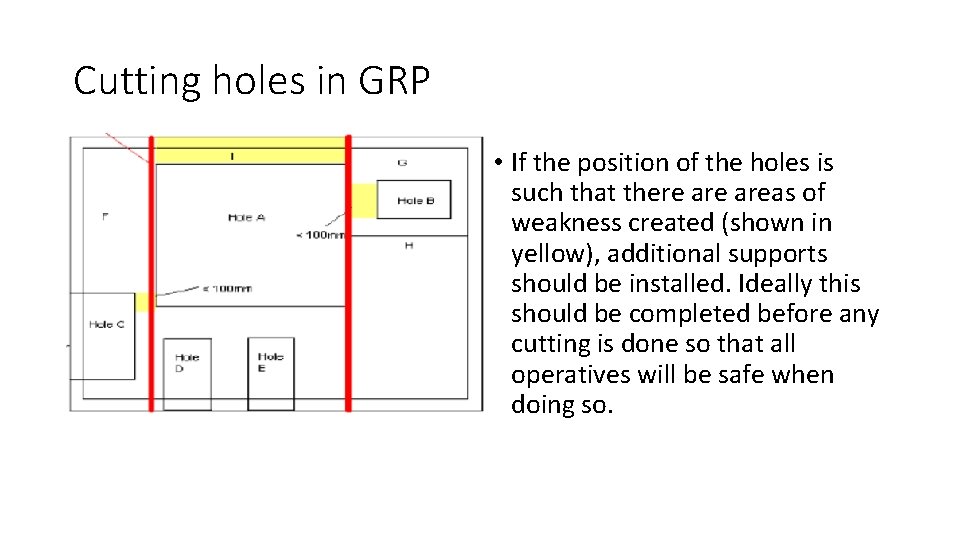
Cutting holes in GRP • If the position of the holes is such that there areas of weakness created (shown in yellow), additional supports should be installed. Ideally this should be completed before any cutting is done so that all operatives will be safe when doing so.
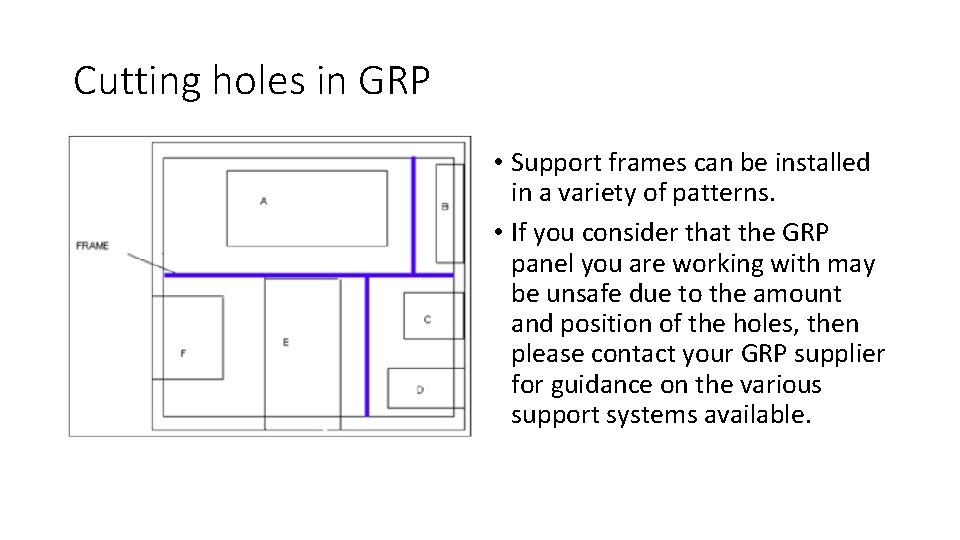
Cutting holes in GRP • Support frames can be installed in a variety of patterns. • If you consider that the GRP panel you are working with may be unsafe due to the amount and position of the holes, then please contact your GRP supplier for guidance on the various support systems available.
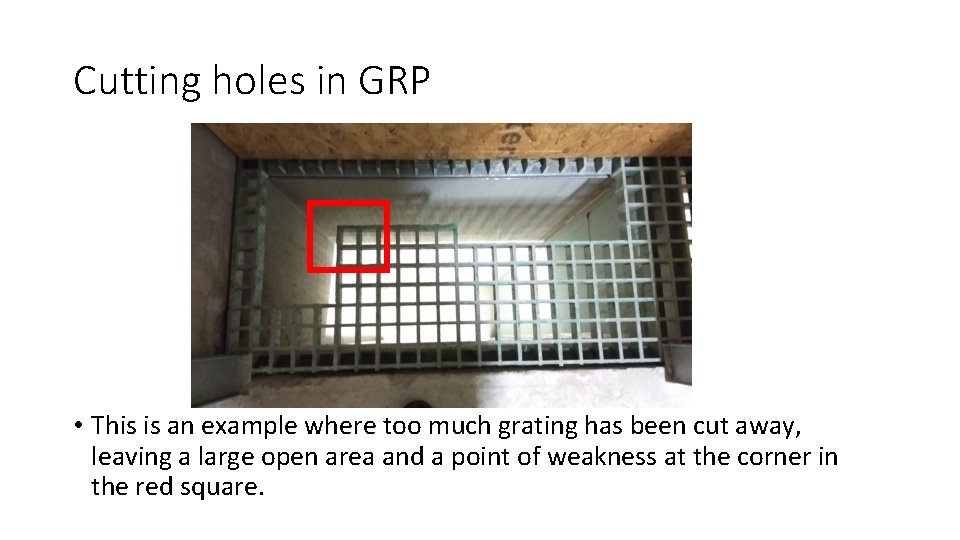
Cutting holes in GRP • This is an example where too much grating has been cut away, leaving a large open area and a point of weakness at the corner in the red square.
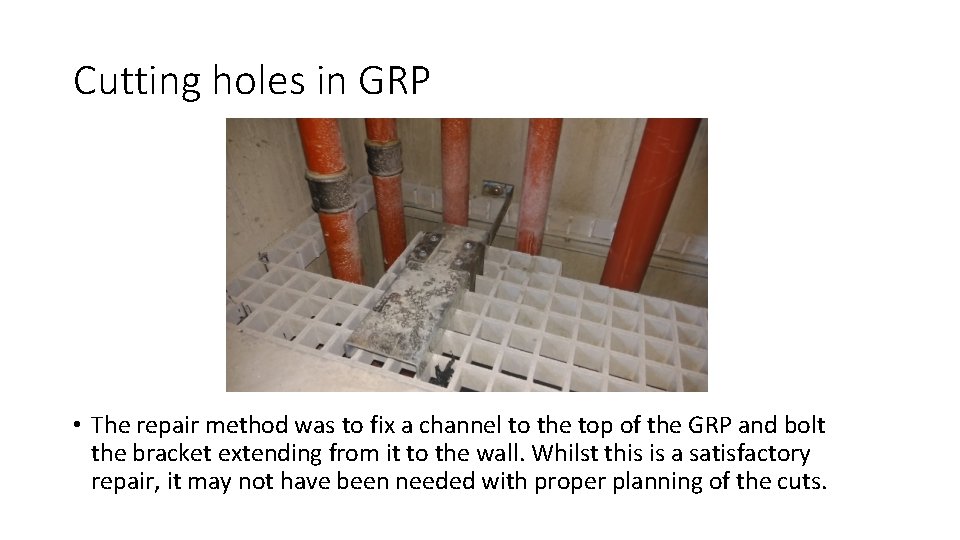
Cutting holes in GRP • The repair method was to fix a channel to the top of the GRP and bolt the bracket extending from it to the wall. Whilst this is a satisfactory repair, it may not have been needed with proper planning of the cuts.
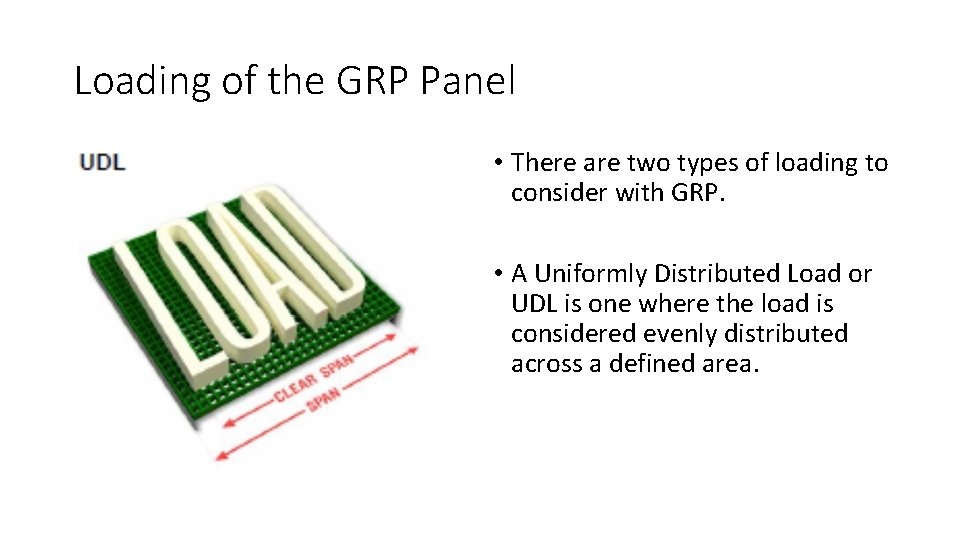
Loading of the GRP Panel • There are two types of loading to consider with GRP. • A Uniformly Distributed Load or UDL is one where the load is considered evenly distributed across a defined area.
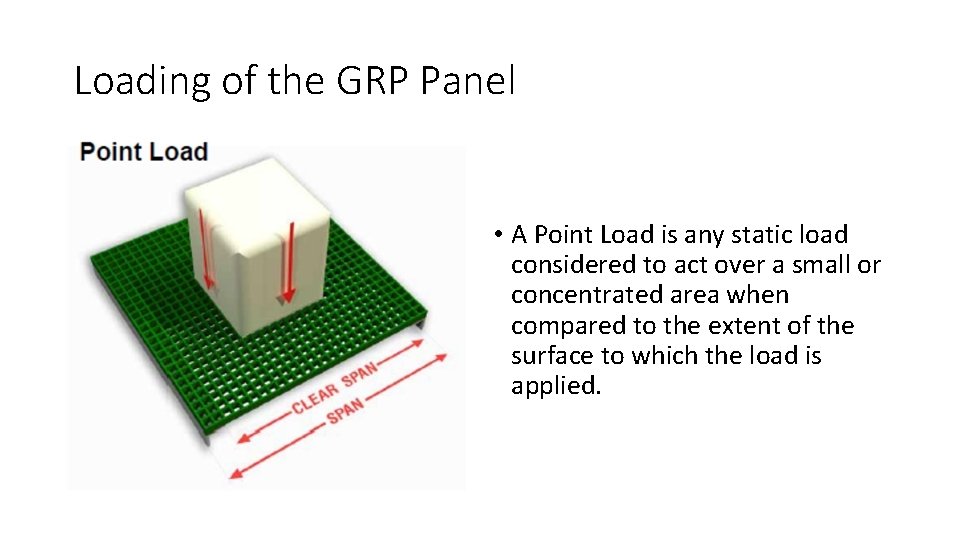
Loading of the GRP Panel • A Point Load is any static load considered to act over a small or concentrated area when compared to the extent of the surface to which the load is applied.
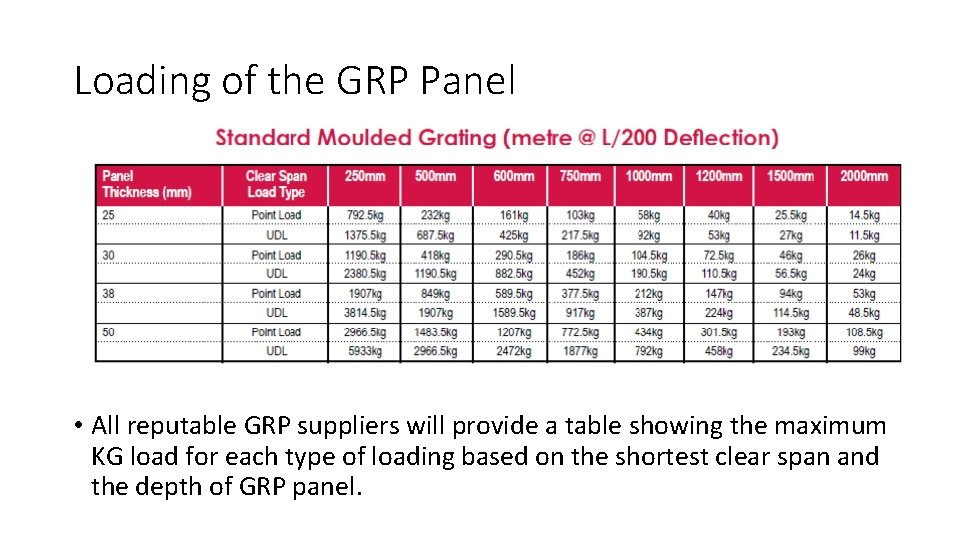
Loading of the GRP Panel • All reputable GRP suppliers will provide a table showing the maximum KG load for each type of loading based on the shortest clear span and the depth of GRP panel.
Loading of the GRP Panel • Rule of thumb for choosing the GRP depth to use for a 3 k. N UDL: • Clear span up to 600 mm – 25 mm GRP • Clear span 600 mm to 800 mm – 30 mm GRP • Clear span 800 mm to 1100 mm – 38 mm GRP • For clear spans exceeding 1100 mm multiple panels will be required along with supporting beams as previously shown. • This calculation is for standard grating. Additional options are available for heavy duty or specialist applications.
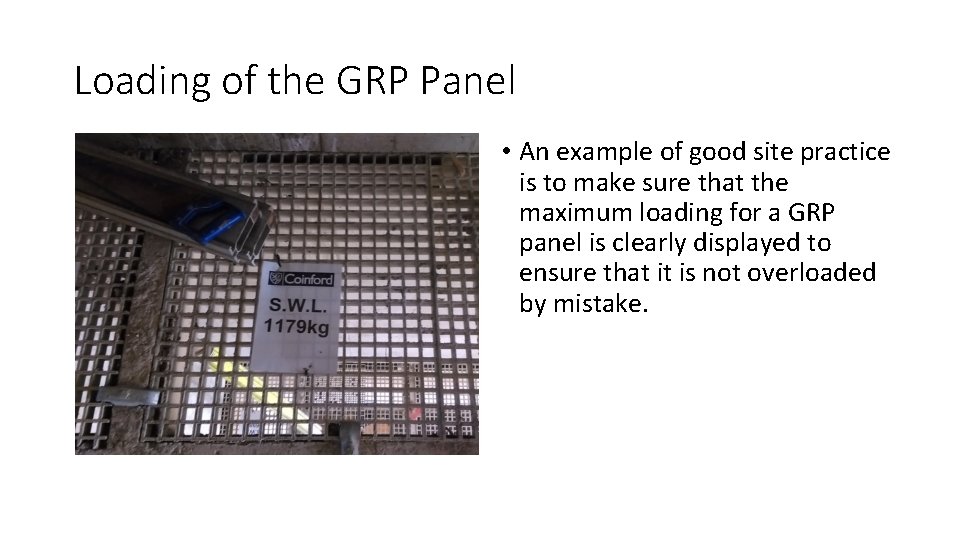
Loading of the GRP Panel • An example of good site practice is to make sure that the maximum loading for a GRP panel is clearly displayed to ensure that it is not overloaded by mistake.
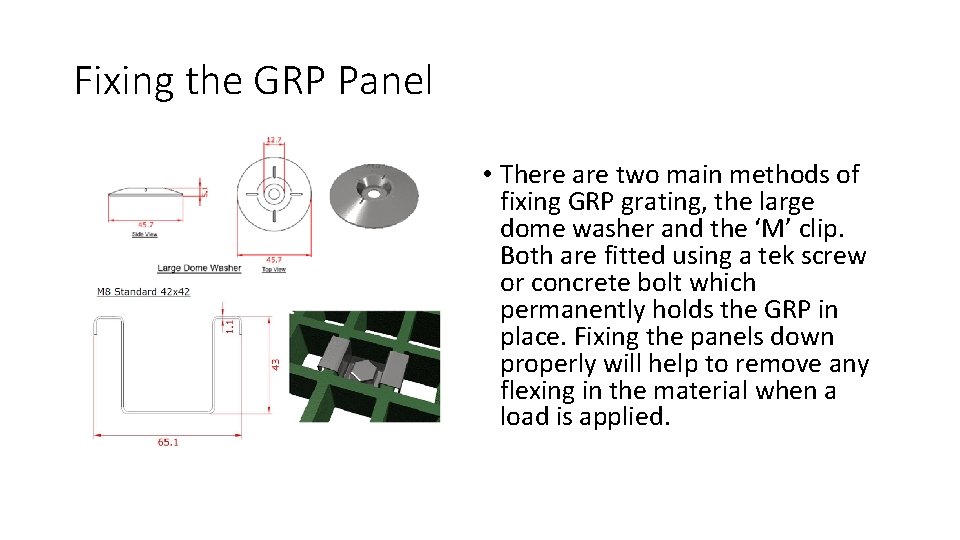
Fixing the GRP Panel • There are two main methods of fixing GRP grating, the large dome washer and the ‘M’ clip. Both are fitted using a tek screw or concrete bolt which permanently holds the GRP in place. Fixing the panels down properly will help to remove any flexing in the material when a load is applied.
- Slides: 21