
Decision Trees The No Free Lunch Theorem Is



![Calculating Information Gain = Impurity (parent) – [Impurity (children)] Entire population (30 instances) 17](https://slidetodoc.com/presentation_image_h2/8aa2680765fe55963c86b9ea0dad9705/image-20.jpg "Calculating Information Gain = Impurity (parent) – [Impurity (children)] Entire population (30 instances) 17")




- Slides: 34
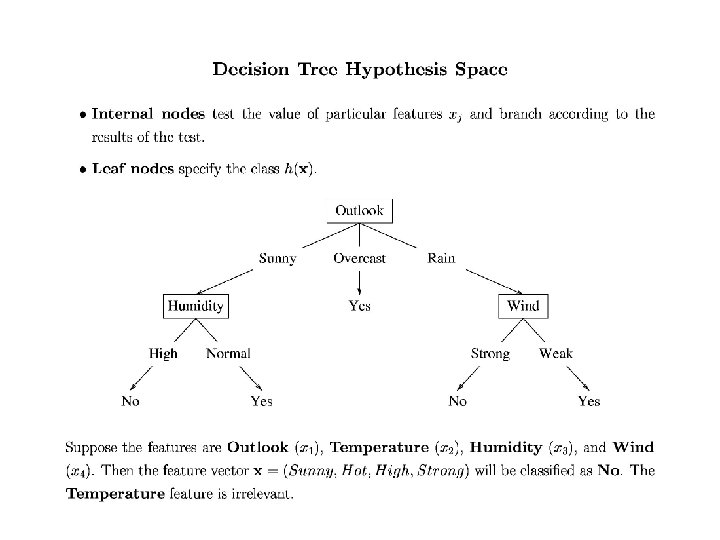
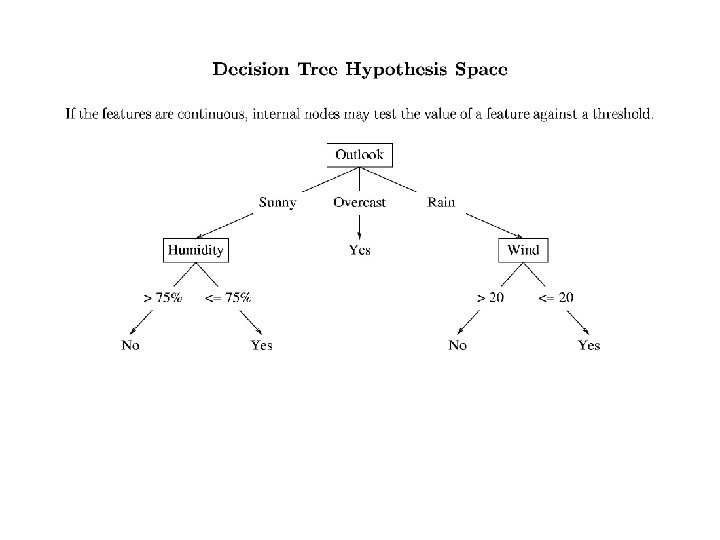
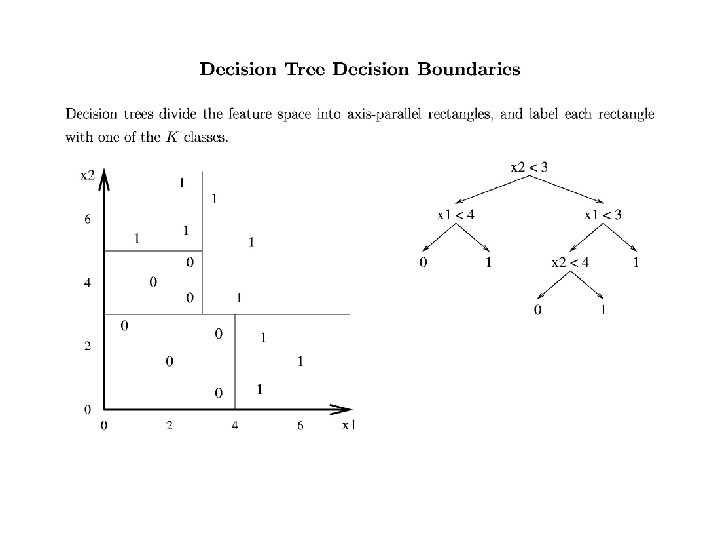
Decision Trees
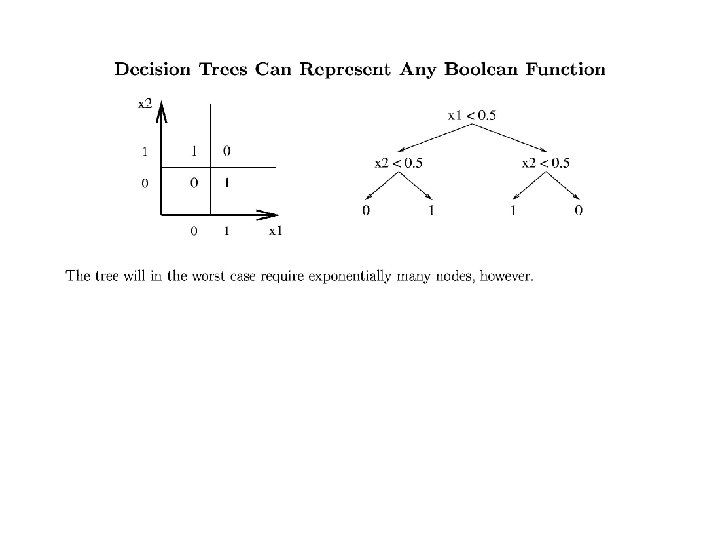
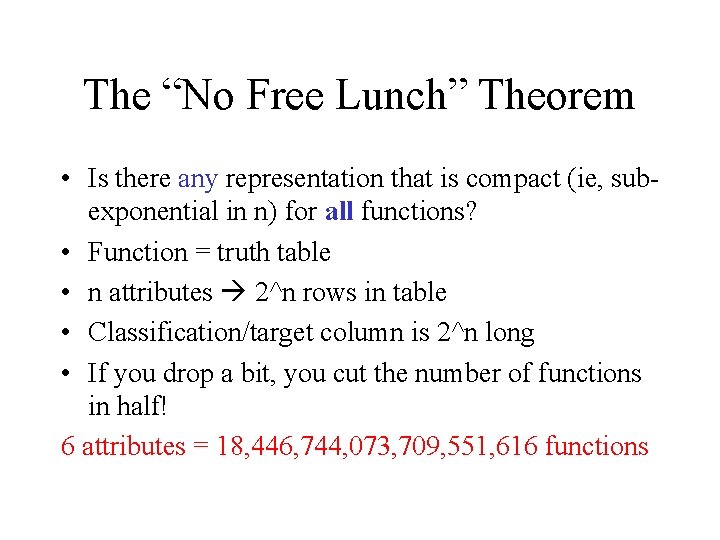
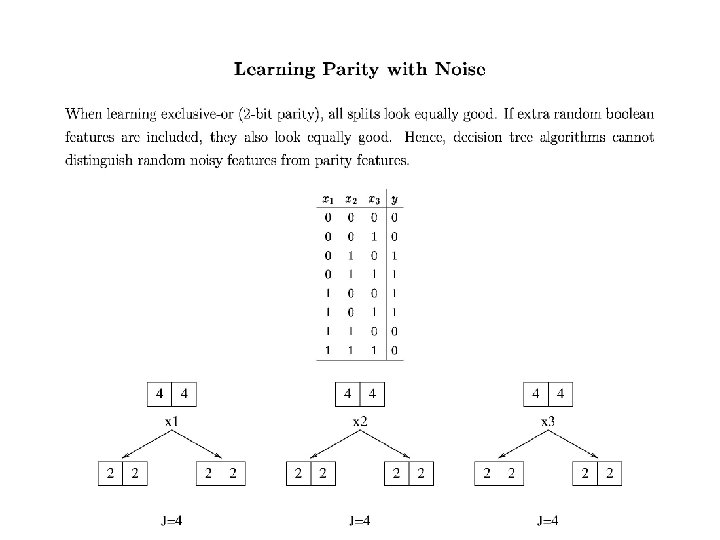
The “No Free Lunch” Theorem • Is there any representation that is compact (ie, subexponential in n) for all functions? • Function = truth table • n attributes 2^n rows in table • Classification/target column is 2^n long • If you drop a bit, you cut the number of functions in half! 6 attributes = 18, 446, 744, 073, 709, 551, 616 functions
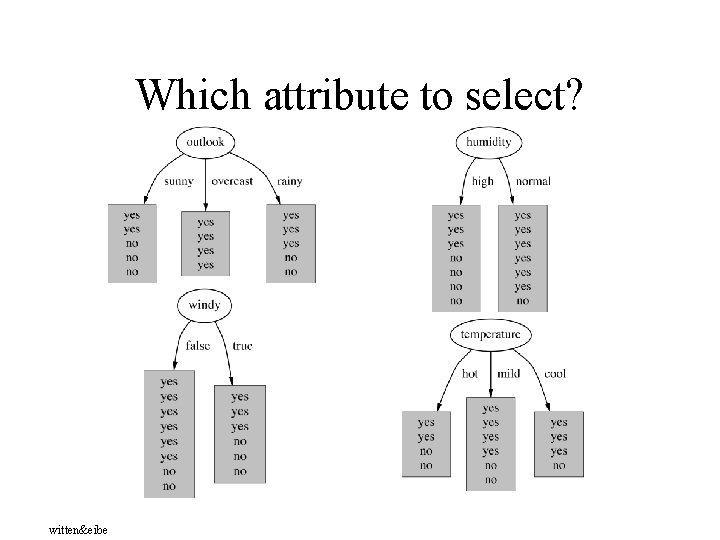
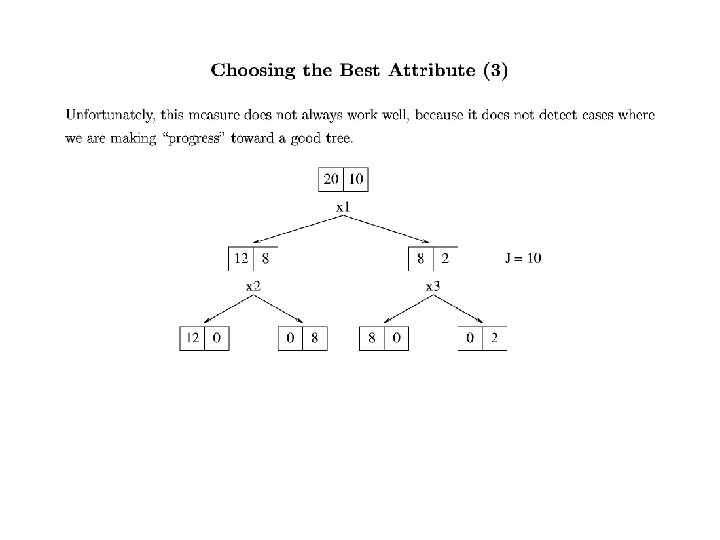
Which attribute to select? witten&eibe
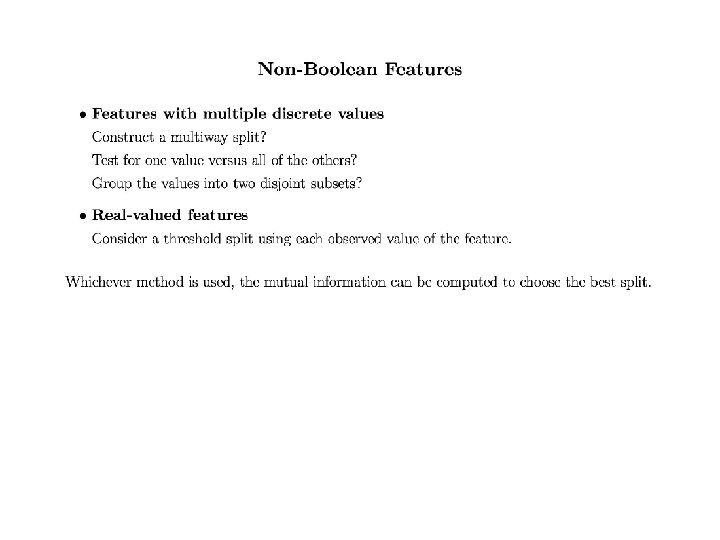
A criterion for attribute selection • Which is the best attribute? – The one which will result in the smallest tree – Heuristic: choose the attribute that produces the “purest” nodes • Need a good measure of purity! – Maximal when? – Minimal when?
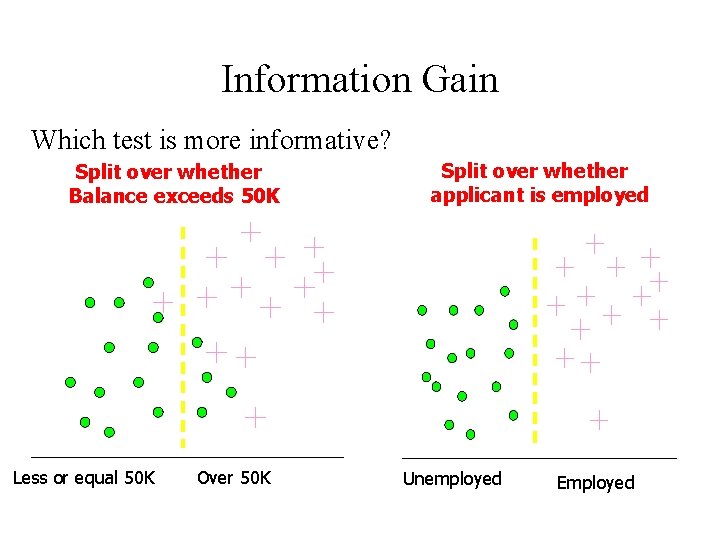
Information Gain Which test is more informative? Split over whether Balance exceeds 50 K Less or equal 50 K Over 50 K Split over whether applicant is employed Unemployed Employed
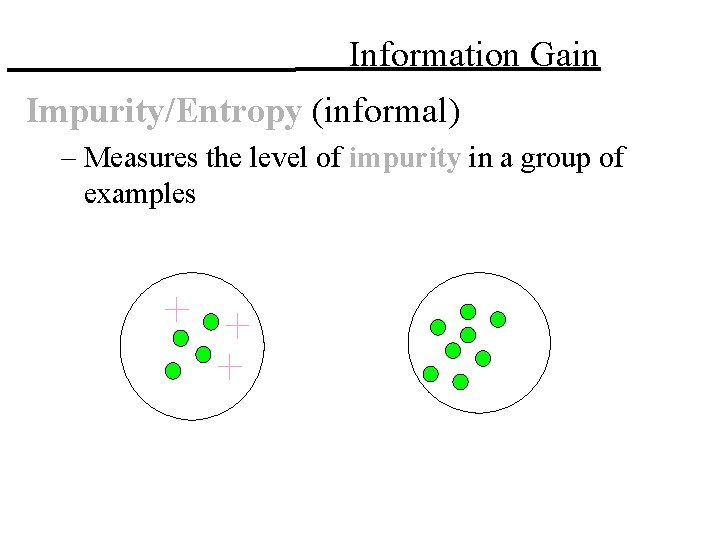
Information Gain Impurity/Entropy (informal) – Measures the level of impurity in a group of examples
Impurity Very impure group Less impure Minimum impurity
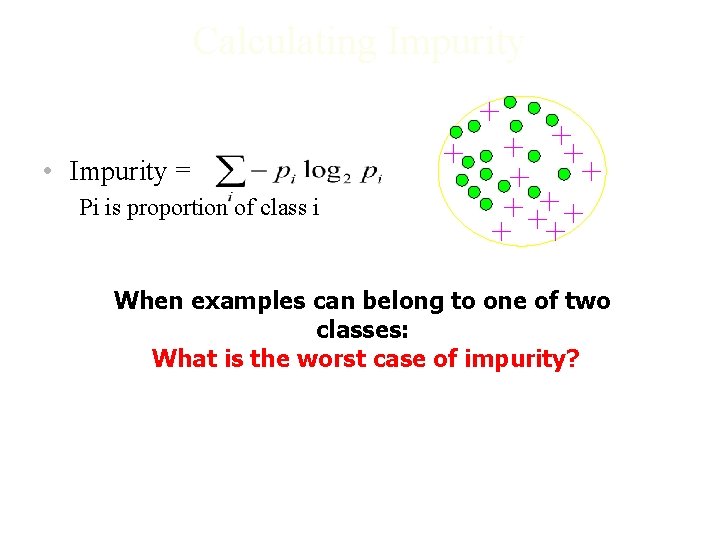
Calculating Impurity • Impurity = Pi is proportion of class i When examples can belong to one of two classes: What is the worst case of impurity?
2 -class Cases: • What is the impurity of a group in which all examples belong to the same class? Minimum impurity – Impurity= - 1 log 21 = 0 • What is the impurity of a group with 50% in either class? – Impurity= -0. 5 log 20. 5 – 0. 5 log 20. 5 =1 Maximum impurity
Calculating Information Gain = Impurity (parent) – [Impurity (children)] Entire population (30 instances) 17 instances 13 instances (Weighted) Average Impurity of Children = Information Gain= 0. 996 - 0. 615 = 0. 38
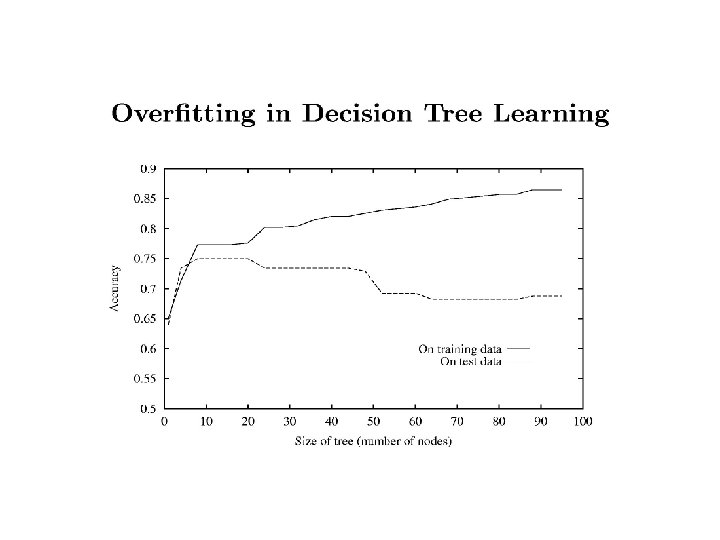
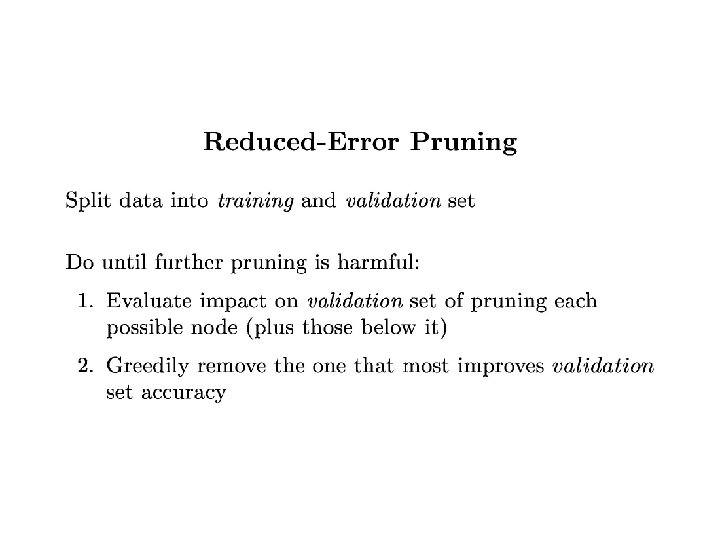
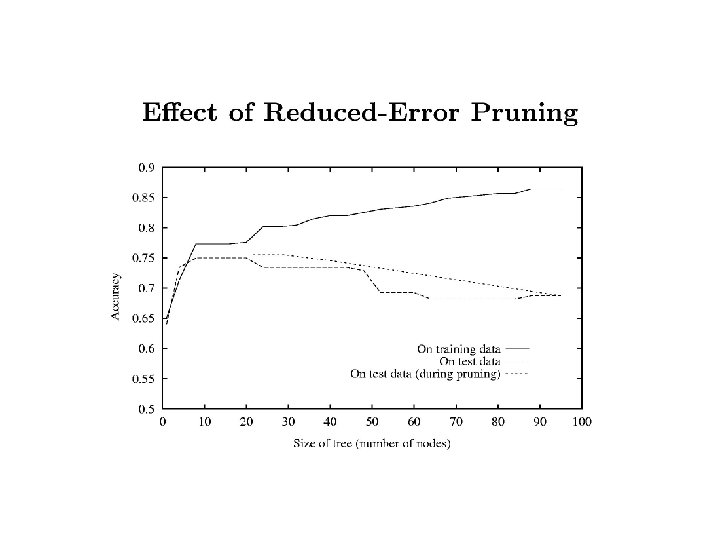
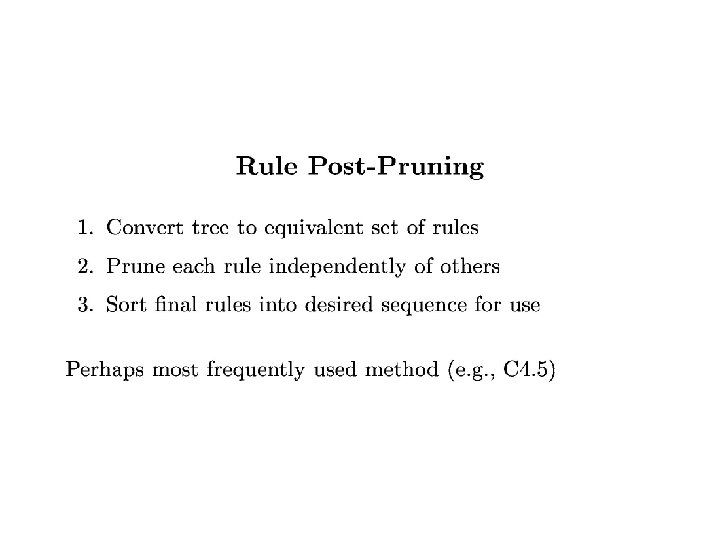
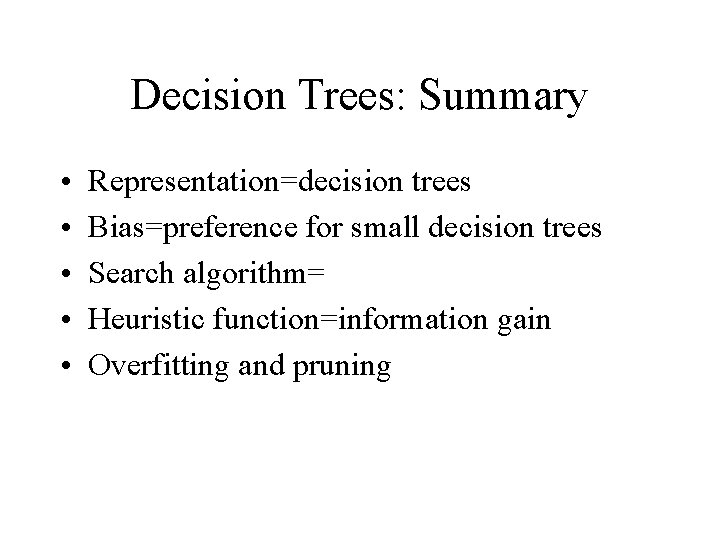
Decision Trees: Summary • • • Representation=decision trees Bias=preference for small decision trees Search algorithm= Heuristic function=information gain Overfitting and pruning