
DECISION MAKING EVERY DAY CHOICES AND THEIR CONSEQUENCES
- Slides: 23
DECISION MAKING EVERY DAY CHOICES AND THEIR CONSEQUENCES
WARM UP 1. What decision have you made recently? 2. Did you make this decision on your own or was it influenced by others?
WARM UP • What are decisions? • What is one decision you have made today?
DECIDING THINGS ON YOUR OWN • As you get older, you make more decisions on your own. • DECISION – the act of making up one’s mind • To make the best choices, you need to be aware of the things that may influence your decisions. You want to make decisions without being influenced by others however, many decisions are influenced by other people.
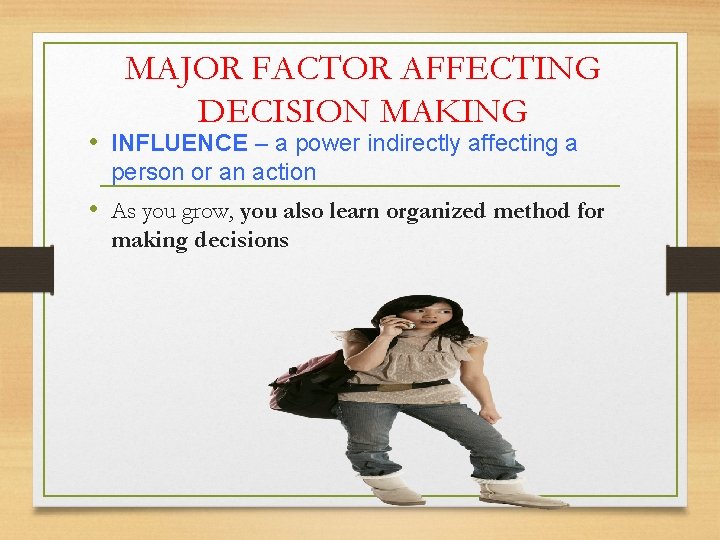
MAJOR FACTOR AFFECTING DECISION MAKING • INFLUENCE – a power indirectly affecting a person or an action • As you grow, you also learn organized method for making decisions
Simple way for making better Decisions Choices are made every day and often based without realizing the difference. The decisions we make each day can require little thought or much time and conscious effort • Simple choices– what to eat for breakfast • Everyday decisions– to do homework or not • Major decisions– What college will you go to in 6 years
3 C’s of Effective Decision Making • Clarify – what is the decision you need to make • Consider – possible alternatives • Choose – the best alternative and take necessary action.
Exit Ticket • Putting the 3 C’s into practice What are the 3 C’s? Explain how empowering yourself with the 3 C’s will help you make informed decisions.
VIDEO Berenstain Bears – Double Dare https: //www. youtube. com/watch? v=GJh. Ob 5 Ro 0 O 4 Babar - Peer Pressure https: //www. youtube. com/watch? v=uo_ys-w. FCAs
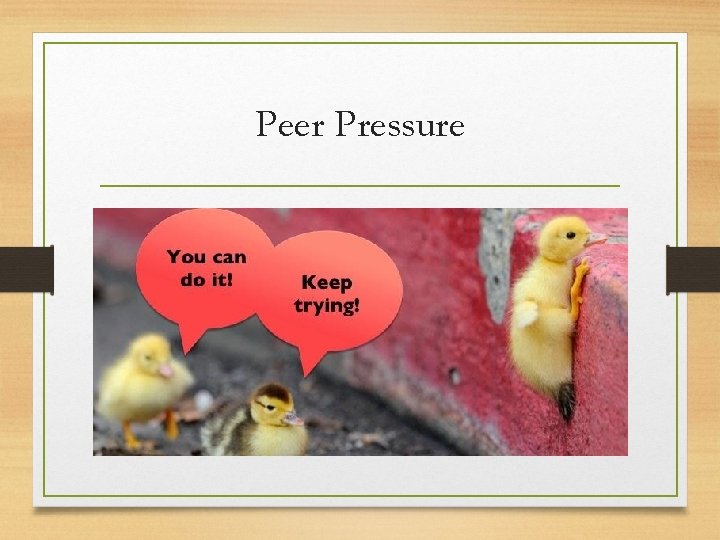
Peer Pressure
3 C’s of Effective Decision Making • Clarify – what is the decision you need to make • Consider – possible alternatives • Choose – the best alternative and take necessary action.
Peer Pressure 1. What do you think peer pressure is? 2. What decision have you made recently that was influenced by your peers? 3. Do your peers pressure to do things you would not normally do?
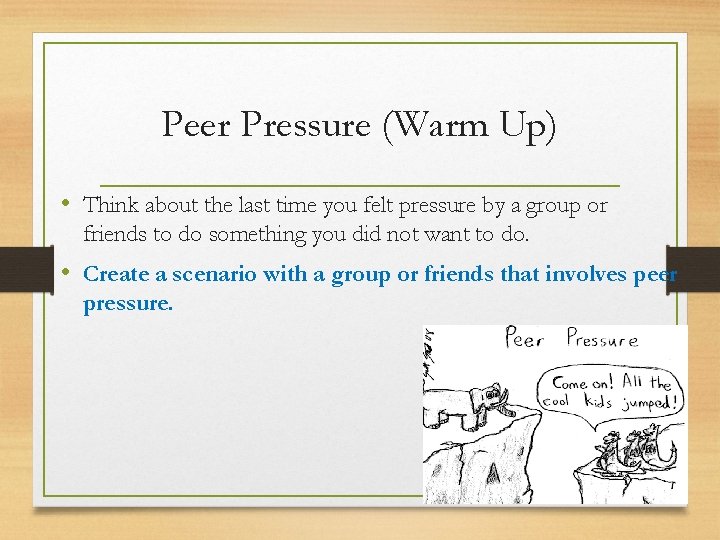
Peer Pressure (Warm Up) • Think about the last time you felt pressure by a group or friends to do something you did not want to do. • Create a scenario with a group or friends that involves peer pressure.
PEER PRESSURE • Trying to force someone to do something by using overpowering influence or persuasion • Pressures from the group to which we belong often influences our decisions • We are often influenced by group members because we want to fit in and be accepted and not be seen
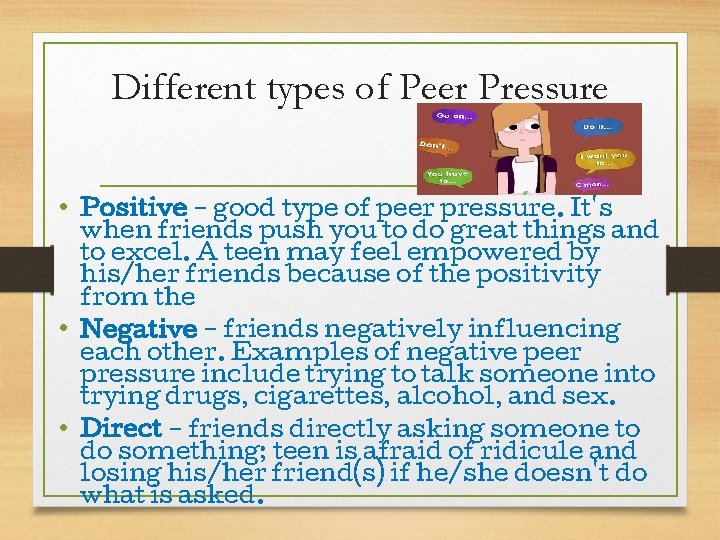
Different types of Peer Pressure • Positive - good type of peer pressure. It's when friends push you to do great things and to excel. A teen may feel empowered by his/her friends because of the positivity from the • Negative - friends negatively influencing each other. Examples of negative peer pressure include trying to talk someone into trying drugs, cigarettes, alcohol, and sex. • Direct - friends directly asking someone to do something; teen is afraid of ridicule and losing his/her friend(s) if he/she doesn't do what is asked.
Different Types of Peer Pressure Cont’d • Indirect - what one sees and hears other teenagers doing; teen wants to fit in, unspoken pressure that teen feels • Internal – pressure on yourself to do what you think peers are doing • External - pressure or encouraging comes from someone or something else.
Video • https: //www. youtube. com/watch? v=-Od 6 ENj. JJ-U
PERSUASIVE TACTIC • A strategy by which someone convinces another to do, think, or say something • Tactics to persuade someone include flattery, appeal to authority, promise of a future reward, persistence or use of guilt • If you are being persuaded to do something, we need to make sure it aligns with what we want.
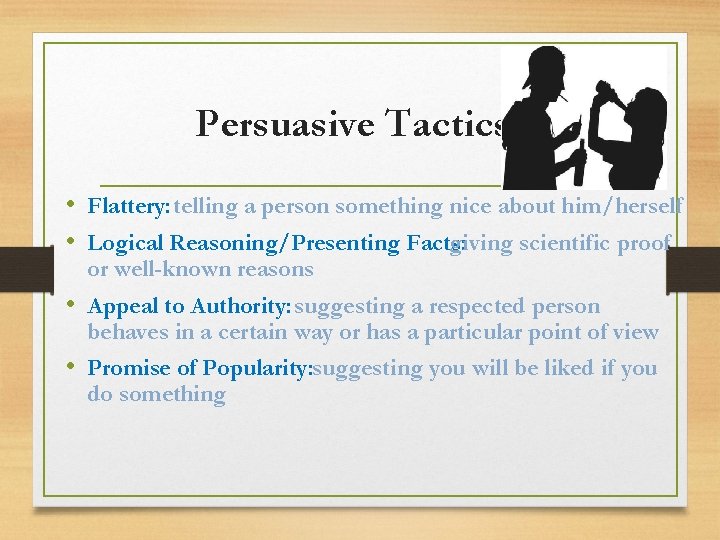
Persuasive Tactics • Flattery: telling a person something nice about him/herself • Logical Reasoning/Presenting Facts: giving scientific proof or well-known reasons • Appeal to Authority: suggesting a respected person behaves in a certain way or has a particular point of view • Promise of Popularity: suggesting you will be liked if you do something
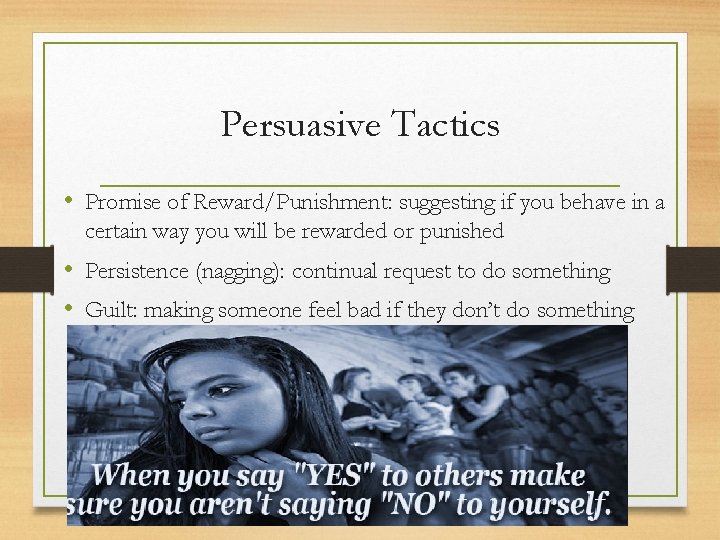
Persuasive Tactics • Promise of Reward/Punishment: suggesting if you behave in a certain way you will be rewarded or punished • Persistence (nagging): continual request to do something • Guilt: making someone feel bad if they don’t do something
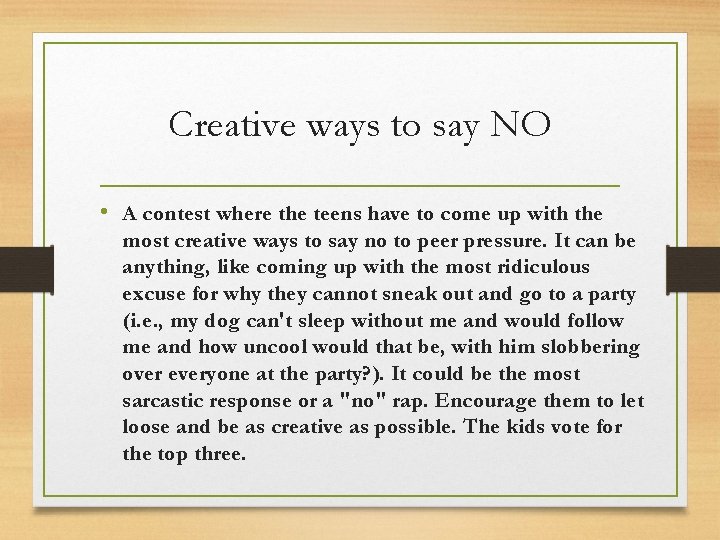
Creative ways to say NO • A contest where the teens have to come up with the most creative ways to say no to peer pressure. It can be anything, like coming up with the most ridiculous excuse for why they cannot sneak out and go to a party (i. e. , my dog can't sleep without me and would follow me and how uncool would that be, with him slobbering over everyone at the party? ). It could be the most sarcastic response or a "no" rap. Encourage them to let loose and be as creative as possible. The kids vote for the top three.
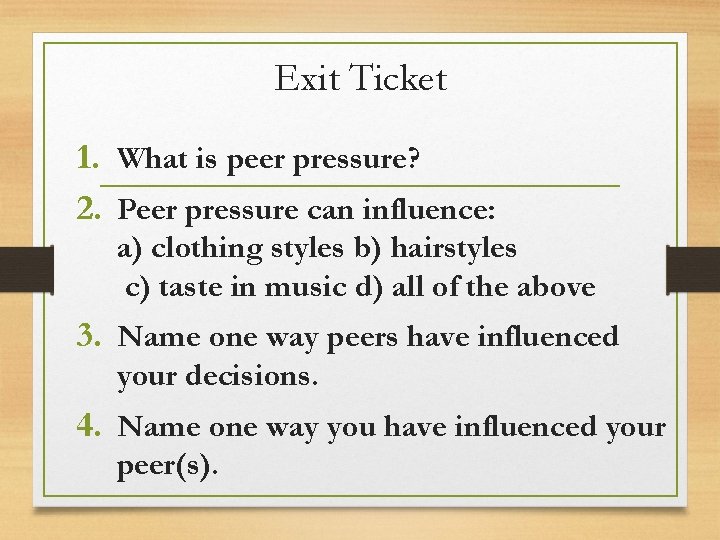
Exit Ticket 1. What is peer pressure? 2. Peer pressure can influence: a) clothing styles b) hairstyles c) taste in music d) all of the above 3. Name one way peers have influenced your decisions. 4. Name one way you have influenced your peer(s).