
Decimals 1 Write these numbers in order of
Decimals 1 Write these numbers in order of size, starting with the smallest 12. 6, 12. 06, 13. 67, 12. 628
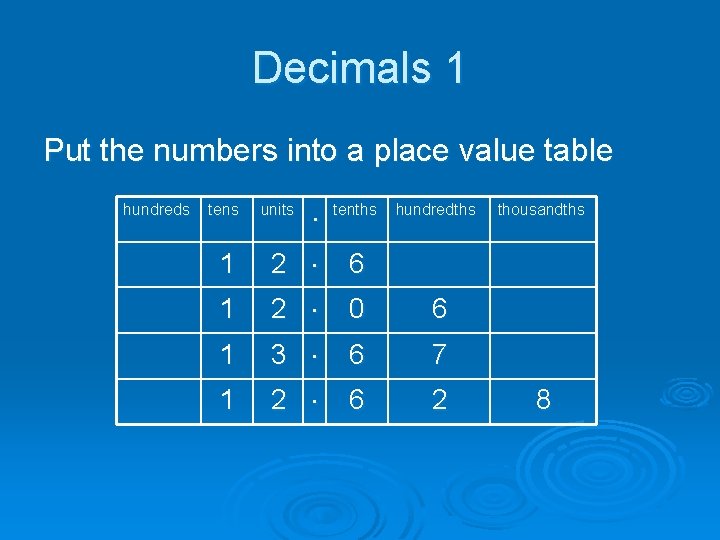
Decimals 1 Put the numbers into a place value table hundreds tens units 1 2 1 3 1 2 · · · tenths hundredths thousandths 6 0 6 6 7 6 2 8
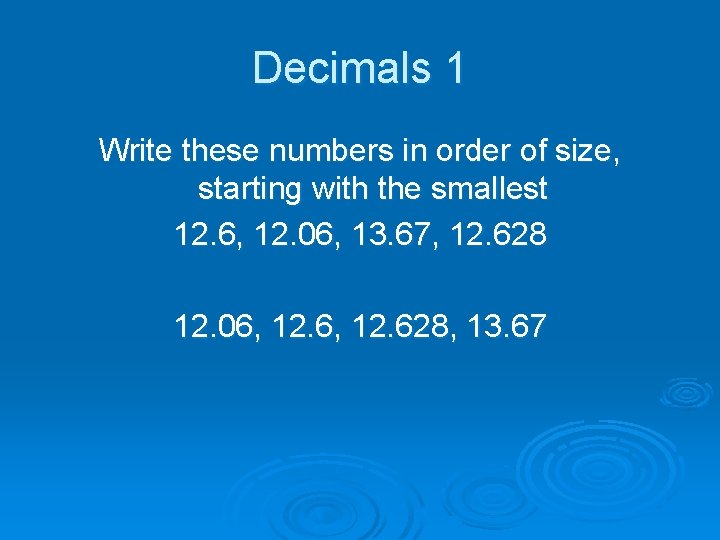
Decimals 1 Write these numbers in order of size, starting with the smallest 12. 6, 12. 06, 13. 67, 12. 628 12. 06, 12. 628, 13. 67
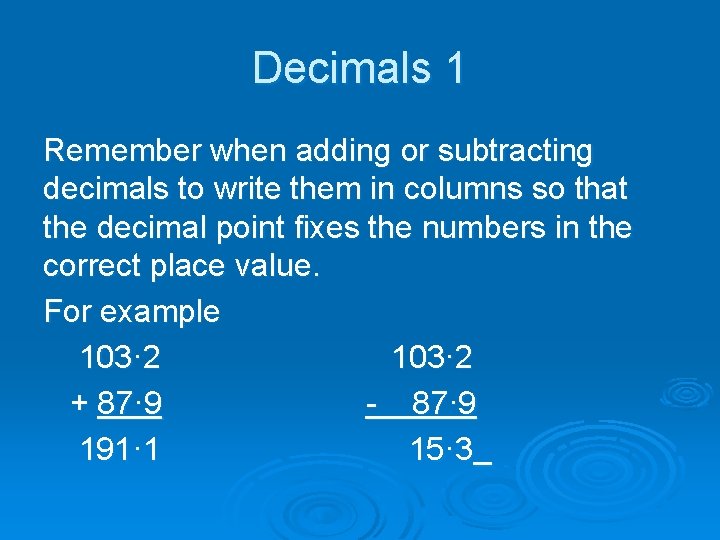
Decimals 1 Remember when adding or subtracting decimals to write them in columns so that the decimal point fixes the numbers in the correct place value. For example 103· 2 + 87· 9 - 87· 9 191· 1 15· 3
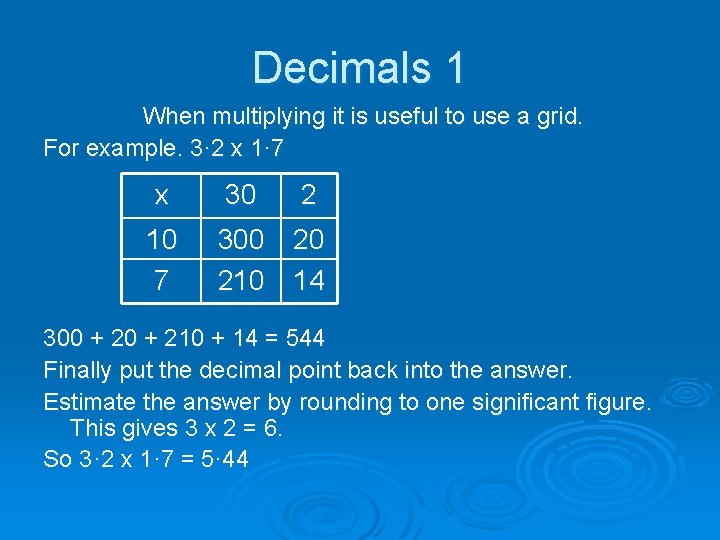
Decimals 1 When multiplying it is useful to use a grid. For example. 3· 2 x 1· 7 x 10 7 30 2 300 20 210 14 300 + 210 + 14 = 544 Finally put the decimal point back into the answer. Estimate the answer by rounding to one significant figure. This gives 3 x 2 = 6. So 3· 2 x 1· 7 = 5· 44
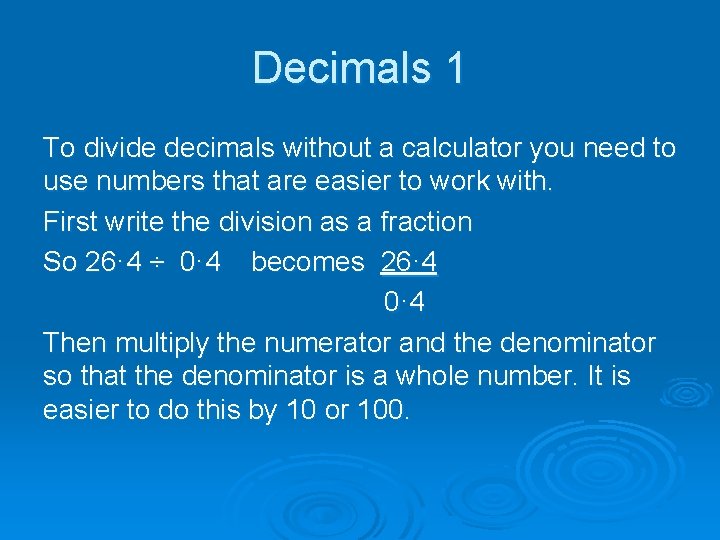
Decimals 1 To divide decimals without a calculator you need to use numbers that are easier to work with. First write the division as a fraction So 26· 4 ÷ 0· 4 becomes 26· 4 0· 4 Then multiply the numerator and the denominator so that the denominator is a whole number. It is easier to do this by 10 or 100.
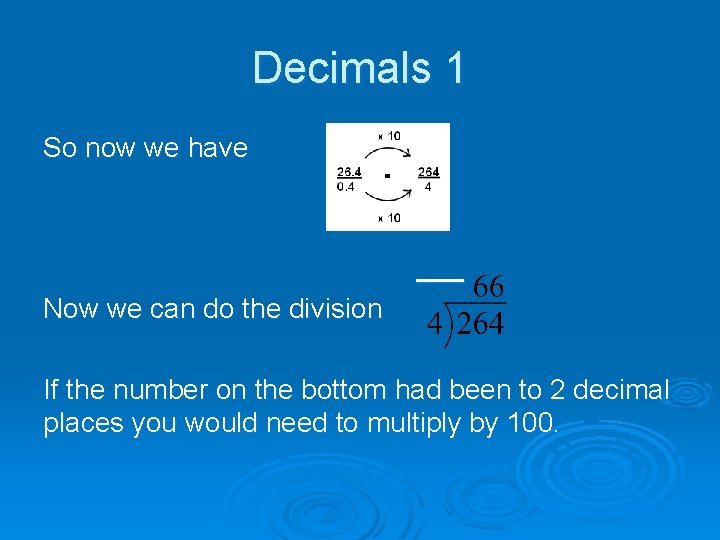
Decimals 1 So now we have Now we can do the division If the number on the bottom had been to 2 decimal places you would need to multiply by 100.
- Slides: 7