
DEBT FOR CLIMATE 3 party funding mechanism for
DEBT FOR CLIMATE 3 -party funding mechanism for debt relief and climate action support in developing countries Andrey Chicherin Green Climate Fund June 2021
Debt For Climate DEBT FOR CLIMATE • Developing countries needs and required financial support to address climate vulnerabilities by far exceed available financial commitments of developed countries • Mitigation and adaptation finance could play better role in catalyzing additional funding and involving developing countries in real support of GCF climate projects • Economic consequences of COVID-19 pandemic create additional challenges to continue ambitious climate-related funding in traditional way Suggested 3 -party funding mechanism could facilitate effective continuation of funding for climate projects and provide debt relief support for vulnerable countries
Debt For Climate GCF OVERVIEW • Green Climate Fund ( «GCF» ) was established in 2010 as financing mechanism of United Framework Convention on Climate Change (UNFCCC) to finance climate mitigation and adaptation projects in developing countries • Through initial resource mobilization and 2019 replenishment, developed countries committed over 20 billion US dollars to support climate projects across the world • By the end of 2020 GCF approved 159 projects with total committed funding 7. 3 bln US dollars
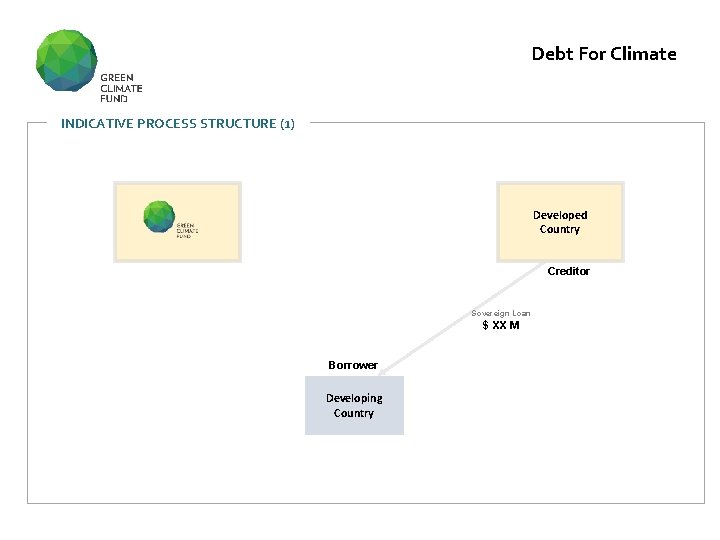
Debt For Climate INDICATIVE PROCESS STRUCTURE (1) Developed Country Creditor Sovereign Loan $ XX M Borrower Developing Country
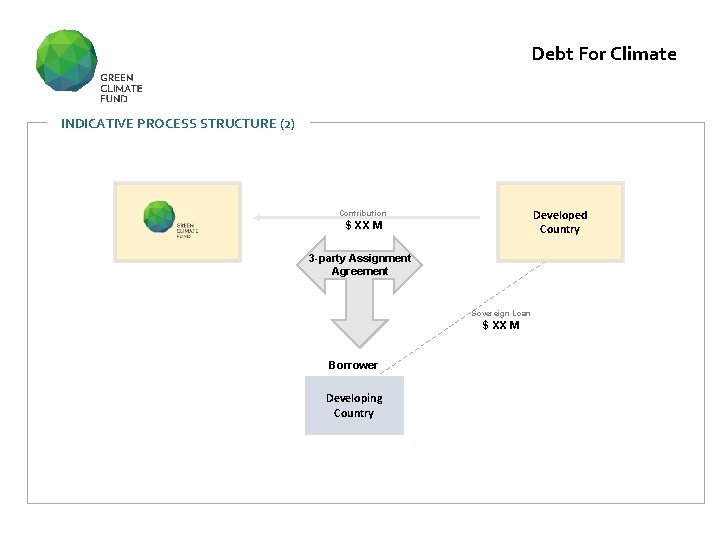
Debt For Climate INDICATIVE PROCESS STRUCTURE (2) Developed Country Contribution $ XX M 3 -party Assignment Agreement Sovereign Loan $ XX M Borrower Developing Country
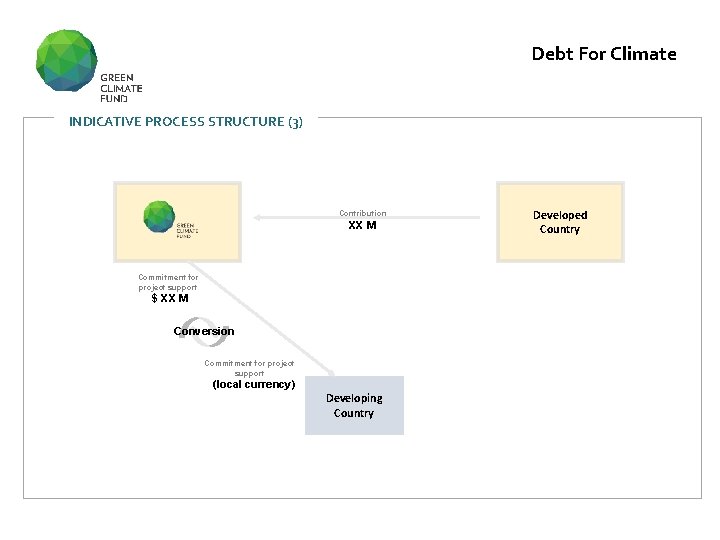
Debt For Climate INDICATIVE PROCESS STRUCTURE (3) Contribution XX M Commitment for project support $ XX M Conversion Commitment for project support (local currency) Developing Country Developed Country
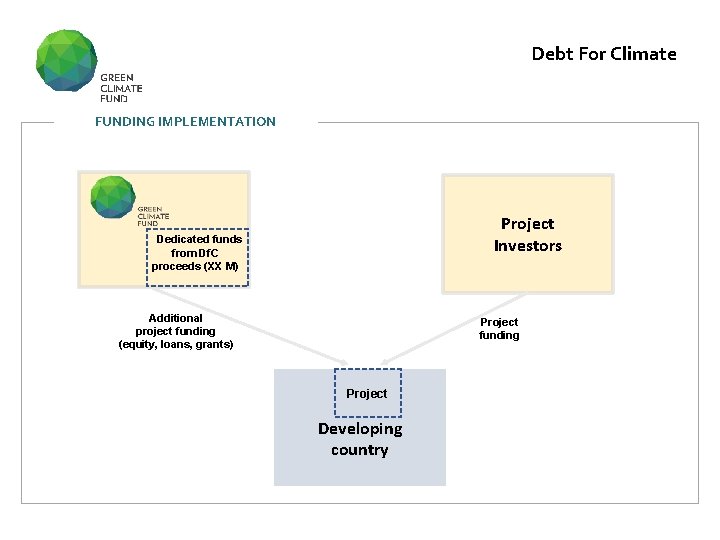
Debt For Climate FUNDING IMPLEMENTATION Project Investors Dedicated funds from Df. C proceeds (XX M) Additional project funding (equity, loans, grants) Project funding Project Developing country
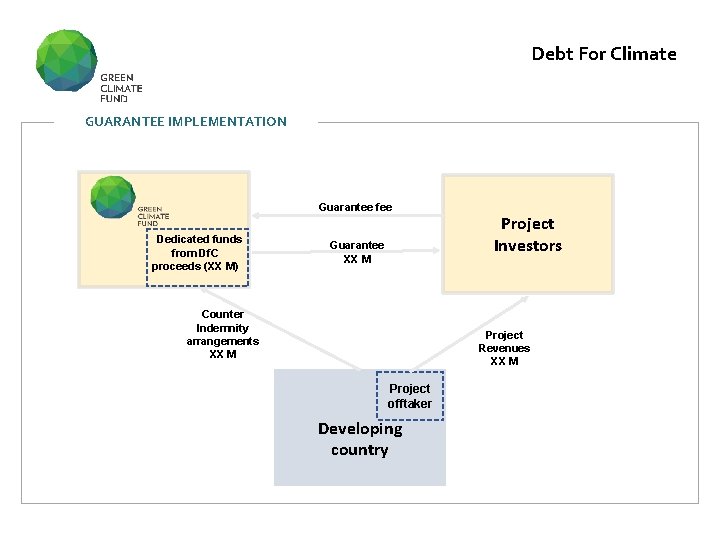
Debt For Climate GUARANTEE IMPLEMENTATION Guarantee fee Dedicated funds from Df. C proceeds (XX M) Guarantee XX M Counter Indemnity arrangements XX M Project Investors Project Revenues XX M Project offtaker Developing country
Debt For Climate IMPLEMENTATION CONSIDERATIONS • Debt-for-Climate (Df. C) proceeds will be the key tool helping GCF to ensure interest alignment and risk allocation among the parties most suitable for bearing it • Funding with Df. C proceeds will help GCF to achieve greater levels of concessionality (including increased grant portion) and mobilize additional funding with structural subordination • For guarantee implementation the longer the developing country ensures that project investors are receiving project revenues, the longer will GCF be able to guarantee other projects in the country (creating virtuous cycle with multiplier effect) • Through the projects supported by the guarantee, the developing country will receive project investment and lower costs of goods/servies sold to the clients as the project output • Df. C proceeds can guarantee funds loaned by domestic banks in local currency and/or ensure longer maturity of the debt funding • Df. C proceeds can also guarantee foreign currency repayments (subject to the mirroring conditions of “counter-indemnity” arrangements with the developing country)
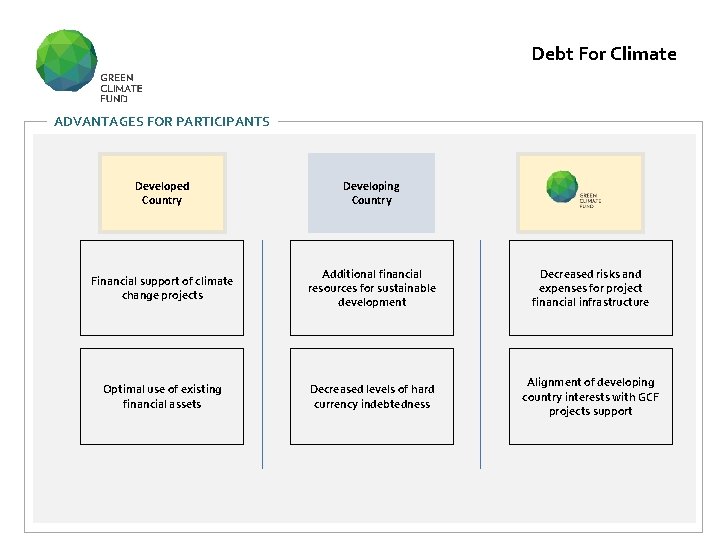
Debt For Climate ADVANTAGES FOR PARTICIPANTS Developed Country Developing Country Financial support of climate change projects Additional financial resources for sustainable development Decreased risks and expenses for project financial infrastructure Optimal use of existing financial assets Decreased levels of hard currency indebtedness Alignment of developing country interests with GCF projects support
Debt For Climate OTHER KEY CONSIDERATIONS Advantages: • Additional financial inputs for projects funding • Relieve contributing countries from monetary funding constraints • Align recipient countries interest to facilitate GCF projects development • Address local currency funding issues • Bring more concessionality to the project funding mix • The process may be applied to private portions of sovereign debt, increasing the amount of funding • Facilitate financial development via additional support initiatives (e. g. climate projects guarantee platform)
- Slides: 11