
Death of stars Final evolution of the Sun
- Slides: 24
Death of stars • • Final evolution of the Sun Determining the age of a star cluster Evolution of high mass stars Where were the elements in your body made? • Reading 21. 3, 22. 1 -22. 10
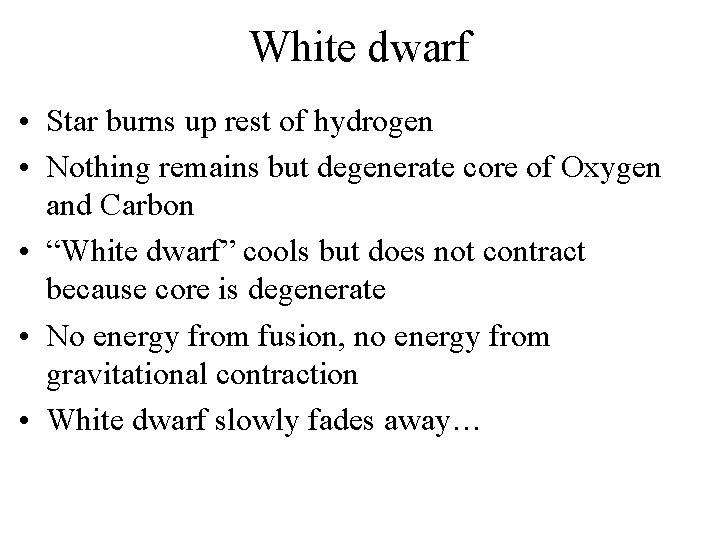
White dwarf • Star burns up rest of hydrogen • Nothing remains but degenerate core of Oxygen and Carbon • “White dwarf” cools but does not contract because core is degenerate • No energy from fusion, no energy from gravitational contraction • White dwarf slowly fades away…
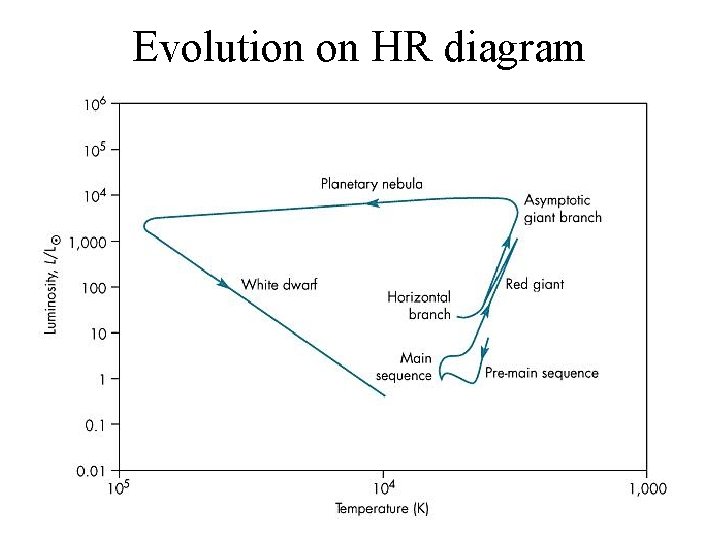
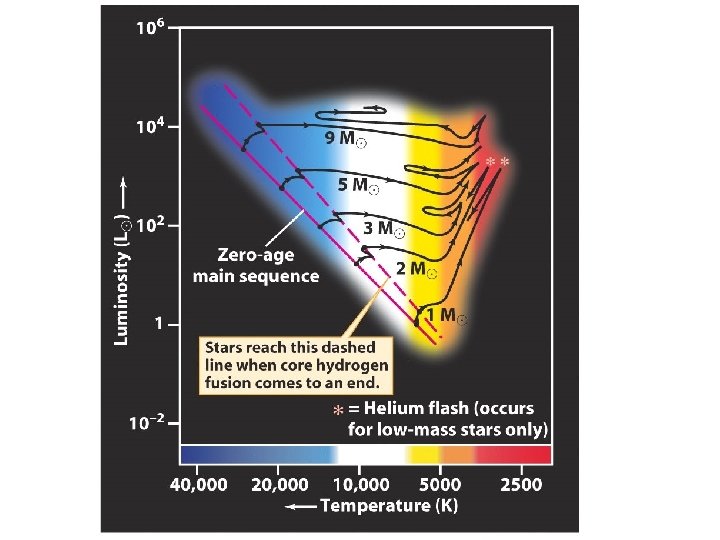
Evolution on HR diagram
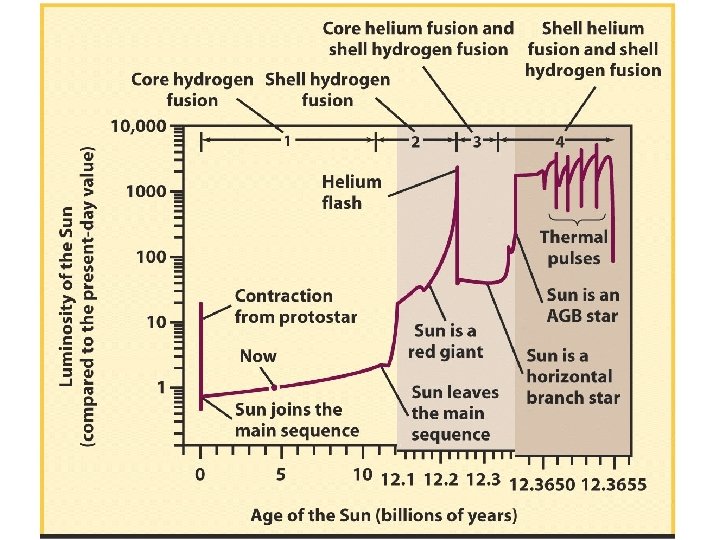
Time line for Sun’s evolution
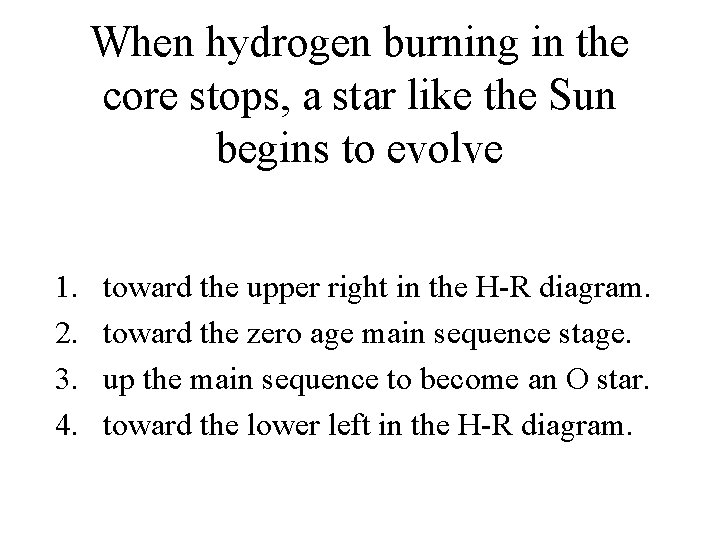
When hydrogen burning in the core stops, a star like the Sun begins to evolve 1. 2. 3. 4. toward the upper right in the H-R diagram. toward the zero age main sequence stage. up the main sequence to become an O star. toward the lower left in the H-R diagram.
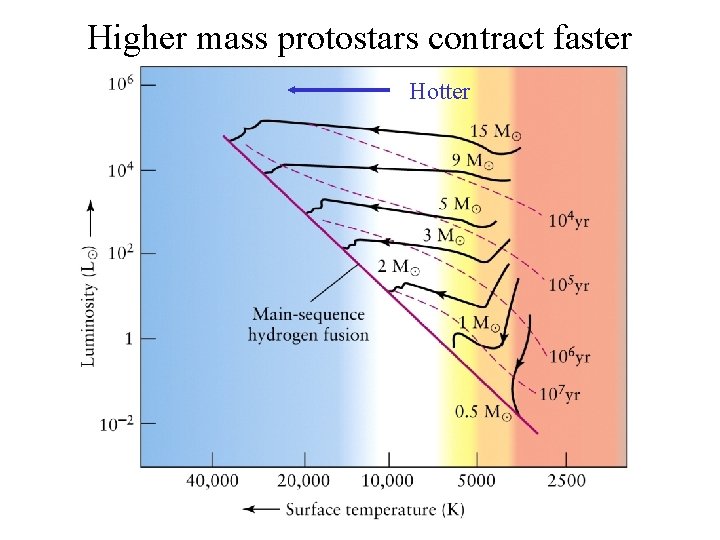
Higher mass protostars contract faster Hotter
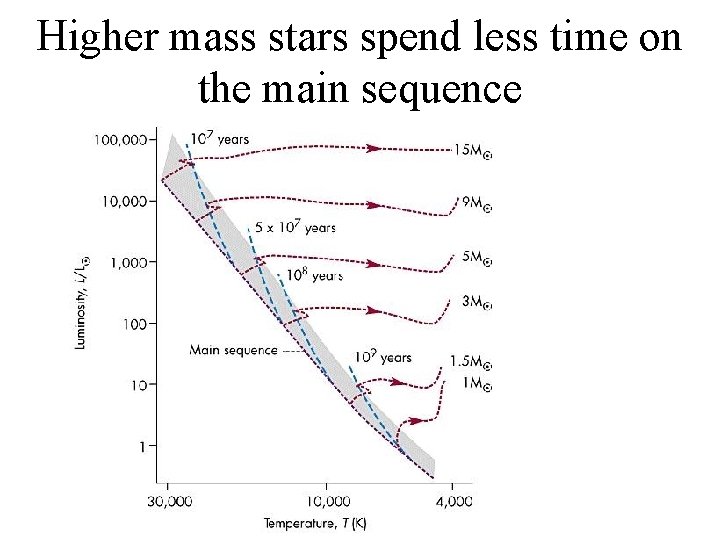
Higher mass stars spend less time on the main sequence
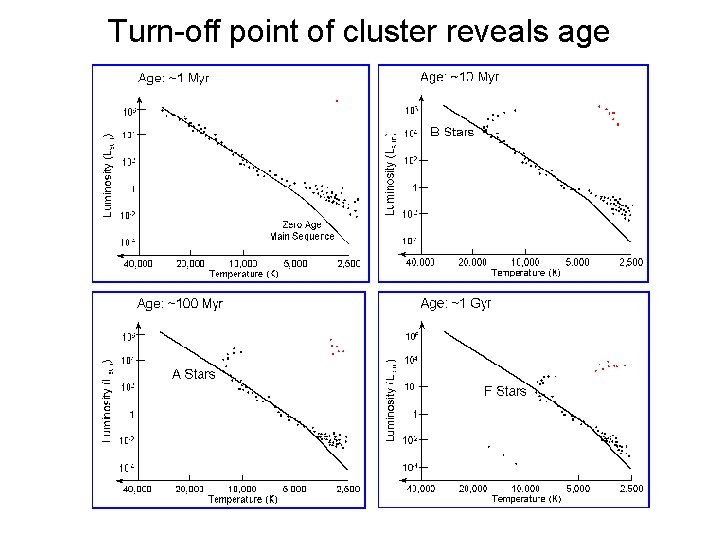
Determining the age of a star cluster • Imagine we have a cluster of stars that were all formed at the same time, but have a variety of different masses • Using what we know about stellar evolution is there a way to determine the age of the star cluster?
Turn-off point of cluster reveals age
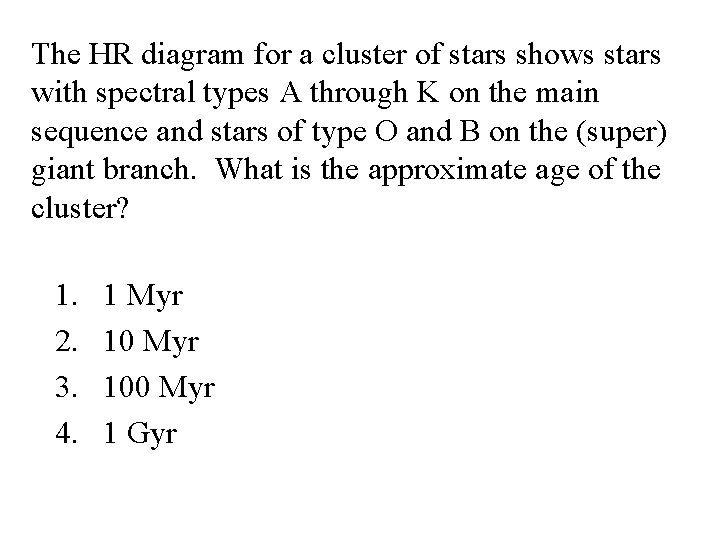
The HR diagram for a cluster of stars shows stars with spectral types A through K on the main sequence and stars of type O and B on the (super) giant branch. What is the approximate age of the cluster? 1. 2. 3. 4. 1 Myr 100 Myr 1 Gyr
Higher mass stars do not have helium flash
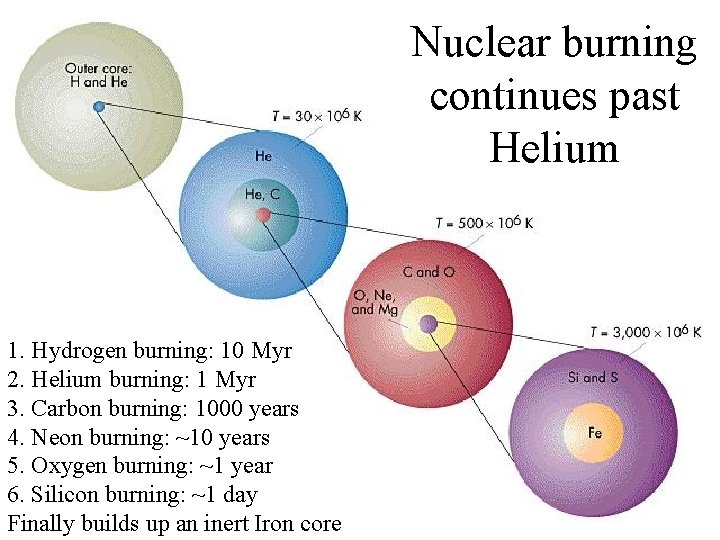
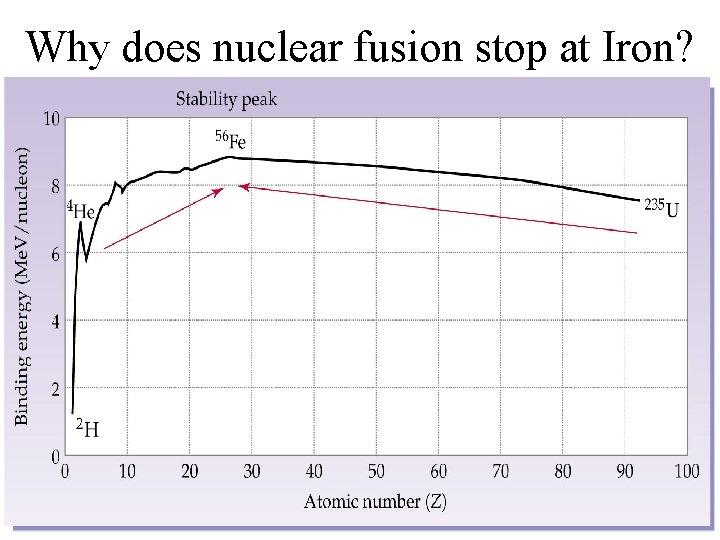
Nuclear burning continues past Helium 1. Hydrogen burning: 10 Myr 2. Helium burning: 1 Myr 3. Carbon burning: 1000 years 4. Neon burning: ~10 years 5. Oxygen burning: ~1 year 6. Silicon burning: ~1 day Finally builds up an inert Iron core
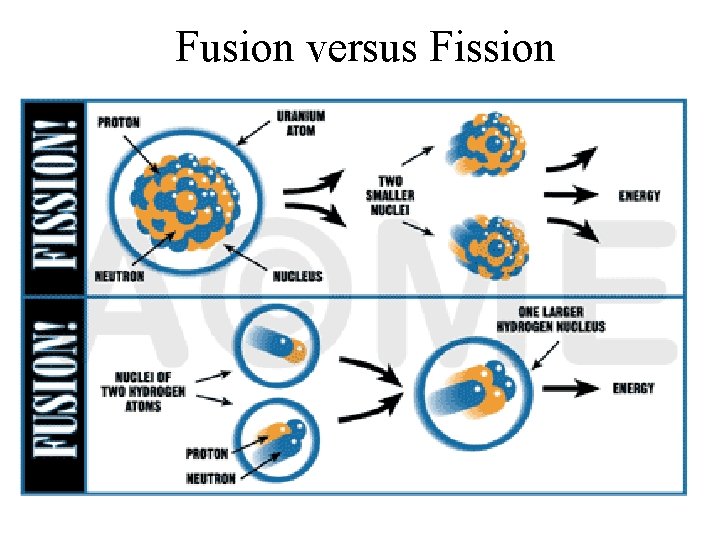
Why does nuclear fusion stop at Iron?
Fusion versus Fission
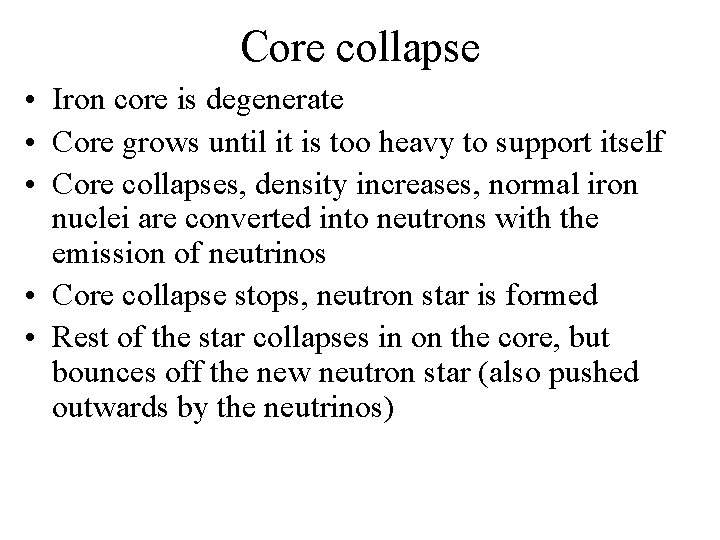
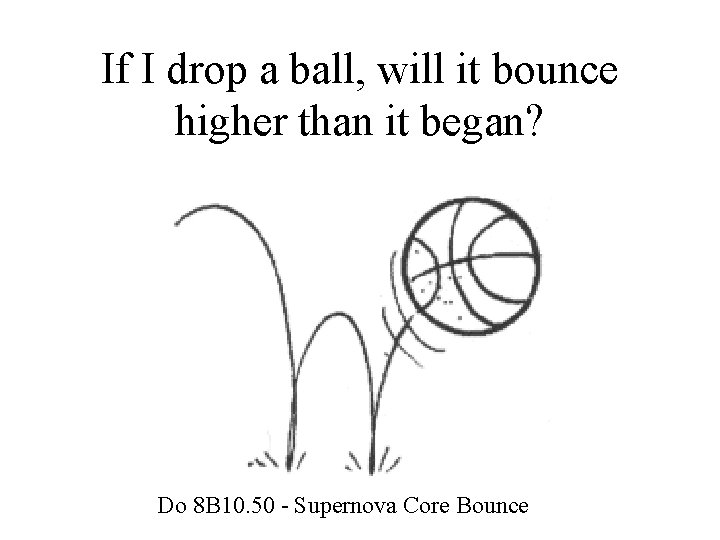
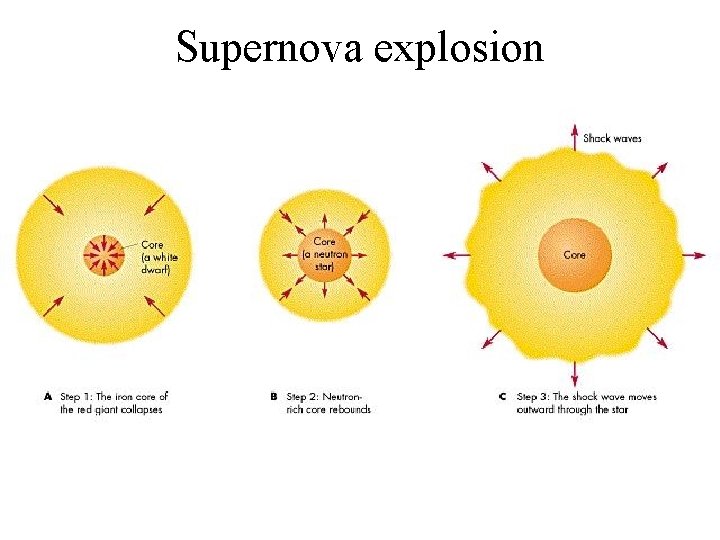
Core collapse • Iron core is degenerate • Core grows until it is too heavy to support itself • Core collapses, density increases, normal iron nuclei are converted into neutrons with the emission of neutrinos • Core collapse stops, neutron star is formed • Rest of the star collapses in on the core, but bounces off the new neutron star (also pushed outwards by the neutrinos)
If I drop a ball, will it bounce higher than it began? Do 8 B 10. 50 - Supernova Core Bounce
Supernova explosion
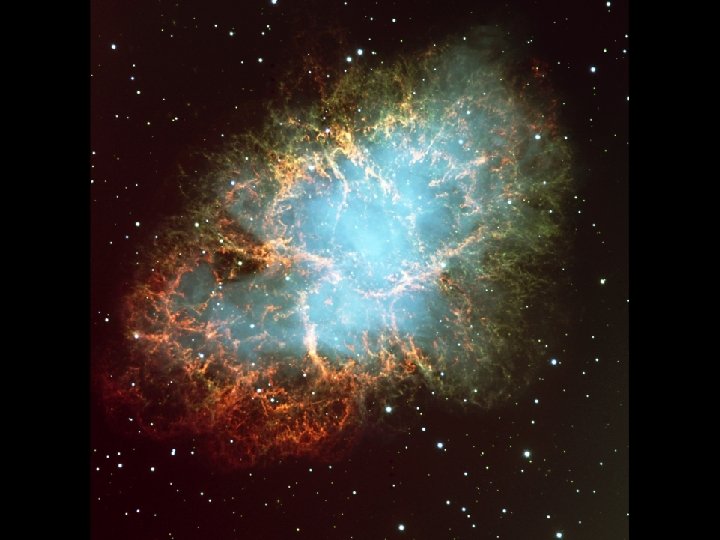
Crab nebula
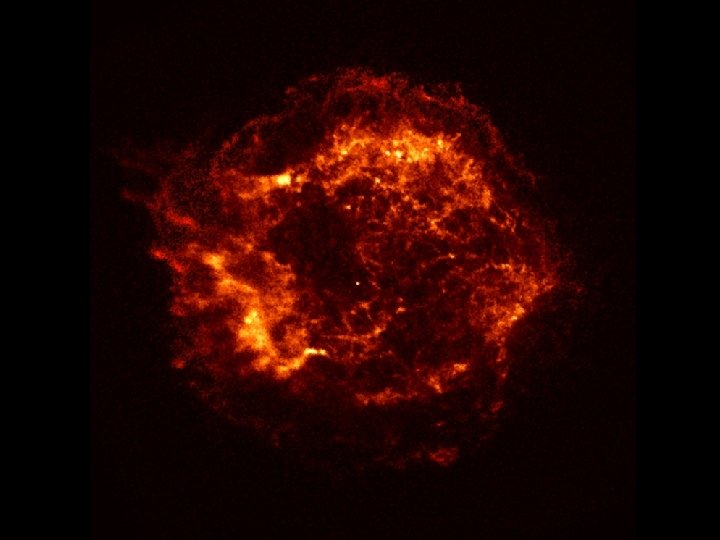
Cas A
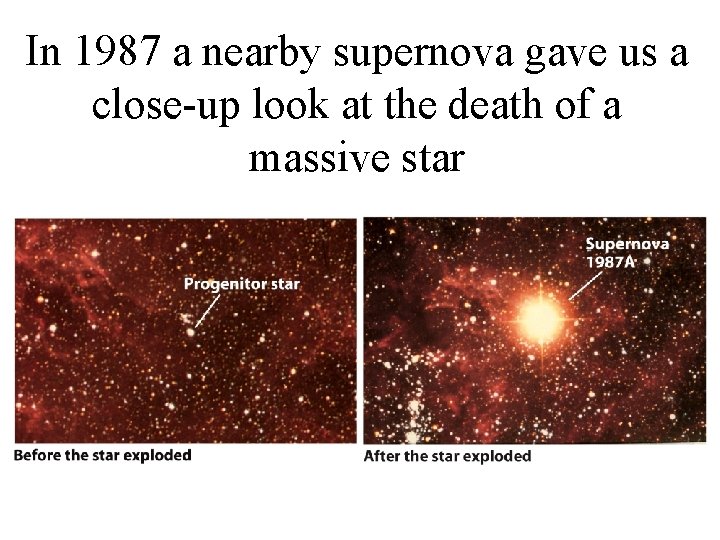
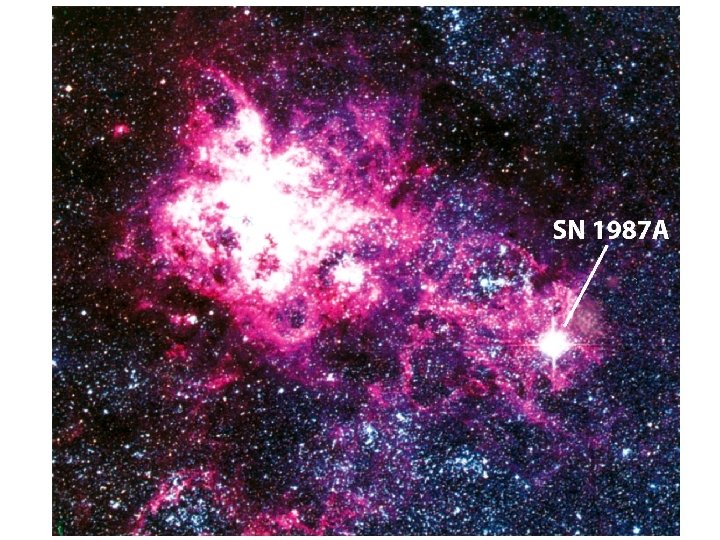
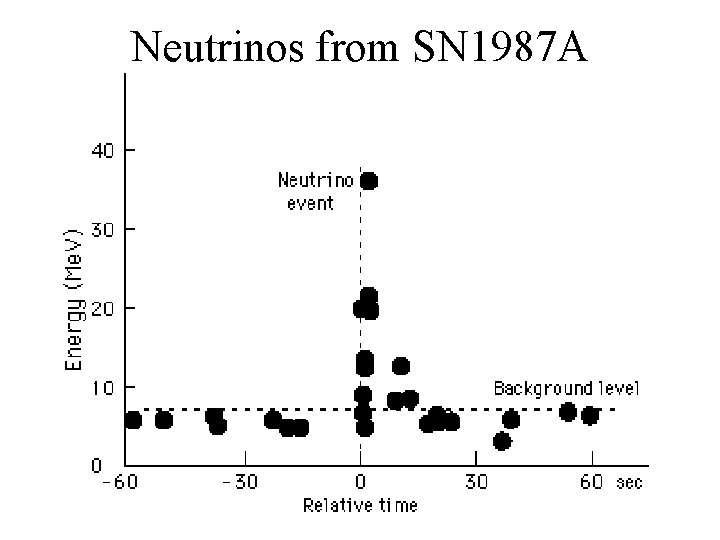
In 1987 a nearby supernova gave us a close-up look at the death of a massive star
Neutrinos from SN 1987 A
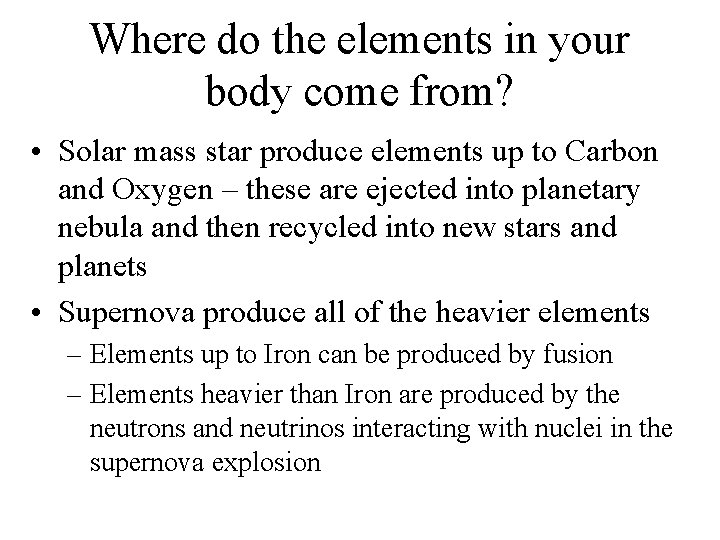
Where do the elements in your body come from? • Solar mass star produce elements up to Carbon and Oxygen – these are ejected into planetary nebula and then recycled into new stars and planets • Supernova produce all of the heavier elements – Elements up to Iron can be produced by fusion – Elements heavier than Iron are produced by the neutrons and neutrinos interacting with nuclei in the supernova explosion
Review Questions • How does the evolution of a high mass star differ from that of a low mass star? • How can the age of a cluster of stars, all formed at the same time, be determined? • Why does fusion stop at Iron? • How are heavy elements produced?