
Dealing with Large Classes Richard Watson Todd KMUTT

- Slides: 21
Dealing with Large Classes Richard Watson Todd KMUTT
Overview of the Workshop • Look at research into large classes • Examine problems with large classes • Investigate some solutions
How large is a large class? • 14 previous surveys show a large class is 40 -60 students • But perceptions of size are subjective • Perceptions of a large class are influenced by course type and teacher’s previous experience
Why are researchers interested in large classes? • • Large classes are the reality in most situations Teachers are concerned about class size Little previous research Often ignored in training programmes
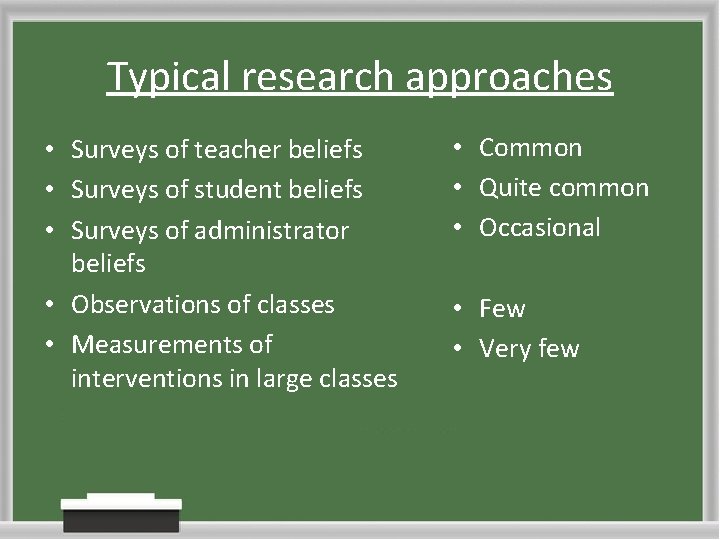
Typical research approaches • Surveys of teacher beliefs • Surveys of student beliefs • Surveys of administrator beliefs • Observations of classes • Measurements of interventions in large classes • Common • Quite common • Occasional • Few • Very few
Some key research findings • Teachers worry about class size • Students prefer smaller classes, but are not very concerned • Administrators are not concerned
Some controversial findings • Class size is unimportant when teaching factual knowledge • Quality of teaching and kinds of activities are more important than class size • Teachers and students behave similarly in different class sizes
Some more controversial findings • Class size is not an important factor in learning • Classroom learning itself may not be very important
Conclusions from research • Class size is not a very important factor in learning. However, teachers’ negative opinions about large classes may have detrimental effects on learning. • Even if class size does not have a great impact on overall learning, it may cause problems in specific areas.
Your ideas • What are the top 5 problems when teaching in large classes?
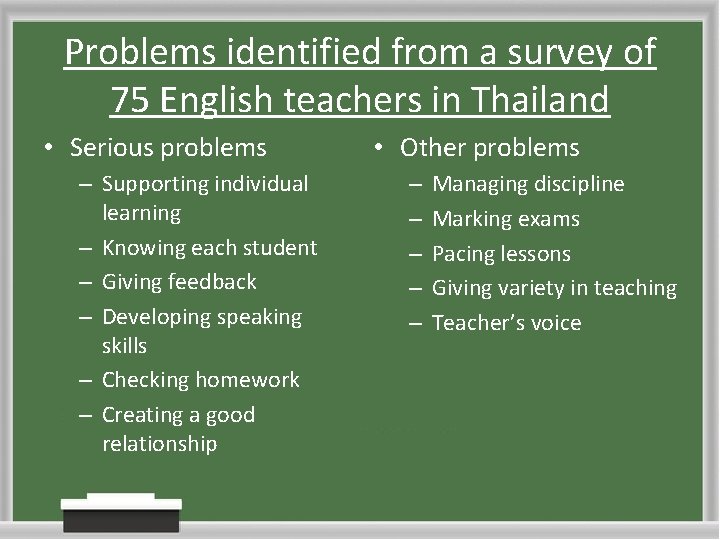
Problems identified from a survey of 75 English teachers in Thailand • Serious problems – Supporting individual learning – Knowing each student – Giving feedback – Developing speaking skills – Checking homework – Creating a good relationship • Other problems – – – Managing discipline Marking exams Pacing lessons Giving variety in teaching Teacher’s voice
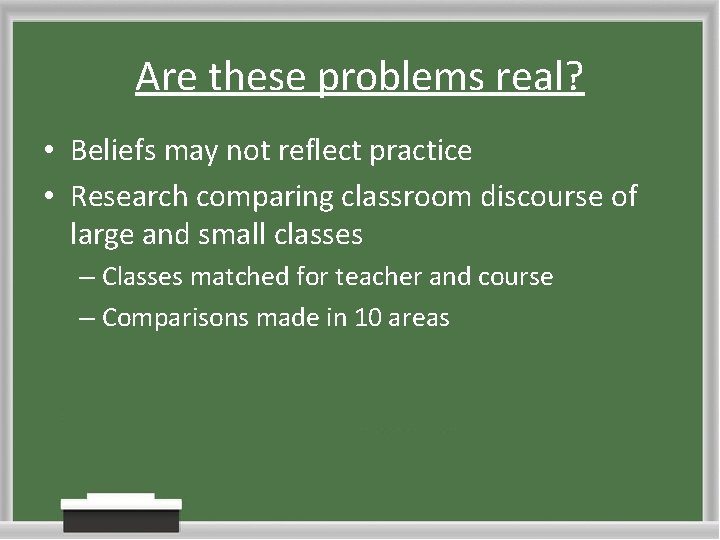
Are these problems real? • Beliefs may not reflect practice • Research comparing classroom discourse of large and small classes – Classes matched for teacher and course – Comparisons made in 10 areas
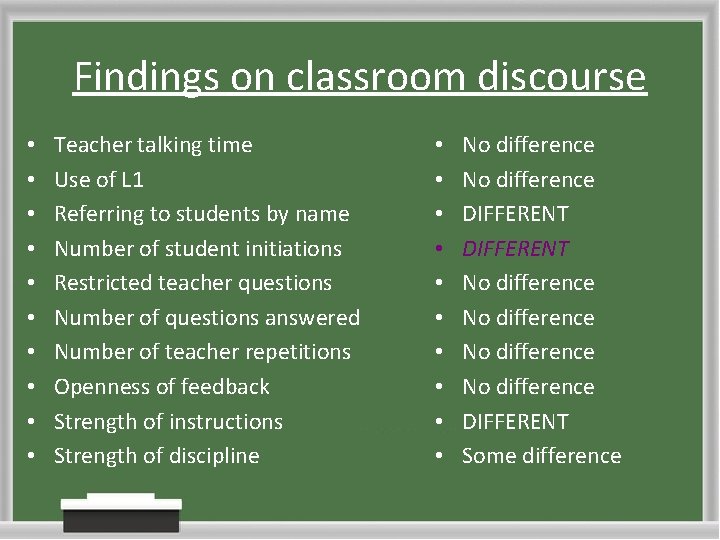
Findings on classroom discourse • • • Teacher talking time Use of L 1 Referring to students by name Number of student initiations Restricted teacher questions Number of questions answered Number of teacher repetitions Openness of feedback Strength of instructions Strength of discipline • • • No difference DIFFERENT No difference DIFFERENT Some difference
Key problems with large classes • Lack of teacher-student interaction – Low individual attention – Need for teacher power – Poor teacher-student relationships (e. g. no use of names) • Poor-quality feedback on students’ work – Lack of individual feedback on speaking – Time pressures for quality feedback on writing • Difficulties in evaluating students
Solving problems • • Solving ‘technical problems’ Imposed solutions Standard solutions Innovative solutions
Solving technical problems • Learning student names – Students sitting in same seat every lesson, student name cards, class file with photos • Discipline – Training in discipline techniques
Imposed solutions • Interaction – Teacher feels forced to lecture more • Feedback – Very little personalised oral feedback – Time pressure means written feedback is minimal and on surface features only • Evaluation – Marking pressures lead to a reliance on multiplechoice exams, so little testing of productive skills
Standard solutions • Interaction – Groupwork and pairwork, role plays, projects • Feedback – Feedback on selected mistakes, feedback on selected paragraphs, feedback in plenary • Evaluation – Innovative testing (e. g. cloze using words from passage)
Innovative solutions • Interaction – Lecture/tutorial format, group consultations • Feedback – Peer consultations, web and e-mail consultations • Evaluation – Web publication and evaluation, electronic portfolios, peer and self-assessment
Problems with innovative solutions • • • Increased teacher workload? Need for investment? Student reactions against methods Need for preparing students Balancing practicality and validity
Principles underlying successful solutions • • Focusing only on what’s most important Dividing large classes into smaller groups Use of electronic support Transferring responsibility – To students – To outsiders