
Dealing with Difficult Students and Residents Mark Meyer
- Slides: 25
Dealing with Difficult Students and Residents Mark Meyer MD Pam Shaw MD
Learning Objectives After attending this meeting the learner will be able to: • Define behaviors that can interfere with performance of learners • Recognize the signs and symptoms of these behaviors • Outline strategies to identify, intervene and manage these behaviors
Behaviors that are common problems • • Stress-personal and professional Depression Disruptive behavior Substance Abuse
Stress • Situational stressors – Sleep deprivation, heavy work load, shortage of support staff, difficult patients, administrative duties • Personal stressors – Family, financial, isolation, limited free time, inadequate coping skills, psychosocial problems • Professional stressors – Responsibility for patients, teaching, professionalism, learning material
Symptoms of stress • Physical – Myalgias, fatigue, headaches, indigestion, pain • Emotional – Anxiety, fear, irritability, impatience, depression • Behavioral – Change in appetite, sleep problem, forgetfulness, angry outbursts, aggression, decrease in productivity, increase in use of alcohol, drugs or caffeine
Stress management • • Communicate clearly expectations Provide time for acclimation Make resources available-training Ongoing support-may mean outsider from the program(advising) • Regular meetings to discuss issues
Stress management • Support group for spouses • Model attitudes towards finding help for stress • Mentoring • Self-reflection (360 evals) • Faculty development
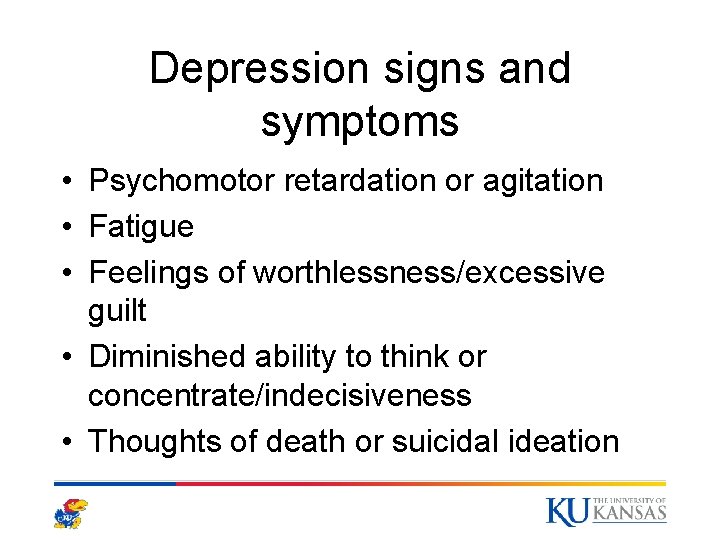
Depression • Prevalence has been reported to be 29% among residents • Signs and symptoms – Depressed mood/feeling sad or empty/tearful – Diminished interest or pleasure in activities – Change in appetite/weight loss or gain – Insomnia or hypersomnia
Depression signs and symptoms • Psychomotor retardation or agitation • Fatigue • Feelings of worthlessness/excessive guilt • Diminished ability to think or concentrate/indecisiveness • Thoughts of death or suicidal ideation
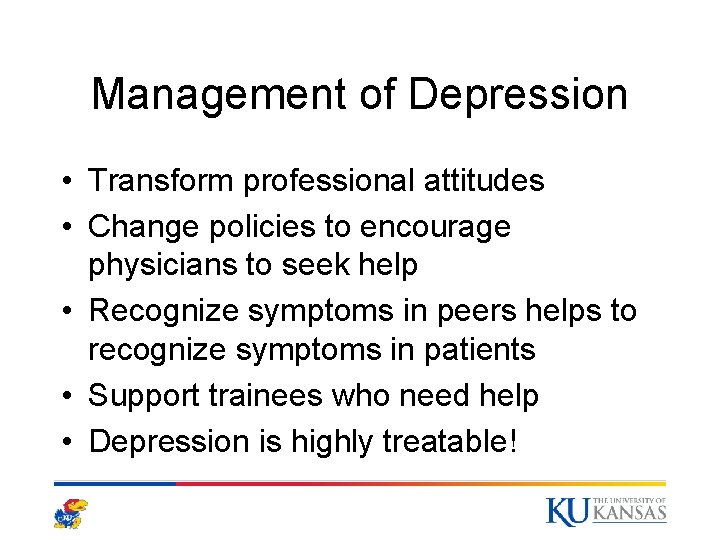
Management of Depression • Transform professional attitudes • Change policies to encourage physicians to seek help • Recognize symptoms in peers helps to recognize symptoms in patients • Support trainees who need help • Depression is highly treatable!
Disruptive Behavior • Disruptive behavior may occur as a response to an important event • Disproportional to the event • Causes polarization and escalation
Common Behaviors • Inappropriate anger or resentments • Inappropriate words or actions • Inappropriate response to patient needs or staff requests
Angry Outbursts • Use intimidating, abusive, condescending or degrading language • Display body language and tone of voice that is pejorative and insulting • Verbalize threats of violence, reprisal or legal action
Degrading or demeaning words or behaviors • Harass others sexually • Use racial or ethnic slurs • Engage in inappropriate humor
Disregard for effective communication • Fail to answer pages or calls in a timely manner • Demonstrate unprofessional demeanor • Blame staff for adverse outcomes • Act in a defiant or rude manner • Refuse requests for help • Inappropriate email
Management of disruptive Behavior • Adequate policies and procedures-honor code • Identify the behavior and focus on it • Identify resources to use and have a plan for corrective action-the learner must acknowledge as well • Reveal the bottom line if behavior continues • DOCUMENT, AND DOCUMENT
Substance abuse • Recurrent substance use resulting in a failure to fulfill major role obligations • Recurrent substance use in situations in which it is physically hazardous • Recurrent substance-related legal problems • Continued substance use despite recurrent social or interpersonal problems
Personal/family behavior • • • Isolation and withdrawal Erratic or violent behavior Sexual dysfunction Legal problems-DUI Separation or divorce Compulsions
Social Behavior • Inappropriate behavior at social functions • Citation for DUI • Deterioration in personal hygiene, clothing and dress habits • Accidents, falls, motor vehicle accidents
Professional Behavior • • Recurrent tardiness or absences Rounds very early or late Diminished performance Over prescribes medicines-requests samples • Alters behavior • Slurs speech • Fails to answer pages
Intervention • • • Trained experienced leader Should be team approach Determine goals Present documented information Rehearse if possible Plan for all outcomes
Legal concerns • Start from a clinical perspective and state the concern regarding the residents safety and the patients carethen DOCUMENT APPROPRIATELY • Avoid diagnosis; describe the behavior and let experts make the diagnosis • Required to report to NPDB if privileges are restricted from > 30 days-no report for evaluation or treatment
Combat Substance Abuse • Education about policies and avoidance of abuse • Define a clear and confidential process for referral • Refer early and stay out of the evaluation and diagnosis • Confidentiality • Know the policies and resources in the state and locally
Resources available • www. lifecurriculum. info • 9 hours of CME and the free CD of vignettes and materials
Rock Chalk Jayhawk!