
Dealing with critical situation polytrauma with airway difficulty

- Slides: 55
Dealing with critical situation polytrauma with airway difficulty & circulatory instability: ABC of emergency DR Tanveer sadiq ch. Associate professor Surgery MBBS Medical college Mirpur AJK 1
Objectives n n Epidemiology of Trauma Care History of Development of Trauma Care Mechanisms of Injury Basics of Trauma Management ◦ ◦ ◦ Primary Survey Resuscitation Secondary Survey ABCDE Format Cervical Spinal Immobilization 2
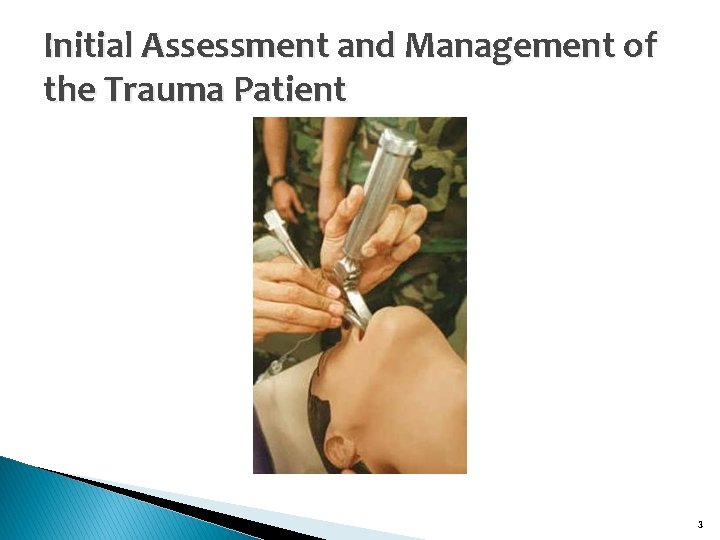
Initial Assessment and Management of the Trauma Patient 3
Epidemiology n n Road Traffic Accidents are major cause of long term morbidity and mortality in developing nations WHO predicts that by 2020, Road Traffic Accidents will be second leading cause of loss of life for world’s population High Morbidity = Loss of income to society Challenges in Developing Countries ◦ Technological Advances in Trauma Care ◦ Lack of Infrastructure for Trauma Management n EMS n Pre-hospital notification n Training in trauma care 4
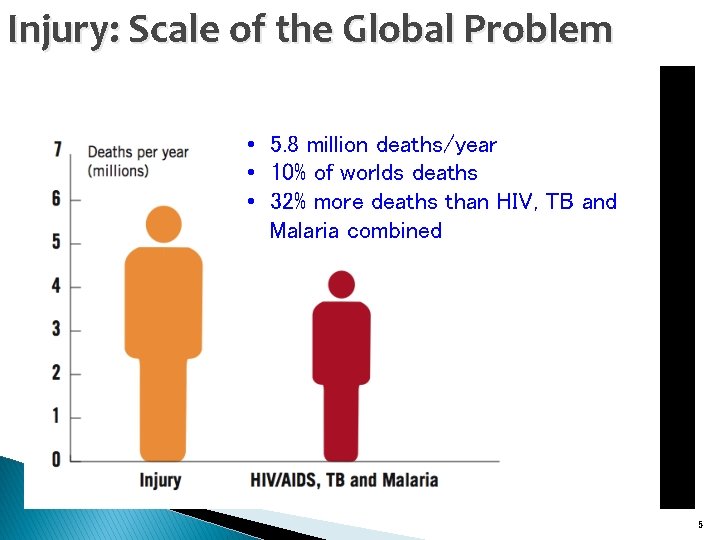
• 5. 8 million deaths/year • 10% of worlds deaths • 32% more deaths than HIV, TB and Malaria combined Source: Global Burden of Disease, WHO, 2004 Injury: Scale of the Global Problem 5
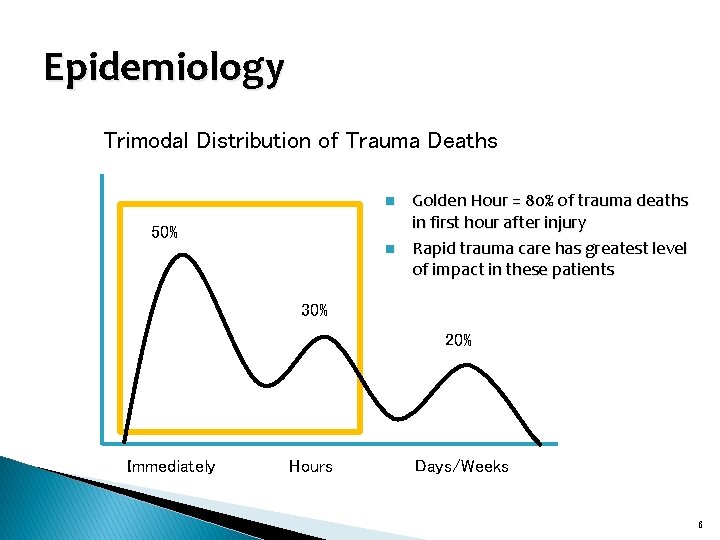
Epidemiology Trimodal Distribution of Trauma Deaths n 50% n Golden Hour = 80% of trauma deaths in first hour after injury Rapid trauma care has greatest level of impact in these patients 30% 20% Immediately Hours Days/Weeks 6
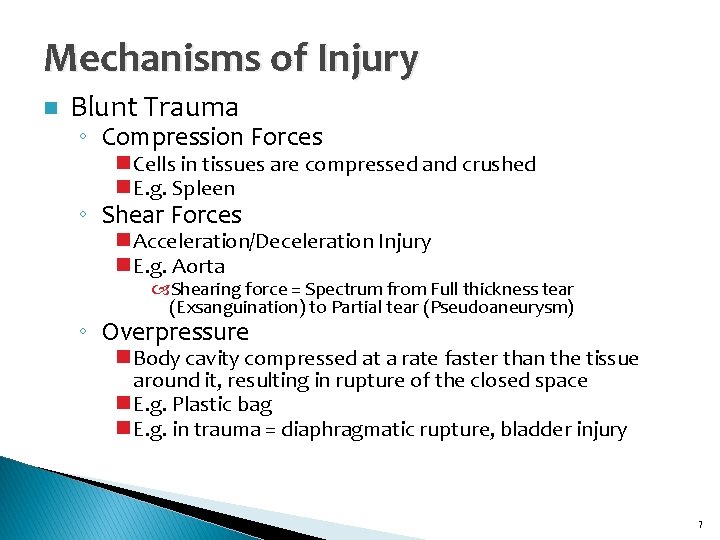
Mechanisms of Injury n Blunt Trauma ◦ Compression Forces n Cells in tissues are compressed and crushed n E. g. Spleen ◦ Shear Forces n Acceleration/Deceleration Injury n E. g. Aorta Shearing force = Spectrum from Full thickness tear (Exsanguination) to Partial tear (Pseudoaneurysm) ◦ Overpressure n Body cavity compressed at a rate faster than the tissue around it, resulting in rupture of the closed space n E. g. Plastic bag n E. g. in trauma = diaphragmatic rupture, bladder injury 7
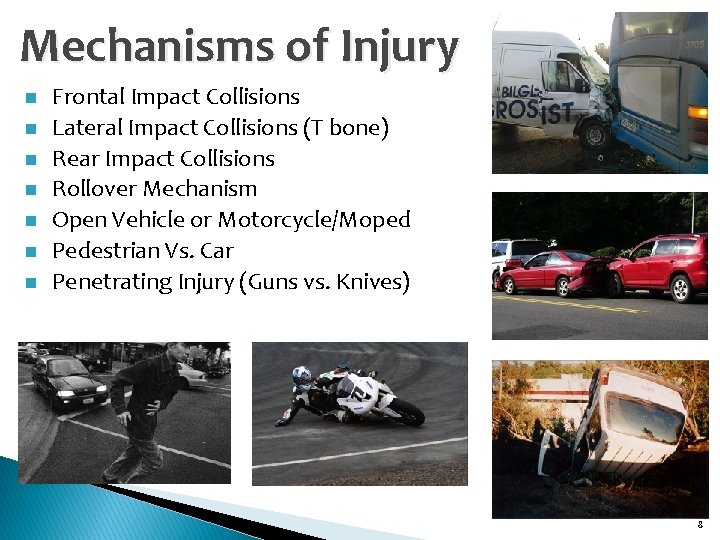
Mechanisms of Injury n n n n Frontal Impact Collisions Lateral Impact Collisions (T bone) Rear Impact Collisions Rollover Mechanism Open Vehicle or Motorcycle/Moped Pedestrian Vs. Car Penetrating Injury (Guns vs. Knives) 8
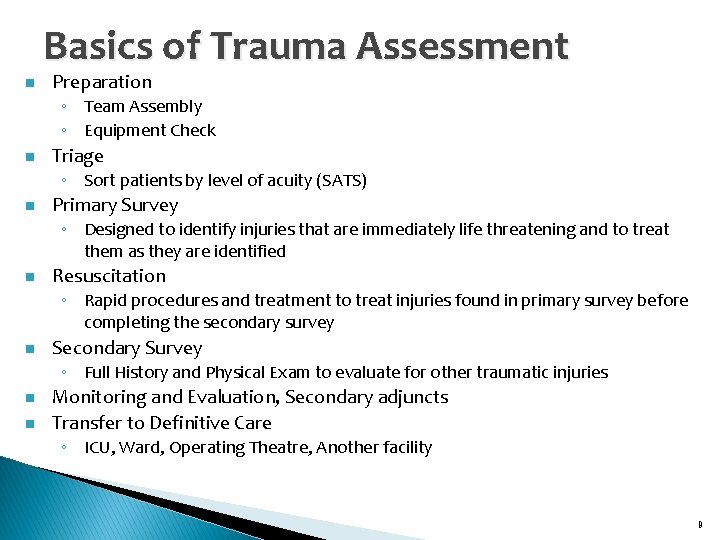
Basics of Trauma Assessment n Preparation ◦ Team Assembly ◦ Equipment Check n Triage ◦ Sort patients by level of acuity (SATS) n Primary Survey ◦ Designed to identify injuries that are immediately life threatening and to treat them as they are identified n Resuscitation ◦ Rapid procedures and treatment to treat injuries found in primary survey before completing the secondary survey n Secondary Survey ◦ Full History and Physical Exam to evaluate for other traumatic injuries n n Monitoring and Evaluation, Secondary adjuncts Transfer to Definitive Care ◦ ICU, Ward, Operating Theatre, Another facility 9
Organize trauma response team 10
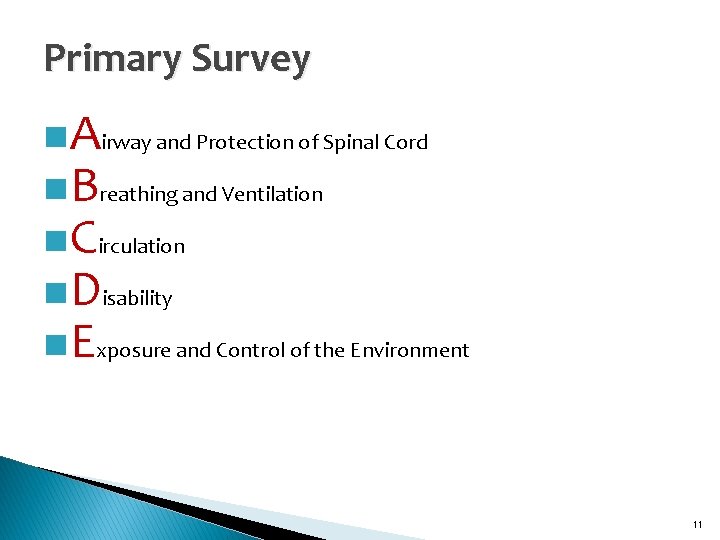
Primary Survey n Airway and Protection of Spinal Cord n Breathing and Ventilation n Circulation n Disability n Exposure and Control of the Environment 11
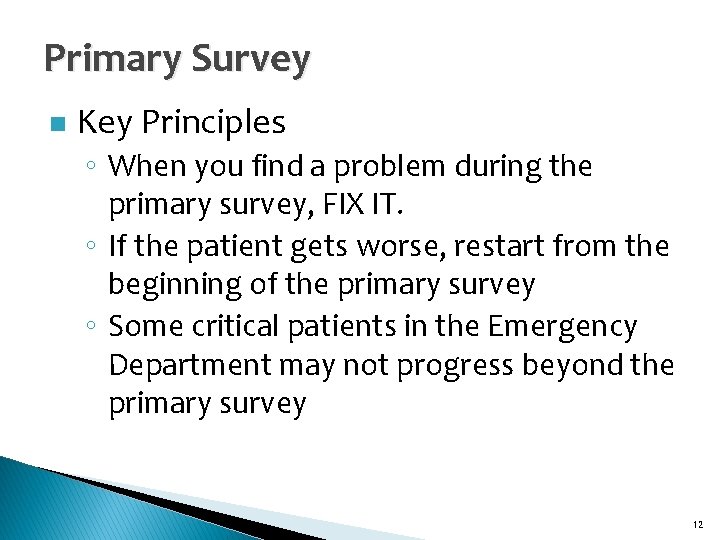
Primary Survey n Key Principles ◦ When you find a problem during the primary survey, FIX IT. ◦ If the patient gets worse, restart from the beginning of the primary survey ◦ Some critical patients in the Emergency Department may not progress beyond the primary survey 12
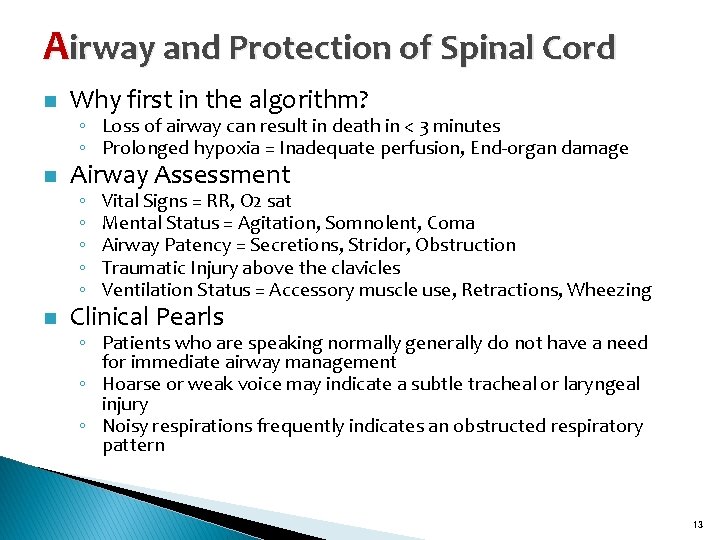
Airway and Protection of Spinal Cord n Why first in the algorithm? n Airway Assessment n ◦ Loss of airway can result in death in < 3 minutes ◦ Prolonged hypoxia = Inadequate perfusion, End-organ damage ◦ ◦ ◦ Vital Signs = RR, O 2 sat Mental Status = Agitation, Somnolent, Coma Airway Patency = Secretions, Stridor, Obstruction Traumatic Injury above the clavicles Ventilation Status = Accessory muscle use, Retractions, Wheezing Clinical Pearls ◦ Patients who are speaking normally generally do not have a need for immediate airway management ◦ Hoarse or weak voice may indicate a subtle tracheal or laryngeal injury ◦ Noisy respirations frequently indicates an obstructed respiratory pattern 13
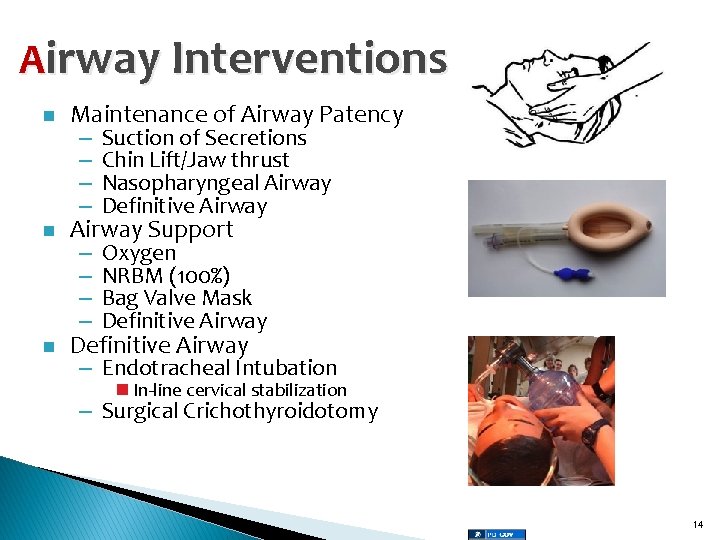
Airway Interventions n Maintenance of Airway Patency n Airway Support n Definitive Airway – – Suction of Secretions Chin Lift/Jaw thrust Nasopharyngeal Airway Definitive Airway – – Oxygen NRBM (100%) Bag Valve Mask Definitive Airway – Endotracheal Intubation n In-line cervical stabilization – Surgical Crichothyroidotomy 14
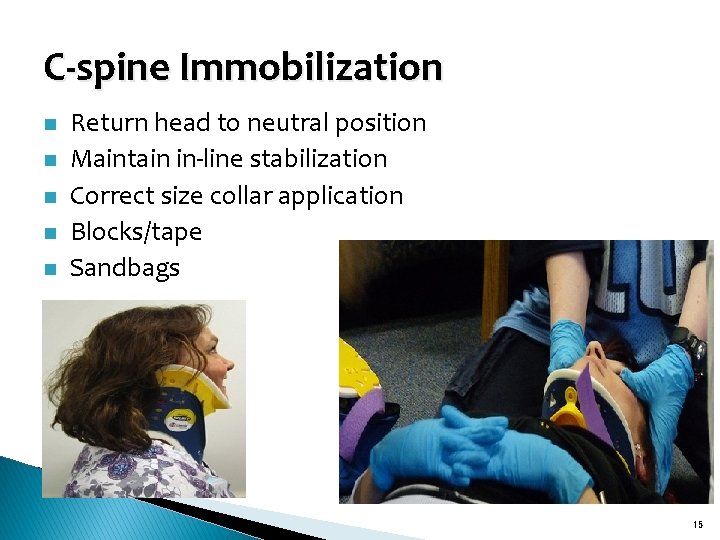
C-spine Immobilization n n Return head to neutral position Maintain in-line stabilization Correct size collar application Blocks/tape Sandbags 15
Breathing and Ventilation n n General Principle: Adequate gas exchange is required to maximize patient oxygenation & carbon dioxide elimination Breathing/Ventilation Assessment: ◦ Exposure of chest ◦ General Inspection n Tracheal Deviation n Accessory Muscle Use n Retractions n Absence of spontaneous breathing n Paradoxical chest wall movement ◦ Auscultation to assess for gas exchange n Equal Bilaterally n Diminished or Absent breath sounds ◦ Palpation n Deviated Trachea n Broken ribs n Injuries to chest wall 16
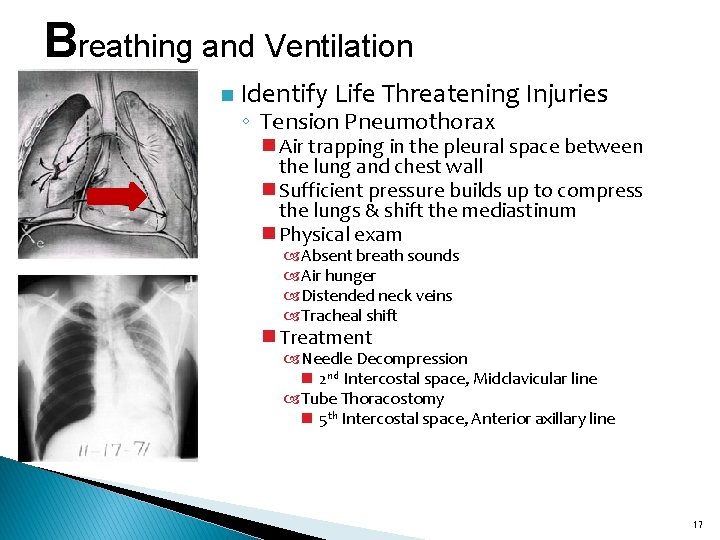
Breathing and Ventilation n Identify Life Threatening Injuries ◦ Tension Pneumothorax n Air trapping in the pleural space between the lung and chest wall n Sufficient pressure builds up to compress the lungs & shift the mediastinum n Physical exam Absent breath sounds Air hunger Distended neck veins Tracheal shift n Treatment Needle Decompression n 2 nd Intercostal space, Midclavicular line Tube Thoracostomy n 5 th Intercostal space, Anterior axillary line 17
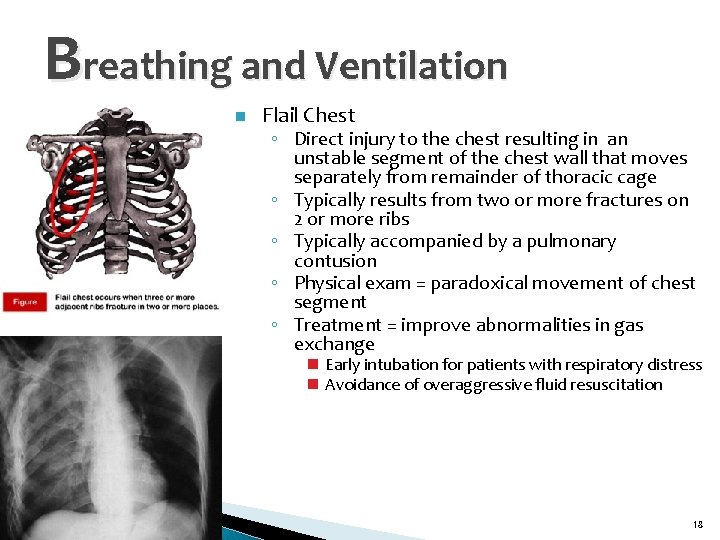
Breathing and Ventilation n Flail Chest ◦ Direct injury to the chest resulting in an unstable segment of the chest wall that moves separately from remainder of thoracic cage ◦ Typically results from two or more fractures on 2 or more ribs ◦ Typically accompanied by a pulmonary contusion ◦ Physical exam = paradoxical movement of chest segment ◦ Treatment = improve abnormalities in gas exchange n Early intubation for patients with respiratory distress n Avoidance of overaggressive fluid resuscitation 18
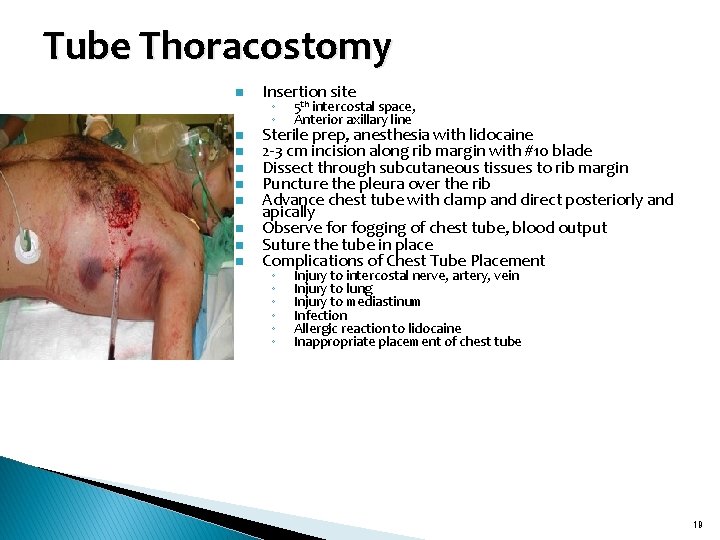
Tube Thoracostomy n Insertion site n n n Sterile prep, anesthesia with lidocaine 2 -3 cm incision along rib margin with #10 blade Dissect through subcutaneous tissues to rib margin Puncture the pleura over the rib Advance chest tube with clamp and direct posteriorly and apically Observe for fogging of chest tube, blood output Suture the tube in place Complications of Chest Tube Placement n n n ◦ ◦ 5 th intercostal space, Anterior axillary line ◦ ◦ ◦ Injury to intercostal nerve, artery, vein Injury to lung Injury to mediastinum Infection Allergic reaction to lidocaine Inappropriate placement of chest tube 19
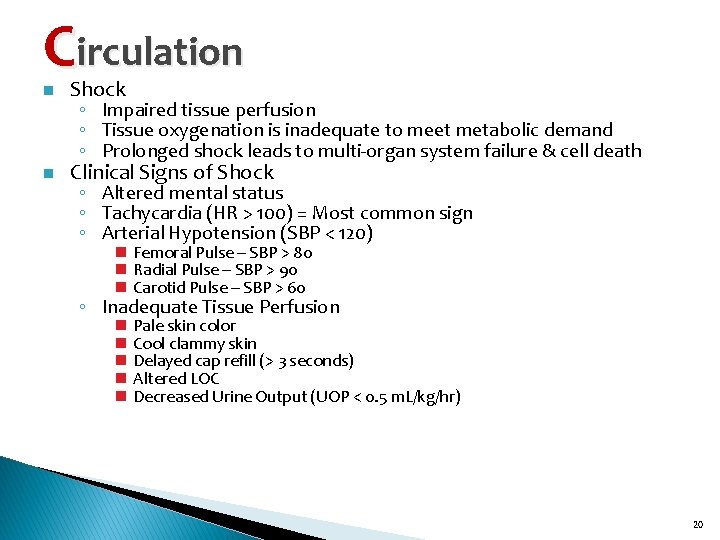
Circulation n Shock n Clinical Signs of Shock ◦ Impaired tissue perfusion ◦ Tissue oxygenation is inadequate to meet metabolic demand ◦ Prolonged shock leads to multi-organ system failure & cell death ◦ Altered mental status ◦ Tachycardia (HR > 100) = Most common sign ◦ Arterial Hypotension (SBP < 120) n Femoral Pulse – SBP > 80 n Radial Pulse – SBP > 90 n Carotid Pulse – SBP > 60 ◦ Inadequate Tissue Perfusion n Pale skin color n Cool clammy skin n Delayed cap refill (> 3 seconds) n Altered LOC n Decreased Urine Output (UOP < 0. 5 m. L/kg/hr) 20
Circulation n Types of Shock in Trauma ◦ Hemorrhagic n Assume hemorrhagic shock in all trauma patients until proven otherwise n Results from Internal or External Bleeding ◦ Obstructive n Cardiac Tamponade n Tension Pneumothorax ◦ Neurogenic n Spinal Cord injury n Sources of Bleeding ◦ ◦ Chest Abdomen Pelvis Bilateral Femur Fractures 21
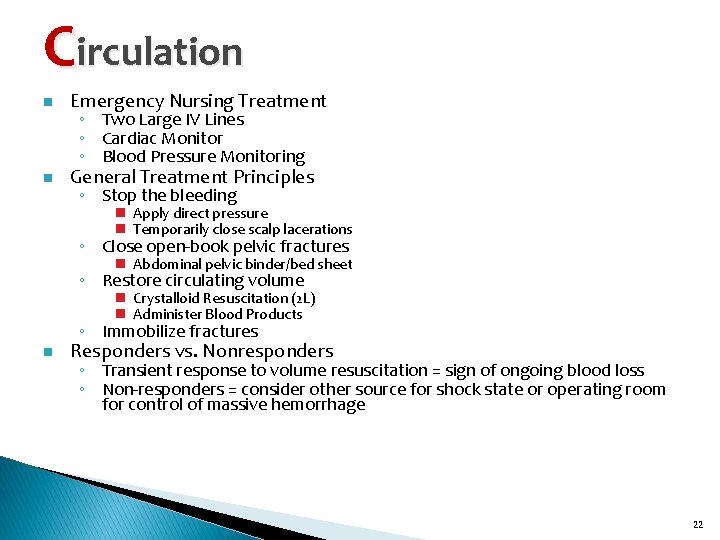
Circulation n Emergency Nursing Treatment n General Treatment Principles ◦ Two Large IV Lines ◦ Cardiac Monitor ◦ Blood Pressure Monitoring ◦ Stop the bleeding n Apply direct pressure n Temporarily close scalp lacerations ◦ Close open-book pelvic fractures n Abdominal pelvic binder/bed sheet ◦ Restore circulating volume n Crystalloid Resuscitation (2 L) n Administer Blood Products ◦ Immobilize fractures n Responders vs. Nonresponders ◦ Transient response to volume resuscitation = sign of ongoing blood loss ◦ Non-responders = consider other source for shock state or operating room for control of massive hemorrhage 22
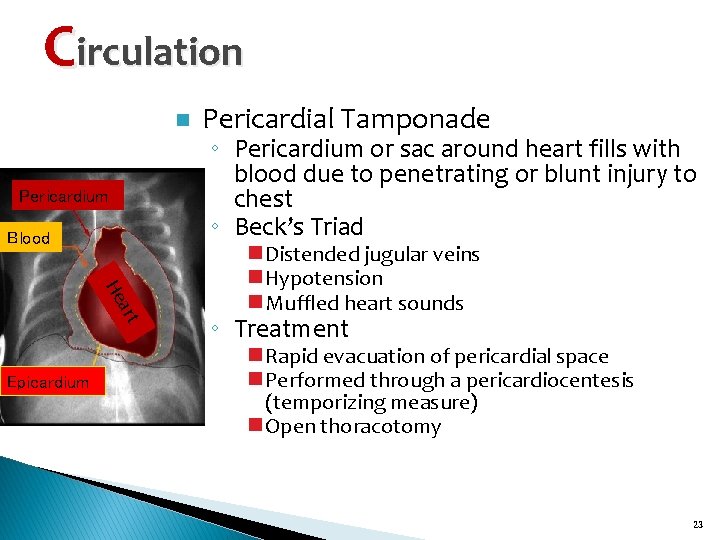
Circulation n Pericardium Blood t ar He Epicardium Pericardial Tamponade ◦ Pericardium or sac around heart fills with blood due to penetrating or blunt injury to chest ◦ Beck’s Triad n Distended jugular veins n Hypotension n Muffled heart sounds ◦ Treatment n Rapid evacuation of pericardial space n Performed through a pericardiocentesis (temporizing measure) n Open thoracotomy 23
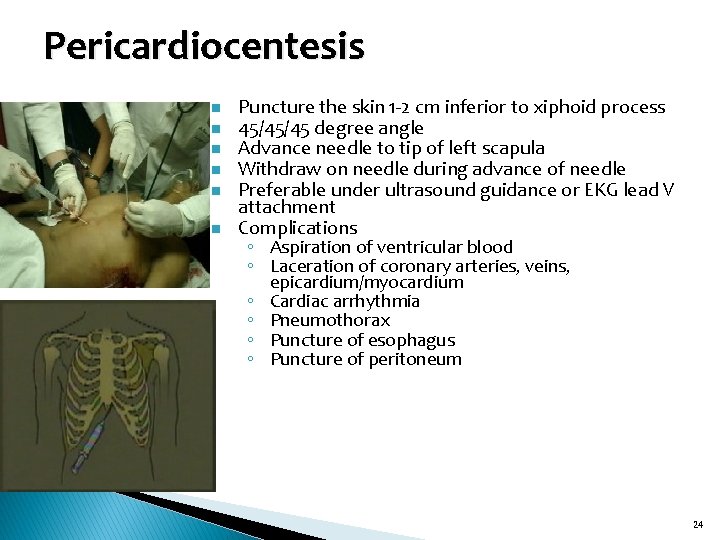
Pericardiocentesis n n n Puncture the skin 1 -2 cm inferior to xiphoid process 45/45/45 degree angle Advance needle to tip of left scapula Withdraw on needle during advance of needle Preferable under ultrasound guidance or EKG lead V attachment Complications ◦ Aspiration of ventricular blood ◦ Laceration of coronary arteries, veins, ◦ ◦ epicardium/myocardium Cardiac arrhythmia Pneumothorax Puncture of esophagus Puncture of peritoneum 24
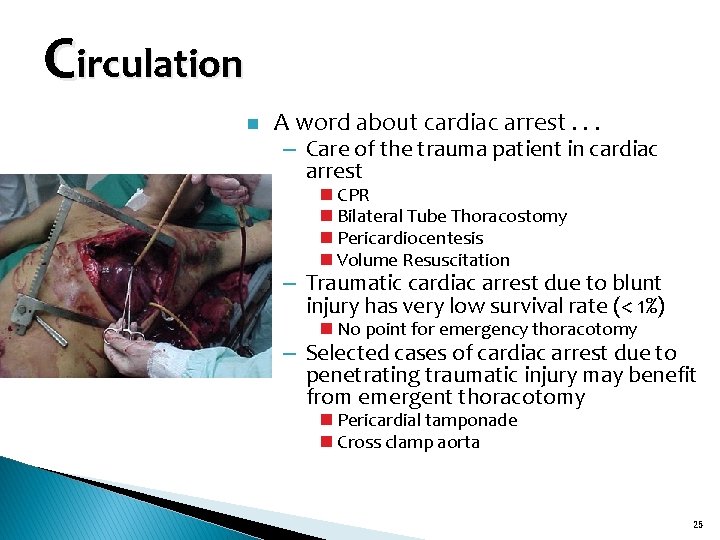
Circulation n A word about cardiac arrest. . . – Care of the trauma patient in cardiac arrest n CPR n Bilateral Tube Thoracostomy n Pericardiocentesis n Volume Resuscitation – Traumatic cardiac arrest due to blunt injury has very low survival rate (< 1%) n No point for emergency thoracotomy – Selected cases of cardiac arrest due to penetrating traumatic injury may benefit from emergent thoracotomy n Pericardial tamponade n Cross clamp aorta 25
Disability n Baseline Neurologic Exam ◦ Pupillary Exam n Dilated pupil – suggests transtentorial herniation on ipsilateral side ◦ AVPU Scale n Alert n Responds to verbal stimulation n Responds to pain n Unresponsive ◦ Gross Neurological Exam – Extremity Movement n Equal and symmetric n Normal gross sensation ◦ Glasgow Coma Scale: 3 -15 ◦ Rectal Exam n Normal Rectal Tone n Note: If intubation prior to neuro assessment, consider quick neuro assessment to determine degree of injury 26
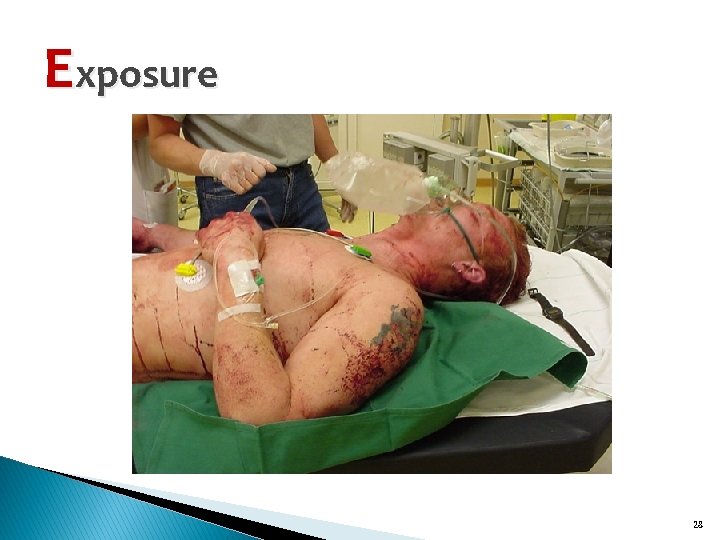
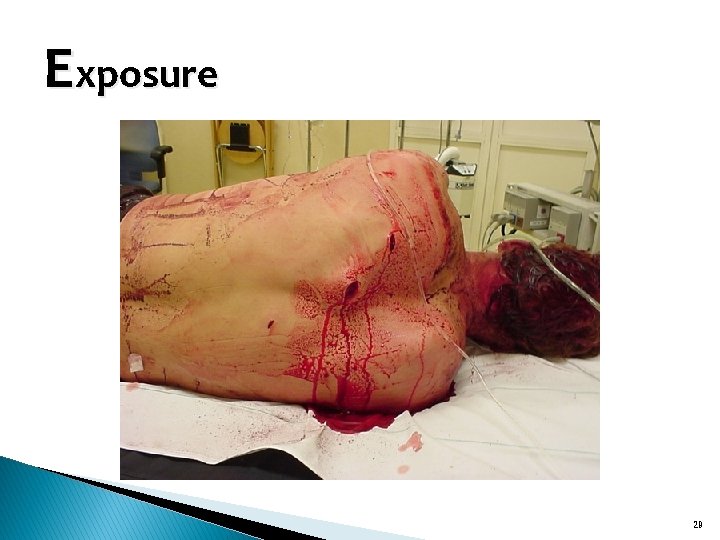
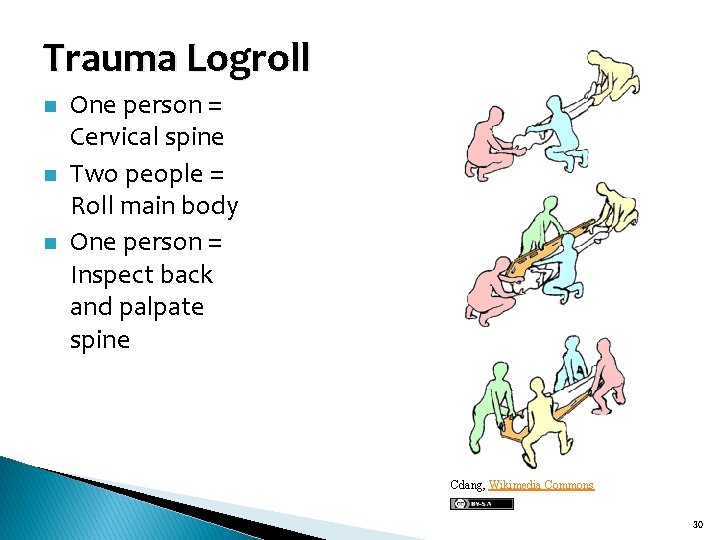
Exposure n Remove all clothing ◦ Examine for other signs of injury ◦ Injuries cannot be diagnosed until seen by provider n Logroll the patient to examine patient’s back ◦ Maintain cervical spinal immobilization ◦ Palpate along thoracic and lumbar spine ◦ Minimum of 3 people, often more providers required n Avoid hypothermia ◦ Apply warm blankets after removing clothes ◦ Hypothermia = Coagulopathy n Increases risk of hemorrhage 27
Exposure 28
Exposure 29
Trauma Logroll n n n One person = Cervical spine Two people = Roll main body One person = Inspect back and palpate spine Cdang, Wikimedia Commons 30
Secondary Survey n n n Secondary Survey is completed after primary survey is completed and patient has been adequately resuscitated. No patient with abnormal vital signs should proceed through a secondary survey Secondary Survey includes a brief history and complete physical exam 31
History n AMPLE History n History may need to be gathered from family members or ambulance service ◦ Allergies ◦ Medications ◦ Past Medical History, Pregnancy ◦ Last Meal ◦ Events surrounding injury, Environment 32
Physical Exam n n n n Head/HEENT Neck Chest Abdomen Pelvis Genitourinary Extremities Neurologic 33
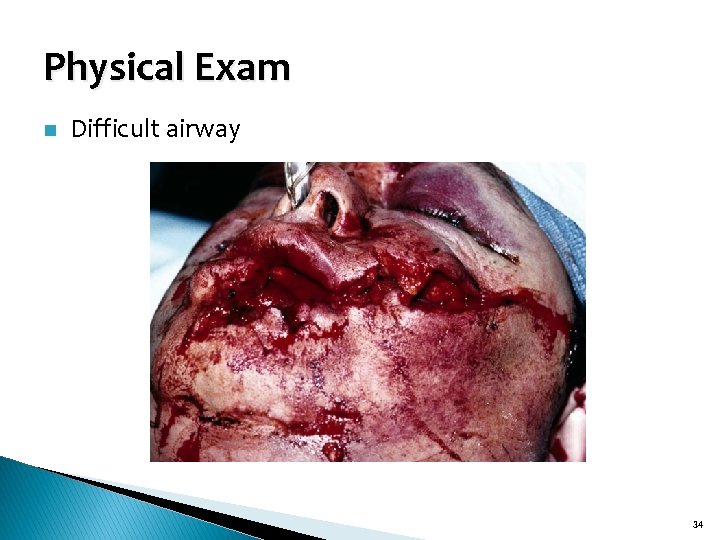
Physical Exam n Difficult airway 34
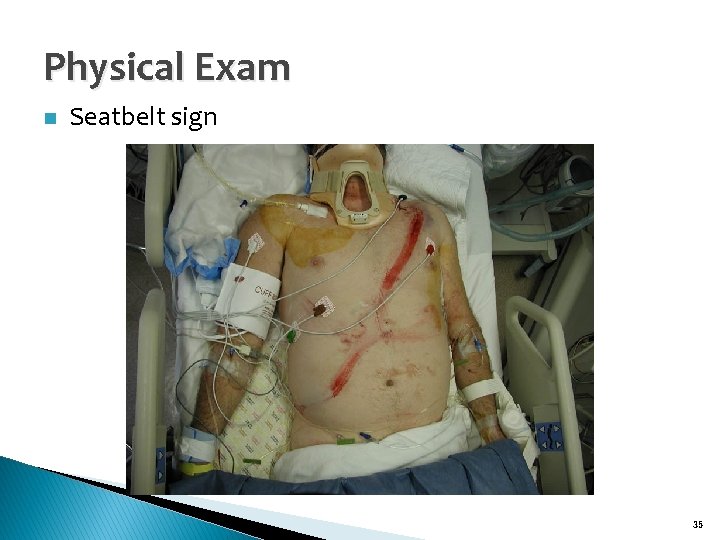
Physical Exam n Seatbelt sign 35
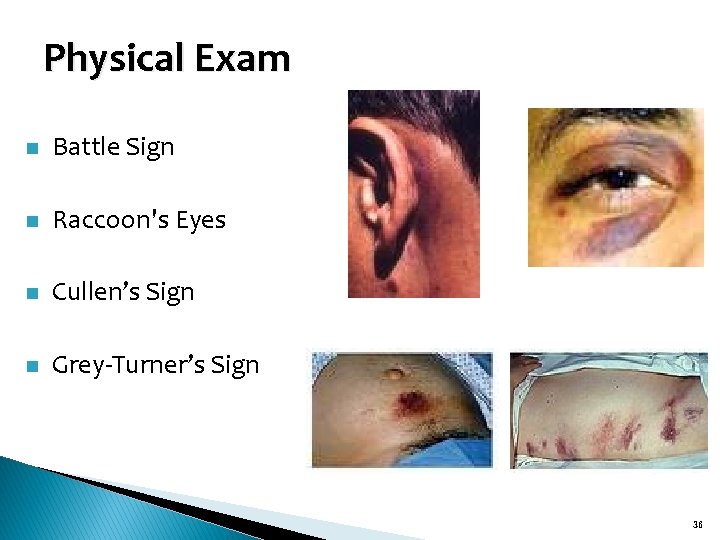
Physical Exam n Battle Sign n Raccoon's Eyes n Cullen’s Sign n Grey-Turner’s Sign 36
Adjuncts to Secondary Survey n Radiology ◦ Standard emergent films n C-spine, CXR, Pelvis ◦ Focused Abdominal Sonography in Trauma (FAST) ◦ Additional films n CT scan imaging n Angiography n Foley Catheter n n n Pain Control Tetanus Status Antibiotics for open fractures ◦ Blood at urethral meatus = No Foley catheter 37
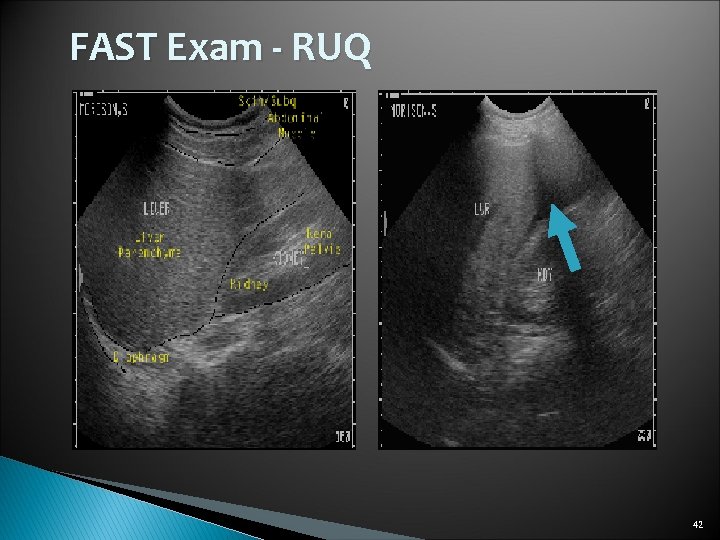
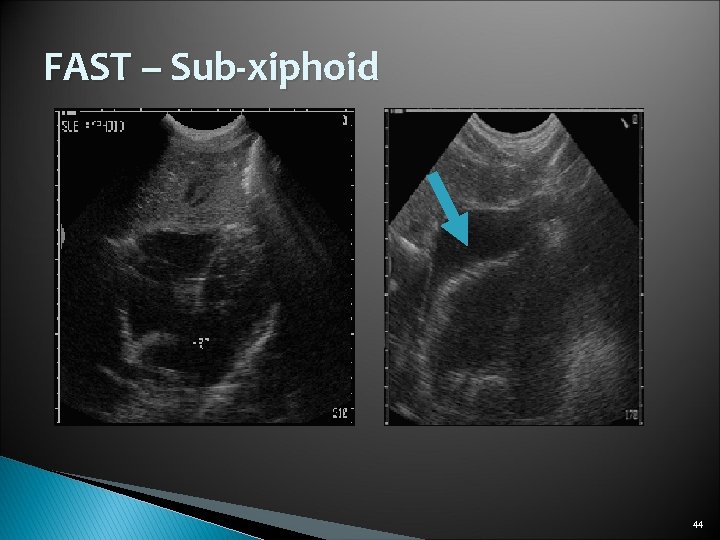
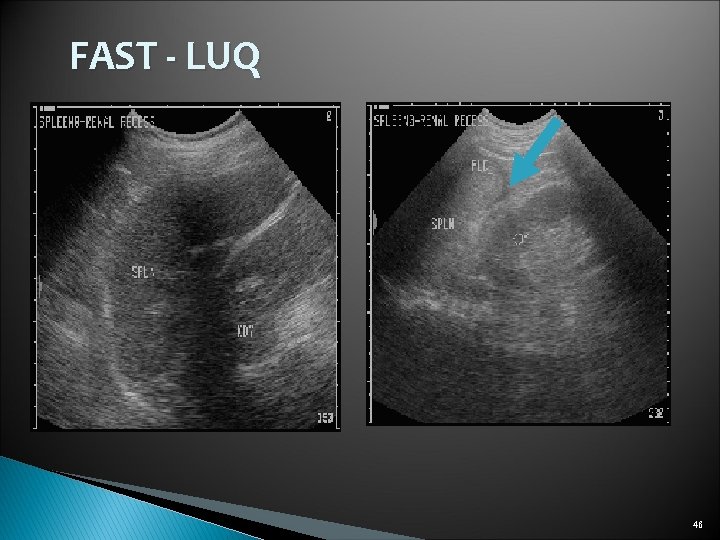
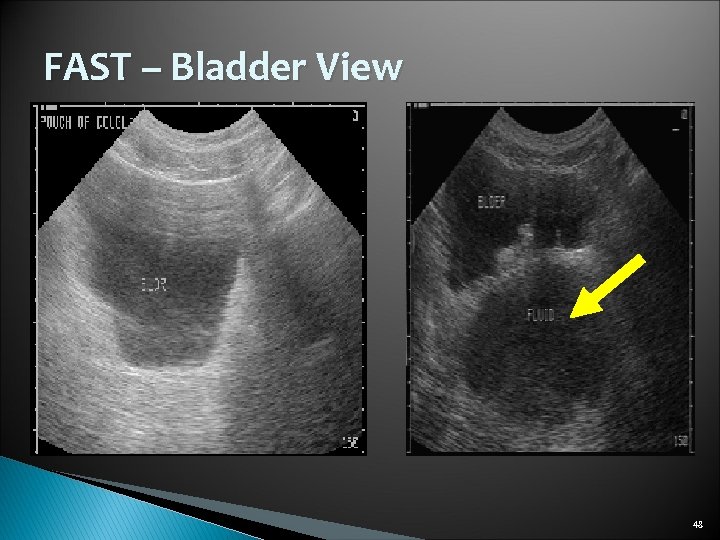
FAST Exam Focused Abdominal Sonography in Trauma 4 views of the abdomen to look for fluid. ◦ ◦ RUQ/Morrison’s pouch Sub-xiphoid – view of heart LUQ – view of spleno-renal junction Bladder – view of pelvis 38
FAST Has largely replaced deep peritoneal lavage (DPL) Bedside ultrasound looking for blood collection in an unstable patient. If the patient is unstable & blood collection is found, proceed urgently to the operating theater. 39
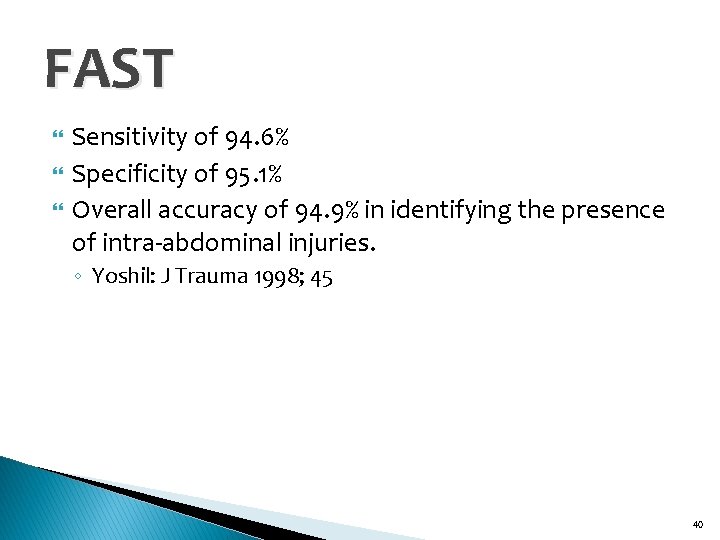
FAST Sensitivity of 94. 6% Specificity of 95. 1% Overall accuracy of 94. 9% in identifying the presence of intra-abdominal injuries. ◦ Yoshil: J Trauma 1998; 45 40
FAST Right Upper Quadrant - Morrison’s Pouch Between the liver and kidney in RUQ. First place that fluid collects in supine patient. 41
FAST Exam - RUQ 42
FAST – Sub-xiphoid Evaluate for pericardial fluid View through liver ◦ Transhepatic or Parasternal Searches for fluid between heart and pericardium 43
FAST – Sub-xiphoid 44
FAST – Left Upper Quadrant View between the spleen and kidney Another dependent place that fluid collects Also see diaphragm in this view 45
FAST - LUQ 46
FAST – Bladder View Evaluates for fluid in the pouch of Douglas ◦ Posterior to bladder Dependent potential space 47
FAST – Bladder View 48
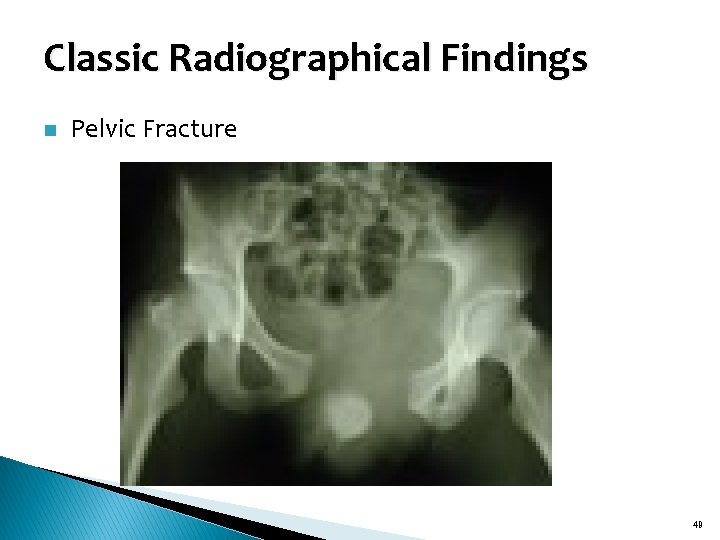
Classic Radiographical Findings n Pelvic Fracture 49
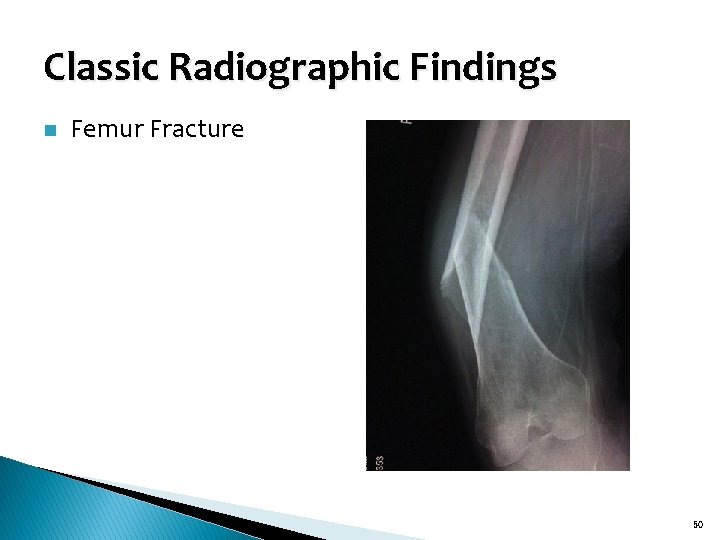
Classic Radiographic Findings n Femur Fracture 50
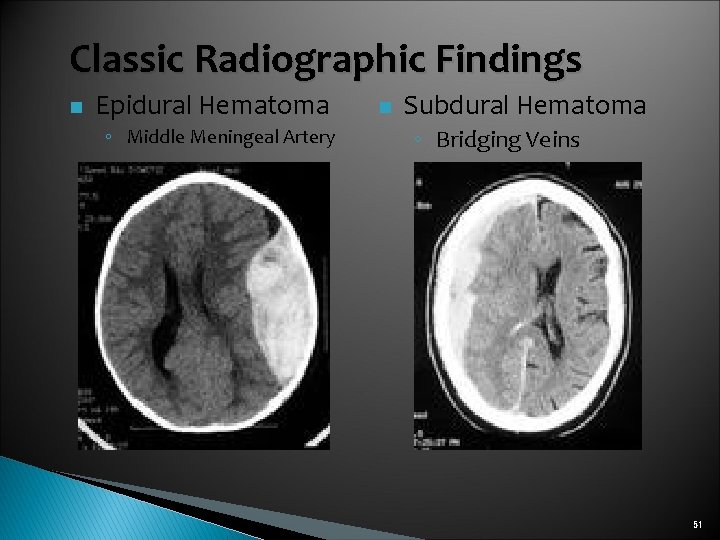
Classic Radiographic Findings n Epidural Hematoma ◦ Middle Meningeal Artery n Subdural Hematoma ◦ Bridging Veins 51
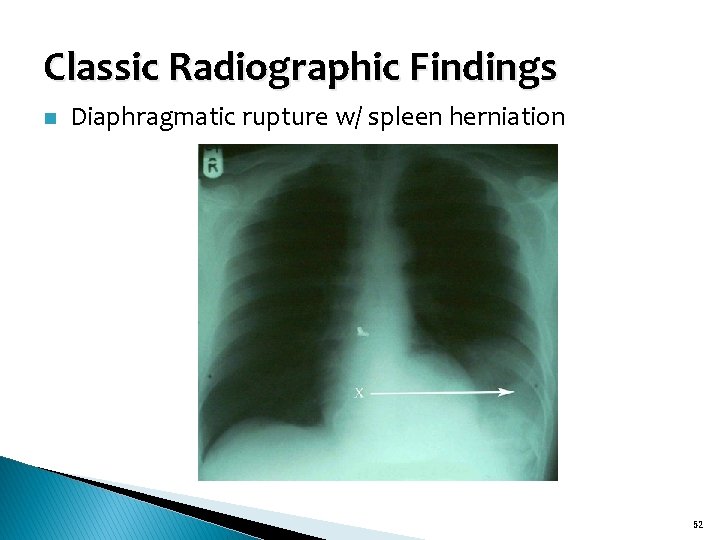
Classic Radiographic Findings n Diaphragmatic rupture w/ spleen herniation 52
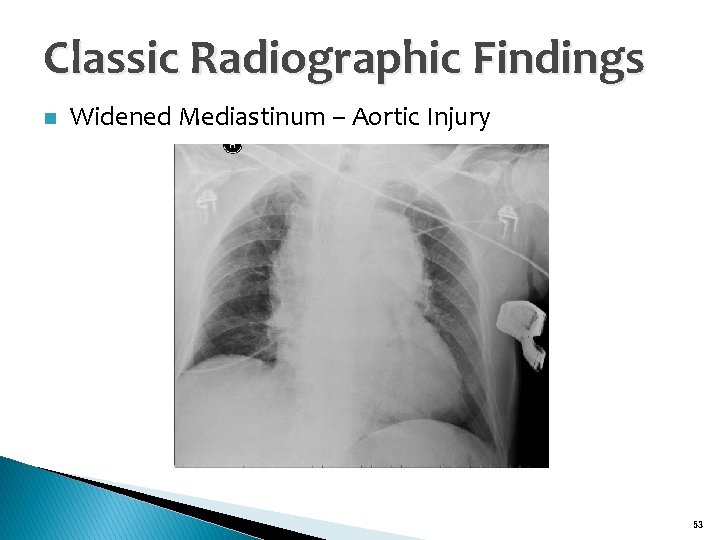
Classic Radiographic Findings n Widened Mediastinum – Aortic Injury 53
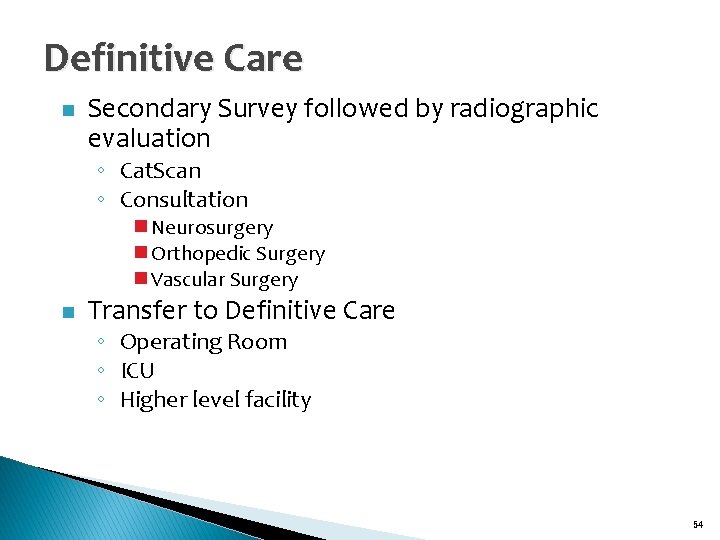
Definitive Care n Secondary Survey followed by radiographic evaluation ◦ Cat. Scan ◦ Consultation n Neurosurgery n Orthopedic Surgery n Vascular Surgery n Transfer to Definitive Care ◦ Operating Room ◦ ICU ◦ Higher level facility 54
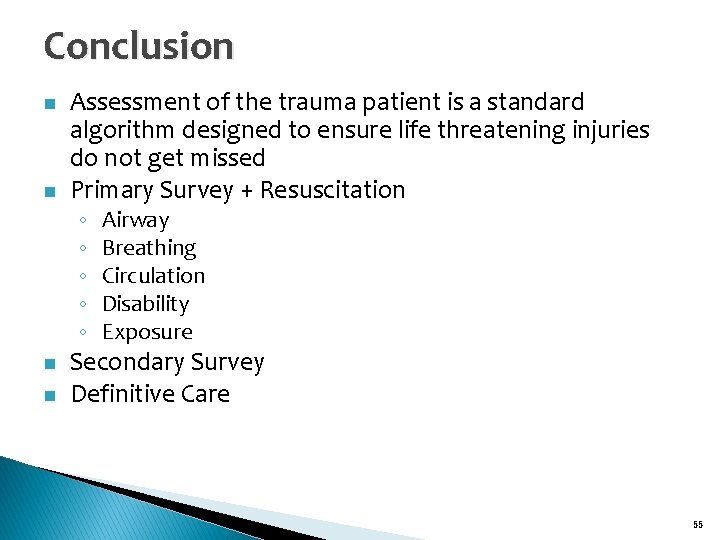
Conclusion n n Assessment of the trauma patient is a standard algorithm designed to ensure life threatening injuries do not get missed Primary Survey + Resuscitation ◦ ◦ ◦ n n Airway Breathing Circulation Disability Exposure Secondary Survey Definitive Care 55