
DEALING WITH CONFLICT BITING WHY AND WHAT CAN
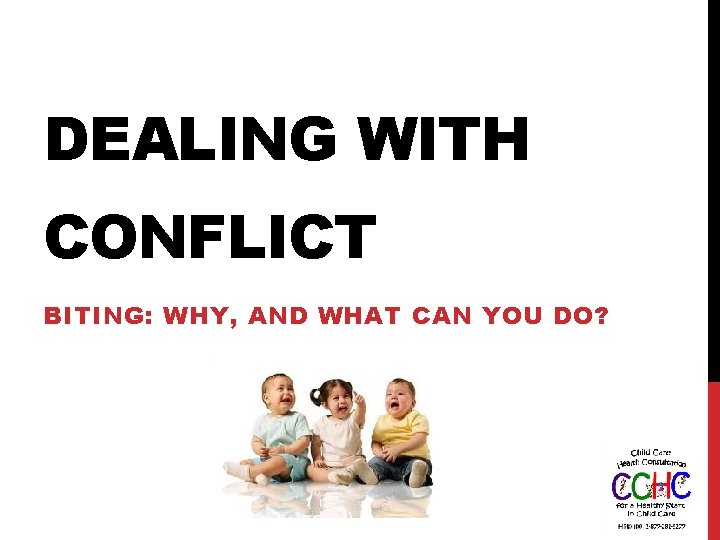
DEALING WITH CONFLICT BITING: WHY, AND WHAT CAN YOU DO?
OBJECTIVES • Define conflict • Discuss and understand why conflicts occur in the classroom • Understand the common causes of conflict between children • Identify our role as childcare providers in conflicts between children
OBJECTIVES • Recognize the valuable social aspects of conflict • Understand the different ways children may approach conflict, including biting • Identify the reasons children may bite, what they mean, and how to handle them • Understand what strategies are not affective in handling biting

ICEBREAKER
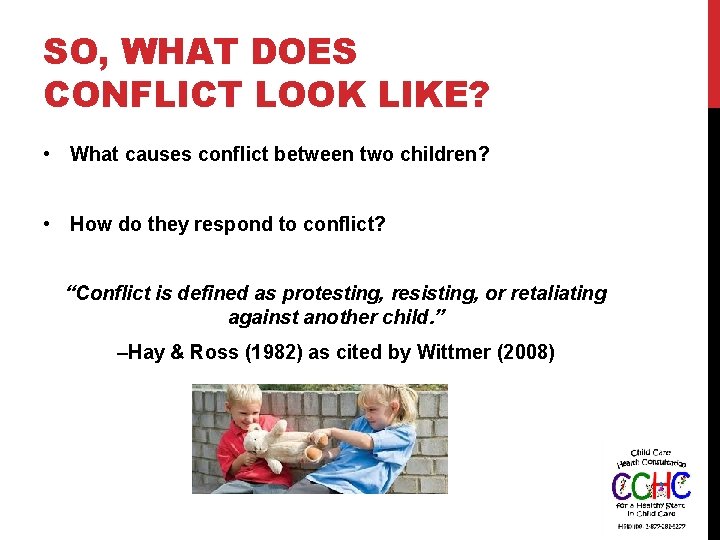
SO, WHAT DOES CONFLICT LOOK LIKE? • What causes conflict between two children? • How do they respond to conflict? “Conflict is defined as protesting, resisting, or retaliating against another child. ” –Hay & Ross (1982) as cited by Wittmer (2008)
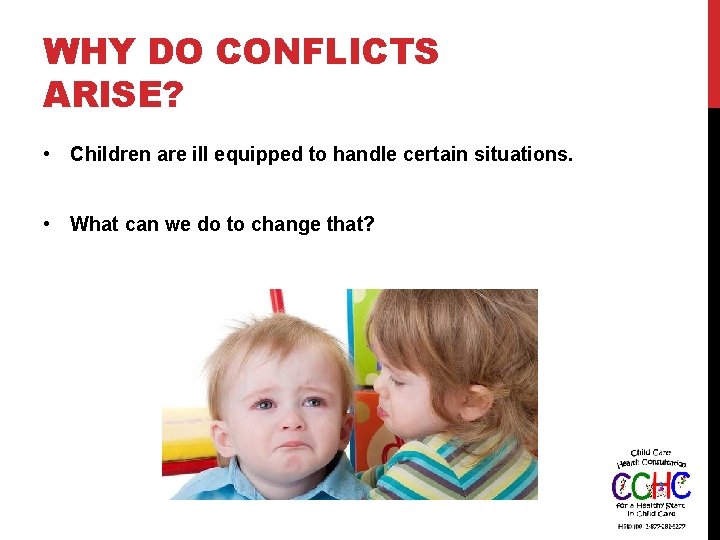
WHY DO CONFLICTS ARISE? • Children are ill equipped to handle certain situations. • What can we do to change that?
ACTIVITY • Partner up. • Each of you will have a card labeled with an emotion. • Express these feelings to one another without using words. • How does this relate to conflict between children?
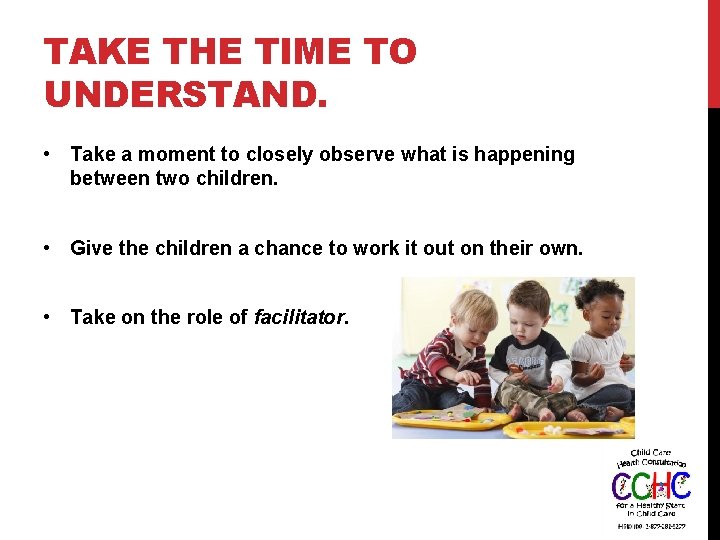
TAKE THE TIME TO UNDERSTAND. • Take a moment to closely observe what is happening between two children. • Give the children a chance to work it out on their own. • Take on the role of facilitator.
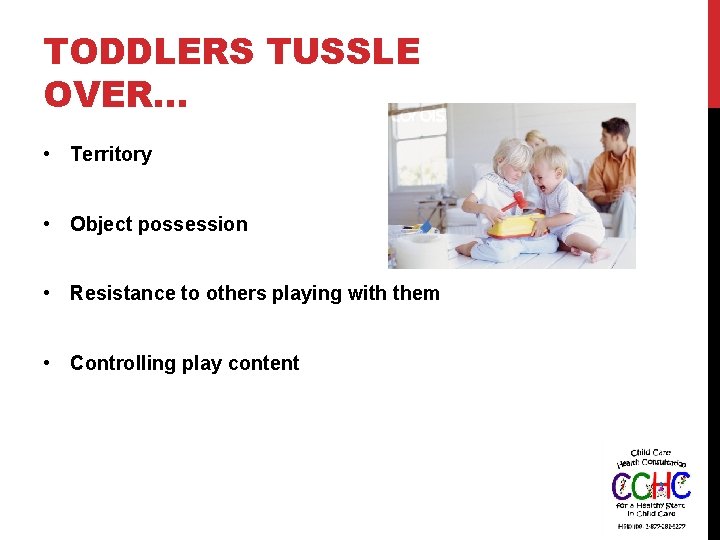
TODDLERS TUSSLE OVER… • Territory • Object possession • Resistance to others playing with them • Controlling play content
TODDLERS TUSSLE OVER… • Access to toys • Resistance to other children’s aggression • Ego testing • Dominance
CASE STUDY You are in your classroom attending to many children’s needs at once, when you see Johnny yanking a toy train from Sara. You rush over to get a closer look and hear Sara say, “Give me that, it’s mine!” Johnny clings tightly to the toy, refusing to give it back.
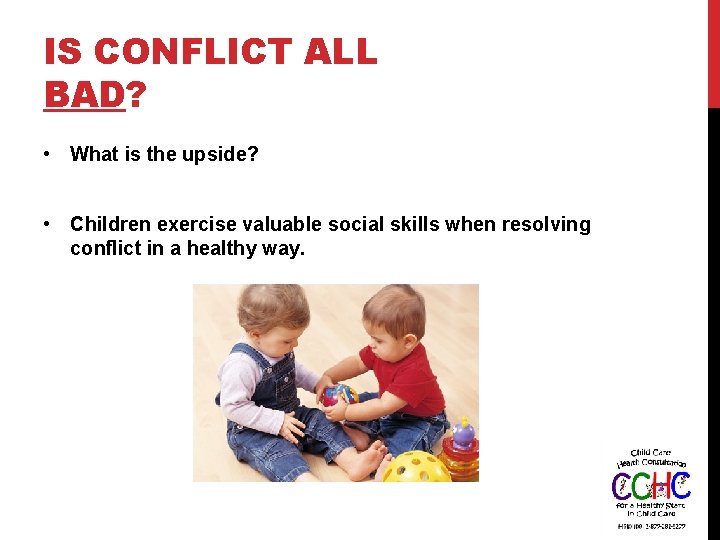
IS CONFLICT ALL BAD? • What is the upside? • Children exercise valuable social skills when resolving conflict in a healthy way.
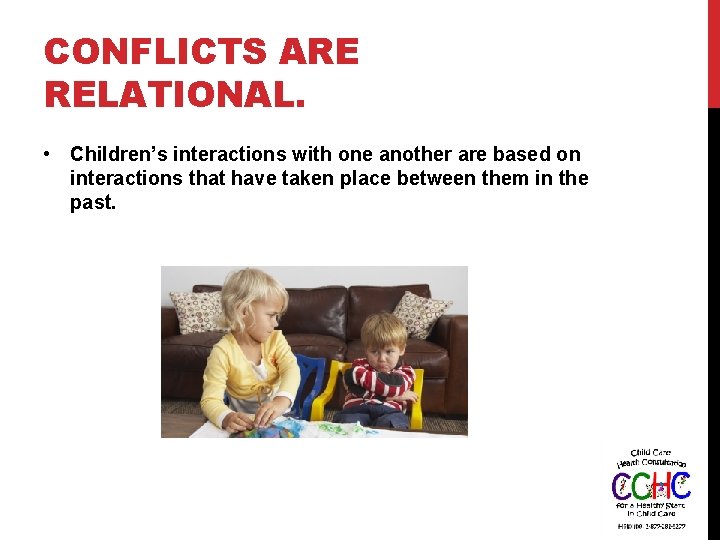
CONFLICTS ARE RELATIONAL. • Children’s interactions with one another are based on interactions that have taken place between them in the past.
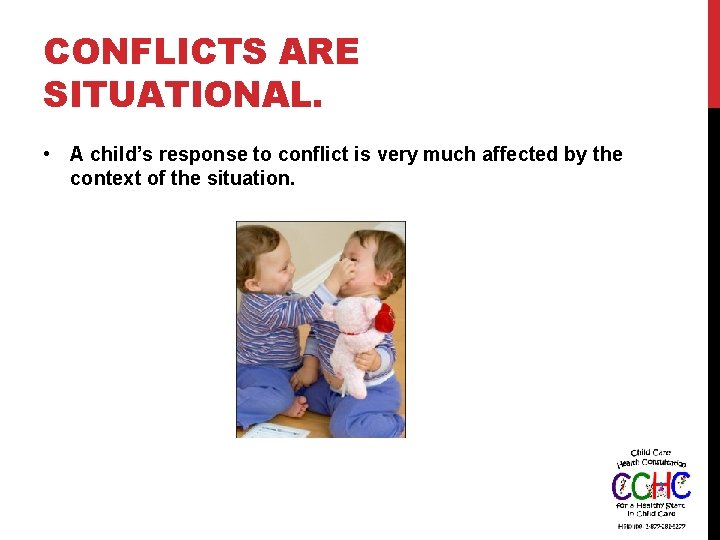
CONFLICTS ARE SITUATIONAL. • A child’s response to conflict is very much affected by the context of the situation.
CHILDREN’S STRATEGIES • Younger children may try to get their way using a simple, “No!” • Older children are more likely to appropriately justify their case if they have had an opportunity to learn these behaviors. • Boys vs. Girls
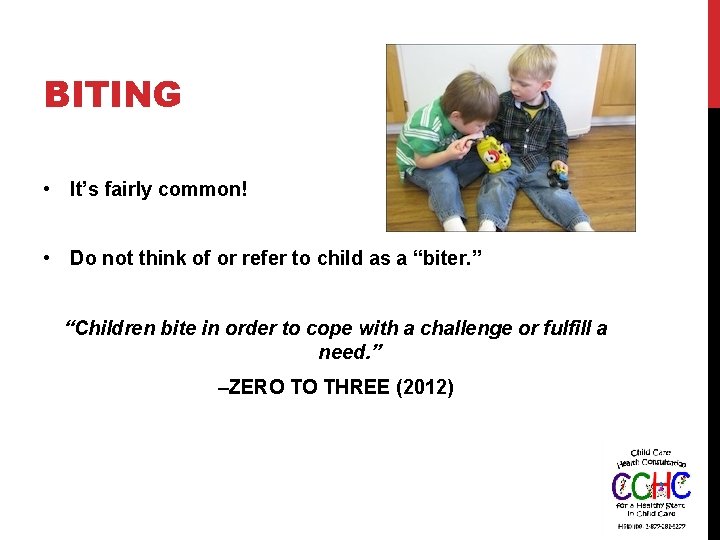
BITING • It’s fairly common! • Do not think of or refer to child as a “biter. ” “Children bite in order to cope with a challenge or fulfill a need. ” –ZERO TO THREE (2012)
IDENTIFYING THE CAUSE • What was the last thing that happened? • Who was the child with? • Is the child biting the same or different children each time? • Where is the biting happening? • What is the child doing?
RESPONDING: GENERAL RULES 1. Focus on staying calm. A biting child can cause a mix of emotions—step back and take a deep breath before you respond. 2. Respond firmly, simply, and clearly; not angrily. 3. Shift attention to child who was bitten immediately.
RESPONDING: GENERAL RULES (CONT. ) 4. Remind the child who has bitten of alternative strategies. 5. Help the children move into a new activity.
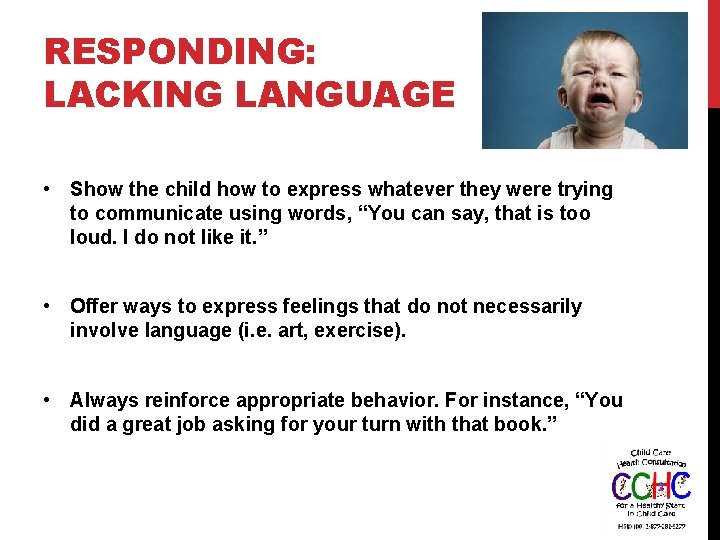
RESPONDING: LACKING LANGUAGE • Show the child how to express whatever they were trying to communicate using words, “You can say, that is too loud. I do not like it. ” • Offer ways to express feelings that do not necessarily involve language (i. e. art, exercise). • Always reinforce appropriate behavior. For instance, “You did a great job asking for your turn with that book. ”
RESPONDING: SENSORY OVERLOAD • Keep TV, radio, and other sound devices turned off or at a low volume. • Avoid crowds and busy settings. • Pay close attention to when you schedule activities that require a lot of sensory input. • Give a nice, firm hug. • Keep a designated calm area for comfort.
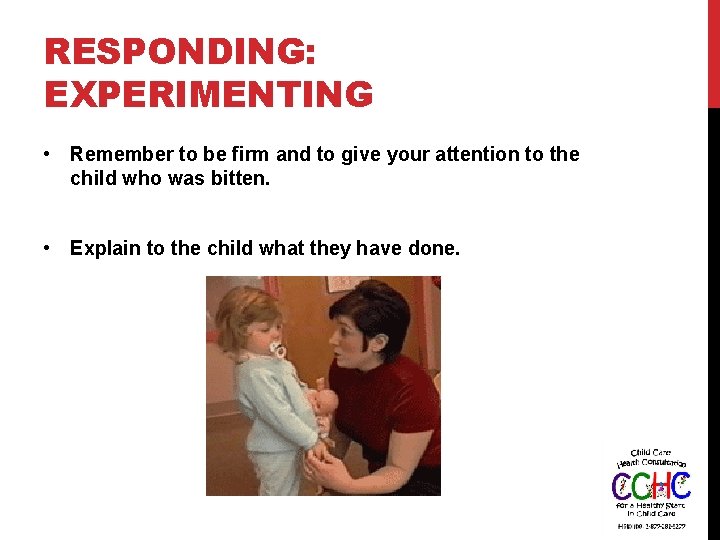
RESPONDING: EXPERIMENTING • Remember to be firm and to give your attention to the child who was bitten. • Explain to the child what they have done.
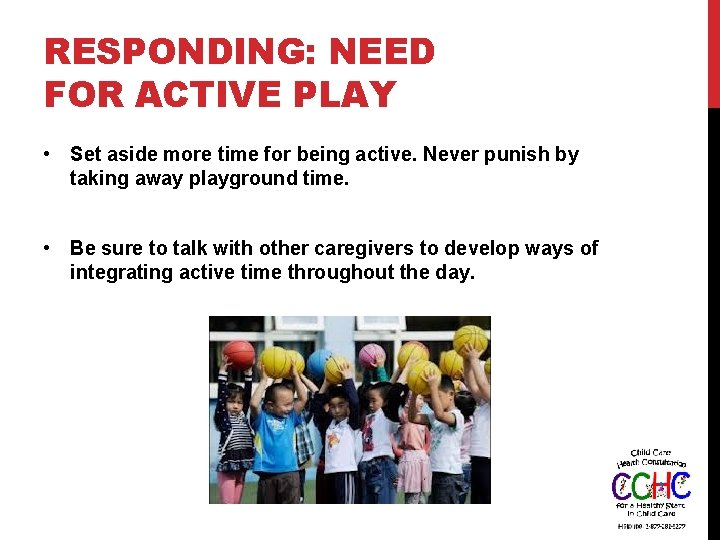
RESPONDING: NEED FOR ACTIVE PLAY • Set aside more time for being active. Never punish by taking away playground time. • Be sure to talk with other caregivers to develop ways of integrating active time throughout the day.
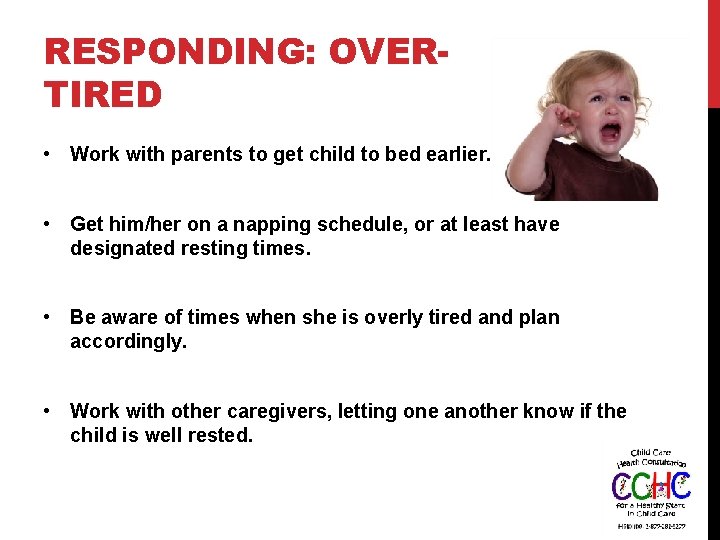
RESPONDING: OVERTIRED • Work with parents to get child to bed earlier. • Get him/her on a napping schedule, or at least have designated resting times. • Be aware of times when she is overly tired and plan accordingly. • Work with other caregivers, letting one another know if the child is well rested.
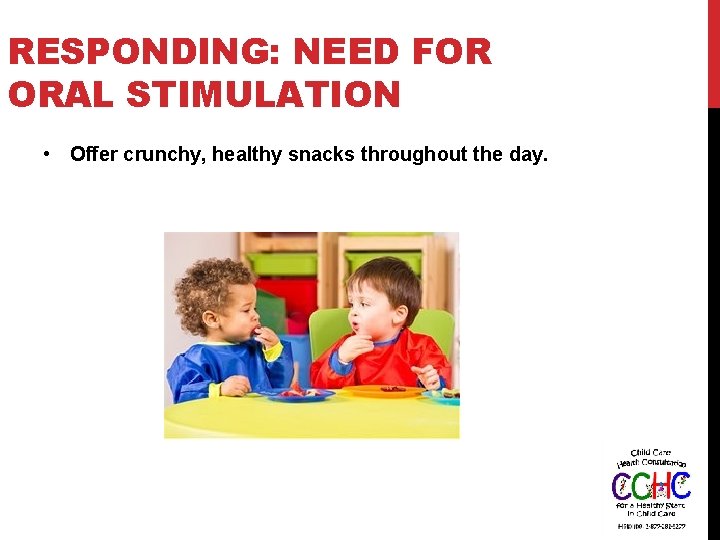
RESPONDING: NEED FOR ORAL STIMULATION • Offer crunchy, healthy snacks throughout the day.
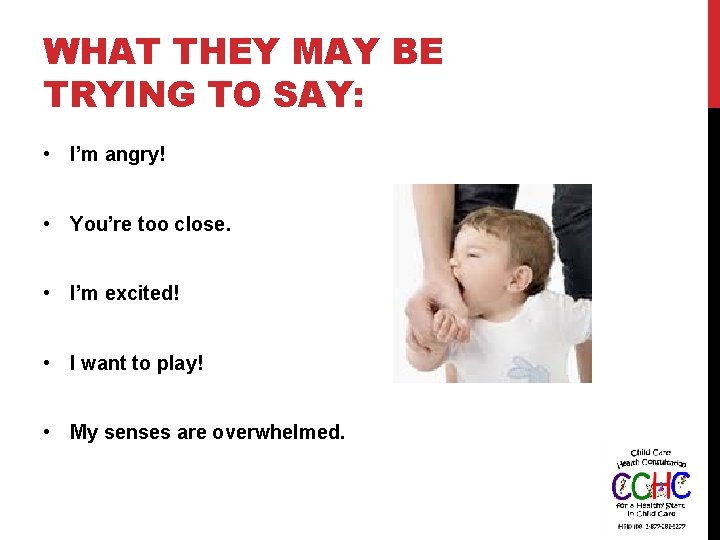
WHAT THEY MAY BE TRYING TO SAY: • I’m angry! • You’re too close. • I’m excited! • I want to play! • My senses are overwhelmed.
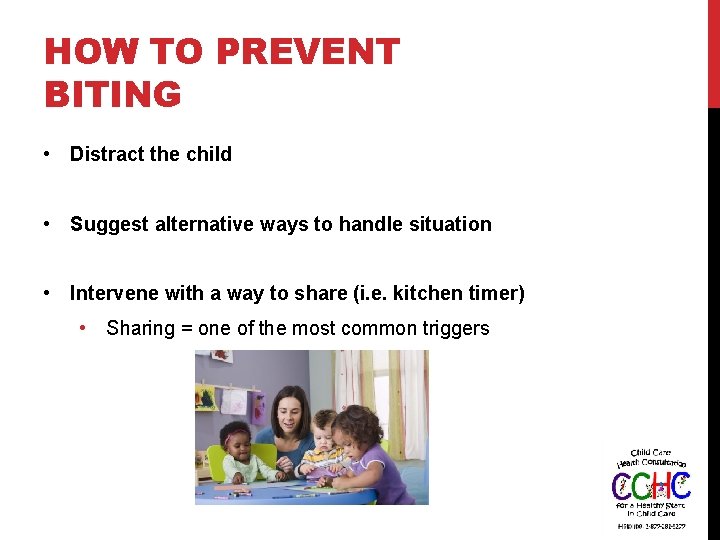
HOW TO PREVENT BITING • Distract the child • Suggest alternative ways to handle situation • Intervene with a way to share (i. e. kitchen timer) • Sharing = one of the most common triggers
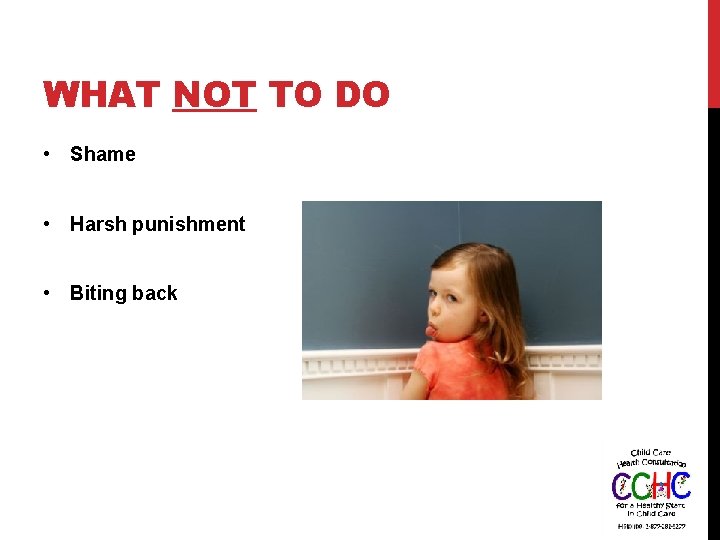
WHAT NOT TO DO • Shame • Harsh punishment • Biting back
SOURCES • ZERO TO THREE. Why do toddlers bite? Finding the right response. In Behavior and development (challenging behavior). Retrieved from http: //www. zerotothree. org/child -development/challenging-behavior/chew-on-thisresources-on-biting. html • Wittmer, Donna S. (2008). Of course, there are conflicts— and then there is biting. Focusing on peers: The importance of relationships in the early years. Washington, DC: ZERO TO THREE. • Adapted from presentation by Carley Travis
- Slides: 30