
De Novo Genome Assembly Introduction Henrik Lantz NBISSci
De Novo Genome Assembly - Introduction Henrik Lantz - NBIS/Sci. Life/Uppsala University

De Novo Assembly - Scope • De novo genome assembly - not reference based • Bioinformatics course - not biological interpretation • Practical experience - focus on computer exercises • Examples of programs - not exhaustive
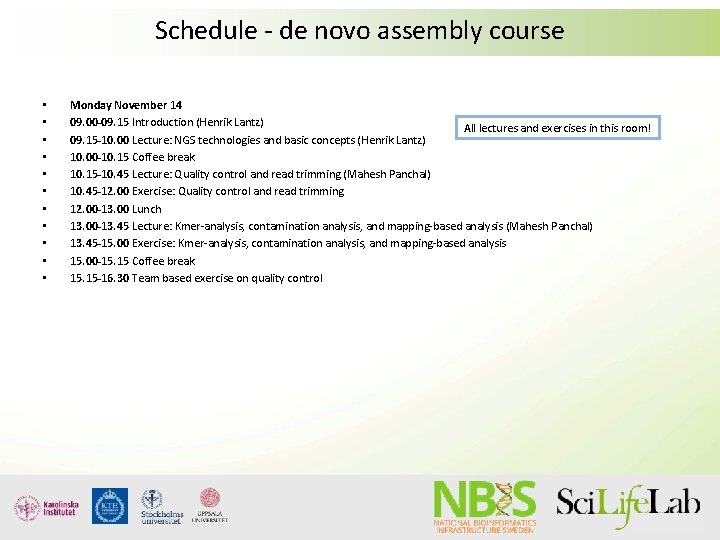
Schedule - de novo assembly course • • • Monday November 14 09. 00 -09. 15 Introduction (Henrik Lantz) All lectures and exercises in this room! 09. 15 -10. 00 Lecture: NGS technologies and basic concepts (Henrik Lantz) 10. 00 -10. 15 Coffee break 10. 15 -10. 45 Lecture: Quality control and read trimming (Mahesh Panchal) 10. 45 -12. 00 Exercise: Quality control and read trimming 12. 00 -13. 00 Lunch 13. 00 -13. 45 Lecture: Kmer-analysis, contamination analysis, and mapping-based analysis (Mahesh Panchal) 13. 45 -15. 00 Exercise: Kmer-analysis, contamination analysis, and mapping-based analysis 15. 00 -15. 15 Coffee break 15. 15 -16. 30 Team based exercise on quality control
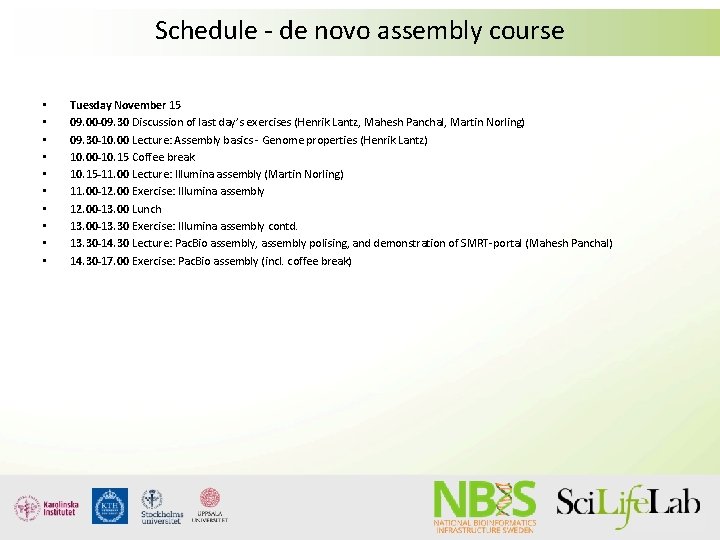
Schedule - de novo assembly course • • • Tuesday November 15 09. 00 -09. 30 Discussion of last day’s exercises (Henrik Lantz, Mahesh Panchal, Martin Norling) 09. 30 -10. 00 Lecture: Assembly basics - Genome properties (Henrik Lantz) 10. 00 -10. 15 Coffee break 10. 15 -11. 00 Lecture: Illumina assembly (Martin Norling) 11. 00 -12. 00 Exercise: Illumina assembly 12. 00 -13. 00 Lunch 13. 00 -13. 30 Exercise: Illumina assembly contd. 13. 30 -14. 30 Lecture: Pac. Bio assembly, assembly polising, and demonstration of SMRT-portal (Mahesh Panchal) 14. 30 -17. 00 Exercise: Pac. Bio assembly (incl. coffee break)
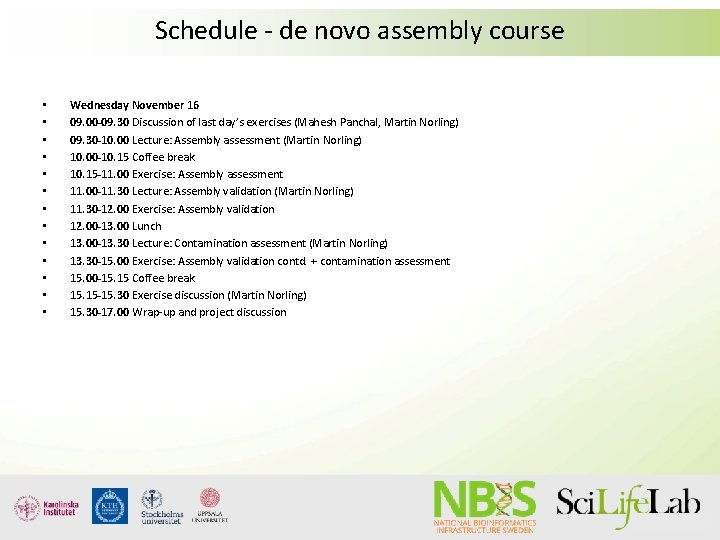
Schedule - de novo assembly course • • • • Wednesday November 16 09. 00 -09. 30 Discussion of last day’s exercises (Mahesh Panchal, Martin Norling) 09. 30 -10. 00 Lecture: Assembly assessment (Martin Norling) 10. 00 -10. 15 Coffee break 10. 15 -11. 00 Exercise: Assembly assessment 11. 00 -11. 30 Lecture: Assembly validation (Martin Norling) 11. 30 -12. 00 Exercise: Assembly validation 12. 00 -13. 00 Lunch 13. 00 -13. 30 Lecture: Contamination assessment (Martin Norling) 13. 30 -15. 00 Exercise: Assembly validation contd. + contamination assessment 15. 00 -15. 15 Coffee break 15. 15 -15. 30 Exercise discussion (Martin Norling) 15. 30 -17. 00 Wrap-up and project discussion
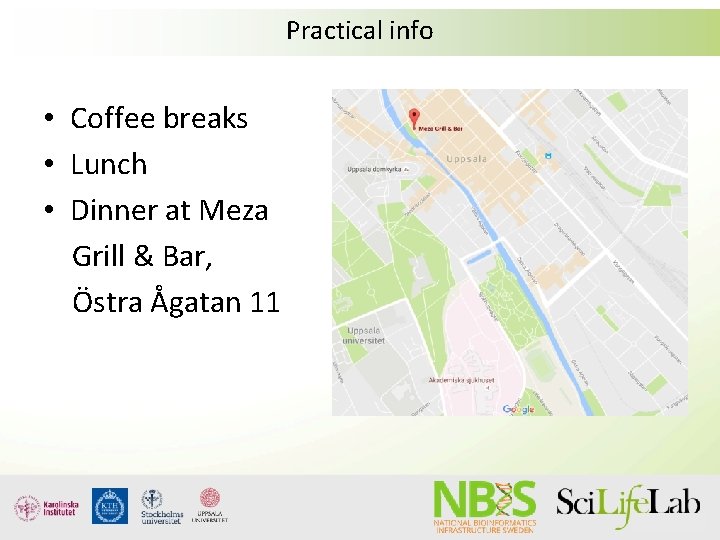
Practical info • Coffee breaks • Lunch • Dinner at Meza Grill & Bar, Östra Ågatan 11
De Novo Genome Assembly - Assembly basics Henrik Lantz - BILS/Sci. Life/Uppsala University

De novo genome project workflow • • • Extract DNA (and RNA) Choose best sequence technology for the project Sequencing Quality assessment and other pre-assembly investigations Assembly validation Assembly comparisons Repeat masking? Annotation
De novo genome project workflow • Extract DNA (and RNA)

De novo genome project workflow • Extract DNA (and RNA) Extract much more DNA than you think you need Also remember to extract RNA for the annotation Single individual and haploid tissue if possible In particular for Illumina mate-pairs data and Pac. Bio, a lot of high molecular weight DNA is critical! • Extracting DNA for de novo assembly is very different from extractions intended for PCR • Do several extractions if possible, and run them on a gel to get an idea of how fragmented the DNA is • Try to remove contaminants from the extractions • •
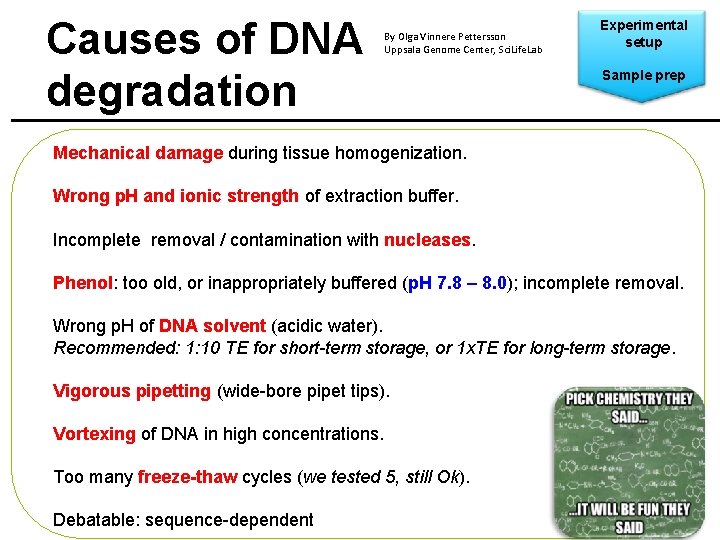
Causes of DNA degradation By Olga Vinnere Pettersson Uppsala Genome Center, Sci. Life. Lab Experimental setup Sample prep Mechanical damage during tissue homogenization. Wrong p. H and ionic strength of extraction buffer. Incomplete removal / contamination with nucleases. Phenol: too old, or inappropriately buffered (p. H 7. 8 – 8. 0); incomplete removal. Wrong p. H of DNA solvent (acidic water). Recommended: 1: 10 TE for short-term storage, or 1 x. TE for long-term storage. Vigorous pipetting (wide-bore pipet tips). Vortexing of DNA in high concentrations. Too many freeze-thaw cycles (we tested 5, still Ok). Debatable: sequence-dependent
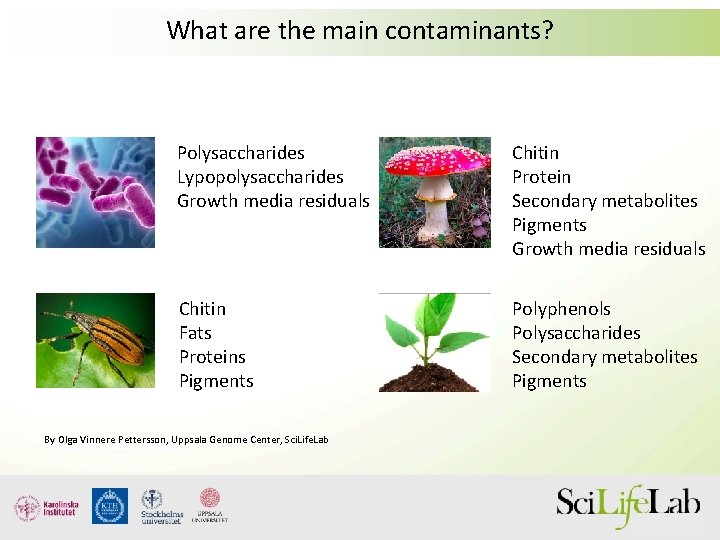
What are the main contaminants? Polysaccharides Lypopolysaccharides Growth media residuals Chitin Protein Secondary metabolites Pigments Growth media residuals Chitin Fats Proteins Pigments Polyphenols Polysaccharides Secondary metabolites Pigments By Olga Vinnere Pettersson, Uppsala Genome Center, Sci. Life. Lab
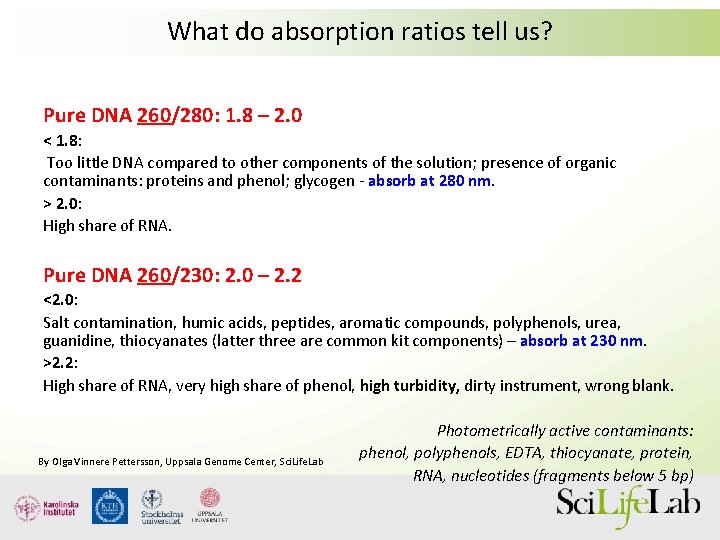
What do absorption ratios tell us? Pure DNA 260/280: 1. 8 – 2. 0 < 1. 8: Too little DNA compared to other components of the solution; presence of organic contaminants: proteins and phenol; glycogen - absorb at 280 nm. > 2. 0: High share of RNA. Pure DNA 260/230: 2. 0 – 2. 2 <2. 0: Salt contamination, humic acids, peptides, aromatic compounds, polyphenols, urea, guanidine, thiocyanates (latter three are common kit components) – absorb at 230 nm. >2. 2: High share of RNA, very high share of phenol, high turbidity, dirty instrument, wrong blank. By Olga Vinnere Pettersson, Uppsala Genome Center, Sci. Life. Lab Photometrically active contaminants: phenol, polyphenols, EDTA, thiocyanate, protein, RNA, nucleotides (fragments below 5 bp)
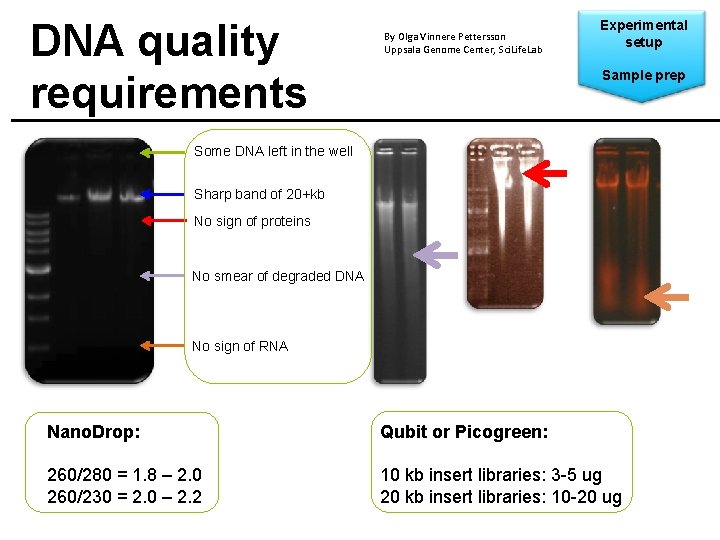
DNA quality requirements By Olga Vinnere Pettersson Uppsala Genome Center, Sci. Life. Lab Experimental setup Sample prep Some DNA left in the well Sharp band of 20+kb No sign of proteins No smear of degraded DNA No sign of RNA Nano. Drop: Qubit or Picogreen: 260/280 = 1. 8 – 2. 0 260/230 = 2. 0 – 2. 2 10 kb insert libraries: 3 -5 ug 20 kb insert libraries: 10 -20 ug

Example: By Olga Vinnere Pettersson Uppsala Genome Center, Sci. Life. Lab Experimental setup Sample prep
Some general concepts • • Assembly process Coverage Paired end/mate pair Insert size File formats Contigs/scaffolds N 50
Next Generation Sequencing • Genomic DNA is fragmented (not Nanopore) and sequenced -> millions of small sequences (reads) from random parts of the genome • Depending on sequence technology, reads can be from 100 bp up to 100 kb in length
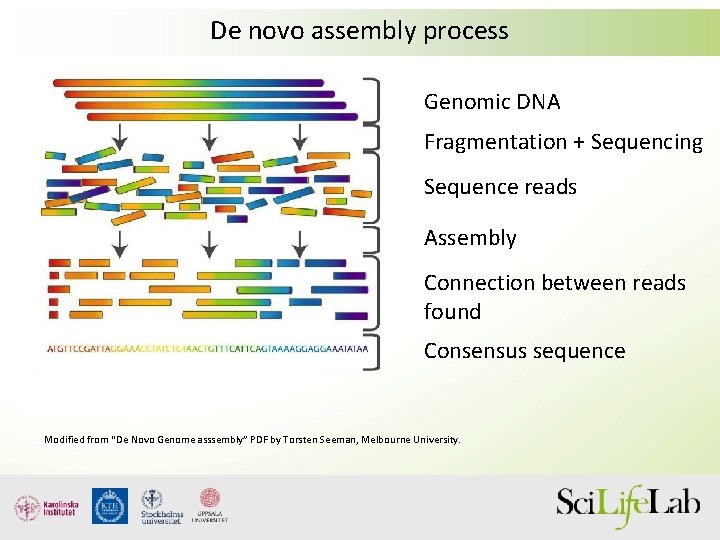
De novo assembly process Genomic DNA Fragmentation + Sequencing Sequence reads Assembly Connection between reads found Consensus sequence Modified from “De Novo Genome asssembly” PDF by Torsten Seeman, Melbourne University.
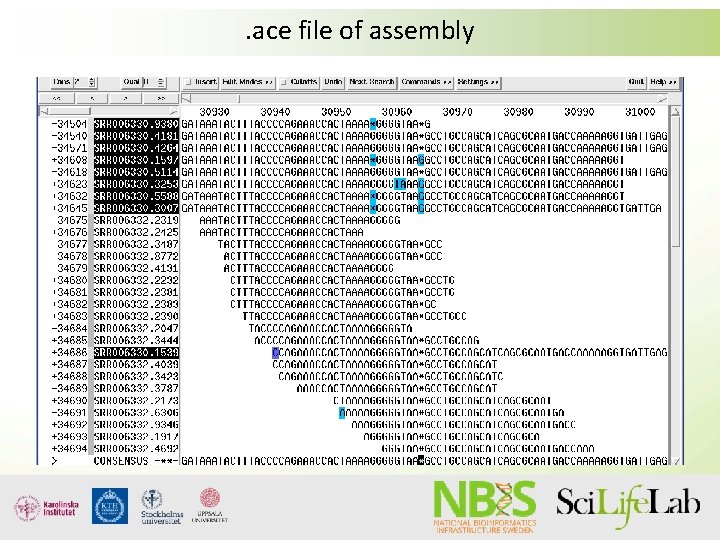
. ace file of assembly

Assembly Reads 5 x Assembly 2 x Per base coverage Overlapping reads Consensus sequence = genome Usually the haploid genome that is reported Per base coverage = number of reads that support a certain position Depth of coverage = average coverage (often shortened to “coverage” or “depth”)
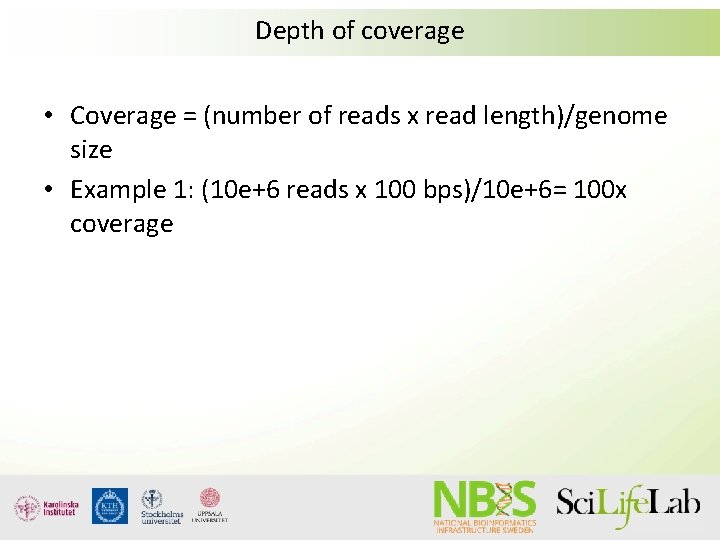
Depth of coverage • Coverage = (number of reads x read length)/genome size • Example 1: (10 e+6 reads x 100 bps)/10 e+6= 100 x coverage

Depth of coverage • Example 2: I know that the genome I am sequencing is 10 Mbases. I want a 50 x coverage to do a good assembly. I am ordering 125 bp Illumina reads. How many reads do I need? • (125 x. N)/10 e+6=50 • N=(50 x 10 e+6)/125=4 e+6 (4 million reads) • A Illumina lane gives you 180 x 2 million reads (PE)
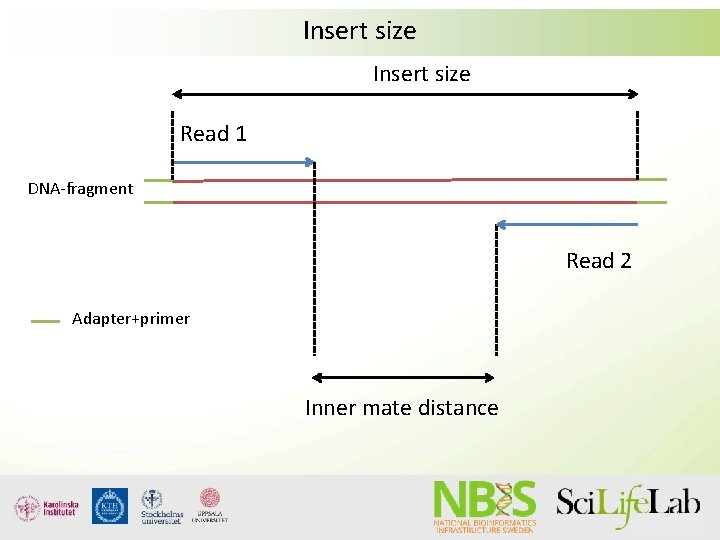
Insert size Read 1 DNA-fragment Read 2 Adapter+primer Inner mate distance
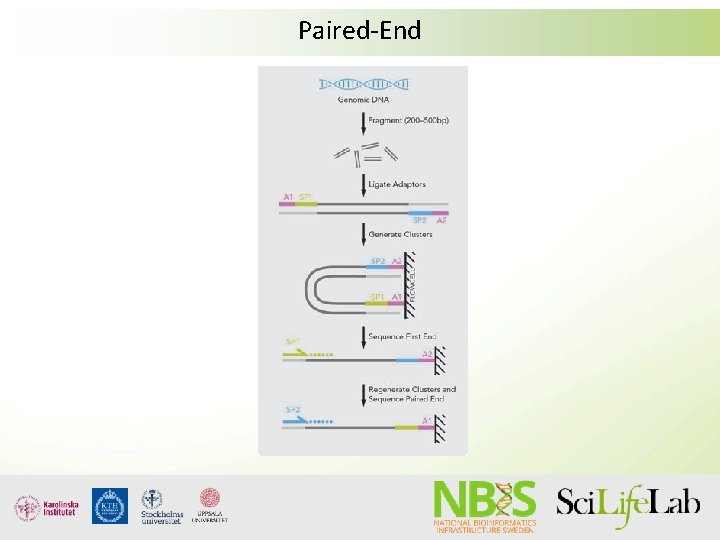
Paired-End
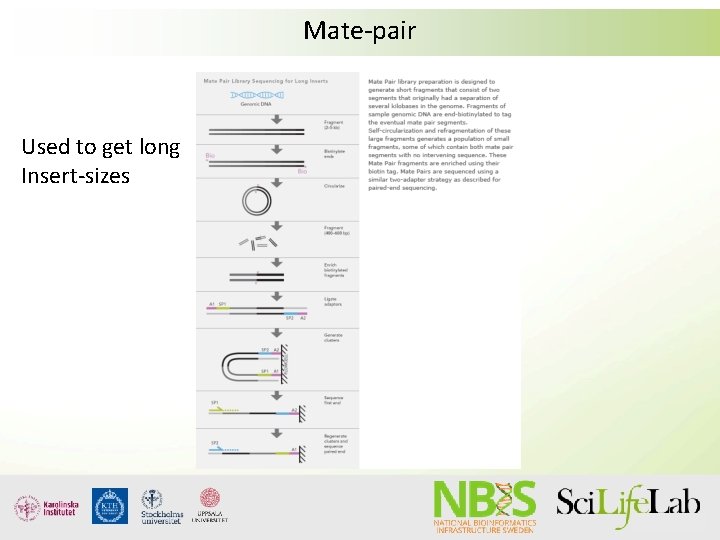
Mate-pair Used to get long Insert-sizes
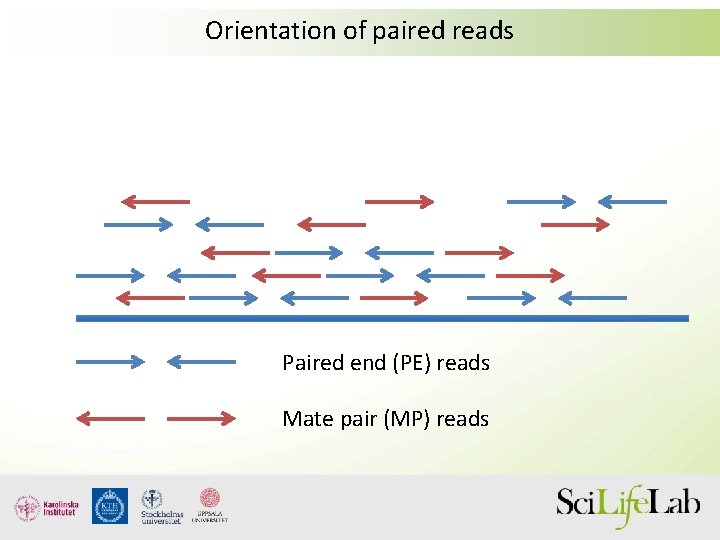
Orientation of paired reads Paired end (PE) reads Mate pair (MP) reads
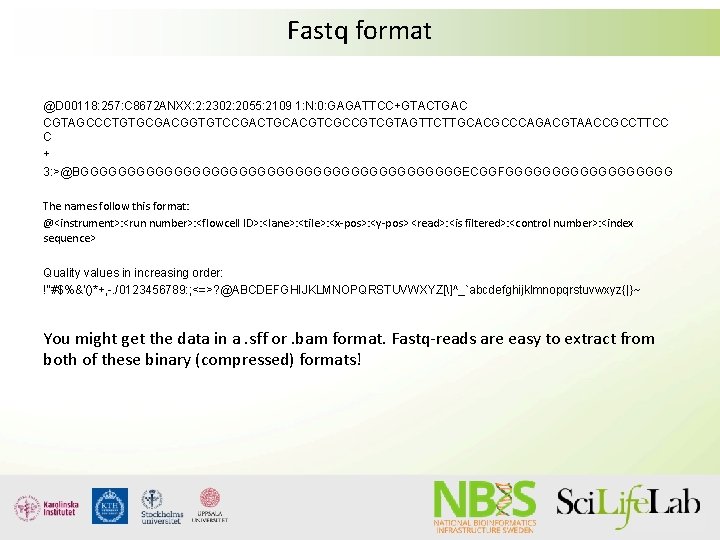
Fastq format @D 00118: 257: C 8672 ANXX: 2: 2302: 2055: 2109 1: N: 0: GAGATTCC+GTACTGAC CGTAGCCCTGTGCGACGGTGTCCGACTGCACGTCGCCGTCGTAGTTCTTGCACGCCCAGACGTAACCGCCTTCC C + 3: >@BGGGGGGGGGGGGGGGGGGGGGECGGFGGGGGGGGG The names follow this format: @<instrument>: <run number>: <flowcell ID>: <lane>: <tile>: <x-pos>: <y-pos> <read>: <is filtered>: <control number>: <index sequence> Quality values in increasing order: !"#$%&'()*+, -. /0123456789: ; <=>? @ABCDEFGHIJKLMNOPQRSTUVWXYZ[]^_`abcdefghijklmnopqrstuvwxyz{|}~ You might get the data in a. sff or. bam format. Fastq-reads are easy to extract from both of these binary (compressed) formats!
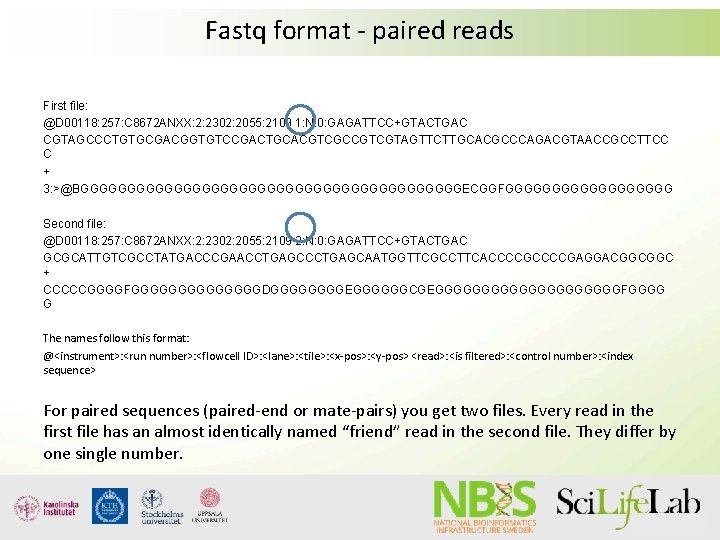
Fastq format - paired reads First file: @D 00118: 257: C 8672 ANXX: 2: 2302: 2055: 2109 1: N: 0: GAGATTCC+GTACTGAC CGTAGCCCTGTGCGACGGTGTCCGACTGCACGTCGCCGTCGTAGTTCTTGCACGCCCAGACGTAACCGCCTTCC C + 3: >@BGGGGGGGGGGGGGGGGGGGGGECGGFGGGGGGGGG Second file: @D 00118: 257: C 8672 ANXX: 2: 2302: 2055: 2109 2: N: 0: GAGATTCC+GTACTGAC GCGCATTGTCGCCTATGACCCGAACCTGAGCAATGGTTCGCCTTCACCCCGAGGACGGCGGC + CCCCCGGGGFGGGGGGGDGGGGEGGGGGGCGEGGGGGGGGGGFGGGG G The names follow this format: @<instrument>: <run number>: <flowcell ID>: <lane>: <tile>: <x-pos>: <y-pos> <read>: <is filtered>: <control number>: <index sequence> For paired sequences (paired-end or mate-pairs) you get two files. Every read in the first file has an almost identically named “friend” read in the second file. They differ by one single number.
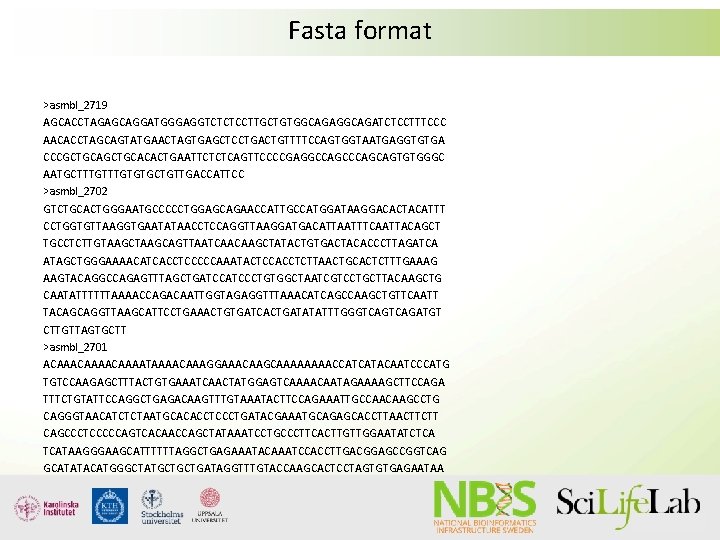
Fasta format >asmbl_2719 AGCACCTAGAGCAGGATGGGAGGTCTCTCCTTGCTGTGGCAGATCTCCTTTCCC AACACCTAGCAGTATGAACTAGTGAGCTCCTGACTGTTTTCCAGTGGTAATGAGGTGTGA CCCGCTGCACACTGAATTCTCTCAGTTCCCCGAGGCCAGCAGTGTGGGC AATGCTTTGTGTGCTGTTGACCATTCC >asmbl_2702 GTCTGCACTGGGAATGCCCCCTGGAGCAGAACCATTGCCATGGATAAGGACACTACATTT CCTGGTGTTAAGGTGAATATAACCTCCAGGTTAAGGATGACATTAATTTCAATTACAGCT TGCCTCTTGTAAGCAGTTAATCAACAAGCTATACTGTGACTACACCCTTAGATCA ATAGCTGGGAAAACATCACCTCCCCCAAATACTCCACCTCTTAACTGCACTCTTTGAAAG AAGTACAGGCCAGAGTTTAGCTGATCCCTGTGGCTAATCGTCCTGCTTACAAGCTG CAATATTTTTTAAAACCAGACAATTGGTAGAGGTTTAAACATCAGCCAAGCTGTTCAATT TACAGCAGGTTAAGCATTCCTGAAACTGTGATCACTGATATATTTGGGTCAGATGT CTTGTTAGTGCTT >asmbl_2701 ACAAAACAAAATAAAACAAAGGAAACAAGCAAAACCATCATACAATCCCATG TGTCCAAGAGCTTTACTGTGAAATCAACTATGGAGTCAAAACAATAGAAAAGCTTCCAGA TTTCTGTATTCCAGGCTGAGACAAGTTTGTAAATACTTCCAGAAATTGCCAACAAGCCTG CAGGGTAACATCTCTAATGCACACCTCCCTGATACGAAATGCAGAGCACCTTAACTTCTT CAGCCCTCCCCCAGTCACAACCAGCTATAAATCCTGCCCTTCACTTGTTGGAATATCTCA TCATAAGGGAAGCATTTTTTAGGCTGAGAAATACAAATCCACCTTGACGGAGCCGGTCAG GCATATACATGGGCTATGCTGCTGATAGGTTTGTACCAAGCACTCCTAGTGTGAGAATAA

Contigs and scaffolds • Contig = a contiguous stretch of nucleotides resulting from the assembly of several reads • Scaffold = several contigs stitched together with NNNs in between Paired reads NNN contig 1 NNN contig 2 NNN contig 3 NNN scaffold 1
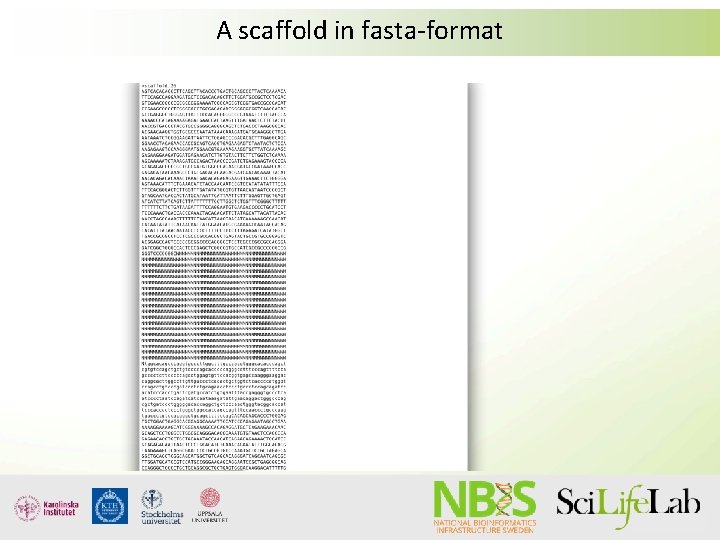
A scaffold in fasta-format
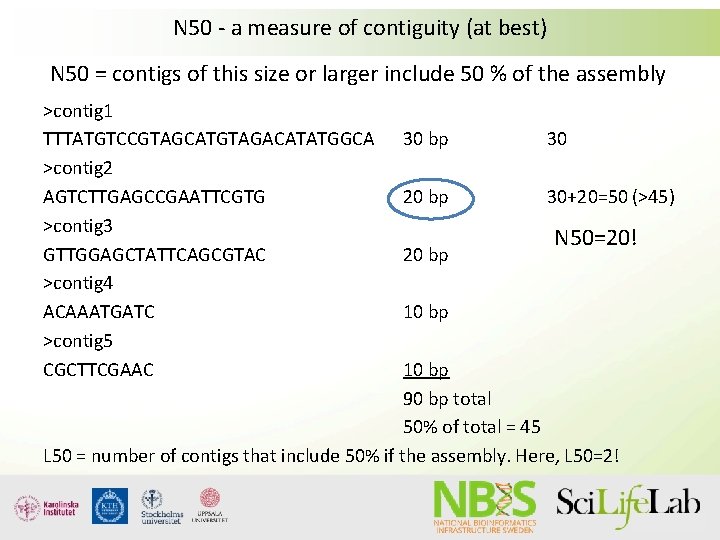
N 50 - a measure of contiguity (at best) N 50 = contigs of this size or larger include 50 % of the assembly >contig 1 TTTATGTCCGTAGCATGTAGACATATGGCA >contig 2 AGTCTTGAGCCGAATTCGTG >contig 3 GTTGGAGCTATTCAGCGTAC >contig 4 ACAAATGATC >contig 5 CGCTTCGAAC 30 bp 30 20 bp 30+20=50 (>45) 20 bp N 50=20! 10 bp 90 bp total 50% of total = 45 L 50 = number of contigs that include 50% if the assembly. Here, L 50=2!
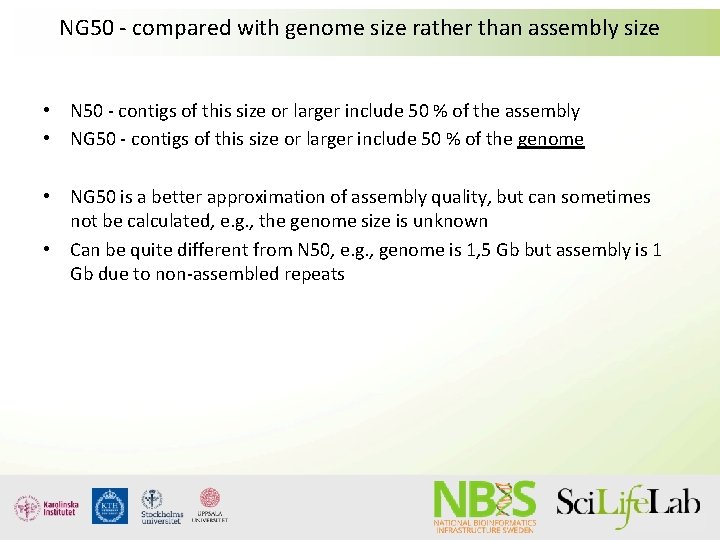
NG 50 - compared with genome size rather than assembly size • N 50 - contigs of this size or larger include 50 % of the assembly • NG 50 - contigs of this size or larger include 50 % of the genome • NG 50 is a better approximation of assembly quality, but can sometimes not be calculated, e. g. , the genome size is unknown • Can be quite different from N 50, e. g. , genome is 1, 5 Gb but assembly is 1 Gb due to non-assembled repeats
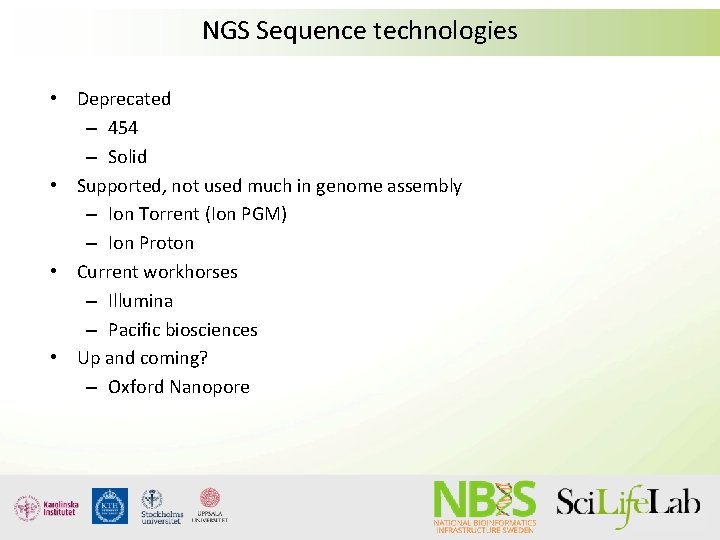
NGS Sequence technologies • Deprecated – 454 – Solid • Supported, not used much in genome assembly – Ion Torrent (Ion PGM) – Ion Proton • Current workhorses – Illumina – Pacific biosciences • Up and coming? – Oxford Nanopore
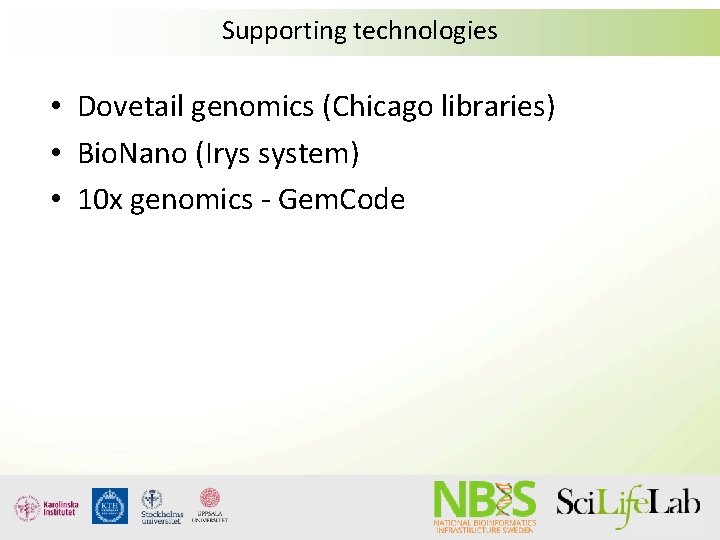
Supporting technologies • Dovetail genomics (Chicago libraries) • Bio. Nano (Irys system) • 10 x genomics - Gem. Code
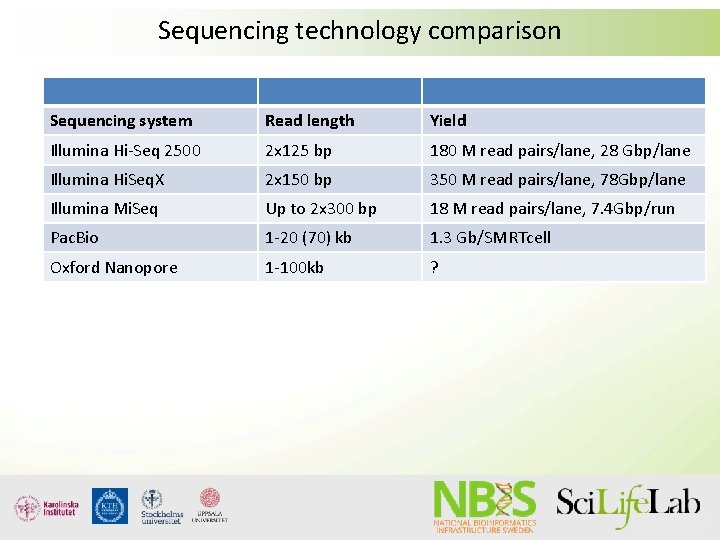
Sequencing technology comparison Sequencing system Read length Yield Illumina Hi-Seq 2500 2 x 125 bp 180 M read pairs/lane, 28 Gbp/lane Illumina Hi. Seq. X 2 x 150 bp 350 M read pairs/lane, 78 Gbp/lane Illumina Mi. Seq Up to 2 x 300 bp 18 M read pairs/lane, 7. 4 Gbp/run Pac. Bio 1 -20 (70) kb 1. 3 Gb/SMRTcell Oxford Nanopore 1 -100 kb ?
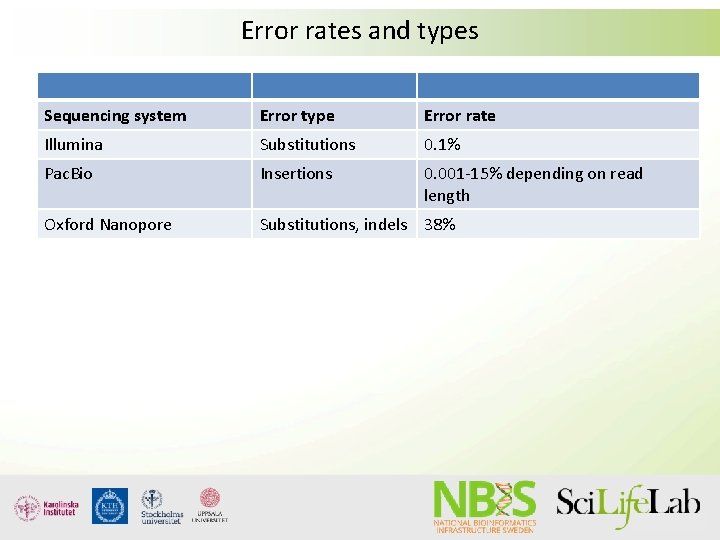
Error rates and types Sequencing system Error type Error rate Illumina Substitutions 0. 1% Pac. Bio Insertions 0. 001 -15% depending on read length Oxford Nanopore Substitutions, indels 38%
Illumina technology
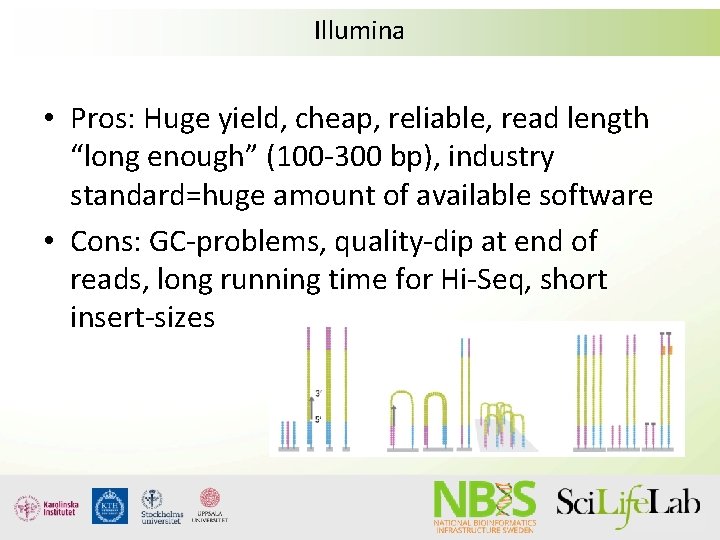
Illumina • Pros: Huge yield, cheap, reliable, read length “long enough” (100 -300 bp), industry standard=huge amount of available software • Cons: GC-problems, quality-dip at end of reads, long running time for Hi-Seq, short insert-sizes
Pac. Bio technology
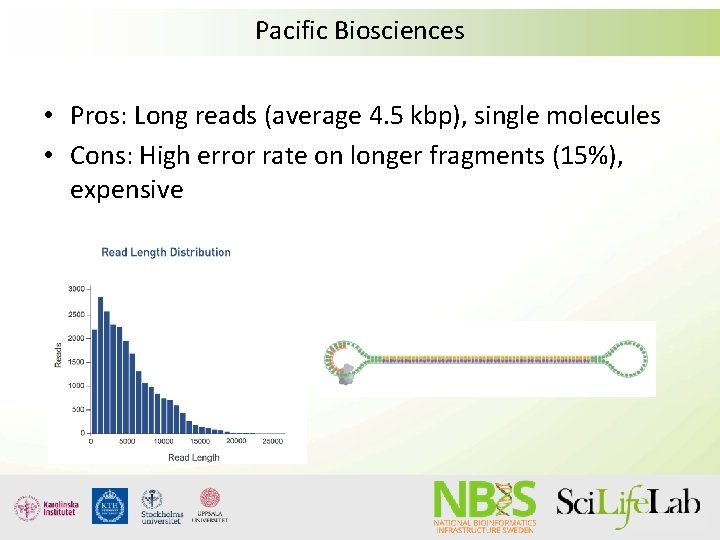
Pacific Biosciences • Pros: Long reads (average 4. 5 kbp), single molecules • Cons: High error rate on longer fragments (15%), expensive
Nanopore technology
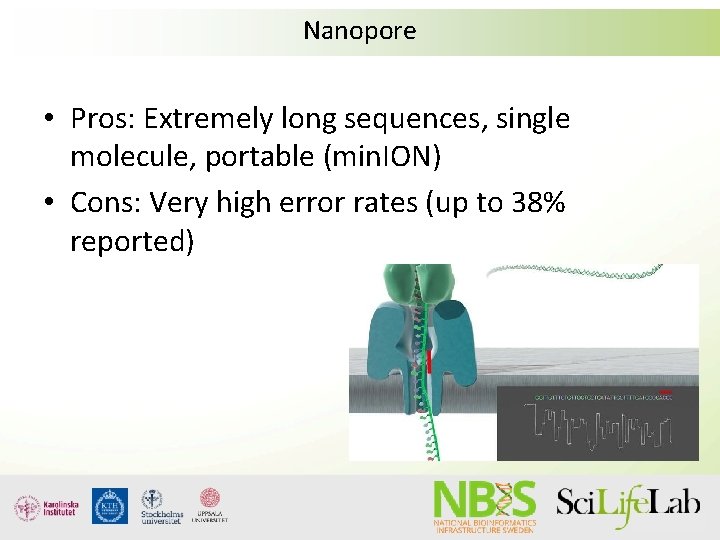
Nanopore • Pros: Extremely long sequences, single molecule, portable (min. ION) • Cons: Very high error rates (up to 38% reported)
10 x genomics • Long DNA fragments are separated in gel beads (gems) and then sequenced with Illumina Hi. Seq -> a “cloud” of reads originating from the same (long) DNA fragment • These reads can then be used to assemble the genome (Supernova) or scaffold/phase the genome (Architect)
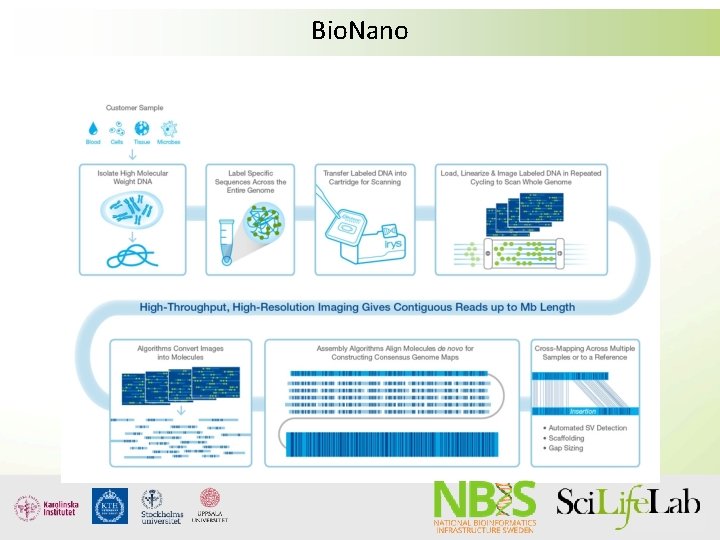
Bio. Nano
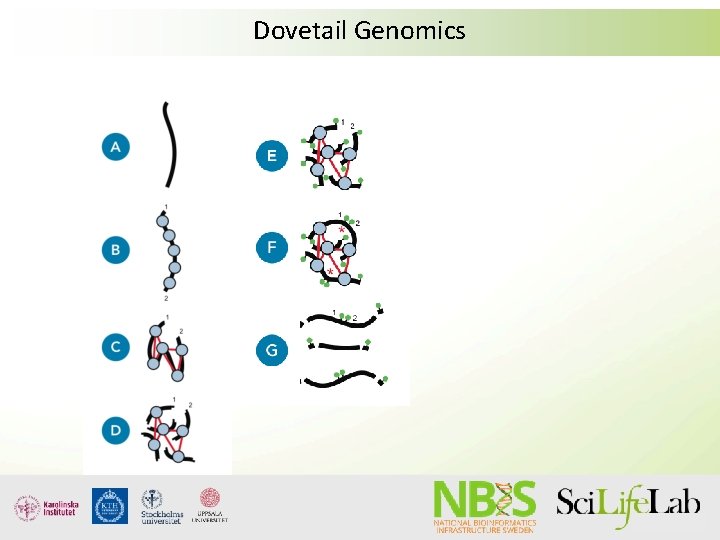
Dovetail Genomics
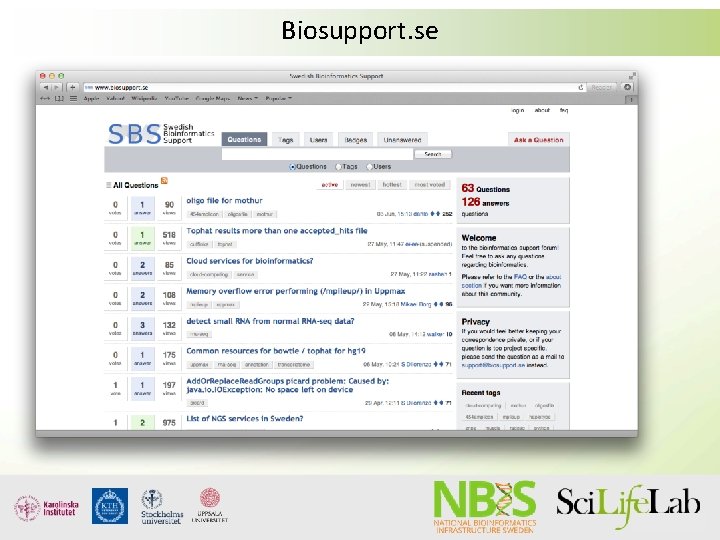
You need help? • NBIS is a VR-financed organization that offers bioinformatics support to all projects in Sweden. Please go to http: //nbis. se/supportform/index. ph p to apply for support. • Biosupport. se is perfect for shorter questions.
Biosupport. se
- Slides: 48