
DDH Care Map A Tool for Systemwide Integrated





- Slides: 34
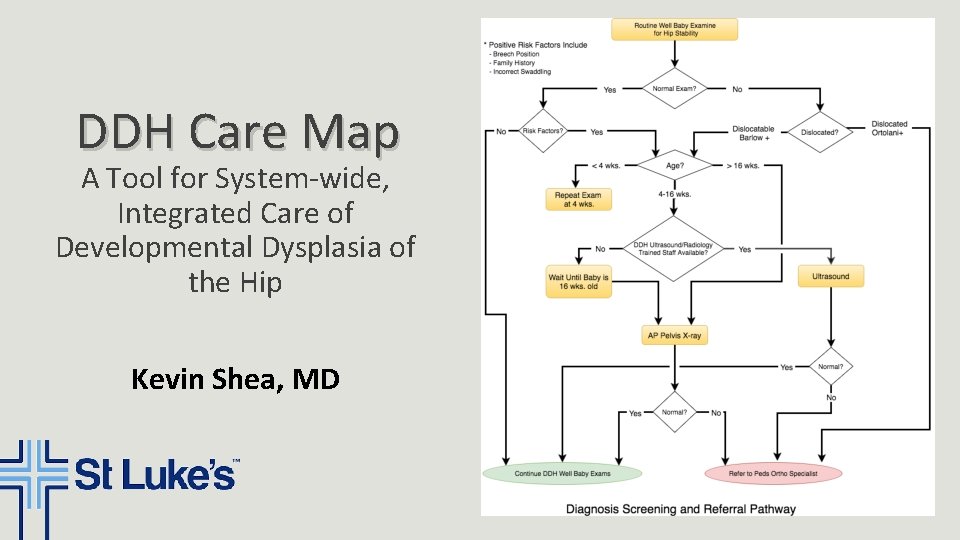
DDH Care Map A Tool for System-wide, Integrated Care of Developmental Dysplasia of the Hip Kevin Shea, MD
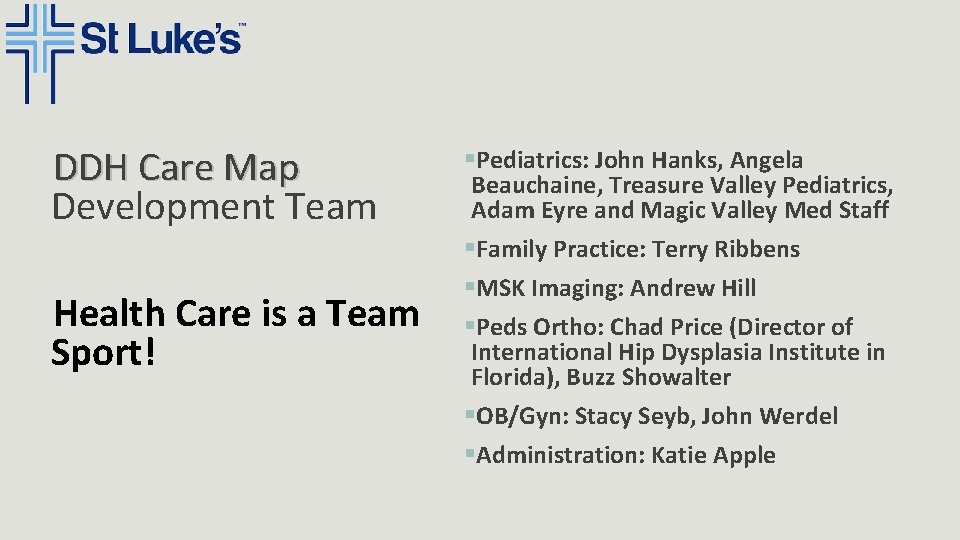
DDH Care Map Development Team Health Care is a Team Sport! §Pediatrics: John Hanks, Angela Beauchaine, Treasure Valley Pediatrics, Adam Eyre and Magic Valley Med Staff §Family Practice: Terry Ribbens §MSK Imaging: Andrew Hill §Peds Ortho: Chad Price (Director of International Hip Dysplasia Institute in Florida), Buzz Showalter §OB/Gyn: Stacy Seyb, John Werdel §Administration: Katie Apple
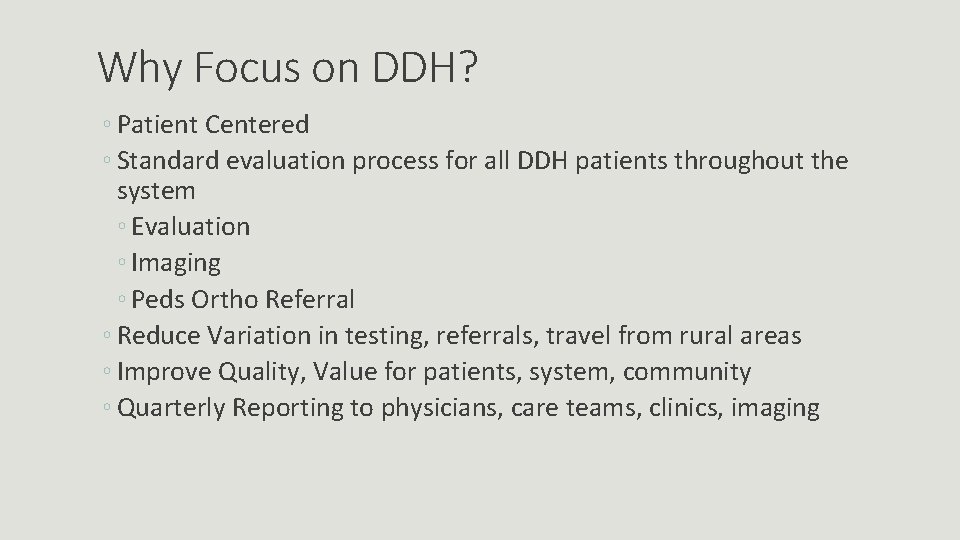
Why Focus on DDH? ◦ Patient Centered ◦ Standard evaluation process for all DDH patients throughout the system ◦ Evaluation ◦ Imaging ◦ Peds Ortho Referral ◦ Reduce Variation in testing, referrals, travel from rural areas ◦ Improve Quality, Value for patients, system, community ◦ Quarterly Reporting to physicians, care teams, clinics, imaging
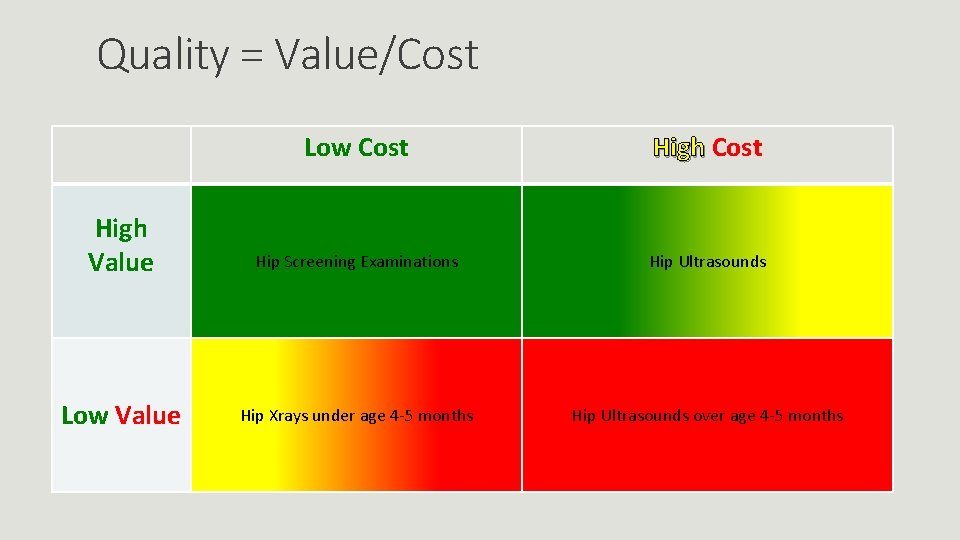
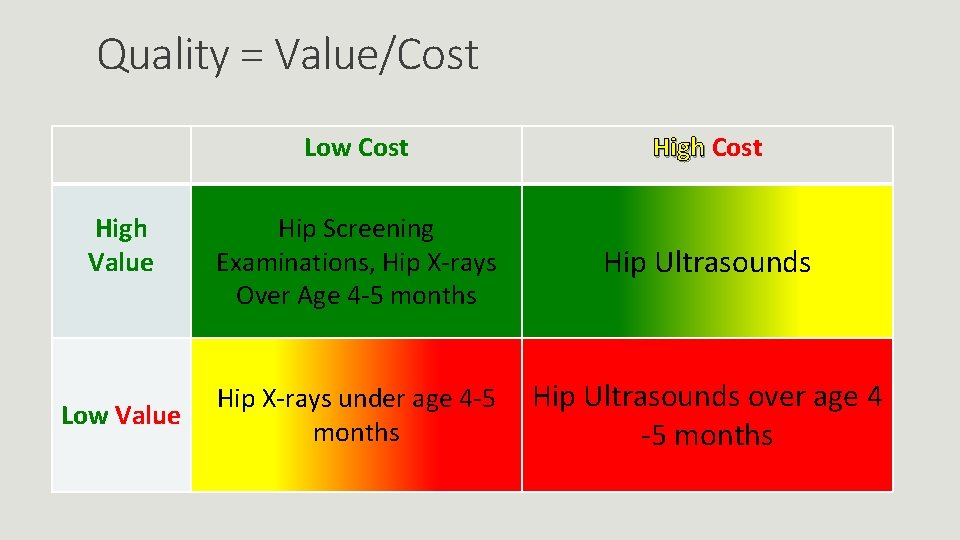
Quality = Value/Cost Low Cost High Value Hip Screening Examinations Hip Ultrasounds Low Value Hip Xrays under age 4 -5 months Hip Ultrasounds over age 4 -5 months
2014 Evidence Based Clinical Practice Guideline for DDH §Evidence Based §Multi-Disciplinarian §Peer Review §Public Commentary §Conflicts of Interest
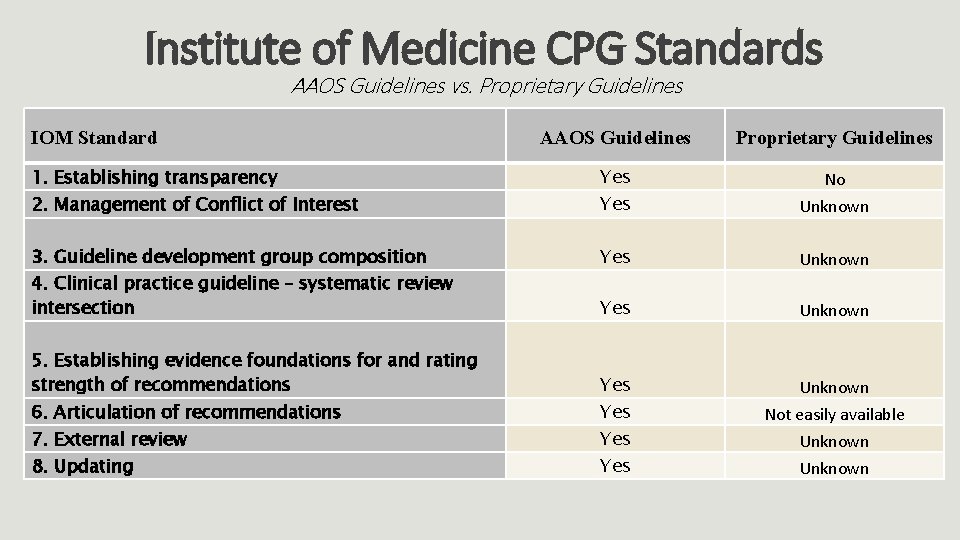
2014 Evidence Based Clinical Practice Guideline for DDH §Why does “Evidence Based Guideline” Matter? §Many Guidelines are based upon highly biased processes §These are not based upon a standardized, transparent processes §They do not result in consistent recommendations, not reproducible §The Institute of Medicine has recognized Major Problems with many guidelines §IOM has a Guideline for Guidelines
Institute of Medicine CPG Standards AAOS Guidelines vs. Proprietary Guidelines IOM Standard 1. Establishing transparency 2. Management of Conflict of Interest 3. Guideline development group composition 4. Clinical practice guideline – systematic review intersection 5. Establishing evidence foundations for and rating strength of recommendations 6. Articulation of recommendations 7. External review 8. Updating AAOS Guidelines Proprietary Guidelines Yes No Yes Unknown Yes Yes Not easily available Unknown
Participating Review Organizations • American College of Radiology • American Academy of Family Physicians • Academic Pediatric Association • American Academy of Pediatrics • Pediatric Orthopaedic Society of North America • International Hip Dysplasia Institute
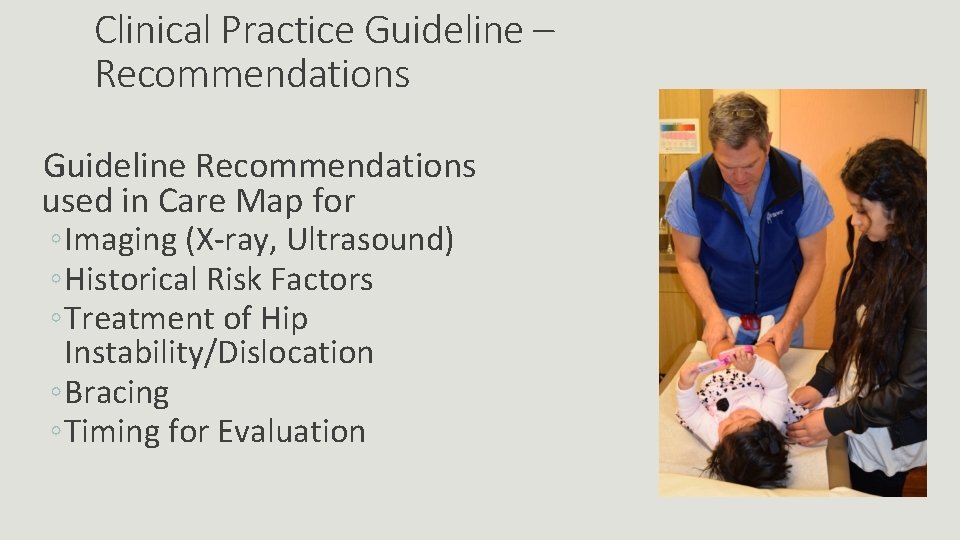
Clinical Practice Guideline – Recommendations Guideline Recommendations used in Care Map for ◦ Imaging (X-ray, Ultrasound) ◦ Historical Risk Factors ◦ Treatment of Hip Instability/Dislocation ◦ Bracing ◦ Timing for Evaluation
Getting from a Guideline to a Care Map §The Guideline is to be used to develop a Care Map, integrating the best evidence we have available with clinical experience §Input from clinicians on the care map is critical §Care Map will change with time, depending on input from clinicians, and development of new evidence §Care Map provides a consistent experience for patients throughout the health care system
DDH Care Map Implementation Team. First Phase §Input from clinicians on Care Map §Design Patient Flow § How does a patient/family flow through this §Indications for examination, imaging, peds ortho referral §Patient Simulations, ie Beta Testing § Error, detect conflicts
DDH Care Map Implementation Team. Second Phase • Many Clinicians using the Care Map • Input from clinicians is strongly encouraged • The Care Map will be better with your input. • The Care Map is not static – it can be modified by the clinicians • provide better care • include newer clinical evidence/studies when appropriate • adapt to needs of families and patients
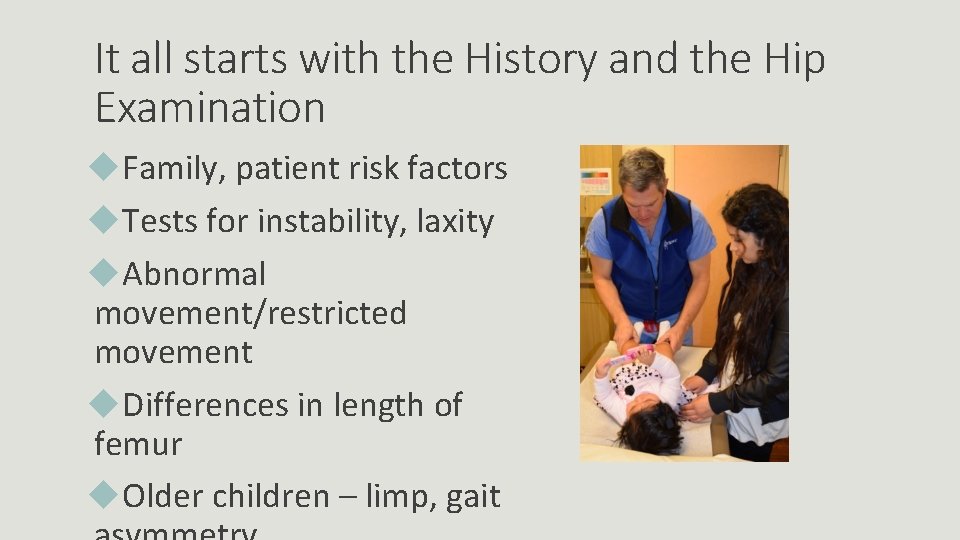
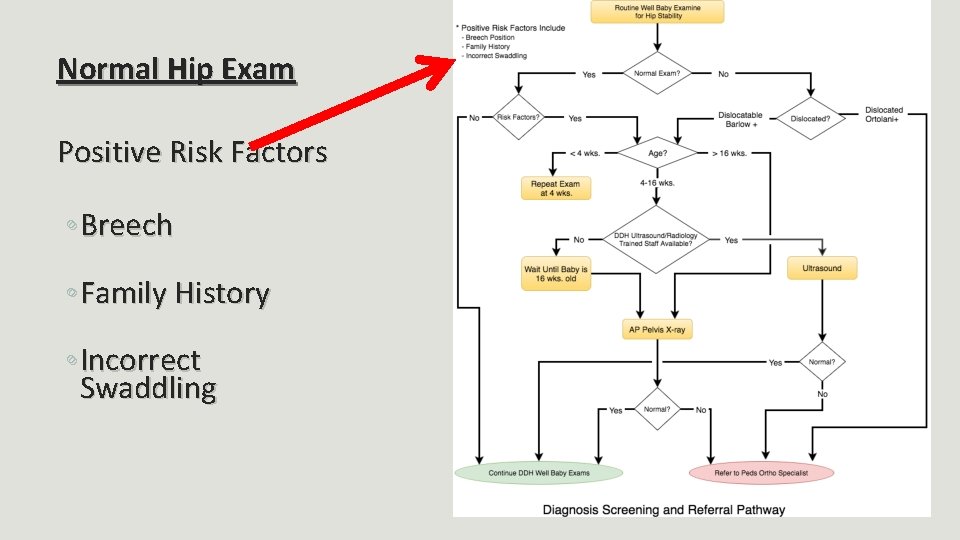
It all starts with the History and the Hip Examination u. Family, patient risk factors u. Tests for instability, laxity u. Abnormal movement/restricted movement u. Differences in length of femur u. Older children – limp, gait
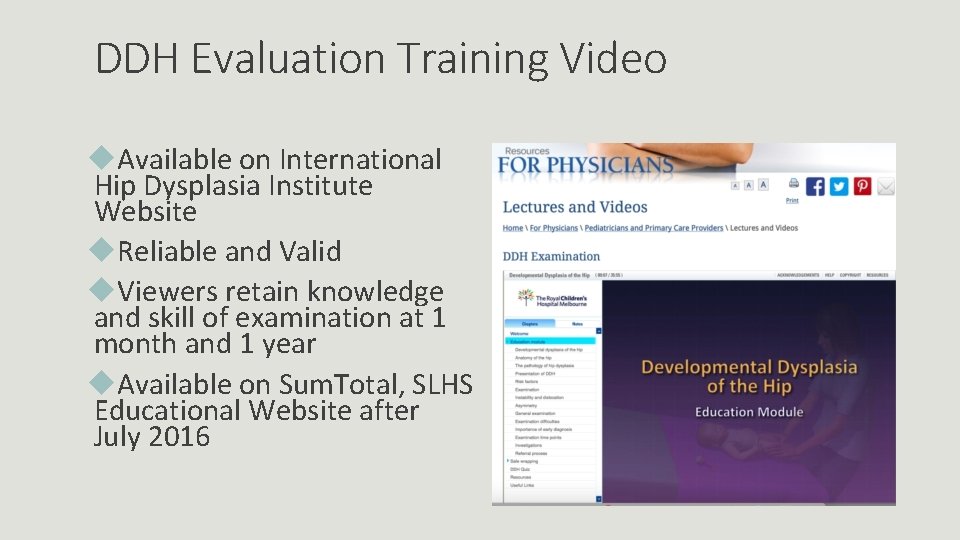
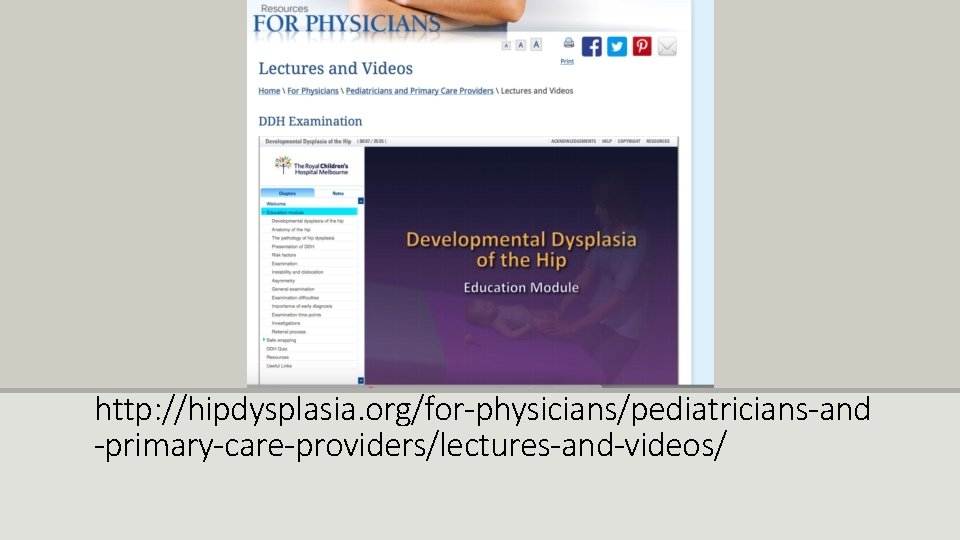
DDH Evaluation Training Video u. Available on International Hip Dysplasia Institute Website u. Reliable and Valid u. Viewers retain knowledge and skill of examination at 1 month and 1 year u. Available on Sum. Total, SLHS Educational Website after July 2016
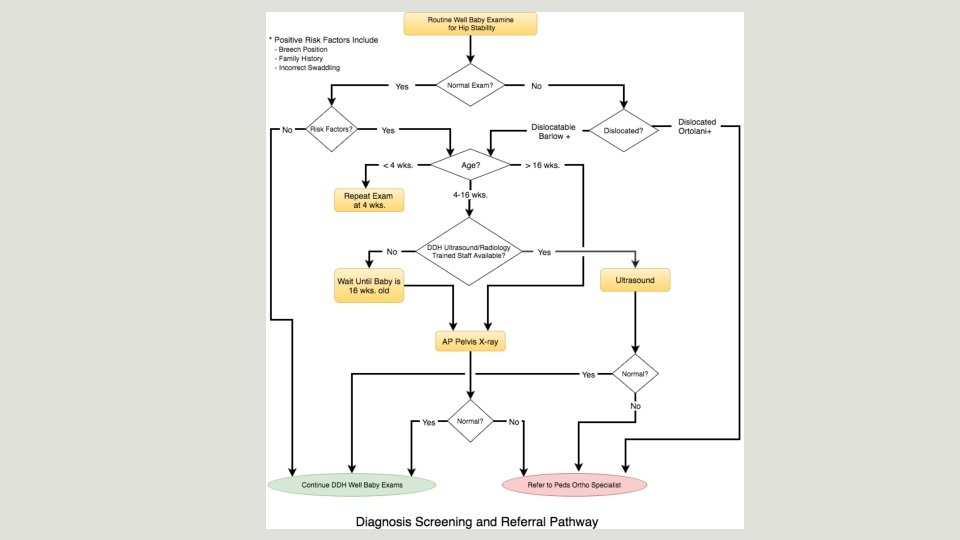
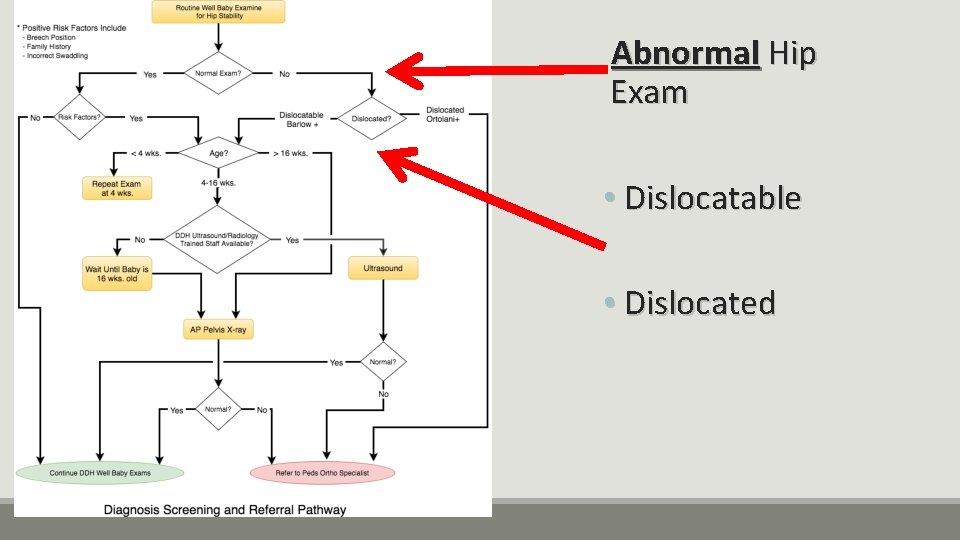
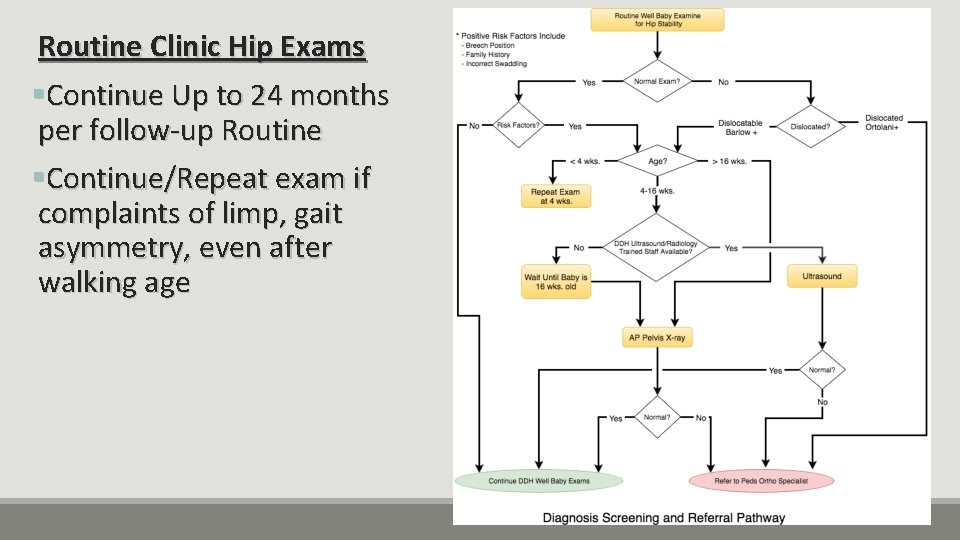
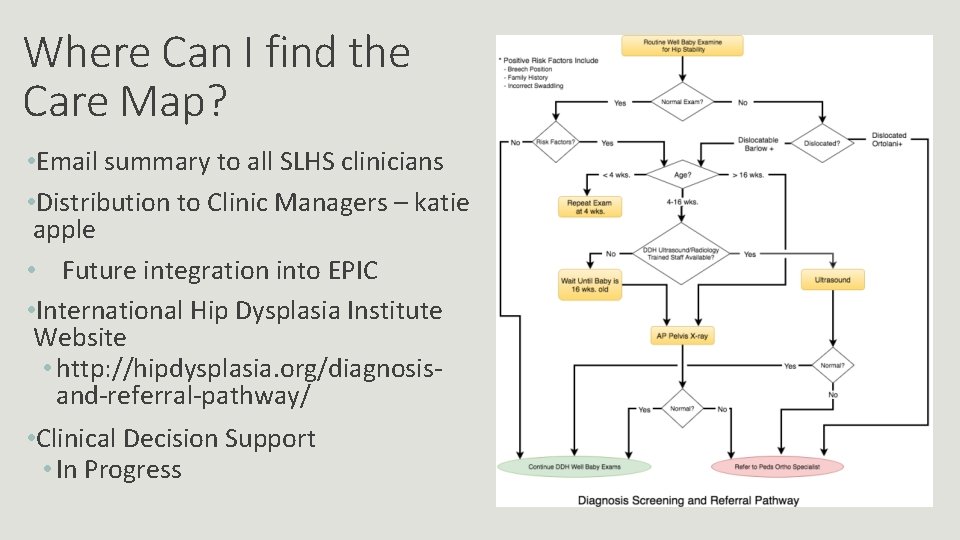
Abnormal Hip Exam • Dislocatable • Dislocated
Normal Hip Exam Positive Risk Factors ◦ Breech ◦ Family History ◦ Incorrect Swaddling
Routine Clinic Hip Exams §Continue Up to 24 months per follow-up Routine §Continue/Repeat exam if complaints of limp, gait asymmetry, even after walking age
Outcome Metrics • Opportunities for Improvement • Monitor Progress • Reports • “If you cant measure it, you cant improve it”
Outcome Metrics §Primary Care §Radiology §Orthopedics
Outcome Metrics Primary Care ◦ Number of Pelvis Radiographs under 4 months post due date (should be a low number) ◦ Number of ultrasounds over 4 -5 months post due date (low number) ◦ Primary Care Providers that receive validated DDH examination training (80 at 1 year, 95% at 2 years, through the International Hip Dysplasia Institute (IHDI) website and Sum. Total online training ◦ http: //hipdysplasia. org/for-physicians/pediatricians-and-primarycare-providers/lectures-and-videos/
http: //hipdysplasia. org/for-physicians/pediatricians-and -primary-care-providers/lectures-and-videos/
Outcome Metrics Radiology ◦ Ability to obtain same-day hip ultrasounds on patients travelling long distances to Boise. (100%) ◦ Ensure that hip radiographs are interpreted by appropriately trained DDH MSK Radiology staff and/or pediatric orthopedic surgeons within the health system (100%) ◦ Ensure that hip radiographs are positioned properly where obturator foramen are equally open within the health system (90%)
Outcome Metrics Orthopedics ◦ Number of patients seen in peds ortho clinic with missed dislocations and residual dysplasia cases requiring treatment
Where Can I find the Care Map? • Email summary to all SLHS clinicians • Distribution to Clinic Managers – katie apple • Future integration into EPIC • International Hip Dysplasia Institute Website • http: //hipdysplasia. org/diagnosisand-referral-pathway/ • Clinical Decision Support • In Progress
Where Can I find the DDH Exam Training Video? • http: //hipdysplasia. org/for-physicians/pediatricians-andprimary-care-providers/lectures-and-videos/ • SLHS Sum. Total for Video, and Test questions
Quality = Value/Cost High Value Low Cost High Cost Hip Screening Examinations, Hip X-rays Over Age 4 -5 months Hip Ultrasounds Hip X-rays under age 4 -5 months Hip Ultrasounds over age 4 -5 months
Questions? Thank you for your time!
Thank You Feedback Greatly appreciated Development Team: Chad Price, Andrew Hill, John Hanks, Terry Ribbens, Peter Cannamela, Angela Beauchaine, Stacey Seyb, John Werdel Critical Early Feedback: Treasure Valley Pediatric, Adam Eyre, Buzz Showalter, Jeff Shilt, Kit Song, Tony Herring
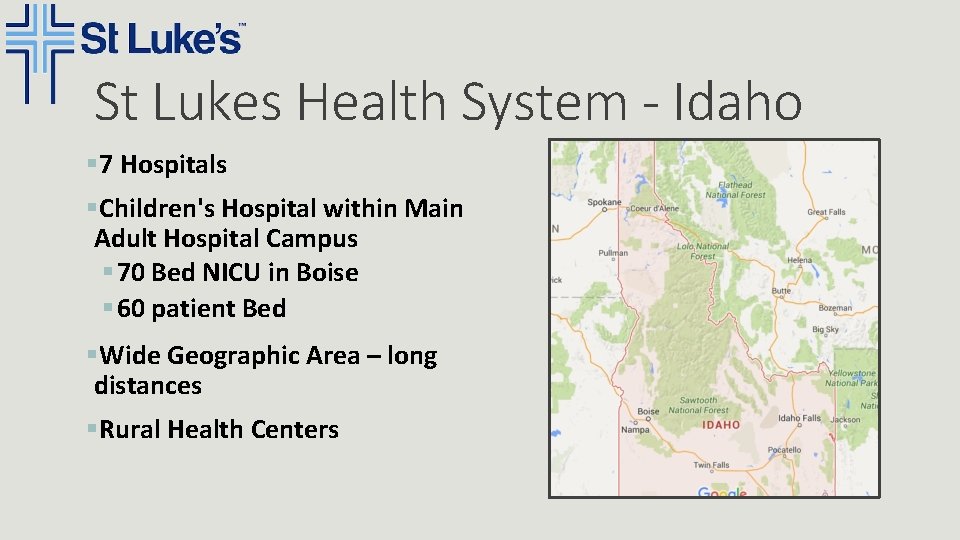
St Lukes Health System - Idaho § 7 Hospitals §Children's Hospital within Main Adult Hospital Campus § 70 Bed NICU in Boise § 60 patient Bed §Wide Geographic Area – long distances §Rural Health Centers
Triple Aim of Health Care u. Better Community Health u. Better Quality u. Lower Cost u. Reduced Variation/Standardization
For More Information on… • Clinical Practice Guidelines • Appropriate Use Criteria • Checklists • Education/CME Go to: www. orthoguidelines. org
Getting from a Guideline to a Care Map §Guideline demonstrates that we have limited or moderate strength evidence §Many fields in medicine rely on evidence with some limitations §Incorporate clinical experience, physician judgment §Guideline questions are generated by expert clinicians – pediatricians, family practitioners, MSK/imaging experts, pediatric ortho surgeons, OB/Gyn
Next Steps Handouts in Clinics PDF Handout on laptops/desktops Integrate into EPIC – Future? Posting on Website § SLHS ◦ IHDI – International Hip Dysplasia Institute ◦ Care Map ◦ Training Video “Beta” Testing Feedback over next year