
DCDC Converters Convert a fixed DC Source into
- Slides: 22
DC-DC Converters • Convert a fixed DC Source into a Variable DC Source • DC equivalent to an AC transformer with variable turns ratio • Step-up and Step-down versions • Applications – Motor Control – Voltage Regulators 1
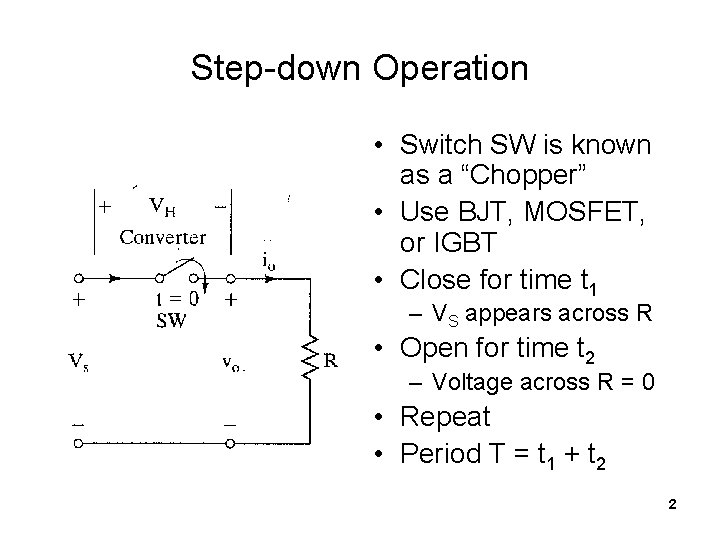
Step-down Operation • Switch SW is known as a “Chopper” • Use BJT, MOSFET, or IGBT • Close for time t 1 – VS appears across R • Open for time t 2 – Voltage across R = 0 • Repeat • Period T = t 1 + t 2 2
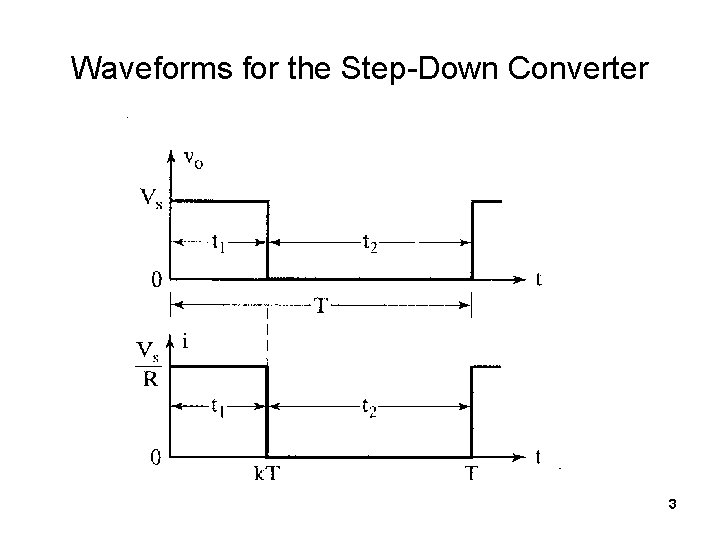
Waveforms for the Step-Down Converter 3
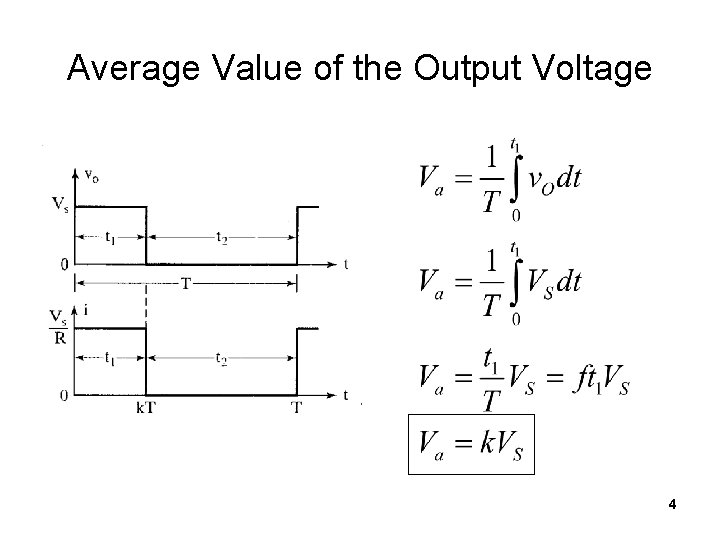
Average Value of the Output Voltage 4
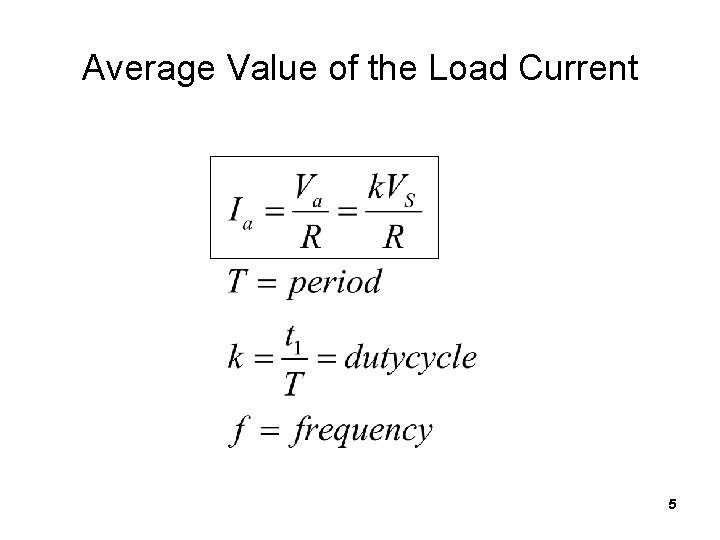
Average Value of the Load Current 5
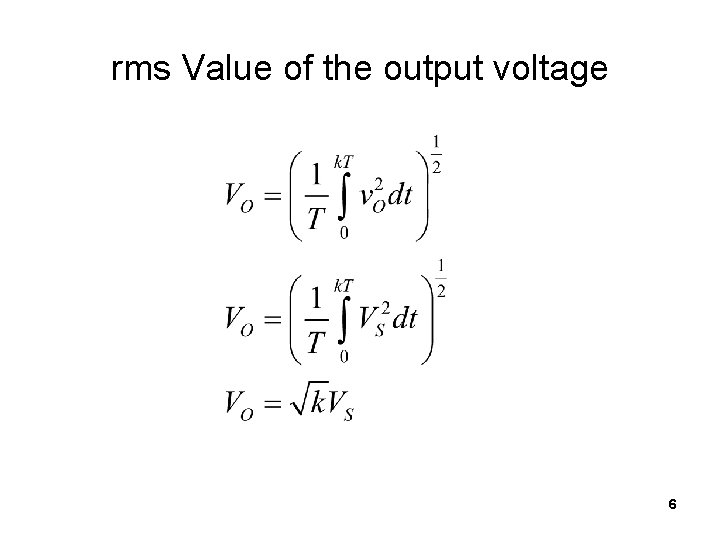
rms Value of the output voltage 6
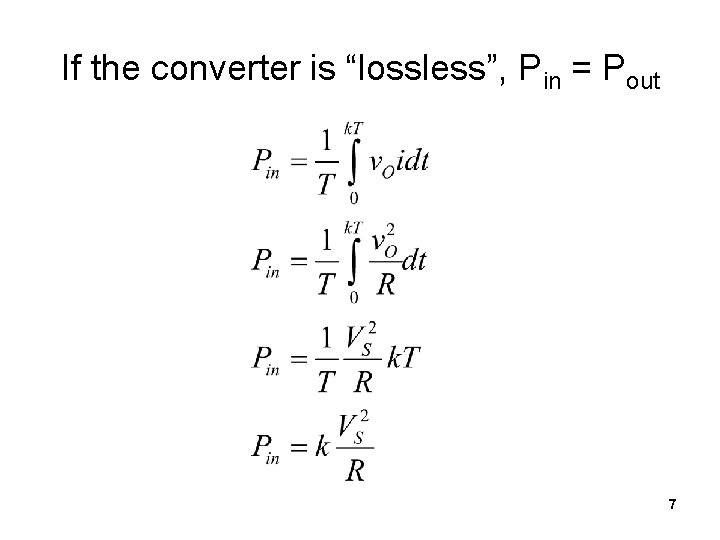
If the converter is “lossless”, Pin = Pout 7
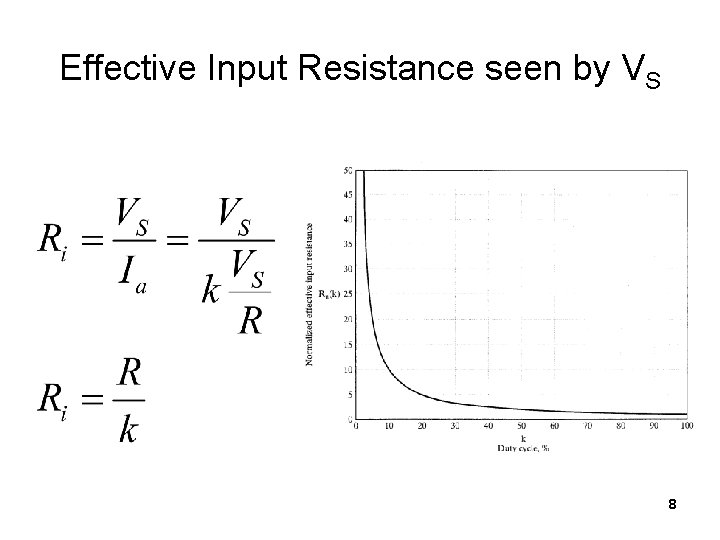
Effective Input Resistance seen by VS 8
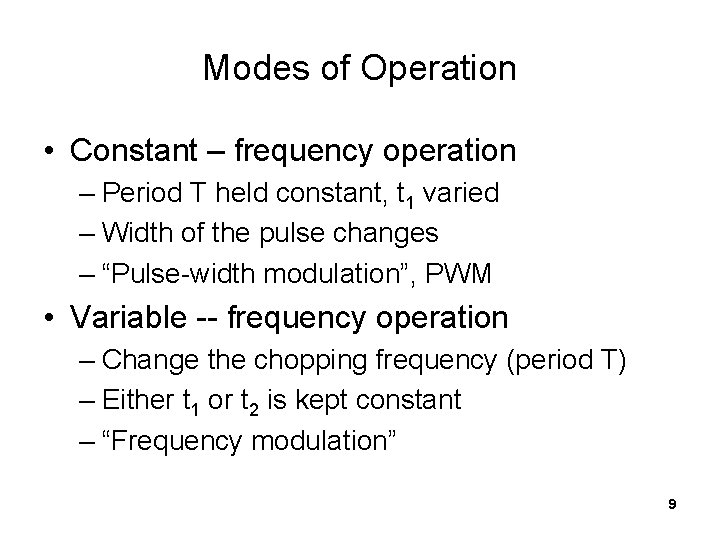
Modes of Operation • Constant – frequency operation – Period T held constant, t 1 varied – Width of the pulse changes – “Pulse-width modulation”, PWM • Variable -- frequency operation – Change the chopping frequency (period T) – Either t 1 or t 2 is kept constant – “Frequency modulation” 9
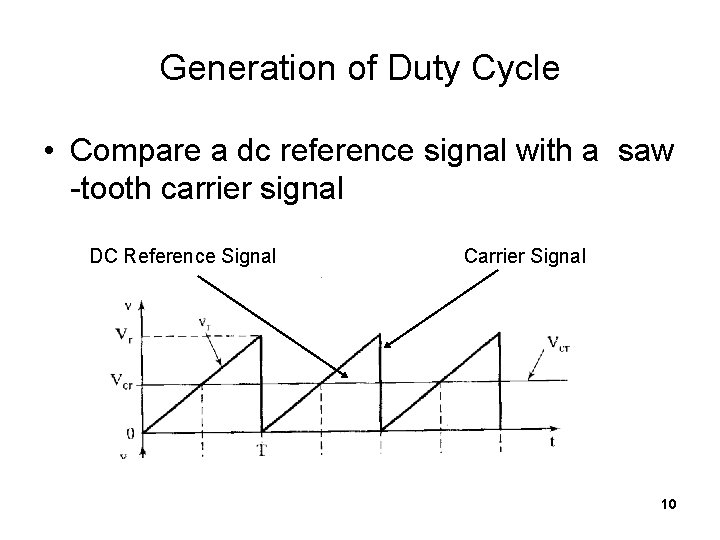
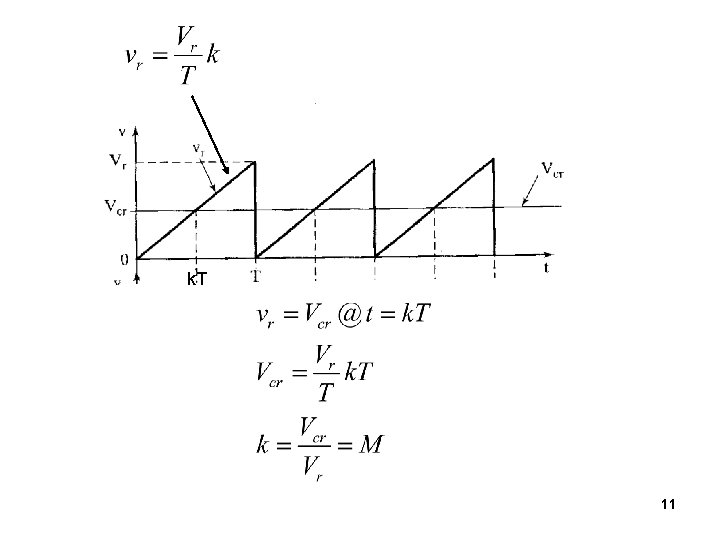
Generation of Duty Cycle • Compare a dc reference signal with a saw -tooth carrier signal DC Reference Signal Carrier Signal 10
k. T 11
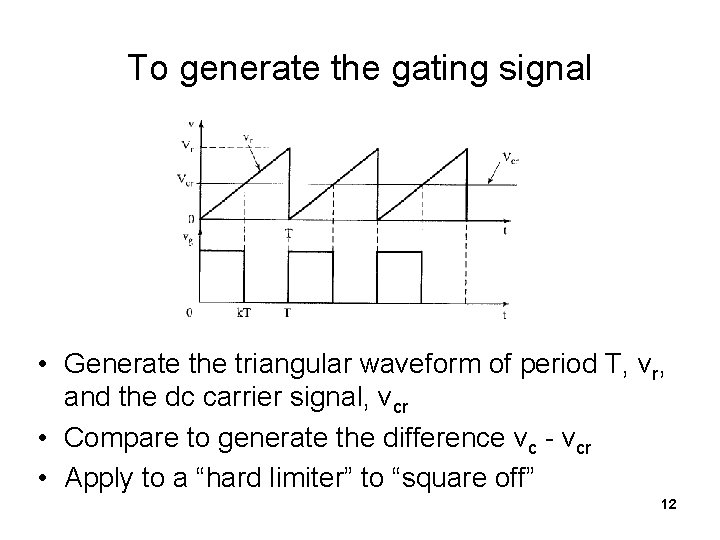
To generate the gating signal • Generate the triangular waveform of period T, vr, and the dc carrier signal, vcr • Compare to generate the difference vc - vcr • Apply to a “hard limiter” to “square off” 12
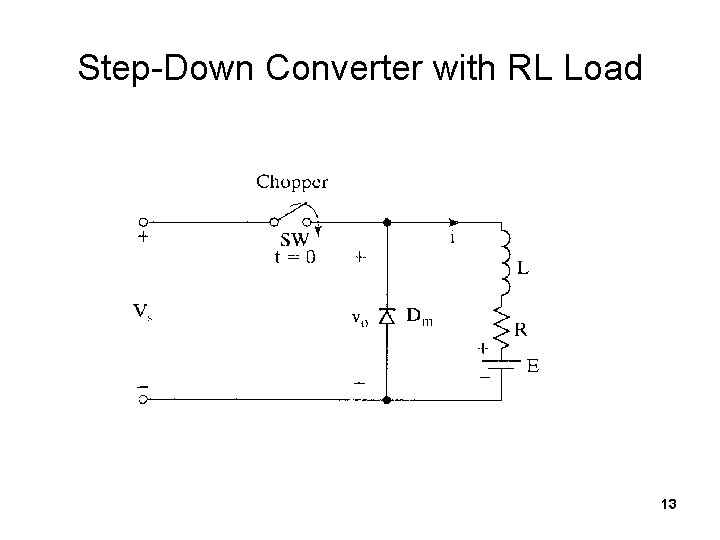
Step-Down Converter with RL Load 13
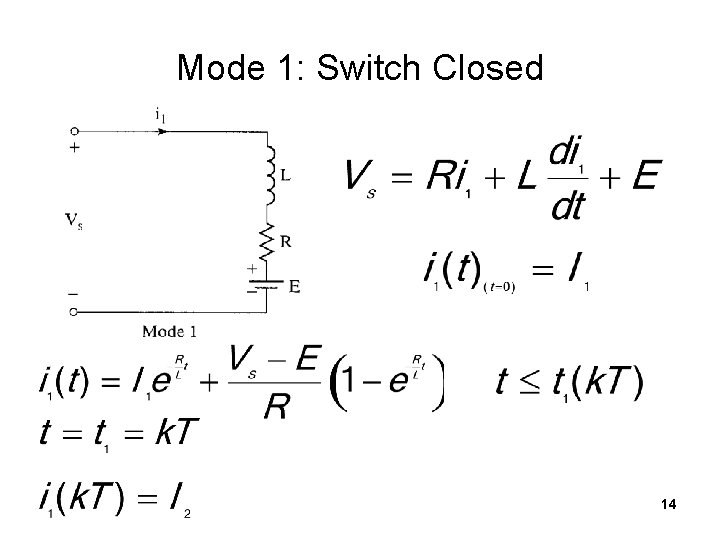
Mode 1: Switch Closed 14
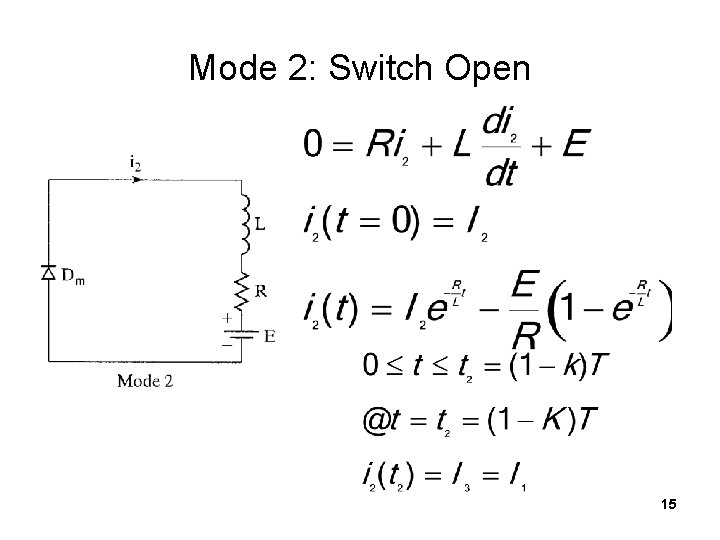
Mode 2: Switch Open 15
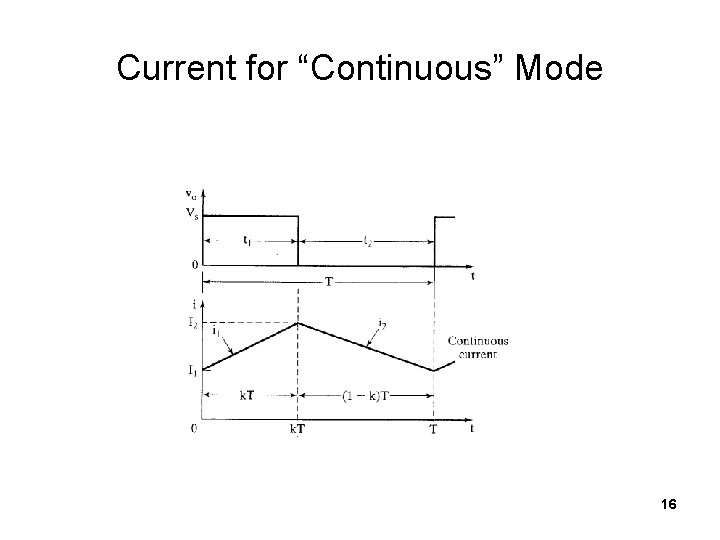
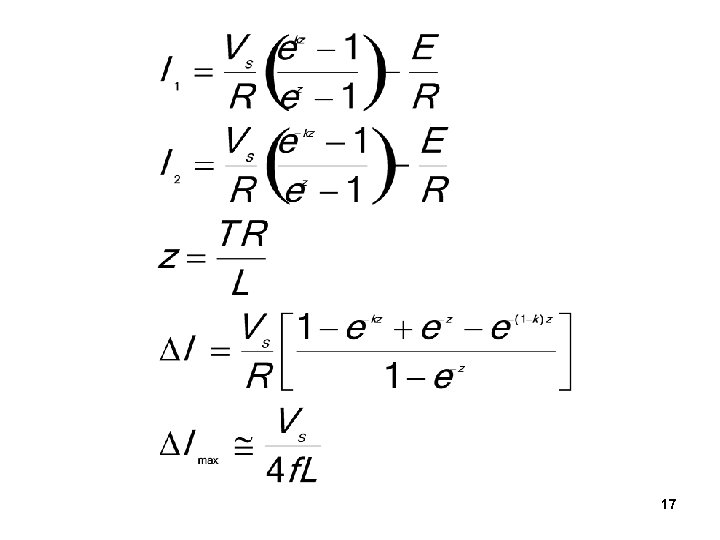
Current for “Continuous” Mode 16
17
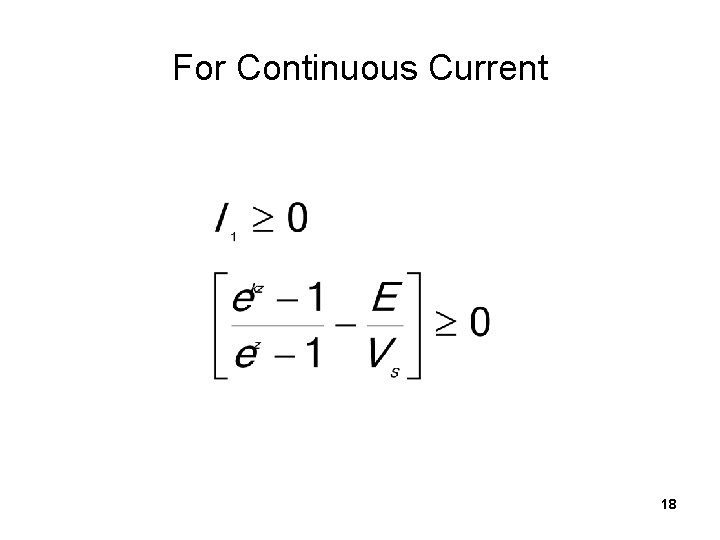
For Continuous Current 18
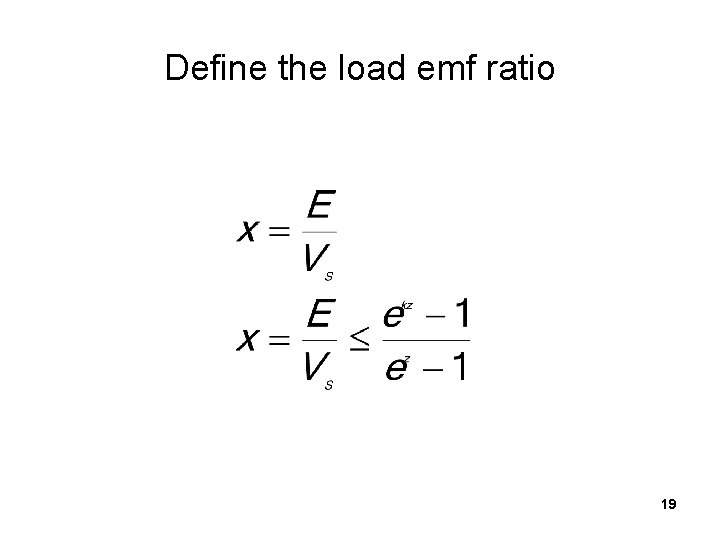
Define the load emf ratio 19
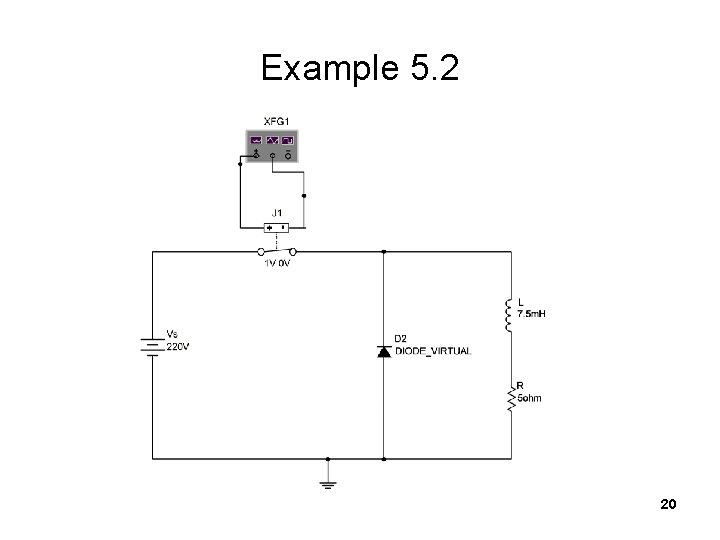
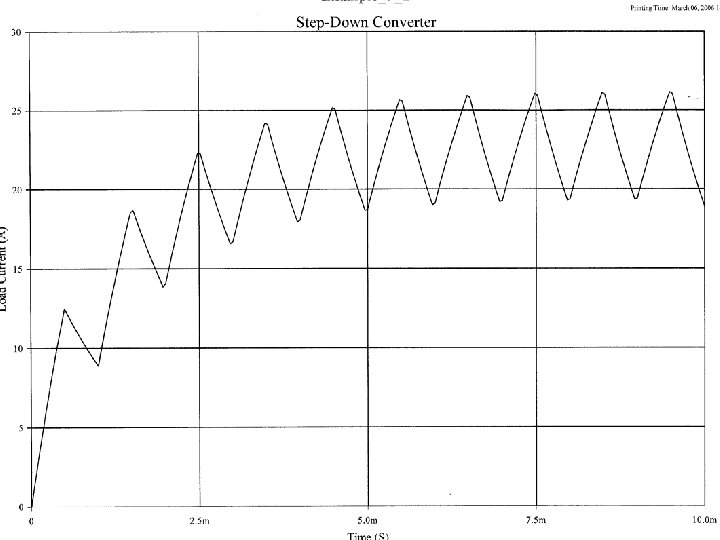
Example 5. 2 20
21
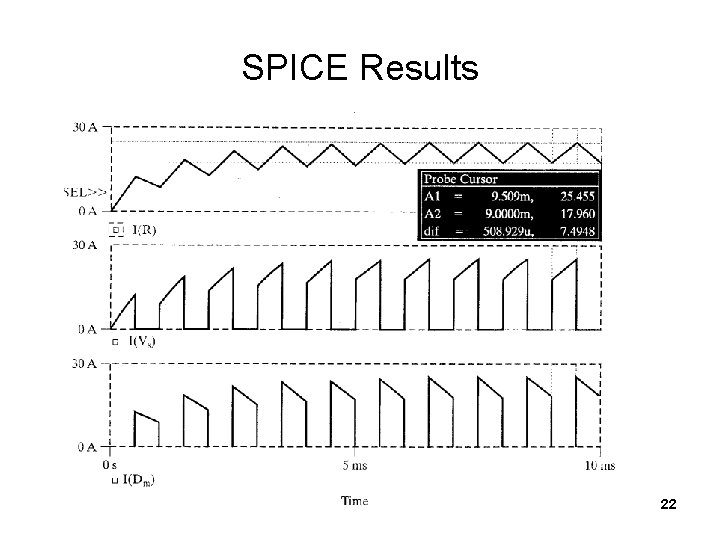
SPICE Results 22