
DCCU An Extended Digital Curation Lifecycle Model Panos
- Slides: 23
DCC&U: An Extended Digital Curation Lifecycle Model Panos Constantopoulos, Costis Dallas, Ion Androutsopoulos, Stavros Angelis, Antonios Deligiannakis, Dimitris Gavrilis, Yannis Kotidis, Christos Papatheodorou Digital Curation Unit, Athena Research Centre
Why Digital Curation? • Diversity of digital information produced by the public and private sector organizations • The value of these digital assets can grow considerably if new, or combined uses of them are technically enabled. • Risk: the repositories to become unfit for use ‘data mortuaries’ 2
Challenges • Adequate representation and long-term access to digital information as its context of use changes • Adopt a multidisciplinary approach (computer science, management science, library & information science) to serve a broad range of constituencies such as e-government, organizational records, e-repositories and digital heritage. 3
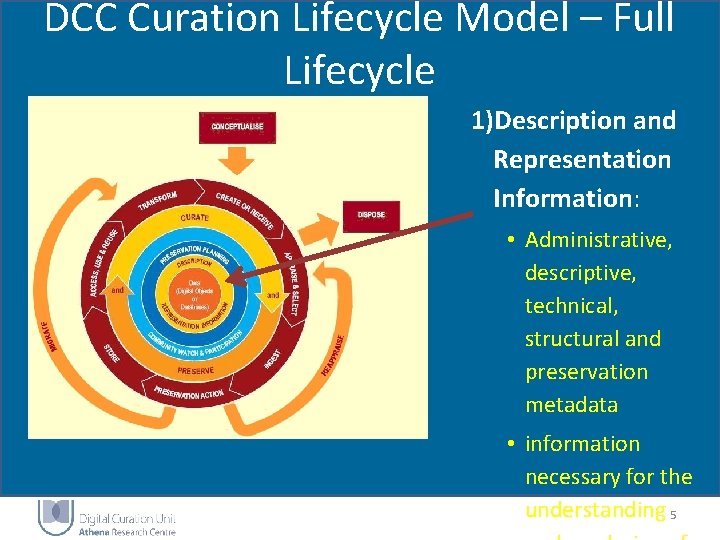
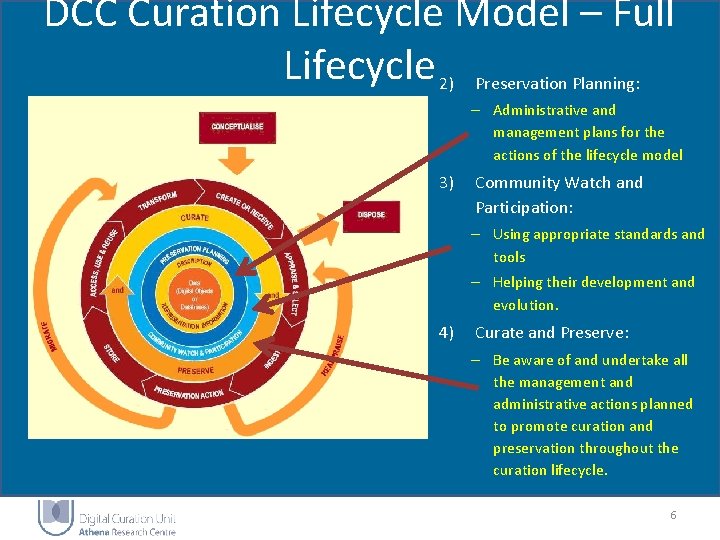
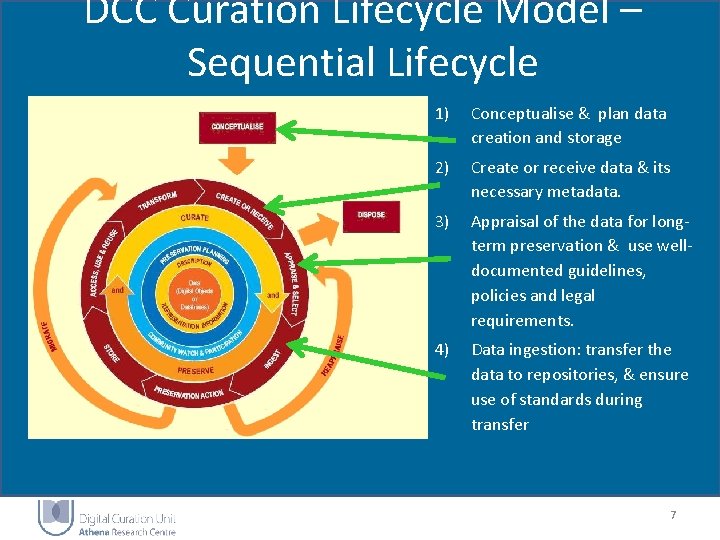
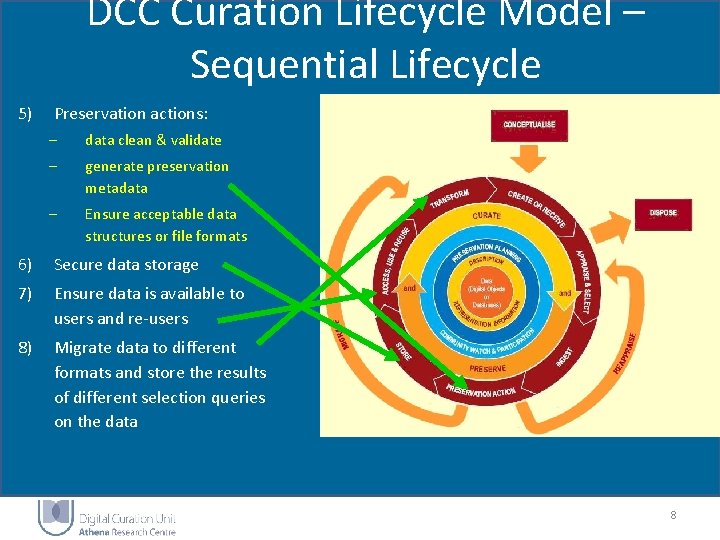
DCC Curation Lifecycle Model Generic graphical high-level overview of the stages required for successful curation and preservation of digital material from initial conceptualisation” [Higgins, 2007] • “ • 3 categories of actions – Full lifecycle: throughout the lifecycle of digital objects – Sequential lifecycle: undertaken in a specific order – Occasional: less frequently activities 4
DCC Curation Lifecycle Model – Full Lifecycle 1)Description and Representation Information: • Administrative, descriptive, technical, structural and preservation metadata • information necessary for the understanding 5
DCC Curation Lifecycle Model – Full Lifecycle 2) Preservation Planning: – Administrative and management plans for the actions of the lifecycle model 3) Community Watch and Participation: – Using appropriate standards and tools – Helping their development and evolution. 4) Curate and Preserve: – Be aware of and undertake all the management and administrative actions planned to promote curation and preservation throughout the curation lifecycle. 6
DCC Curation Lifecycle Model – Sequential Lifecycle 1) Conceptualise & plan data creation and storage 2) Create or receive data & its necessary metadata. 3) Appraisal of the data for longterm preservation & use welldocumented guidelines, policies and legal requirements. 4) Data ingestion: transfer the data to repositories, & ensure use of standards during transfer 7
DCC Curation Lifecycle Model – Sequential Lifecycle 5) Preservation actions: – data clean & validate – generate preservation metadata – Ensure acceptable data structures or file formats 6) Secure data storage 7) Ensure data is available to users and re-users 8) Migrate data to different formats and store the results of different selection queries on the data 8
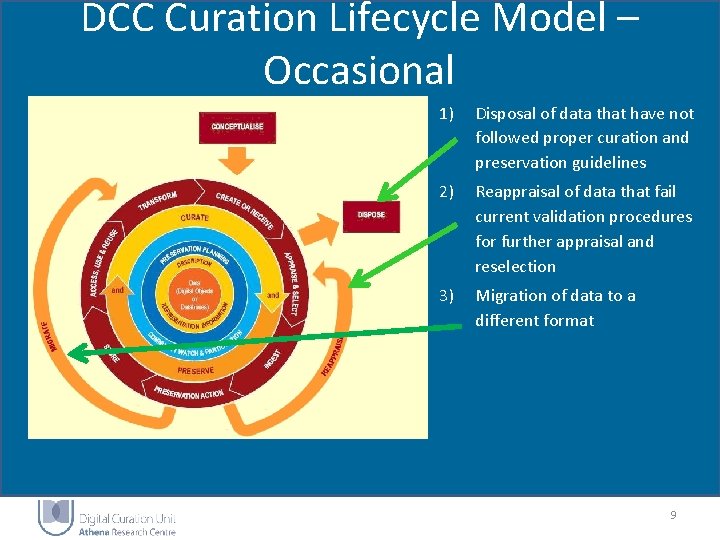
DCC Curation Lifecycle Model – Occasional 1) Disposal of data that have not followed proper curation and preservation guidelines 2) Reappraisal of data that fail current validation procedures for further appraisal and reselection 3) Migration of data to a different format 9
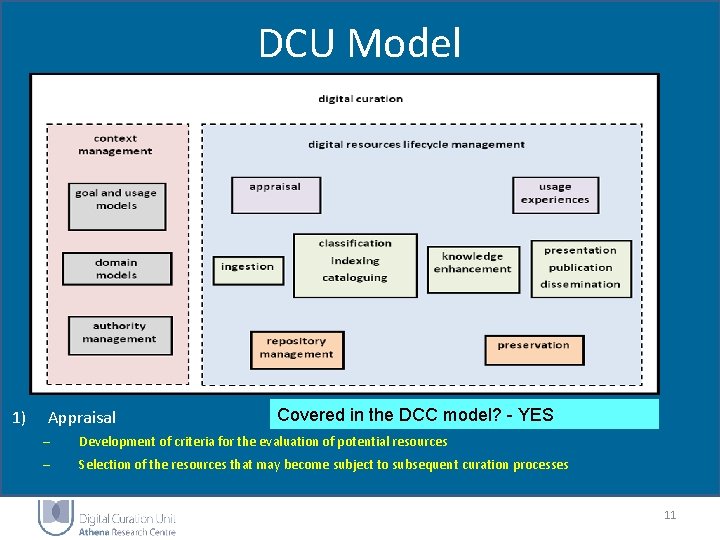
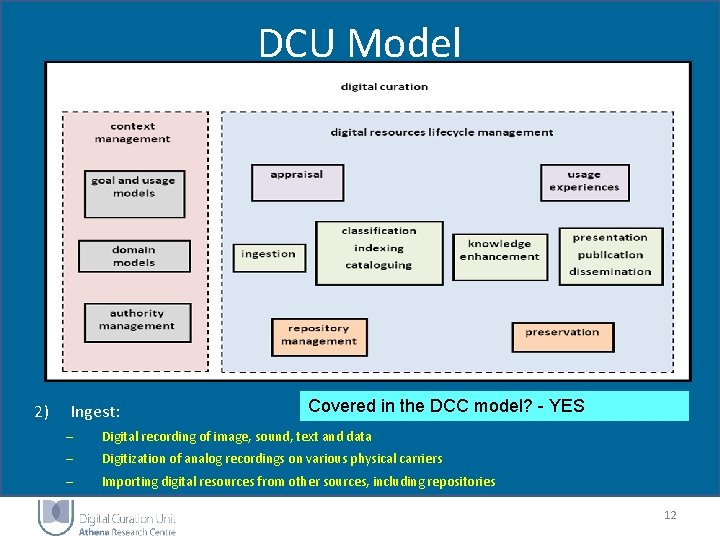
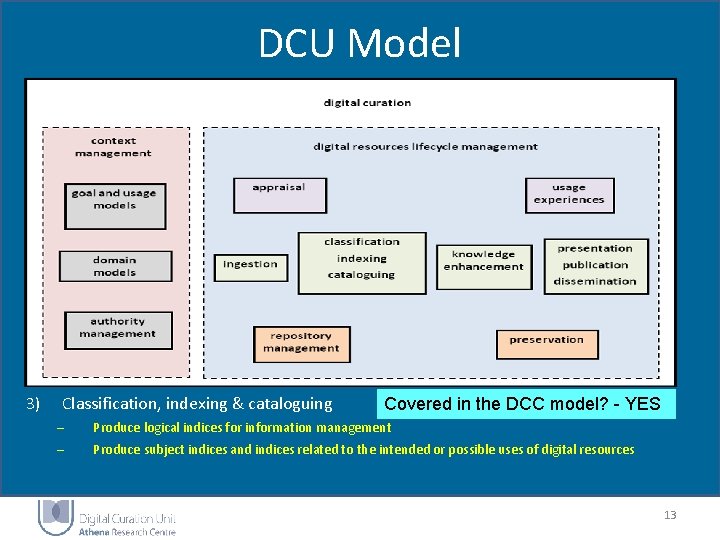
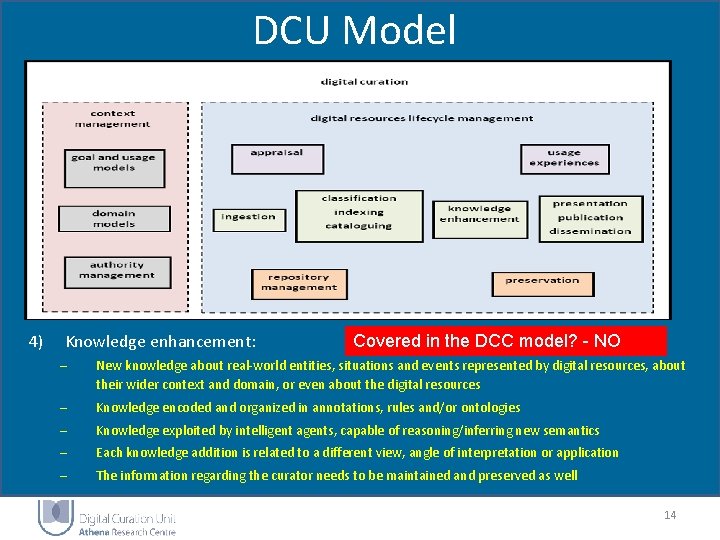
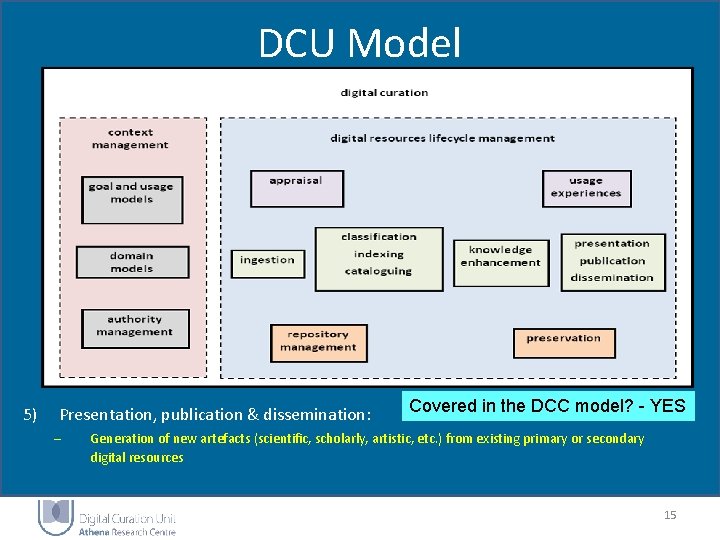
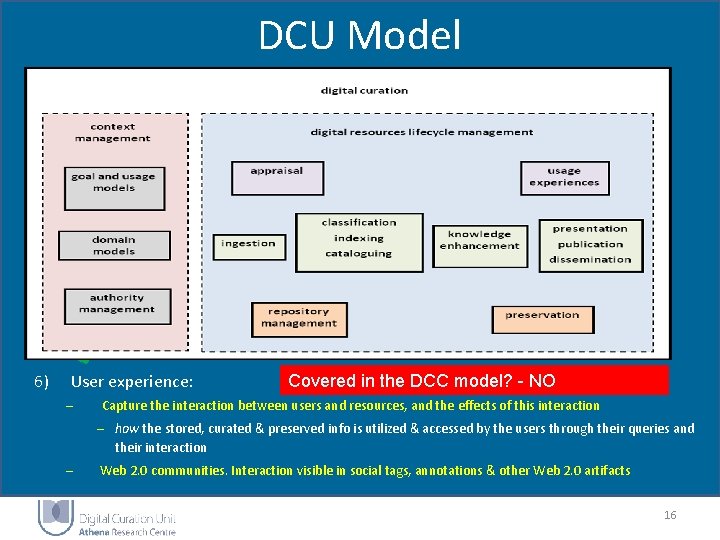
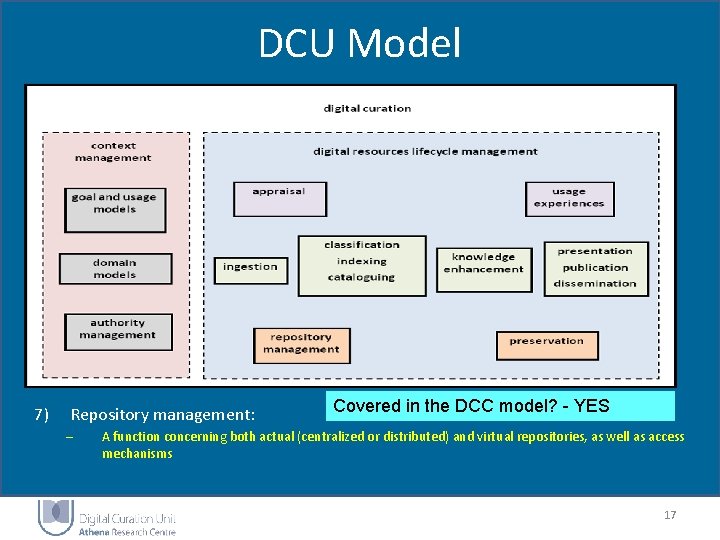
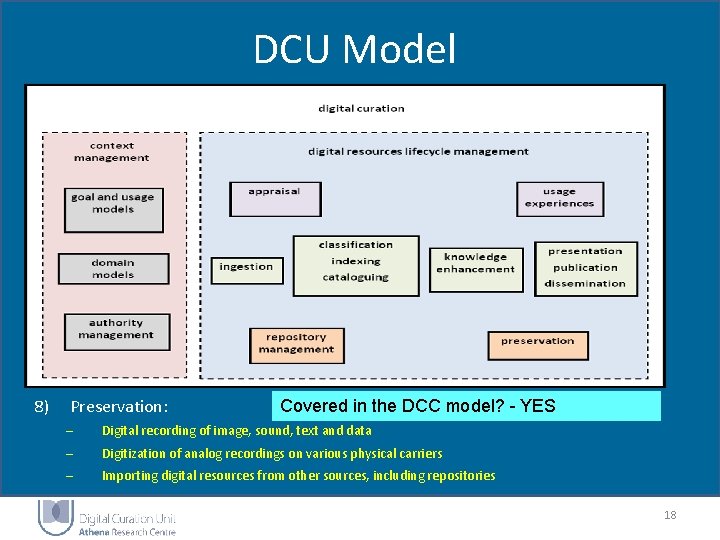
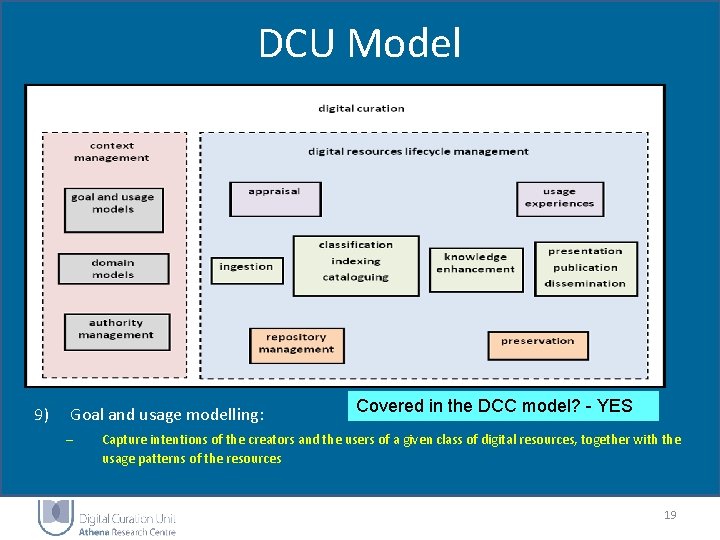
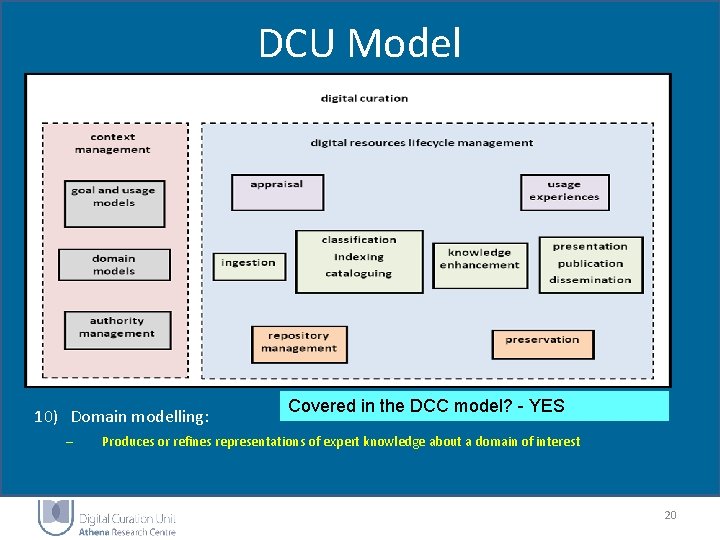
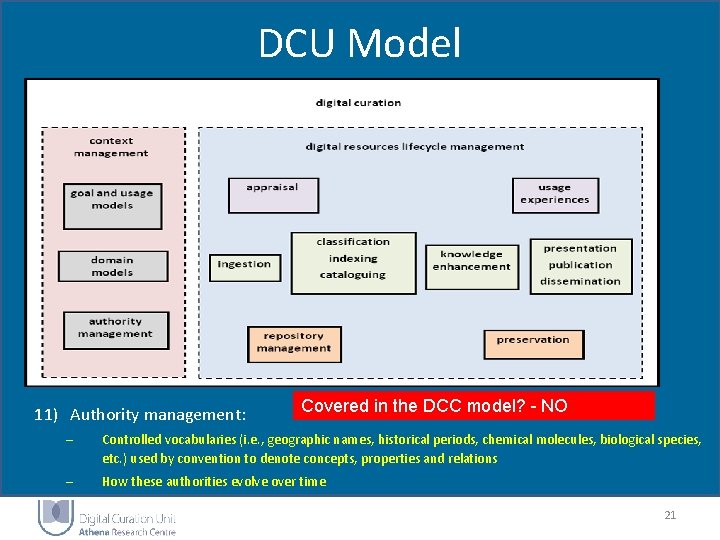
Is the DCC Curation Lifecycle Model Complete? • DCU digital curation processes model – A model presented recently [Constantopoulos & Dallas, 2008] – 11 processes - 2 categories • Context management • Digital resources lifecycle management • Are there processes not included in the DCC model? 10
DCU Model 1) Appraisal Covered in the DCC model? - YES – Development of criteria for the evaluation of potential resources – Selection of the resources that may become subject to subsequent curation processes 11
DCU Model 2) Ingest: Covered in the DCC model? - YES – Digital recording of image, sound, text and data – Digitization of analog recordings on various physical carriers – Importing digital resources from other sources, including repositories 12
DCU Model 3) Classification, indexing & cataloguing Covered in the DCC model? - YES – Produce logical indices for information management – Produce subject indices and indices related to the intended or possible uses of digital resources 13
DCU Model 4) Knowledge enhancement: Covered in the DCC model? - NO – New knowledge about real-world entities, situations and events represented by digital resources, about their wider context and domain, or even about the digital resources – Knowledge encoded and organized in annotations, rules and/or ontologies – Knowledge exploited by intelligent agents, capable of reasoning/inferring new semantics – Each knowledge addition is related to a different view, angle of interpretation or application – The information regarding the curator needs to be maintained and preserved as well 14
DCU Model 5) Presentation, publication & dissemination: – Covered in the DCC model? - YES Generation of new artefacts (scientific, scholarly, artistic, etc. ) from existing primary or secondary digital resources 15
DCU Model 6) User experience: – Covered in the DCC model? - NO Capture the interaction between users and resources, and the effects of this interaction – how the stored, curated & preserved info is utilized & accessed by the users through their queries and their interaction – Web 2. 0 communities. Interaction visible in social tags, annotations & other Web 2. 0 artifacts 16
DCU Model 7) Repository management: – Covered in the DCC model? - YES A function concerning both actual (centralized or distributed) and virtual repositories, as well as access mechanisms 17
DCU Model 8) Preservation: Covered in the DCC model? - YES – Digital recording of image, sound, text and data – Digitization of analog recordings on various physical carriers – Importing digital resources from other sources, including repositories 18
DCU Model 9) Goal and usage modelling: – Covered in the DCC model? - YES Capture intentions of the creators and the users of a given class of digital resources, together with the usage patterns of the resources 19
DCU Model 10) Domain modelling: – Covered in the DCC model? - YES Produces or refines representations of expert knowledge about a domain of interest 20
DCU Model 11) Authority management: Covered in the DCC model? - NO – Controlled vocabularies (i. e. , geographic names, historical periods, chemical molecules, biological species, etc. ) used by convention to denote concepts, properties and relations – How these authorities evolve over time 21
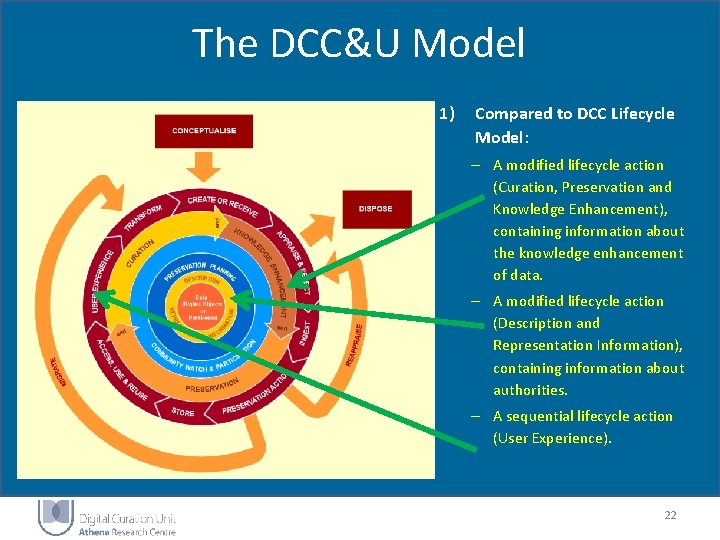
The DCC&U Model 1) Compared to DCC Lifecycle Model: – A modified lifecycle action (Curation, Preservation and Knowledge Enhancement), containing information about the knowledge enhancement of data. – A modified lifecycle action (Description and Representation Information), containing information about authorities. – A sequential lifecycle action (User Experience). 22
Conclusion • Examined 2 parallel models for digital curation • Investigated actions not present in the DCC model • Proposed an enhanced model including selected additional actions Future directions: • Elaborate operational details of the extended lifecycle model 23