
DAY OLD CHICK QUALITY CHICK TAKEOFF Chicks do
- Slides: 12
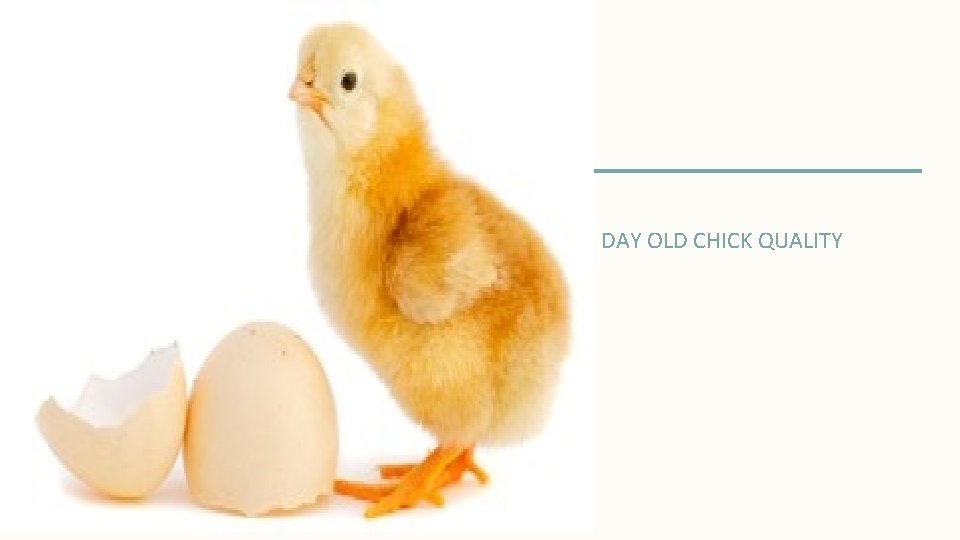
DAY OLD CHICK QUALITY
CHICK TAKE-OFF – Chicks do not all hatch at the same time. – There might be a difference of 40 hours between the first and last hatched chicks.
INSTRUCTIONS – Do not open the incubator to take out the early hatched chicks while others are still in the process of hatching. – This will disturb the climate inside the incubator too much for the slower chicks. – Avoid waiting for the last chick to be hatched; in the meantime the rest of the chicks suffer from dehydration.
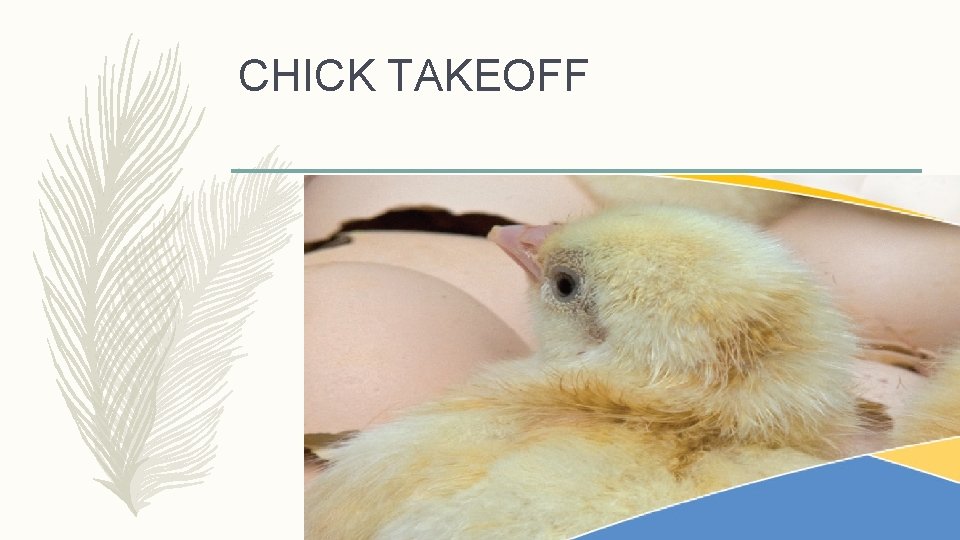
CHICK TAKEOFF
CHICK TAKE-OFF – Chicks are ready to be taken off when most of them are dry and fluffed up, with a few (about 5%) still having some moisture on the back of the necks.
X-TICS OF GOOD QUALITY DAY OLD CHICK – active and lively, normal behaviour – normal size – straight feet and toes – two bright eyes
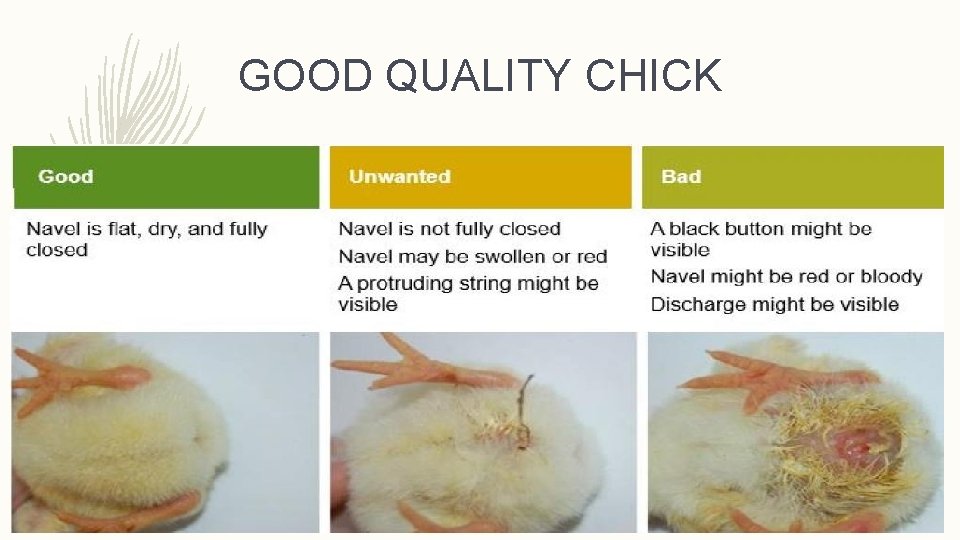
GOOD QUALITY CHICK
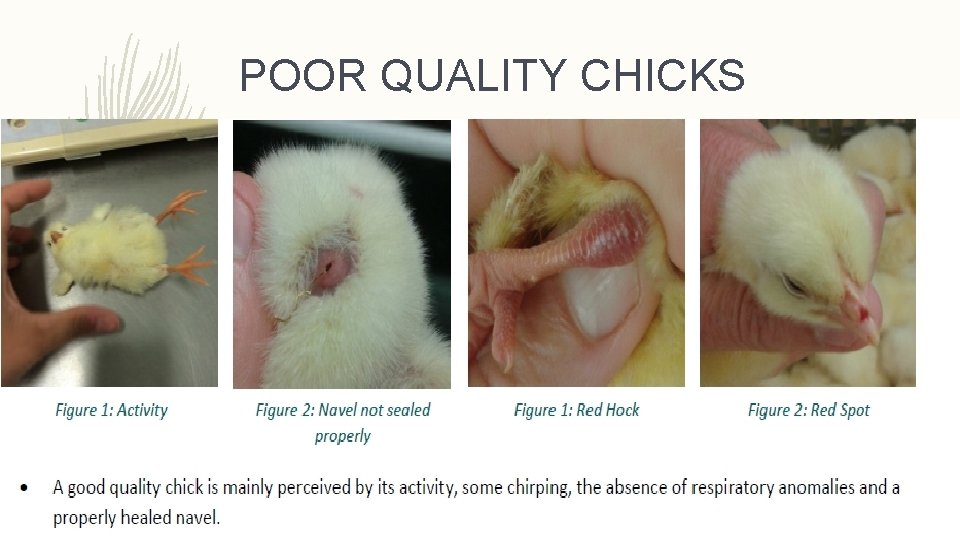
POOR QUALITY CHICKS
GOOD QUALITY – straight, closed beak – good, dry feathers – normal colour – supple belly – completely healed navel – normal cloaca
POOR QUALITY DAY OLD CHICK – weak and not lively, twisted neck (torticollis), stargazers – too small – curled feet and toes (indicated by red hocks) – abnormal eyes, blind – cross beak, open or dirty beak
POOR QUALITY CHICK – sticky and wet feathers, clubbed down – too pale (mostly not the only problem) – hard and swollen belly (remains of yolk are too large) – unhealed and/or navel (rough), thick navel cord – closed cloaca
REASONS FOR SEPARATING GOOD QUALITY AND POOR QUALITY – to avoid high mortality rates especially during the first three to five days – weak chicks are more susceptible to diseases and could contaminate the other birds as well; – poor quality chicks perform less well.