
Day 19 Cadences Stability chart Most left to
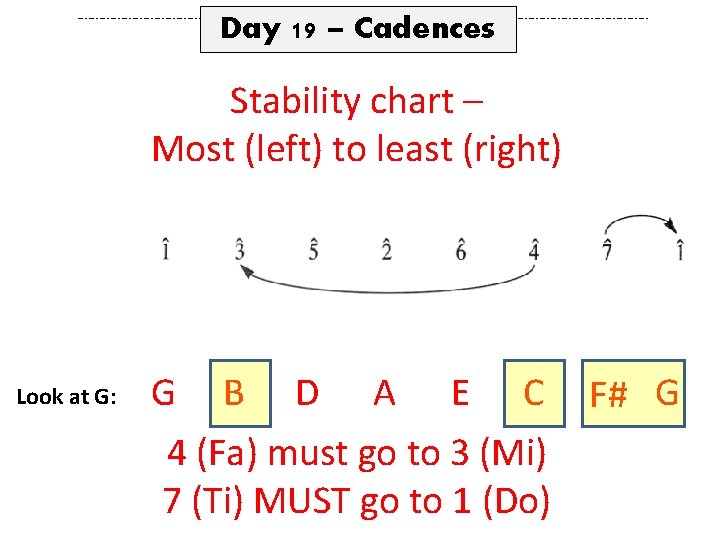
Day 19 – Cadences Stability chart – Most (left) to least (right) Look at G: G B D A E C F# G 4 (Fa) must go to 3 (Mi) 7 (Ti) MUST go to 1 (Do)
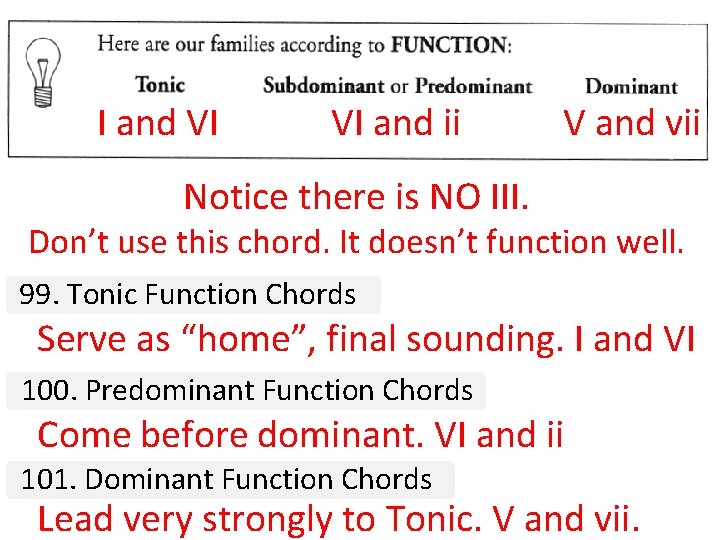
I and VI VI and ii V and vii Notice there is NO III. Don’t use this chord. It doesn’t function well. 99. Tonic Function Chords Serve as “home”, final sounding. I and VI 100. Predominant Function Chords Come before dominant. VI and ii 101. Dominant Function Chords Lead very strongly to Tonic. V and vii.
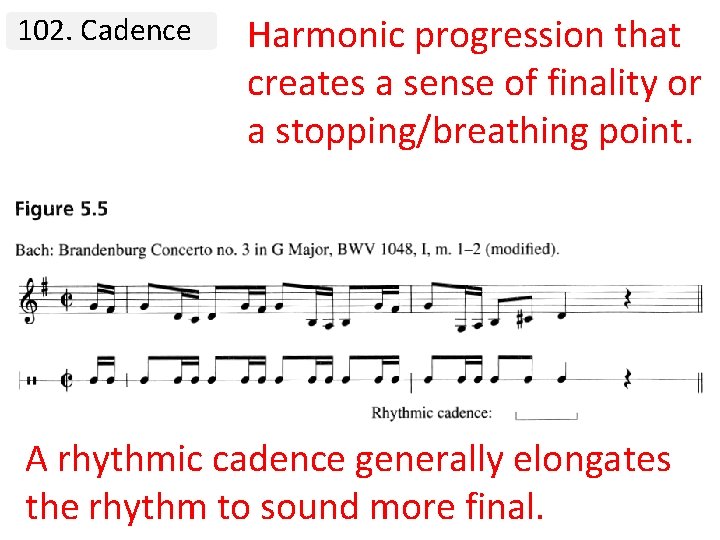
102. Cadence Harmonic progression that creates a sense of finality or a stopping/breathing point. A rhythmic cadence generally elongates the rhythm to sound more final.
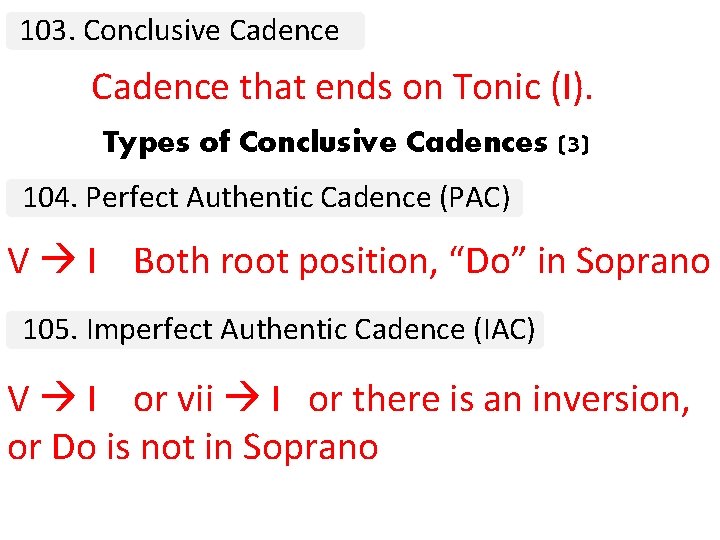
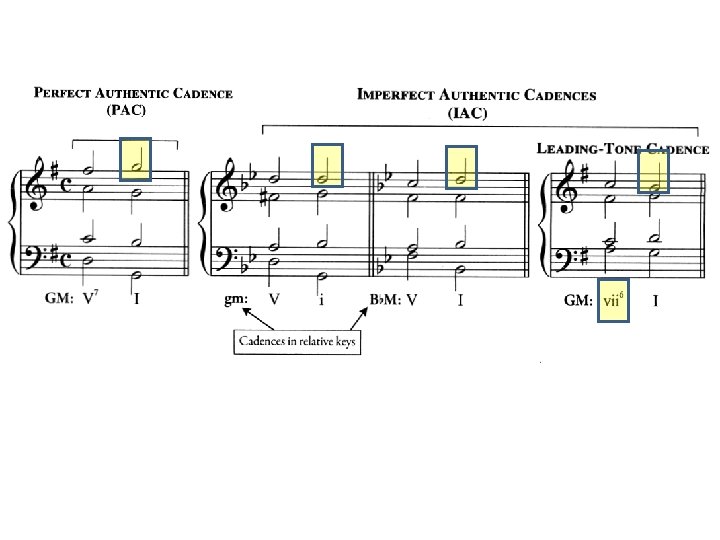
103. Conclusive Cadence that ends on Tonic (I). Types of Conclusive Cadences (3) 104. Perfect Authentic Cadence (PAC) V I Both root position, “Do” in Soprano 105. Imperfect Authentic Cadence (IAC) V I or vii I or there is an inversion, or Do is not in Soprano
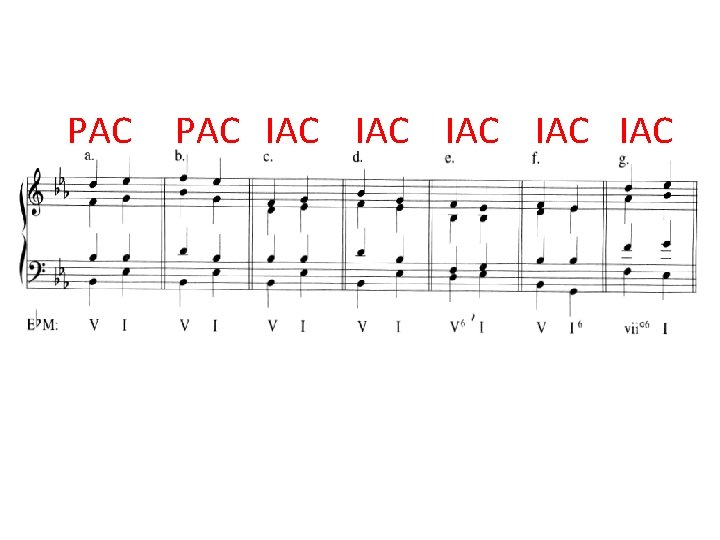
PAC IAC IAC IAC
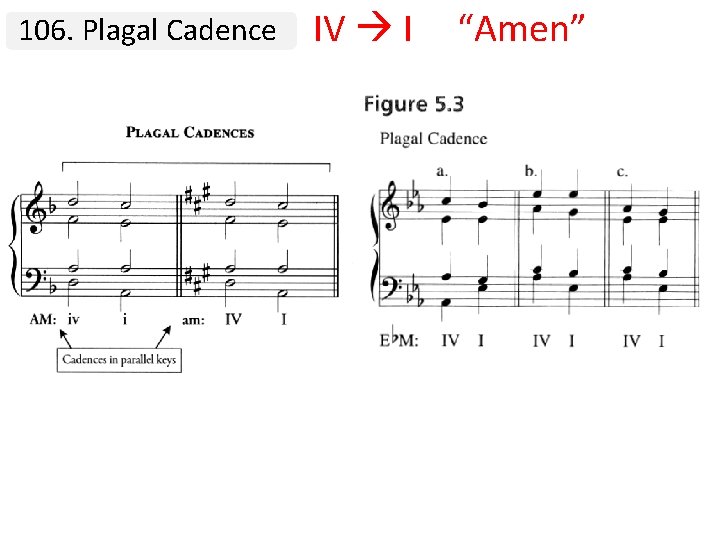
106. Plagal Cadence IV I “Amen”
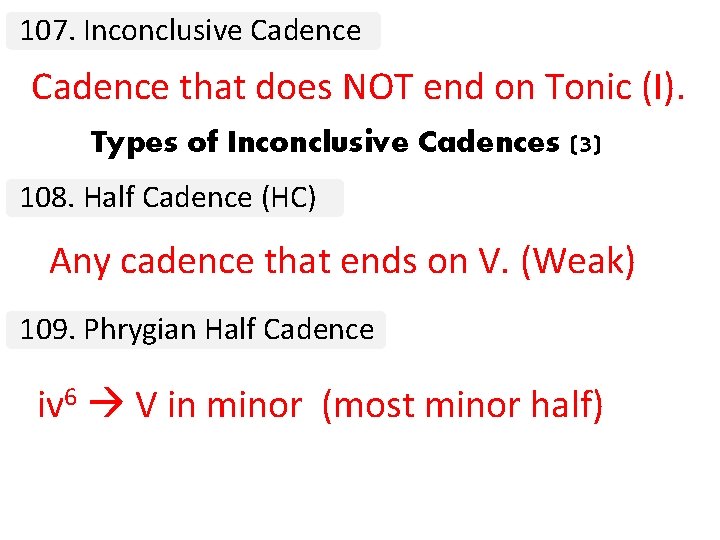
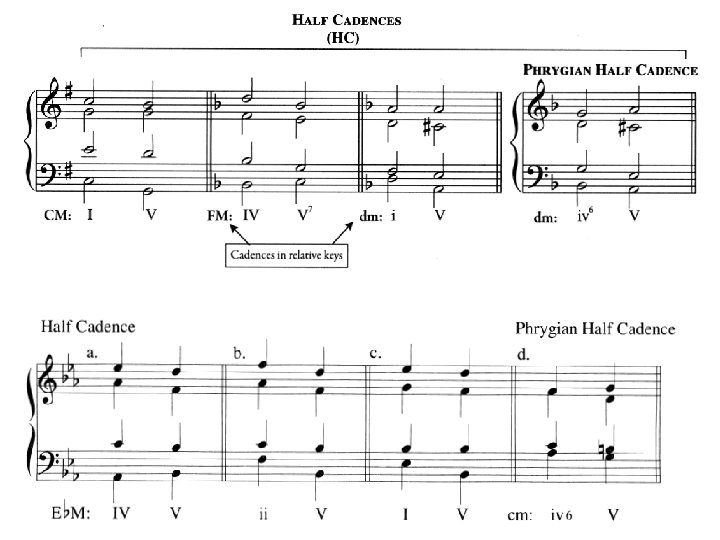
107. Inconclusive Cadence that does NOT end on Tonic (I). Types of Inconclusive Cadences (3) 108. Half Cadence (HC) Any cadence that ends on V. (Weak) 109. Phrygian Half Cadence iv 6 V in minor (most minor half)
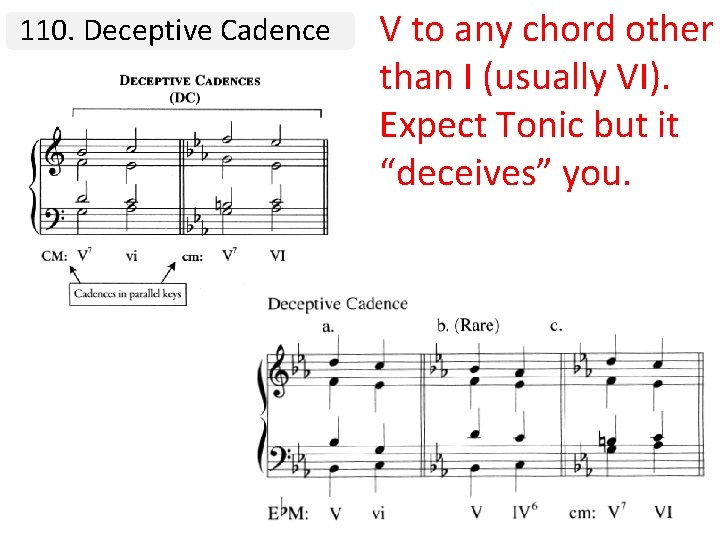
110. Deceptive Cadence V to any chord other than I (usually VI). Expect Tonic but it “deceives” you.
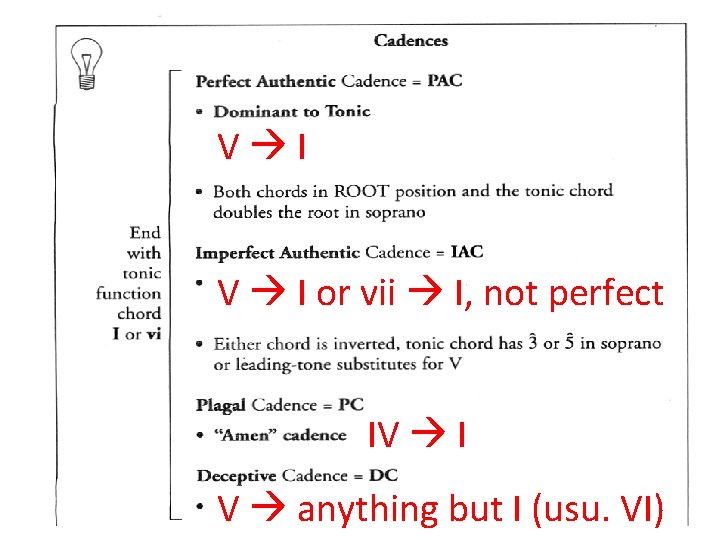
V I V I or vii I, not perfect IV I V anything but I (usu. VI)
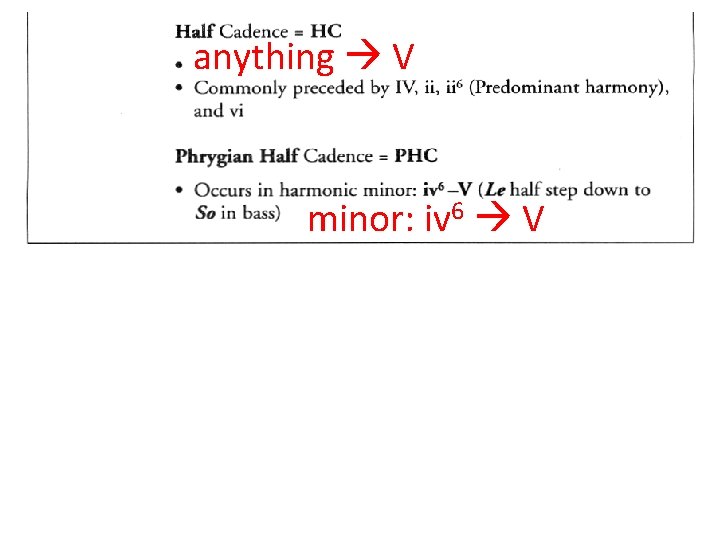
anything V minor: iv 6 V
- Slides: 12