
Day 1 Whats My Job Can you sort
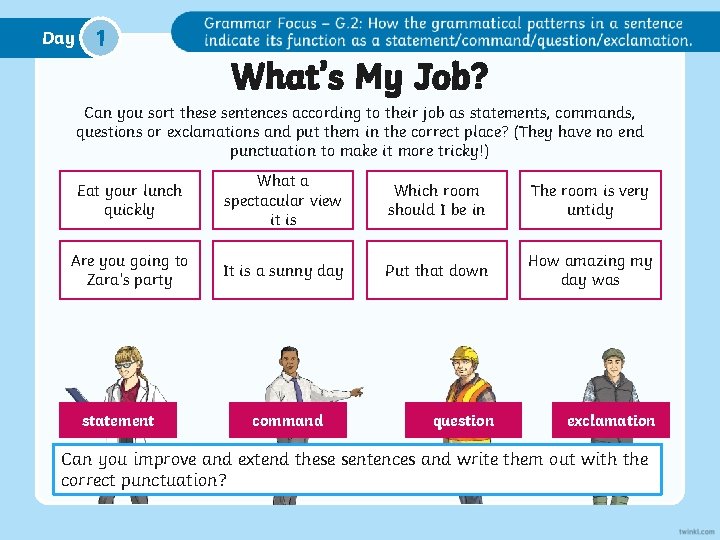
Day 1 What’s My Job? Can you sort these sentences according to their job as statements, commands, questions or exclamations and put them in the correct place? (They have no end punctuation to make it more tricky!) Eat your lunch quickly What a spectacular view it is Which room should I be in The room is very untidy Are you going to Zara’s party It is a sunny day Put that down How amazing my day was statement command question exclamation Can you improve and extend these sentences and write them out with the correct punctuation?
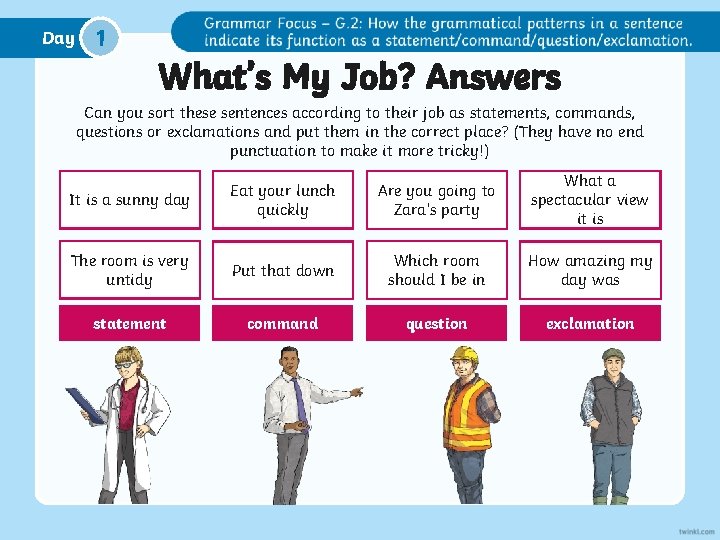
Day 1 What’s My Job? Answers Can you sort these sentences according to their job as statements, commands, questions or exclamations and put them in the correct place? (They have no end punctuation to make it more tricky!) Eat your lunch It is a sunny day quickly What a Eat your lunch spectacular view quickly it is Are. Which you going room to should Zara’s Iparty be in What a The room is very spectacular view untidy it is The roomgoing is very Are you to untidy Zara’s party It. Put is athat sunny day down Which room Put that down should I be in How amazing my day was statement command question exclamation
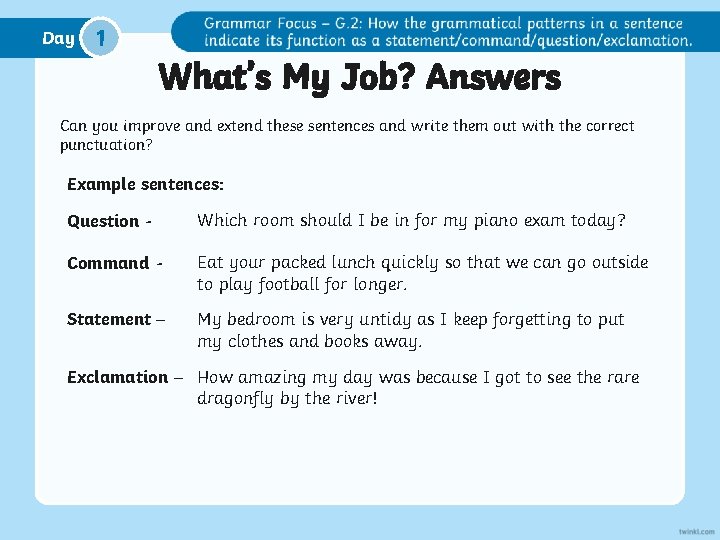
Day 1 What’s My Job? Answers Can you improve and extend these sentences and write them out with the correct punctuation? Example sentences: Question - Which room should I be in for my piano exam today? Command - Eat your packed lunch quickly so that we can go outside to play football for longer. Statement – My bedroom is very untidy as I keep forgetting to put my clothes and books away. Exclamation – How amazing my day was because I got to see the rare dragonfly by the river!
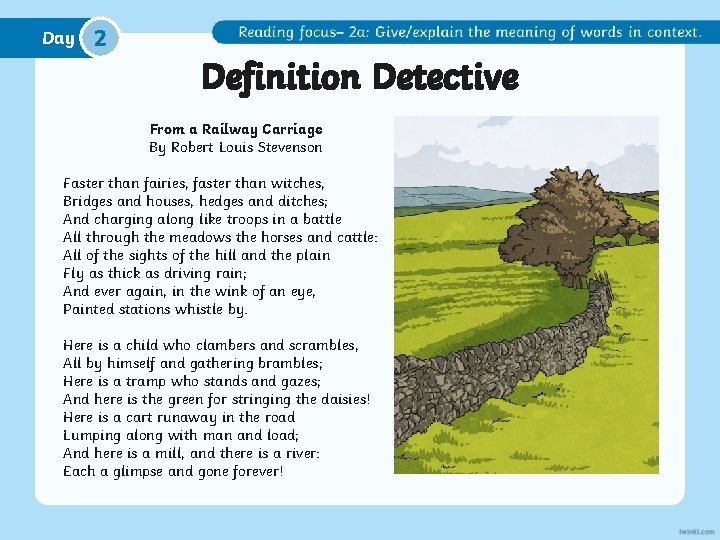
Day 2 Definition Detective From a Railway Carriage By Robert Louis Stevenson Faster than fairies, faster than witches, Bridges and houses, hedges and ditches; And charging along like troops in a battle All through the meadows the horses and cattle: All of the sights of the hill and the plain Fly as thick as driving rain; And ever again, in the wink of an eye, Painted stations whistle by. Here is a child who clambers and scrambles, All by himself and gathering brambles; Here is a tramp who stands and gazes; And here is the green for stringing the daisies! Here is a cart runaway in the road Lumping along with man and load; And here is a mill, and there is a river: Each a glimpse and gone forever!
2 Day Definition Detective 1 a) Why does the poet describe the train as ‘charging along like troops in a battle’? b) What type of sentence is this? 2 a) In this poem, what do the words ‘clambers and scrambles’ mean? b) What do these words suggest about the child? 3 What is the meaning of the word ‘glimpse’ in this poem?
2 Day Definition Detective Answers 1 a) Why does the poet describe the train as ‘charging along like troops in a battle’? Troops would march directly and quickly to the destination of a battle so this gives us a clear image of the train travelling directly and urgently to its destination. b) What type of sentence is this? This sentence is a simile comparing the train to something else (the troops). Try using a metaphor to describe the way the train moves. The train was a bullet shooting out of the station.
Day 2 Definition Detective Answers 2 a) In this poem, what do the words ‘clambers and scrambles’ mean? These words mean climbing and slipping. b) What do these words suggest about the child? He is playing on a sloped piece of land maybe is struggling to reach the brambles (which are mentioned in the next line of the poem). Can you use a simile to describe the brambles the child is trying to reach? The brambles are as prickly as sharp cats’ claws.
Day 2 Definition Detective Answers 3 What is the meaning of the word ‘glimpse’ in this poem? In this poem, glimpse is being used to describe the brief views that are seen through the windows of the train. How else could the word ‘glimpse’ be used? Can you write a sentence that includes it? I peered through the icy window to steal a glimpse of the magnificent Christmas tree that sparkled inside.
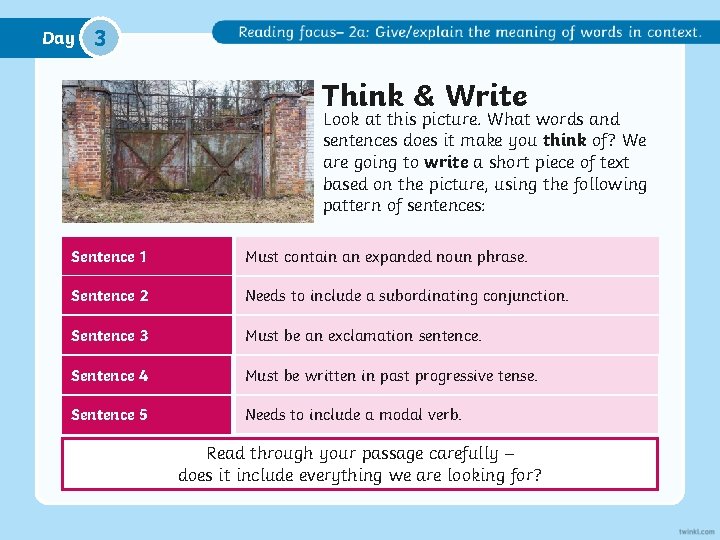
Day 3 Think & Write Look at this picture. What words and sentences does it make you think of? We are going to write a short piece of text based on the picture, using the following pattern of sentences: Sentence 1 Must contain an expanded noun phrase. Sentence 2 Needs to include a subordinating conjunction. Sentence 3 Must be an exclamation sentence. Sentence 4 Must be written in past progressive tense. Sentence 5 Needs to include a modal verb. Read through your passage carefully – does it include everything we are looking for?
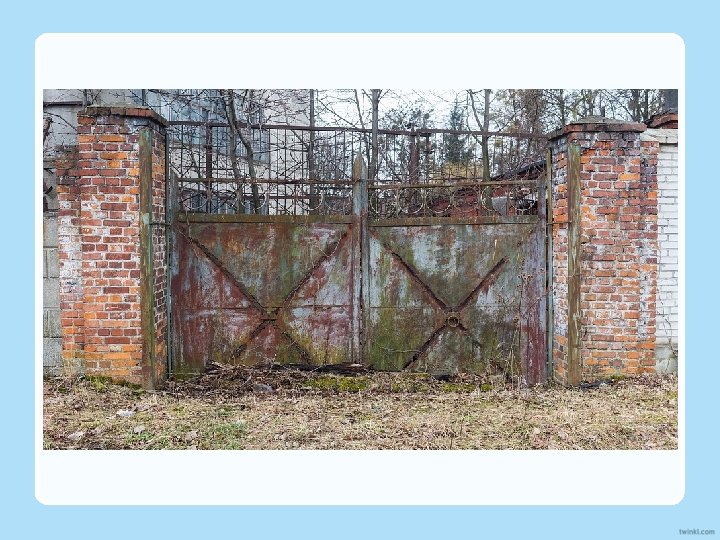
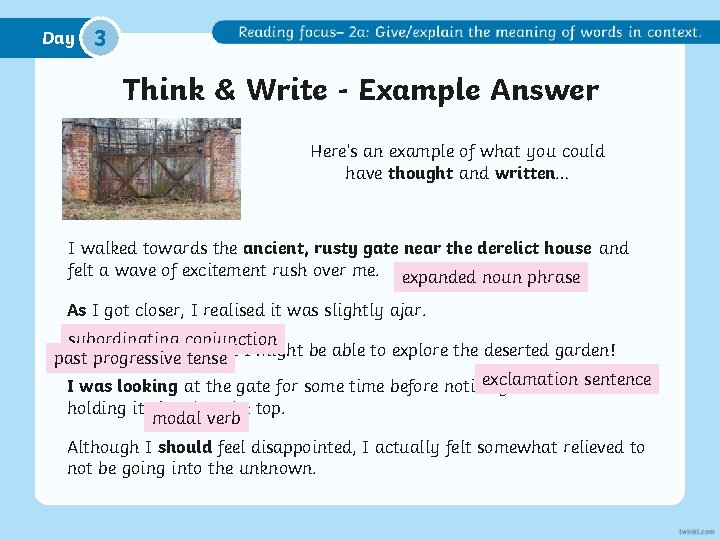
Day 3 Think & Write - Example Answer Here’s an example of what you could have thought and written… I walked towards the ancient, rusty gate near the derelict house and felt a wave of excitement rush over me. expanded noun phrase As I got closer, I realised it was slightly ajar. subordinating conjunction How exciting totense think I might be able to explore the deserted garden! past progressive exclamation sentence I was looking at the gate for some time before noticing the lose chain holding it closed at the top. modal verb Although I should feel disappointed, I actually felt somewhat relieved to not be going into the unknown.
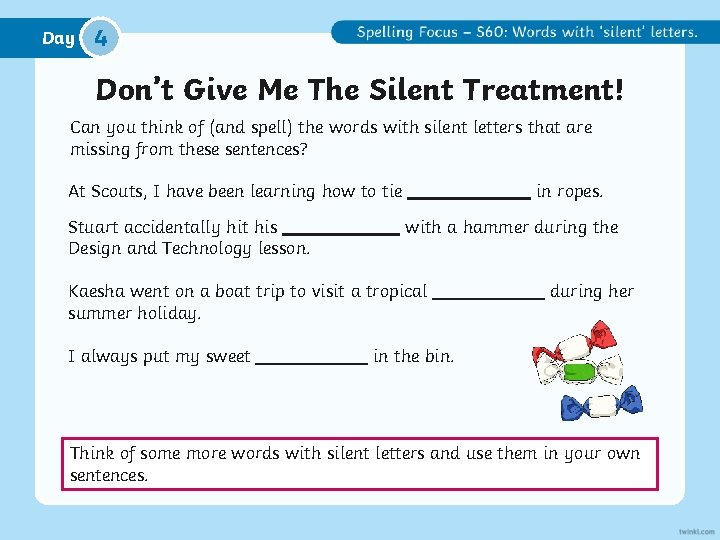
Day 4 Don’t Give Me The Silent Treatment! Can you think of (and spell) the words with silent letters that are missing from these sentences? At Scouts, I have been learning how to tie Stuart accidentally hit his Design and Technology lesson. in ropes. with a hammer during the Kaesha went on a boat trip to visit a tropical summer holiday. I always put my sweet during her in the bin. Think of some more words with silent letters and use them in your own sentences.
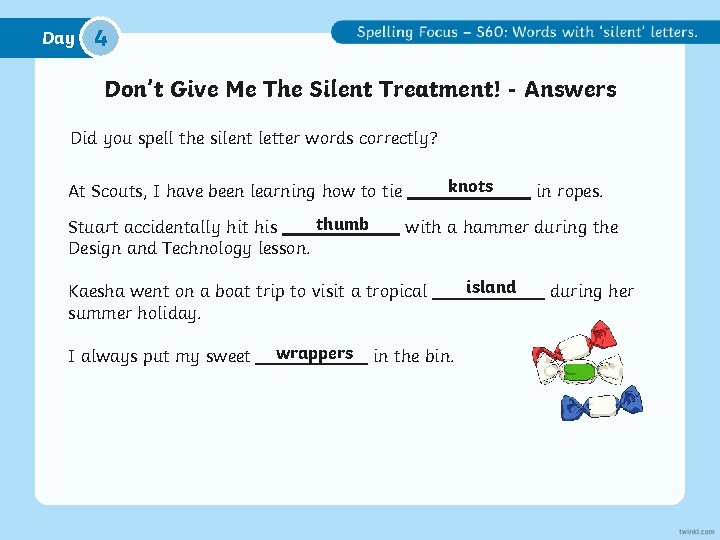
Day 4 Don’t Give Me The Silent Treatment! - Answers Did you spell the silent letter words correctly? knots At Scouts, I have been learning how to tie thumb Stuart accidentally hit his Design and Technology lesson. with a hammer during the Kaesha went on a boat trip to visit a tropical summer holiday. I always put my sweet wrappers in ropes. in the bin. island during her
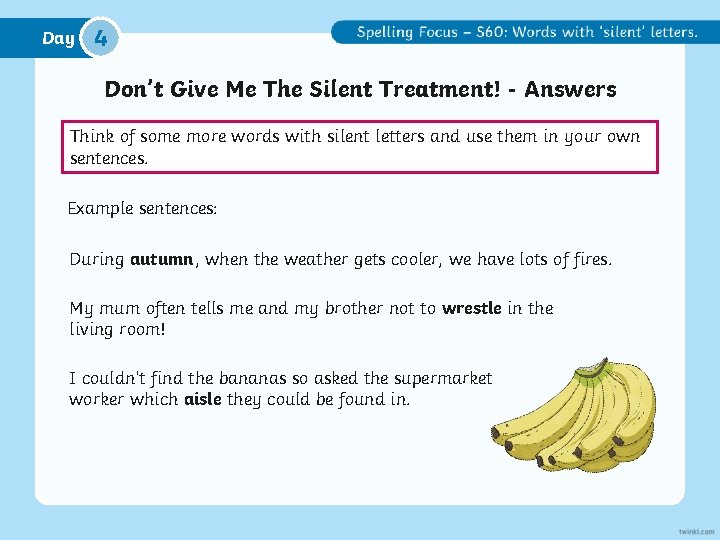
Day 4 Don’t Give Me The Silent Treatment! - Answers Think of some more words with silent letters and use them in your own sentences. Example sentences: During autumn, when the weather gets cooler, we have lots of fires. My mum often tells me and my brother not to wrestle in the living room! I couldn’t find the bananas so asked the supermarket worker which aisle they could be found in.
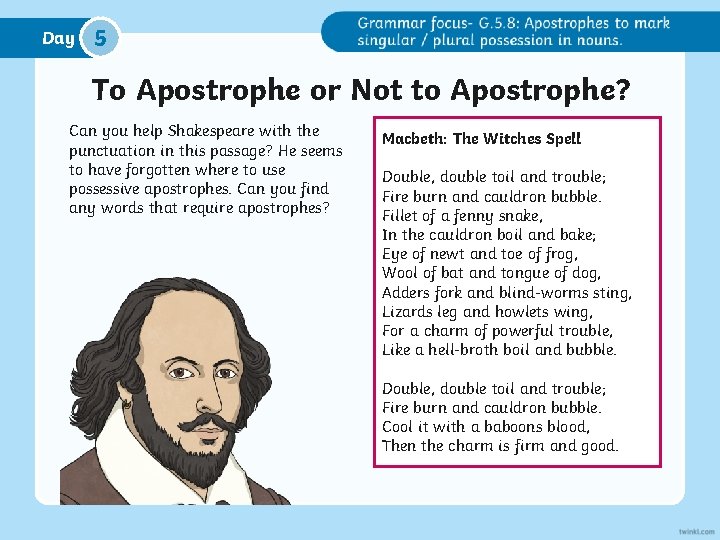
Day 5 To Apostrophe or Not to Apostrophe? Can you help Shakespeare with the punctuation in this passage? He seems to have forgotten where to use possessive apostrophes. Can you find any words that require apostrophes? Macbeth: The Witches Spell Double, double toil and trouble; Fire burn and cauldron bubble. Fillet of a fenny snake, In the cauldron boil and bake; Eye of newt and toe of frog, Wool of bat and tongue of dog, Adders fork and blind-worms sting, Lizards leg and howlets wing, For a charm of powerful trouble, Like a hell-broth boil and bubble. Double, double toil and trouble; Fire burn and cauldron bubble. Cool it with a baboons blood, Then the charm is firm and good.
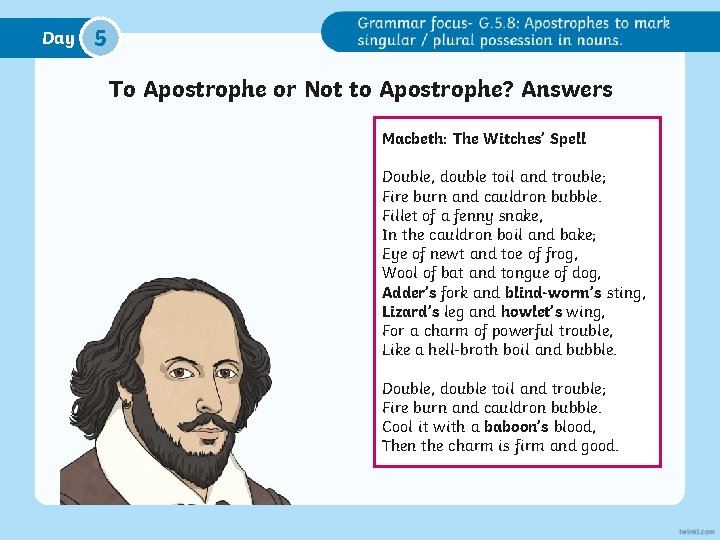
Day 5 To Apostrophe or Not to Apostrophe? Answers Macbeth: The Witches’ Spell Double, double toil and trouble; Fire burn and cauldron bubble. Fillet of a fenny snake, In the cauldron boil and bake; Eye of newt and toe of frog, Wool of bat and tongue of dog, Adder’s fork and blind-worm’s sting, Lizard’s leg and howlet’s wing, For a charm of powerful trouble, Like a hell-broth boil and bubble. Double, double toil and trouble; Fire burn and cauldron bubble. Cool it with a baboon’s blood, Then the charm is firm and good.

- Slides: 18