
DAY 1 Leaf Structure Photosynthesis Respiration Main Job

DAY 1 Leaf Structure
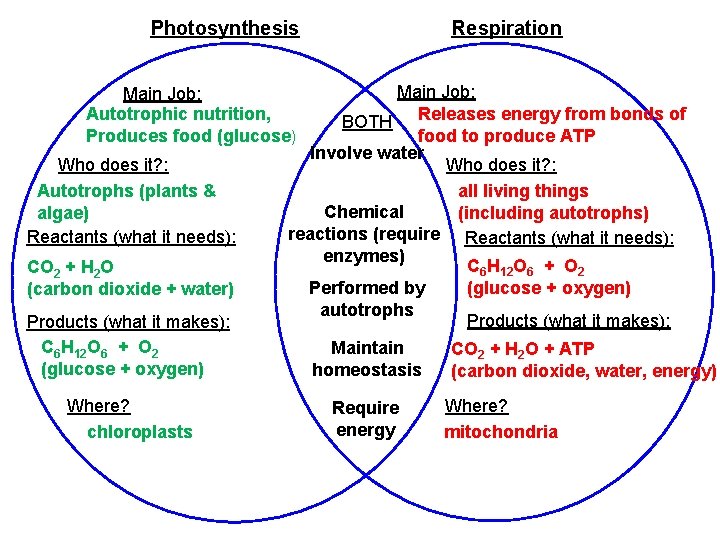
Photosynthesis Respiration Main Job: BOTH Releases energy from bonds of food to produce ATP Involve water Who does it? : all living things Chemical (including autotrophs) reactions (require Reactants (what it needs): enzymes) C 6 H 12 O 6 + O 2 (glucose + oxygen) Performed by autotrophs Products (what it makes): Main Job: Autotrophic nutrition, Produces food (glucose) Who does it? : Autotrophs (plants & algae) Reactants (what it needs): CO 2 + H 2 O (carbon dioxide + water) Products (what it makes): C 6 H 12 O 6 + O 2 (glucose + oxygen) Where? chloroplasts Maintain homeostasis Require energy CO 2 + H 2 O + ATP (carbon dioxide, water, energy) Where? mitochondria
Design a Leaf!! • What would be the best structure for a leaf to carry out its major function…PHOTOSYNTHESIS!!!? ? ? • Place the following in order from the top of the leaf to the bottom. A. Spongy layer allowing gases to flow to the choloroplasts B. Thick, waxy layer C. Layer of cells with the MOST chloroplasts D. Layer of cells that includes holes for gases to enter or “leave” the leaf E. Layer with veins to carry glucose and water to and
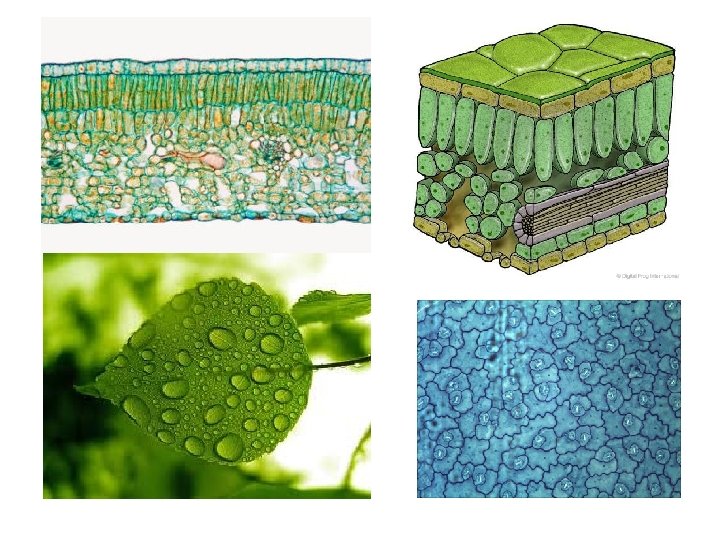
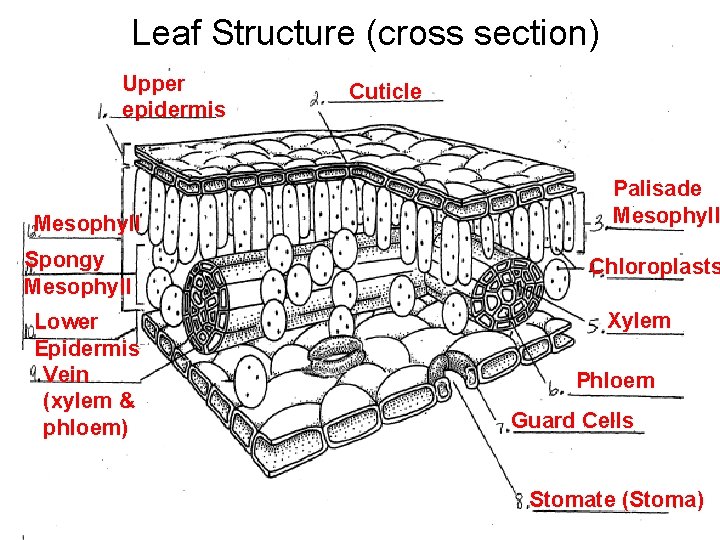
Leaf Structure (cross section) Upper epidermis Mesophyll Spongy Mesophyll Lower Epidermis Vein (xylem & phloem) Cuticle Palisade Mesophyll Chloroplasts Xylem Phloem Guard Cells Stomate (Stoma)
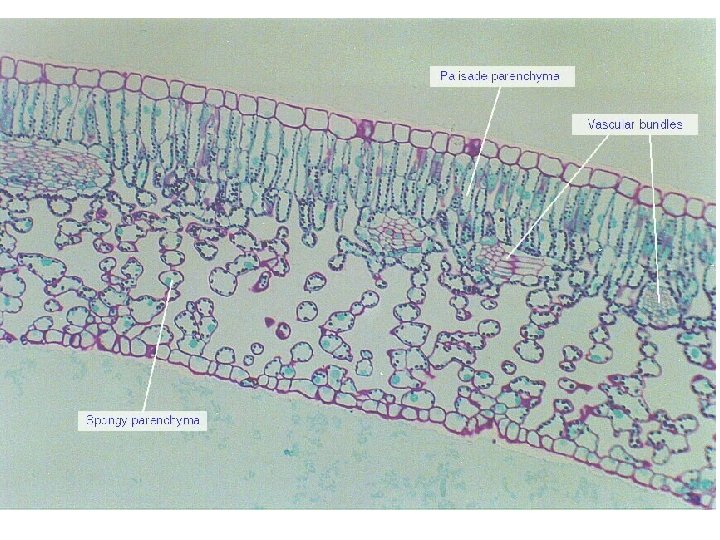
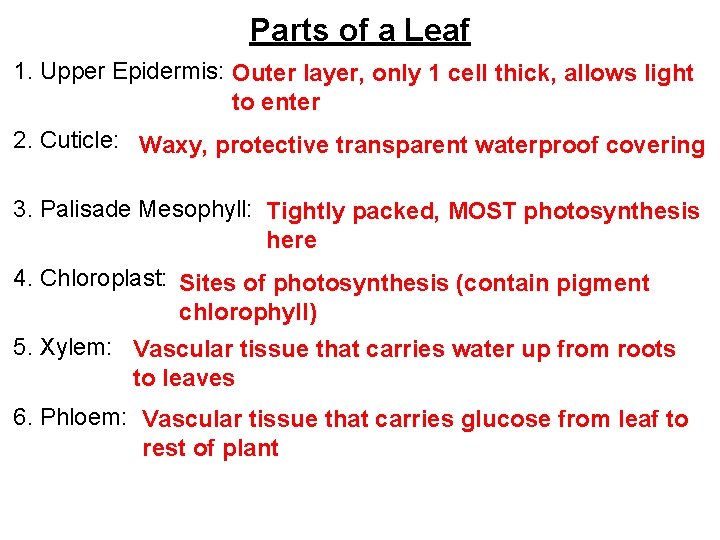
Parts of a Leaf 1. Upper Epidermis: Outer layer, only 1 cell thick, allows light to enter 2. Cuticle: Waxy, protective transparent waterproof covering 3. Palisade Mesophyll: Tightly packed, MOST photosynthesis here 4. Chloroplast: Sites of photosynthesis (contain pigment chlorophyll) 5. Xylem: Vascular tissue that carries water up from roots to leaves 6. Phloem: Vascular tissue that carries glucose from leaf to rest of plant
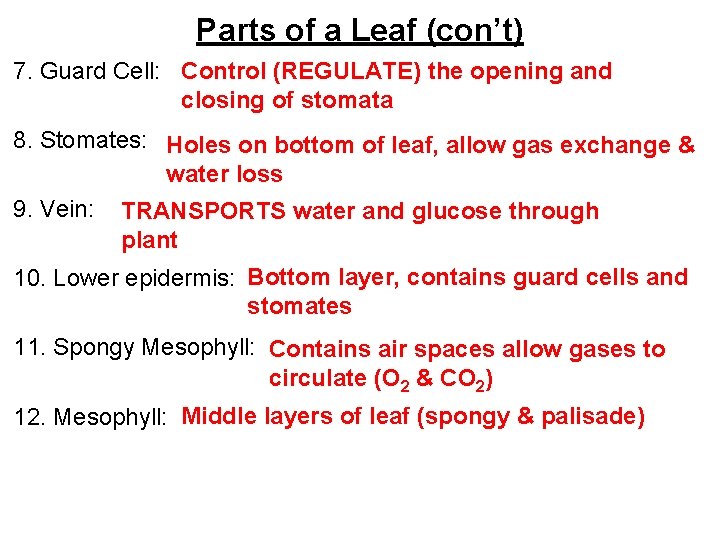
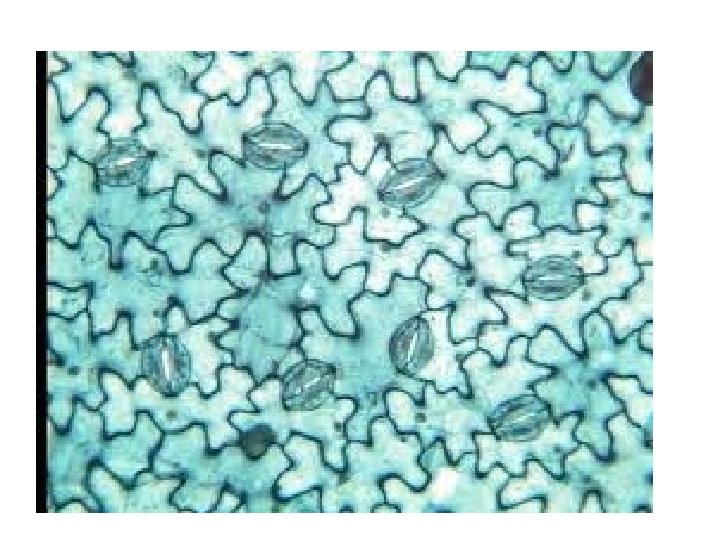
Parts of a Leaf (con’t) 7. Guard Cell: Control (REGULATE) the opening and closing of stomata 8. Stomates: Holes on bottom of leaf, allow gas exchange & water loss 9. Vein: TRANSPORTS water and glucose through plant 10. Lower epidermis: Bottom layer, contains guard cells and stomates 11. Spongy Mesophyll: Contains air spaces allow gases to circulate (O 2 & CO 2) 12. Mesophyll: Middle layers of leaf (spongy & palisade)
DAY 2 Photosynthesis
Bellwork • Transport, Nutrition, Regulation and Respiration are 4 of the life functions carried out by all living things! How does the leaf carry these out in plants? • In Greek, “stomata” means “mouth”…why do you think the holes in the bottom of the leaf are called stomates?
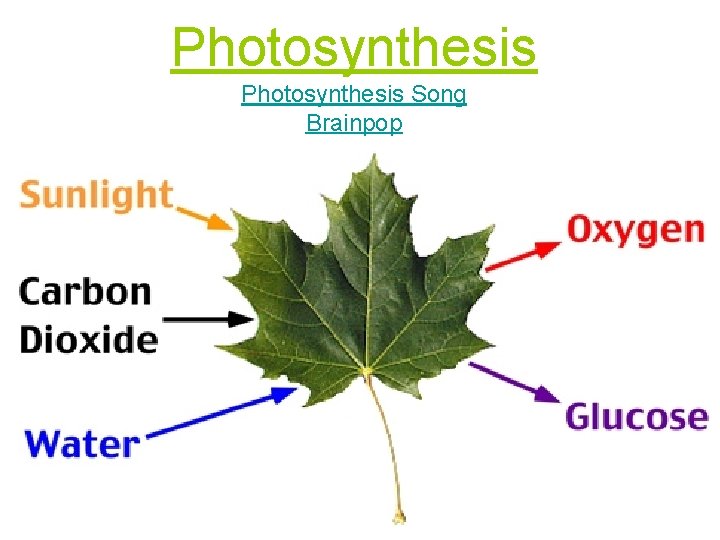
Photosynthesis Song Brainpop
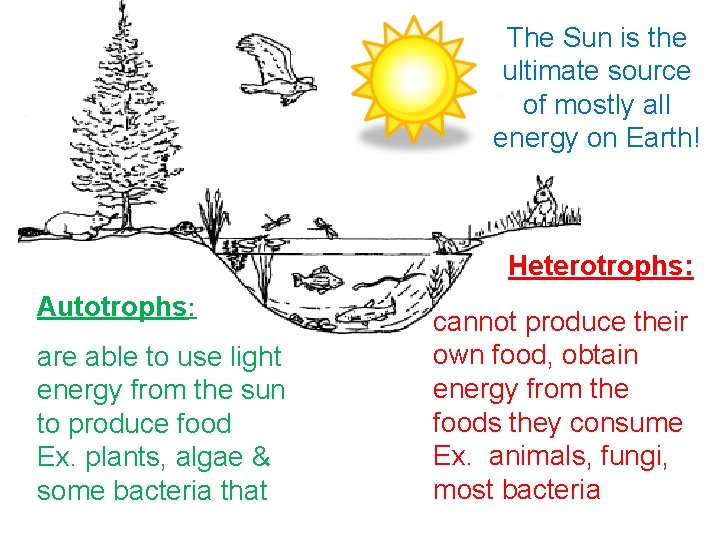
The Sun is the ultimate source of mostly all energy on Earth! Heterotrophs: Autotrophs: are able to use light energy from the sun to produce food Ex. plants, algae & some bacteria that cannot produce their own food, obtain energy from the foods they consume Ex. animals, fungi, most bacteria

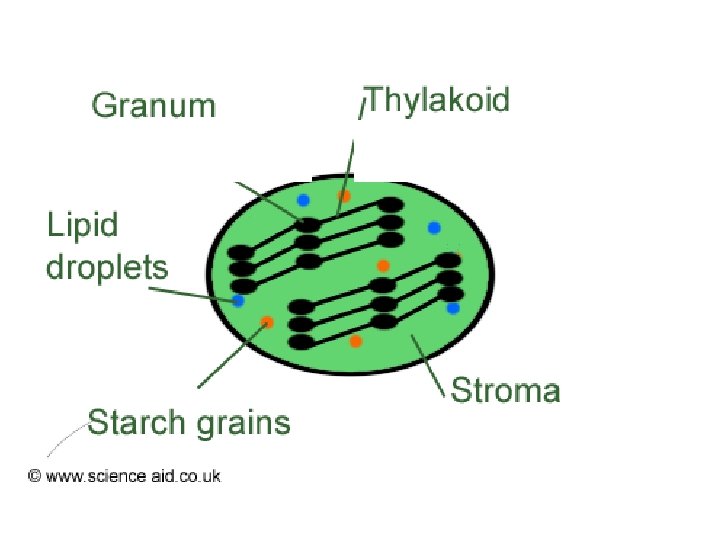
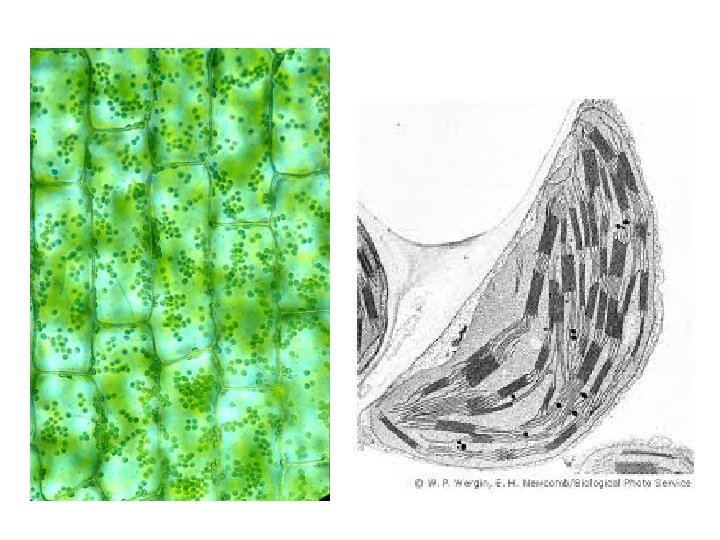
Photosynthesis: process by which…plants use the energy from sunlight to convert water and carbon dioxide into oxygen and highenergy sugars (a. k. a. “autotrophic nutrition”) • Chloroplasts – site of photosynthesis within the cell • Chlorophyll – a green pigment found in the chloroplast, absorbs light energy
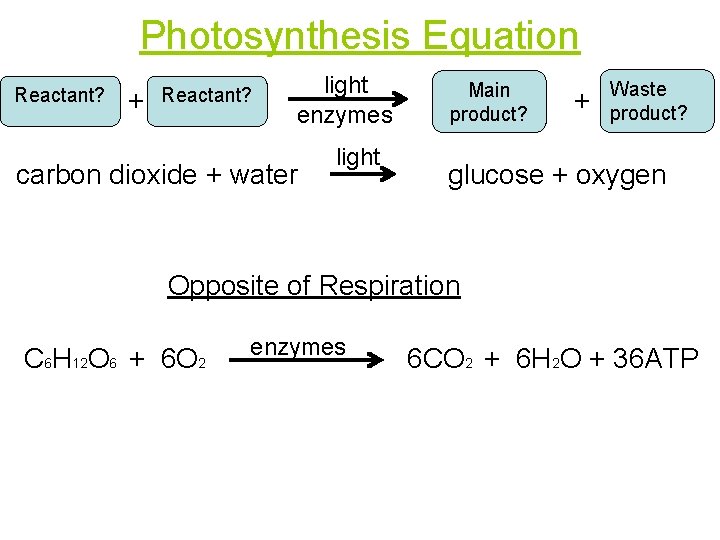
Photosynthesis Equation Reactant? 6 CO 2 + Reactant? 6 H 2 O light enzymes carbon dioxide + water light Main C 6 H 12 O 6 product? + Waste 6 O 2 product? glucose + oxygen Opposite of Respiration C 6 H 12 O 6 + 6 O 2 enzymes 6 CO 2 + 6 H 2 O + 36 ATP
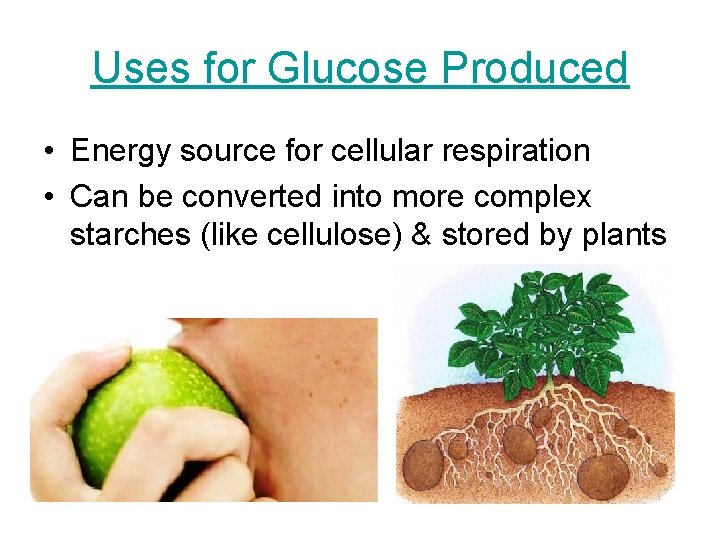
Uses for Glucose Produced • Energy source for cellular respiration • Can be converted into more complex starches (like cellulose) & stored by plants
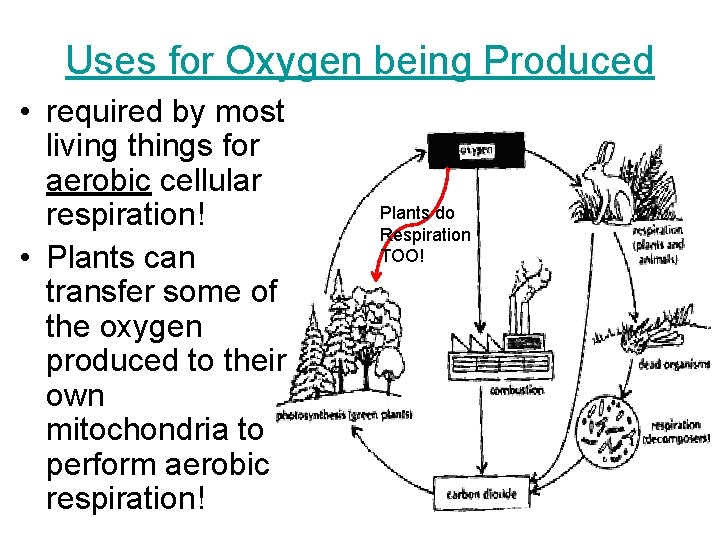
Uses for Oxygen being Produced • required by most living things for aerobic cellular respiration! • Plants can transfer some of the oxygen produced to their own mitochondria to perform aerobic respiration! Plants do Respiration TOO!
DAY 3 Factors Affecting Photosynthesis Light Dependent & Independent Reactions
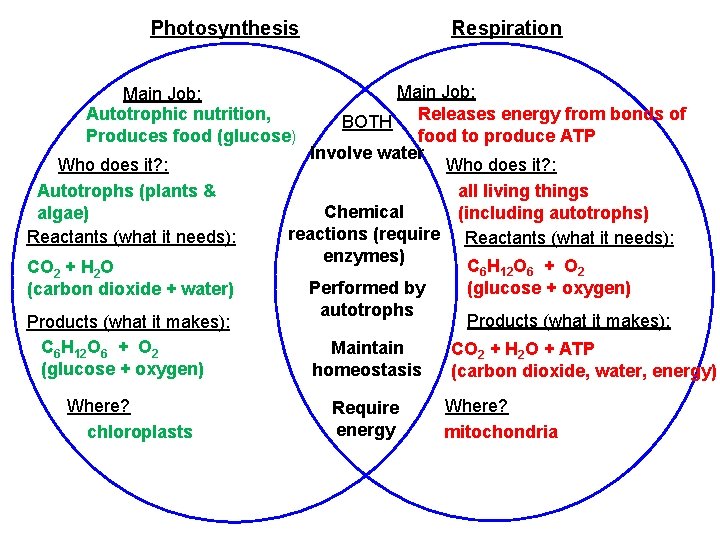
Photosynthesis Respiration Main Job: BOTH Releases energy from bonds of food to produce ATP Involve water Who does it? : all living things Chemical (including autotrophs) reactions (require Reactants (what it needs): enzymes) C 6 H 12 O 6 + O 2 (glucose + oxygen) Performed by autotrophs Products (what it makes): Main Job: Autotrophic nutrition, Produces food (glucose) Who does it? : Autotrophs (plants & algae) Reactants (what it needs): CO 2 + H 2 O (carbon dioxide + water) Products (what it makes): C 6 H 12 O 6 + O 2 (glucose + oxygen) Where? chloroplasts Maintain homeostasis Require energy CO 2 + H 2 O + ATP (carbon dioxide, water, energy) Where? mitochondria
Why are plants and algae considered “self-sustaining”? • Plants can transfer some of the oxygen produced at the chloroplasts to their own mitochondria to perform aerobic respiration!
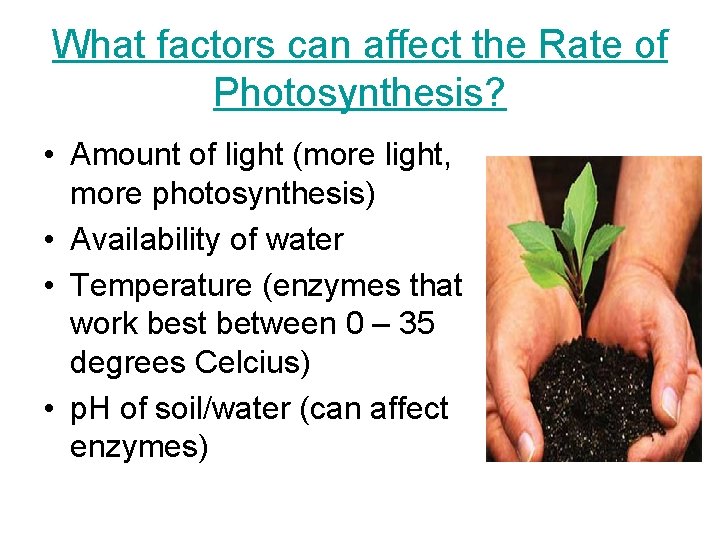
What factors can affect the Rate of Photosynthesis? • Amount of light (more light, more photosynthesis) • Availability of water • Temperature (enzymes that work best between 0 – 35 degrees Celcius) • p. H of soil/water (can affect enzymes)
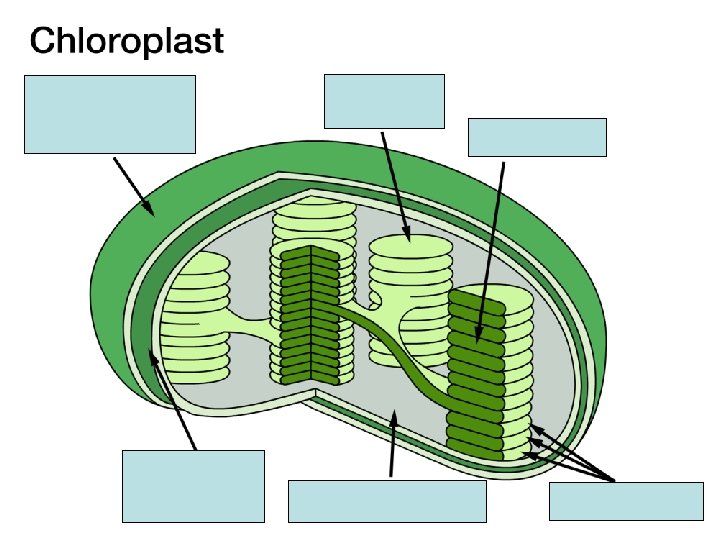
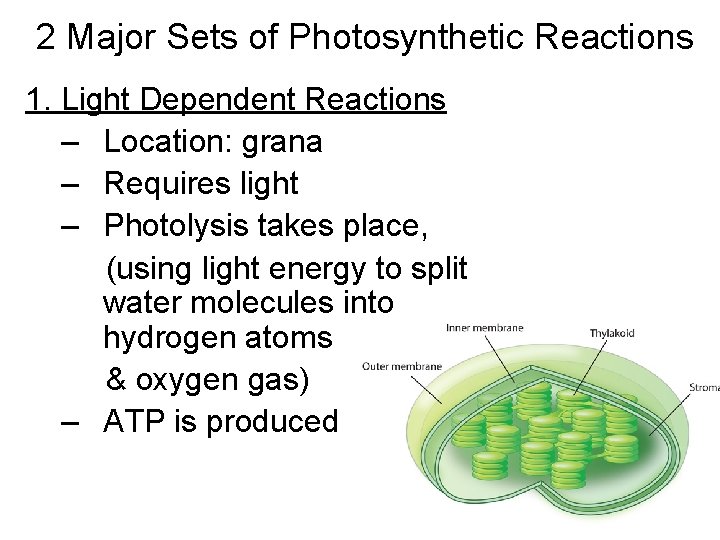
2 Major Sets of Photosynthetic Reactions 1. Light Dependent Reactions – Location: grana – Requires light – Photolysis takes place, (using light energy to split water molecules into hydrogen atoms & oxygen gas) – ATP is produced
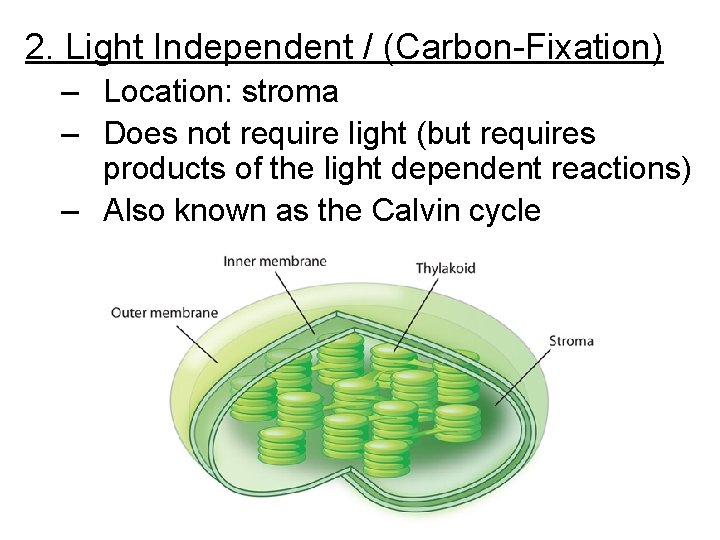
2. Light Independent / (Carbon-Fixation) – Location: stroma – Does not require light (but requires products of the light dependent reactions) – Also known as the Calvin cycle
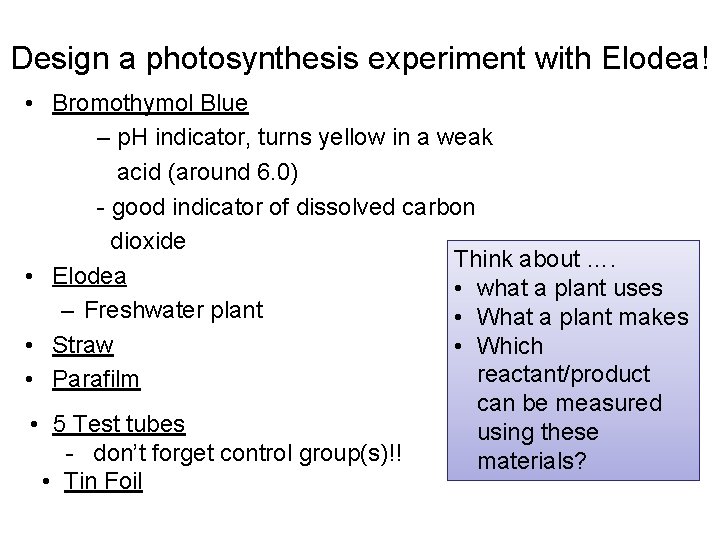
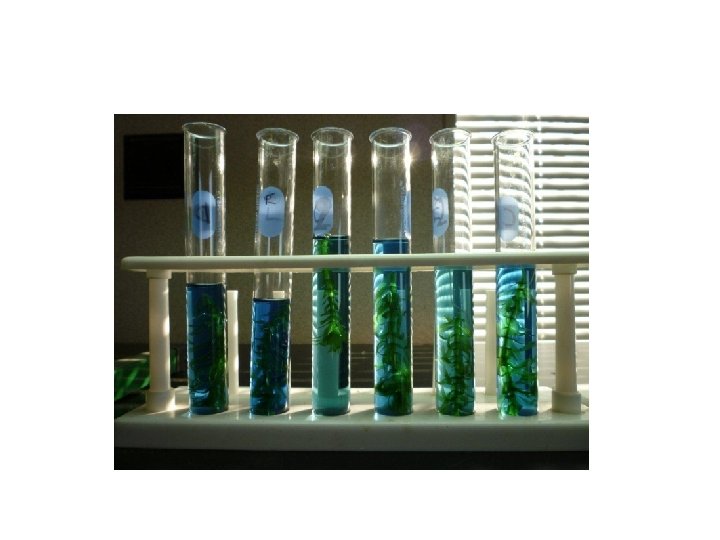
Design a photosynthesis experiment with Elodea! • Bromothymol Blue – p. H indicator, turns yellow in a weak acid (around 6. 0) - good indicator of dissolved carbon dioxide Think about …. • Elodea • what a plant uses – Freshwater plant • What a plant makes • Straw • Which reactant/product • Parafilm can be measured • 5 Test tubes using these - don’t forget control group(s)!! materials? • Tin Foil
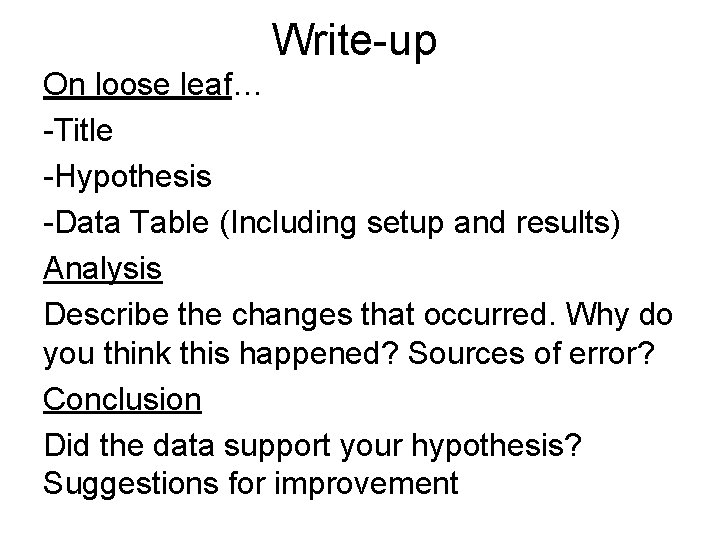
Write-up On loose leaf… -Title -Hypothesis -Data Table (Including setup and results) Analysis Describe the changes that occurred. Why do you think this happened? Sources of error? Conclusion Did the data support your hypothesis? Suggestions for improvement
DAY 4 Photosynthesis SAT II Light Dependent & Independent Reactions Chart & Flowchart
Practice Questions Which process is directly used by autotrophs to store energy in glucose? (1) diffusion (2) respiration (3) photosynthesis (4) active transport
Practice Questions What does the process of photosynthesis produce? 1) starch, which is metabolized into less complex molecules by dehydration synthesis 2) protein, which is metabolized into less complex molecules by dehydration synthesis 3) glycerol, which is metabolized into more complex carbohydrates by dehydration synthesis 4) glucose, which is metabolized into more complex carbohydrates by dehydration synthesis
Practice Questions • Which process provides most of the oxygen found in Earth's atmosphere? 1) photosynthesis 2) aerobic respiration 3) dehydration synthesis 4) fermentation
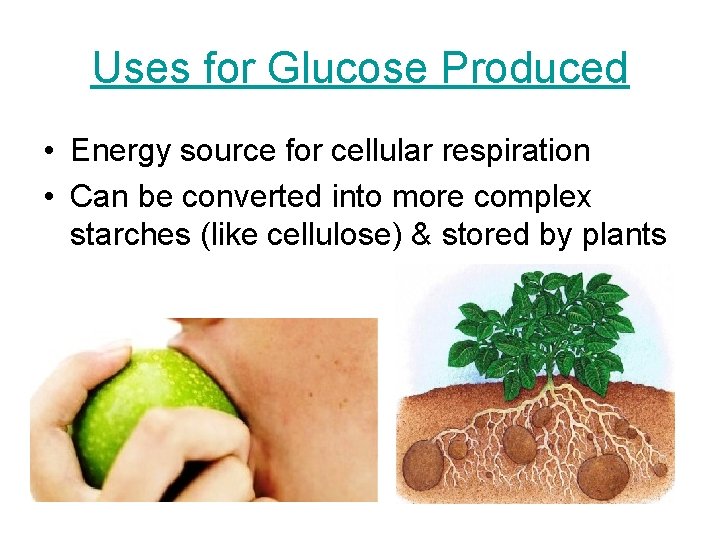
Uses for Glucose Produced • Energy source for cellular respiration • Can be converted into more complex starches (like cellulose) & stored by plants
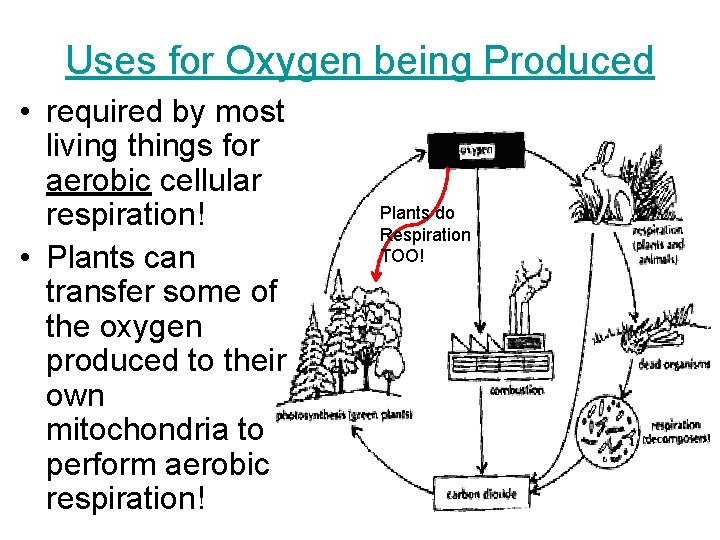
Uses for Oxygen being Produced • required by most living things for aerobic cellular respiration! • Plants can transfer some of the oxygen produced to their own mitochondria to perform aerobic respiration! Plants do Respiration TOO!
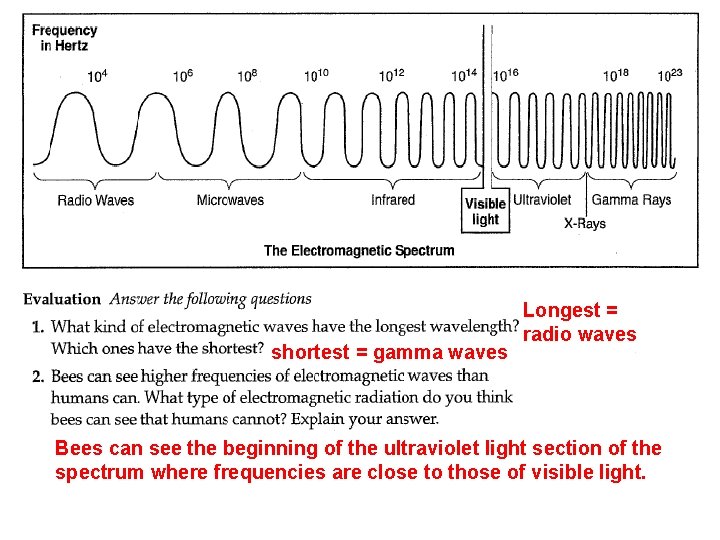
shortest = gamma waves Longest = radio waves Bees can see the beginning of the ultraviolet light section of the spectrum where frequencies are close to those of visible light.
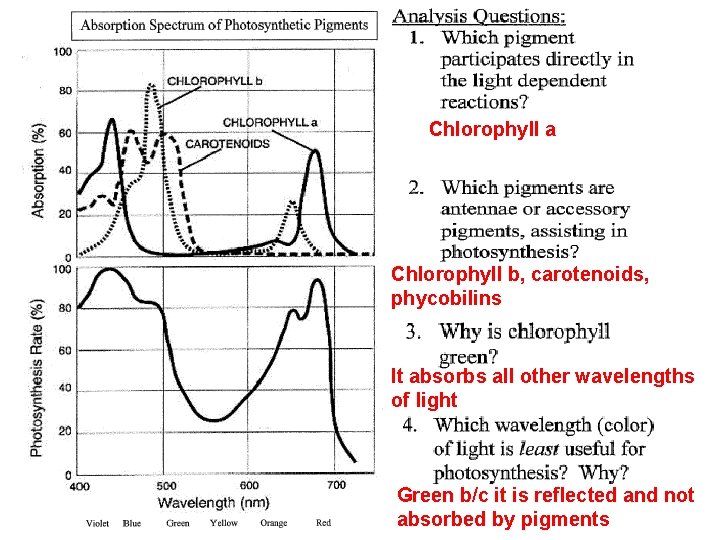
Chlorophyll a Chlorophyll b, carotenoids, phycobilins It absorbs all other wavelengths of light Green b/c it is reflected and not absorbed by pigments
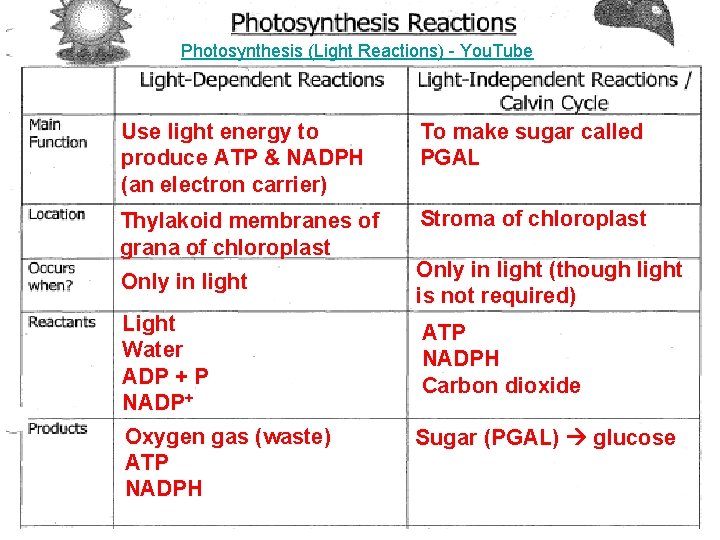
Photosynthesis (Light Reactions) - You. Tube Use light energy to produce ATP & NADPH (an electron carrier) To make sugar called PGAL Thylakoid membranes of grana of chloroplast Stroma of chloroplast Only in light (though light is not required) Light Water ADP + P NADP+ ATP NADPH Carbon dioxide Oxygen gas (waste) ATP NADPH Sugar (PGAL) glucose
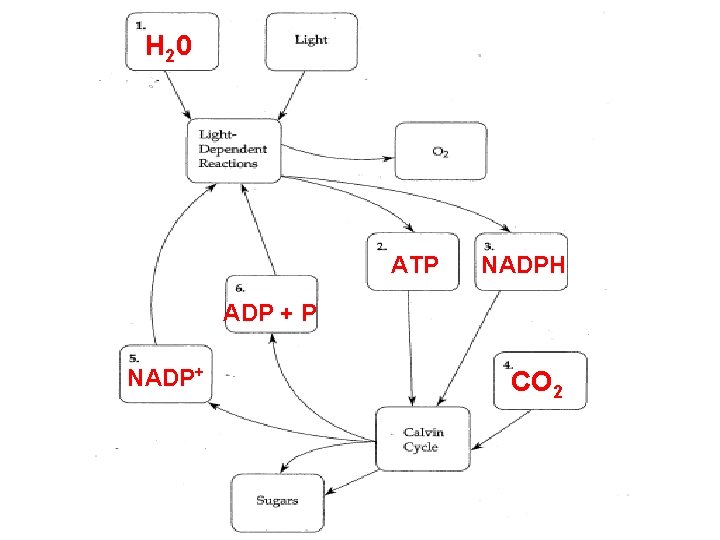
H 20 ATP NADPH ADP + P NADP+ CO 2
Extra Credit Write on the back of packet… 8 -10 line poem on one of these topics (or a combination of 2) Respiration: Photosynthesis: The Leaf: Include these terms – Oxygen, carbon dioxide, water, lactic acid breathing, animals, plants, energy Leaf, autotrophs, chloroplast, carbon dioxide, oxygen, glucose, water, sunlight Stomate, open, chloroplast, exchange, palisades, waxy cuticle, sunlight
- Slides: 40