
Dawn of the Industrial Age Industrial Revolution https

- Slides: 11
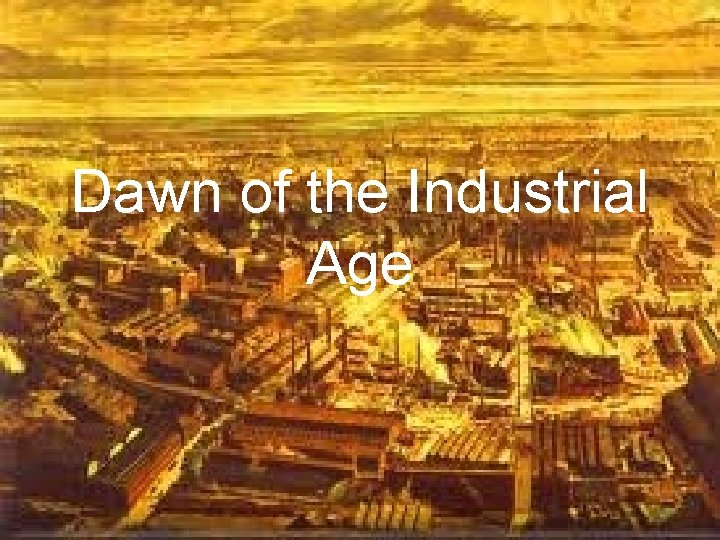
Dawn of the Industrial Age
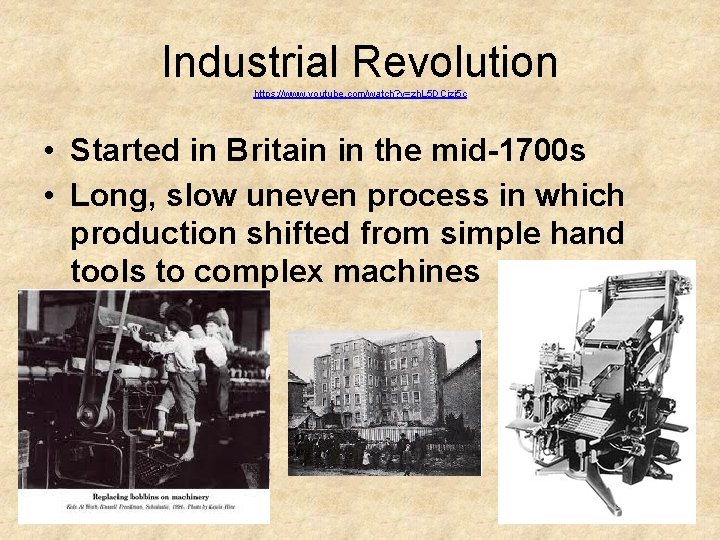
Industrial Revolution https: //www. youtube. com/watch? v=zh. L 5 DCizj 5 c • Started in Britain in the mid-1700 s • Long, slow uneven process in which production shifted from simple hand tools to complex machines
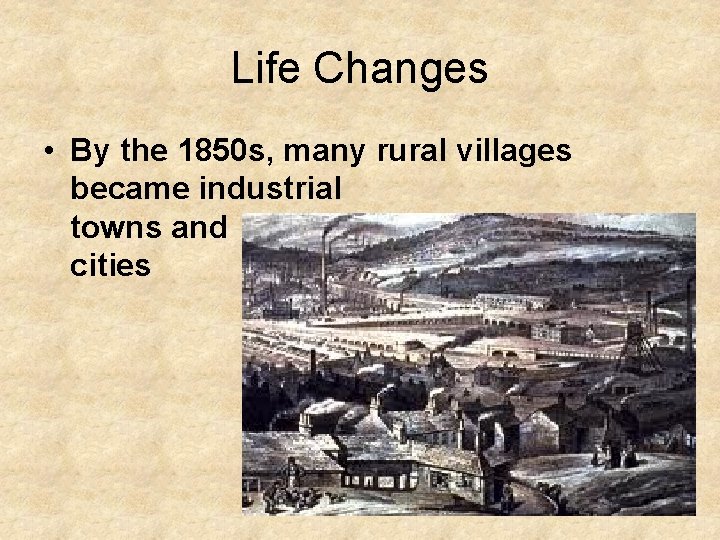
Life Changes • By the 1850 s, many rural villages became industrial towns and cities
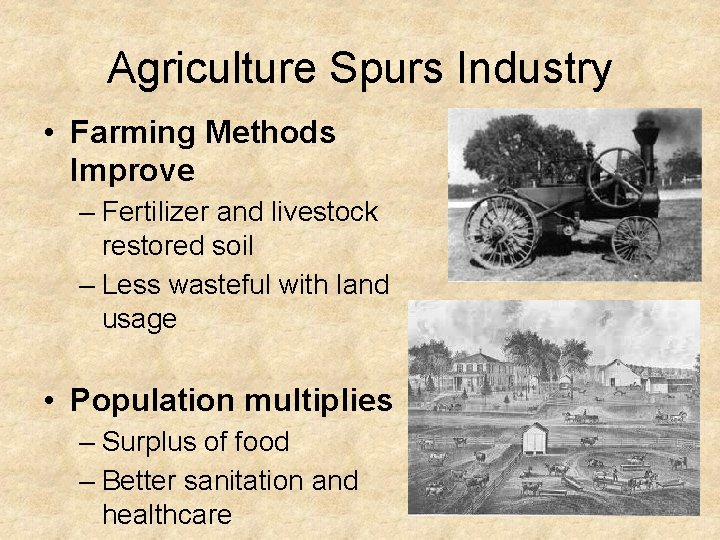
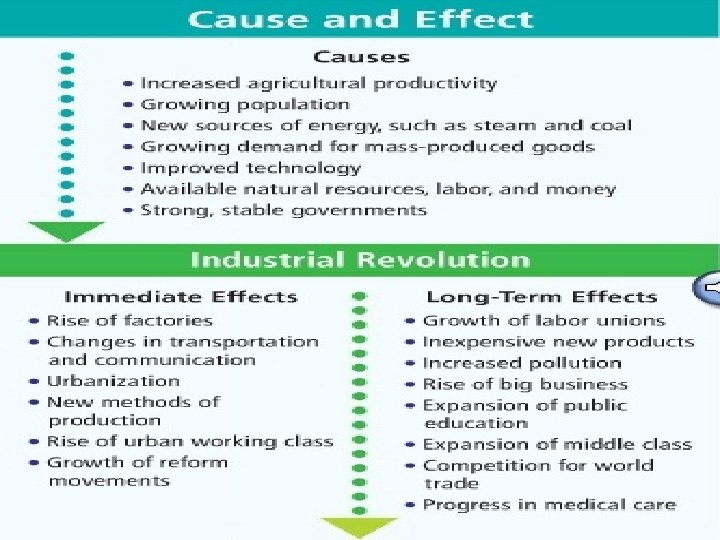
Agriculture Spurs Industry • Farming Methods Improve – Fertilizer and livestock restored soil – Less wasteful with land usage • Population multiplies – Surplus of food – Better sanitation and healthcare
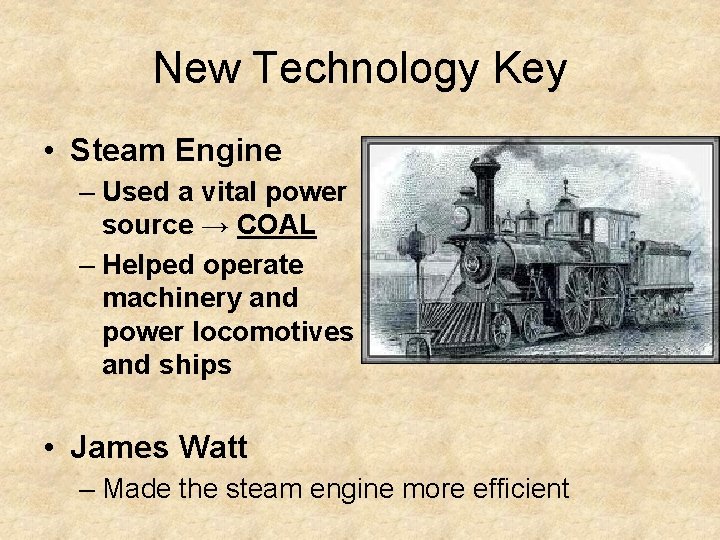
New Technology Key • Steam Engine – Used a vital power source → COAL – Helped operate machinery and power locomotives and ships • James Watt – Made the steam engine more efficient
Britain Leads the Way
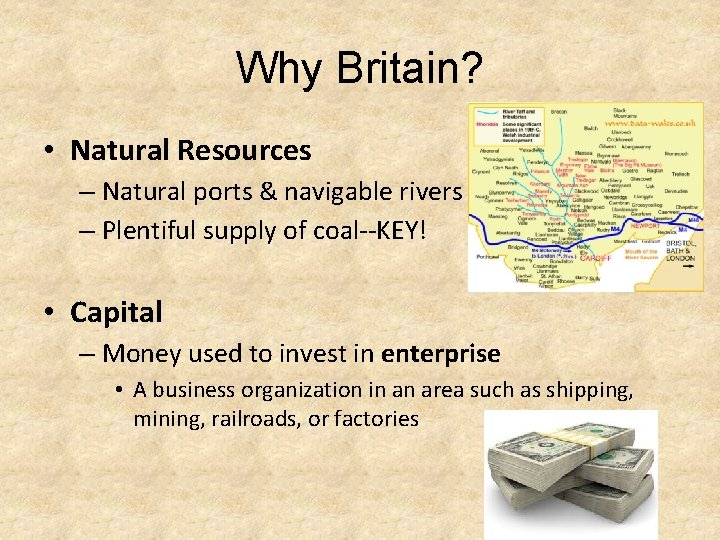
Why Britain? • Natural Resources – Natural ports & navigable rivers – Plentiful supply of coal--KEY! • Capital – Money used to invest in enterprise • A business organization in an area such as shipping, mining, railroads, or factories
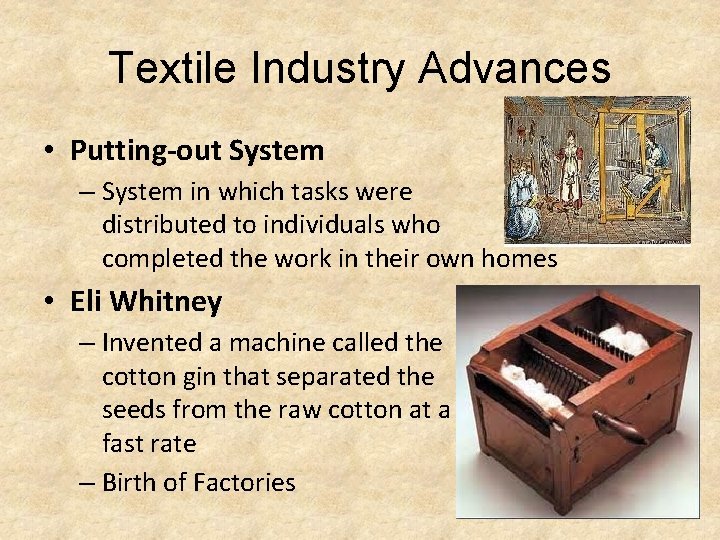
Textile Industry Advances • Putting-out System – System in which tasks were distributed to individuals who completed the work in their own homes • Eli Whitney – Invented a machine called the cotton gin that separated the seeds from the raw cotton at a fast rate – Birth of Factories
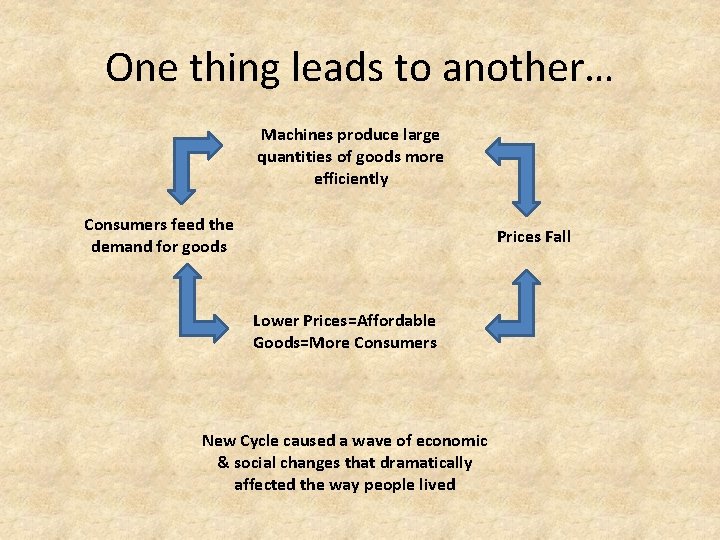
One thing leads to another… Machines produce large quantities of goods more efficiently Consumers feed the demand for goods Prices Fall Lower Prices=Affordable Goods=More Consumers New Cycle caused a wave of economic & social changes that dramatically affected the way people lived