
David and Goliath Strength and Power in Sport
- Slides: 27
David and Goliath: Strength and Power in Sport John D Barrow
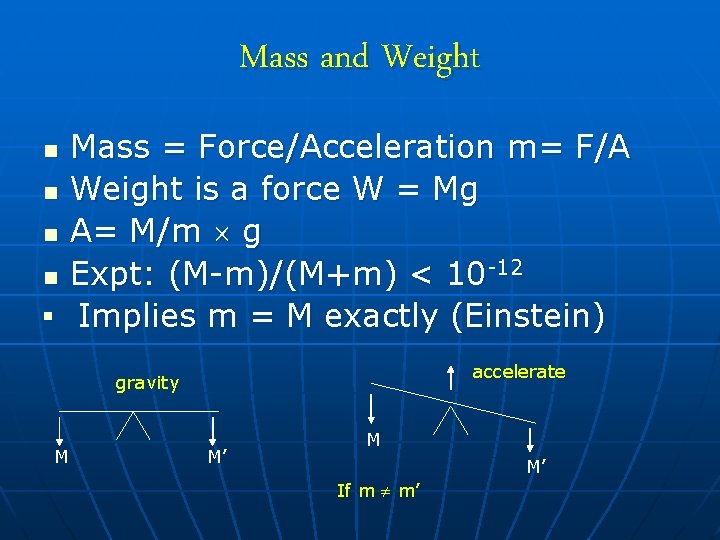
Mass and Weight n n n Mass = Force/Acceleration m= F/A Weight is a force W = Mg A= M/m g Expt: (M-m)/(M+m) < 10 -12 Implies m = M exactly (Einstein) accelerate gravity M M’ If m m’
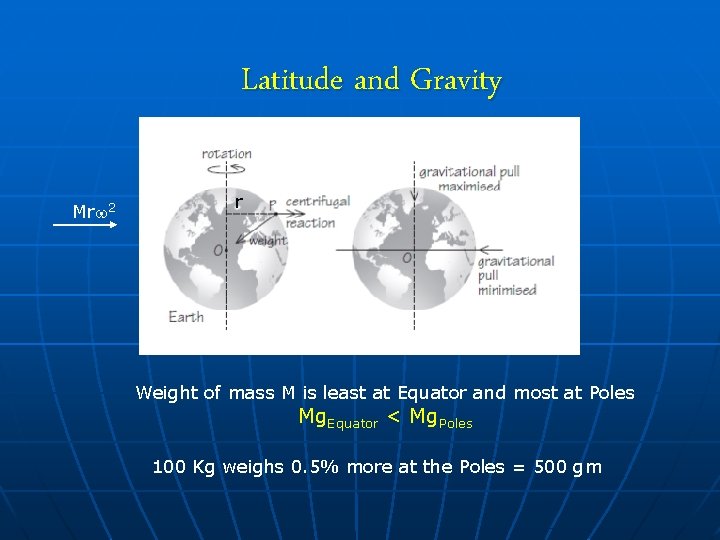
Latitude and Gravity Mr 2 r Weight of mass M is least at Equator and most at Poles Mg. Equator < Mg. Poles 100 Kg weighs 0. 5% more at the Poles = 500 gm
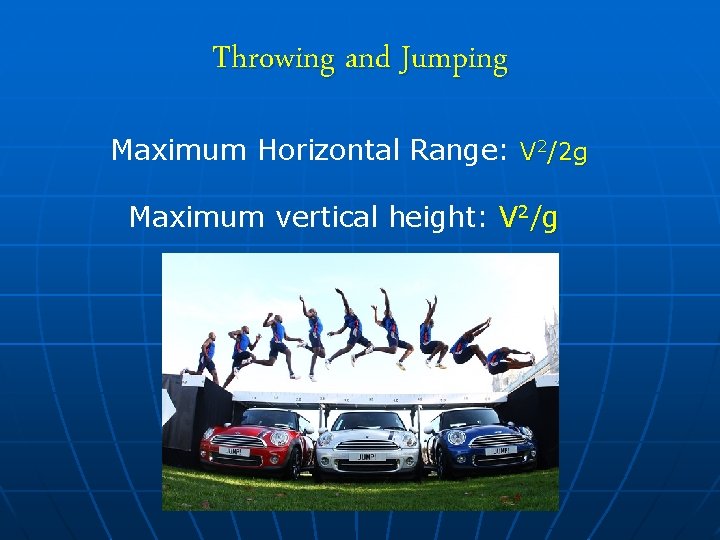
Throwing and Jumping Maximum Horizontal Range: V 2/2 g Maximum vertical height: V 2/g
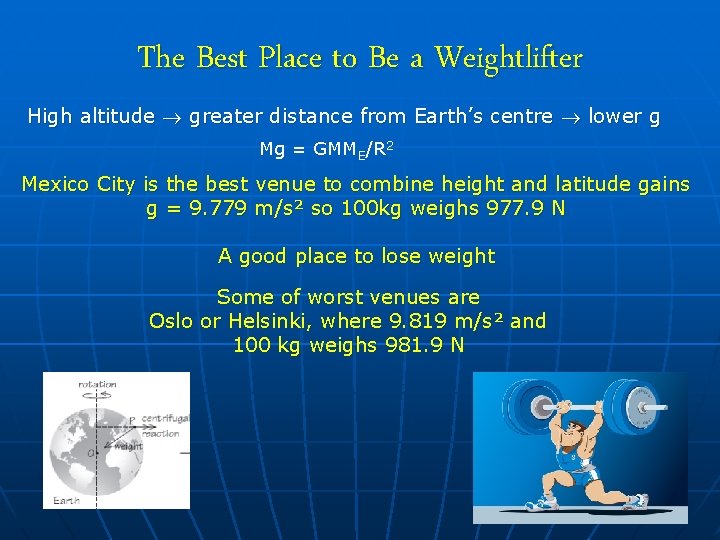
The Best Place to Be a Weightlifter High altitude greater distance from Earth’s centre lower g Mg = GMME/R 2 Mexico City is g the best venue to combine height and latitude gains = 9. 779 m/s² so 100 kg weighs 977. 9 N A good place to lose weight Some of worst venues are Oslo or Helsinki, where 9. 819 m/s² and 100 kg weighs 981. 9 N
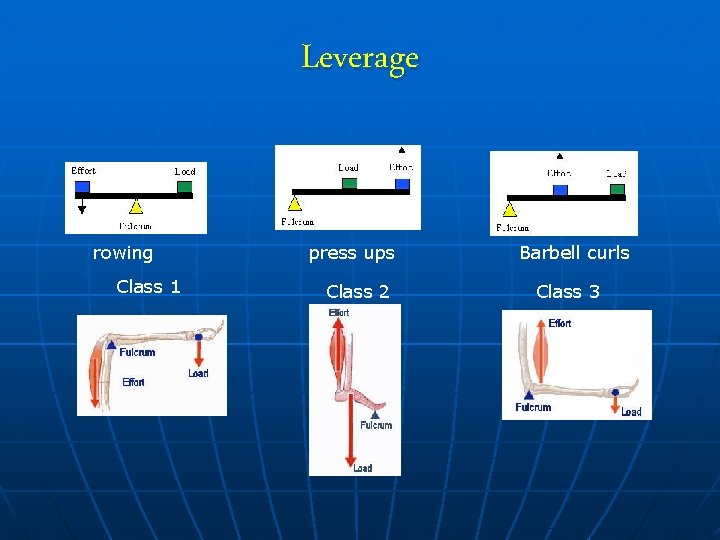
Leverage rowing Class 1 press ups Class 2 Barbell curls Class 3
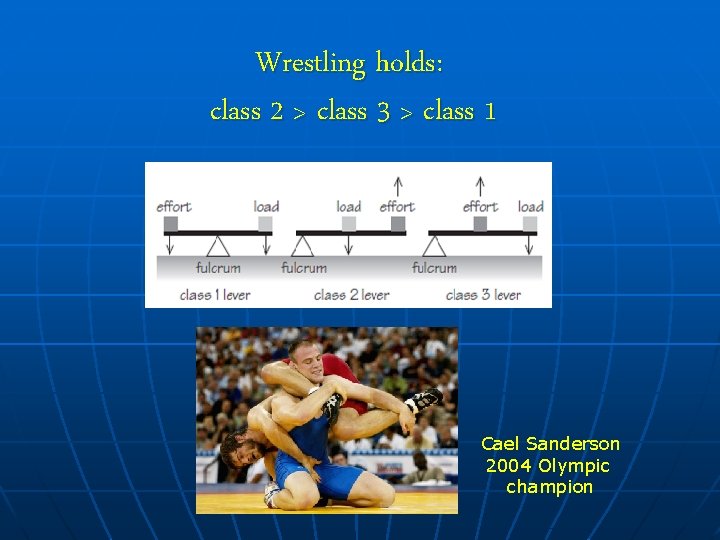
Wrestling holds: class 2 > class 3 > class 1 Cael Sanderson 2004 Olympic champion
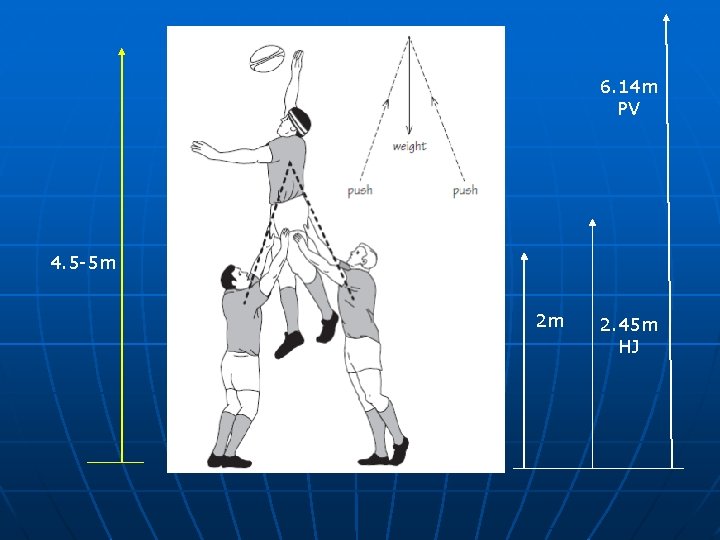
6. 14 m PV 4. 5 -5 m 2 m 2. 45 m HJ
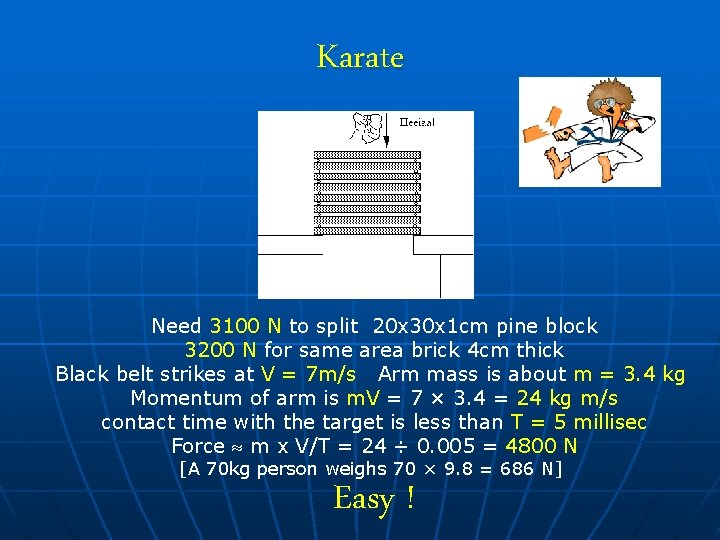
Karate Need 3100 N to split 20 x 30 x 1 cm pine block 3200 N for same area brick 4 cm thick Black belt strikes at V = 7 m/s Arm mass is about m = 3. 4 kg Momentum of arm is m. V = 7 × 3. 4 = 24 kg m/s contact time with the target is less than T = 5 millisec Force m x V/T = 24 ÷ 0. 005 = 4800 N [A 70 kg person weighs 70 × 9. 8 = 686 N] Easy !
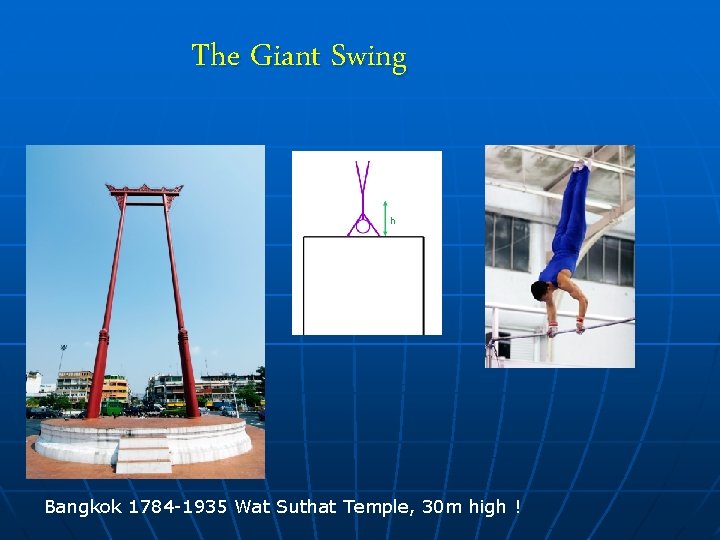
The Giant Swing Bangkok 1784 -1935 Wat Suthat Temple, 30 m high !
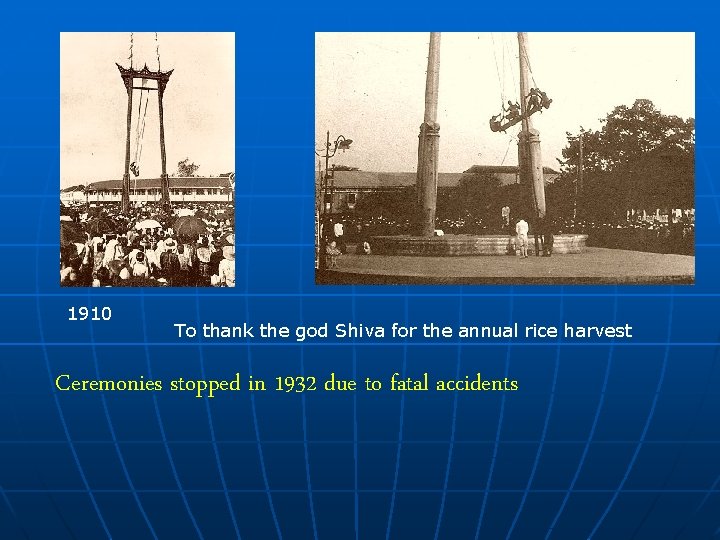
1910 To thank the god Shiva for the annual rice harvest Ceremonies stopped in 1932 due to fatal accidents
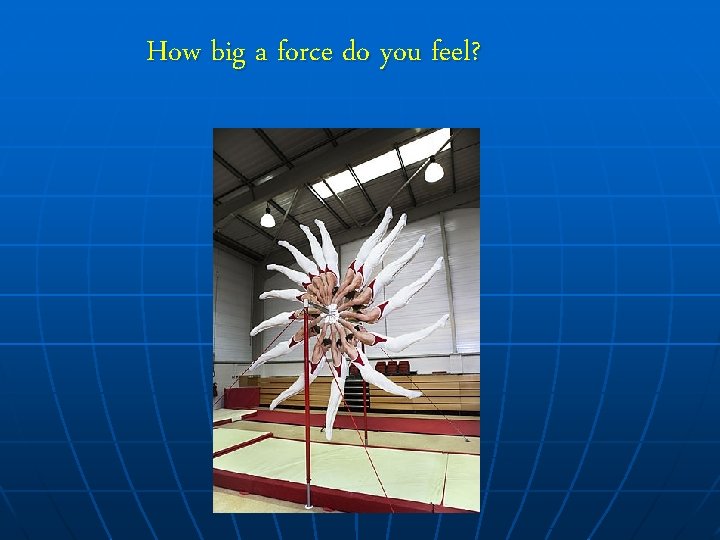
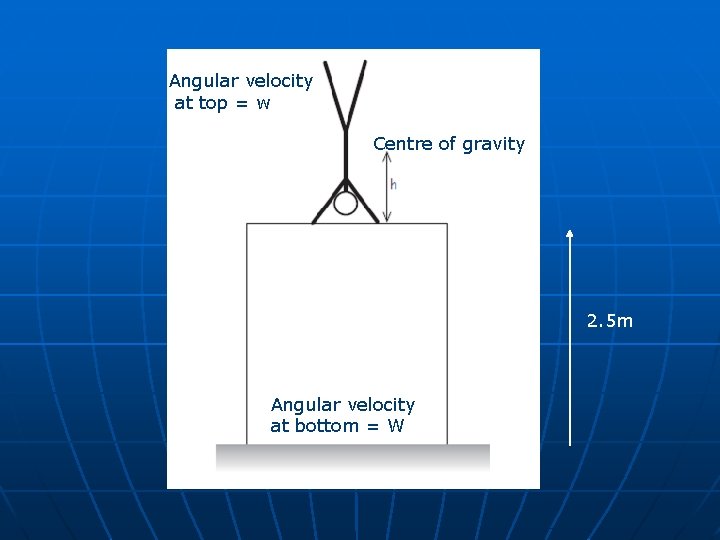
How big a force do you feel?
Angular velocity at top = w Centre of gravity 2. 5 m Angular velocity at bottom = W
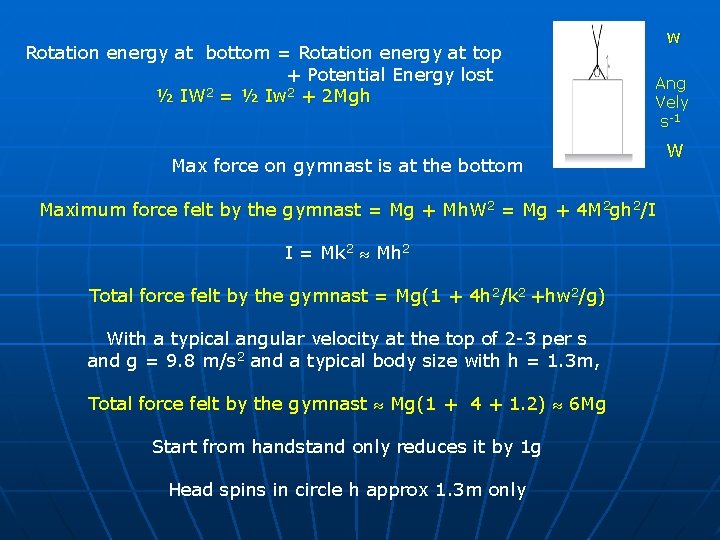
Rotation energy at bottom = Rotation energy at top + Potential Energy lost ½ IW 2 = ½ Iw 2 + 2 Mgh w Ang Vely s-1 Max force on gymnast is at the bottom Maximum force felt by the gymnast = Mg + Mh. W 2 = Mg + 4 M 2 gh 2/I I = Mk 2 Mh 2 Total force felt by the gymnast = Mg(1 + 4 h 2/k 2 +hw 2/g) With a typical angular velocity at the top of 2 -3 per s and g = 9. 8 m/s 2 and a typical body size with h = 1. 3 m, Total force felt by the gymnast Mg(1 + 4 + 1. 2) 6 Mg Start from handstand only reduces it by 1 g Head spins in circle h approx 1. 3 m only W
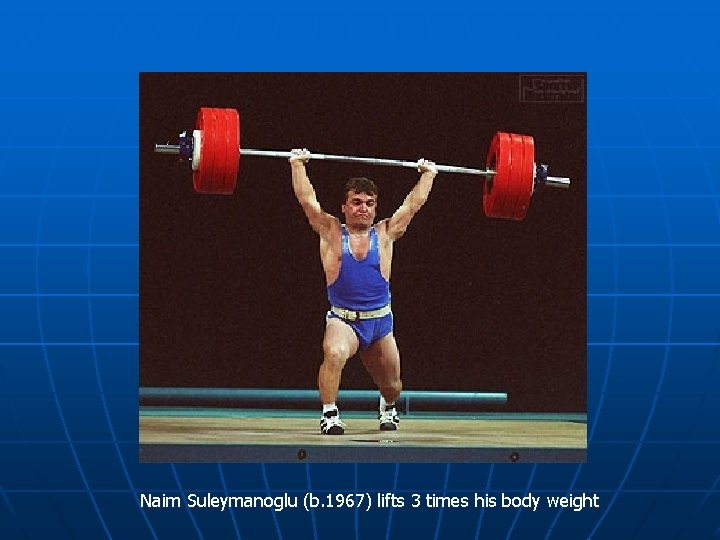
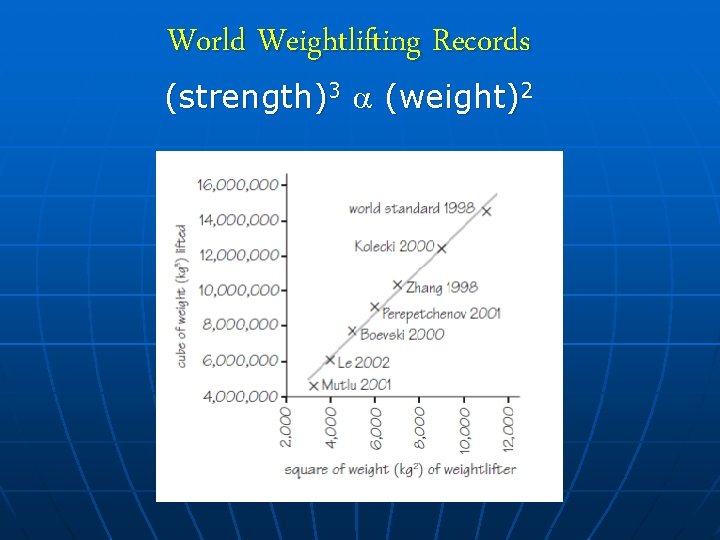
Naim Suleymanoglu (b. 1967) lifts 3 times his body weight
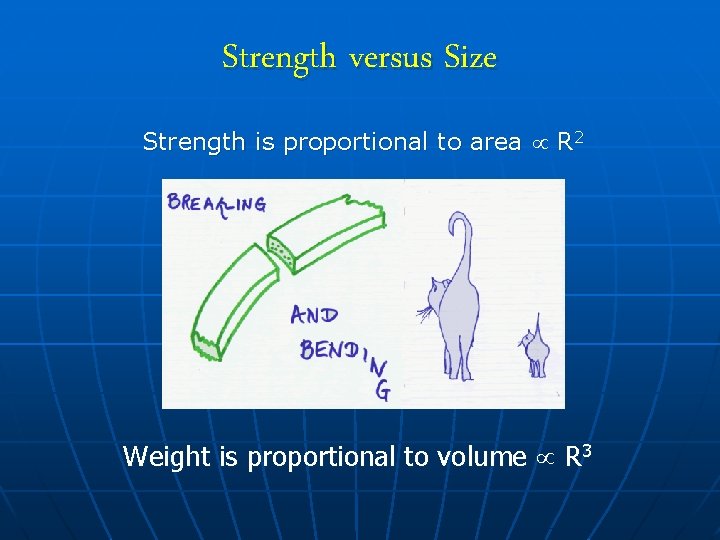
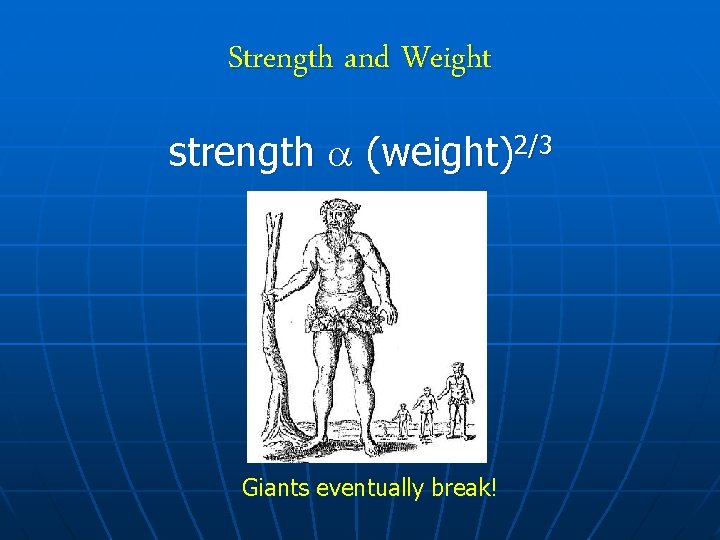
Strength versus Size Strength is proportional to area R 2 Weight is proportional to volume R 3
Strength and Weight strength (weight)2/3 Giants eventually break!
World Weightlifting Records (strength)3 (weight)2
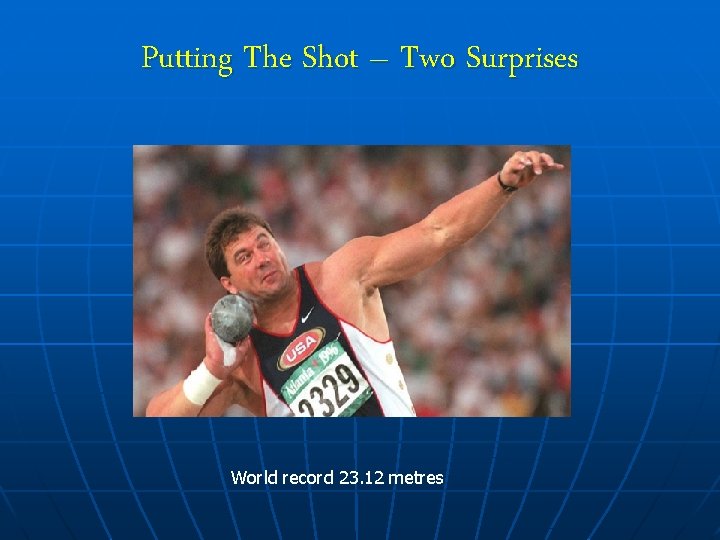
Putting The Shot – Two Surprises World record 23. 12 metres
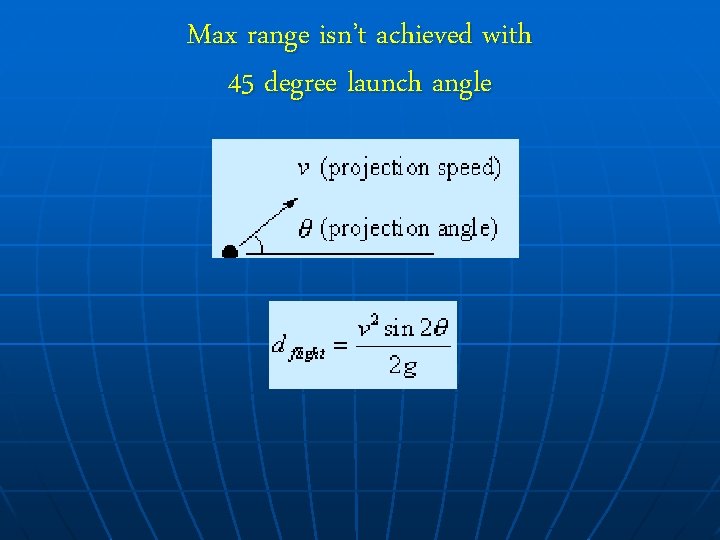
Max range isn’t achieved with 45 degree launch angle
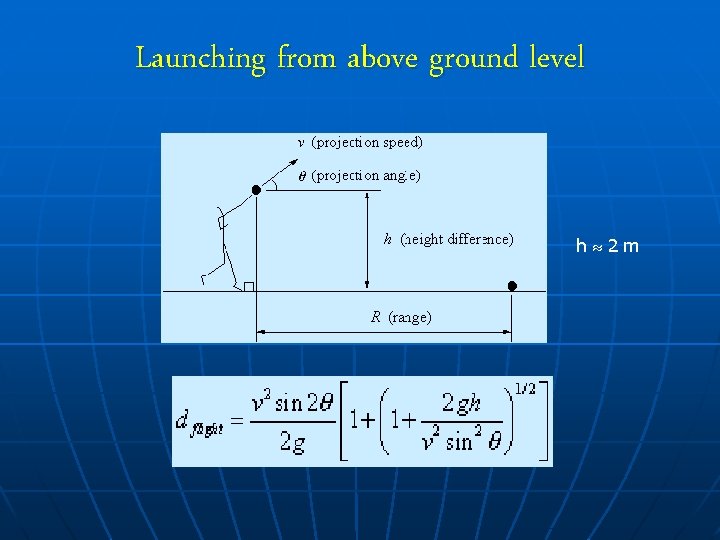
Launching from above ground level h 2 m
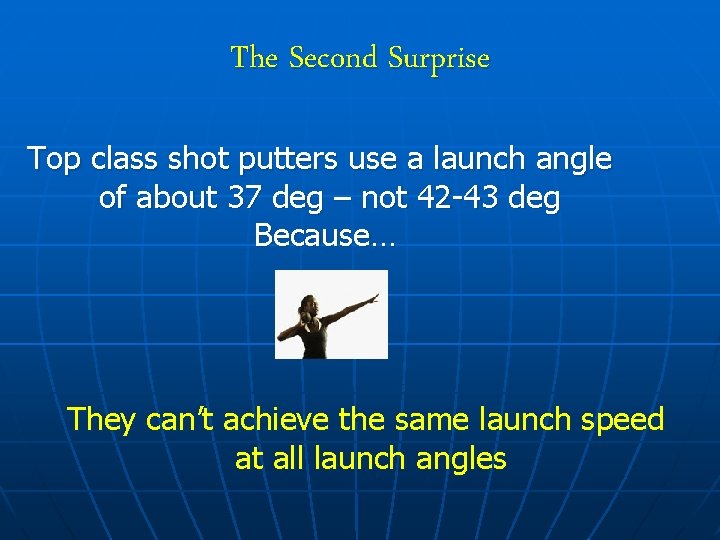
The Second Surprise Top class shot putters use a launch angle of about 37 deg – not 42 -43 deg Because… They can’t achieve the same launch speed at all launch angles
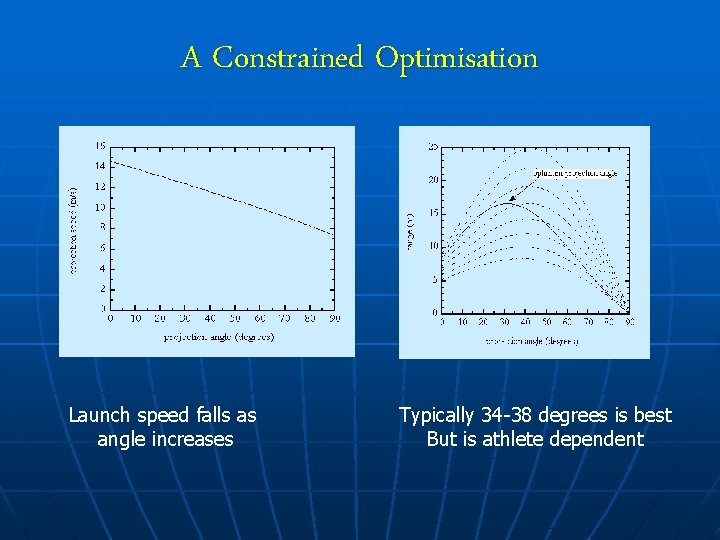
A Constrained Optimisation Launch speed falls as angle increases Typically 34 -38 degrees is best But is athlete dependent
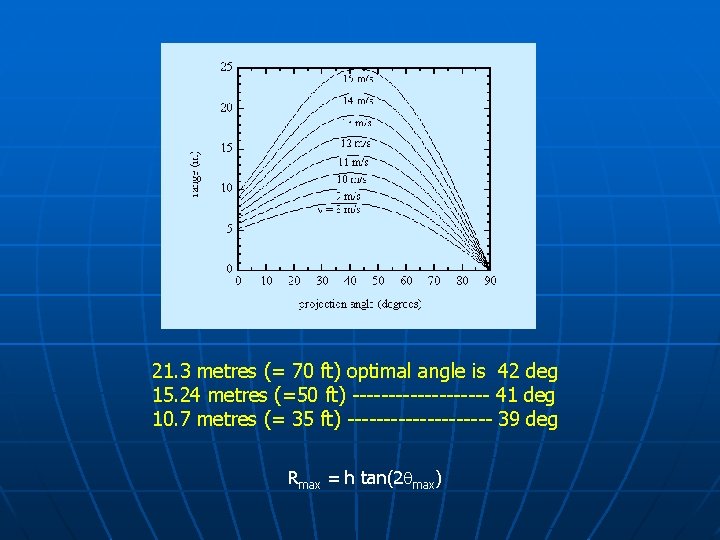
21. 3 metres (= 70 ft) optimal angle is 42 deg 15. 24 metres (=50 ft) ---------- 41 deg 10. 7 metres (= 35 ft) ---------- 39 deg Rmax = h tan(2 max)
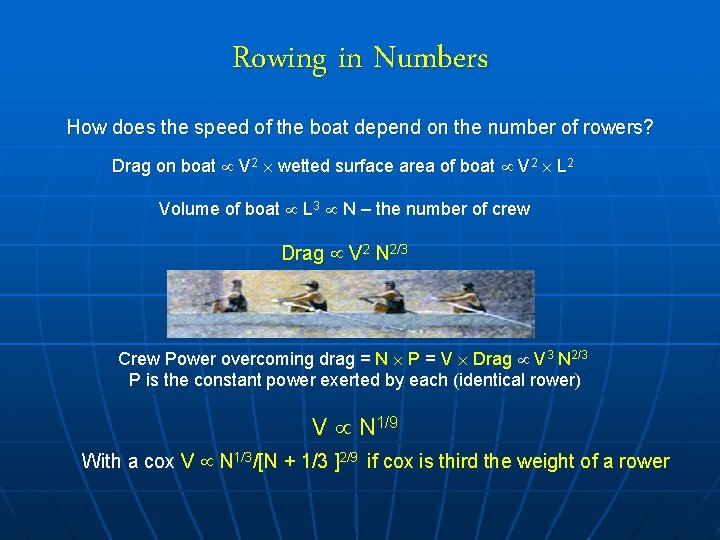
Rowing in Numbers How does the speed of the boat depend on the number of rowers? Drag on boat V 2 wetted surface area of boat V 2 L 2 Volume of boat L 3 N – the number of crew Drag V 2 N 2/3 Crew Power overcoming drag = N P = V Drag V 3 N 2/3 P is the constant power exerted by each (identical rower) V N 1/9 With a cox V N 1/3/[N + 1/3 ]2/9 if cox is third the weight of a rower
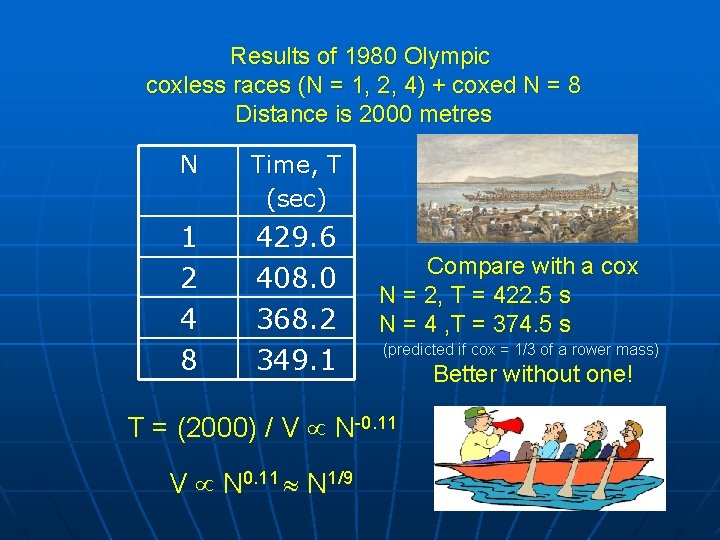
Results of 1980 Olympic coxless races (N = 1, 2, 4) + coxed N = 8 Distance is 2000 metres N Time, T (sec) 1 2 4 8 429. 6 408. 0 368. 2 349. 1 Compare with a cox N = 2, T = 422. 5 s N = 4 , T = 374. 5 s (predicted if cox = 1/3 of a rower mass) T = (2000) / V N-0. 11 V N 0. 11 N 1/9 Better without one!
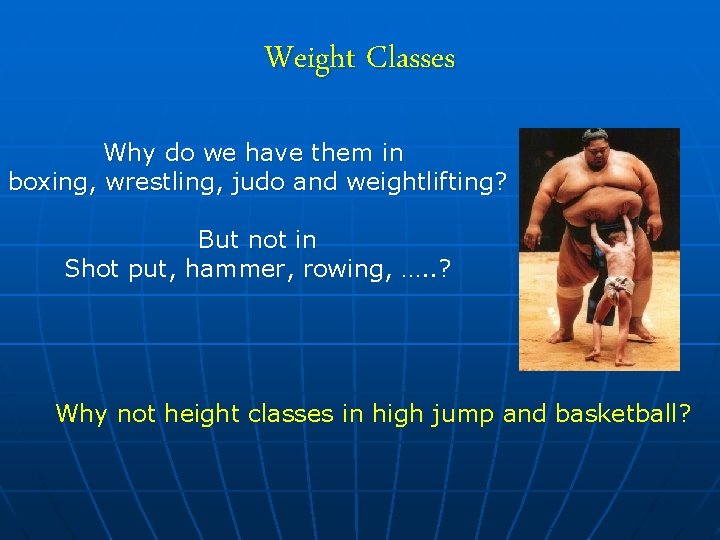
Weight Classes Why do we have them in boxing, wrestling, judo and weightlifting? But not in Shot put, hammer, rowing, …. . ? Why not height classes in high jump and basketball?