
Datum and Projections Overview Coordinate Systems Cartesian Geographic


- Slides: 15
Datum and Projections
Overview § Coordinate Systems § Cartesian § Geographic § Datum § Local § Global § Map Projections § Types & Differences § Map Scale § Large & small
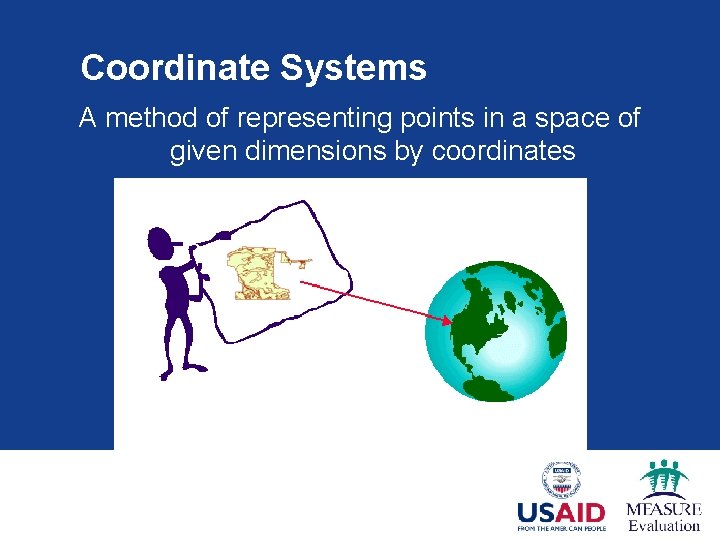
Coordinate Systems A method of representing points in a space of given dimensions by coordinates
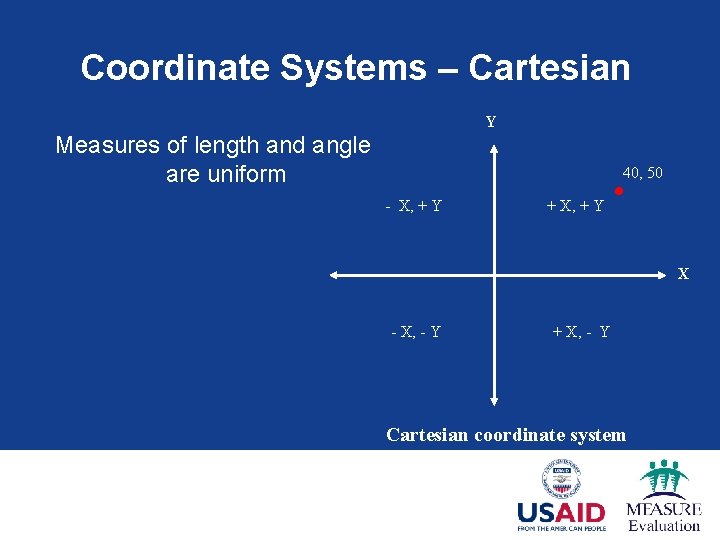
Coordinate Systems – Cartesian Y Measures of length and angle are uniform 40, 50 - X, + Y + X, + Y X - X, - Y + X, - Y Cartesian coordinate system
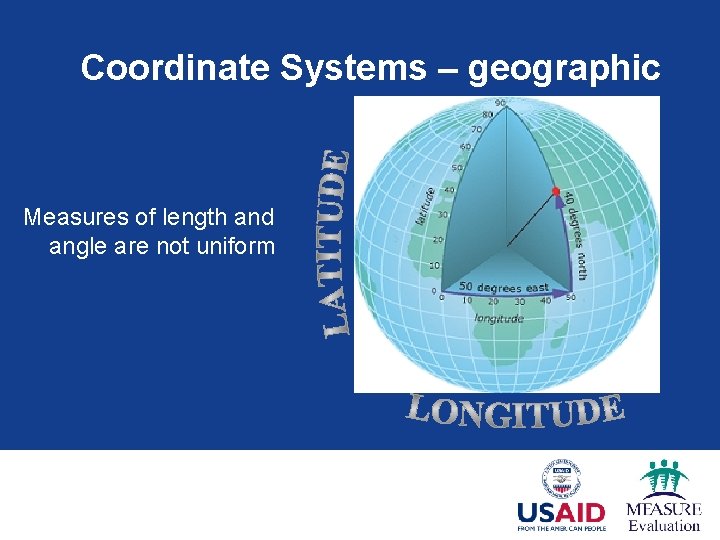
Coordinate Systems – geographic Measures of length and angle are not uniform
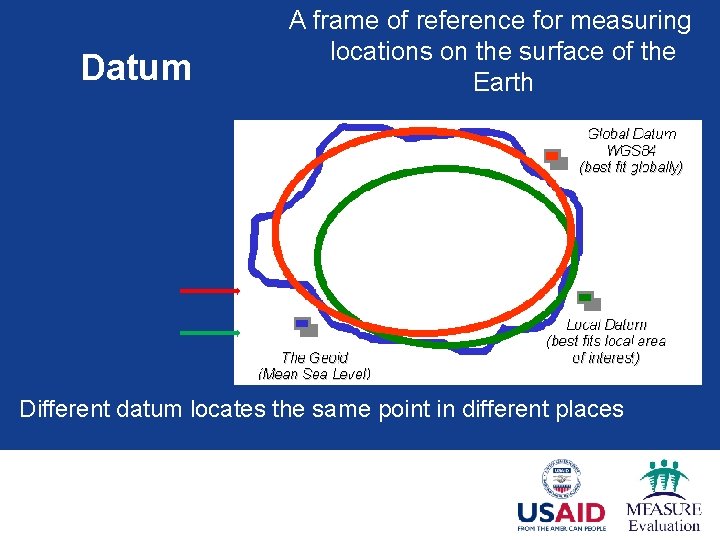
Datum A frame of reference for measuring locations on the surface of the Earth Different datum locates the same point in different places
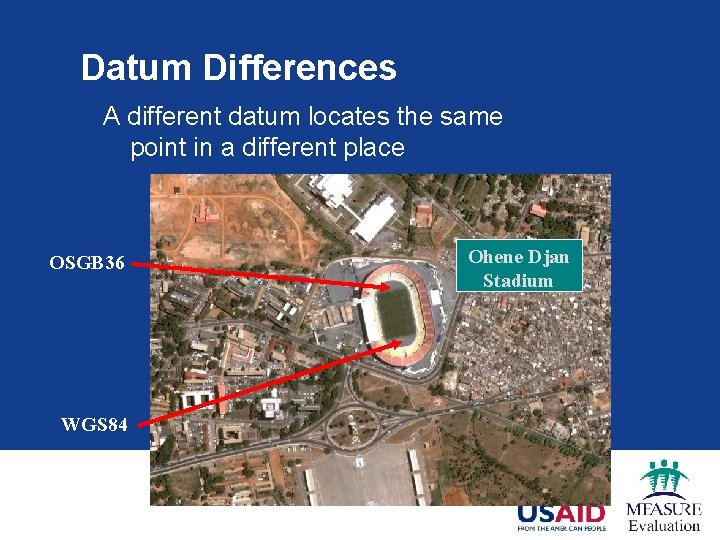
Datum Differences A different datum locates the same point in a different place OSGB 36 WGS 84 Ohene Djan Stadium
Map Projections Map projections convert curved surfaces to flat surfaces
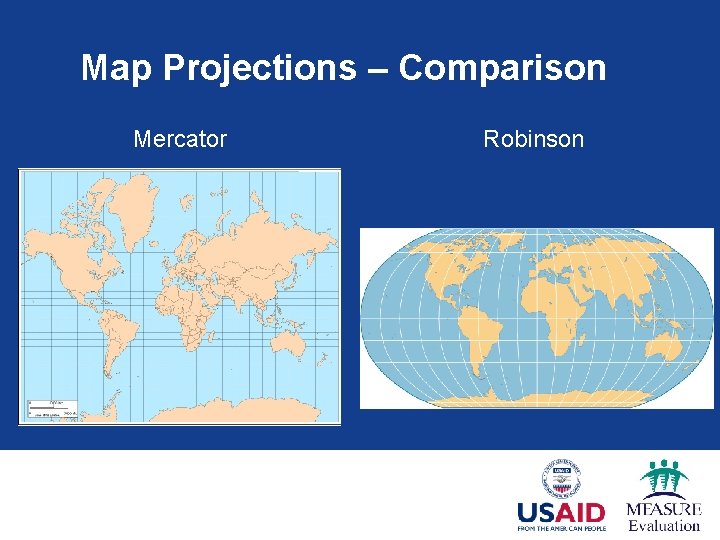
Map Projections – Comparison Mercator Robinson
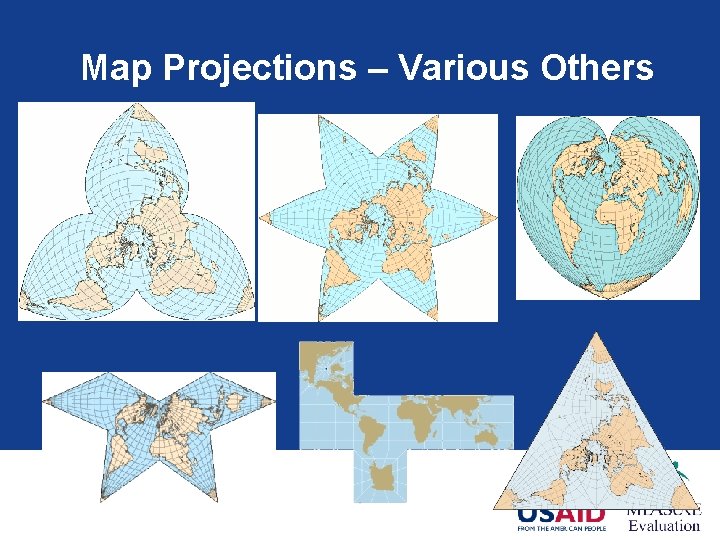
Map Projections – Various Others
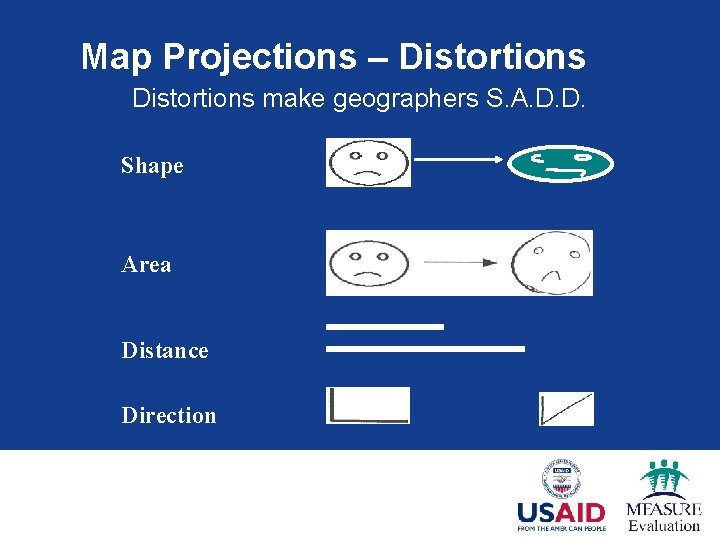
Map Projections – Distortions make geographers S. A. D. D. Shape Area Distance Direction
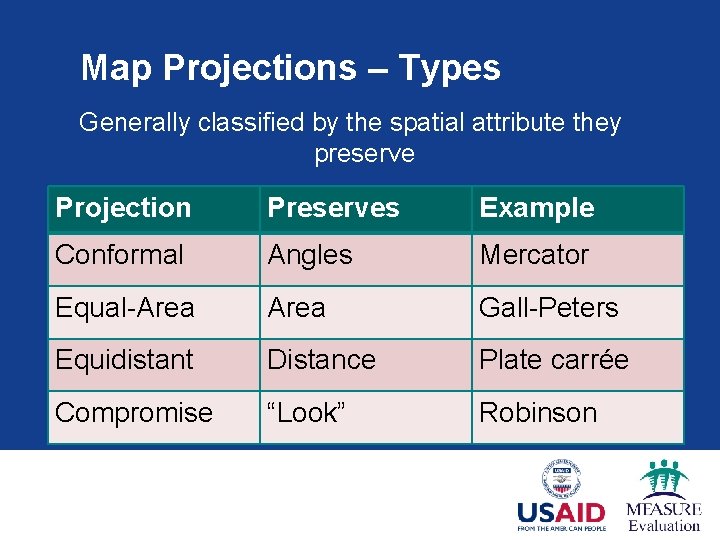
Map Projections – Types Generally classified by the spatial attribute they preserve Projection Preserves Example Conformal Angles Mercator Equal-Area Gall-Peters Equidistant Distance Plate carrée Compromise “Look” Robinson
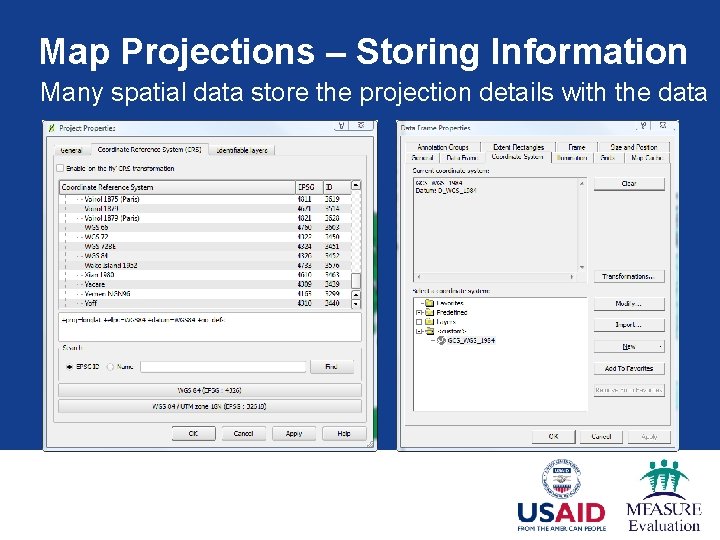
Map Projections – Storing Information Many spatial data store the projection details with the data
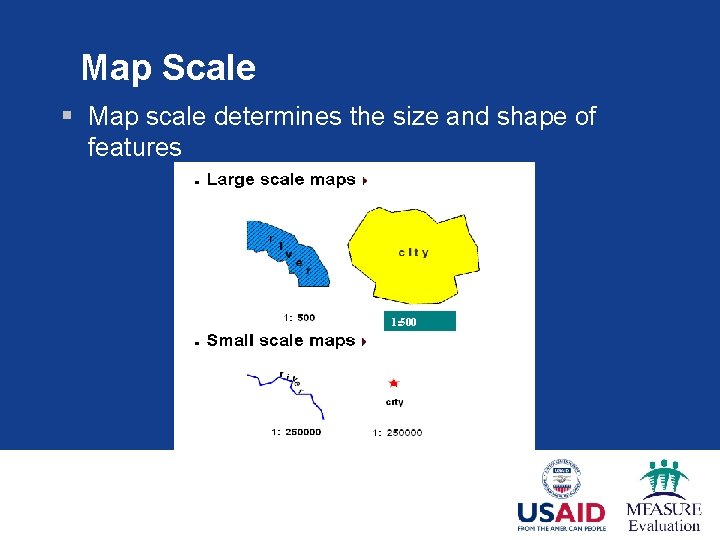
Map Scale § Map scale determines the size and shape of features 1: 500
Summary § A coordinate system is a way to reference a location § A datum is way to model the shape of the Earth § A map projection is way represent the 3 dimensional surface of the Earth in 2 dimensions